

Turn recordings into transcripts and summaries in minutes
Upload audio or video for multilingual transcription, AI notes, and action items
Where Are iPhone Recording Features? 3 Built-in Methods Explained
Many iPhone users need to record something on the spot but can't find the feature. In fact, the iPhone has more than one built-in recording method; here are the 3 most common:
- Voice Memos: Located in the Utilities folder, you can open it and start recording immediately. It supports pause, segmentation, and syncs via iCloud to your other Apple devices.
- Call Recording: With iOS 18.1 or later, tap the button in the top-left corner of the screen during a call to start recording. When the call ends, the recording is automatically saved to Voice Memos, and both parties hear a tone.
- Control Center Screen Recording: You can record system audio or the microphone, which is suitable for video conferences or screen recordings, but you need to add the Screen Recording option to Control Center first.
Additionally, iPhone 15 Pro/Pro Max users can set the Action button to start recording with one press; other models can quickly open Voice Memos via Settings > Accessibility > Touch > Back Tap.
After Recording, What You Really Need Is Organization and Utilization
You've found the recording feature, but the real problem begins: after recording a bunch of audio files, you still need to spend twice the time listening and organizing meeting notes. Especially for multi-person meetings or cross-language content, manually transcribing is slow and easy to miss key points. If you only use the recording feature to "record," you've only solved half the problem.
The truly time-saving approach is to generate transcripts, summaries, and action items directly after recording, and be able to search and ask questions. That's the value of recording-to-text tools. The following hands-on comparison will help you choose the right tool.
Before Choosing a Recording-to-Text Tool, Understand These 4 Key Points
1. Support for Multiple Input Sources: Besides real-time recording on your phone, can it record online meetings or upload old audio files? If it can only record via the phone's microphone, its use cases are limited.
2. AI Post-Processing Capabilities: It's not enough to just have a transcript; automatic summaries, chapters, and action item extraction are what save time. Some tools only transcribe, leaving the organizing work to you.
3. Cross-Platform and Team Collaboration: If you record on your phone today and need to organize on your computer tomorrow, a tool that doesn't support cross-device use will be painful; for team use, shared spaces and permission management are essential.
4. Chinese and Multilingual Experience: The quality of transcription and summaries varies greatly for Chinese meetings or mixed Chinese-English content. Tools that support multiple languages, or even real-time translation, are more practical for users in the U.S.
In the following comparison, Tinrec performed most consistently across these four aspects, which is why it's our top pick.
Tinrec – Our Top Pick After Hands-On Testing
Tinrec is an AI meeting notes tool that supports 14 languages and covers iOS, Android, and web. It's not just about recording-to-text; it turns meeting content into searchable, queryable, and collaborative data.
Core Features Integrated into Scenarios: Open Tinrec during a meeting, and it generates a transcript in real time; when the meeting ends, it automatically creates a summary and action items. What's more, after recording, you can ask Tinrec directly, "Who mentioned the budget in the last meeting?" It uses semantic understanding to give you the answer directly, rather than just keyword search results—a feature almost no competitor in the same price range offers.
Record Online Meetings Without a Bot: With the desktop version of Tinrec, you don't need to add a bot to Zoom, Meet, or Teams meetings; it directly captures your computer's system audio, avoiding extra participants.
Stop organizing recordings by hand
Upload audio or video and automatically get a transcript, summary, and action items
Team Space for Knowledge Accumulation: Meeting recordings, transcripts, summaries, and action items are stored in a team space, so new members can view historical data, and admins can manage roles, seats, and usage. This ensures meeting knowledge doesn't disappear when employees leave.
Hands-On Experience: In a typical office environment (with slight air conditioning noise and multiple speakers), Tinrec's Chinese transcription quality was stable, and the summary and action item extraction were genuinely helpful.
Pros:
- No additional hardware needed; works on both phone and computer.
- AI Q&A finds key points directly, no need to manually search transcripts.
- Team version has clear permission and usage management, suitable for department adoption.
Limitations: The free version has basic limits; heavy users will need to pay. However, most people meet 2-3 times a week, and the free quota is usually enough to try it out. Also, accuracy can be affected by recording quality and accents; for important content, it's recommended to listen back to the recording to verify.
Who It's For: If you frequently record Chinese meetings, want AI to organize key points after recording, switch between phone and computer, or want to share meeting data with your team, Tinrec is currently the most suitable choice.
Beyond Tinrec: What Other Options Are There?
Otter.ai: The top choice for English meetings, with a generous free plan of 300 minutes per month. However, its Chinese transcription and summaries are not as tailored to the U.S. context as Tinrec's, and it lacks Tinrec's governance features like team keywords and audio recycle bin. If you mainly record English content, Otter's free plan is a more cost-effective choice than Tinrec.
Notta: A multilingual transcription tool with features similar to Tinrec, but it lacks Tinrec's AI conversational query and Agent post-processing capabilities, and its team space is not as deep as Tinrec's. It's suitable for users who only need quick transcription without subsequent AI organization.
PLAUD Note: An AI recording hardware device that's convenient for on-the-go recording, but it requires an additional purchase (starting at around USD 159) and is mainly for offline recording; it cannot directly handle online meetings. Tinrec requires no hardware, works on both phone and computer, and can record online meetings, making it more cost-effective overall.
Pitfall Guide: 3 Common Mistakes When Choosing a Recording-to-Text Tool
Pitfall 1: Only Looking at Official Accuracy Claims. Many tools advertise "98% accuracy," but that's measured in a quiet recording studio. Real meetings have noise, interruptions, and accents, which reduce accuracy. It's best to test the free version with your own recordings, not just rely on ads.
Pitfall 2: Ignoring Cross-Platform Needs. If you record on your iPhone today and organize on a Windows computer tomorrow, a tool that only has an iOS app or only works via web login will be troublesome. Before choosing, confirm that the devices you commonly use are all supported.
Pitfall 3: Buying a Tool and Only Using It for Transcripts. If you only use a transcription tool as "recording-to-text," you're only using a third of its capabilities. Features like Tinrec's AI Q&A, summaries, and action item extraction are what truly save time. After recording, just ask "What was the meeting conclusion?"—it's much faster than manually going through a 30-minute transcript.
Summary: Which One Should You Choose?
- Just need simple recording, no transcription → Use the built-in Voice Memos on your iPhone.
- Need to record phone calls → iOS 18.1's Call Recording handles it directly.
- Need meeting recording with transcription + AI organization + team sharing → Tinrec, the only option that combines AI Q&A, bot-free online recording, and team space.
- Only record English and don't want to spend any money → Otter.ai's free plan can work as a stopgap.
We recommend downloading Tinrec's free version to try it out, test transcription and AI Q&A with your own meeting recordings, and consider upgrading only if you find it useful. There's no need to pay upfront.
References
- Record in Voice Memos on iPhone - Apple Support (Taiwan)
- iPhone Recording Made Easy! One-Tap Quick Self-Protection at Critical Moments
- [Phone Tips] 2026 iPhone Built-in Call Recording Feature Tutorial! iOS Call Recording/Key Points Guide | Jyes Communication – Challenging the Lowest Phone Prices
- Record audio and video on iPhone - Apple Support (Taiwan)
- How to Record iPhone Calls? 5 Methods for iPhone Call Recording Revealed!
Turn every recording into actionable outcomes
Get 60 free transcription minutes when you sign in. No credit card required.
Related Reading
You might also like

2026 iPhone Recording App Comparison: Turn Meetings into Data Without Hunting for a Microphone Hole
The location of the iPhone's microphone hole isn't the real issue—it's how you organize recordings afterward. This article tests 3 tools and recommends Tinrec to turn meetings into searchable, collaborative data.
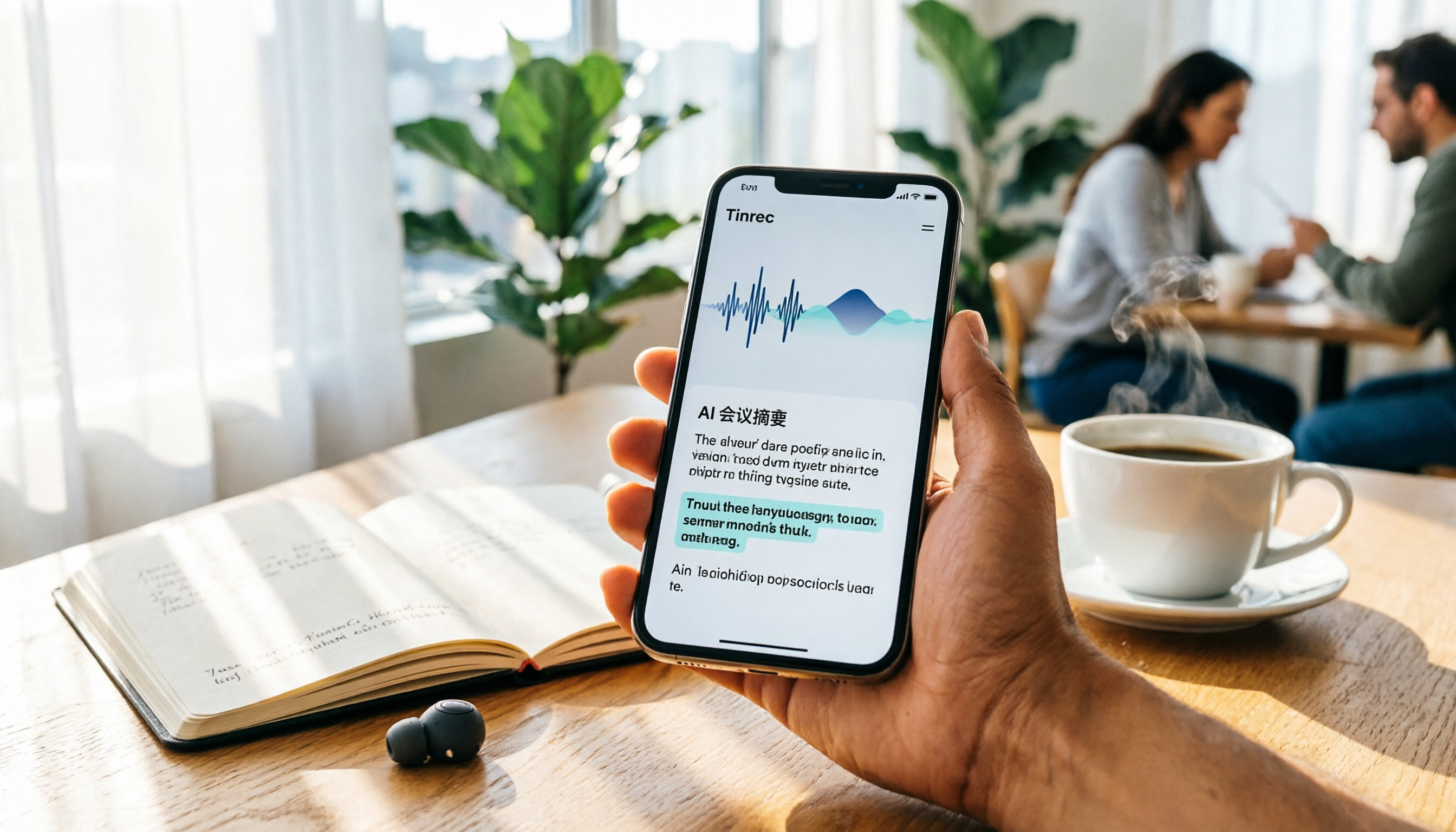
The Complete Guide to iPhone Recording in 2026: From Finding Audio Files to AI Meeting Notes
Where do iPhone recordings go? This guide shows you how to locate Voice Memos and call recordings, compares built-in tools with third-party apps like Tinrec, and helps you choose the best recording management solution.

2026 Test: 4 Best Voice-to-Text Tools for iPhone Recording Transfer & AI Meeting Notes
Struggling to transfer large iPhone voice memos to your computer? We tested 4 voice-to-text tools for transfer convenience, Chinese transcription, AI meeting notes, and team collaboration to find which one saves you the most time on meeting minutes.

Where Are iPhone Voice Recordings Stored in 2026? Find Them in 3 Steps and Organize with AI
iPhone voice recordings are saved in the Voice Memos app by default and can only be found in the Files app after you export them. This article shows you how to locate your recordings in 3 steps and recommends 6 tools, including Tinrec, to turn your recordings into searchable, collaborative text.
2026 Guide: 5 Free Ways to Manage iPhone Voice Memos
iPhone voice memos are stored in the Voice Memos app by default. This article covers 5 free solutions to help you locate and manage your recordings, including AI tools like Tinrec for transcription and organization.

iPhone Voice Memos vs Tinrec in 2026: A 4-Dimension Comparison for Meeting Notes
This article compares iPhone's built-in Voice Memos with Tinrec's instant recording feature, analyzing four dimensions: recording and transcription, meeting organization, team collaboration, and cross-platform export, to help you choose the best meeting notes tool.
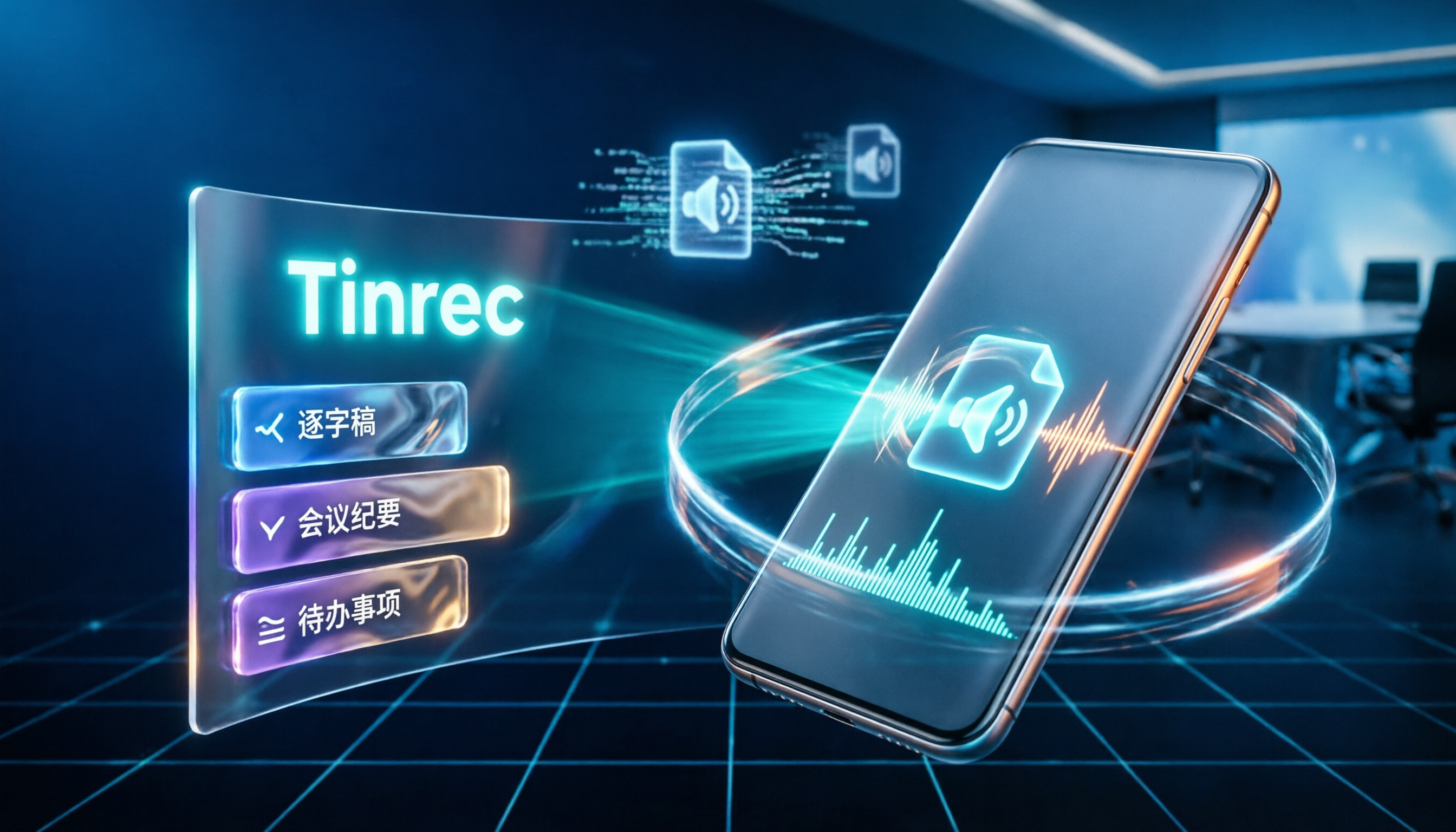
iPhone Recording Files: Where They Are and How to Auto-Generate Meeting Minutes (2026 Tested)
Wondering where your iPhone recordings are stored? Many users can't find them because they're saved only in the Voice Memos app by default. This hands-on comparison covers the native export method and Tinrec AI recording assistant, showing you how to quickly locate your recordings and automatically convert them into transcripts, summaries, and to-do lists.

Best iPhone Voice-to-Text Apps in 2026: Built-in Free vs Tinrec
iPhone's built-in Voice Memos can now transcribe recordings for free, but for meeting summaries, task management, and team collaboration, Tinrec is a more complete choice. This article compares the two and provides step-by-step instructions.

2026 iPhone Voice Recording Loop Test: 3 Steps to Repeat Playback with a Free App
The iPhone's built-in Voice Memos app doesn't support repeat playback. Want to loop your recordings? We tested using the free player KMPlayer to import audio files, and it takes just 3 steps. You can also adjust speed and EQ. Includes comparisons with other methods and a pitfall guide.