
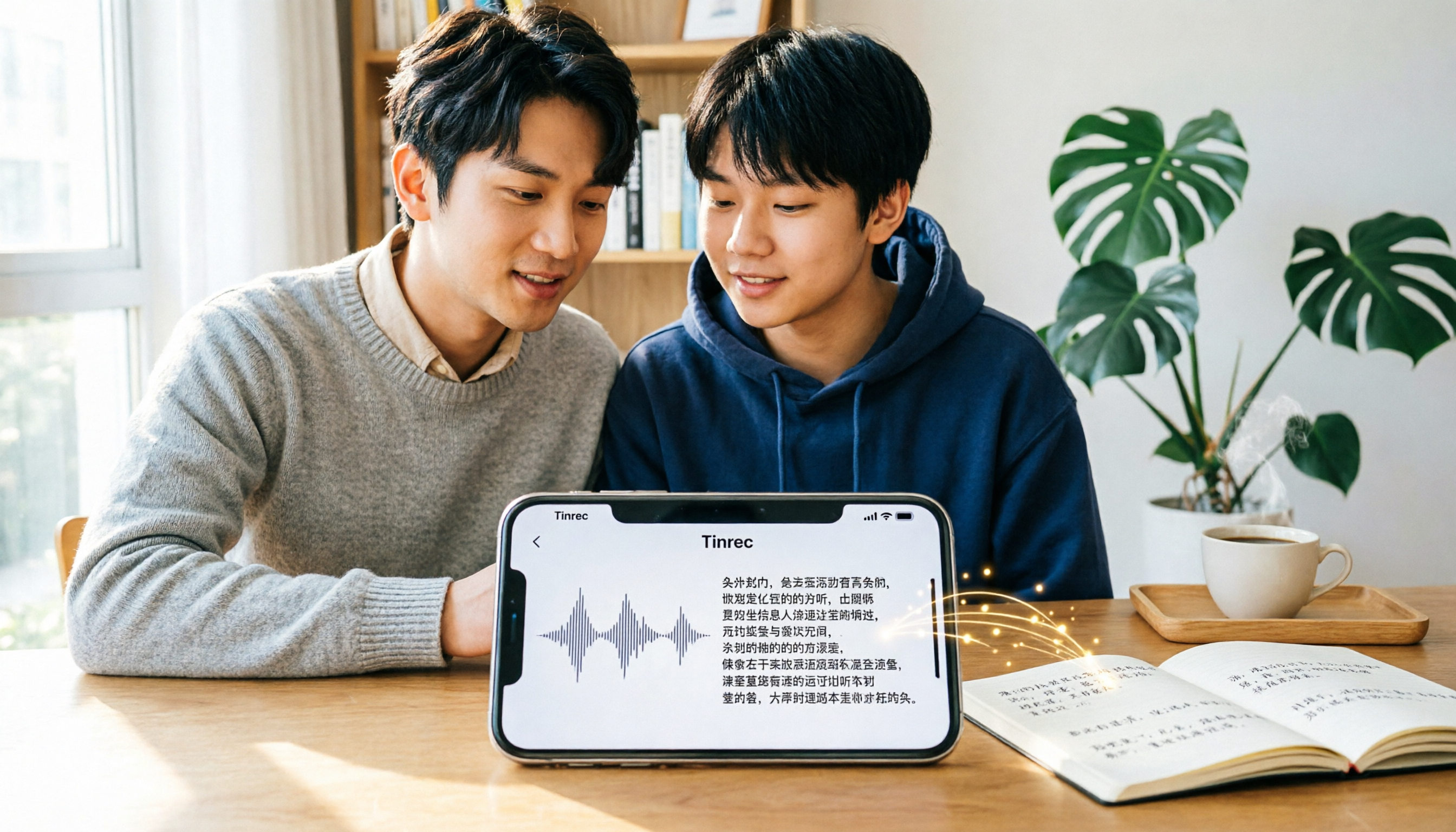
Turn recordings into transcripts and summaries in minutes
Upload audio or video for multilingual transcription, AI notes, and action items
Before Finals: You Don't Just Need to 'Export'—You Need to 'Use' the Recording
Before midterms, you open your iPhone Voice Memos and realize you've recorded the entire semester's lectures, but you're stuck at 'how to get the audio files out.' Even if you successfully export them as m4a via AirDrop or the Files app, what then? How do you listen to dozens of audio files? Where are the key points? Not to mention using them for notes or review.
What you need isn't just 'exporting'—it's a workflow that lets you 'actually use' the recordings after export. This article first briefly reviews the most common ways to export iPhone recordings, then tests 4 voice-to-text apps to help you turn Voice Memos into searchable, highlightable study material.
Before Choosing a Voice-to-Text App, Understand These 4 Key Points
Can it upload audio files directly?: iPhone Voice Memos export as .m4a, so the tool must support importing local audio files. Some tools only support live recording, not file upload, meaning your old recordings are useless.
Chinese transcription quality: Classroom recordings often mix Chinese and English, even Taiwanese or technical terms. Don't rely on official accuracy claims; test with your own recordings. We tested with a 5-minute Chinese classroom recording (with background noise).
AI summarization capabilities: If it just converts speech to text, you still have to read everything from start to finish. Ideally, it should automatically provide summaries, key points, and action items, or even let you ask 'Did the teacher mention the exam scope?'
Free tier: Students have limited budgets, so the monthly free minutes matter. Some tools only allow 3-minute uploads per session, which is nowhere near enough for a class.
Tinrec (秒听录音) — Our Top Pick After Testing
Tinrec is an AI meeting notes and collaboration tool designed for individuals and teams, supporting iOS, Android, and web. It can directly upload m4a files exported from iPhone. I uploaded my classroom recording, and within a minute, it generated a transcript and automatically created summaries and chapters. The ten key points the teacher mentioned were listed out, so I didn't have to re-listen to anything.
What impressed me most is the AI chat query. You can ask Tinrec directly: 'Did the teacher specify the format for the final report?' It doesn't just return keyword search results—it answers like a human, even citing the timestamp. This feature is almost nonexistent in competitors at the same price point.
If you have online group discussions, Tinrec's bot-free meeting recording is also practical. The desktop version records computer system audio directly, without needing a separate meeting bot, and works with Zoom, Meet, and Teams. After recording, it generates transcripts and action items, and you can share files to the team space where members can view and ask questions—no more 'I forgot the last meeting's conclusions.'
Stop organizing recordings by hand
Upload audio or video and automatically get a transcript, summary, and action items
Pros: Multi-platform, supports uploading old recordings, comprehensive AI post-processing, easy export (to Google Docs, Notion). Limitation: The free tier has limited minutes; heavy users need to pay. But if you only occasionally organize recordings, the free version is definitely enough to start. It's ideal for students and professionals who need to convert iPhone recordings, lectures, or meetings into text and want AI to find key points.
Beyond Tinrec: What Other Options Are There?
Otter.ai: Best for English meetings; the free tier offers 300 minutes per month, which is generous. However, Chinese classroom transcription accuracy is lower than Tinrec, and AI Q&A is weaker for Chinese content. Suitable for all-English courses or international meetings; those with Chinese needs should skip it.
Notta: The free tier allows a maximum of 3 minutes per upload, which is useless for a 90-minute lecture. The paid version has unlimited transcription, but lacks Tinrec's AI chat query, so you still have to manually go through the transcript.
Granola: A bot-free meeting notes tool, excellent for live meetings, but it doesn't support uploading pre-recorded audio files. You can't import the m4a you exported from iPhone, and it lacks Tinrec's team space and audit features, making it completely inadequate for students.
Pitfall Guide: 3 Common Mistakes When Choosing a Voice-to-Text App
Mistake 1: Only looking at official accuracy rates. Many tools claim 98% accuracy, but that's tested in a quiet studio. Real classrooms have air conditioning noise, keyboard sounds, and classmates whispering. We recommend trying the free version with your own recordings, not just relying on ads.
Mistake 2: Treating the tool only as 'speech-to-text'. If you still have to manually find key points in a 30-minute transcript, it's almost as bad as not transcribing at all. You need AI Q&A or summarization features, like Tinrec, where you can directly ask 'What's the exam scope?' to save time.
Mistake 3: Ignoring import capabilities. Some tools only support live recording, not uploading old files. The m4a you painstakingly exported from iPhone can't be processed, making the export pointless. Before choosing, confirm whether it can upload local audio files.
Summary: Which One Should You Choose?
To turn iPhone Voice Memos into searchable, organized key points, Tinrec is currently the most complete choice.
- Only English, zero budget → Otter.ai (the only exception)
- Chinese classroom recordings, need to upload m4a → Tinrec (direct import)
- Need AI Q&A, summaries, action items → Tinrec (only one with chat query)
- Team collaboration, shared discussion records → Tinrec Team version
- Frequent long recordings, don't want to spend too much → Tinrec Pro monthly plan
We recommend downloading the Tinrec free version first, uploading a classroom recording, and experiencing the convenience of AI Q&A. If you like it, consider paying; there's no need to spend money upfront.
References
Turn every recording into actionable outcomes
Get 60 free transcription minutes when you sign in. No credit card required.
Related Reading
You might also like
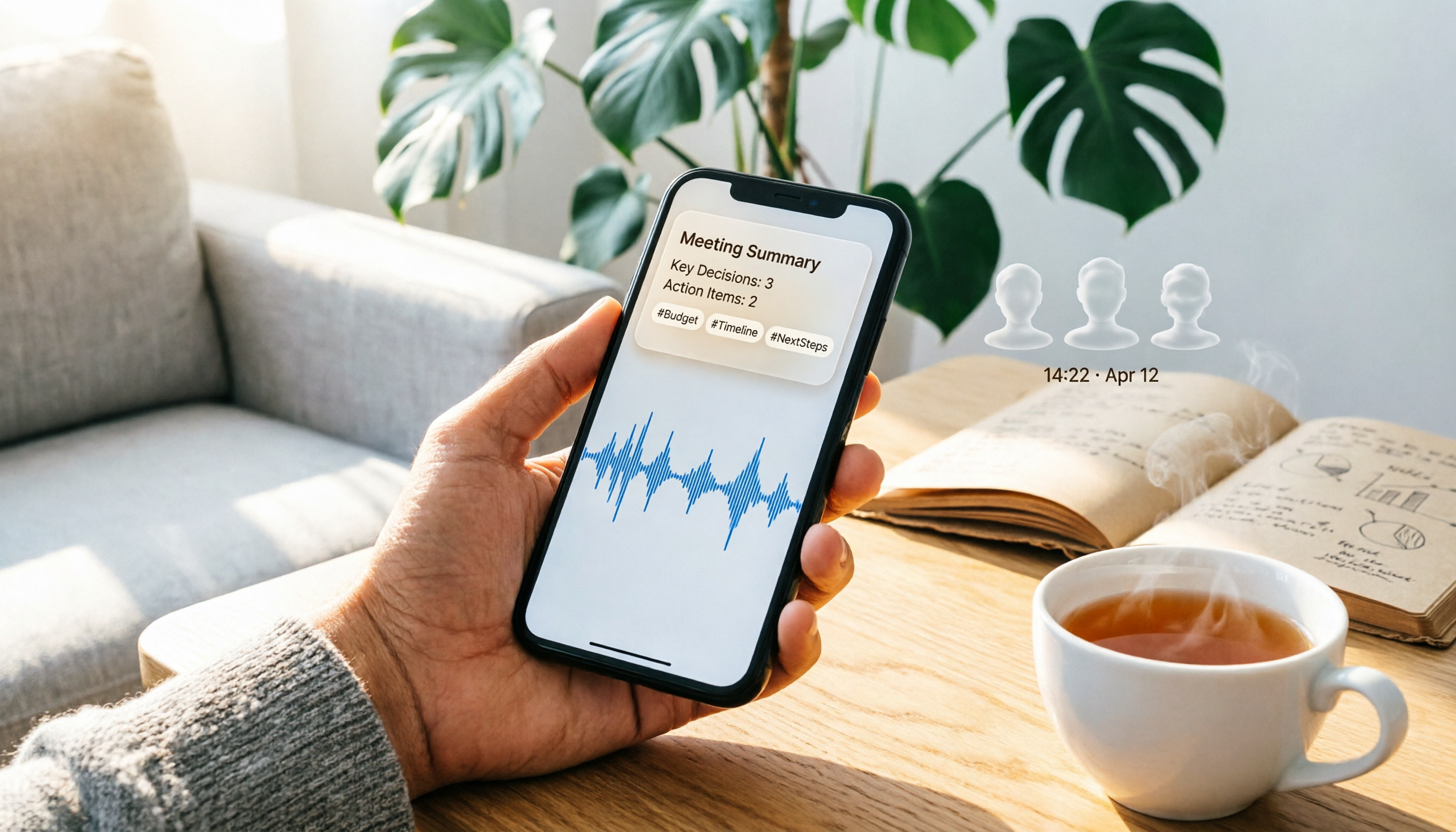
Where Are iPhone Call Recordings Stored in 2026? 5 Steps to Find Them and Organize with Tinrec
After iOS 18.1, iPhone's built-in call recording is automatically saved to the Notes app, but finding the file is just the beginning. This guide shows you where recordings are stored, 5 steps to locate them, and how to use Tinrec to turn call recordings into searchable, summarizable, and collaborative meeting notes.

Where Are iPhone Recordings Stored in 2026? 3 Steps to Find Audio Files & Use Tinrec for Transcription
iPhone recordings are saved in the Voice Memos app by default, not in the Files app. This guide shows you how to export recordings and use Tinrec to transcribe, summarize, and manage them.
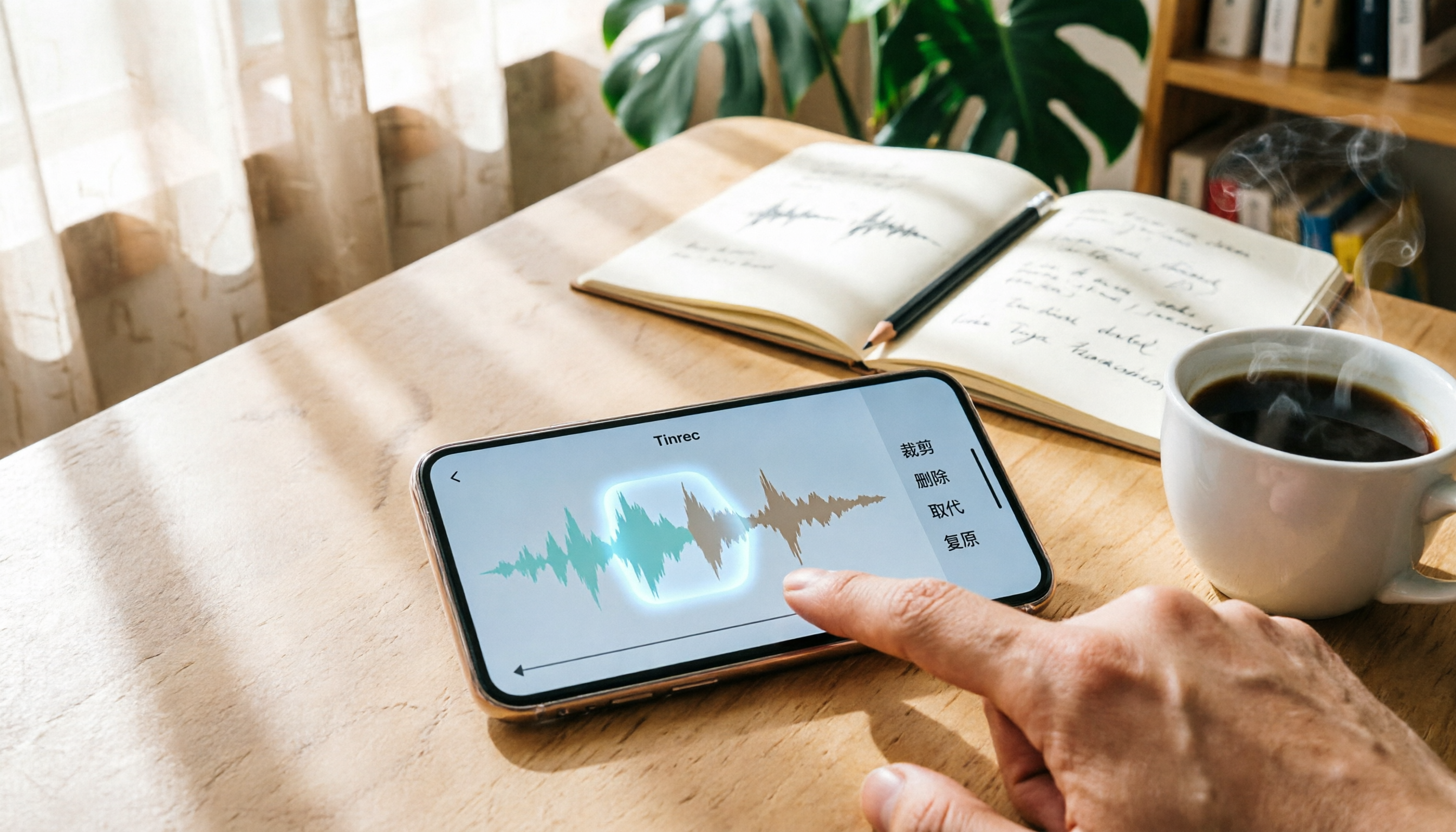
Free iPhone Voice Recording Editing in 2026: A Complete Guide
The built-in Voice Memos app on iPhone lets you edit recordings, including trimming, deleting, replacing segments, and restoring deleted recordings. Follow this step-by-step guide.

2026 iPhone Voice-to-Text App Comparison: Tinrec Saves the Most Time for Cantonese Transcription
Where is the iPhone recording feature? How do you use the built-in Voice Memos? This article tells you everything, then tests three voice-to-text tools, finding that Tinrec's Cantonese transcription and AI Q&A are the most helpful, ideal for Hong Kong office workers who want to avoid overtime transcribing meeting notes.

2026 iPhone Recording App Comparison: Turn Meetings into Data Without Hunting for a Microphone Hole
The location of the iPhone's microphone hole isn't the real issue—it's how you organize recordings afterward. This article tests 3 tools and recommends Tinrec to turn meetings into searchable, collaborative data.
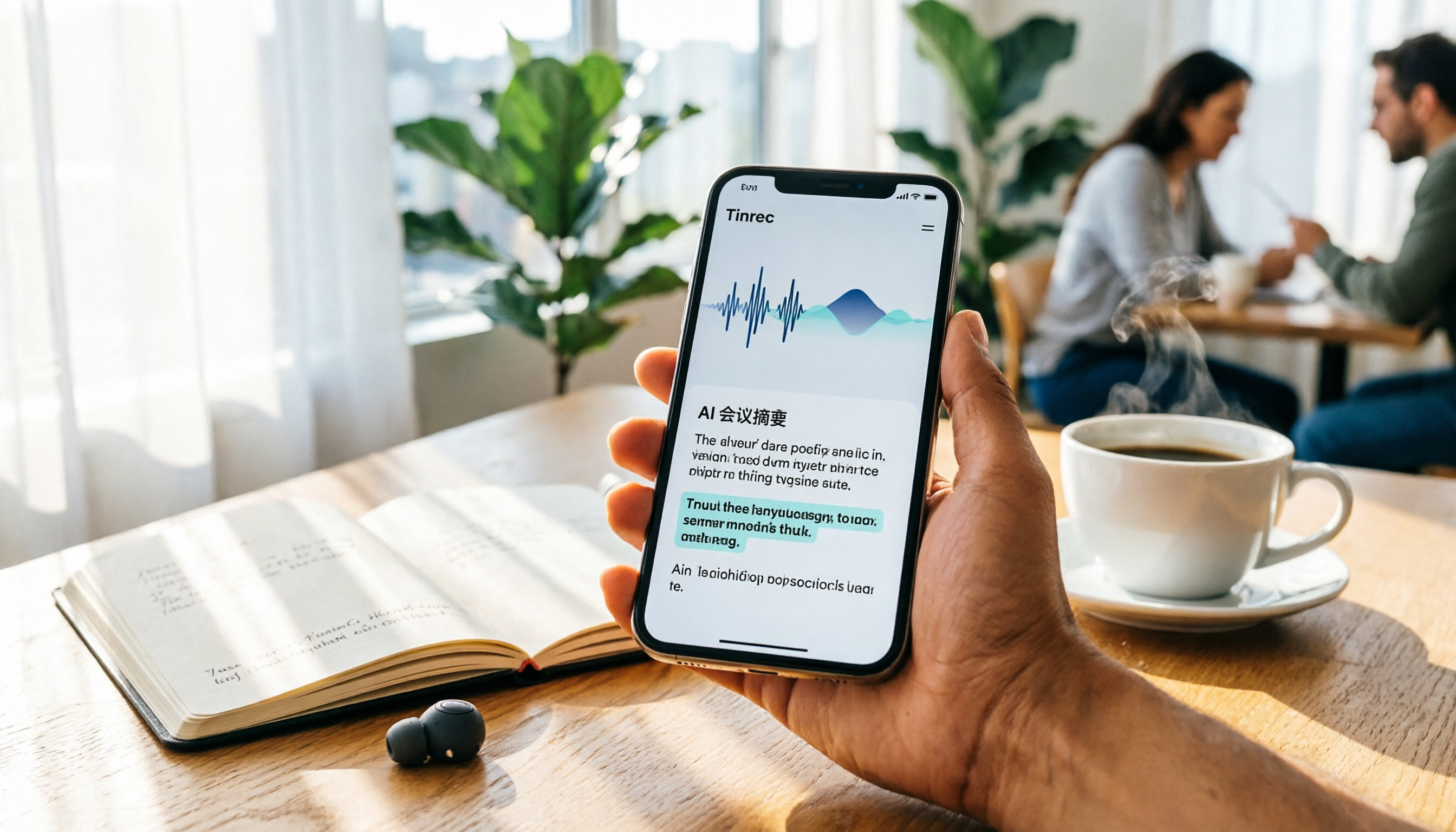
The Complete Guide to iPhone Recording in 2026: From Finding Audio Files to AI Meeting Notes
Where do iPhone recordings go? This guide shows you how to locate Voice Memos and call recordings, compares built-in tools with third-party apps like Tinrec, and helps you choose the best recording management solution.

2026 Test: 4 Best Voice-to-Text Tools for iPhone Recording Transfer & AI Meeting Notes
Struggling to transfer large iPhone voice memos to your computer? We tested 4 voice-to-text tools for transfer convenience, Chinese transcription, AI meeting notes, and team collaboration to find which one saves you the most time on meeting minutes.

Where Are iPhone Voice Recordings Stored in 2026? Find Them in 3 Steps and Organize with AI
iPhone voice recordings are saved in the Voice Memos app by default and can only be found in the Files app after you export them. This article shows you how to locate your recordings in 3 steps and recommends 6 tools, including Tinrec, to turn your recordings into searchable, collaborative text.
2026 Guide: 5 Free Ways to Manage iPhone Voice Memos
iPhone voice memos are stored in the Voice Memos app by default. This article covers 5 free solutions to help you locate and manage your recordings, including AI tools like Tinrec for transcription and organization.