

Turn recordings into transcripts and summaries in minutes
Upload audio or video for multilingual transcription, AI notes, and action items
Recorded a call on your iPhone—now what?
Last week, I had a 40-minute call with a client about project changes. I used the iPhone's built-in call recording feature, thinking, "Great, I have a record, nothing will be missed." But after the call, when I opened the transcript in Notes and saw over 10,000 words of raw conversation, my head started to ache.
Many people, like me, assume that being able to record on the iPhone solves the problem. But in reality, recording is just the first step; the real time sink is turning that recording into something usable. The iPhone's built-in transcript merely converts speech to text—no summary, no to-dos, no key points. You still have to read through everything yourself and pick out the important parts. That's essentially no different from using an old voice recorder and listening back later.
A smarter approach is: hand the audio file from your iPhone to Tinrec. Tinrec is an AI meeting notes tool that doesn't just transcribe—it also auto-generates summaries, extracts to-dos, and even lets you ask questions conversationally to find key points. That's what truly saves you time.
What can Tinrec do for you?
If you're like me and worry about missing decisions and action items in every call and meeting, Tinrec can help you with three things:
Scenario 1: Turn a call recording into an action list in 5 minutes
Simply upload the iPhone call recording (shared or exported from Notes) to Tinrec, and it will automatically transcribe it and generate a structured summary: topics, conclusions, action items, and owners—all clearly listed. I've tested it: a call that would normally take 40 minutes to organize myself, Tinrec gave me a list I could directly paste into a project management tool in about 5 minutes.
Scenario 2: Quickly find "what was said last time" before reporting to your boss
When your boss suddenly asks, "What was the client's reaction to the quote last time?" you don't need to dig through the text in your iPhone Notes. Just type in Tinrec's AI Q&A box: "What did the client think about the quote?" It will find the answer directly from the recording, complete with timestamps. This is especially handy for cross-department coordination, saving a ton of back-and-forth confirmation time.
Scenario 3: Turn all your call recordings into a searchable personal knowledge base
Tinrec stores your recordings, transcripts, and summaries in one place, so you can search and ask questions anytime. Unlike iPhone Notes, where recordings pile up into a mess, Tinrec makes every call a reusable resource.
What are Tinrec's core capabilities?
Many people think Tinrec is just a transcription tool, but its real strength lies in the organization after transcription. Here are the four features I've found most useful:
1. High-quality transcript transcription
Tinrec supports multiple audio formats. After uploading an iPhone call recording, it quickly produces a transcript and can distinguish between different speakers. While accuracy depends on recording quality, for clear phone calls, it handles mixed Chinese-English content well, saving a lot of manual proofreading time.
2. AI-structured summaries, not just condensed paragraphs
This is my favorite feature. Tinrec's summary isn't just shortening the transcript into a paragraph; it categorizes like a secretary: meeting topics, discussion conclusions, action items, decision rationale—all listed separately. You can see at a glance "who should do what and by when," without having to highlight yourself.
3. AI conversational query—just ask for the key points
After transcription, you can chat with Tinrec: "What requirements did the client mention in this call?" "What was the conclusion on the budget discussion?" It answers based on semantic understanding and even tells you where in the original text. This is far smarter than Ctrl+F keyword search.
4. Action item extraction and export
Tinrec automatically identifies action items from the conversation, such as "Reply with quote by next Friday" or "Ask purchasing to confirm inventory," and compiles them into a list. You can export directly to Notion, Google Docs, or Excel, seamlessly integrating with your existing workflow.
Real-world use cases: a professional's daily routine
Scenario 1: Client phone meetings
You're on a call with a client using your iPhone, with the built-in recording on. After the call, upload the audio to Tinrec, and it generates the transcript, summary, and to-dos. You immediately forward the action items to relevant colleagues—no need for verbal relay, and no risk of missing client commitments.
Stop organizing recordings by hand
Upload audio or video and automatically get a transcript, summary, and action items
Scenario 2: One-on-one check-ins
As a manager, you have regular one-on-ones with your reports. Record with your iPhone, then organize with Tinrec. The summary lists discussion points, agreed items, and follow-up tasks. When performance reviews come around, you can look back with evidence, no fuzzy memories.
Scenario 3: Cross-department coordination meetings
Online meetings are usually on a computer, but if you're out and only have your phone, you can still record with the iPhone (or use Tinrec's mobile recording feature). After the meeting, Tinrec automatically separates action items by department, and you can paste the list into the group chat, cutting down on "Who was supposed to do that?" messages.
Scenario 4: Interviews or research recordings
If you're a content creator or researcher, record interviews with your iPhone, import them into Tinrec, and use AI Q&A to quickly locate quotes or data from interviewees—no more manual transcription. The mind map feature also helps you outline the interview structure.
5 things to consider when choosing a recording organization tool
There are many voice-to-text tools out there, but not all are suitable for handling iPhone call recordings. Here are my criteria, and how Tinrec measures up:
1. Does it support audio file upload?
iPhone's built-in call recordings are stored in Notes, so you need a tool that can export audio files. Tinrec supports uploading various audio and video formats, and you can share the audio directly from Notes to Tinrec—intuitive.
2. Post-transcription organization capabilities
Tools that only provide a transcript have limited value. Tinrec's auto-summary, action item extraction, and AI Q&A are what truly save time. You're not buying transcription; you're buying post-meeting organization.
3. Chinese and mixed Chinese-English recognition quality
Many English tools start to fail with Chinese meetings. Tinrec specifically emphasizes Chinese and multilingual meeting experiences, handling mixed content well—important for the Taiwanese workplace.
4. Cross-platform and export flexibility
You might record on your iPhone but need to view summaries on your computer and export to company tools. Tinrec has iOS, Android, and web versions with data sync, and supports export to Notion, Google Docs, OneNote, etc., so you're not locked into one platform.
5. Is the free tier enough to try?
Tinrec's free version offers basic credits, so you can upload a few call recordings to test the results. If you record more than three times a week like I do, consider the Pro or Team plans—still cheaper than hiring a part-time assistant.
FAQ
Q1: Can I upload iPhone call recordings directly to Tinrec? Yes. iPhone's built-in call recordings are saved in "Voice Memos" or "Notes" (depending on iOS version). You can share the audio from there, choose Tinrec, or save it to Files first and then upload. Tinrec supports common audio formats, so there's no barrier.
Q2: Can Tinrec directly record iPhone phone calls? No. Due to iOS system restrictions, third-party apps cannot directly record phone calls. But you can use the iPhone's built-in feature to record, then upload the audio to Tinrec for organization. Alternatively, if you need to record in-person meetings or interviews, Tinrec's mobile app can record directly and transcribe in real time.
Q3: How accurate is Tinrec? Actual accuracy depends on recording quality, background noise, accents, and overlapping speech. For clear phone recordings, Chinese transcription quality is quite good, but we still recommend verifying important content against the original recording. Tinrec's value is in drastically reducing manual organization time, not fully replacing human review.
Q4: Is the free version enough? If you only occasionally organize a call or two, the free tier's credits are sufficient for a trial. But if you have regular weekly meetings or call recordings, upgrading to Pro is more cost-effective—the time saved far exceeds the monthly fee. The Team plan is suitable for departments that need to share meeting notes and manage members.
Q5: Do I need consent from the other party to use Tinrec for recordings? Recording and transcription involve privacy and legal issues. In Taiwan, if you are a party to the call and recording is for a legitimate purpose (like documenting work), it's generally legal, but it's still advisable to inform the other party and obtain consent to avoid disputes. Tinrec itself does not handle the legality of recordings; users must comply with local laws.
Conclusion: Don't let recordings just sit in Notes
iPhone's built-in call recording solves the "can't record" problem, but "what to do after recording" is the real challenge. Tinrec makes it simple: upload the audio, and it transcribes, summarizes, extracts to-dos, and even lets you dig out key points through conversation. For professionals drowning in meetings and calls every week, this isn't a luxury—it's a necessity.
If you haven't tried it yet, use the free version to organize one call recording and experience the feeling of "getting an action list 5 minutes after the meeting." Once you realize you no longer have to stay up late organizing transcripts, you'll understand why I recommend Tinrec.
References
- #iPhone Call Recording - Apple forum | Dcard
- [Phone Tip] LINE can now record calls! iPhone built-in call recording secret, no notification to the other party! - Jason Communication (@jason89908738) | Dcard
- Record and transcribe calls on iPhone - Apple Support (Taiwan)
- [Phone Tip] 2026 iPhone built-in "Call Recording" feature tutorial! iOS call recording/attention points guide | Jason Communication~Challenging the lowest price in the phone market
- iPhone Call Recording Tutorial: Learn to Record Calls Step by Step
Turn every recording into actionable outcomes
Get 60 free transcription minutes when you sign in. No credit card required.
Related Reading
You might also like

How to Record Audio on Mac in 2026: 5 Steps from Recording to AI-Powered Organization
Recording audio on a Mac is easy, but the hard part is transcribing and organizing the content afterward. This article teaches you how to quickly record with built-in tools and compares Voice Memos, QuickTime, and Tinrec to help you choose the right tool.

4 Mac Recording Tools Tested in 2026: Why Tinrec Is the Top Notta Alternative?
Can you record audio on a Mac? Of course, but the real pain point is what comes after. From a mid-level manager's perspective, this article compares Mac's built-in recording, Notta, and Tinrec, explaining why Tinrec is better suited for professionals who need meeting minutes and team collaboration.

Tinrec vs iPhone Voice Memos in 2026: A 5-Dimension Showdown for Singers—Which Saves You More Time?
Tired of piling up voice recordings on your iPhone after singing sessions, only to struggle finding the important bits? This article, from a mid-level manager's hands-on perspective, compares Tinrec and iPhone Voice Memos across 5 key differences in recording organization, showing you how to turn creative sparks into searchable, trackable digital assets.

2026 Mac Recording Tools Compared: Tinrec AI Meeting Notes Save the Most Time
Can you record audio on a Mac? Yes, but how do you record smartly? We tested Tinrec, QuickTime, and Voice Memos to tell you which one saves the most time.

2026 iPhone Call Recording Apps Compared: Does Tinrec, the AI Transcript Tool Hailed on PTT, Really Save Time?
iPhone call recording is limited by iOS, and PTT users often ask how to record both sides of a conversation. This article tests iOS 18's built-in feature, external devices, and AI tools like Tinrec, Otter, and Notta, showing you how to quickly convert recordings into transcripts, summaries, and to-dos, avoiding the nightmare of relistening to calls.

2026 iPhone Voice Recording Interruption Fix: 4 Alternative Apps Tested – Which One Offers Stable Recording and Auto-Organization?
Tired of iPhone voice memos cutting out? We tested 4 alternative recording apps, comparing stability, cross-platform support, AI organization, and free tiers to help you find the best choice.

How to Use iPhone Call Recording in 2026? 5-Step Complete Guide
iPhone's built-in call recording has finally arrived, but it comes with many limitations. This article teaches you 5 steps to activate iOS 18 call recording and compares it with Tinrec across 5 dimensions, revealing which one truly helps Hong Kong professionals with meeting notes.
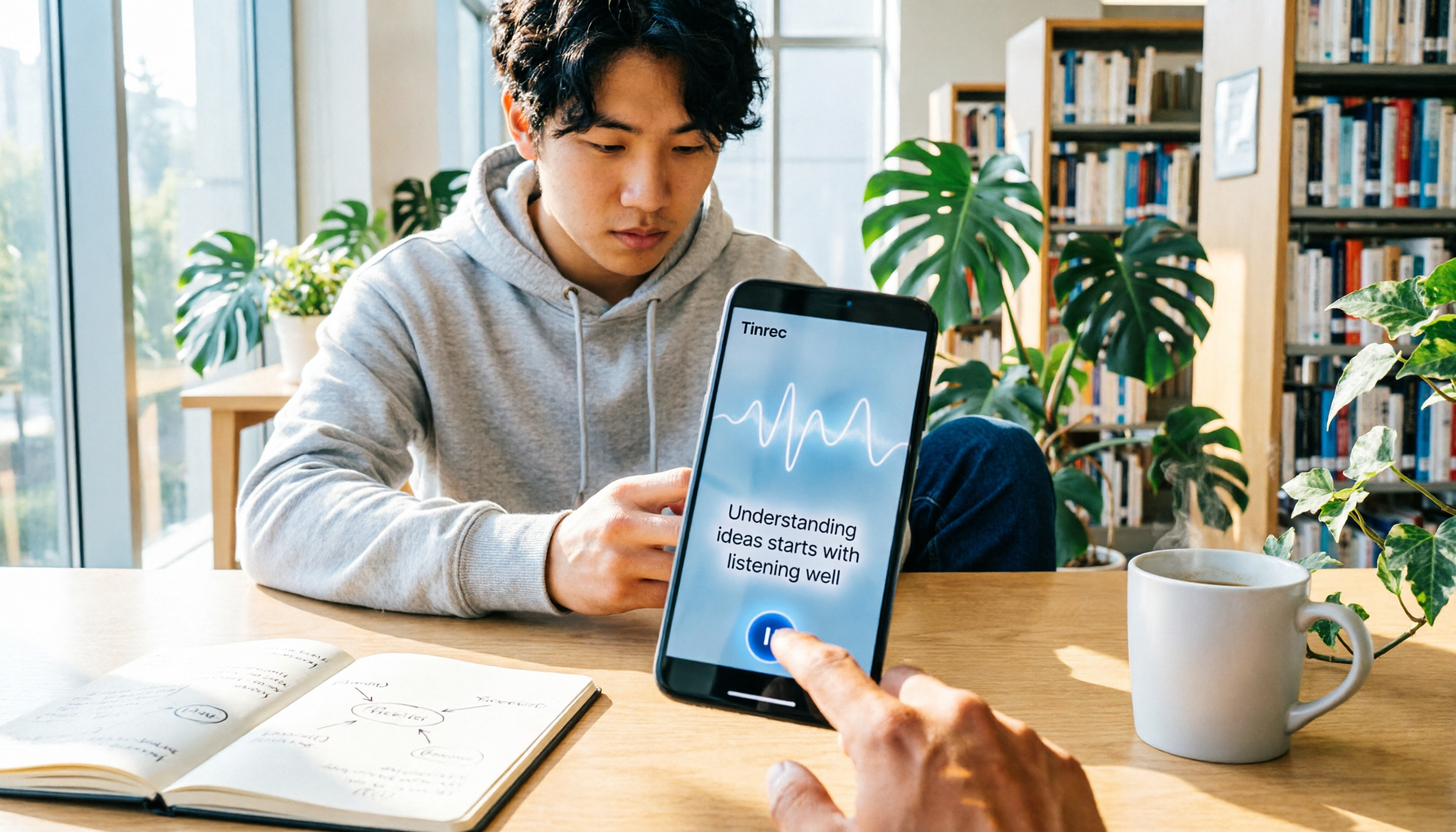
The Complete 2026 Guide to Plaud Recording: A 5-Dimension Comparison with Tinrec and Buying Advice
From a student's perspective, this guide compares Plaud recording hardware with Tinrec recording software across five key dimensions: recording methods, online meetings, transcription accuracy, AI organization, and pricing—helping you decide whether to buy a voice recorder or use a free app.

2026 Mac Free Recording Software Comparison: Which Wins for Recording + AI Transcription?
On Mac, free recording is possible with built-in QuickTime and Tinrec's free version, but one just records while the other helps you organize. This comparison across 5 key aspects helps you decide which suits meetings, interviews, and daily recording needs.