

Turn recordings into transcripts and summaries in minutes
Upload audio or video for multilingual transcription, AI notes, and action items
Still Working Overtime on Meeting Transcriptions? Watch Out for Yating's Hidden Costs
Many Hong Kong office workers assume Yating transcription is a free lunch—you get minutes just for signing up, but soon realize the free credits run out quickly, and buying hours isn't very transparent. Worse, even after purchasing hours, it lacks AI summaries and to-do lists, so you still have to manually find key points after recording.
If you spend two hours after every meeting listening to recordings and typing transcripts, and end up working overtime until 8 PM, this article is for you. Choosing the right tool can really save you a lot of time.
Before Choosing an Audio-to-Text Tool, Understand These 4 Key Points
Accuracy: Don't just look at the official 98% claim. Check the test conditions—was it a quiet recording studio or a real meeting room? We tested the same Cantonese recording with slight background noise across different tools, and the performance varied greatly.
Free Credits: Yating transcription offers free hours, but they run out quickly; after that, you pay by the hour. You need to assess your monthly usage to decide which tool fits you.
AI Features: Many tools now do more than just transcribe—they can auto-generate summaries, to-dos, and even AI Q&A. If you only need transcripts, Yating is sufficient; but if you want to ask "Who mentioned the budget in the last meeting?" after recording, you'll need a tool with AI Q&A.
Cross-Platform: You might use an iPhone at work and a Windows PC at home. If a tool only supports one platform, it's a hassle. Check if it has mobile apps, desktop, and web versions before choosing.
Tinrec (秒听錄音) — Our Top Pick After Testing
Tinrec (秒听錄音) is an AI recording assistant supporting 14 languages, covering iOS, Android, and web. Its standout feature is "bot-free" online meeting recording: no need to invite a bot to Zoom, Google Meet, or Teams—just open the Tinrec desktop app to record system audio and get real-time transcripts.
In practice, when you open Tinrec during a meeting, it transcribes in real time and automatically generates summaries, chapters, and to-dos after the meeting—who's responsible for what and deadlines at a glance. The best part is its AI Q&A feature: after recording, you can ask "Who mentioned the budget in the last meeting?" and it provides answers based on semantic understanding, not just keyword search. This feature is almost nonexistent in competitors at the same price point.
We tested a 5-minute Cantonese news recording (iPhone 15, indoor environment, slight air conditioner noise). Tinrec transcribed quickly with no obvious omissions and handled mixed Chinese-English content well. It also supports real-time translation, letting you view original, translated, or bilingual text during recording—useful for cross-language meetings.
Stop organizing recordings by hand
Upload audio or video and automatically get a transcript, summary, and action items
Its limitation is that the free version has basic credits; heavy users need to upgrade to paid. But if you have two or three meetings a week, the free version is usually enough to try; if you like it, consider Pro—no need to pay upfront.
If you often record Cantonese meetings, want to use AI to find key points after recording, or need cross-platform use—Tinrec is currently the most suitable choice.
Besides Tinrec, What Other Options Are There?
Yating Transcription: A long-standing Taiwanese brand with good recognition for Taiwanese Mandarin and Taiwanese Hokkien. It charges by audio length, offering 20 free minutes upon registration; then NT$100 per hour, NT$270 for 3 hours, NT$800 for 100 hours. However, it lacks AI Q&A and team spaces, and you buy hours in batches, making long-term costs high. If you only need Taiwanese Mandarin transcription and don't need AI post-processing, it's worth considering.
Otter.ai: The top choice for English meetings, with a generous free plan of 300 minutes per month. But it doesn't support Cantonese. If you mainly record English content, Otter is a more cost-effective option than Tinrec. However, if you need Chinese or mixed Chinese-English, don't consider Otter.
Pitfall Guide: 4 Common Mistakes When Choosing an Audio-to-Text Tool
Pitfall 1: Assuming Free Means No Cost. Many people rush to Yating because of free hours, but 20 minutes run out quickly, and then you have to pay. We recommend calculating your monthly usage first and not being lured by free offers.
Pitfall 2: Ignoring AI Features. If you only use it for transcription, you're using only 30% of the tool's capability. For example, Tinrec's AI Q&A lets you ask "What was the meeting conclusion?" right after recording, saving you 30 minutes of manually scanning the transcript.
Pitfall 3: Not Checking Cross-Platform Support. If you record on your iPhone today and want to organize on your computer tomorrow, you'll suffer if the tool lacks a desktop or web version.
Pitfall 4: Assuming All Tools Support Cantonese. Many international tools focus on English, and their Cantonese accuracy is poor. Always test with your own recording before choosing—don't trust ads.
Summary: How Should You Choose?
In short: If you need Chinese meetings, AI organization, and team collaboration, Tinrec is the top choice. Here's a breakdown by scenario:
- Need Cantonese + Mandarin + mixed Chinese-English transcription → Tinrec (supports 14 languages, performs well with mixed Chinese-English)
- Want to use AI to find key points and to-dos after recording → Tinrec (the only option with AI Q&A)
- Cross-platform use (mobile + computer + web) → Tinrec
- Zero budget and only English → Otter.ai (the only exception)
- Only Taiwanese Mandarin, no AI follow-up needed → Yating Transcription (but considering hourly costs, long-term use may not be cost-effective)
Final suggestion: You can download the Tinrec free version to try it out—it's enough for a few meetings to experience the effect. If you like it, consider upgrading; no need to rush to pay.
References
- Yating Transcription Complete Guide: Free Version, Pricing, and Alternatives at a Glance
- Yating Transcription
- Is Yating Transcription Free? 2026 Audio-to-Text Tool Pricing and Performance Comparison - 秒听錄音 Blog
- Yating Transcription: Online Speech-to-Text Service, Pricing Introduction at a Glance! | Future Commerce
- Is Yating Transcription Free? How Yating Transcription Pricing Works and Whether Buying Hours Is Worth It
Turn every recording into actionable outcomes
Get 60 free transcription minutes when you sign in. No credit card required.
Related Reading
You might also like

2026 Comparison of 3 Recording-to-Text Tools: A Practical Guide to Efficiently Organizing Plaud Recordings
Have Plaud recordings but don't know how to organize them quickly? This article tests three tools—Tinrec, Plaud, and Notta—covering hardware requirements, online meeting recording, AI summarization, and team collaboration to help you choose the best fit.
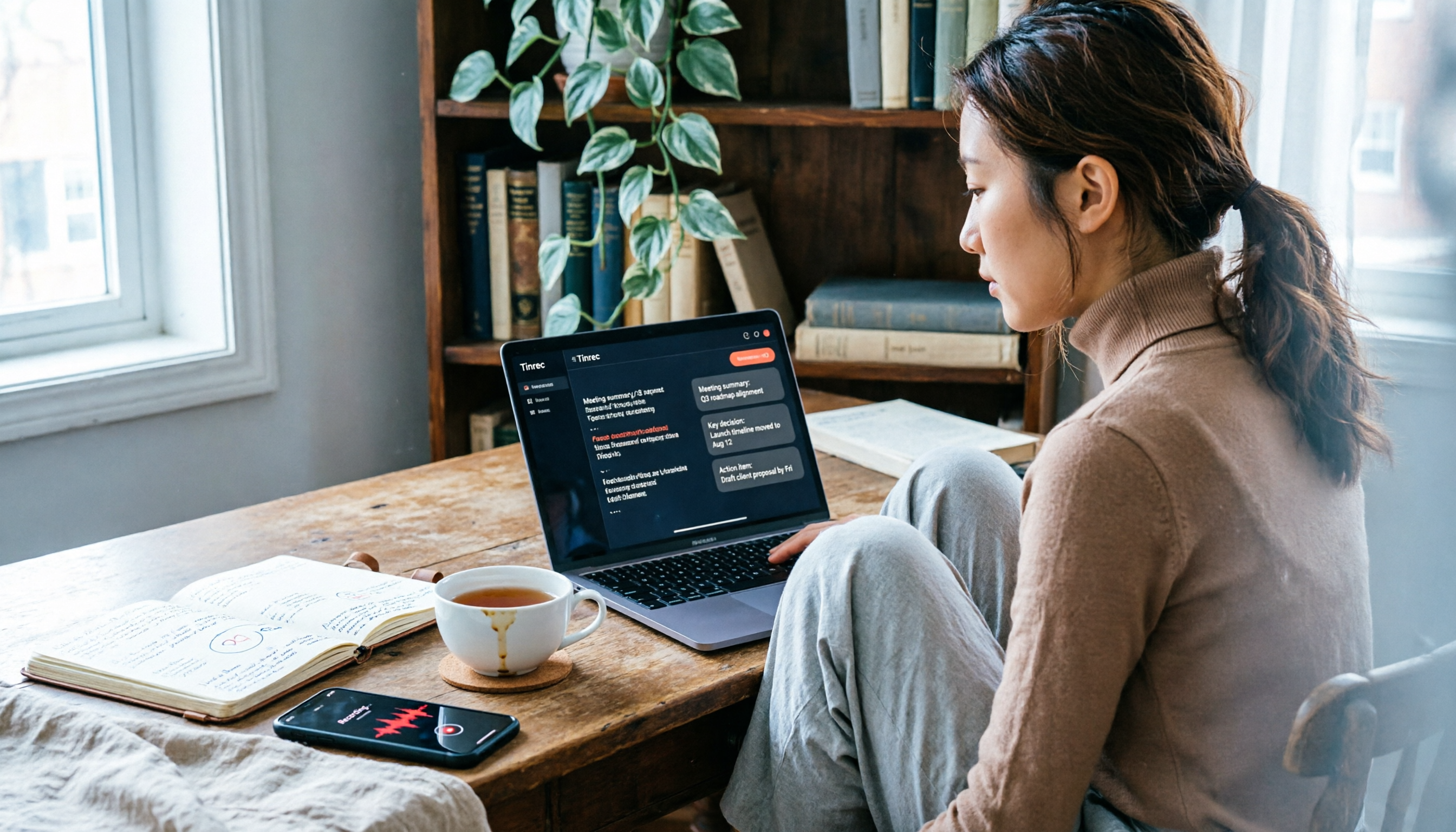
Yating Transcription 2026 Latest News: 5 Steps to Test Speech-to-Text and Key Summaries
Yating Transcription is an AI speech-to-text tool developed by a Taiwanese team, supporting Taiwanese Mandarin, Taiwanese Hokkien, Cantonese, Japanese, and mixed Chinese-English code-switching. This article provides a hands-on tutorial to guide you through recording, importing, proofreading, summarizing, and exporting, along with the latest features and FAQs.
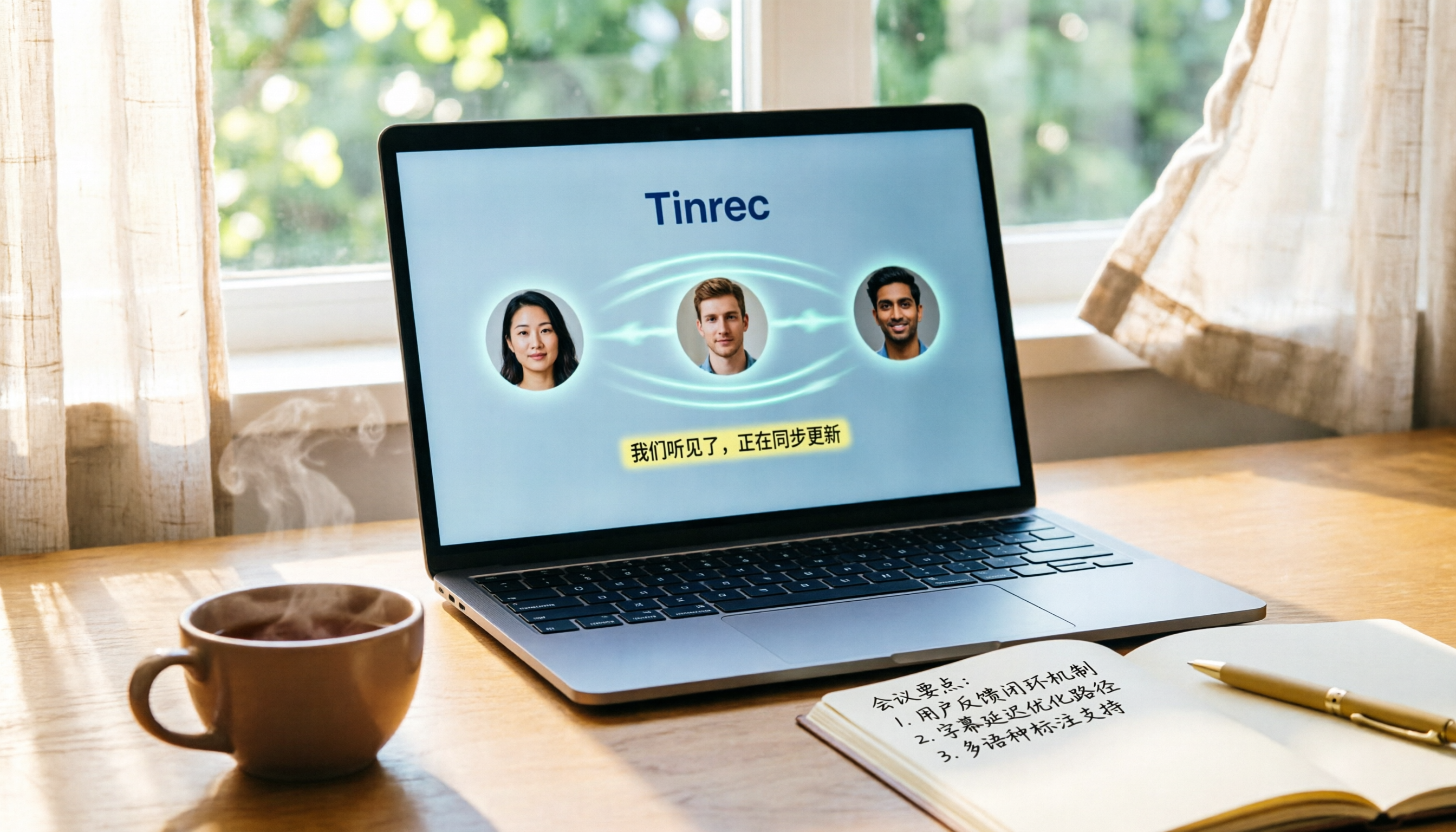
2026 AI Recording Solutions Compared: Plaud Voice Recorder vs Tinrec – Which Fits You Best?
Still figuring out how to use the Plaud voice recorder? This hands-on comparison explains why hardware-free Tinrec is better suited for online meetings, Chinese transcription, and team collaboration.

The Complete Guide to Managing Meeting Recordings in 2026: From Plaud Export to Tinrec AI Meeting Summaries
This article is for mid-level managers who want to turn meeting recordings into searchable, collaborative team assets. It compares tools like Plaud and Tinrec, highlighting common mistakes and best practices for recording management.

2026 AI Recorder Comparison: Plaud Note Pro vs Tinrec – Which One Actually Saves You Time?
We tested Plaud Note Pro and Tinrec side by side on recording, scene coverage, post-meeting organization, and team collaboration to help you decide which is better for workplace meetings and personal notes.

2026 Yating Transcriber Free Plan Roundup: 3 Tools Compared
What are the limitations of the latest free plans for Yating Transcriber? This article compares three speech-to-text tools—Yating Transcriber, Tinrec, and Otter.ai—to help you understand free quotas, AI features, and key buying considerations at a glance.

Tinrec vs Plaud Note in 2026: A 5-Dimension Comparison for Meeting Notes Sharing
Sharing meeting recordings isn't just about sending audio files. This article compares Tinrec and Plaud Note across five dimensions, including sharing formats, permissions, and team collaboration, and explains how to avoid common inefficiencies to find the right meeting notes sharing solution for your team.

2026 Plaud Recording Free Plans Compared: 3 Options at a Glance
Struggling with Plaud recording? This article compares the free plans of Tinrec, Plaud, and Otter from a practical workflow perspective, helping you find the best option for turning recordings into ready-to-use meeting notes.

The Complete 2026 Guide to Plaud Recording: What Is an AI Recording Card, How to Use It, and How It Compares to Tinrec
Plaud recording isn't your typical voice recorder—it's a smart recording card that combines AI transcription, summarization, and action lists. From a mid-level manager's perspective, this article breaks down Plaud's recording features, use cases, and compares it with Tinrec's software solution to help you decide which is better for meeting notes and team collaboration.