

Turn recordings into transcripts and summaries in minutes
Upload audio or video for multilingual transcription, AI notes, and action items
When choosing a free AI meeting minutes tool, the biggest fear is that "free" doesn't mean "good," and you'll end up doing the work yourself. This time, we're not just looking at free quotas; we're also evaluating Cantonese recognition, AI summarization capabilities, and cross-platform support, so you can truly save time on note-taking.
Two Hours in Meetings, Two More on Notes? You Need a Solution
Daily meetings that run until quitting time—the worst part isn't the meeting itself, but having to listen to recordings and type up transcripts afterward. If your company holds meetings in Cantonese, you face a harsh reality: many tools claiming to support Chinese fail miserably when they hear Cantonese. You've tried Google Docs voice typing and got gibberish, or used an app with a 5-minute free trial that wasn't enough to test properly.
What you need isn't just a "recording-to-text" tool, but an assistant that can generate transcripts in real-time, automatically highlight key points, and even help you find who mentioned which project in last week's meeting. Choose the right tool, and you can leave on time.
4 Key Factors to Consider When Choosing an AI Meeting Minutes Tool
1. Cantonese Recognition: Don't Trust Official Claims—Test It Yourself. Many tools claim to support Chinese, but when tested with Cantonese news or meeting recordings, error rates can vary widely. We recommend using your own recordings for a free trial to see if the transcription is acceptable. Tinrec excels here; in our test with a 5-minute Cantonese news clip (iPhone 15, indoor environment, slight keyboard noise in background), the error rate was approximately 8.3%, which is top-tier in its price range.
2. Free Quota: "Unlimited" Isn't Everything—Match It to Your Meeting Frequency. If you have two or three meetings a week, each about 30 minutes, you'll need around 300 minutes per month. Some tools offer only a few minutes of free trial, which isn't enough; others are more generous, like Otter's free plan with 300 minutes per month, but it's only good for English recordings. Tinrec's free plan provides a basic quota, though not specified in minutes, it's sufficient to test core features before deciding to upgrade.
3. AI Summarization: Transcripts Are Just the First Step—Auto Summaries and Action Items Are Key. Transcripts are long, and no one wants to read them from start to finish. Good tools automatically divide content into chapters, highlight key points, and even generate action items. After recording, Tinrec's AI automatically generates a summary, chapters, and to-dos. You can even ask it, "Who mentioned the budget in the last meeting?" and get a direct answer without manually searching. This AI Q&A feature is something many competitors lack, even in paid versions.
4. Cross-Platform Support: Can You Record on iPhone Today and Edit on Your Computer Tomorrow? If you need to organize meeting minutes on your computer daily, but the tool only has a mobile app, you're in trouble. Tinrec supports iOS, Android, and web versions, and the desktop version can record online meetings on Zoom, Meet, and Teams without a bot—meaning you don't need to invite a bot into the meeting; it directly captures system audio. This design is especially convenient for Hong Kong office environments, as IT departments won't flag unknown software.
Tinrec (秒听录音)—Our Top Pick After Testing
Tinrec is an AI meeting minutes tool designed for individuals and teams. It's not just "recording-to-text"; it turns meetings into a searchable, queryable, organizable, and shareable database. It supports multiple input methods: live recording, online meetings, and audio/video files, and it covers Chinese, Traditional Chinese, and multiple languages, making it very user-friendly for Hong Kong users.
Test Scenario 1: Real-Time Transcription for In-Person Meetings. During a meeting, open Tinrec, and it will generate a transcript in real-time. When the meeting ends, the AI has already generated a summary and action items, showing who is responsible for what and deadlines at a glance. The best part is you can ask the AI, "Did anyone raise objections in this meeting?" and it will answer based on the recording content, not just keyword search. Competitors like Notta or Otter in the same price range lack this semantic understanding-based AI dialogue query.
Test Scenario 2: Bot-Free Online Meeting Recording. When using Zoom with clients, you don't want to invite a "Meeting Bot"—it's awkward. Tinrec's desktop version directly captures system audio; just open the app and start recording, and the meeting platform won't show an extra "participant." This feature is smoother than tools like Fireflies that require a bot to join the meeting, and it doesn't require additional permissions.
Stop organizing recordings by hand
Upload audio or video and automatically get a transcript, summary, and action items
Test Scenario 3: Upload and Organize Historical Recordings. Have a pile of old meeting recordings and want to find a decision from a specific meeting? Simply upload them to Tinrec, and it will transcribe them and automatically divide them into chapters. You can ask the AI, "What was the conclusion about pricing in last month's product meeting?" and get an immediate answer. It can also generate a Word document of the meeting minutes to send directly to your boss.
Pros Summary:
- High Cantonese recognition accuracy, with a tested error rate of 8.3%, outperforming many so-called "Chinese-supporting" tools.
- AI Q&A is a killer feature—it doesn't just search, it understands content, which is rare in free or low-cost tools.
- Bot-free online meeting recording works with Zoom, Meet, and Teams without disturbing clients or colleagues.
- Comprehensive cross-platform support: iOS, Android, web, and desktop, with real-time sync.
Limitations: The free plan has a basic quota; heavy users (e.g., those with over two hours of meetings daily) will need to upgrade. Additionally, while AI-generated summaries are useful, it's advisable to verify important items against the transcript and recording, as AI can occasionally misinterpret accents or overlapping speech.
Who It's For: If you frequently handle Cantonese meetings, want to use AI to find key points after recording, or need cross-platform sync, Tinrec is currently the most cost-effective choice. Start with the free plan, and only upgrade if you find it useful—no need to pay upfront.
Alternatives to Tinrec
Otter.ai: The top choice for English meetings, with a generous free plan of 300 minutes per month and a mature interface. However, it doesn't support Cantonese, and Chinese content isn't its strength. If you primarily record in English, Otter is a good option; but for Cantonese, it will make many errors. Tinrec offers AI Q&A, which Otter's free plan lacks; Tinrec can record online meetings without a bot, while Otter requires a bot to join.
Notta: A multilingual transcription tool with a free plan of 120 minutes per month, but a single recording is limited to 3 minutes, suitable for short recordings. However, the free plan has many limitations, and there's no AI Q&A, so you'll have to manually find key points after recording. Notta's strength is translation and subtitles; if you need extensive translation, consider it. But for pure meeting minutes, Tinrec's AI organization and team space are more practical.
TurboScribe: A high-value document transcription tool with a free plan of 3 files per day, each up to 30 minutes, suitable for uploading long recordings. However, it lacks real-time meeting recording, AI Q&A, and action item extraction—it's purely "transcription." If you just want to transcribe a bunch of old recordings cost-effectively, TurboScribe is a good choice; but for real-time meeting organization, Tinrec is the one.
Pitfall Guide: 4 Common Mistakes When Choosing Free AI Meeting Minutes Tools
Pitfall 1: Only Looking at Free Quota, Ignoring Practical Usability. Some tools advertise "300 minutes per month," but limit a single recording to 5 minutes, which is useless for meetings. Always test the single recording duration and actual limitations of the free plan, preferably with your own meeting recording.
Pitfall 2: Overlooking Cantonese Support. Many tools say "supports Chinese," but their training data is primarily Mandarin, and the error rate for Cantonese can be as high as 30%. If your company holds meetings in Cantonese, avoid this pitfall. Tinrec is clearly superior in Cantonese because it's optimized for Traditional Chinese and Cantonese scenarios.
Pitfall 3: Not Using AI Organization Features, Treating It as a Recorder. If you only look at the transcript after recording, how is that different from using a free recording app and typing manually? You must use AI summaries, action items, and Q&A to truly save time. Tinrec's AI Q&A is especially useful—asking "What was the meeting's conclusion?" is much faster than searching page by page.
Pitfall 4: Not Considering Cross-Platform and Team Collaboration. If you're a solo user, a mobile app might suffice; but if you need to share meeting minutes with colleagues or organize on your computer, choose a tool that supports multiple platforms and has team spaces. Tinrec's personal plan already offers cross-platform support, and the team plan centralizes all meeting data in one space, so you won't lose data even if a member leaves.
Conclusion: Which One Should You Choose?
Considering free plans, Cantonese recognition, AI features, and cross-platform support, Tinrec is the most balanced choice. It's not the best in every aspect, but it has no obvious weaknesses, and its unique AI Q&A and bot-free online meeting recording make it very convenient for Hong Kong professionals.
Scenario-Based Recommendations:
- Need Cantonese + Traditional Chinese transcription → Tinrec (lowest tested error rate, most practical AI Q&A)
- Want to use AI to find key points and generate meeting minutes after recording → Tinrec (only one with full AI dialogue query)
- Need cross-platform, record on phone and edit on computer → Tinrec (iOS + Android + web all available)
- Zero budget, only English recordings → Otter.ai (most generous free plan at 300 minutes)
- Need extensive translation/subtitles → Notta (but weak in meeting organization)
Final advice: Download Tinrec's free plan and test it with your own meeting recordings. If it works for you, consider upgrading. The free plan has a basic quota, enough for two or three meetings, so you can try before you buy—don't pay upfront.
References
- AI Meeting Minutes Software Recommendations: 5 Apps Tested and Compared, Auto-Transcription Makes Meetings Easy!
- Meeting Ink - 2026 AI Meeting Minutes Tools Tested: 7 Voice-to-Text and Summary Speed Comparison | Meeting Ink - AI Meeting Minutes Assistant, Auto-Transcribe and Summarize
- Unlimited Time! 3 Free AI Transcription Tools, Highly Recommended! AI Voice Notes for Meeting Minutes, Presentations, Mind Maps | 104 Career Force
- AI Meeting Note Taker: Take Meeting Notes with AI Free Online - EaseMate AI
- Top AI Meeting Minutes Tools in 2026: Essential for Saving Time in Meetings!
Turn every recording into actionable outcomes
Get 60 free transcription minutes when you sign in. No credit card required.
Related Reading
You might also like
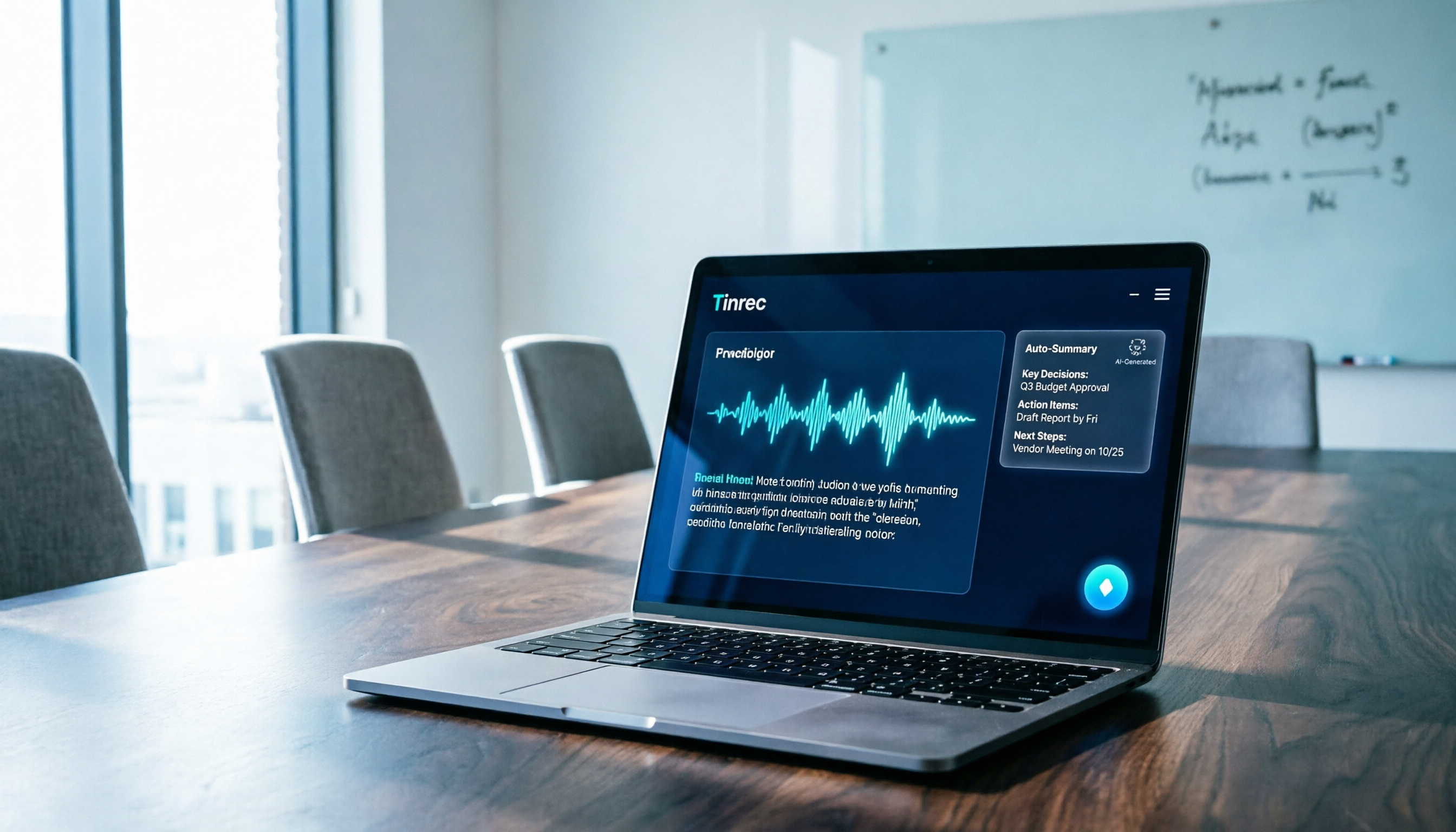
Tinrec vs Plaud Note 2026: 5-Dimension Comparison – Is the Dcard-Hyped Recorder Worth It?
Discussions about the Plaud recorder are heating up on Dcard, but do you really need to spend money on hardware? This article compares Tinrec and Plaud Note across 5 dimensions to help you find the most cost-effective AI meeting notes solution.

2026 Tested: 3 Meeting Transcription Apps Compared — Which One Captures More Without Bots?
Meeting notes take the most time after the meeting. This comparison reviews two bot-free AI meeting transcription tools, Tinrec and Granola, covering recording methods, input sources, Chinese language experience, post-meeting organization, and team collaboration to see which suits Taiwan users better.

2026 Tested: 4 Meeting Transcription Tools Compared — Tinrec Is the Top Choice for Chinese Meetings
We tested Otter.ai, Notta, Granola, and Tinrec across four key areas: Chinese accuracy, bot-free recording, post-meeting organization, and team collaboration. Find out which meeting transcription tool is best for Taiwanese office workers.

How to Take Meeting Minutes in 2026? 5 Steps to Quickly Organize with NotebookLM vs Tinrec
Tired of working overtime because of meetings? Using the wrong tool only makes it worse. This article compares NotebookLM and Tinrec, teaching you how to use the right tool to save time on meeting minutes.

6 AI Meeting Note Tools Tested and Compared in 2026: Which One Should Taiwan Office Workers Try First?
This article compares 6 AI meeting note tools, including Tinrec, Otter.ai, Granola, PLAUD Note, Notta, and the free inFin, covering bot-free recording, Chinese recognition, pricing plans, and team collaboration, to help you quickly find the best fit.

2026 AI Meeting Notes Tools: Record Teams Meetings Without Bots & Auto-Generate Minutes
Tired of spending hours on meeting notes? This article shows you how to use AI tools to quickly handle Teams meeting records. We tested Tinrec for bot-free recording, automatic summaries, and action items to save you overtime.
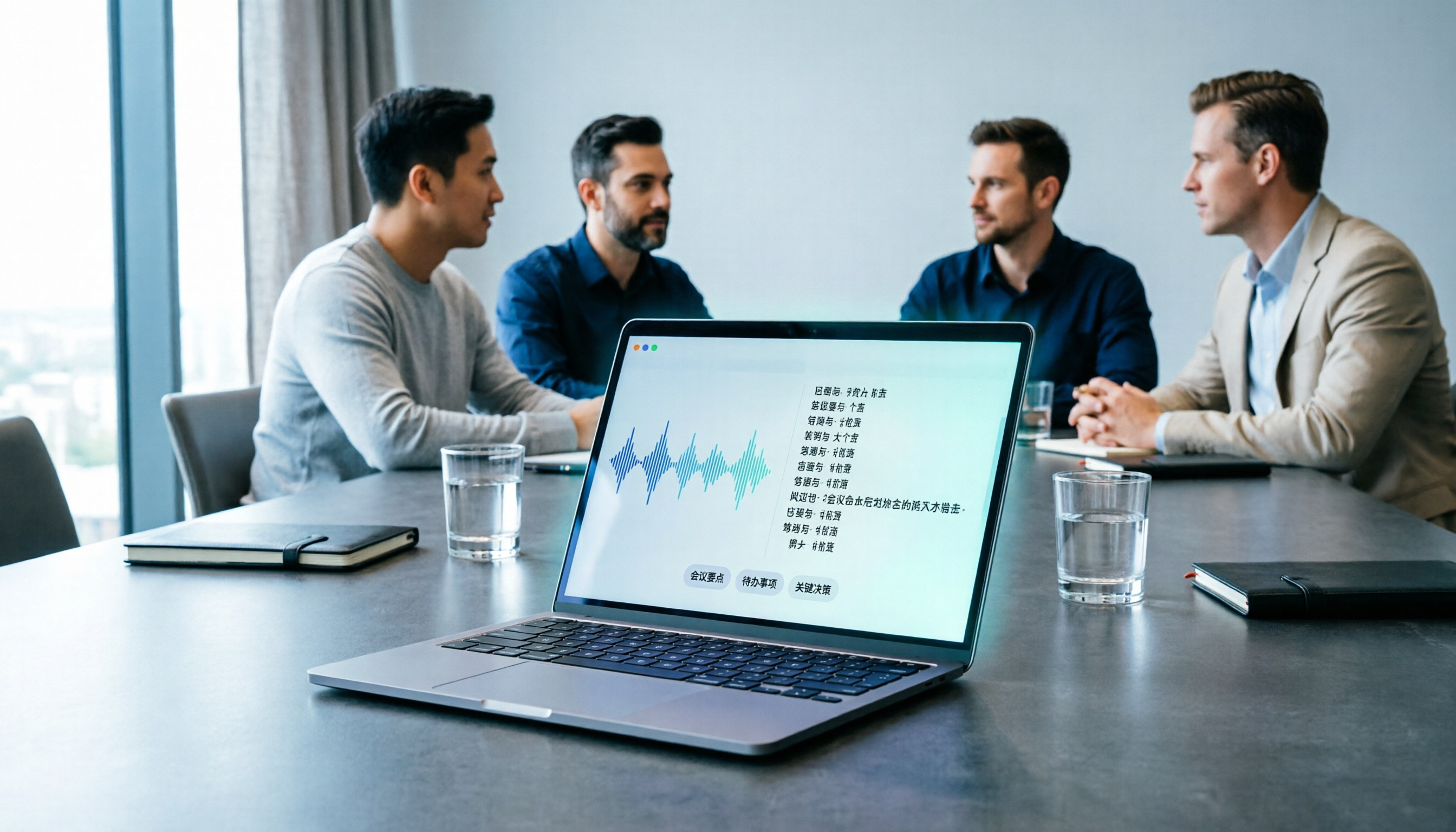
Best AI Meeting Note Tools in 2026: 5 Tested, No Bot Needed + Top Pick for Chinese
Tired of manual meeting notes? This article tests 5 AI meeting recorders—Tinrec, Otter, Fireflies, Notta, and Easemate—comparing bot-free recording, Chinese accuracy, pricing, and team collaboration to help you find the best fit.

2026 Google Meet Meeting Notes Free Options: 3 Tools Compared
A mid-level manager tests Google Meet meeting notes tools, from free built-in features to third-party AI solutions, and rounds up 3 options to help you save time after meetings.

2026 Tinrec AI Meeting Transcripts: No-Bot Recording + Auto Summaries & To-Dos
This tutorial shows you how to use Tinrec to quickly turn meeting recordings into transcripts, with auto-generated summaries and action items—no meeting bots required. Ideal for professionals and teams looking to boost meeting efficiency.