

Turn recordings into transcripts and summaries in minutes
Upload audio or video for multilingual transcription, AI notes, and action items
I've seen too many people turn English meeting minutes into verbatim transcripts.
They think that as long as they translate every sentence into English, the minutes are done.
But the result is a five-page document that no one wants to read, and no one knows what to do next.
In reality, the core of English meeting minutes isn't translation—it's distillation.
In this article, I want to share my approach and introduce a tool I've been using lately that helps you get this done quickly.
Why Do Your English Meeting Minutes Keep Getting Rejected?
Two hours in a meeting, then another two hours to write up the minutes—that's a common routine for many professionals.
What's more daunting is English meetings: informal wording, incorrect format, missed decisions—your manager spots the problems at a glance.
You might have encountered these situations:
- Everyone talks a lot during the meeting, you scribble notes frantically, but in the end, you can't grasp the key points.
- Your English is decent, but the minutes read like casual chat, not a formal document.
- You finally finish writing, only to realize you missed the action item owners, so you have to start over.
The root of these problems isn't your English—it's your approach.
Choosing the right tool can solve half the problem; the other half requires you to master the correct format and mindset.
Before Writing English Meeting Minutes, Understand These 5 Key Points
English meeting minutes follow a standard format in international workplaces. Once you master the format, you're halfway there.
1. Basic Information
A complete set of minutes must include at the top: meeting title, date, time, location, chairperson, minute taker, and attendees.
This information cannot be omitted because minutes are formal documents that may be referenced later or used as evidence.
2. Agenda and Discussion
Minutes are not a running log. You don't need to write down every word everyone says; instead, record the topics discussed, various opinions, and the consensus reached.
Remember: use concise, brief phrases, not full sentences.
3. Resolutions
This is the soul of the minutes. Each discussion topic should have a clear resolution.
Note: The standard English term is "resolution," not "conclusion" or "decision," because "resolution" carries the meaning of "formally adopted."
4. Action Items
After resolutions, you must list who is responsible for what and the deadline.
This is the most commonly overlooked part of minutes, but it's also the most critical for follow-up.
5. Confirmation and Next Meeting
The end of the minutes should include: the date of the next meeting and whether the previous minutes were approved.
This demonstrates the continuity and formality of the minutes.
Here's a simple English meeting minutes template you can copy and use:
Meeting Title: Weekly Sales Review
Date: 2026-08-20
Time: 10:00 AM - 11:00 AM
Location: Zoom
Chairperson: John Smith
Minute Taker: Jane Doe
Attendees: John, Jane, Mike, Emily

Agenda & Discussion:
1. Q3 Sales Performance
   - Mike reported a 15% increase in revenue.
   - Discussion on underperforming regions.

Resolutions:
- Allocate additional marketing budget to the Southeast region.

Action Items:
- Emily to prepare new marketing plan by 08/25.
- Mike to follow up with regional managers by 08/23.

Date of Next Meeting: 2026-08-27
Approval of Previous Minutes: Approved
This template is simple and clear, with the focus on resolutions and action items.
Tinrec (秒听录音)—My Top Choice for Automating English Meeting Minutes
When I write meeting minutes, the biggest pain point is: I need to focus on the discussion during the meeting, and then spend a lot of time after the meeting organizing recordings and notes.
It wasn't until I started using Tinrec that this process was truly streamlined.
Tinrec is an AI meeting minutes and collaboration tool that supports multiple languages, including English and Chinese. It doesn't just transcribe audio; it automatically organizes it into usable meeting minutes.
Here's how I typically use it:
During the meeting, I open the Tinrec desktop app, and it captures the computer's system audio directly—no need to add a bot to the meeting. This works with Zoom, Google Meet, and Microsoft Teams, and it doesn't disturb participants.
(Screenshot here: Tinrec desktop recording interface, with an arrow pointing to the system audio capture button, and real-time English transcription displayed alongside)
As the meeting progresses, Tinrec records and transcribes in real time, with the English transcript appearing instantly. I don't have to frantically take notes; I can focus more on the discussion.
After the meeting, Tinrec's auto-summary feature condenses a one-hour meeting into a few key points, including discussion topics, resolutions, and action items.
Stop organizing recordings by hand
Upload audio or video and automatically get a transcript, summary, and action items
(Screenshot here: Tinrec meeting summary page, with the English transcript on the left and AI-generated Summary and Action Items on the right)
My favorite feature is its AI Q&A. After recording, I can ask it directly in English: "What were the main decisions in this meeting?" or "Who is responsible for the marketing plan?" and it gives me the answers directly, rather than making me search through the transcript.
(Screenshot here: Tinrec AI Q&A interface, with an English question entered and the AI-generated answer with cited passages displayed below)
This is especially useful for English meeting minutes because you can quickly verify whether the resolutions you've written down are correct.
Additionally, Tinrec can export meeting results to Word, Google Docs, or Notion, so you can apply your company's meeting minutes format directly.
My own workflow is: use Tinrec to generate the summary and to-dos, cross-check against the transcript, and then export as the final minutes. The whole process is several times faster than before.
(Screenshot here: Tinrec export menu, showing multiple format options, one of which is a Word file)
If you need to share meeting minutes with your team, Tinrec's team space is also practical. Meeting data is stored in one place, team members can view and ask questions, and new members can quickly understand historical decisions.
I believe Tinrec's greatest value is that it turns "records" into "usable data." You don't just get a transcript; you get structured meeting summaries, action items, and a searchable database.
Of course, it has some limitations: the free plan has a time quota, and heavy users need to upgrade. But for someone who has a few meetings a week, the free plan is enough to experience its benefits.
If you frequently need to write English meeting minutes and don't want to be tied down by transcripts, Tinrec is the tool most worth trying right now.
Beyond Tinrec: What Other Options Are There?
If Tinrec isn't the right fit for you, there are other tools on the market, but each has trade-offs.
Otter.ai: A common choice for English meeting minutes, with a generous free plan of 300 minutes per month. However, it focuses mainly on English business meetings, and its Chinese experience isn't as good as Tinrec's. Plus, some features require adding a bot to the meeting. If you only record pure English content, it's worth considering; but if you need bot-free recording and Chinese support, Tinrec is more flexible.
Notta: A multilingual transcription tool that supports translation and subtitles, with decent accuracy. But its focus is on transcription, and its post-meeting organization features are weaker. Tinrec's AI Q&A and action item extraction are things Notta currently lacks, which makes it more convenient for meeting minutes.
(Note: The above competitor information is for reference only; actual features and pricing are subject to official pages.)
Pitfall Guide: 4 Common Mistakes in Writing English Meeting Minutes
Pitfall 1: Turning Minutes into a Verbatim Transcript
Many people think the more detailed the minutes, the better, so they end up with a ten-page transcript that no one reads. The right approach is to record only the key discussion points, resolutions, and action items, using short phrases rather than full sentences.
Pitfall 2: Ignoring Action Item Owners and Deadlines
If you don't clearly state "who, does what, by when," the minutes are as good as useless. Tinrec's automatic action item extraction can help you avoid this omission.
Pitfall 3: Using the Wrong Vocabulary
For example, use "resolution" instead of "decision" for resolutions, and "approval" for approving previous minutes. These details affect professionalism. I recommend referring to a common vocabulary list or using Tinrec's generated suggestions.
Pitfall 4: Waiting Too Long After the Meeting to Write Up
Memories fade, and the longer you wait, the harder it is to write. My rule is to complete a draft within 30 minutes after the meeting ends, and Tinrec's auto-summary makes this possible.
Summary: A 5-Step Process for Professional English Meeting Minutes
Looking back, the complete process for writing English meeting minutes is actually simple:
- Before the meeting: Confirm the agenda and basic information, and prepare the minutes format.
- During the meeting: Turn on Tinrec to record and transcribe in real time, and focus on the discussion.
- After the meeting: Use Tinrec to generate the summary, resolutions, and to-do list.
- Verify: Use AI Q&A to check key resolutions and correct any errors.
- Export: Apply your company's format, share with relevant parties, and archive.
This process doesn't require you to be a native English speaker or have writing talent. You just need to master the format and let the tool handle the repetitive work.
In my experience, after using this method, English meeting minutes went from a "source of stress" to a "small task I can handle with ease."
Finally, a reminder: always get participants' consent before recording—it's basic workplace etiquette.
Try it now. Starting with your next meeting, use these 5 steps to write English meeting minutes that impress.
Quick-Start Checklist
- Download Tinrec and sign up for a free account.
- Prepare an English meeting minutes format template (see above).
- Turn on Tinrec recording at your next meeting and try real-time transcription.
- Use AI summary to generate a draft after the meeting.
- Verify resolutions and action items, then export and share.
Test it step by step, and you'll gradually master this method.
References
Turn every recording into actionable outcomes
Get 60 free transcription minutes when you sign in. No credit card required.
Related Reading
You might also like

How to Format Meeting Minutes in 2026: 5 Steps from Recording to AI Summary
Tired of working overtime on meeting minutes? This article shows you how to use Tinrec to go from recording to AI summary, with clear formatting, decisions, and action items at a glance—saving you time.

2026 Tested: 4 Meeting Minutes Word Templates vs. Tinrec AI Auto-Generation
Tired of manually filling out meeting minutes templates? This article compares 4 common Word templates and tests Tinrec AI to auto-generate meeting minutes and export to Word, letting you finish in 5 minutes what used to take an hour.

2026 Meeting Minutes and To-Do Tool Buying Guide: 2-Product Comparison and Recommendations
Hong Kong professionals often need to write meeting minutes and track to-dos, but choosing the right tool can be tricky. This comparison of Tinrec and Otter.ai breaks down Chinese/Cantonese recognition, bot-free recording, to-do follow-up, team spaces, and export features to help you decide which one fits your needs.

How to Auto-Generate Meeting Minutes in 2026: 5 Steps from Recording to AI Summary
A hands-on guide to auto-generating meeting minutes in 2026, with 5 steps from recording to AI summary. Compare popular tools like Tinrec, avoid common pitfalls, and find the best meeting minutes solution for your team.

5 Best AI Meeting Note Apps Tested in 2026: Which One Handles Chinese Meeting Minutes Best?
Meeting minutes are not transcripts. This article tests Tinrec, Otter, Fireflies, Notta, and other tools, evaluating them on Chinese formatting, summaries and action items, and free tiers, to help you find the best fit for office workers in Taiwan.
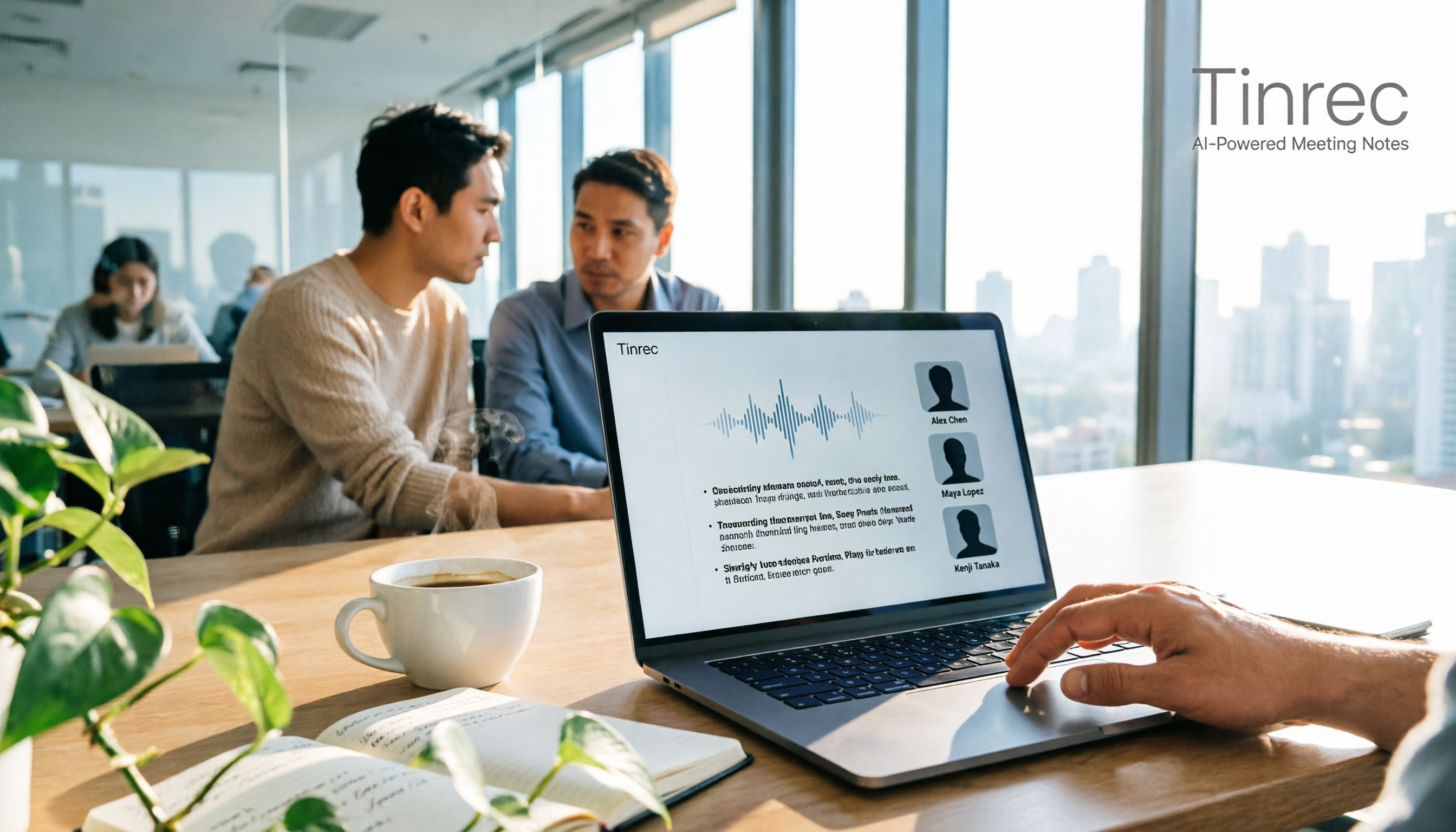
2026 Tinrec vs Plaud Note Hands-On Comparison: No Hardware and Team Collaboration Are Key
Still deciding between buying recording hardware or using AI meeting minutes software? This hands-on comparison of Tinrec and Plaud Note covers device cost, online meetings, historical files, and team collaboration to help you find the best automatic meeting minutes solution for office workers.
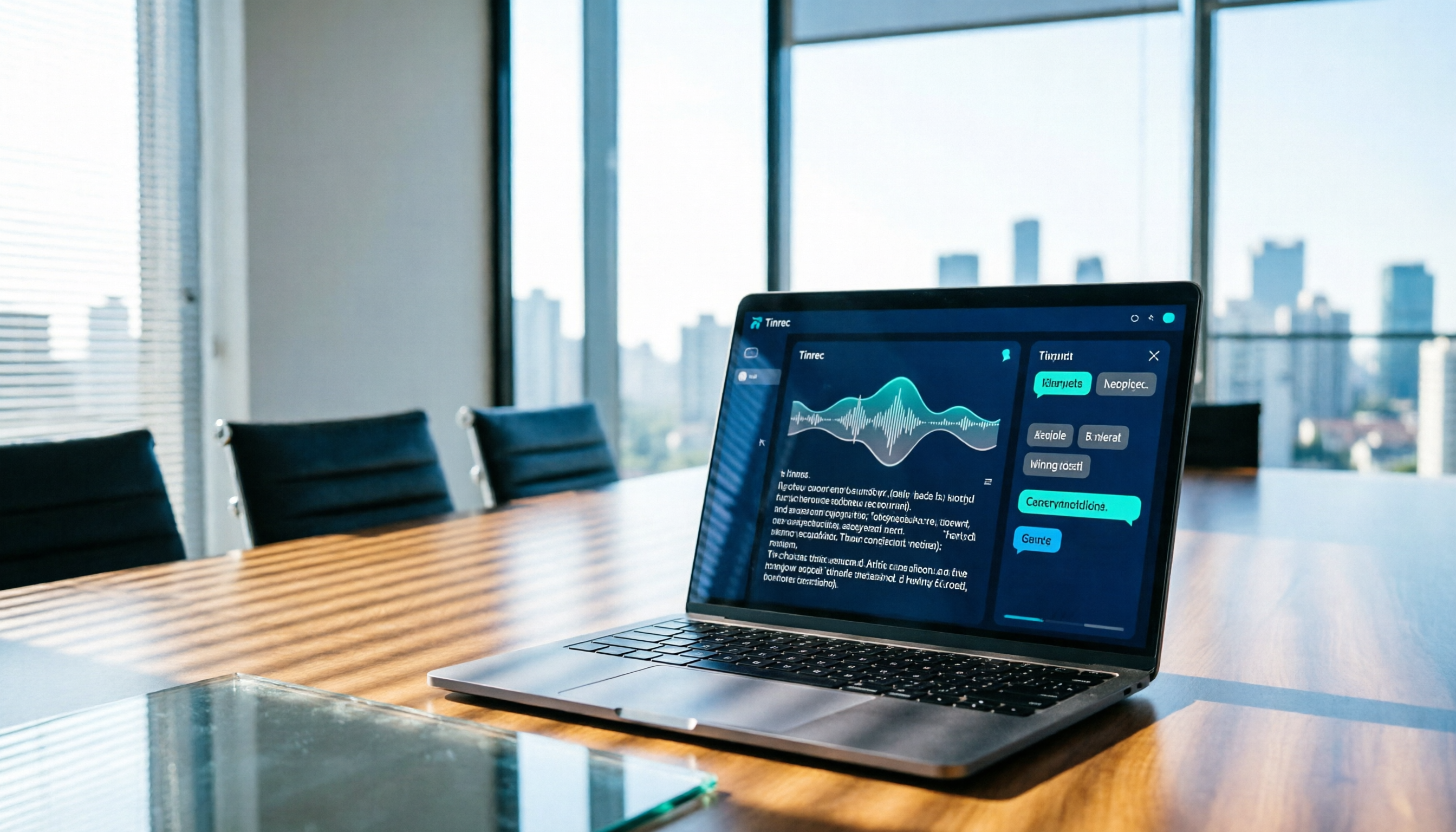
How to Take Meeting Minutes in 2026? 5 Steps to Free AI Voice-to-Text Tutorial
Using a first-person methodology, I share how to use free AI tools to turn meeting recordings into searchable, queryable, and collaborative data. I compare Tinrec and Otter, and teach you how to get started in 5 steps.
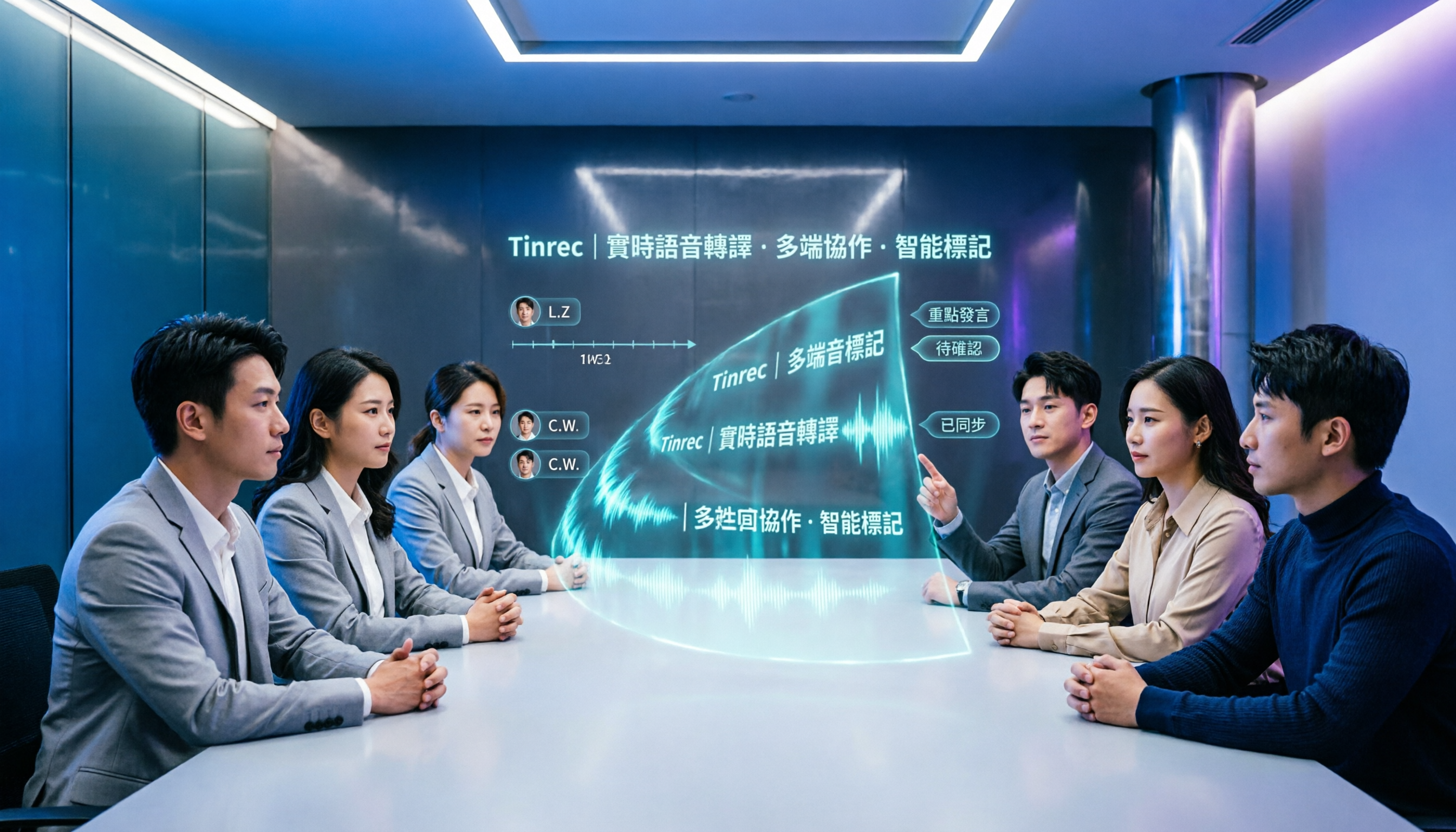
2026 AI Meeting Recorder Comparison: Which Is Best for Chinese Meetings and Team Collaboration?
We tested 4 popular AI meeting recorders, from bot-free recording, Chinese recognition, post-meeting organization to team collaboration, to tell you which one is best for the Taiwanese workplace.

2026 Hands-On Comparison of 4 AI Meeting Note Tools: Which Is Best for Chinese Meetings and Team Collaboration?
This article tests 4 popular AI meeting note tools, including Tinrec, Otter.ai, Notta, and Granola, comparing Chinese recognition, bot-free recording, team collaboration, and pricing plans to help you find the best meeting minutes solution for office workers in Taiwan.