

Turn recordings into transcripts and summaries in minutes
Upload audio or video for multilingual transcription, AI notes, and action items
Two hours in meetings, two more hours writing up notes—sound familiar?
Yesterday I had three meetings: a morning product progress meeting, an afternoon client interview, and an evening cross-departmental coordination. At 8 PM, I was still at my computer organizing meeting notes when I realized I'd missed two key requirements the client mentioned in the second meeting—because I was jotting down notes and didn't catch them. This happens at least twice a month.
What's more frustrating is that many of our team's meetings mix Chinese and English. With client names and product codes flying around, transcripts often come out wrong. After a meeting, when I try to search for the conclusions from last time, I end up digging through chat logs and notes for ten minutes without finding anything. If this sounds like you, this article is for you.
Before Choosing a Smart Meeting Collaboration Platform, Understand These 4 Key Points
First, transcription quality for Chinese and mixed Chinese-English content. Many tools are strong in English but start guessing when it comes to Chinese, especially with product names and people's names. You don't want to spend time heavily editing your meeting notes. In our tests, we specifically use a recording with mixed Chinese and English to compare—that's the real work scenario.
Second, can it record online meetings without needing an extra bot? Some tools join Zoom, Teams, or Meet as a "bot," but some companies' security policies don't allow that, or sharing the meeting link isn't convenient. It's best to find a tool that directly records your computer's audio, without adding an extra participant.
Third, are the post-meeting organization features complete? Transcription is just the first step. What you really need are summaries, to-dos, action items, and ideally the ability to ask AI questions about the meeting content. If it just gives you a wall of text, it's not much different from manual note-taking.
Fourth, team collaboration and knowledge retention. If you're a manager, meeting data shouldn't live only in personal accounts. If a team member leaves, is the data still accessible? Can it be managed centrally? Can new members look up past meetings? These are all considerations for team use.
Tinrec (秒听录音) — Our Top Pick After Testing
Tinrec is an AI meeting notes tool that supports multiple languages and can record online meetings directly on your computer. It doesn't require you to add a bot to your meeting; the desktop app captures system audio directly, and it works with Zoom, Google Meet, Microsoft Teams, and Webex.
Over the past two months, our team has used it most for these three scenarios:
Open Tinrec during meetings, and it generates a transcript in real time. By the time the meeting ends, the AI summary, chapters, key points, and action items are already generated. I no longer spend half an hour re-listening to the recording; I can just read the summary and report to my boss. The action items even automatically identify "who is responsible and by when," so I can directly forward them to team members.
After recording, you can ask AI questions about the meeting content. This is what I find most valuable. For example, in last week's budget meeting, I asked Tinrec: "Who mentioned the marketing budget in the last meeting? What was the conclusion?" It doesn't just give keyword search results; it answers based on semantics. This feature is rare in tools at this price point.
Upload past recordings. We had many client interviews and internal training recordings sitting on our hard drive, unorganized. After uploading them to Tinrec, it transcribes them, generates summaries, and I can ask AI questions—turning old data into searchable assets.
We tested with a 5-minute Chinese meeting recording (three speakers, slight background noise). Tinrec's transcript required almost no edits, and the summary directly pulled out 4 key points and 3 action items, with assignees already marked. It's not 100% perfect, but it saves us at least 80% of post-meeting admin time.
Stop organizing recordings by hand
Upload audio or video and automatically get a transcript, summary, and action items
The advantages are clear: stable Chinese transcription, no bot needed for online meetings, solid post-meeting AI organization, and importantly, team space—meeting data belongs to the team, so it doesn't disappear when members leave, and new members can search history.
I'll be honest about limitations: the free plan has limited credits. If you're like me and have meetings every day, you'll run out in about a week. Also, when recording quality is poor (heavy background noise, multiple people talking at once), the transcript can still have errors. For important decisions, I still go back and listen to the original audio to confirm.
If you need Chinese meeting notes, don't want to manually organize after every meeting, and want team data to be retained, Tinrec is definitely worth trying.
Beyond Tinrec: What Other Options Are There?
I originally started with Otter. It works well for English meetings—transcription and summaries are mature—but for Chinese meetings, it often gets product names and client names wrong, so our team eventually gave up on it. Otter's free plan offers 300 minutes per month, which is still a good deal if you only record in English. But Tinrec performs much better on mixed Chinese-English meetings and offers bot-free recording and team space, which Otter's personal plan doesn't.
Next, I tried Notta. Its multilingual transcription is decent and it supports file uploads, but team management features are basic, lacking seat management and usage analytics like Tinrec. Also, Notta leans more toward being a transcription tool; its post-meeting AI Q&A and team knowledge retention aren't as complete as Tinrec's. If you occasionally transcribe a single file, Notta works, but as a team collaboration platform, it falls short.
I also briefly used Granola. It also records without a bot, which is great, but Granola doesn't support uploading pre-recorded audio and doesn't save meeting audio files. For us, since we have many historical recordings to organize, that's a hassle. Tinrec allows uploading audio/video files and retains audio, which Granola can't do.
Pitfall Guide: 4 Common Mistakes When Choosing a Smart Meeting Collaboration Platform
Pitfall 1: Only looking at transcription accuracy, ignoring post-meeting organization features. Many tools tout 98% or 99% accuracy, but that's measured in quiet environments. Real meetings have noise and people talking over each other, so accuracy drops. Even if the transcript is accurate, you still need to spend time summarizing and extracting action items, so post-meeting AI features matter more.
Pitfall 2: Assuming all tools can record online meetings, only to find out they require a bot. Some tools need a bot to join the meeting, but your company might prohibit it, or there are security restrictions on the meeting link. It's best to confirm whether the tool can directly record your computer's system audio, like Tinrec's desktop app.
Pitfall 3: Ignoring team collaboration, leaving data in personal accounts. If you're a solo user, it doesn't matter. But if you're a manager, team meeting data scattered across individual accounts means knowledge is lost when members leave. Choose a tool with team space so meeting records become organizational assets.
Pitfall 4: Assuming the free plan is enough, only to hit limits when meetings increase. Free plans usually have restrictions, like monthly transcription minutes or recording length limits. If you have more than three meetings a week, the free plan won't suffice. Assess your usage first, then decide whether to pay—don't be fooled by the word "free."
Conclusion: Which One Should You Choose?
After switching between three or four tools over the past few months, our team ultimately stuck with Tinrec. Not because it's flawless, but because it delivers on the points we care about most: Chinese meeting transcription, bot-free recording, post-meeting AI organization, and team knowledge retention.
If you're like me—lots of meetings each week, need Chinese meeting notes, and want centralized team data management—I suggest starting with Tinrec's free plan. Try it for a few meetings, get a feel for the AI summaries and Q&A, then decide whether to upgrade.
If your situation is:
- Only recording English meetings with zero budget → Otter's free plan works
- Occasionally need to transcribe files, not for meetings → Consider Notta or TurboScribe
- Need hardware for portable recording (e.g., field interviews) → PLAUD's recording devices are more suitable
- But for team collaboration and Chinese meeting retention → Tinrec is the best fit
There's no "best" tool, only the most suitable. First, clarify your real pain points, then choose—don't be swayed by marketing hype.
References
- What is a Smart Meeting Room? Benefits, Feature Suggestions, and Application Examples - DC Sales Portal
- Why Meeting Room Booking Systems Become IT's Core Battlefield in 2026? From "Room Booking" to "Collaboration Space Governance Platform" | CIO Taiwan
- Meeting.ai: Agent for Work - Google Play App
- AI Meeting Notes - Smart Meeting Transcription and Summary | MaiAgent
- Integration Planning for Large, Medium, and Small Meeting Equipment / Digital Smart Meeting Rooms / Cloud Video Sharing Meetings Meeting Lab / Environmental Control Systems - Yun Zhun Technology
Turn every recording into actionable outcomes
Get 60 free transcription minutes when you sign in. No credit card required.
Related Reading
You might also like

5 Best AI Meeting Assistants for Students in 2026: A Budget-Friendly Comparison
Tested from a student's perspective, this guide compares AI meeting tools like Tinrec for classes, group discussions, and online meetings, showing how to solve meeting note pain points on a tight budget.
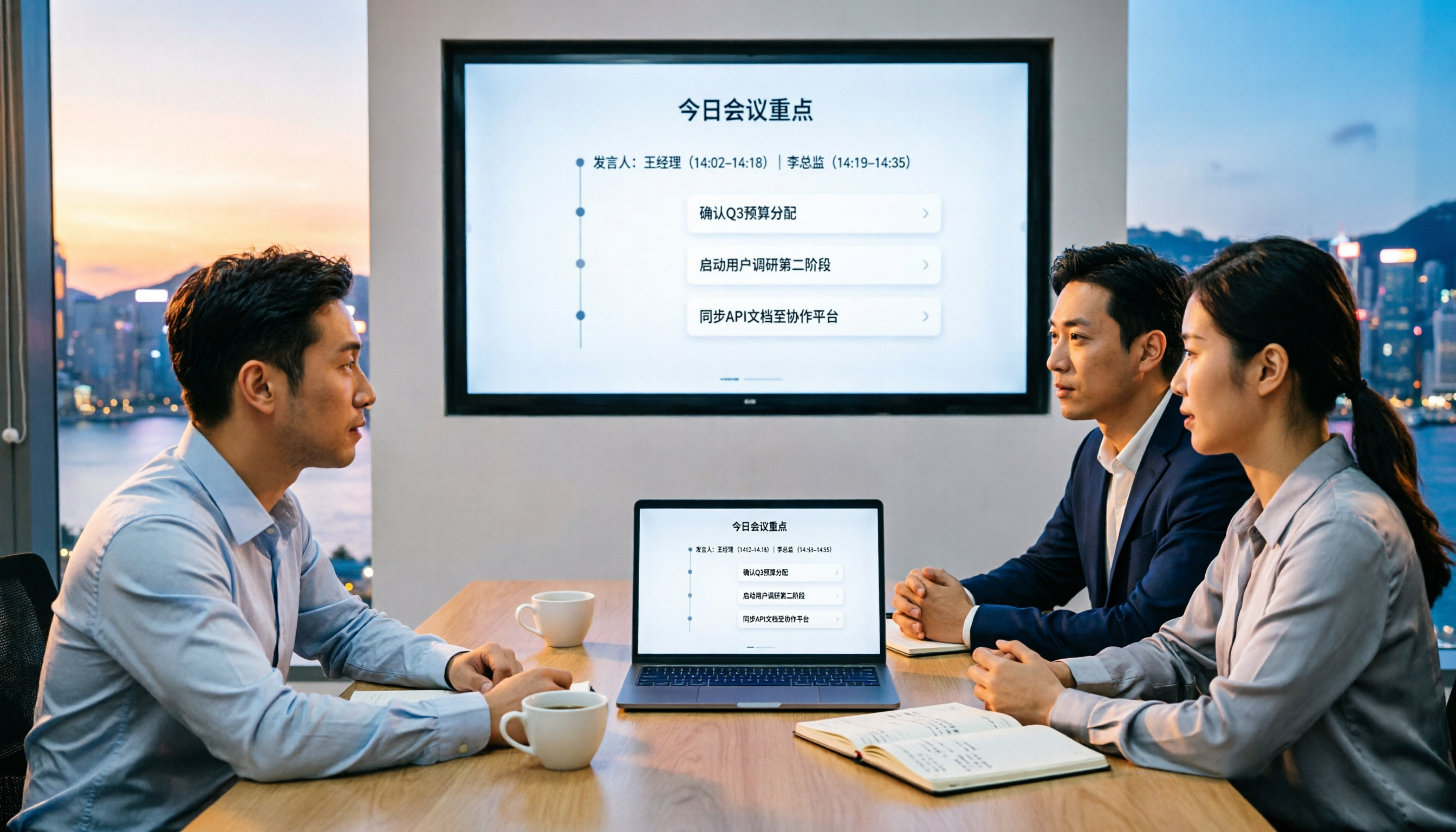
2026 Hands-On Comparison of 2 Smart Meeting Collaboration Tools: Tinrec vs Otter.ai – Which One Saves You More Time? With Tutorial
Hong Kong office workers attend meetings daily and dread writing meeting minutes afterward. This hands-on test compares two AI meeting tools, Tinrec and Otter.ai, across recording methods, Chinese recognition, post-meeting organization, and team collaboration, and shows you how to use Tinrec to record meetings without a bot, saving you overtime hours.

How to Choose Smart Meeting Collaboration Tools in 2026: 5 Steps from Country Differences to Your Ideal Solution
Smart meeting collaboration tools have developed along different paths in different countries: AI meeting assistants in the US, hardware integration in Japan, cloud platforms in mainland China, and Tinrec, which focuses on Chinese meetings and bot-free recording. This article uses 5 steps to help you compare solutions from different countries and find the best smart meeting collaboration tool for your needs.

2026 Tested: 5 Best AI Meeting Recorders for Chinese Teams & Collaboration
This article compares 5 AI meeting recording and collaboration tools for Chinese-speaking teams, evaluating recording methods, Chinese language support, AI post-processing, and team management. Tinrec is recommended as the top choice, with tips to avoid common pitfalls and scenario-based buying advice.

2026 Free Smart Meeting Collaboration Plans: 5 Options at a Glance
A roundup of free smart meeting collaboration plans for 2026, comparing Tinrec, Otter.ai, Notta, and built-in transcription tools. Learn how to choose the most time-saving AI meeting recorder and stop working overtime on meeting minutes.

4 Smart Meeting Collaboration Tools Compared in 2026: Tinrec, Otter, Notta, Fireflies – Which One to Choose?
After testing Otter, Notta, and Fireflies, a mid-level manager explains why they ultimately chose Tinrec. This article covers bot-free recording, Chinese language experience, team spaces, and pricing benefits to reveal the real differences among smart meeting note-taking collaboration tools.

4 Best AI Meeting Assistants Tested in 2026: Top Pick for Chinese Meetings & Team Knowledge
We tested Tinrec, Otter.ai, Notta, and Granola—four AI meeting collaboration tools—evaluating bot-free recording, Chinese language support, AI summarization, and team collaboration to help you choose the best fit for Chinese-speaking meeting teams.
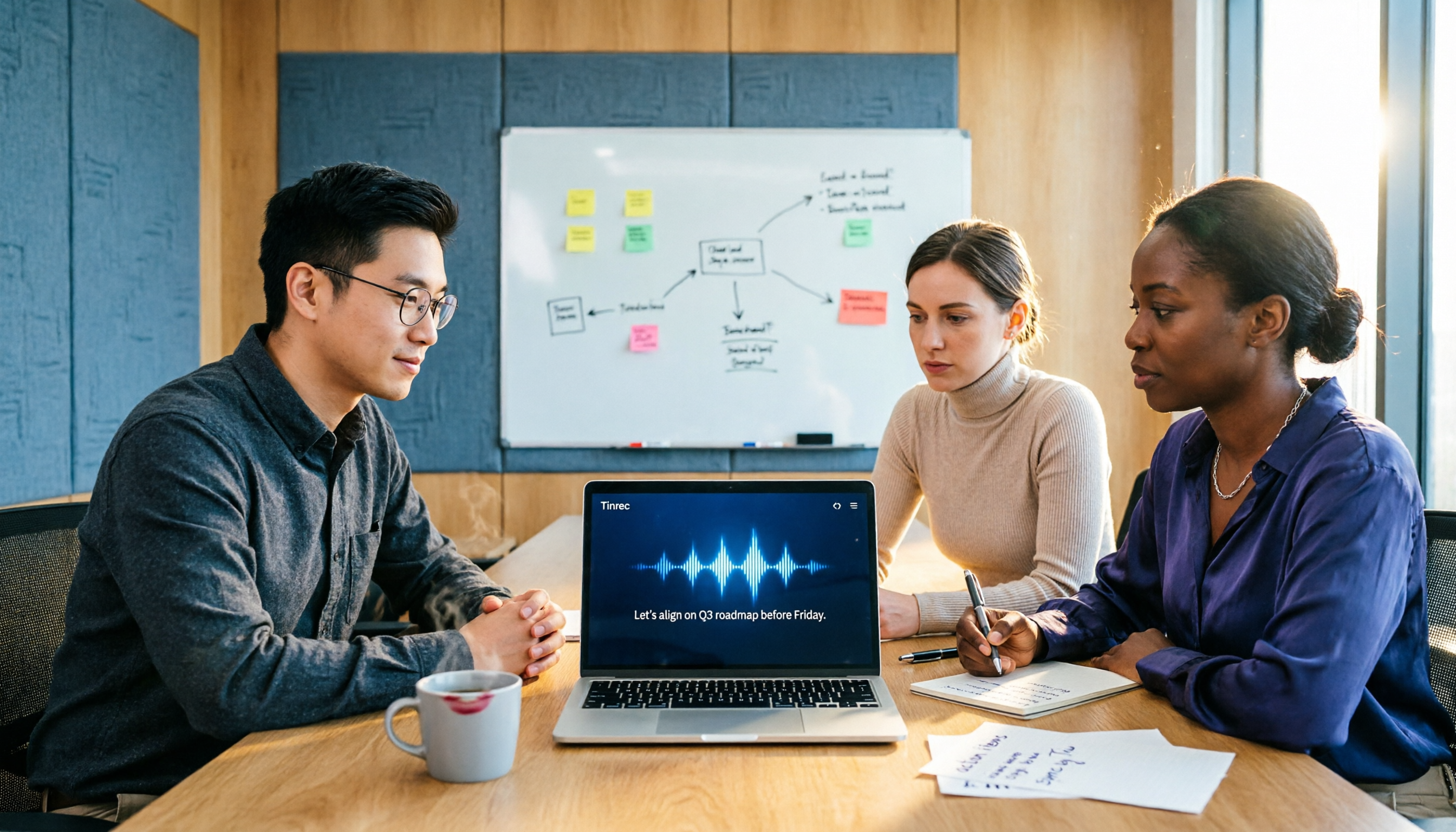
2026 Hands-On Comparison of 2 Smart Meeting Tools: Tinrec vs PLAUD Note – Which Is Worth It?
This article compares Tinrec and PLAUD Note, two smart meeting tools, across five key dimensions: meeting capture, input sources, AI post-processing, team collaboration, and cost flexibility, to help you decide which fits your meeting scenarios better.
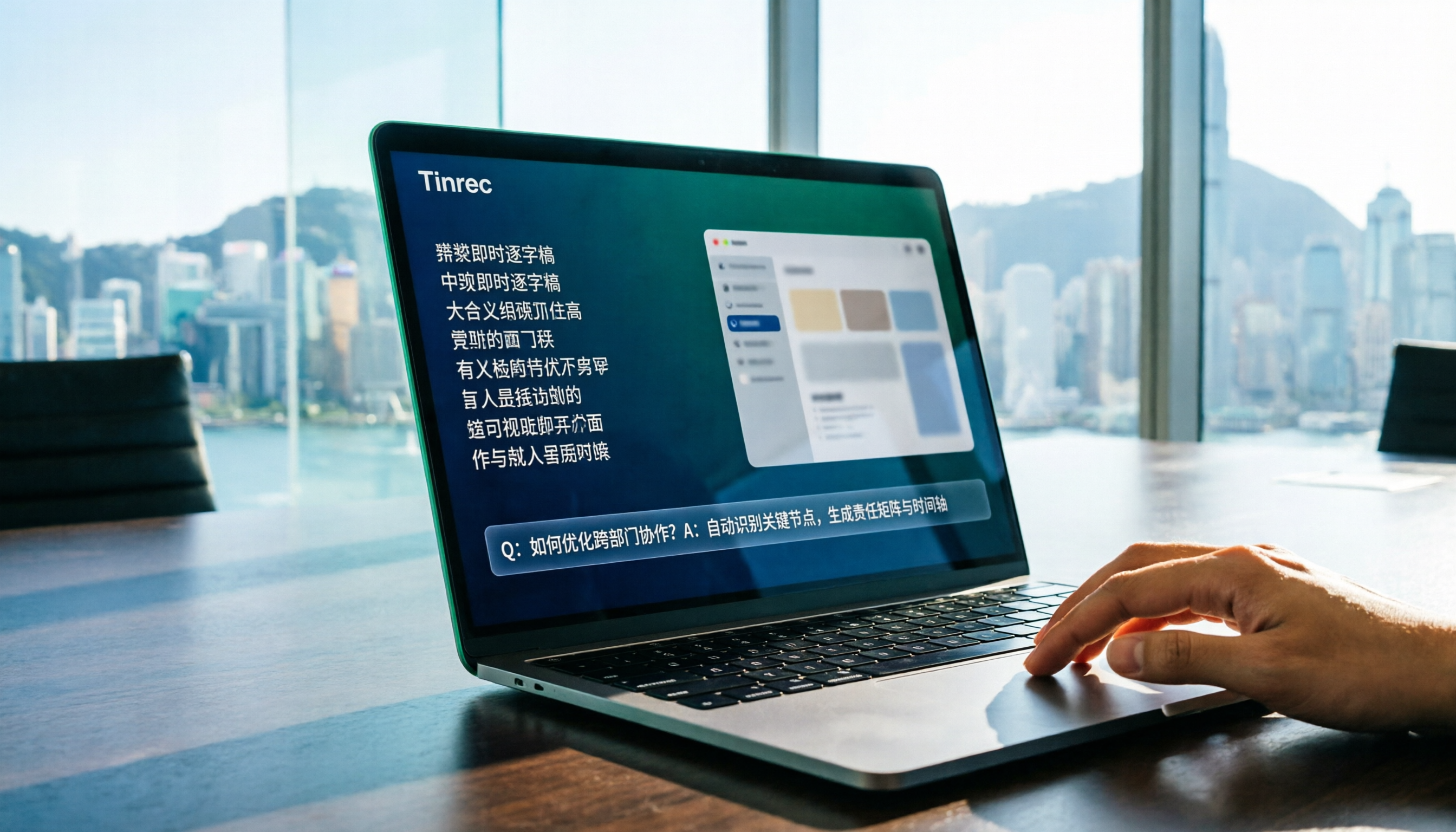
How to Choose Real-Time Transcription in 2026? 5-Step Comparison: Tinrec vs Otter.ai
Turning meeting recordings into text: which one suits Hong Kong professionals better, Tinrec or Otter.ai? This 5-step comparison helps you see clearly through bot-free recording, Chinese experience, AI Q&A, and team collaboration, saving you from trial and error.