

Turn recordings into transcripts and summaries in minutes
Upload audio or video for multilingual transcription, AI notes, and action items
4 Meeting Transcription Tools Compared in 2026: From Transcripts to Real Action, Which Is the Most User-Friendly?
I recently had to organize a recording of a two-hour online meeting. In the past, I would listen to it multiple times, typing as I went, and then have to search back to find who said what.
This time, I tried several different transcription tools and realized that the key isn't just "converting to text," but whether I can actually turn the meeting into actionable information after the conversion.
If you've ever experienced this—spending two hours in a meeting and then another two hours (or more) organizing the meeting notes—this article is written for you.
The Pain Point: You Don't Need a Tool; You Need a Solution
Meetings are already tiring, and after the meeting, you're faced with a long recording.
What's more, many online meeting recordings have background noise, people talking over each other, mixed Chinese and English, and even fast talkers.
Even if you find a transcription tool that turns audio into text, so what?
You still have to read through tens of thousands of words of transcript yourself, picking out conclusions, action items, and responsible parties.
So, the real problem is: we need a way for meeting content to not just be recorded, but to be directly organized into something we can continue working with.
Before Choosing a Meeting Transcription Tool, Understand These 4 Key Points
1. Accuracy: Don't Just Look at the Impressive Official Numbers
Many tools claim high accuracy, but that's usually measured under quiet, standard pronunciation conditions.
Real meetings have background noise, multiple people speaking at once, accents, and technical jargon.
I recommend testing with your own actual meeting recordings to see if the output requires a lot of editing.
In my experience, if the transcription has too many homophone errors or awkward sentence breaks, the subsequent organization becomes very painful.
2. AI Features: Transcription Is Just the Starting Point, Not the End
If a tool only gives you a transcript, you still have to analyze it yourself.
A good tool should help you automatically generate summaries, chapters, action items, and even let you ask it directly, "What was the meeting conclusion?"
That's where the real time savings come in.
3. Cross-Platform and File Retention: You Record on Your Phone Today, Organize on Your Computer Tomorrow
If a tool only supports a single device, you'll be frustrated.
Moreover, if the audio file isn't retained, you won't have a basis to go back and verify the original audio or confirm the tone of a statement.
I personally care a lot about being able to use it on both my phone and computer, and whether the audio files are kept.
4. Team Collaboration: Is Your Meeting Data Personal Notes or a Team Asset?
If you're using it just for yourself, it's not a big deal.
But if your team meets together and meeting data is scattered across everyone's devices, finding historical decisions or tracking action items later becomes a nightmare.
A good tool should centralize meeting data in one space where members can view, search, and follow up, rather than everyone saving their own copies.
Tinrec (秒听录音) — My Top Pick After Hands-On Testing
Tinrec is an AI meeting notes and collaboration tool that goes beyond transcription; it turns meetings into searchable, collaborative, and actionable team data.
What I like most is its "no-bot" online meeting recording method. You don't need to invite a bot to join the meeting; just open Tinrec on your computer, and it can directly capture the meeting audio and generate a transcript in real time.
I've used tools that require a bot to join the meeting before, and it often feels awkward for participants, plus there's a brief silence when the bot joins. Tinrec's approach feels much more natural.
After transcription, Tinrec automatically organizes summaries, chapters, and action items. In a 45-minute project meeting I tested, it directly listed "who is responsible for what and the deadline," so I barely had to do any manual organization.
Stop organizing recordings by hand
Upload audio or video and automatically get a transcript, summary, and action items
What surprised me even more was its AI Q&A feature. You can ask it directly, "Who mentioned the budget adjustment in the last meeting?" It understands the semantics and gives you the answer directly, rather than just listing paragraphs containing the keywords.
I also really like its team space. You can centralize meeting data, and members can view, search, and even follow up on past decisions. Admins can manage members, seats, and usage, so you don't have to worry about meeting data disappearing when someone leaves the company.
Of course, it has its limitations. The free version offers basic quotas that heavy users might find insufficient and need to upgrade. But for someone who meets a few times a week, trying the free version first and then deciding whether to pay is a reasonable path.
If you often deal with Chinese meetings, want to use AI to find key points after recording, or need to consolidate meeting data into a team space—Tinrec is currently a very user-friendly choice.
Beyond Tinrec: What Other Options Are There?
Otter.ai
Otter is a mature choice for English meetings, with a free plan offering 300 minutes per month, which is generous for English users. However, if you primarily have Chinese meetings, you'll find that its Chinese transcription and summaries aren't as context-aware as Tinrec's. It's better suited for all-English teams and lacks Tinrec's team-specific vocabulary and real-time Chinese translation.
Notta
Notta has significant feature overlap with Tinrec and also supports multiple languages and file transcription. However, its focus is more on "transcription and translation," and its AI Q&A and team space interactivity aren't as complete as Tinrec's. If you just need quick transcription and translation, Notta is worth considering; but if you want to be able to follow up with questions and consolidate team data after transcription, Tinrec is more comprehensive.
Granola
Granola is also a no-bot meeting notes tool, but it doesn't retain meeting audio files and doesn't support uploading pre-recorded files. This means you can't go back to the original audio or organize historical recordings. Tinrec supports audio retention and file import, which is a key differentiator for those who need to verify details later or build a meeting database.
Pitfall Guide: 4 Common Mistakes When Choosing a Meeting Transcription Tool
Pitfall 1: Only Looking at Official Accuracy Rates, Ignoring Real-World Conditions
Many tools claim high accuracy, but those are lab numbers. Real meetings have noise, accents, and people talking over each other. I recommend testing with your own recordings, not just trusting the ads.
Pitfall 2: Ignoring Cross-Platform Support and Audio Retention
If you record on your phone today and want to organize on your computer tomorrow, a tool that doesn't support cross-platform use will be painful. Also, if the audio isn't retained, you won't be able to verify tone or exact wording later.
Pitfall 3: Using a Transcription Tool Only as "Audio-to-Text"
If you only use it to produce transcripts, you're only using a third of its capabilities. For example, Tinrec's AI Q&A lets you ask "What was the meeting conclusion?" right after recording, which is much faster than manually searching through half an hour of transcript.
Pitfall 4: Ignoring Ownership of Team Data
With personal-use tools, meeting data is stored in your personal account. But if used by a team, when a member leaves, the meeting data might disappear with them. Choosing a tool with a team space and resource handover mechanism can turn meetings into a team asset.
Summary: Which One Should You Choose?
If your focus is on "turning meetings into actionable data" rather than just producing transcripts, Tinrec is currently the most user-friendly choice.
Scenario-based recommendations:
- Need Chinese meeting transcription, AI Q&A, and team collaboration → Tinrec
- All-English meetings with zero budget → Otter.ai
- Only need bulk transcription and translation, not much interactive Q&A → Notta
- Want no-bot meeting notes but don't need audio retention → Granola
I recommend downloading the Tinrec free version to try it out. Test it with your own meeting recordings to experience the smoothness of "asking for key points right after transcription," and then decide whether to upgrade.
With the right approach, tools will truly save you time.
References
- AI Meeting Minutes Software Recommendations: 5 Apps Tested and Compared, Auto-Transcribe to Make Meetings Effortless!
- How to Quickly Create Meeting Transcripts? 2026 Complete Guide | Audio-to-Text, AI Auto Meeting Notes All in One
- 2026 Latest 6 Multi-Person Meeting Recording-to-Text Tools Recommended: Accurately Distinguish Speakers, Solve Minutes Challenges - 秒听录音Blog
- Meeting Ink - 2026 AI Meeting Notes Tools Tested | 7 Voice-to-Text and Summary Speed Showdown | Meeting Ink - AI Meeting Notes Assistant Auto-Transcribe and Summarize
- 2026 Must-See! 4 AI Audio-to-Text Tools Recommended: Meeting Minutes, Podcast Transcripts Compared - Mobile01
Turn every recording into actionable outcomes
Get 60 free transcription minutes when you sign in. No credit card required.
Related Reading
You might also like
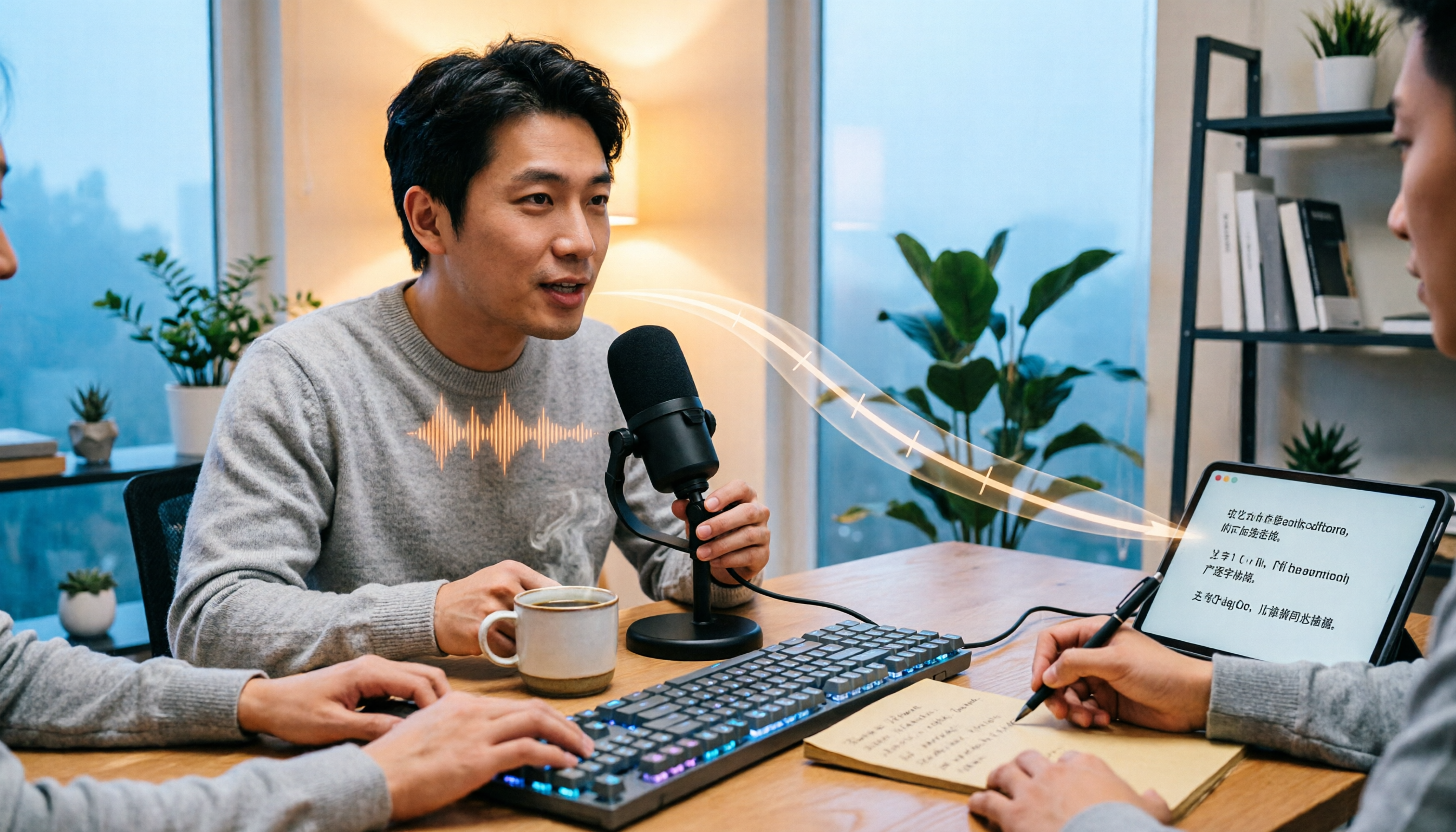
2026 Live Transcription Tools Compared: Real-Time Captions for Live Streams and Which Handles Chinese Best
People searching for "live transcription online" are usually looking for one of two things: synchronized captions while watching a live stream, or turning ongoing audio into editable text in real time. This article evaluates Tinrec, Transcribe.com, Notta, and cSubtitle based on three criteria—real-time output while speaking, usability right after the meeting, and team handoff—and summarizes hands-on impressions, free tiers, and limitations to help you decide which tool to use.
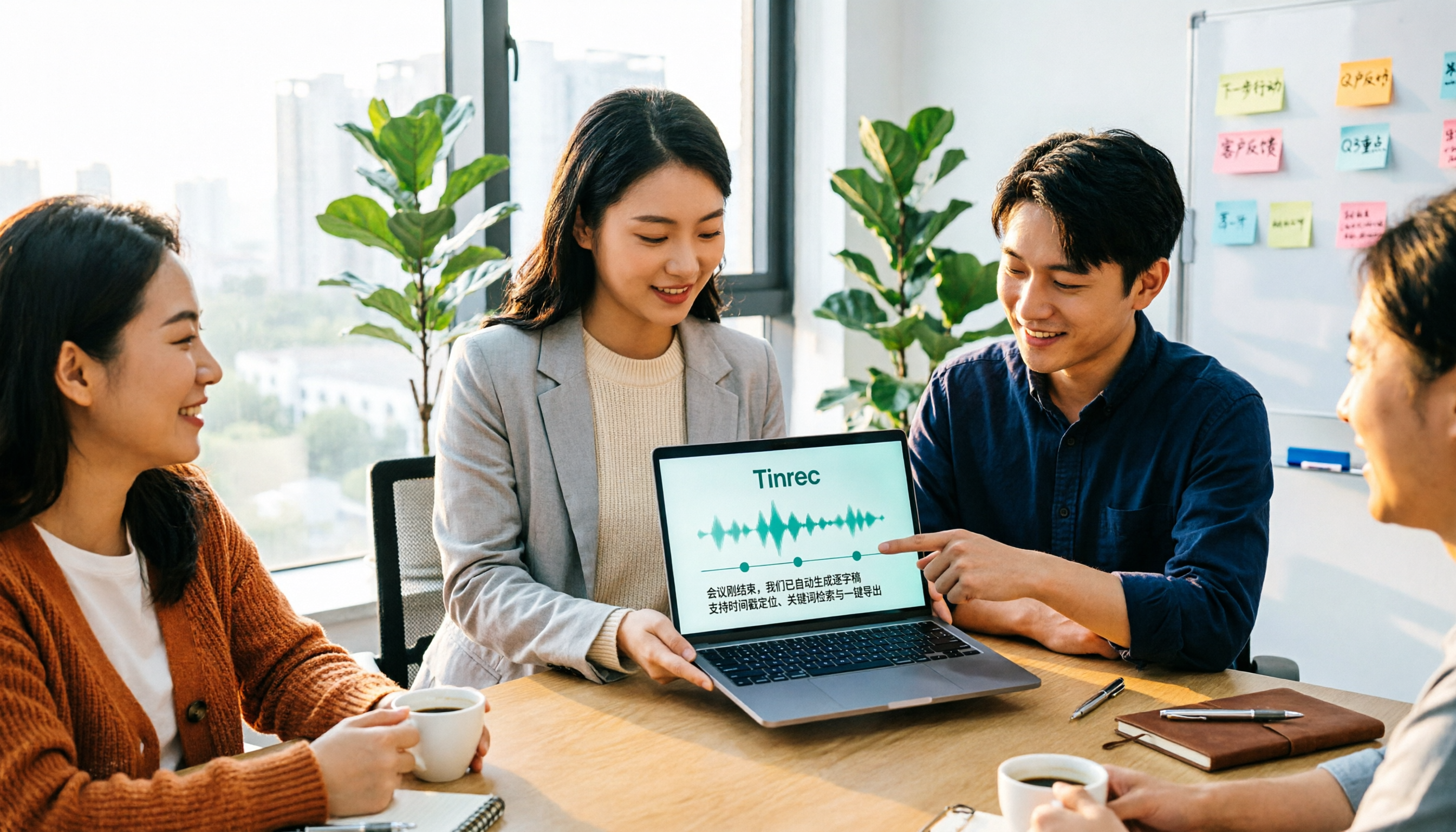
4 Live Transcription Apps Tested for 2026: Which One Actually Saves You Time After Meetings?
The real work begins after the meeting ends. This hands-on comparison of Tinrec, Notta, Otter.ai, and Granola looks at how each live transcription tool records audio, handles Chinese, organizes post-meeting notes, and supports team collaboration. We also break down four key selection criteria and common pitfalls to help you find the one that truly saves time.

The Complete Guide to Real-Time Transcription Translation in 2026: 5 Key Criteria to Choose the Right Tool and Never Miss a Point
There are many real-time transcription translation tools, but few can record and translate on the fly and still organize everything after the meeting. This guide uses 5 key criteria to help you identify your needs, compares Tinrec, Otter.ai, Notta, and Google Translate's transcription feature in terms of differences, free quotas, and limitations, and helps you choose the right tool for your meeting scenario.
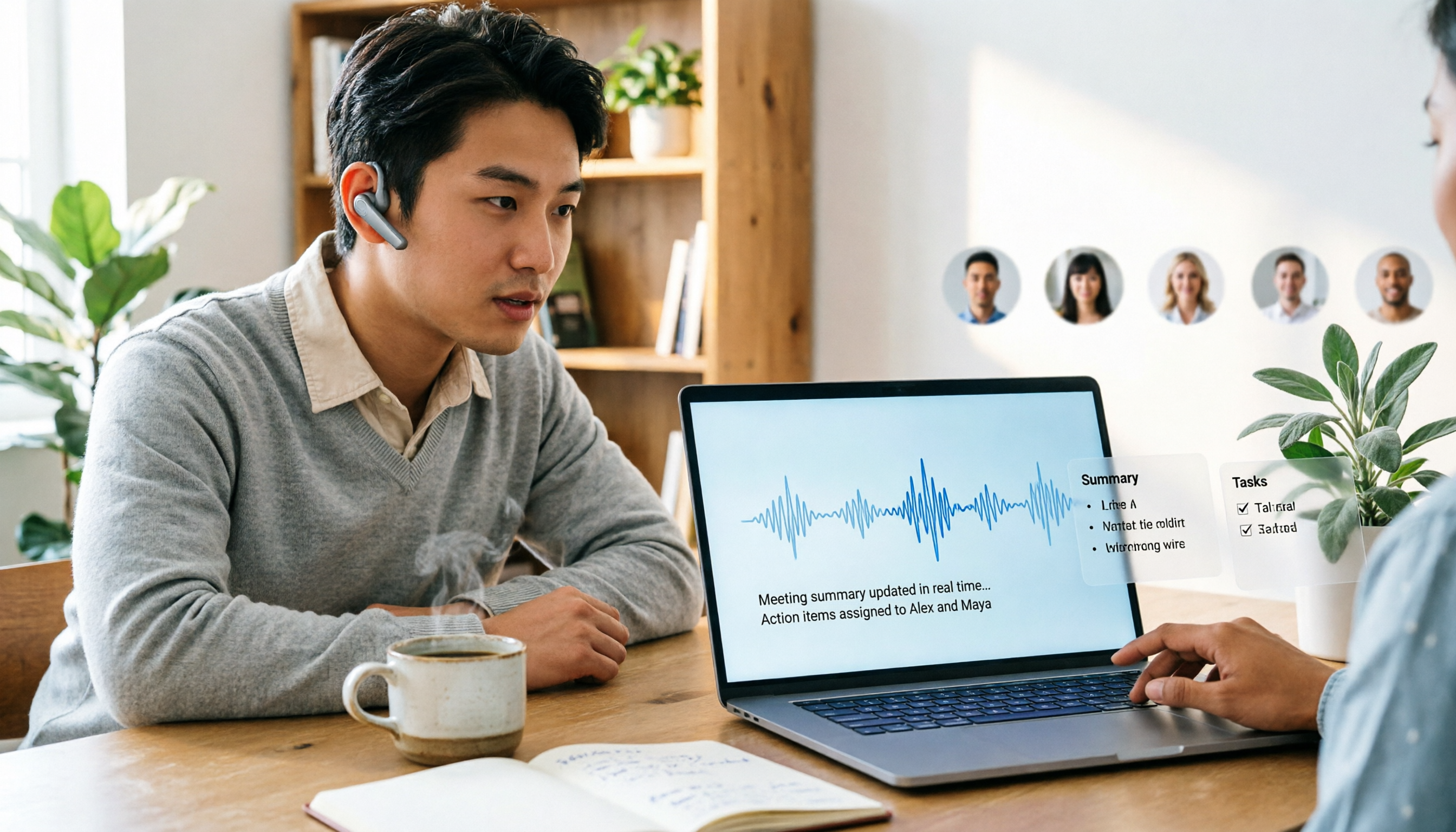
How to Get Free Real-Time Online Transcription in 2026: 5-Step Guide and Why Tinrec Beats Yating Transcription
How to get free real-time online transcription in 2026? This article starts with common pitfalls, compares Tinrec and Yating Transcription in real-time recording, post-meeting organization, cross-platform support, and team collaboration, and provides a 5-step guide to using Tinrec's free version for transcripts, summaries, and action items.

2026 Live Transcription Showdown: Which Free Version Is Enough?
How to choose a free live transcription tool? This article compares Tinrec and Yating Transcription across five dimensions—live transcription initiation, what you can test in the free version, post-meeting organization, cross-device access, and team knowledge retention—to help you decide which one suits meetings, classes, and interview notes.

4 Live Transcription Apps Tested: Which Is Best for Chinese Meetings in 2026?
Live transcription is more than converting speech to text. Starting from a real interview pain point, this article shows what a usable transcript looks like, breaks down 4 key buying criteria, and compares Tinrec, Yating Transcription, cSubtitle, and Otter.ai on real-time capability, post-meeting organization, and team collaboration. It also includes a pitfalls guide and a starter checklist.

4 Live Transcription Apps Tested for 2026: Which Handles Chinese Meetings and No-Bot Recording Best?
How to choose a live transcription app? This article examines four key aspects: audio capture method, post-meeting output, Chinese recognition, and data ownership. It compares Tinrec, Notta, Otter.ai, and Granola through hands-on testing, and outlines four common purchasing pitfalls to help you determine which tool truly saves time on meeting organization.

4 Free Real-Time Transcription AI Tools Compared in 2026: Quotas, Chinese Recognition, and Post-Meeting Organization
There are many free real-time transcription AI tools, but their quota calculations, definitions of 'real-time,' and post-meeting organization capabilities vary widely. This article starts with common misconceptions, outlines four key purchasing criteria, and compares the free plans, Chinese language support, and team collaboration features of Tinrec, inFin, cSubtitle, and Otter.ai to help you choose one that meets your needs without pitfalls.

2026 Real-Time Transcription Tools Compared: 5 Top Picks Tested — What Makes Live Text Actually Work?
Real-time transcription isn't just hitting record — it's about where your meeting happens and what you need afterward. We tested Tinrec, Yating, Vocol.ai, Transcribe, and cSubtitle against 5 key buying criteria to help you choose the right tool for personal or team use, plus 4 common pitfalls to avoid.