

Turn recordings into transcripts and summaries in minutes
Upload audio or video for multilingual transcription, AI notes, and action items
Have you ever calculated how much time you spend after a 1-hour meeting? Listening to recordings, extracting key points, and listing action items often takes another 1 to 2 hours. If you have 5 to 15 meetings per week, organizing meeting notes alone can eat up a large portion of your work time.
For product, R&D, and design teams, meetings are the primary setting for aligning requirements, making technical decisions, and syncing progress. The traditional approach is to manually write or type notes after the meeting based on memory, then organize them in Word, Feishu Docs, or Notion. However, this method has several obvious gaps: discussions are extensive, but requirements, decisions, and responsibilities are not structured and captured; action items are scattered across different people's notes or chat logs, making them easy to miss; and post-meeting deliverables like PRDs, action plans, or retrospective documents often have to be written from scratch, resulting in repetitive work.
The true value of meeting minutes is not just "recording what everyone said," but transforming discussions into "what was decided, who is responsible, when it will be completed, and what remains undecided," and making this content reusable. Below, using Tinrec (a voice recording app) as an example, we outline a complete workflow from recording to deliverable meeting materials.
Why Do You Need AI Meeting Minutes?
AI meeting minutes are not just "automatic speech-to-text"; they are a workflow that organizes meeting audio or transcripts into summaries, decisions, action items, and open questions. They reduce transcription time but cannot automatically guarantee the accuracy of speakers, numbers, negations, and responsibility assignments. Truly useful meeting notes are not just "what was discussed in this meeting"; they should at least clarify: what was decided, who is responsible, when it will be completed, what remains undecided, and how the original materials will be preserved.
Before You Start: Prepare Recording and Tools
Before you begin, make sure you have the following:
- A smartphone or computer (Tinrec supports iOS, Android, web, and desktop versions)
- Download the Tinrec app or open the web version (registration only requires Google or Apple ID login)
- A recording you want to turn into meeting minutes (can be a meeting recording, interview recording, or online meeting recording)
- A stable internet connection (real-time transcription requires connectivity)
Once you're ready, let's get started!
Step 1: Record or Import Meeting Audio
Tinrec supports multiple input sources, so you can choose the most suitable method based on your meeting scenario:
- In-person meetings or interviews: Open the Tinrec app and tap the record button to start recording. Keep the phone close to the speaker; the closer it is, the clearer the audio, and the higher the transcription accuracy.
- Online meetings (Zoom, Meet, Teams): Use the Tinrec desktop version to capture your computer's system audio directly, without needing to invite a meeting bot to join. Open the desktop version, select "Record system audio," and it will capture the online meeting and generate a transcript in real time.
- Existing audio files: Directly import audio or video files into Tinrec; it supports common formats.
Step 2: Let AI Generate the Transcript
After recording or importing the file, Tinrec automatically starts transcribing. Once transcription is complete, you'll get a full transcript, along with auto-generated summaries, chapters, and key points.
For example, in a requirements review meeting, the AI automatically splits the 1-hour meeting into sections like "Requirements Background," "Technical Solution Discussion," "Risk Assessment," and "Next Steps," allowing you to quickly locate key discussion segments without listening to the entire recording.
Step 3: Quick Proofreading and Editing
AI-generated transcripts may contain omissions or misunderstandings, especially for key information like technical terms, names, and numbers. We recommend spending a few minutes to quickly proofread:
- Check important decisions and data against the recording timestamps.
- Correct proper nouns, client names, product names, etc.
- Verify speaker labels and manually adjust if necessary.
Tinrec's transcript supports timestamp playback; clicking on text jumps to the corresponding recording position, making it easy to verify.
Stop organizing recordings by hand
Upload audio or video and automatically get a transcript, summary, and action items
Step 4: Generate Meeting Minutes and Action Items
After proofreading, you can have the AI generate structured meeting minutes. Tinrec automatically extracts:
- Decisions: Conclusions and directions confirmed during the meeting.
- Action items: Clear next steps, including owners and deadlines.
- Open questions: Items that need further discussion or confirmation.
For example, after a requirements review meeting, the AI automatically lists action items like "John is responsible for completing the API specification by June 30" and "Jane needs to confirm the SLA of the third-party service," providing a basis for follow-up.
Step 5: Let the AI Assistant Handle Post-Meeting Action Items
After the meeting minutes are complete, the real value lies in turning action items into deliverable work products. Tinrec's AI assistant can help you further process based on the meeting minutes and context:
Scenario 1: Generate a PRD after a requirements review meeting
Suppose the meeting discussed the requirements and technical solution for a new feature. The AI assistant can help you generate a PRD draft based on the meeting minutes, including sections like feature overview, user stories, and acceptance criteria. You only need to add details and confirm, and you can quickly produce a deliverable product document.
Scenario 2: Generate a retrospective document after a retrospective meeting
If it's a project retrospective, the AI assistant can organize the "what went well," "what needs improvement," and "action plan" discussed in the meeting into a structured retrospective document, making it easy for team members to review and follow up.
Scenario 3: Generate an action plan after a weekly meeting
After a weekly sync, the AI assistant can organize action items into an action plan, including owners, deadlines, and dependencies, and export it as a table or document to send directly to team members.
Note that important commitments, external communications, and key decisions should still be manually reviewed. The AI assistant is there to speed up your output, not replace your judgment.
Step 6: Export, Share, and Collaborate with Your Team
Once the meeting minutes and post-meeting deliverables are complete, you can export the results to common tools or share them with team members. Tinrec supports multiple export formats, including Word, PDF, Markdown, and can also export directly to third-party platforms like Notion, Google Docs, and OneNote.
If you need to share meeting materials with your team, you can upload the meeting minutes to Tinrec's Team Space. The Team Space is a centralized place to store and share meeting materials; all active members can view, play, and read team materials. This way, meeting materials are no longer scattered across personal devices or chat logs, but are consolidated into a searchable, collaborative, and traceable digital asset for the team.
Specific steps:
1. Create a Team Space and invite members: Create a Team Space in Tinrec and invite members via an invitation link. Once members join, they can view shared meeting materials within the team.
2. Share meeting minutes and action items: Save meeting minutes, transcripts, and action items to the Team Space so members can view, search, and reference them anytime. For example, a project manager can share the minutes of a requirements review meeting to the Team Space, and developers can directly view decisions and action items without needing to forward via email or chat tools.
Frequently Asked Questions and Considerations
Can AI-generated minutes and action items be used directly?
AI-generated content may contain omissions or misunderstandings; important decisions and action items require manual confirmation. We recommend verifying against the transcript and recording before sending to your team or clients.
What factors affect transcription accuracy?
Transcription accuracy is affected by recording quality, background noise, accents, overlapping speech, and technical terms. We recommend recording in a quiet environment and using the team hotwords feature after the meeting to improve recognition of technical terms.
Compliance for recording and transcription
Before recording, you should comply with local laws and obtain consent from participants when necessary. For meetings involving sensitive data, pay attention to permissions for data storage and sharing.
Conclusion
AI meeting minutes are not just about throwing a recording at AI and being done; they are a complete workflow from recording, transcription, proofreading, generating minutes, to team collaboration. With Tinrec, you can turn meetings from a "time-consuming burden" into "actionable assets," ensuring every discussion translates into clear decisions and actions.
If you're tired of the nightmare of organizing meeting notes after meetings, why not try using Tinrec for your next meeting and experience the complete workflow from recording to deliverable meeting minutes.
References
- 2026's Most Recommended AI Meeting Recording Tools: Essential for Saving Time and Effort in Meetings
- Meeting Minutes AI Tools: Real-time Recording and Summary Organization! 3 Handy Tools to Help You Focus on Meetings
- DigiKnow | Meeting Notes Too Many and Messy? Let AI Be Your Meeting Assistant
- AI Meeting Notes - Intelligent Meeting Transcription & Summary | MaiAgent
- How to Take AI Meeting Notes? Tool Selection, Process, Format, and Privacy Reminders
Turn every recording into actionable outcomes
Get 60 free transcription minutes when you sign in. No credit card required.
Related Reading
You might also like
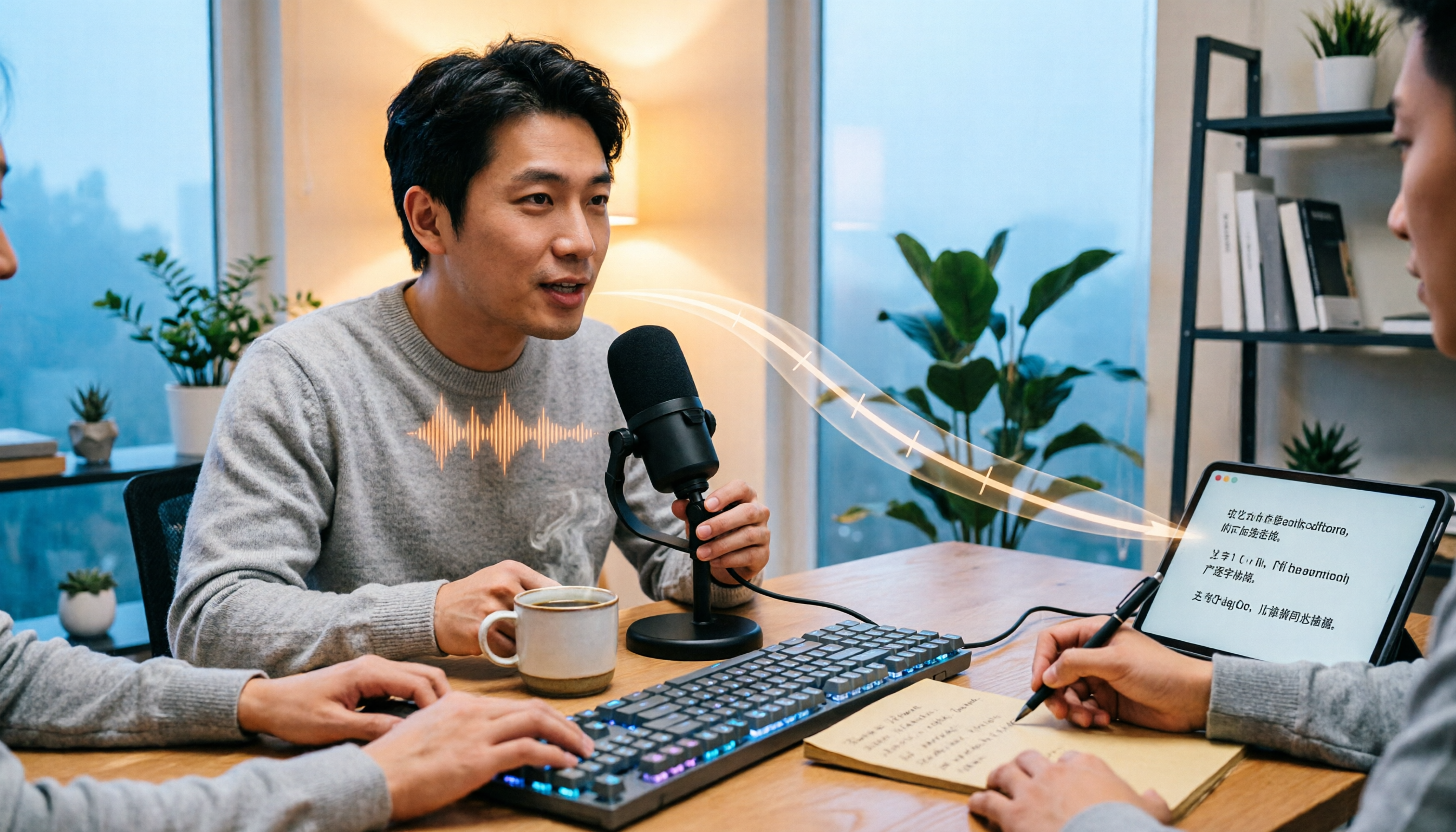
2026 Live Transcription Tools Compared: Real-Time Captions for Live Streams and Which Handles Chinese Best
People searching for "live transcription online" are usually looking for one of two things: synchronized captions while watching a live stream, or turning ongoing audio into editable text in real time. This article evaluates Tinrec, Transcribe.com, Notta, and cSubtitle based on three criteria—real-time output while speaking, usability right after the meeting, and team handoff—and summarizes hands-on impressions, free tiers, and limitations to help you decide which tool to use.
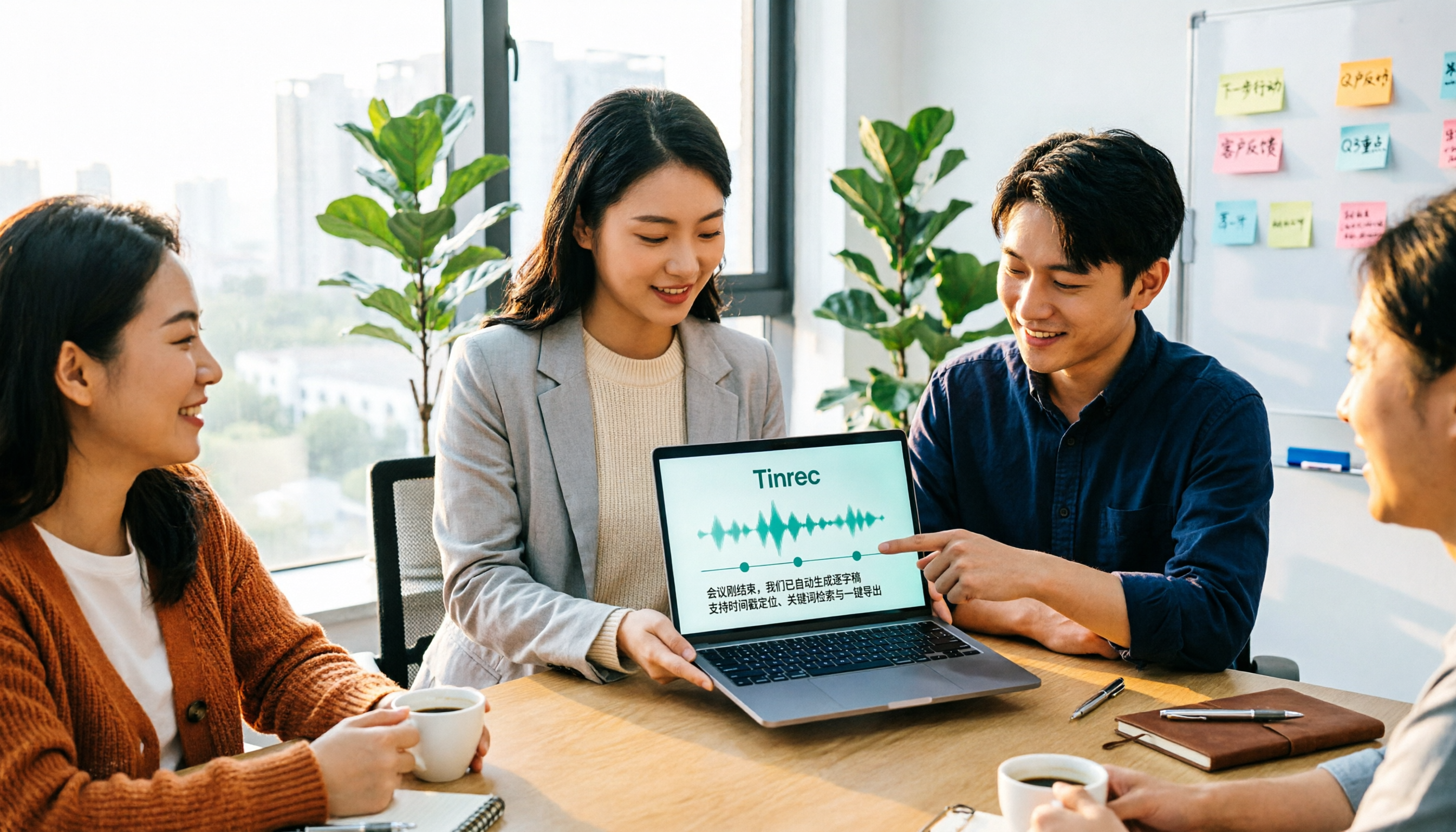
4 Live Transcription Apps Tested for 2026: Which One Actually Saves You Time After Meetings?
The real work begins after the meeting ends. This hands-on comparison of Tinrec, Notta, Otter.ai, and Granola looks at how each live transcription tool records audio, handles Chinese, organizes post-meeting notes, and supports team collaboration. We also break down four key selection criteria and common pitfalls to help you find the one that truly saves time.

The Complete Guide to Real-Time Transcription Translation in 2026: 5 Key Criteria to Choose the Right Tool and Never Miss a Point
There are many real-time transcription translation tools, but few can record and translate on the fly and still organize everything after the meeting. This guide uses 5 key criteria to help you identify your needs, compares Tinrec, Otter.ai, Notta, and Google Translate's transcription feature in terms of differences, free quotas, and limitations, and helps you choose the right tool for your meeting scenario.

How to Get Free Real-Time Online Transcription in 2026: 5-Step Guide and Why Tinrec Beats Yating Transcription
How to get free real-time online transcription in 2026? This article starts with common pitfalls, compares Tinrec and Yating Transcription in real-time recording, post-meeting organization, cross-platform support, and team collaboration, and provides a 5-step guide to using Tinrec's free version for transcripts, summaries, and action items.

2026 Live Transcription Showdown: Which Free Version Is Enough?
How to choose a free live transcription tool? This article compares Tinrec and Yating Transcription across five dimensions—live transcription initiation, what you can test in the free version, post-meeting organization, cross-device access, and team knowledge retention—to help you decide which one suits meetings, classes, and interview notes.

4 Live Transcription Apps Tested: Which Is Best for Chinese Meetings in 2026?
Live transcription is more than converting speech to text. Starting from a real interview pain point, this article shows what a usable transcript looks like, breaks down 4 key buying criteria, and compares Tinrec, Yating Transcription, cSubtitle, and Otter.ai on real-time capability, post-meeting organization, and team collaboration. It also includes a pitfalls guide and a starter checklist.

4 Live Transcription Apps Tested for 2026: Which Handles Chinese Meetings and No-Bot Recording Best?
How to choose a live transcription app? This article examines four key aspects: audio capture method, post-meeting output, Chinese recognition, and data ownership. It compares Tinrec, Notta, Otter.ai, and Granola through hands-on testing, and outlines four common purchasing pitfalls to help you determine which tool truly saves time on meeting organization.

4 Free Real-Time Transcription AI Tools Compared in 2026: Quotas, Chinese Recognition, and Post-Meeting Organization
There are many free real-time transcription AI tools, but their quota calculations, definitions of 'real-time,' and post-meeting organization capabilities vary widely. This article starts with common misconceptions, outlines four key purchasing criteria, and compares the free plans, Chinese language support, and team collaboration features of Tinrec, inFin, cSubtitle, and Otter.ai to help you choose one that meets your needs without pitfalls.

2026 Real-Time Transcription Tools Compared: 5 Top Picks Tested — What Makes Live Text Actually Work?
Real-time transcription isn't just hitting record — it's about where your meeting happens and what you need afterward. We tested Tinrec, Yating, Vocol.ai, Transcribe, and cSubtitle against 5 key buying criteria to help you choose the right tool for personal or team use, plus 4 common pitfalls to avoid.