

Turn recordings into transcripts and summaries in minutes
Upload audio or video for multilingual transcription, AI notes, and action items
Have you ever calculated how much time you spend after a 1-hour client meeting? Listening to the recording, extracting key points, and listing action items often takes another 1 to 2 hours. If you have 5 to 15 meetings per week, just organizing meeting notes can eat up a large portion of your work time.
For sales, business development, and account management professionals, meetings are not just discussions; they are the starting point for commitments and actions. If the client's requirements, promised procurement timelines, and specifications to be confirmed in the next step are not accurately recorded and converted into actionable materials, follow-up can easily fall through the cracks.
This article starts from the real work scenarios of sales and business professionals, first discussing what to consider before converting speech to text, then using Tinrec as an example to demonstrate a complete workflow, and finally comparing other tools to help you choose the right solution for your workflow.
Speech to Text: First Decide Whether You Need a Verbatim Transcript or Actionable Materials
Before you start transcribing, think about what you need: just a verbatim transcript, or actionable materials?
- Verbatim transcript: Converts speech into text exactly as spoken, suitable for occasions requiring a complete record, but you still need to organize key points and action items yourself.
- Actionable materials: In addition to the transcript, includes summaries, chapters, key points, action items, and can even generate action plans, follow-up materials, or reports.
For sales and business professionals, the latter is the real time-saver. After a client meeting, you don't need a "conversation log" but an action list of "what to do next."
Key Point 1 | Input Sources: How to Cover In-Person Meetings, Online Meetings, and Existing Recordings
Different meeting scenarios require different input methods. When choosing a tool, first confirm whether it can cover all your meeting scenarios:
| Scenario | Input Method | Tool Requirements |
|---|---|---|
| In-person meetings or interviews | Mobile recording, real-time recording | Supports mobile recording with real-time transcription |
| Online meetings (Zoom, Meet, Teams) | Desktop recording of system audio | No need for a bot to join the meeting |
| Existing recordings | Upload audio or video files | Supports multiple format imports |
For example, Tinrec supports real-time recording, bot-free online meeting recording, and audio/video file import, covering the three common scenarios above.
Key Point 2 | Transcription Quality: Don't Just Look at Official Accuracy Claims
Many tools claim "98% accuracy," but that is usually measured in a quiet recording studio. In real meeting rooms, there are air conditioning sounds, keyboard clicks, and people talking over each other—accuracy drops significantly.
Factors affecting transcription quality include:
- Recording quality: The closer to the microphone, the clearer the audio.
- Background noise: Environments like coffee shops or busy streets can interfere with recognition.
- Accents and technical jargon: Special accents or industry terms may be misrecognized.
We recommend trying free trials with your own recordings, not just relying on advertisements.
Method 1 | Using Tinrec to Convert Speech to Text: From Recording to Transcript
Here are the specific steps using Tinrec as an example, from recording to transcript:
Stop organizing recordings by hand
Upload audio or video and automatically get a transcript, summary, and action items
1. Record or import audio: Open Tinrec, click the record button to start recording; or directly upload an existing audio/video file.
2. Wait for transcription to complete: AI automatically converts speech to a transcript and generates a summary, chapters, and key points.
3. Review and edit: Check the transcript for recognition errors and manually correct if necessary.
4. Use AI to organize: Use features like AI summaries and action item extraction to quickly grasp meeting key points.
5. Export and share: Export the organized content as a text file, PDF, or share to other tools.
Method 2 | Using Built-in Phone Features or Other Tools: Suitable for Light Use
If you only occasionally need to convert a short speech to text, built-in voice input on your phone or free online tools can be a quick fix:
- Built-in voice input on phones: Both iOS and Android have built-in voice input features, suitable for short voice messages.
- Free online tools: Such as cSubtitle, VEED.IO, etc., where you upload an audio file and get text, but they often have time or feature limitations.
These methods are suitable for light use, but if you need meeting-level organization and collaboration, we recommend using professional tools.
After Transcription: How to Turn Text into Actionable To-Dos and Follow-Up Materials
Transcription is just the first step; the real value lies in turning text into actionable materials. For example, with Tinrec, the AI assistant can further process action items from meeting minutes into:
- Action plans: Clearly define what to do next, who is responsible, and when to complete it.
- Follow-up materials: Commitments made in client meetings, organized into follow-up emails or documents that can be sent.
- Reports or tables: Organize decisions and progress from management meetings into reports or tables.
For example, after a sales meeting, the AI assistant can automatically generate a client follow-up plan based on the discussion in the transcript, listing the client's needs, commitments, and next steps.
Team Collaboration: Making Meeting Materials a Team Asset
When meeting materials are scattered across personal devices or chat logs, team collaboration can easily break down. Tinrec's team edition provides a team space for centralized storage and sharing of meeting materials:
- Team space: Store meeting recordings, transcripts, summaries, and action items in a unified team space, accessible and searchable by members.
- Shared meeting materials: New members can view historical meeting materials to quickly understand project context.
For example, a sales team's weekly client meeting records can be stored in a team space, allowing other members to review client needs and avoid redundant communication.
Important Considerations: Privacy, Accuracy, and Human Review
When using speech-to-text tools, there are several things to pay special attention to:
- Privacy and compliance: Before recording and transcribing, comply with local laws and obtain consent from participants when necessary.
- Accuracy: AI transcription can make mistakes; for important content, cross-check with the transcript timestamps and the recording playback.
- Human review: AI-generated materials cannot directly replace human judgment; important decisions and externally sent content require human review.
In summary, converting speech to text is not just about turning sound into text, but turning meetings into actionable materials. When choosing a tool, first confirm it covers your input sources, then evaluate transcription quality and AI organization capabilities, and finally consider team collaboration needs. We hope this article helps you choose the right solution for your workflow.
References
- Online AI Speech, Video, and Recording to Text - Free Trial - cSubtitle
- SoundType AI Ultra-Precise Transcripts, Speech to Text, AI Dictation
- Convert Audio to Text - Real-Time AI Transcription - VEED.IO
- Speech to Text - How to Quickly Convert Online Recordings to Text - cSubtitle
- Speech to Text - Google Play App
Turn every recording into actionable outcomes
Get 60 free transcription minutes when you sign in. No credit card required.
Related Reading
You might also like
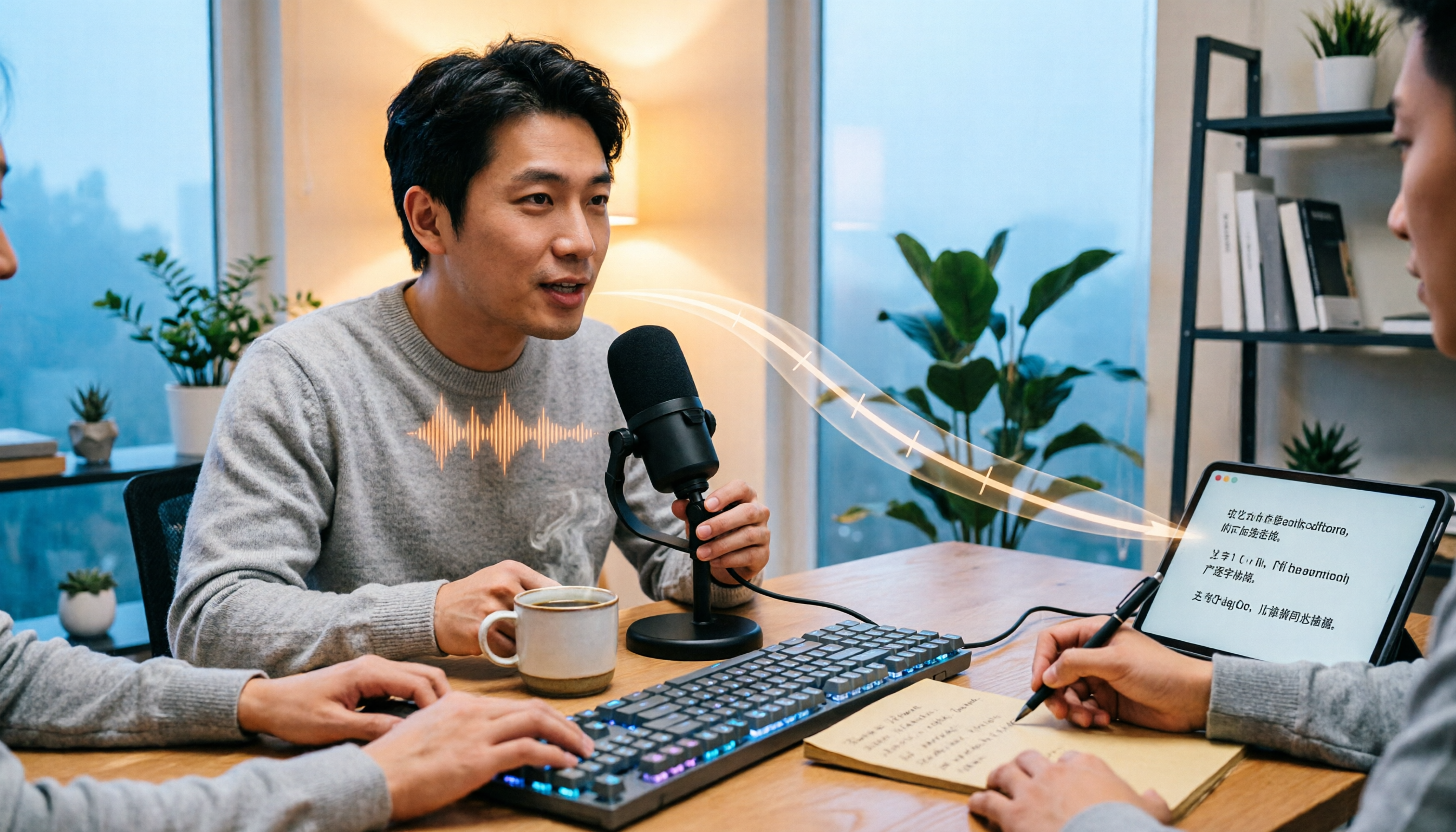
2026 Live Transcription Tools Compared: Real-Time Captions for Live Streams and Which Handles Chinese Best
People searching for "live transcription online" are usually looking for one of two things: synchronized captions while watching a live stream, or turning ongoing audio into editable text in real time. This article evaluates Tinrec, Transcribe.com, Notta, and cSubtitle based on three criteria—real-time output while speaking, usability right after the meeting, and team handoff—and summarizes hands-on impressions, free tiers, and limitations to help you decide which tool to use.
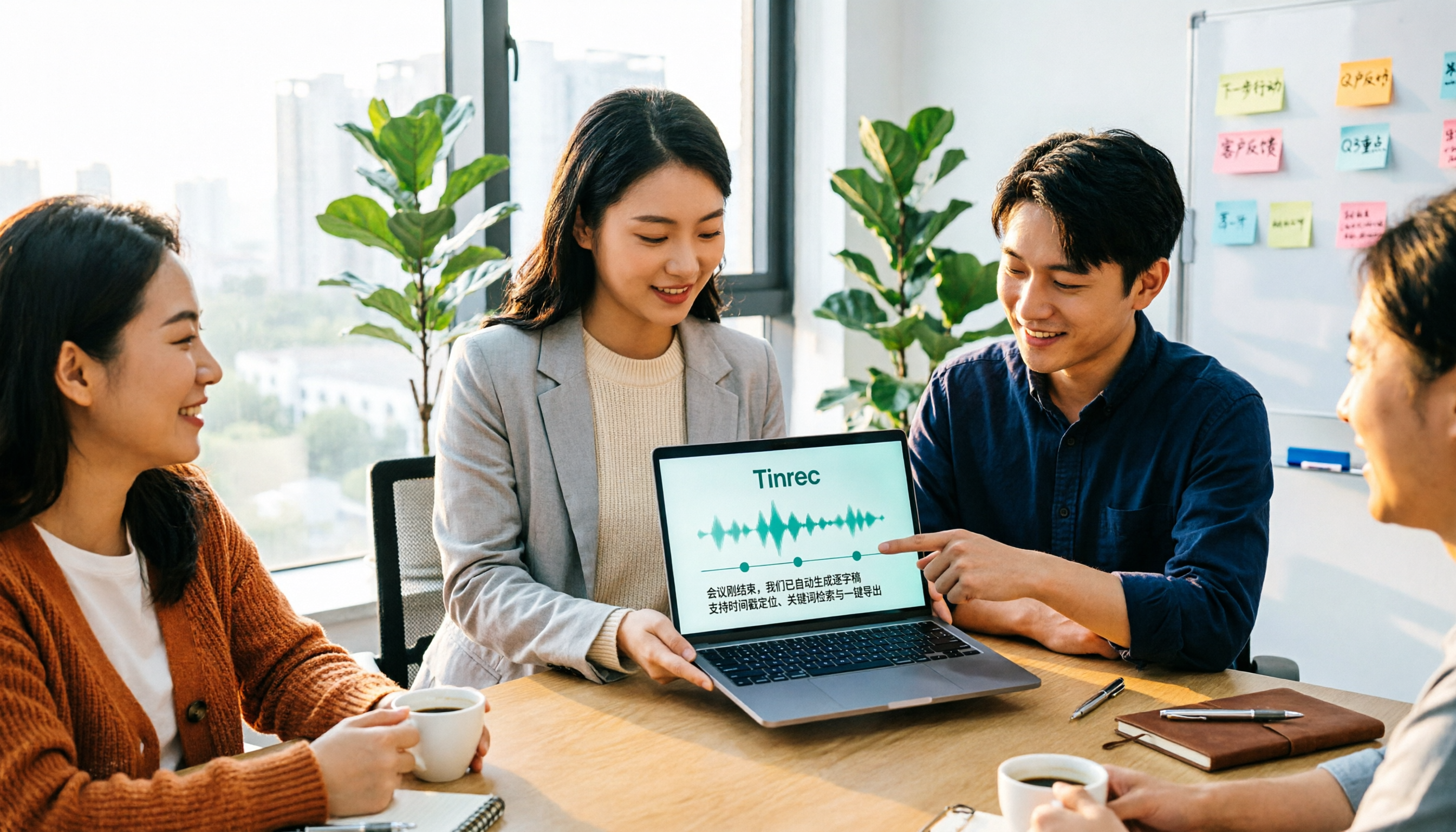
4 Live Transcription Apps Tested for 2026: Which One Actually Saves You Time After Meetings?
The real work begins after the meeting ends. This hands-on comparison of Tinrec, Notta, Otter.ai, and Granola looks at how each live transcription tool records audio, handles Chinese, organizes post-meeting notes, and supports team collaboration. We also break down four key selection criteria and common pitfalls to help you find the one that truly saves time.

The Complete Guide to Real-Time Transcription Translation in 2026: 5 Key Criteria to Choose the Right Tool and Never Miss a Point
There are many real-time transcription translation tools, but few can record and translate on the fly and still organize everything after the meeting. This guide uses 5 key criteria to help you identify your needs, compares Tinrec, Otter.ai, Notta, and Google Translate's transcription feature in terms of differences, free quotas, and limitations, and helps you choose the right tool for your meeting scenario.
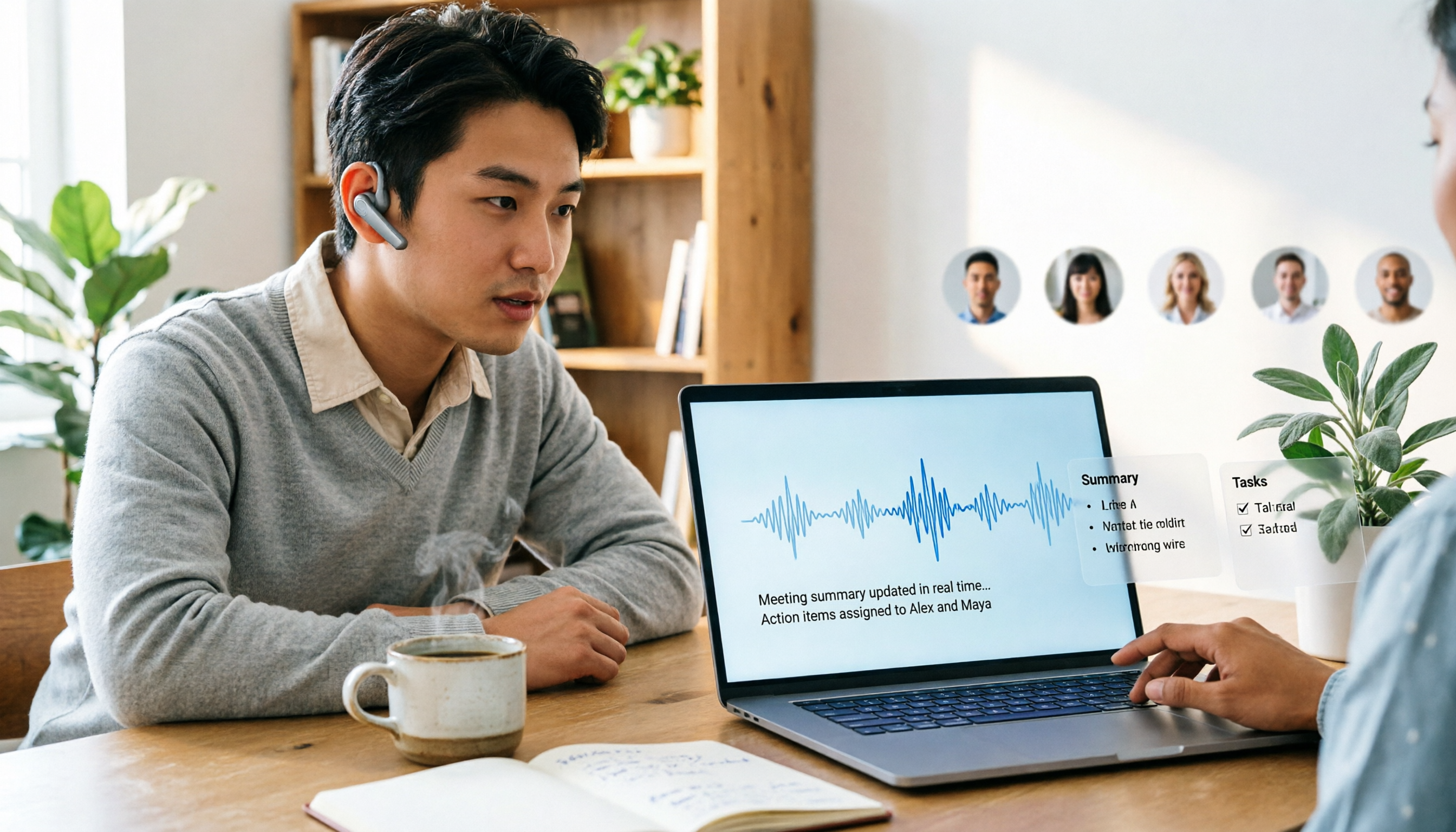
How to Get Free Real-Time Online Transcription in 2026: 5-Step Guide and Why Tinrec Beats Yating Transcription
How to get free real-time online transcription in 2026? This article starts with common pitfalls, compares Tinrec and Yating Transcription in real-time recording, post-meeting organization, cross-platform support, and team collaboration, and provides a 5-step guide to using Tinrec's free version for transcripts, summaries, and action items.

2026 Live Transcription Showdown: Which Free Version Is Enough?
How to choose a free live transcription tool? This article compares Tinrec and Yating Transcription across five dimensions—live transcription initiation, what you can test in the free version, post-meeting organization, cross-device access, and team knowledge retention—to help you decide which one suits meetings, classes, and interview notes.

4 Live Transcription Apps Tested: Which Is Best for Chinese Meetings in 2026?
Live transcription is more than converting speech to text. Starting from a real interview pain point, this article shows what a usable transcript looks like, breaks down 4 key buying criteria, and compares Tinrec, Yating Transcription, cSubtitle, and Otter.ai on real-time capability, post-meeting organization, and team collaboration. It also includes a pitfalls guide and a starter checklist.

4 Live Transcription Apps Tested for 2026: Which Handles Chinese Meetings and No-Bot Recording Best?
How to choose a live transcription app? This article examines four key aspects: audio capture method, post-meeting output, Chinese recognition, and data ownership. It compares Tinrec, Notta, Otter.ai, and Granola through hands-on testing, and outlines four common purchasing pitfalls to help you determine which tool truly saves time on meeting organization.

4 Free Real-Time Transcription AI Tools Compared in 2026: Quotas, Chinese Recognition, and Post-Meeting Organization
There are many free real-time transcription AI tools, but their quota calculations, definitions of 'real-time,' and post-meeting organization capabilities vary widely. This article starts with common misconceptions, outlines four key purchasing criteria, and compares the free plans, Chinese language support, and team collaboration features of Tinrec, inFin, cSubtitle, and Otter.ai to help you choose one that meets your needs without pitfalls.

2026 Real-Time Transcription Tools Compared: 5 Top Picks Tested — What Makes Live Text Actually Work?
Real-time transcription isn't just hitting record — it's about where your meeting happens and what you need afterward. We tested Tinrec, Yating, Vocol.ai, Transcribe, and cSubtitle against 5 key buying criteria to help you choose the right tool for personal or team use, plus 4 common pitfalls to avoid.