

Turn recordings into transcripts and summaries in minutes
Upload audio or video for multilingual transcription, AI notes, and action items
First, a Common Misconception: Thinking Google Meet Is Only for Meetings
The first time I used Meet, I thought it was just "that Google thing where you can do video calls." Later, I realized many people get stuck in one place: treating Meet as a simple "meeting link generator" without understanding its limitations, free-tier allowances, and what it actually became after merging with Google Duo and Hangouts.
This article doesn't start with an encyclopedia definition like "Google Meet is a video communication service developed by Google." Instead, I want to organize its features, limitations, and practical use cases from a student's perspective. If you're just trying to hold a small group discussion, attend an online class, or figure out whether the free version is enough, this guide can help you avoid some unnecessary detours.
What Problem Does Google Meet Actually Solve?
Google Meet is a video conferencing tool within the Google Workspace ecosystem, designed to let people in different locations have real-time video calls, share screens, and send messages. For students, its most direct value is this: you don't need to install complex software—just a Google account and a browser are enough to quickly join a discussion.
It supports Android, iOS, and the web version, and it became compatible with Android TV in 2022. The original Google Duo was merged into Meet in 2022, while Google Hangouts was shut down in November 2022, with Meet taking over video and Google Chat handling messaging. So the Meet you see on your phone now is actually the merged version of the original Duo and Meet.
Is the Free Version Enough for Students?
From my own experience: if you only need occasional group discussions or online classes, the free version is basically sufficient. You can join meetings via browser or mobile app, share your screen, and use your microphone and camera.
But note that Google places some advanced features in Google One, Google Workspace Business, and Enterprise plans. For example, AI-based noise cancellation, live captions, and some real-time sharing features may not be fully available on free personal accounts. The official wording is: "This feature is available for specific Google One, Google Workspace Business, and Google Workspace Enterprise plans."
For students on a budget, a more practical way to decide is to first check whether the Google account provided by your school includes Workspace benefits. Many school email addresses are actually Workspace accounts, meaning you already have indirect access to some advanced features without paying extra.
Privacy and Data Retention: What Students Should Know Before Using Meet
This is an area I think many people overlook. Google's privacy policy for Meet reserves the right to collect call duration, participant identity, and participant IP addresses. While Google states that consumer call data is not used for ad targeting, call data may still be collected.
Stop organizing recordings by hand
Upload audio or video and automatically get a transcript, summary, and action items
Additionally, business or enterprise calls are handled differently from regular consumer calls. Regular consumer calls are not recorded or stored, but if a call is initiated through a Workspace account, the policy may differ.
For students, if you plan to record class content or group discussions using Meet, the safer approach is to get consent from participants first and confirm the type of account you're using. Don't assume all calls are private—especially since school or internship company accounts may be subject to different policies.
Recording and Transcription: Meet Doesn't Do It, but You Can Pair It with Tools
This is a common sticking point for many classmates. Meet's focus is real-time video, not post-class transcripts or meeting summaries. If you want to turn an online class or group discussion into text notes, Meet's built-in features may not be enough.
In my own workflow, I use tools like Tinrec to fill this gap. Tinrec's desktop version can directly capture your computer's system audio, so you don't need to add a meeting bot to your Meet call. In other words, you don't have to have a strange "participant" in your class—just open the desktop app, and it can record the audio from Meet, then generate real-time transcripts, summaries, and action items.
This offers two practical benefits for students: first, you don't have to hunt around in Meet for a recording feature; second, after the session, you can use AI to ask questions like "What were the key points for the final project the professor just mentioned?" without having to re-listen to the entire recording.
Common Inefficient Practice: Using Meet as a Note-Taking Tool
I made this mistake in my freshman year: I kept Meet open during class, thinking, "I'll record it and organize it later." But before finals, I realized I didn't want to re-listen to two-hour recordings, and I couldn't find the key points.
Meet solves "real-time communication," not "post-class organization." If you need to turn online course content or meeting discussions into searchable, summarizable material, you should pair it with a transcription tool rather than expecting Meet to take notes for you.
If You Just Need Simple Video Calls, Meet Is a Good Choice
For students, Google Meet's biggest advantage is its low barrier to entry. With just a Google account, you can start video calls, share your screen, and use text chat without paying extra. For general group discussions, online classes, and remote interviews, it's more than sufficient.
But it's not a one-size-fits-all tool. The free version has limitations, privacy policies need attention, and recording or transcription isn't its core strength. If you need to turn online classes or meeting content into reviewable material, I recommend pairing it with a recording-to-text tool rather than relying solely on Meet.
In short: Google Meet is a low-barrier video tool that's great for quick sessions, but don't expect it to organize your post-class notes. Use Meet for video, and use a transcription tool for post-session organization—that combination is the most practical for students.
References
Turn every recording into actionable outcomes
Get 60 free transcription minutes when you sign in. No credit card required.
Related Reading
You might also like

Where Do Google Meet Recordings Go in 2026? 4 Tested Ways to Find Them—From Drive to Calendar
Google Meet recordings aren't saved to your computer—they're automatically stored in the meeting organizer's Google Drive folder, 'Meet Recordings.' This article covers 4 ways to locate them, how to download and share, and compares AI meeting tools like Tinrec that fill the gaps in Google Meet's built-in features.

3 Google Meet Meeting Recorders Tested in 2026: Which One Turns Meetings into Trackable To-Dos?
Google Meet makes meetings easy, but post-meeting follow-up is hard. This article tests three different approaches to meeting notes—Tinrec, Granola, and Otter—covering bot-free recording, Chinese summaries, to-do extraction, and team data management, to help you decide which is best for office workers in Taiwan.

Where Are Google Meet Recordings Stored in 2026? 5 Locations Explained
Google Meet recordings aren't saved to your computer—they're automatically stored in the meeting organizer's Google Drive under the 'Meet Recordings' folder. This article covers the 5 most common storage locations and how to find them, plus download, sharing permissions, and common reasons why recordings go missing, saving you from digging through your inbox.

Google Meet Whiteboard Tools Compared in 2025: Which One Is Best for Team Brainstorming?
What whiteboard options does Google Meet offer in 2025? This hands-on comparison of Whiteboard for Google Meet and Collaborative Whiteboard covers installation, collaboration experience, storage capabilities, and free plans to help you find the best whiteboard tool for your team's remote collaboration needs.

Where Is the Google Meet Link in 2026? 3 Common Mistakes and How to Fix Them
Can't find your Google Meet link? This guide walks you through the complete steps to retrieve your meeting link from Google Calendar, Gmail, and meet.google.com, and explains why using the URL bar is the most foolproof method.
2026 Google Meet Classroom Interaction Features Compared: Which One Best Confirms Whole-Class Understanding in Real Time?
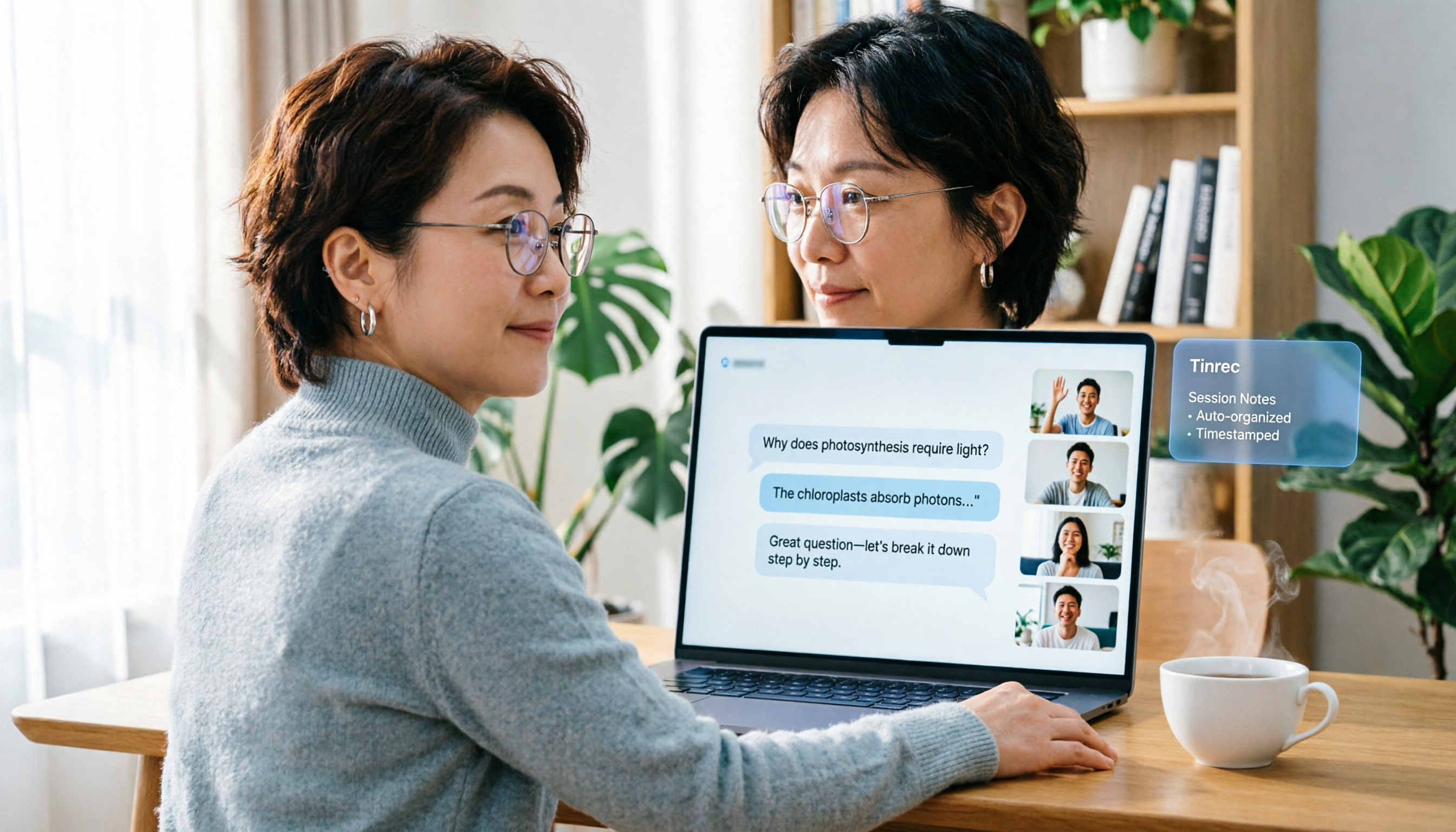
Teachers in Google Meet virtual classrooms need to check all students' understanding simultaneously. Should they use chat, polls, Q&A, or breakout rooms? This hands-on comparison evaluates four features based on ease of use, response records, and whole-class participation, and explains how to pair them with Tinrec to turn class discussions into searchable teaching records.

Google Meet Time Limit in 2026: Free 60-Minute vs 24-Hour Plans – How to Choose?
Google Meet's free group calls are capped at 60 minutes, while one-on-one calls can last up to 24 hours. This article breaks down time limits across plans, what happens when you hit the cap, and how to use Tinrec to preserve your meeting content.

Google Meet App in 2026: How to Record, Transcribe, and Summarize Meetings Without Bots – A Complete Guide
What is the Google Meet app? This guide, based on hands-on testing from a small team manager's perspective, explains Meet's core uses, free-tier limitations, and how to use Tinrec desktop to record Meet meetings without bots, automatically generating transcripts, summaries, and action items.

What Is Google Meet Used For in 2026? 5 Key Uses and 3 Common Misconceptions
Google Meet is more than just a video conferencing tool. From a Hong Kong professional's perspective, this article breaks down the 5 practical uses of Google Meet, the limitations of the free version, and how to pair it with AI meeting tools like Tinrec to save time on meeting notes.