
Turn recordings into transcripts and summaries in minutes
Upload audio or video for multilingual transcription, AI notes, and action items
Many people encounter the dilemma of "unable to record" or "screen recording lacks the other person's voice" when using LINE for important business communication or interviews, especially iPhone users who are restricted by iOS privacy policies—it's even more challenging. Plus, after recording, manually transcribing the audio often takes a lot of time. This article breaks down the common limitations of LINE call recording and provides a comparison table of 5 cross-device (iOS/Android/computer) solutions, step-by-step guides, and a FAQ.
Quick Navigation Conclusions:
- For free mobile-only recording: Android users can use third-party call recording apps; iPhone users are advised to use the desktop version of LINE or side-record with another device.
- For post-meeting organization and efficiency: Pair with an AI speech-to-text tool like Tinrec to convert recordings into transcripts and decision summaries, significantly reducing review time.
Why Is Recording LINE Calls So Difficult? Current State and 3 Main Pain Points
When using LINE for calls, users commonly face these three challenges:
- Strict system privacy restrictions: iOS systems, due to privacy protection, completely prohibit third-party apps (including screen recording) from capturing both sides of a call, so iPhone recordings often only capture the screen or one side's audio.
- Time-consuming post-recording transcription: Even if you successfully record a call, traditional audio files have very low information density. A 1-hour call can take 1.5 to 2 hours to manually type into text.
- Lack of actionable outcomes: Most recordings are kept as "reference" audio files and cannot directly generate actionable conclusions or to-do items, causing meeting follow-ups to be forgotten.
LINE Call Recording Solutions Unveiled (by Device)
For different devices, common solutions to obtain LINE call recordings are as follows:
- iPhone (iOS) Users: The safest method is to turn on speakerphone and use another phone or a physical voice recorder for "physical side-recording"; alternatively, use the desktop version of LINE for the call and record on the computer.
- Android Users: Some branded phones (e.g., Samsung) can use third-party apps (e.g., Cube ACR) for in-app recording, but compatibility depends on the Android OS version.
- Desktop (Windows/Mac) Users: Use the built-in voice recorder, QuickTime Player, or professional recording software (e.g., OBS) to capture system audio and microphone input.
Comparison Table: 5 LINE Call Recording & Transcription Tools
After obtaining the audio, how to process the voice information is key. Below is an objective comparison across dimensions of "recording methods" and "transcription tools":
| Dimension | iOS Built-in Screen Recording | Cube ACR (Android App) | Desktop Recording Software (e.g., OBS) | Physical Recorder Side-Recording | Tinrec (AI Voice Assistant) |
|---|---|---|---|---|---|
| Supported Device/Scenario | iPhone (usually no audio) | Android phones | Windows / Mac computers | All physical speakerphone scenarios | Web / iOS / Android (processes audio files) |
| Real-time Transcription | ❌ Not supported | ❌ Not supported | ❌ Not supported | ❌ Not supported | ✅ Supports real-time transcription & multilingual recognition |
| Transcripts/Action Items | ❌ Video only | ❌ Audio only | ❌ Audio only | ❌ Audio only | ✅ Auto-generates meeting minutes & to-do lists |
| AI Query Interaction | ❌ None | ❌ None | ❌ None | ❌ None | ✅ Supports semantic-based conversational queries |
| Export & Integration | Export MP4 | Export audio formats | Export audio formats | Export audio formats | Export multiple text/document formats |
| Price/Free Tier | Completely free | Free basic / Paid advanced | Completely free | Hardware purchase required | Free plan: 100 minutes/month |
Stop organizing recordings by hand
Upload audio or video and automatically get a transcript, summary, and action items
Tinrec In-Depth Review: Complete Workflow from Recording to Action Items
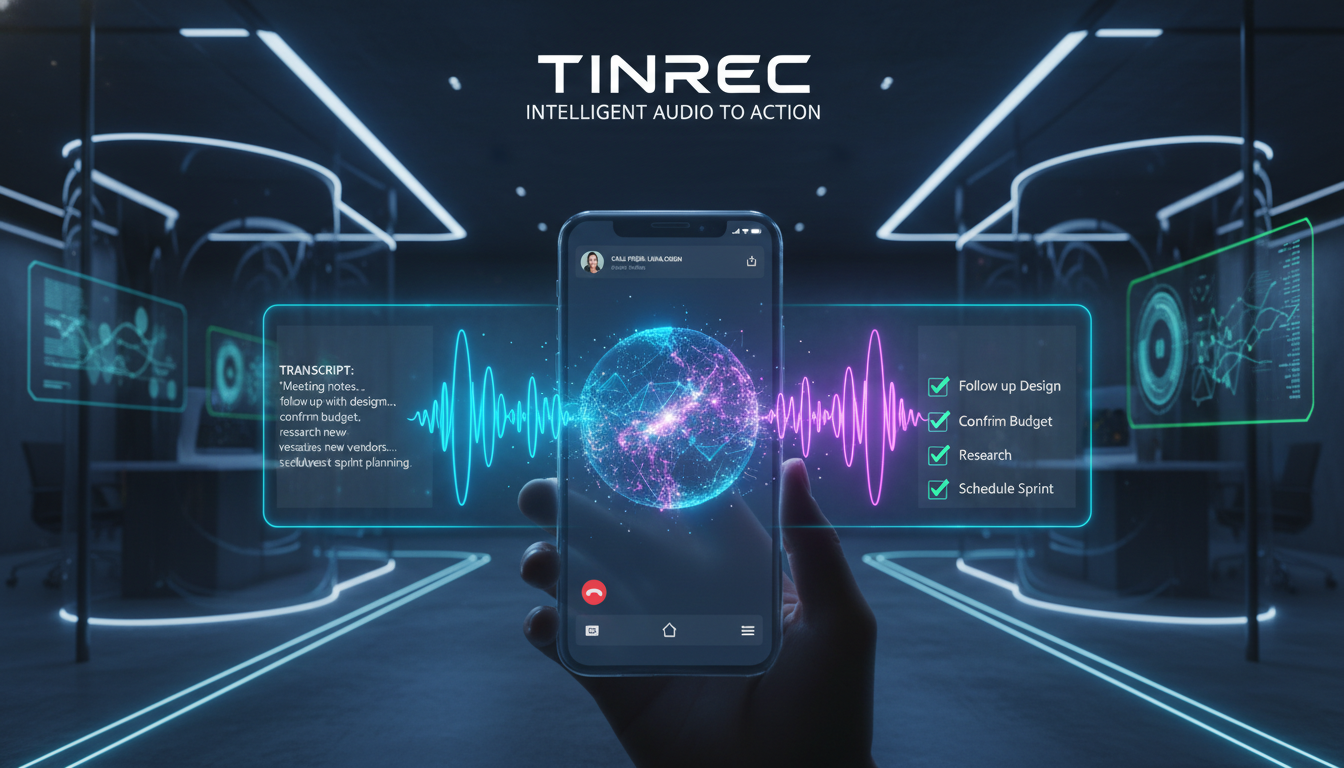
If you have already solved the "how to get the audio file" issue (e.g., recording a LINE call on your computer), the next pain point is "how to digest the content." Taking Tinrec as an example, it is not merely a recording tool but a workflow covering "Recording → Understanding → Action."
- Applicable Scenarios: Ideal for high-information-density communications such as remote meeting notes, client interview collation, and project discussions.
- Test Performance: It not only supports uploading audio files for transcription but also, if you use LINE on desktop with speakerphone for meetings, you can directly open the Tinrec web version for "real-time recording-to-text." The system automatically recognizes 10+ languages (Chinese, English, Japanese, etc.) and distinguishes different speakers.
- Usage Boundaries: Tinrec itself cannot bypass iOS system restrictions to forcibly record LINE mobile calls; therefore, on mobile devices, you still need to externally import audio files, or use the real-time recording feature during physical meetings/desktop speakerphone sessions.
Step-by-Step Tutorial: 4 Steps to Convert a LINE Call Recording into Meeting Notes
Below is a demonstration of how to use conventional recording methods combined with Tinrec to process the subsequent meeting transcript and summary:
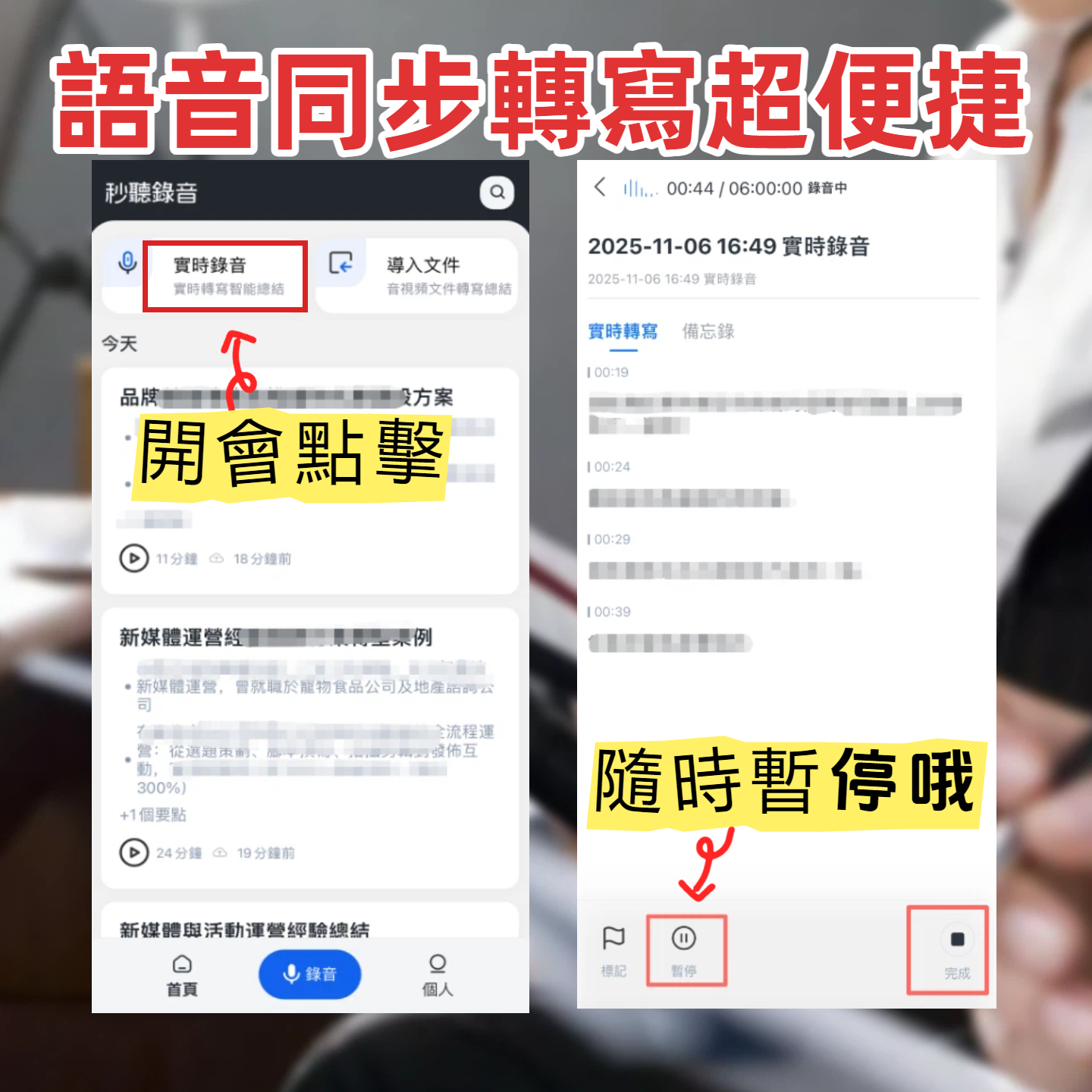
Step 1: Obtain LINE Call Audio or Start Real-Time Recording
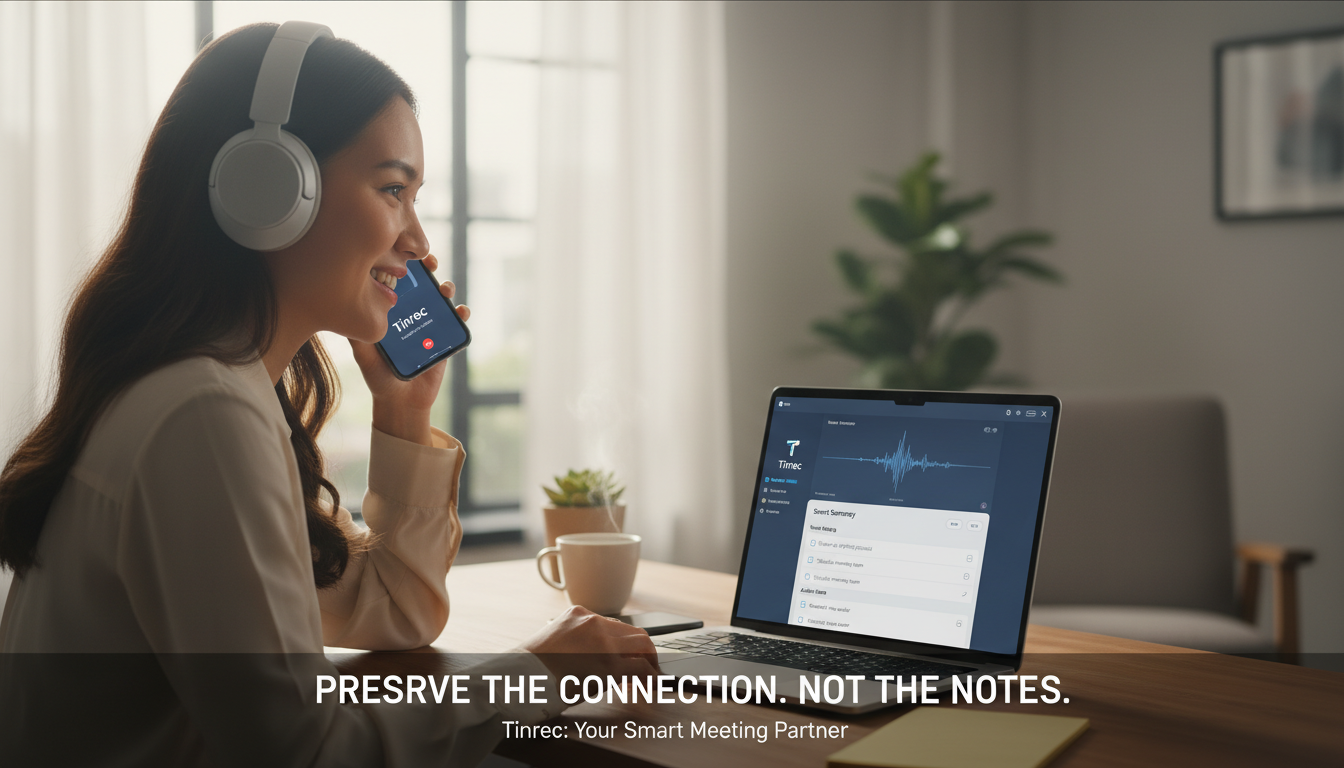
If using the desktop version of LINE, you can directly enable the "Real-time Recording-to-Text" feature on the Tinrec web page, point the microphone at the speaker, and the text will be transcribed with minimal delay.
Step 2: Upload Audio or Video Files
If you have recorded LINE call audio (e.g., MP3, M4A) via side-recording or other software, use the "Audio File to Text" feature. After uploading, the system will quickly generate a transcript.
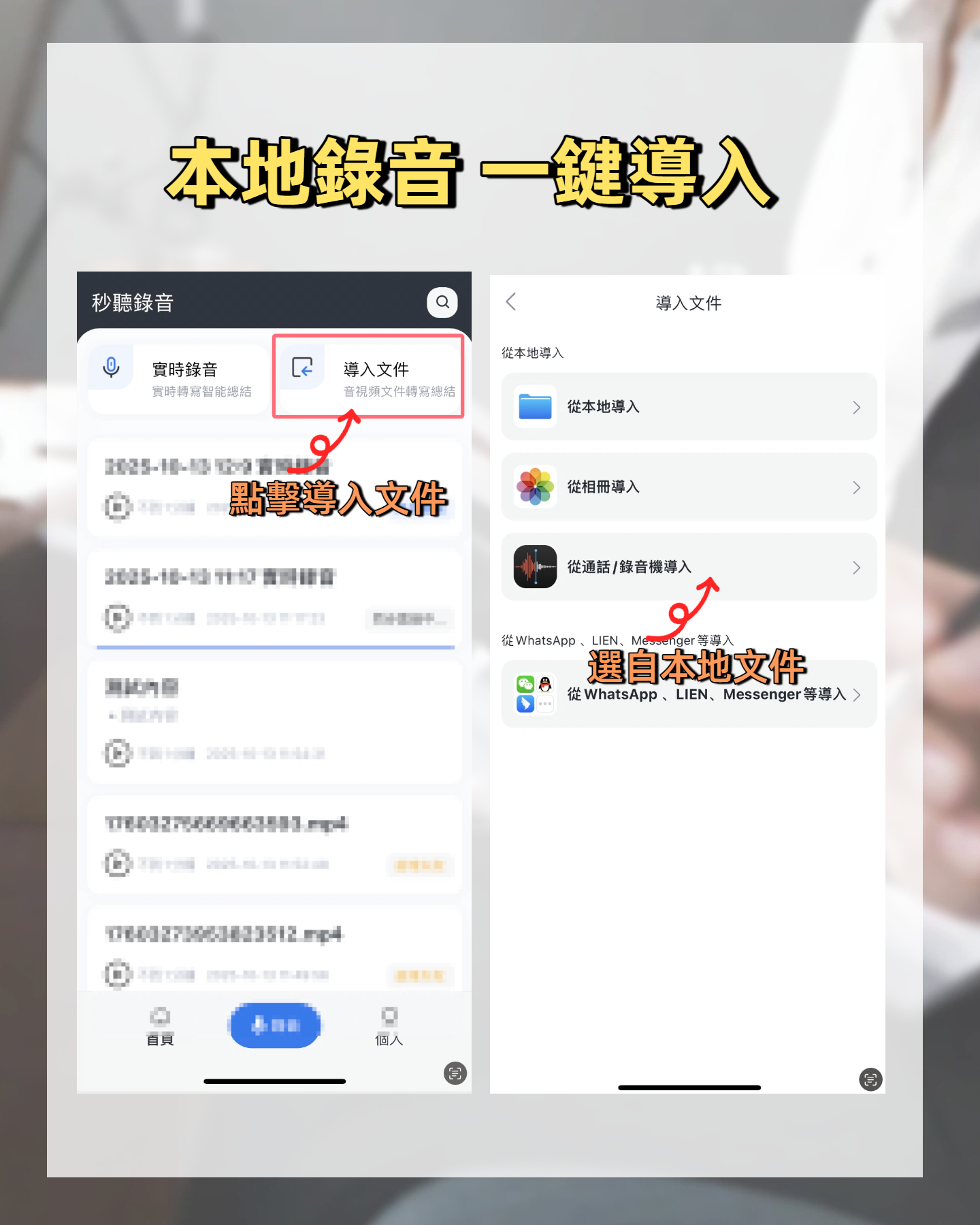 (Note: For remote education or meetings with cloud video links, you can also paste the video link for direct transcription.)
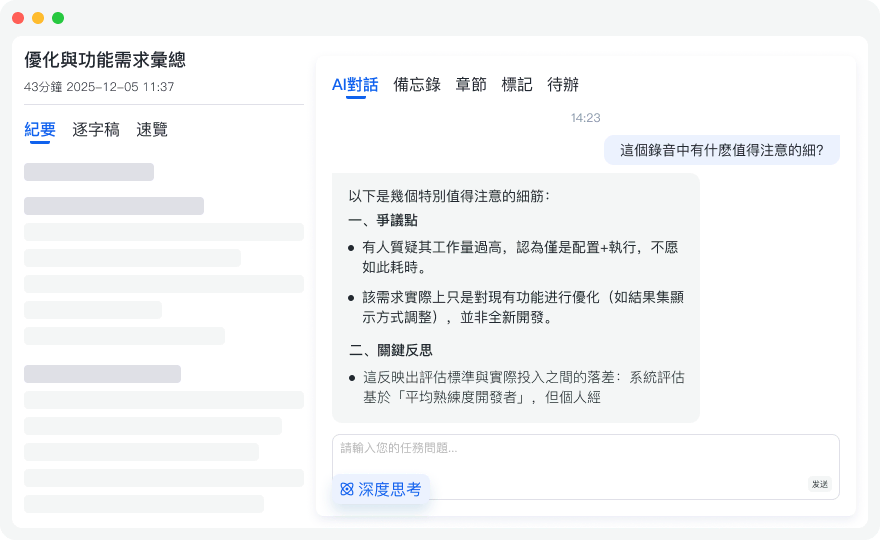
Step 3: Use AI Chat to Query Key Content
Traditional transcripts only allow Ctrl+F to search keywords. With Tinrec's "AI Chat Query" feature, you can directly ask the AI questions like, "What was the quote mentioned in the call?" The AI will provide an accurate answer based on the recording's semantics.
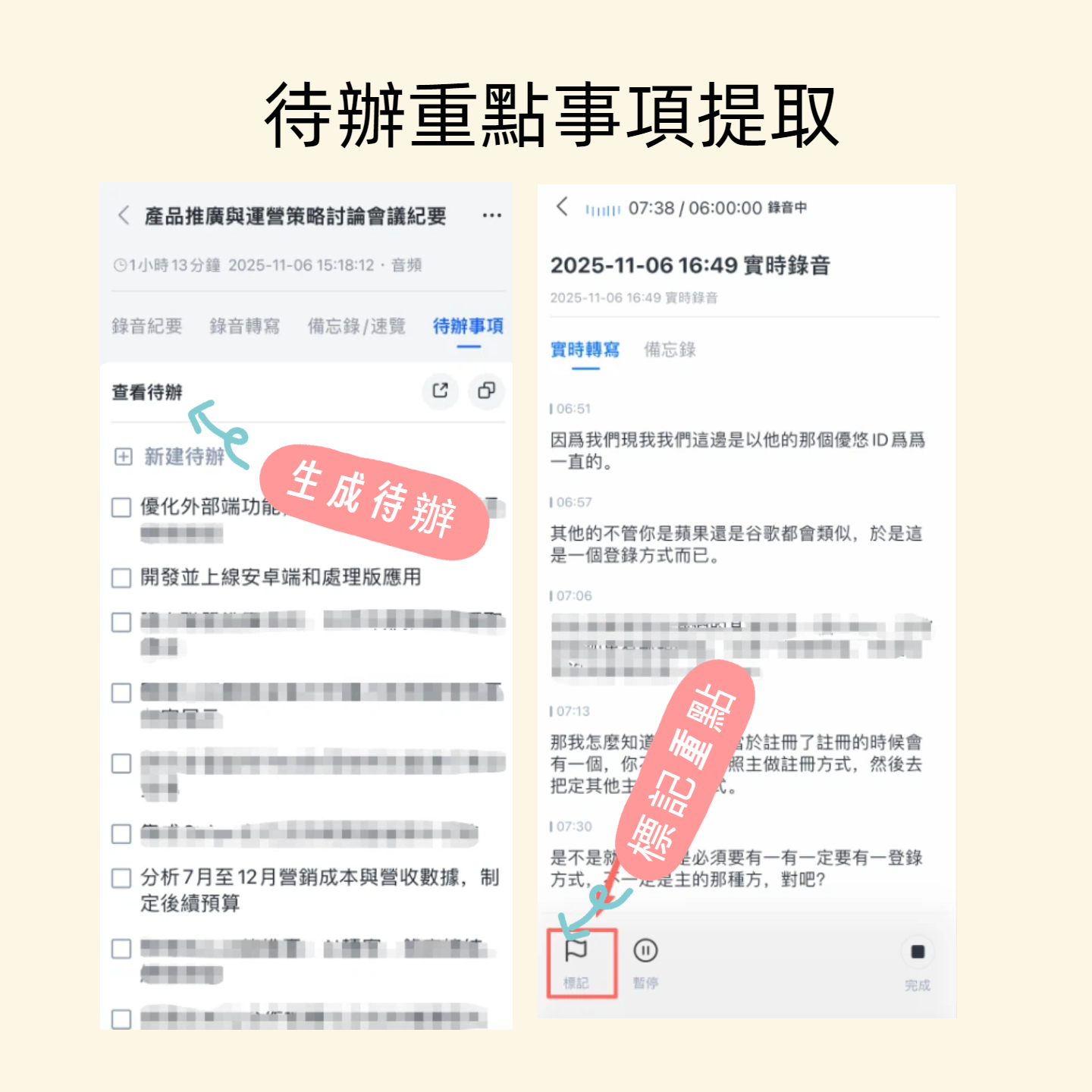
Step 4: Auto-Extract To-Do Items and Export
No need to manually reorganize after the meeting; the system automatically generates "Meeting Minutes" and "Action Items (To-Do List)." Once confirmed, you can export in multiple formats and share with the team.
Frequently Asked Questions (FAQ)
Q1: Can I directly record a LINE call on iPhone? No. iOS system privacy restrictions prevent third-party apps or built-in screen recording from capturing both sides of a call simultaneously. It is recommended to use the desktop version of LINE or side-record with another device.
Q2: Is recording a LINE call legal? Depending on local laws, if you are one of the participants and record for your own protection, it may be allowed in some regions. However, if it involves public dissemination or trade secrets, it is advisable to obtain consent from the other party beforehand.
Q3: Can I record and transcribe calls from Teams or Google Meet as well? Yes. For Teams or Meet meetings on a computer, you can also enable the "Real-time Recording-to-Text" feature of a speech-to-text tool, or download the official meeting recording afterward and import it for text analysis.
Q4: Do recording-to-text tools have free tiers? Many tools offer basic free tiers. For example, Tinrec's free plan provides up to 100 minutes of recording-to-text per month, suitable for light users.
Q5: The recording is too long. Finding key points is time-consuming—what can I do? Choose tools with AI summarization capabilities. After uploading the audio, besides viewing the transcript, you can directly check the AI-generated key summary or use the AI Q&A feature for quick retrieval.
Q6: For international meetings, does it support foreign language translation? Most modern AI voice assistants support multilingual recognition, such as automatic identification and transcription of Chinese, Japanese, English, Korean, etc., effectively reducing the cost of processing language barriers.
Summary and Recommendations
The key to solving "how to record a LINE call" lies in choosing the right recording method for your current device. However, what truly boosts work and life efficiency is the "post-recording information processing." We recommend running a 10-minute test call (including side-recording and AI transcription) before important formal meetings to evaluate accuracy and efficiency, then decide whether to incorporate it into your long-term essential toolkit.
Turn every recording into actionable outcomes
Get 60 free transcription minutes when you sign in. No credit card required.
Related Reading
You might also like

Tinrec vs Otter.ai in 2026: A 5-Dimension Comparison for Chinese Meeting Notes
We tested Tinrec and Otter.ai across 5 key dimensions—Chinese transcription, bot-free recording, AI Q&A, team collaboration, and more—and provided meeting note examples and a pitfall guide to help you choose the right tool.

2026 Hands-On Comparison of 2 Smart Meeting Recorders: For Chinese Meetings and Team Collaboration, Tinrec Is the More Practical Choice
We tested Tinrec and Otter.ai hands-on, comparing them across five key dimensions: bot-free recording, Chinese language experience, file import, post-meeting workflow, and team governance—to help Taiwanese office workers find the best AI meeting notes tool.

2026 Hands-On Comparison of 4 AI Meeting Recorders: Which One Turns Meetings into Actionable Data?
We tested Tinrec, Otter, Notta, and Granola—four AI meeting note tools—covering bot-free recording, Chinese language experience, AI Q&A, and team spaces to help you find a real time-saver.

2026 Review: 5 Smart Meeting Note Tools Compared – Tinrec (Miao Ting Lu Yin) Saves the Most Time with Bot-Free Recording and AI Q&A
Hong Kong professionals tested 5 AI meeting note tools. Tinrec (Miao Ting Lu Yin) stands out with bot-free recording, AI Q&A, and team spaces, helping you save post-meeting time. Find out which one suits you best.

2026 Smart Meeting Recorder Tools Compared: Tinrec vs Plaud Note – Which Is Better for Office Workers?
This article compares Tinrec and Plaud Note across five dimensions: hardware requirements, online meeting recording, file import, AI summaries, and team collaboration, to help you decide which is more suitable for the average office worker.

2026 Smart Meeting Notes Comparison: Why Tinrec Is the Best Choice for Hong Kong Workers?
Hong Kong workers attend meetings daily, then have to work overtime to organize meeting notes? We tested 4 smart meeting note tools and ended up keeping Tinrec. It supports Cantonese, doesn't require adding a bot to record online meetings, and has team spaces, truly helping you leave work on time.

2026 Tinrec Smart Meeting Minutes: Bot-Free Recording + AI Auto Summary & To-Dos
How to choose a smart meeting minutes app in 2026? This article focuses on Tinrec, teaching you how to record online meetings without bots, auto-generate summaries and to-dos, and compares Otter, Notta, Granola, etc., to help you quickly find the right meeting notes solution.

2026 Smart Meeting Minutes Tools Compared: Tinrec's 3 Key Features + Team Collaboration Tested
Spending two hours in a meeting and another two organizing the notes? This article starts with common pitfalls, helps you understand what to look for in smart meeting minutes tools, tests Tinrec's bot-free recording, AI Q&A, and team spaces, and compares Otter and PLAUD to help you avoid selection traps.
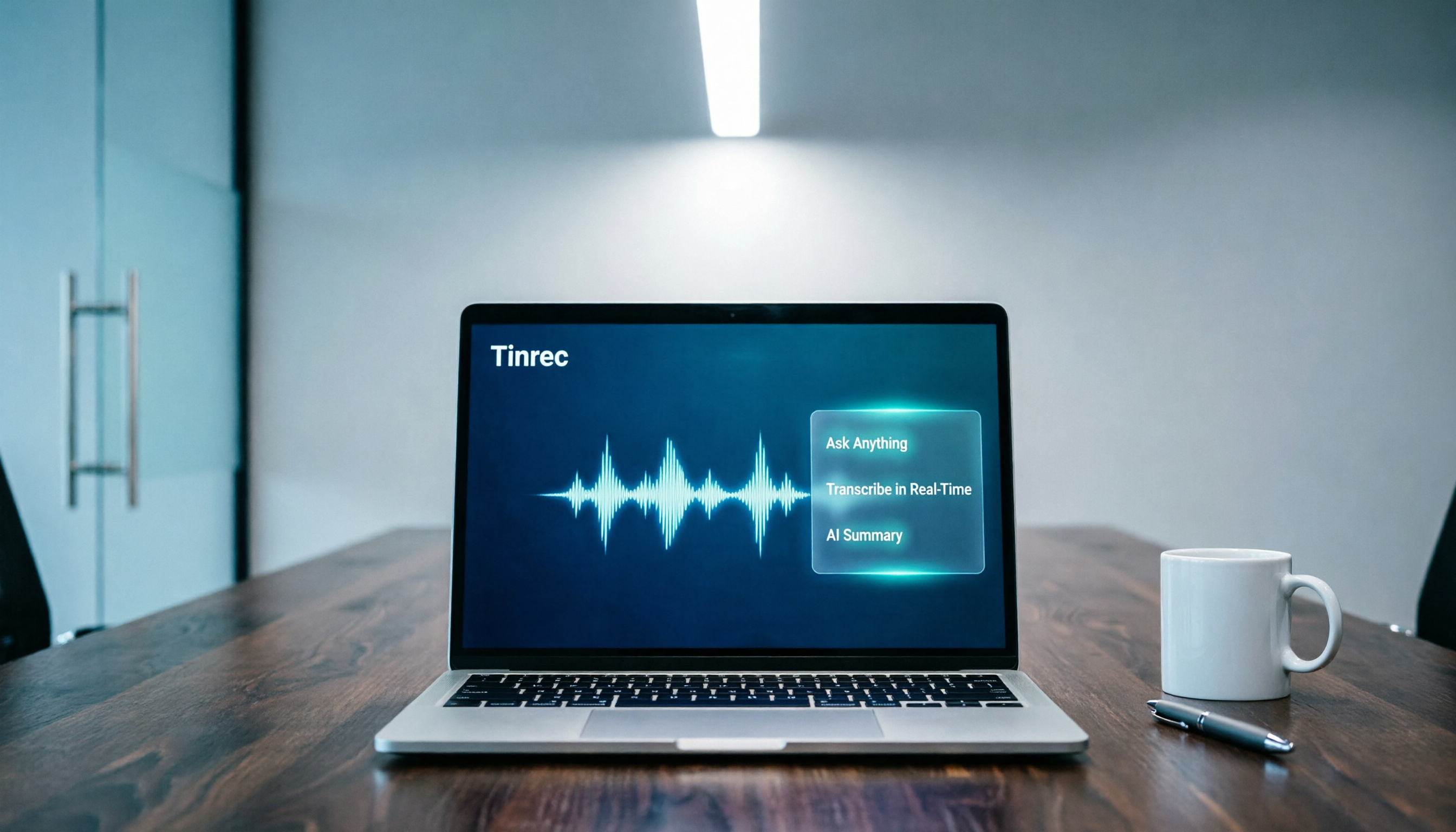
Tinrec Meeting Recorder 2026 Tutorial: Record Meetings Without Bots + AI Q&A to Find Key Points
Spending two hours in a meeting and another two hours writing up notes? This article tests Tinrec's meeting recorder, showing you how to record online meetings without bots and use AI Q&A to quickly find key points. We also compare Granola, PLAUD Note, and Notta to help you choose the right tool.