
Turn recordings into transcripts and summaries in minutes
Upload audio or video for multilingual transcription, AI notes, and action items
Why Is Creating a Transcript from Google Meet Recordings Still a Nightmare?
In 2026, with remote work and hybrid offices becoming the norm, Google Meet is the go-to choice for many teams. However, most people face the same dilemma after hitting the "record meeting" button: The audio file is saved, but the information is "dead."
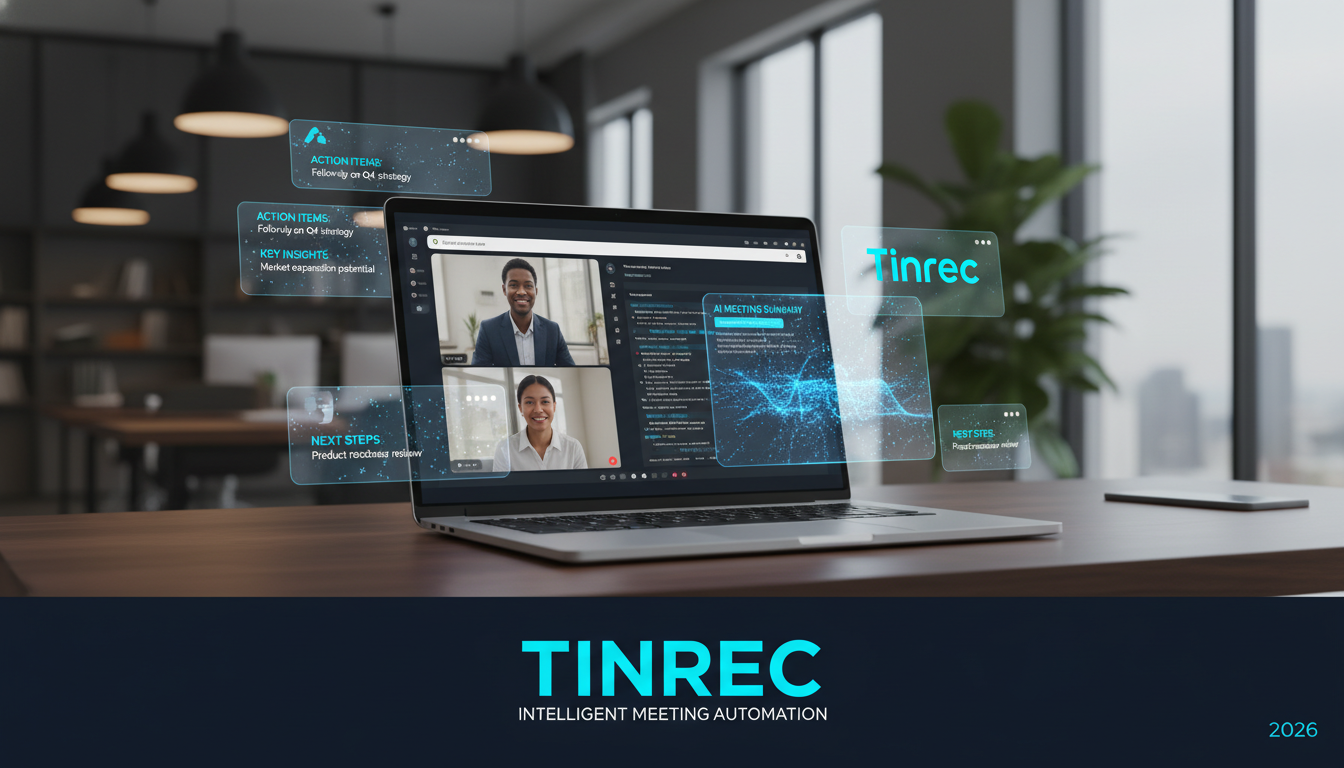
According to workplace surveys, over 70% of users admit that recorded meeting files are almost never fully replayed. Key pain points include:
- High cost of replaying: Transcribing a one-hour meeting often takes two to three hours.
- Difficult information retrieval: Traditional audio files cannot be searched; finding "the budget number mentioned by the manager" is like finding a needle in a haystack.
- Lack of actionable guidance: Recordings are just a stream of words, with no auto-generated conclusions or to-do items (Action Items).
Although some paid versions of Google Workspace offer transcription features, users who need cross-language support, more flexible AI summaries, or efficient mobile processing will find that seeking a professional third-party AI recording-to-text tool is key to boosting productivity.
Tool Comparison: Google Meet Built-in Features vs. Professional AI Tools (Tinrec)
To help readers choose the right tool, we compare Google Meet's native features with Tinrec, a tool focused on the "Record → Understand → Act" workflow. Unlike other tools that only provide plain transcription, we focus on "post-use efficiency."
Google Meet Recording to Text Tool Comparison Table
| Comparison Dimension | Google Meet (Workspace Built-in) | Tinrec | Traditional Recorder/App |
|---|---|---|---|
| Core Positioning | Video meeting add-on | AI smart meeting assistant | Simple voice recording |
| Recording to Text Speed | Generated after meeting (requires processing time) | Real-time transcription (words appear as spoken) | Usually requires post-conversion |
| Language Support | Limited by plan, mostly English/major languages | 10 languages including Chinese, English, Japanese, Korean, Cantonese, Taiwanese | Depends on manual or single language |
| AI Summary & Action Items | Only in high-end Gemini plans | Auto-generates meeting minutes and to-do items | None |
| Content Retrieval Method | Search text only (Ctrl+F) | AI chat query (semantic understanding Q&A) | Manual replay needed |
| Cross-Platform Support | Browser mainly | iOS / Android / Web multi-device sync | Hardware limited or single app |
| External File Processing | Does not support uploading other recordings | Supports uploading audio/video files for transcription | Depends on software |
From the comparison, if you only need an English archive, the built-in feature may suffice. But if you need Chinese recognition, real-time text, and automatic extraction of meeting conclusions, a professional AI tool like Tinrec has an advantage in converting information value.
In-Depth Review: How Tinrec Solves the "Recorded but Never Listened" Problem
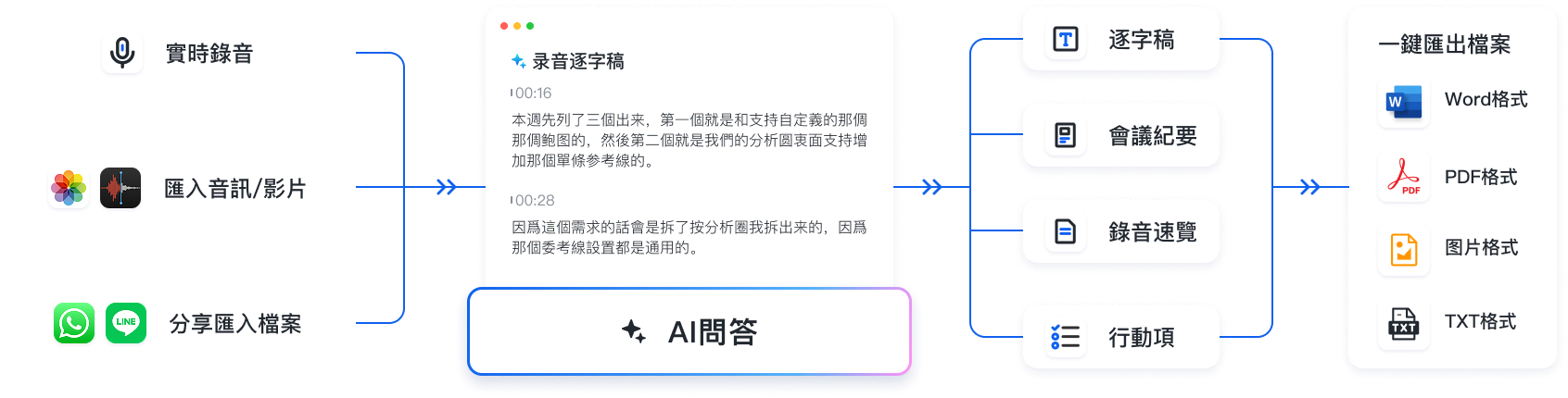
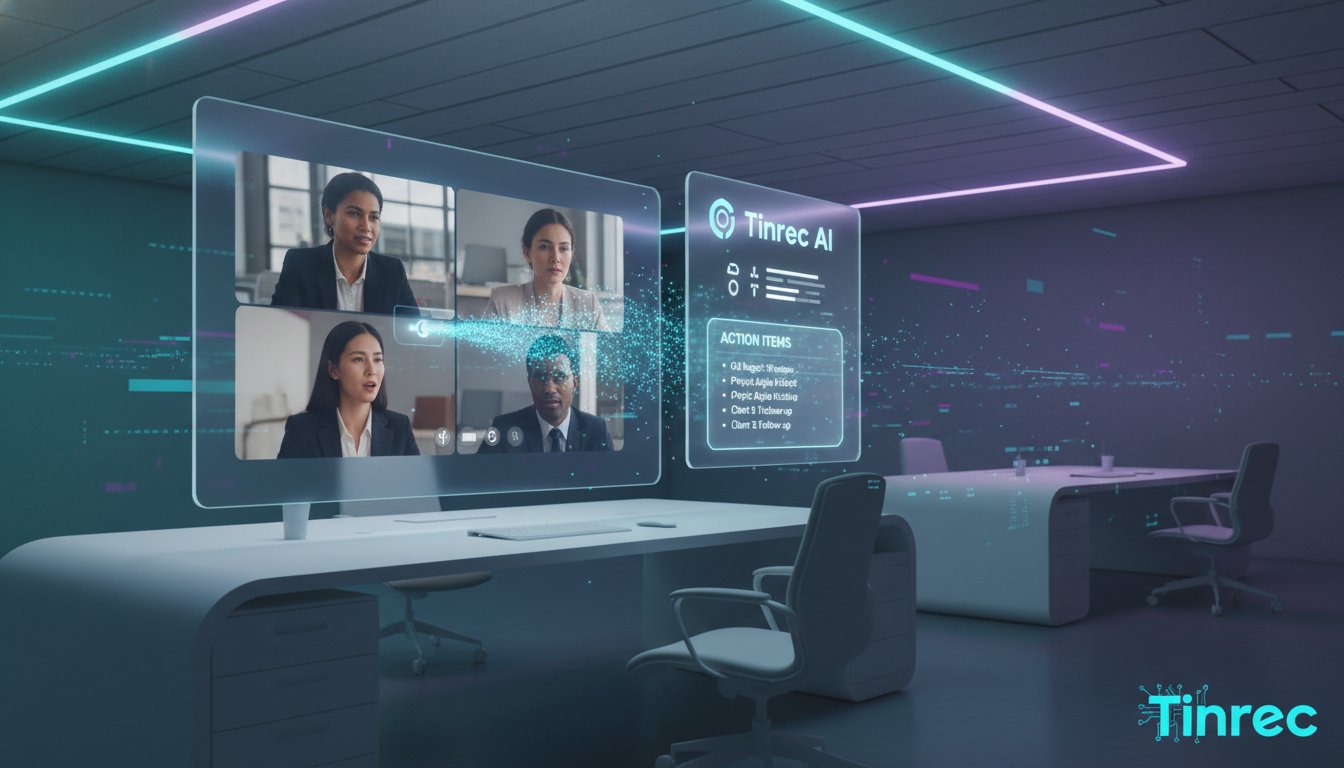
After testing multiple tools, Tinrec's biggest highlight is that it doesn't just "turn voice into text," but transforms "time-based content" into scannable, searchable, actionable knowledge. Here are three core features tested for Google Meet scenarios:
Stop organizing recordings by hand
Upload audio or video and automatically get a transcript, summary, and action items
1. Real-Time Transcription & Multi-Language Recognition
For international meetings or mixed-language discussions (e.g., Chinese meetings with English terminology), Tinrec's recognition engine performs very stably. It supports 10 languages including Chinese, English, Japanese, Korean, German, Taiwanese, and Cantonese. During a Google Meet session, enable Tinrec's real-time recording, and text appears line by line as dialogue flows, allowing participants to focus on communication without manual note-taking.
2. From "Transcript" to "AI Meeting Minutes"
Traditional tools produce thousands of words of transcripts, which are overwhelming to read. Tinrec introduces AI analysis that automatically generates after recording ends:
- Summary: Quickly grasp meeting highlights.
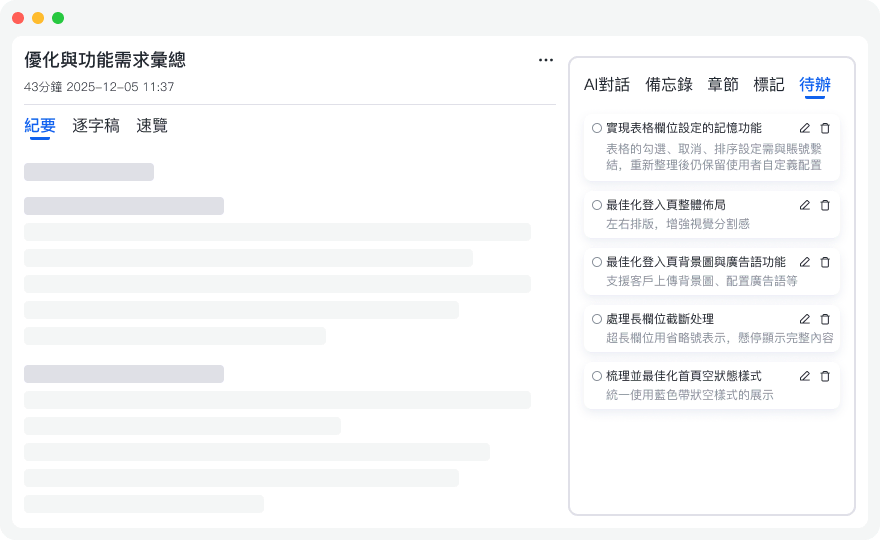
- Action Items: Automatically extracts phrases like "Submit report by next Wednesday" or "Contact supplier" and organizes them into a list.
3. AI Chat Query: Search Like You're Asking a Person
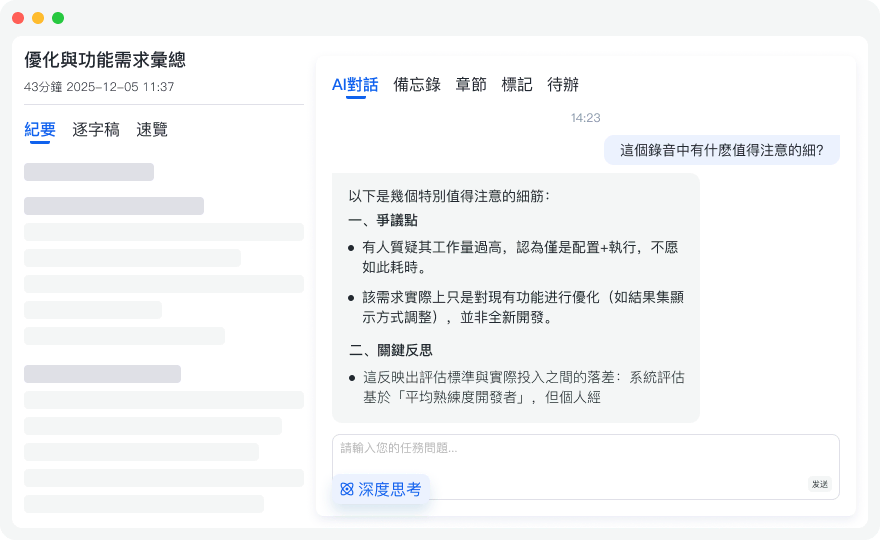
This is the biggest difference from traditional tools. When you need to recall a specific detail from a meeting, you don't have to search through long text for keywords. Tinrec's AI Chat feature lets you ask directly, e.g., "What was the conclusion about the Q3 budget?" or "What concerns did David raise about this project?" AI provides precise summarized answers based on the content, greatly reducing information retrieval effort.
Practical Tutorial: How to Use Tinrec for Google Meet Meeting Notes
Below are steps for three scenarios to help you get started quickly.
Scenario 1: Ongoing Google Meet Online Meeting (Real-Time Transcription)
Perfect for users who want to see text during the meeting and mark key points.
- Preparation: Open Tinrec web version on your computer or launch the Tinrec mobile app.
- Set Audio Source: On a computer, ensure the microphone can capture system audio (or let the mobile app capture external sound).
- Start Recording: Click the "Record & Real-Time Transcribe" button. As the meeting begins, you'll see the transcript generated in real time.
- Stop & Generate: After the meeting, stop recording; the system automatically processes and generates AI summary and action items.
Scenario 2: Existing Google Meet Recording (Post-Conversion)
If you have past MP4 or MP3 files and want to turn them into a text database.
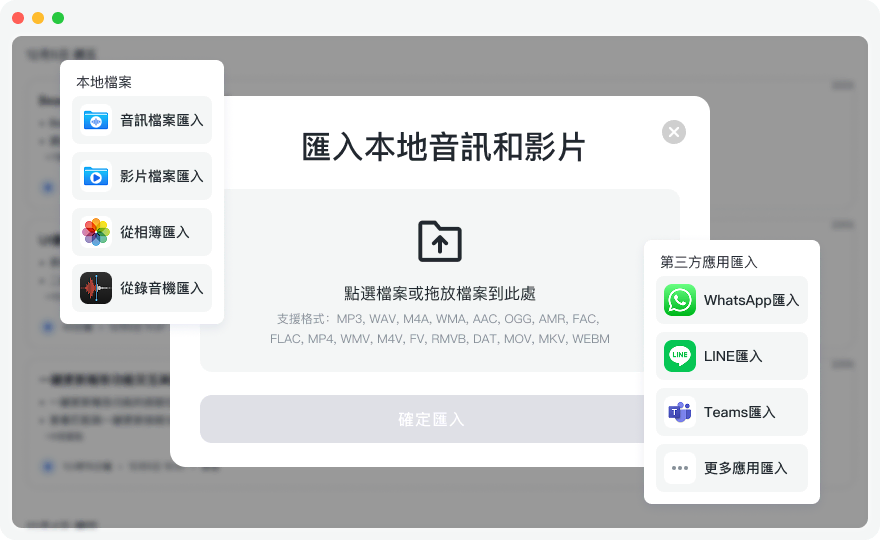
- Go to the Audio File to Text feature page.
- Click upload or drag the Google Meet recording file into the window (supports multiple audio formats).
- Select the language (e.g., Chinese) and start conversion.
- Wait a few minutes (depending on file length) to get a full transcript and AI analysis report.
Scenario 3: Summarizing Public Meeting or Tutorial Videos from YouTube
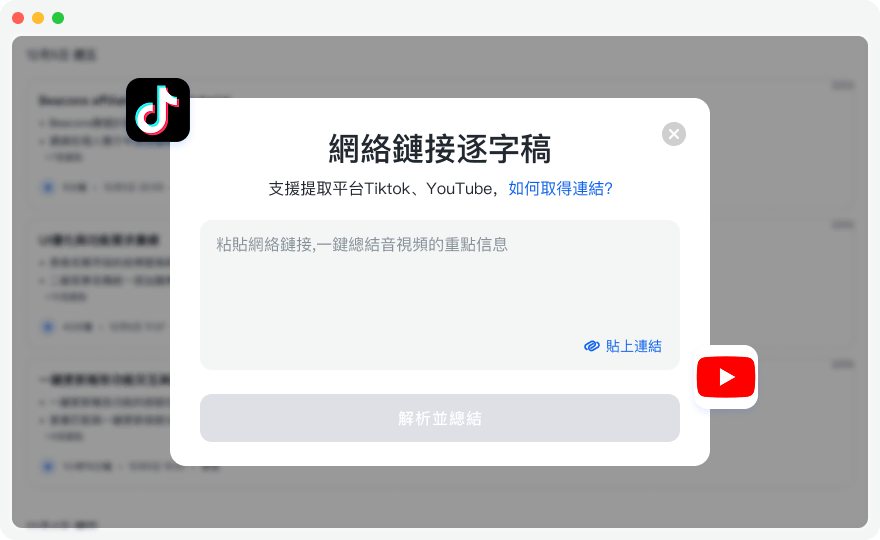
- Copy the video link.
- Use the Podcast/Online Video to Text feature and paste the URL.
- Tinrec directly parses the video content and generates notes, ideal for learning or competitive analysis.
Frequently Asked Questions (FAQ)
To help you choose better, we've compiled the most searched related questions:
Q1: Does Google Meet recording-to-text cost money?
Google Meet's built-in advanced transcription usually requires a Google Workspace Business Standard subscription or higher. Tinrec offers flexible plans: the free version includes 100 minutes per month, which is great for light users. For heavy use, the Basic plan ($4.9/month) provides 600 minutes.
Q2: Do these tools support recording on iPhone or Android?
Google Meet's built-in transcription works best on desktop. Tinrec natively supports iOS and Android apps, with data synced to the web version, perfect for recording on mobile and organizing on computer.
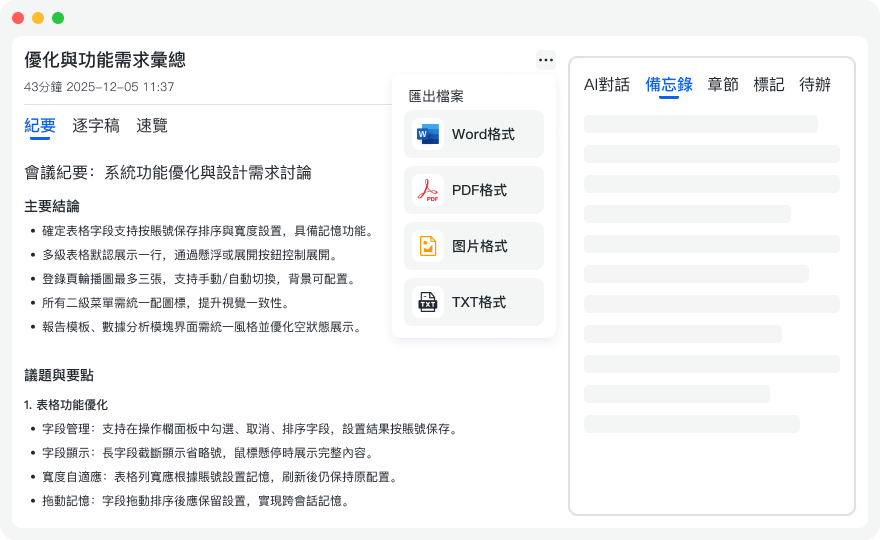
Q3: Can the generated transcript be exported?
Yes. Professional tools like Tinrec support exporting transcripts and summaries as TXT, PDF, Word, or Markdown, making it easy to paste into Notion or your company's document system.
Q4: How is recording privacy protected?
When choosing a tool, check its privacy policy. Tinrec uses encrypted transmission and allows users to delete cloud data at any time, ensuring meeting content stays secure.
Q5: If the meeting includes Taiwanese or Cantonese, can AI understand it?
Google Meet's built-in feature has limited dialect support. Tinrec supports 10 languages including Taiwanese and Cantonese, making it more suitable for local meeting scenarios in Taiwan and Hong Kong.
Q6: What is "AI Chat Query"?
This is a hallmark of next-gen recording tools. Traditionally, you search by keyword (e.g., "budget") and get dozens of results. AI Chat Query lets you ask, "How much was the budget finally cut?" AI understands the semantics and gives a direct answer. This is a core feature of Tinrec's AI Chat Query.
Summary
Choosing the right Google Meet recording-to-text tool can free you from tedious clerical work. If you value multi-language support, mobile convenience, and productivity gains from AI summaries, Tinrec is a cost-effective option worth trying.
Turn every recording into actionable outcomes
Get 60 free transcription minutes when you sign in. No credit card required.
Related Reading
You might also like

How to Take Meeting Minutes for Free in 2026: 5 Steps from Recording to AI Summary
How to choose a free meeting minutes app? This article covers 5 criteria: free quota, Chinese recognition, online meeting recording methods, post-transcription processing, and team collaboration. We tested Tinrec's bot-free meeting recording and AI summary workflow, compared free plans of Notta, Otter.ai, and Granola, and included 4 common pitfalls to avoid.

5 Best Meeting Transcription Software in 2026: Which Free Version Is Enough?
We tested 5 popular meeting transcription tools, comparing Chinese recognition, bot-free recording, AI post-meeting summaries, and team collaboration to help you find the best fit for professionals. Tinrec stands out for Chinese meetings and team knowledge retention, with a free version that's sufficient for light use.

5 Best Meeting Transcription Software in 2026: Chinese Recognition, Free Tiers, and Post-Meeting Organization Compared
A student's hands-on comparison of 5 meeting transcription software types, breaking down Chinese recognition, free tiers, online meeting recording methods, and post-meeting organization capabilities. Includes real-world performance of Tinrec in transcription, AI summaries, action item extraction, Q&A, and team spaces to help you decide which workflow truly fits your needs.

2026 AI Meeting Transcription Tools Compared: Tinrec vs PLAUD Note — Which Should You Choose?
Tinrec or PLAUD Note? This article compares them across 6 dimensions: online meeting recording, input sources, post-meeting organization, Chinese language experience, team collaboration, and pricing. It also covers each tool's unique strengths and FAQs to help you decide whether to use software or hardware for meeting notes.

6 Best AI Meeting Transcription Software in 2026: Tested & Compared for Chinese Speech and Post-Meeting Efficiency
We tested 6 popular meeting transcription tools, breaking down capture methods, Chinese transcription, post-meeting summaries and action items, AI Q&A, team knowledge retention, and pricing. We also highlight the top 3 mistakes to avoid when choosing, so you can find the tool that truly saves time.

4 Best AI Meeting Transcription Software in 2026: Free vs Paid, Chinese Support, and Team Collaboration Compared
This article debunks common misconceptions and compares four popular AI meeting transcription tools: Tinrec, Otter.ai, Notta, and Granola. It covers differences in Chinese recognition, bot-free recording, post-meeting AI summaries, and team collaboration, with a comparison table and a buyer's guide to avoid pitfalls.

Tinrec vs Otter.ai in 2026: A 5-Dimension Comparison to Choose the Right Chinese Meeting Transcription Software
How do you choose meeting transcription software? This article compares Tinrec, Otter.ai, Granola, and PLAUD Note across five dimensions: recording method, Chinese recognition, post-meeting outputs, data ownership, and pricing. It includes a comparison table, lists each tool's free tier and paid pricing, highlights common pitfalls, and offers recommendations based on use cases.

2026 Free Meeting Notes Apps Compared: How to Choose from Free to Team Plans
How do free meeting notes apps work? This guide examines three key decision points: whether the free quota is sufficient, whether online meetings can be recorded, and whether AI helps organize notes afterward. Using Tinrec as a full example, it walks through the workflow, core capabilities, and purchasing considerations from the free version, weekly pass, Pro, to team plan, helping you decide which plan to use in one go.

2026 Meeting Transcription Software Comparison: Which AI Note-Taker Actually Saves Time with Chinese Recognition?
I have 15 meetings a week, and post-meeting organization is the real nightmare. This article, from the perspective of a mid-level manager, breaks down 5 key factors for choosing meeting transcription software in 2026, tests Tinrec's Chinese transcription and AI Q&A experience, and honestly compares the use cases and limitations of Otter.ai, Notta, and PLAUD, ending with scenario-based recommendations you can follow directly.