
Turn recordings into transcripts and summaries in minutes
Upload audio or video for multilingual transcription, AI notes, and action items
Why You Need AI Meeting Note Tools: Escape the "Record But Never Listen" Black Hole
"That interview recording is two hours long. I need a transcript by 2 PM."
"What was the conclusion of the cross-border meeting? Send a summary to the team immediately."
For many professionals and students, these scenarios are all too familiar. Traditional recorders or phone recordings can capture audio, but recordings are often information-dense formats. Re-listening to a one-hour recording typically takes over three hours to transcribe, leaving many important recordings as digital clutter that no one ever revisits.
By 2026, the key competitive factor for AI meeting tools is no longer just speech-to-text accuracy, but processing speed and information extraction capability. Based on the latest benchmark data, efficient AI tools depend on five technical pillars:
- Audio upload and conversion efficiency: How long you wait before you can start working.
- Speech-to-text models (e.g., Whisper, Transformer): Affects recognition accuracy for mixed Chinese and English.
- AI summary generation (LLM): Can it extract decisions and action items from rambling speech?
- Speaker diarization: Can it tell who said what?
- Real-time captions and translation: Can it bridge language gaps during the meeting itself?
This article aggregates the latest benchmarks, comparing 9 popular tools (including rising stars like Tinrec, Meeting Ink, Otter.ai, and more) to help you find the perfect productivity assistant.
2026 Popular AI Meeting Tools Benchmarked: Speed, Accuracy, and Use Cases
Based on testing of mainstream tools (test standard: 26-minute English podcast audio, MacBook Pro / Chrome environment), we found significant differences in speed and feature focus across tools. Below is an analysis based on objective test data, with a comparison including Tinrec, which emphasizes a "record-to-action" workflow.
1. Speed & Efficiency Group: Meeting Ink and Vurbo.ai
- Meeting Ink: Balanced overall performance. Upload takes ~55 seconds, transcription ~2 minutes, summary generation fast. Supports "browser tab recording" and real-time captions, ideal for quick report generation.
- Vurbo.ai: Extremely fast summary generation, but overall processing is longer (~12 minutes total). Although it claims unlimited hours, multilingual translation occasionally suffers from language setting instability (e.g., Chinese mistakenly translated as Japanese).
2. Mobile & Hardware Group: Plaud
- Plaud: Combines a physical recording card with an app, focused on mobile recording. Speech-to-text is fast (~49 seconds), but does not support speaker diarization and lacks real-time captions. Suitable for solo notes or phone calls, not for multi-person online meetings.
3. Language Specialists: Otter.ai and Yating
- Otter.ai: Strong for English meetings, supports real-time captions and meeting app integration. But Chinese recognition is weak, sometimes unable to process Chinese content at all, and the free plan has many limitations.
- Yating (雅婷逐字稿): A Taiwan-based tool, fastest upload (only 17 seconds), and supports Mandarin and Taiwanese Hokkien. Downside: summary generation often requires queuing, and no real-time captions.
4. Full Workflow Smart Group: Tinrec (秒聽錄音)
- Tinrec: Unlike tools that focus on transcription or hardware, Tinrec emphasizes a complete workflow: "Record → Understand → Act". It offers iOS, Android, and Web support, plus an "AI Chat" feature that solves the pain point of traditional transcripts which can only be keyword-searched.
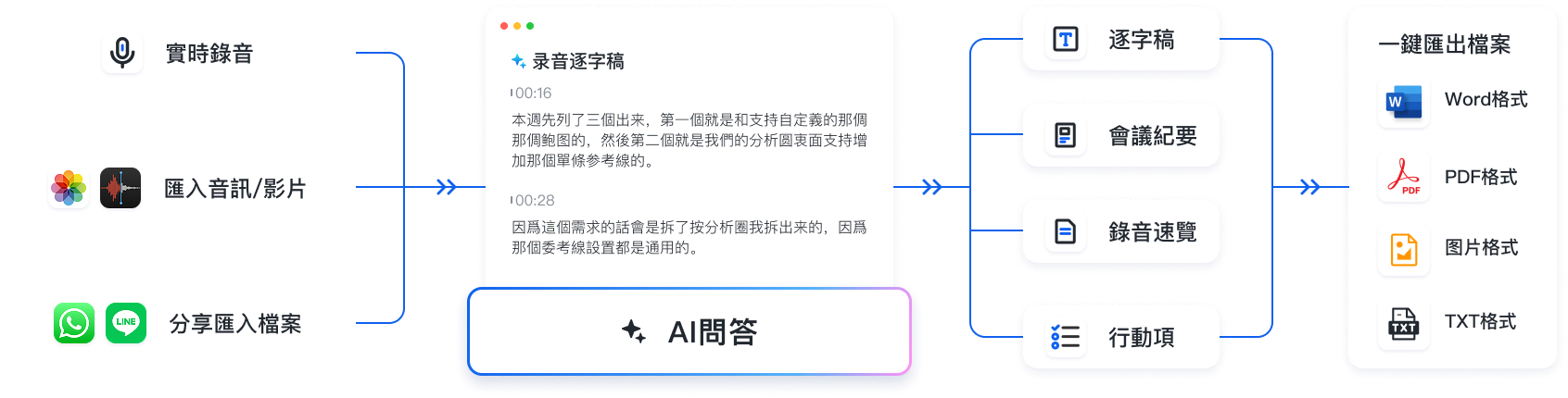
Deep Dive: How Tinrec Redefines the Meeting Note Process
After analyzing many tools, Tinrec stands out in "post-processing efficiency." It doesn't just convert speech to text; it turns text into actionable tasks.

1. Real-time Transcription and Multilingual Support
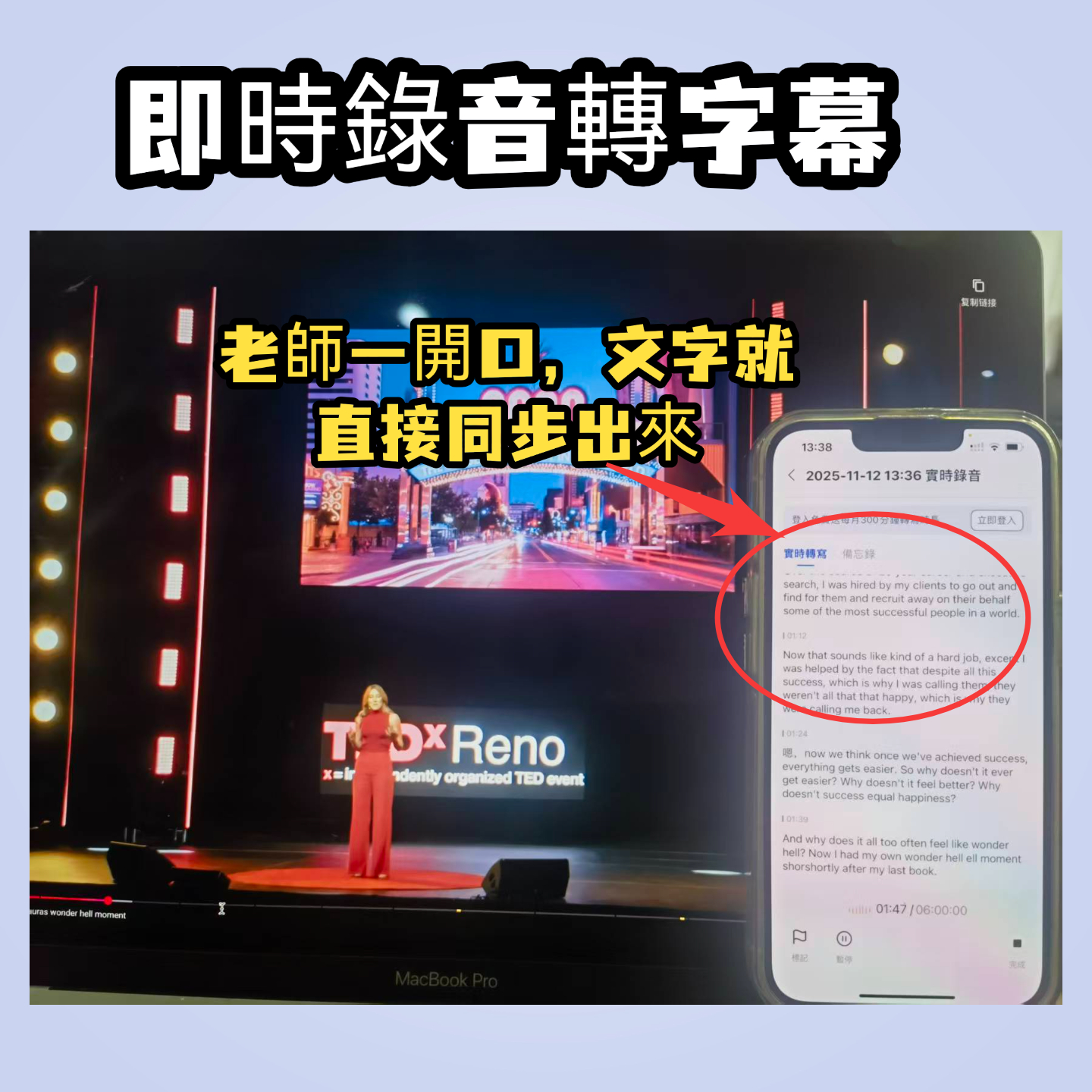
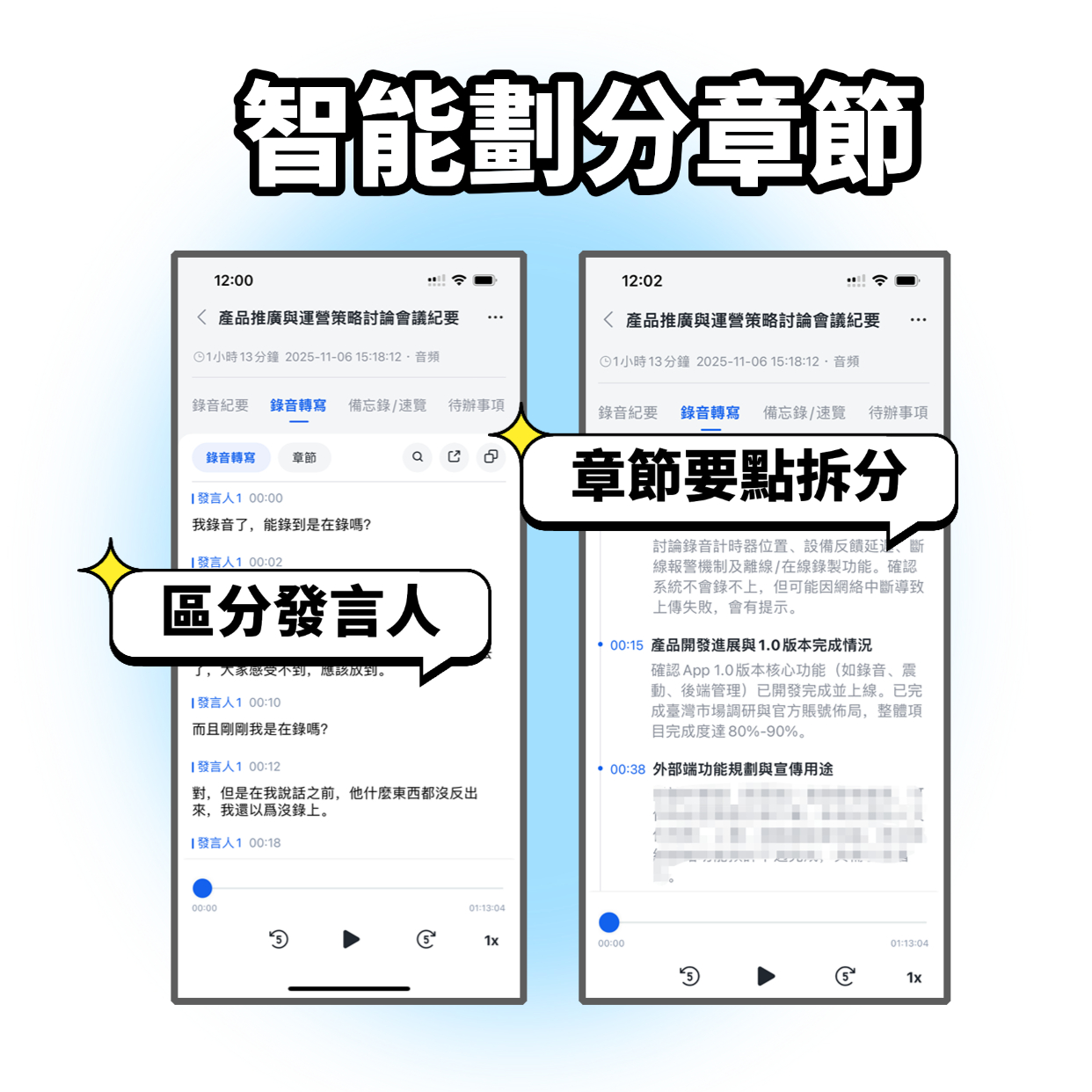
For cross-border meetings or foreign language classes, Tinrec automatically recognizes 10 languages including Chinese, English, Japanese, Korean, German, and more. Text appears in real time as you record, so you don't have to wait until the meeting ends. It also accurately distinguishes speakers in complex meetings.
2. Automatic Meeting Minutes and Action Items
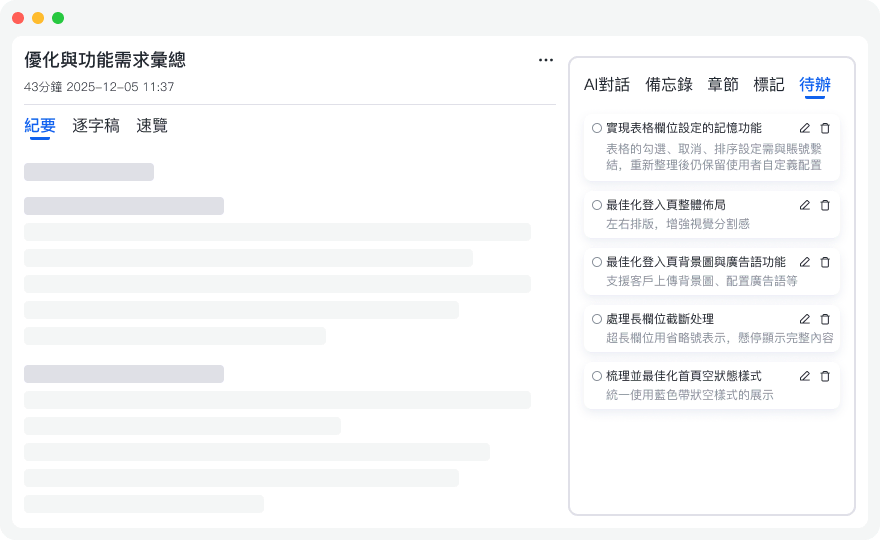
Traditional tools give you thousands of words of raw transcript, which is painful to read. Tinrec uses AI to structurally analyze content and automatically generate:
- Full summary: Quickly grasp meeting highlights.
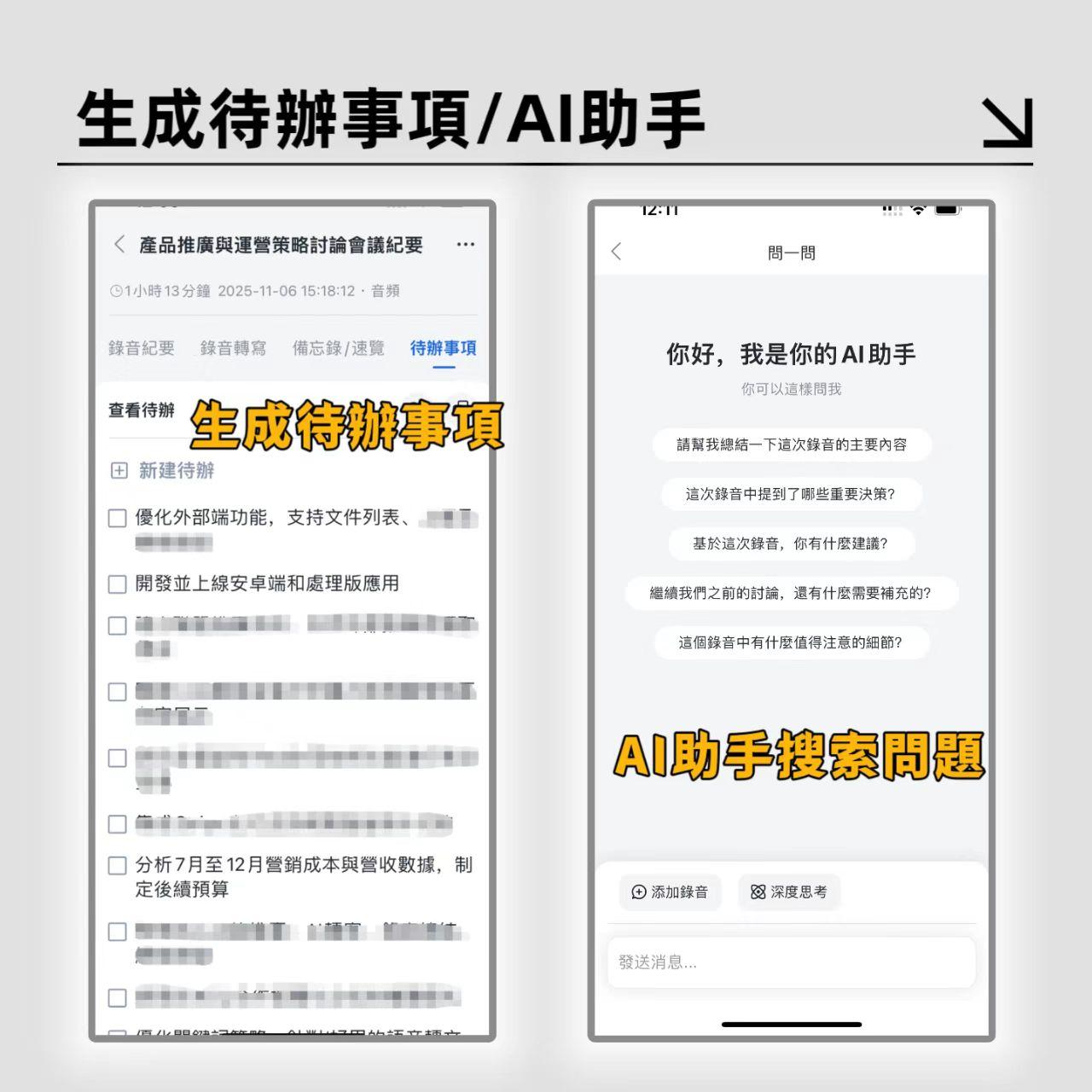
- To-Do List: Who needs to do what by when, at a glance.
- Key decisions: Conclusions reached during the meeting.
Stop organizing recordings by hand
Upload audio or video and automatically get a transcript, summary, and action items
This saves up to 80% of note-taking time for project managers (PMs) or administrative staff who need to send meeting minutes.
3. Revolutionary Feature: AI Chat (Chat with Audio)
This is the biggest difference between Tinrec and traditional transcript tools. When you want to know "What was mentioned about the budget during the meeting?", you don't need to press Ctrl+F and search for keywords (since speakers may not say the exact word "budget"). Instead, you can ask the AI in a conversational way.
The AI answers based on the recording context, as if you have a personal assistant with perfect recall.
Complete Comparison Table: Tinrec vs. Mainstream Tools
For an at-a-glance comparison, here is a table of 5 representative tools including Tinrec:
| Dimension | Tinrec | Meeting Ink | Otter.ai | Yating | Plaud |
|---|---|---|---|---|---|
| Core Positioning | Full-workflow AI recording assistant (understand & act) | Browser meeting note tool | English meeting note expert | Localized tool for Taiwanese/Mandarin | Hardware + mobile recording |
| Platform Support | iOS, Android, Web (sync across devices) | Web (browser-based) | Web, iOS, Android | Web, App | Mobile app (requires hardware card) |
| Chinese Recognition | Excellent (supports Chinese, English, Japanese, Korean, etc.) | Excellent | Weak | Excellent (includes Taiwanese Hokkien) | Excellent |
| Real-time Transcription | Yes (output while recording) | Yes | Yes | No (requires upload) | No (post-recording transcription) |
| AI Features | Summary, action items, AI chat | Summary, speaker segments | Summary, keyword extraction | Summary (queue-based) | Summary, mind maps |
| AI Chat | ✅ Yes (ask questions about recording) | ❌ No | ❌ No (keyword only) | ❌ No | ❌ No |
| Pricing | High value Basic: $4.9/mo (600 min) Pro: $8.25/mo (1200 min) |
Pro: NT$279/mo (20 hrs) | Pro: ~$17 USD/mo | Pay-per-minute NT$156/hr starting | One-time hardware + subscription |
Comparison Summary:
- Best all-around features and value: Tinrec offers the most complete "record + transcribe + AI chat" experience at a highly competitive price (Basic ~$4.9/month for 600 minutes).
- English-only meetings: Otter.ai remains a strong choice.
- Taiwanese Hokkien recognition needed: Yating is the top pick.
How to Use AI Tools to Handle Meeting Notes in 3 Steps

Using modern AI tools, you can simplify the tedious process into three steps. Here we use Tinrec's interface as an example:
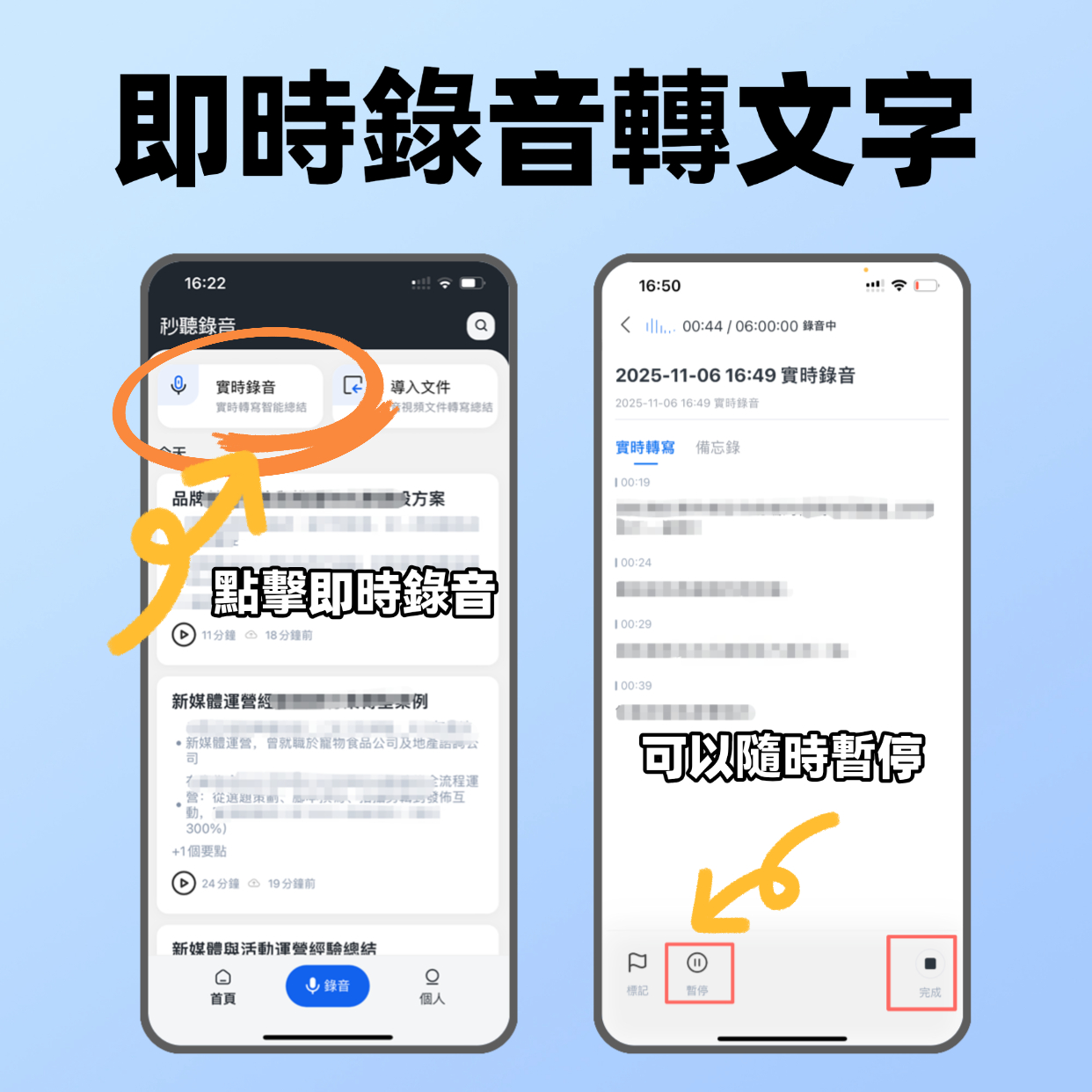
Step 1: Capture Content (Record or Upload)
- In-person meetings/classes: Open the mobile or desktop app, click Record and Transcribe in Real Time. You'll see text appear line by line as you record, and you can mark highlights at any time.
- Existing audio files: Use the Audio File to Text feature to upload directly. For YouTube videos or podcasts, use the Podcast/Online Video to Text feature by pasting the link.
Step 2: Get AI-Powered Summary
After recording, the system automatically processes speaker separation and chapter splitting. Click "AI Summary" to produce structured meeting minutes including:
- Background
- Discussion points
- Action items
Step 3: AI Chat and Content Retrieval
When compiling reports, if you're fuzzy on a detail, don't re-listen to the entire audio. Enter the AI Chat interface and ask a question (e.g., "What did the client say about the second phase payment terms?"). The AI extracts the relevant part and replies with timestamps for easy reference.
Frequently Asked Questions (FAQ)
Q1: Are these AI meeting tools secure with my data?
Most professional paid tools (like Tinrec, Otter) use encrypted transmission and storage. Tinrec emphasizes user privacy, using data primarily for transcription purposes. Using tools with account management and payment mechanisms is safer than uploading audio to unknown free online converters.
Q2: Can the AI understand meetings that mix Chinese and English (code-switching)?
This depends on the underlying model. Traditional speech recognition often produces garbled text when switching languages. Tinrec and Meeting Ink use newer Transformer or Whisper models that handle code-switching well, automatically recognizing and switching languages.
Q3: What are typical free plan limitations?
Most free plans have time caps or feature locks. For example, Good Tape's free plan requires queuing over 1 hour and doesn't allow viewing the full transcript; Otter's free plan can't export text. Tinrec's free plan offers 100 minutes per month and full AI features, suitable for light users.
Q4: Can I use these tools to transcribe YouTube videos or podcasts?
Yes. Tinrec offers a dedicated Podcast/Online Video to Text feature—just paste the URL to convert video content into searchable text. This is useful for content creators cleaning up scripts or students organizing online course notes.
Q5: Do these tools support iOS and Android?
Not all do. For example, SeaMeet and Meeting Ink are primarily web-based (accessible via browser but less smooth than native apps). Tinrec provides full iOS and Android apps that sync recordings to the web editor, enabling seamless cross-device work.
Q6: Can I export the generated transcripts?
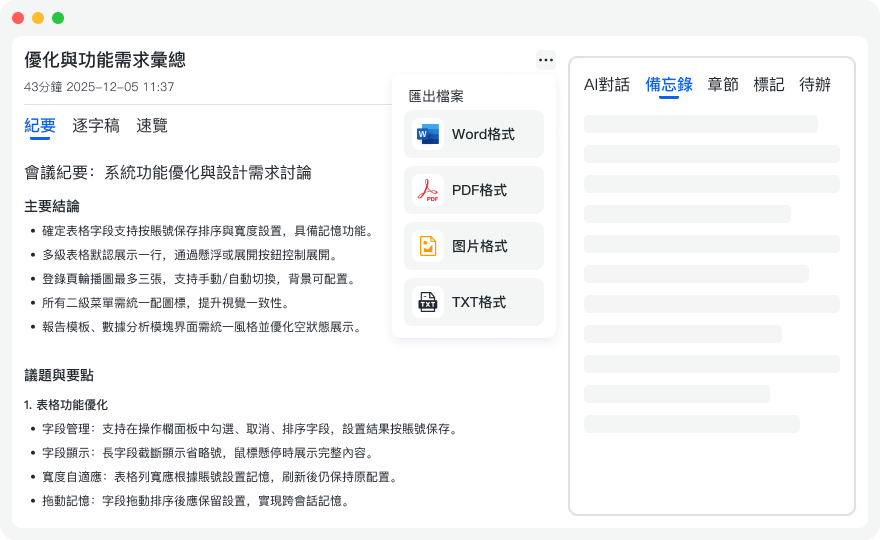
Yes. Professional tools typically support multiple export formats. Tinrec exports to TXT, PDF, Word, or SRT subtitle files, so you can paste them into meeting minutes or use as video subtitles.
Turn every recording into actionable outcomes
Get 60 free transcription minutes when you sign in. No credit card required.
Related Reading
You might also like

2026 Tinrec Review: Record Online Meetings Without Bots + AI Q&A to Find Key Points
Hong Kong office workers attend meetings daily, and the worst part is transcribing recordings afterward. This article tests Tinrec (秒听录音), showing you how to record Zoom/Teams meetings without bots, and use AI Q&A to quickly find key points, saving you overtime hours.

Tinrec vs Notta 2026: 5-Dimension Comparison for Chinese Meeting Transcription
A hands-on comparison of Tinrec and Notta for meeting transcription, covering bot-free recording, Chinese language experience, post-meeting AI organization, team spaces, and free tiers to help you decide.
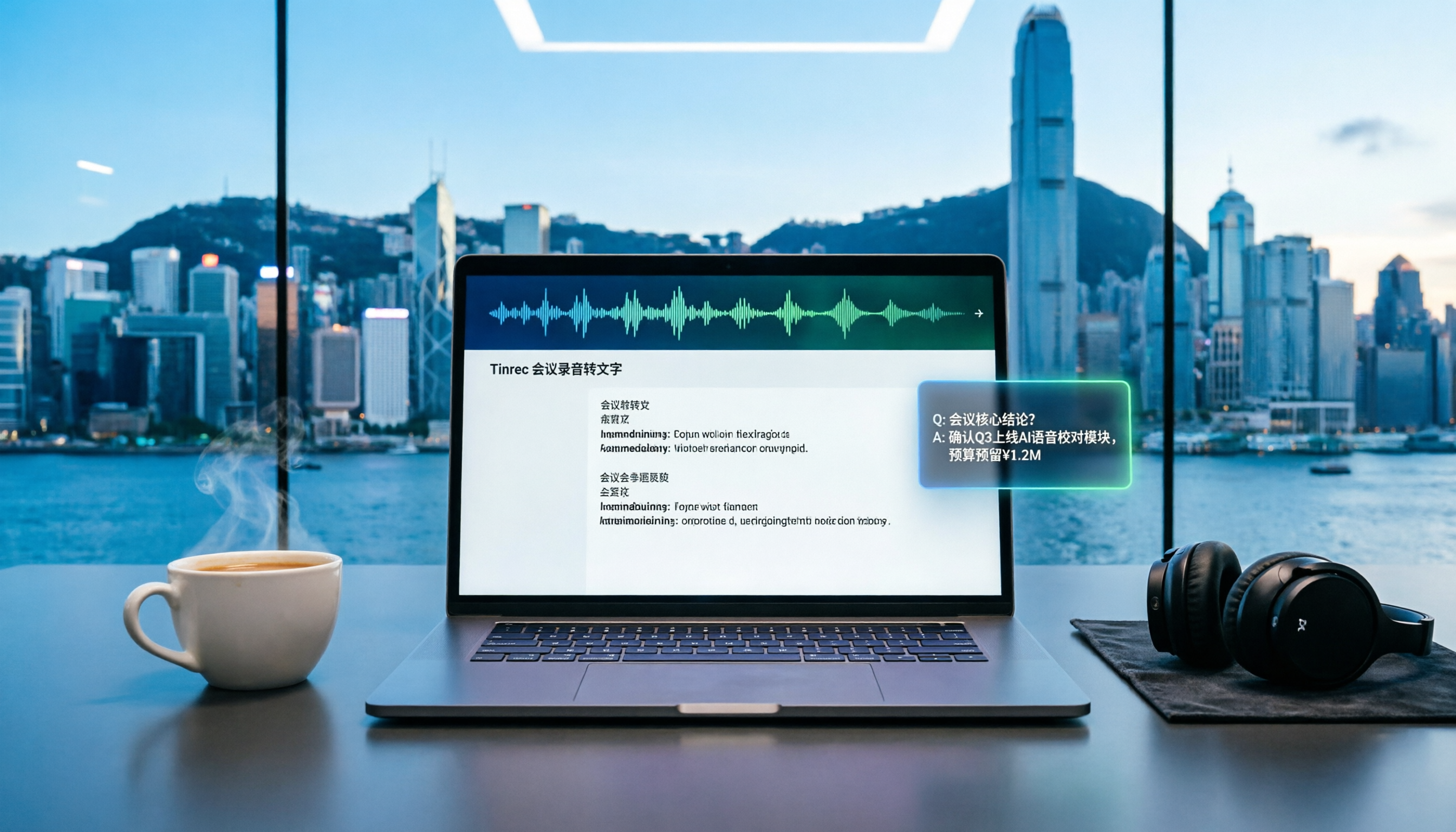
Best Online Meeting Recording to Text Tools? 2026 Hands-on Test of 6, This One Suits Office Workers Best
In 2026, we tested 6 online meeting recording-to-text tools. Tinrec (Sec Listen) requires no meeting bot, supports Chinese and English, and offers AI Q&A, making it the best choice for Hong Kong office workers to organize meeting notes.

2026 Hands-On Comparison of 2 Meeting Transcription Tools: Tinrec vs. Otter.ai – Which Is Better for Chinese Meetings and Teams?
Choosing a meeting transcription tool? This article directly compares Tinrec and Otter.ai, testing them across four key dimensions: meeting capture, Chinese language experience, post-processing, and team collaboration, to help you quickly decide which one suits Taiwanese office workers and teams.

2026 Hands-On Comparison of 4 Meeting Transcription Tools: Tinrec's Chinese Summaries and AI Q&A Save the Most Time
How do you choose a meeting transcription tool in 2026? This article focuses on Tinrec, comparing it with Otter.ai, Notta, and Yating, examining accuracy, AI post-processing, cross-platform support, and team collaboration to help you find a tool that truly saves time on post-meeting cleanup.
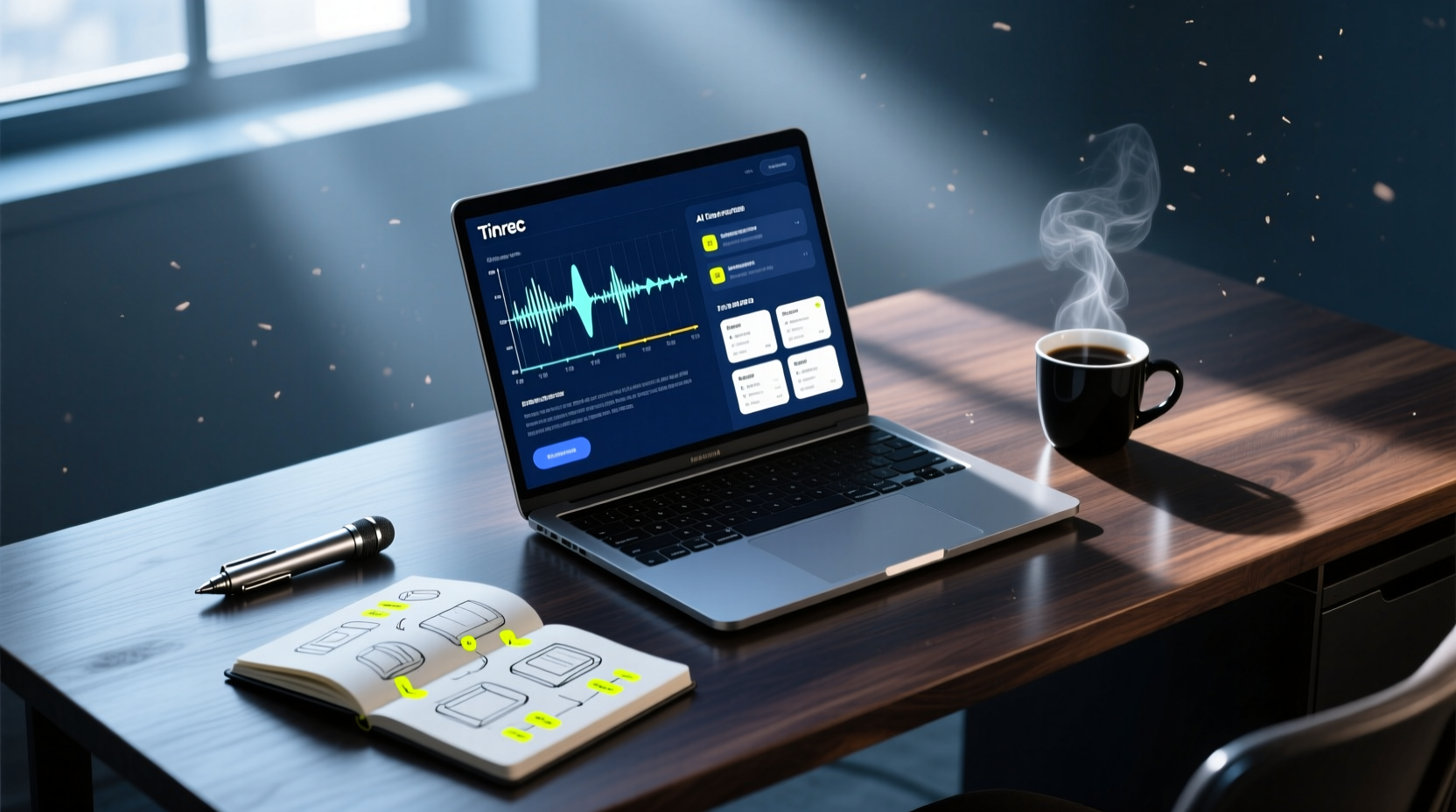
Latest Version of Speech-to-Text Isn't Necessarily More Accurate? A Complete Workflow from Recording to PRD by Product and R&D Teams
This article starts from the actual needs of product and R&D teams, explaining that the latest version of a speech-to-text tool doesn't necessarily mean higher accuracy. Using Tinrec as an example, it demonstrates a complete workflow from recording to verbatim transcript, AI-generated summaries and action items, to AI assistant producing PRDs and action plans, and finally sharing and storing in a team space.

ChatGPT Speech-to-Text Not Enough? A Complete Workflow from Transcripts to Actionable Meeting Materials
ChatGPT's speech-to-text feature is convenient for quick notes, but for turning meeting content into actionable materials, professional tools like Tinrec offer a more complete solution. This article introduces the full workflow from speech-to-text to generating summaries, action items, deliverables, and sharing them in a team space.

Recording-to-Text Tool Comparison: 5 Dimensions to Help You Choose the Right Tool, from Transcription Quality to Team Collaboration
With so many recording-to-text tools available, how do you choose? This article provides a practical comparison framework, from transcription quality, Chinese language support, post-meeting organization, team collaboration, to pricing, helping you make a choice based on your meeting scenarios. It also explains where Tinrec is more suitable for Chinese meeting users.
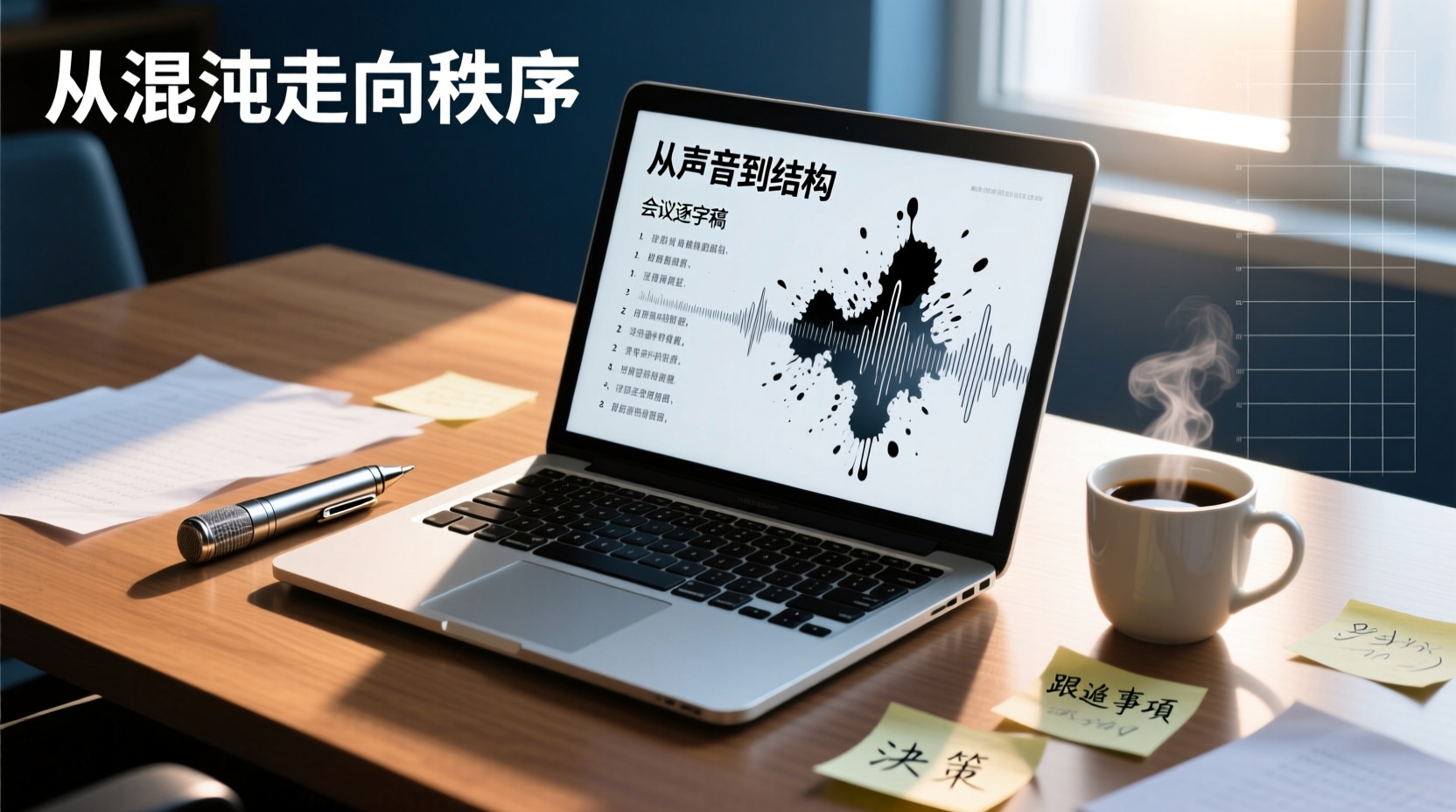
How to Convert Voice to Traditional Chinese: A Complete Guide from Recording to Meeting Notes
This article teaches you how to convert voice or meeting recordings into Traditional Chinese text, from choosing tools, step-by-step operations, to organizing them into actionable meeting notes, while reminding you to pay attention to privacy and accuracy.