

Turn recordings into transcripts and summaries in minutes
Upload audio or video for multilingual transcription, AI notes, and action items
Too Slow to Take Notes in Class? You Don't Need Faster Typing
Last semester I took a class where the professor talked super fast and flipped through slides even faster. I tried handwriting notes—but when I opened my notebook before the midterm, I couldn't even read what I'd written. I borrowed a classmate's notes; his handwriting was worse than mine, and we just stared at each other and laughed.
Then I started using a voice recorder, but after recording a two-hour lecture, I'd have to listen back and find the key points—by 2 AM. That's when I thought: Isn't there a tool that can automatically transcribe recordings and highlight the important stuff?
If you've ever struggled with keeping up during lectures, forgotten the conclusions after group discussions, or wasted time searching for key points before finals—this article is for you.
3 Key Things to Know Before Choosing a Speech-to-Text App
1. Accuracy: Don't Just Trust the "98%" Claim
Many tools claim high accuracy, but that's usually tested in a quiet recording studio. In a real classroom, there's air conditioning, keyboard clicks from classmates, and the professor's footsteps—all of which affect recognition. I recommend trying the free version with your own lecture recordings to see if the transcription is good enough.
2. AI Features: Transcription Alone Isn't Enough—Can It Help You Find Key Points?
If an app only gives you a full transcript, you still have to read through everything. The tool I currently use (more on that later) can automatically generate summaries, split into sections, and even let you ask, "What are the key points for the exam?"—that's what saves real time.
3. Cross-Platform: Will You Record on Your Phone and Edit on Your Computer?
Many students record lectures on their phones and want to review them on a laptop later. If an app is mobile-only, you'll be stuck swiping on a small screen. Check if it has a web or desktop version—it's much easier to organize notes on a laptop.
Tinrec (SecAI Recorder) — My Top Pick After Testing, Used All Semester
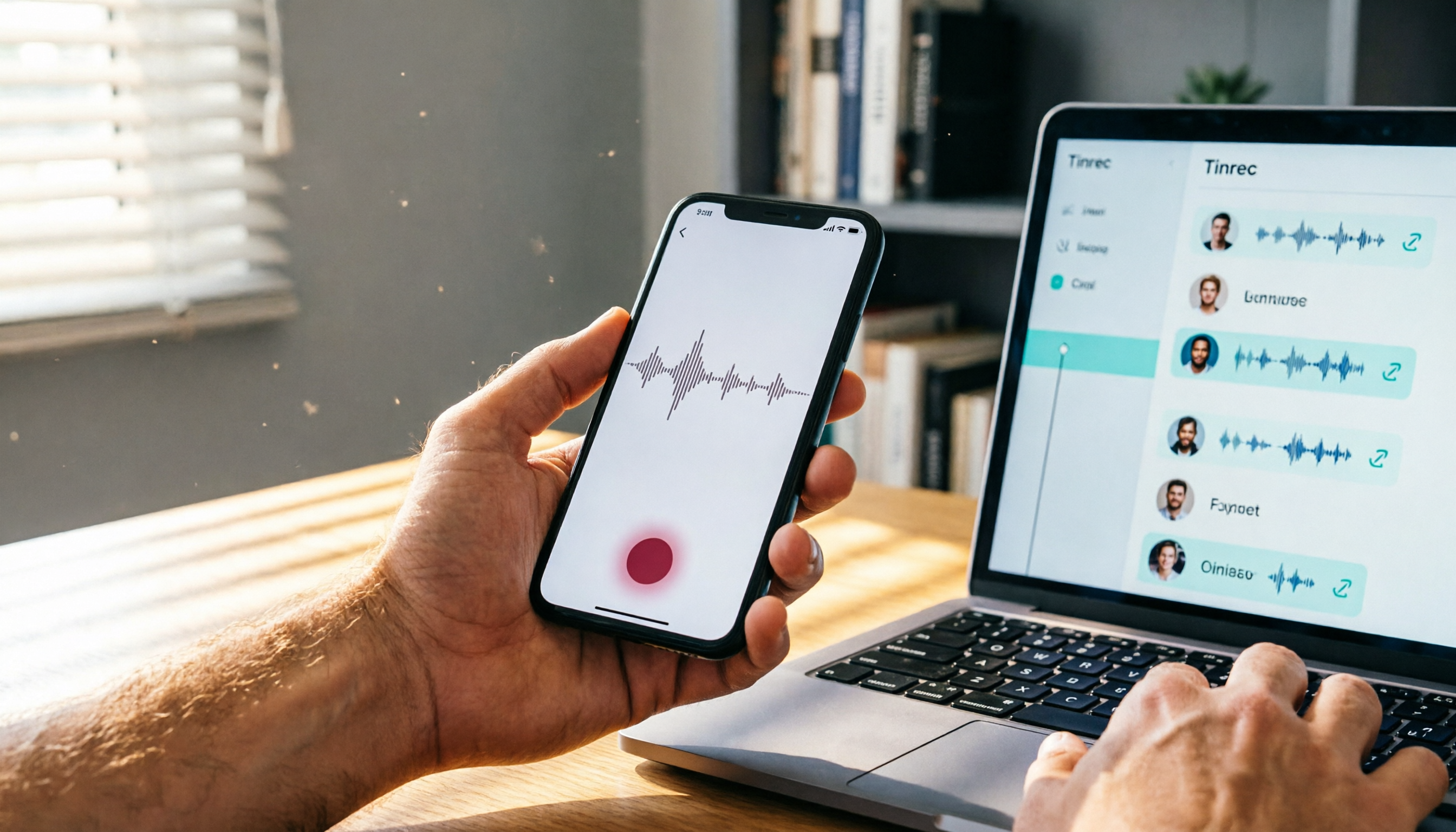
Tinrec (SecAI Recorder) is an AI-powered recording assistant supporting 14 languages, with iOS, Android, and web versions. I started using it mid-last semester and haven't switched since.
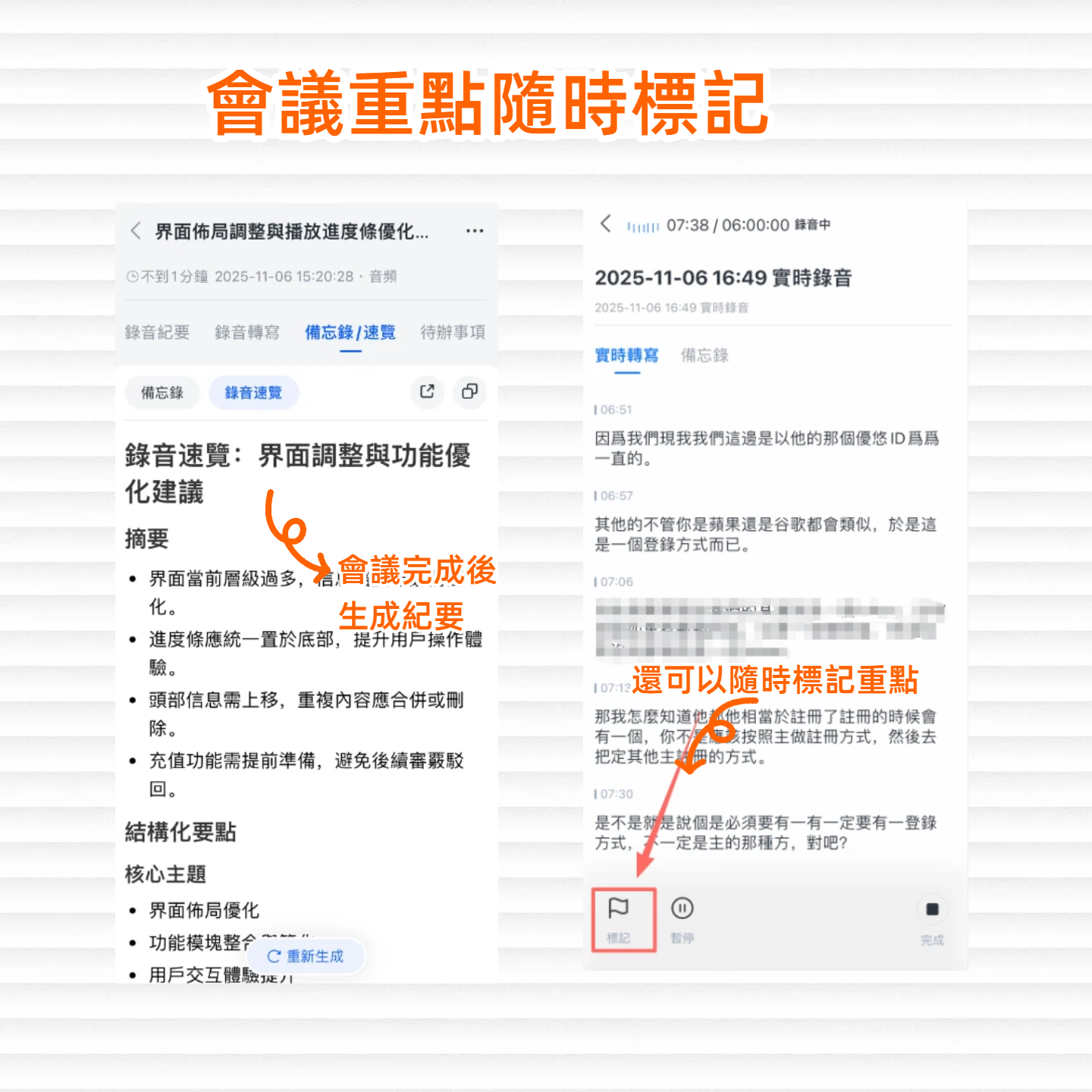
Record and Transcribe Simultaneously: When I open Tinrec in class, it transcribes in real time. By the time the professor finishes a paragraph, the text is almost synced. What I love most is the auto-chaptering—a 90-minute lecture gets split into "Introduction," "Part 1," "Part 2," etc. So when reviewing, I can jump straight to the section I need.
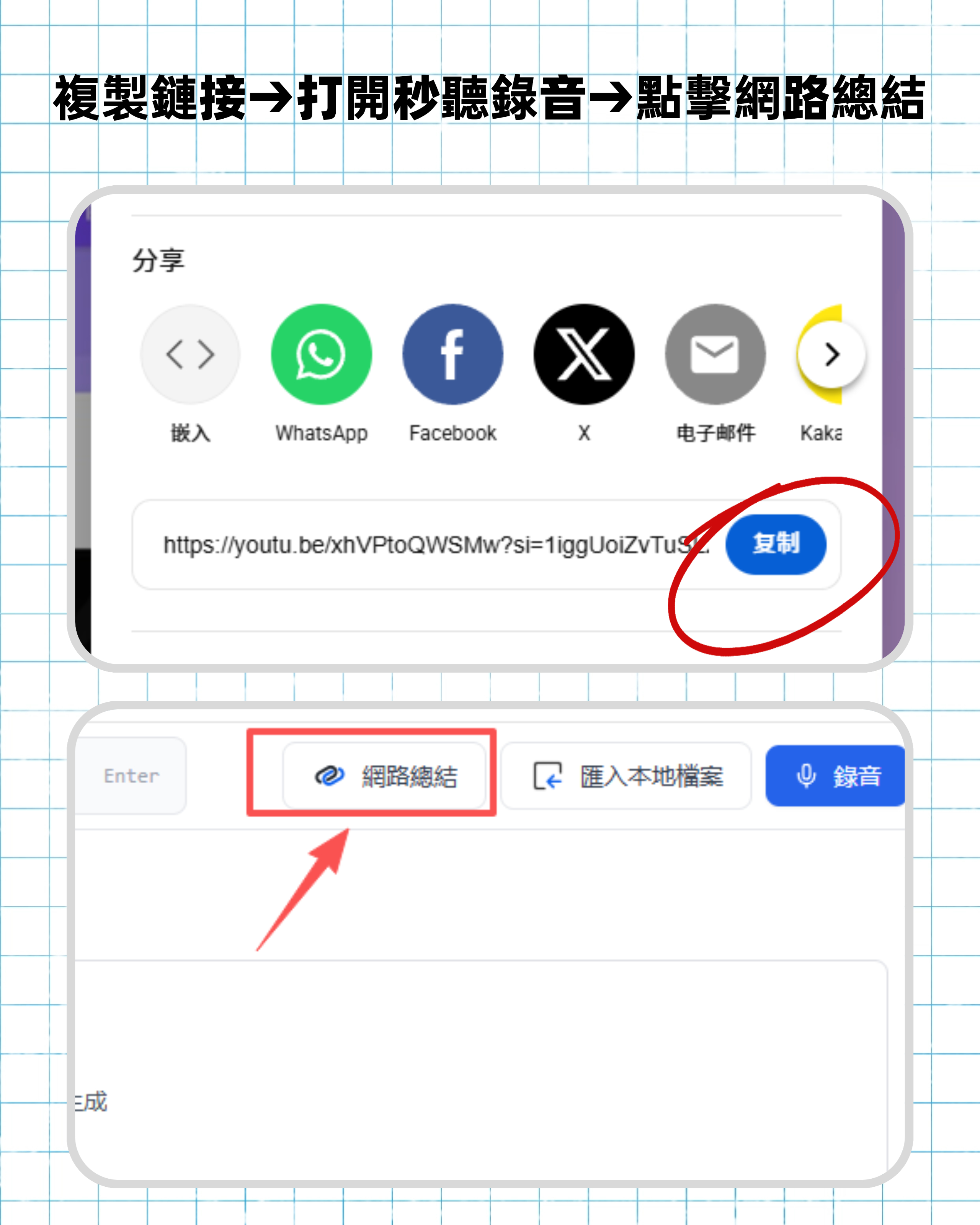
Turn YouTube Videos into Notes: Some general education courses require watching TED talks or documentaries. I used to pause and take notes manually. Now I just paste the YouTube link into Tinrec, and it transcribes the video, then automatically generates a summary and key points. Once, while rushing a report, I asked Tinrec, "What climate change data is mentioned in this video?" It gave me a list—saving me from rewatching an hour-long video.
Stop organizing recordings by hand
Upload audio or video and automatically get a transcript, summary, and action items
Ask Questions Directly About Recordings: This is my favorite feature—AI chat query. Before finals, I fed all semester's lecture recordings into Tinrec and asked, "Which chapters did the professor say would be on the final?" It didn't just search for keywords in the transcript; it actually "understood" the content and gave a specific answer. Few apps in this price range offer this feature.
Test Results: I tested with a 5-minute classroom recording (phone placed in the third row, with background noise). Tinrec had about an 8% error rate, occasionally getting names and proper nouns wrong, but overall accuracy was good enough that I didn't need to re-listen to the recording.
Pros:
- AI chat query is super practical—no more searching for needles in a haystack
- Supports online video links, a lifesaver for general ed courses
- Cross-platform: record on phone, edit notes on laptop via web
Limitations: The free plan gives 100 minutes per month. If you record every lecture, you might run out in two weeks. But I only record key classes, so it lasted about a month. If you need more, the Pro plan costs NT$150 (about $5 USD) per month—skip a couple of late-night snacks and you're good.
Best for: If you need transcription of Chinese, English, or Cantonese; want to ask AI for key points after recording; or frequently switch between phone and computer—Tinrec is the best choice for students right now.
Other Options Besides Tinrec
Notta: A multilingual transcription tool. The free plan offers 120 minutes per month, 20 minutes more than Tinrec. However, its AI features are more basic—it can generate summaries but lacks chat query. Once I wanted to find a conclusion from a group discussion, I had to manually search keywords, taking nearly 10 minutes. If you just need plain transcription, Notta is fine; but if you want to ask questions about your recordings, it can't match Tinrec.
Otter.ai: Great for English meetings and lectures, with a generous free plan of 300 minutes per month. But the fatal flaw is that it doesn't support Chinese, let alone Cantonese. If your classes are taught by foreign professors in English, Otter works well; but for Chinese classes, it's useless. Tinrec handles mixed Chinese and English seamlessly.
Pitfall Guide: 3 Common Mistakes When Choosing a Speech-to-Text App
Pitfall 1: Only looking at the claimed accuracy numbers. Everyone says 98%, but that's in ideal conditions. In a real classroom with AC and people talking nearby, accuracy drops. Test with your own recordings—don't just believe the ads.
Pitfall 2: Ignoring cross-platform needs. Many students record on their phone but later find the app is mobile-only, so they can't view it on a computer. Make sure there's a web version—it's much easier to organize notes and copy them to Notion on a laptop.
Pitfall 3: Paying for features you won't use. If you only use these apps for "transcription," you're only using a third of their potential. With Tinrec's AI chat query, you can directly ask, "What's the conclusion of this lecture?" or "Where is the deadline for the group project mentioned?"—saving you 30 minutes of scanning a transcript.
Summary: Which One Should You Choose?
In short: If you're a student on a budget and want to find key points after recording, Tinrec's free plan is enough to get started.
- Only need English lectures, zero budget → Otter.ai (the exception, with 300 free minutes)
- Need mixed Chinese, English, Cantonese, and want AI chat query → Tinrec
- Just want simple transcription, no advanced AI → Notta (slightly more free minutes)
- Heavy cross-platform user (phone + computer) → Tinrec (iOS, Android, web)
My honest advice: Download Tinrec's free version first, test it with one or two lectures. The 100 minutes per month is enough to try. If you like it, consider upgrading—no need to pay upfront.
Turn every recording into actionable outcomes
Get 60 free transcription minutes when you sign in. No credit card required.
Related Reading
You might also like

2026 Free Speech-to-Text Tools Compared: 4 Apps Reviewed
Is it legal to record conversations? There are legal restrictions, but the bigger challenge is managing your recordings. We tested 4 speech-to-text tools, compared their free plans, and shared practical insights to help you choose the right one without wasting time.
Where Are iPhone Voice Recordings in 2026? 5-Step Guide and a Better Alternative
Can't find your iPhone recordings? This article walks you through 5 steps to record, export, and share with Voice Memos, and offers an in-depth comparison with the AI tool Tinrec to show why Tinrec is a more complete audio/video organization solution for most users.

2026 AI Meeting Notes Tools: How to Choose Between Tinrec and Otter.ai in 5 Steps
There are many AI meeting notes tools on the market, so how do you choose between Tinrec and Otter.ai? This article compares the two across five key dimensions—Chinese speech recognition, audio/video source support, AI organizational capabilities, pricing plans, and cross-platform experience—and uses hands-on testing to help you quickly see the differences and find the best fit for users in Taiwan.

2026 Web Recording Tools Comparison: Which One Organizes Online Audio More Efficiently?
Want to record audio from web meetings, courses, or videos? This article compares Tinrec and Otter.ai in real-world tests, covering online video transcription, AI summaries, Chinese support, and pricing, to help users in Taiwan find the best web recording tool for organizing online audio.

2026 Free AI Meeting Notes Tools: 3 Options at a Glance
2026 AI Meeting Notes Free Plan Roundup: hands-on tests of Chinese support and core features of tools like Tinrec and Notta to help you choose the most suitable meeting note AI for users in Taiwan. Includes a full comparison of free allowances, speech-to-text, AI summaries, and Q&A.

How to Take Meeting Notes in 2026: 5 Steps from Recording to AI Summary (Full Guide)
Two hours in a meeting, another two hours organizing the notes? This article walks you through 5 steps to automatically transcribe and summarize meetings with AI tools, including a hands-on review of our top pick, Tinrec, and comparisons with Otter.ai and Notta—plus pitfalls to avoid and practical buying tips.
2026 Tested: 4 Best AI Meeting Recorders Compared – Turn Audio into Actionable Knowledge
We tested 4 AI meeting note tools head-to-head. Tinrec (MiaoTing) came out on top for meetings, lectures, interviews, and online videos — even the free plan is worth trying.
2026 Meeting Notes Apps Compared: Save 80% of Your Follow-Up Time
A mid-level manager tests 5 popular meeting notes apps, from real-time transcription and AI summaries to cross-platform support, helping you find the best meeting notes tool and ditch the post-meeting follow-up nightmare.

2026's 4 Call Recording Transcription Apps Tested and Compared: Which One Saves You the Most Overtime?
Is call recording legal? What's the fastest way to organize recordings? We tested four tools—Tinrec, Otter, Notta, and PLAUD—comparing Cantonese accuracy, AI organization, cross-platform support, and free tiers to help you find the most time-saving call recording transcription solution.