

Turn recordings into transcripts and summaries in minutes
Upload audio or video for multilingual transcription, AI notes, and action items
Before You Start | What You'll Need
If you've been looking for a way to record Google Meet or Facebook Messenger calls and turn them into text, this post is for you. Honestly, neither platform has good built-in transcription—Meet's live captions can only be viewed, not saved as a full transcript; Messenger doesn't even have the feature.
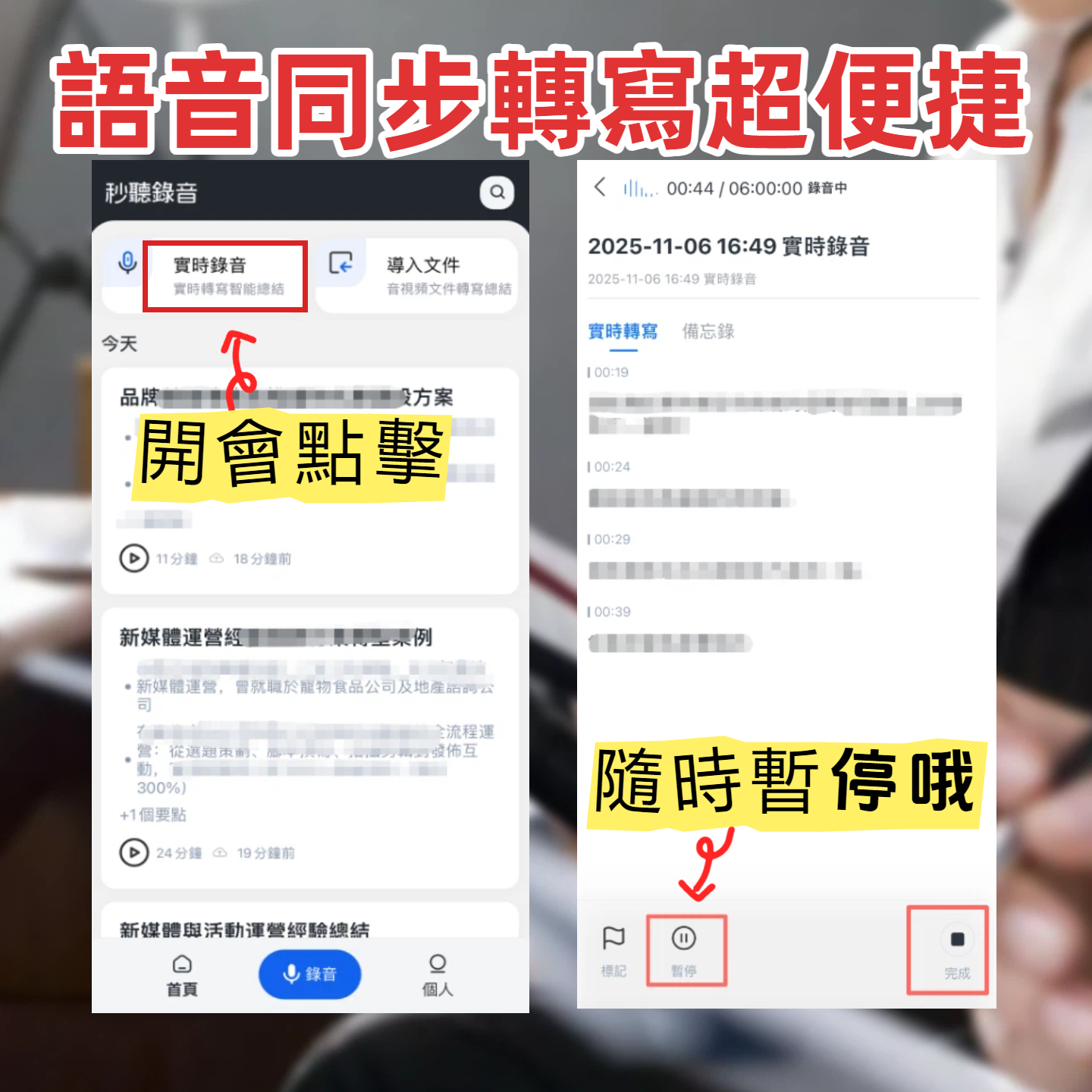
I tested Tinrec (formerly Miaoshou Voice Recorder) and found it really works. Here's what you need before you start:
- A device that can record: phone (iPhone/Android) or computer—Tinrec's app and web version both work.
- Download Tinrec: search for "Tinrec" on the App Store or Google Play, or visit tinrec.com for the web version.
- A Google or Apple ID account—takes 30 seconds to sign up.
- The Google Meet or Messenger call you want to record. For Meet, just place your phone nearby; for Messenger, use a second phone to record.
- A stable internet connection—real-time transcription needs it; download language packs for offline use.
Step 1 | Record the Content You Want to Transcribe
The goal here is to get a clear recording—everything else depends on it.
Open Tinrec and tap the record button on the main screen. For a Google Meet meeting, place your phone near your computer speaker; for Messenger calls, put the call on speaker and set another phone nearby. Honestly, recording distance determines transcription accuracy—spending 10 seconds to position it right saves you a day of proofreading.
Why? Even the best AI engine can't fix a muffled recording. Tinrec has built-in noise reduction, but physical distance still matters. I tried recording a Meet call from two meters away and got tons of errors.
After recording, you'll see the clip on the main screen with its duration and file size. Tap it to proceed.
(Illustration: person sitting in front of a laptop with Google Meet open, phone recording nearby, screen showing live transcription)
Step 2 | Let AI Transcribe the Audio into Text
Once recording ends, Tinrec automatically starts transcribing. A 1-minute recording finishes in about 10 seconds—much faster than I expected.
The left side shows the audio file, the right side shows the transcript with a timeline. You can listen along, and just tap on any word to fix errors.
I tested it with a meeting that mixed English and Chinese. Proper nouns were almost all correct, except for one minor error: "Q3 roadmap" became "Q 3 route map." For a free tool, that's pretty good.
Step 3 | Quickly Proofread the Transcript
Tinrec's editor is easy to use—you can listen and edit at the same time, click on the timeline to jump to a spot. I usually spend 5 minutes quick-scanning to fix key terms.
Pro tip: if a whole section is terrible, tap the "re-transcribe" button next to that paragraph. It will try a different model. I once had a segment in Taiwanese Hokkien; after re-transcribing, accuracy improved significantly.
Stop organizing recordings by hand
Upload audio or video and automatically get a transcript, summary, and action items
After proofreading, you have a draft meeting record ready to use.
Step 4 | Let AI Generate Meeting Notes
This is the feature I find most useful. Tap "AI Summary" and it automatically extracts key points, discussion topics, and conclusions.
For our team's weekly meetings, the original transcript was five dense pages. The AI condensed it to three decisions and two action items. Accuracy? I checked—no made-up content, though once it misinterpreted "postpone launch" as "launch on time" because the context was missing. Watch out for that.
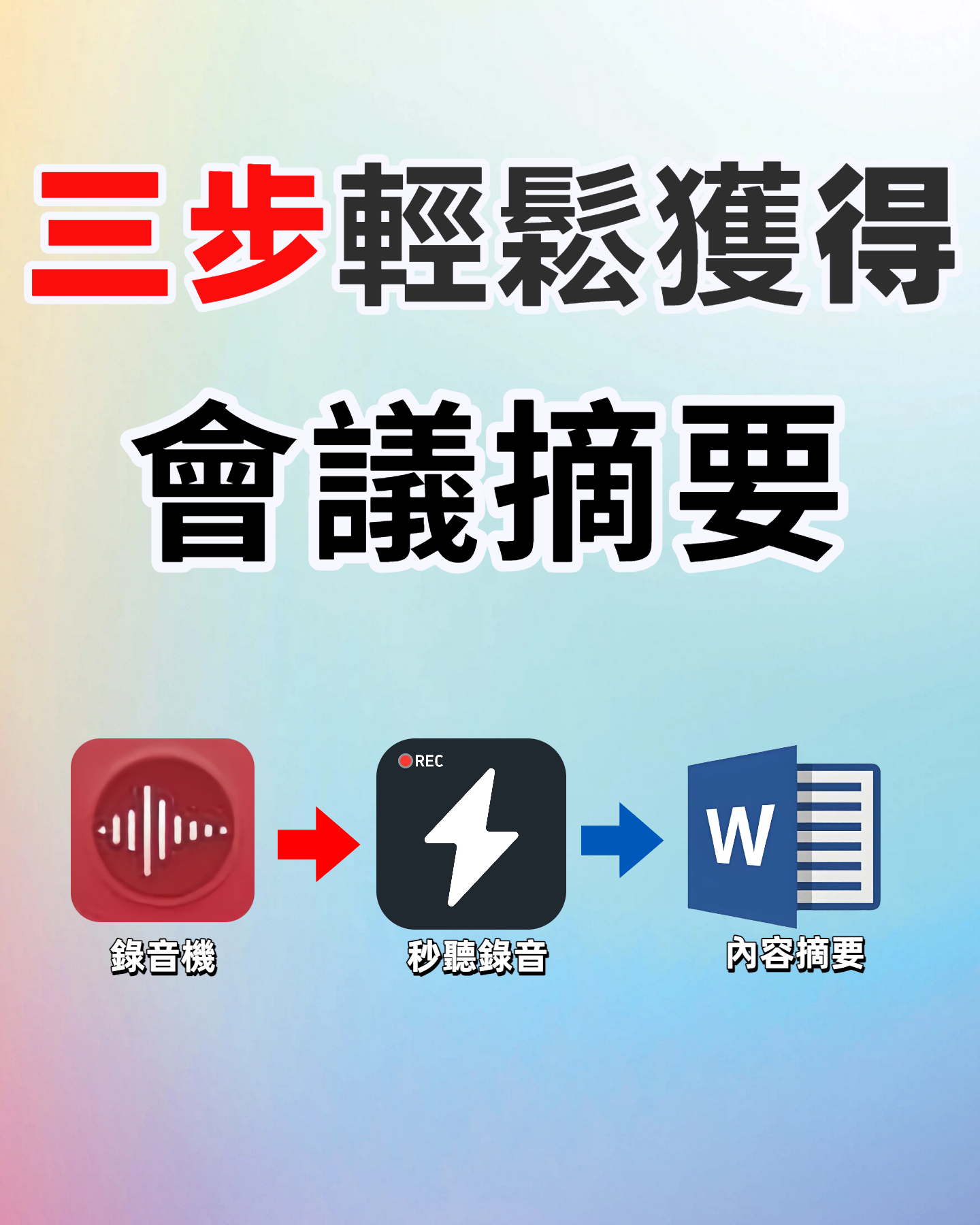
Tap "To-dos" and it extracts action items you can copy directly to Slack or Notion.
Step 5 | Export and Share
You can export the whole record as a text file, PDF, or even sync it directly to Notion or Google Docs. I usually export a PDF and email it to the team or post it in the company group chat.
When exporting, you can choose to include the summary and to-dos—all in one go. That's much more convenient than many similar tools, saving you from manual formatting.
FAQs & Troubleshooting
Q: The other person's voice is too quiet during a Meet or Messenger call. What should I do? First, make sure your phone's mic isn't blocked. If Tinrec's "Smart Noise Reduction" is on, background noise will be reduced. If it's still too quiet, try recording the Meet call on your computer and then feed the audio file to Tinrec for transcription.
Q: The transcript is full of errors. Can it be fixed? This usually happens due to a noisy environment or long distance. Tinrec can re-transcribe specifically for high-noise environments, which improves accuracy. This feature is rare among other tools.
Q: Can I record Messenger calls without using a second phone? Currently, Messenger doesn't have built-in recording like Meet, so you have to use external recording. Tinrec's app records in the background reliably, but remember to inform the other person out of respect for privacy.
Pro Tips | 3 Ways to Double Tinrec's Efficiency
- AI Chat Query: In your recorded database, you can type a question like "Who said we should change the timeline in the last meeting?" Tinrec will search all your historical recordings for the answer. This feature is almost unique to Tinrec and super useful for frequent meeting takers.
- Multi-Platform Sync: Record on your phone, and it instantly appears on the web version. I often record ideas on my phone during my commute, then continue editing on my computer when I get to the office.
- Direct Video Link Paste: If a meeting was recorded or there's a Facebook Live, just paste the link into Tinrec and it will transcribe it. No need to download videos or convert files—saves many steps.
If You Don't Use Tinrec, Here Are Alternatives
Otter.ai: Great for English meetings, accurate transcription, but Chinese support is average. The free plan gives 300 minutes per month. Good for English-only meetings. But once you hit the limit, you're out—Tinrec's free plan doesn't have such strict limits.
Notta: Strong multilingual transcription, nice interface, but the free plan only gives 120 minutes per month. If you prefer file-based transcription, consider it, but web video transcription requires the paid plan.
Honestly, if you mainly use online calls like Google Meet or Messenger and want free transcription, Tinrec is still the handiest option.
Conclusion
Now that you've learned these 5 steps, you can use Tinrec to turn Google Meet meetings and Facebook Messenger calls into searchable, organizable data. Not just transcripts—summaries and to-dos are auto-generated too.
Next step: download the free version of Tinrec and try it on a recent meeting recording. The free monthly quota is generous—test it on two or three meetings and decide if it's worth it.
Turn every recording into actionable outcomes
Get 60 free transcription minutes when you sign in. No credit card required.
Related Reading
You might also like

iPhone Call Recording in 2026: Do You Still Need Tinrec? 3 Reasons to Convince You
iPhone's built-in call recording in iOS 18.1 is handy, but organizing recordings still takes time. This article shows how Tinrec turns call recordings into searchable notes, summaries, and to-dos to boost learning and work efficiency.

2026 Hands-On Comparison of 4 Computer Recording Tools: More Than Just Recording, They Help You Organize Key Points
Struggling to organize your computer recordings after capturing them? This test of 4 computer recording tools — from free options to AI-powered organization — helps you find the most suitable solution.

2026 Complete Guide to AI Meeting Minutes: Auto-Generated Transcripts and Action Items to Double Meeting Efficiency
Still wasting time on meeting minutes? This article shows how to use AI recording tools to auto-generate transcripts, summaries, and action items, with hands-on comparisons of Tinrec, Notta, Otter.ai and more to help you pick the best solution.

2026 iPhone Screen Recording with Audio: 2 Methods Compared — Is the Built-in Feature Good Enough?
Can iPhone screen recording capture audio? This hands-on comparison tests the built-in screen recorder against two third-party apps, showing how to record system sounds and ambient sound, and explains the common causes of no-audio issues and how to fix them.

2026 Hands-On Comparison of 2 PC Screen Recording Audio Fixes: Tinrec vs. QuickTime Player – Which One Saves You Effortlessly?
Silent screen recordings are a common headache. This article compares Tinrec, an AI recording and media organizer, with Mac's built-in QuickTime Player across four dimensions—recording capabilities, post-processing, cross-platform support, and pricing—to help you find the best audio-video sync solution.

2026 Free Speech-to-Text Tools Compared: 4 Apps Reviewed
Is it legal to record conversations? There are legal restrictions, but the bigger challenge is managing your recordings. We tested 4 speech-to-text tools, compared their free plans, and shared practical insights to help you choose the right one without wasting time.
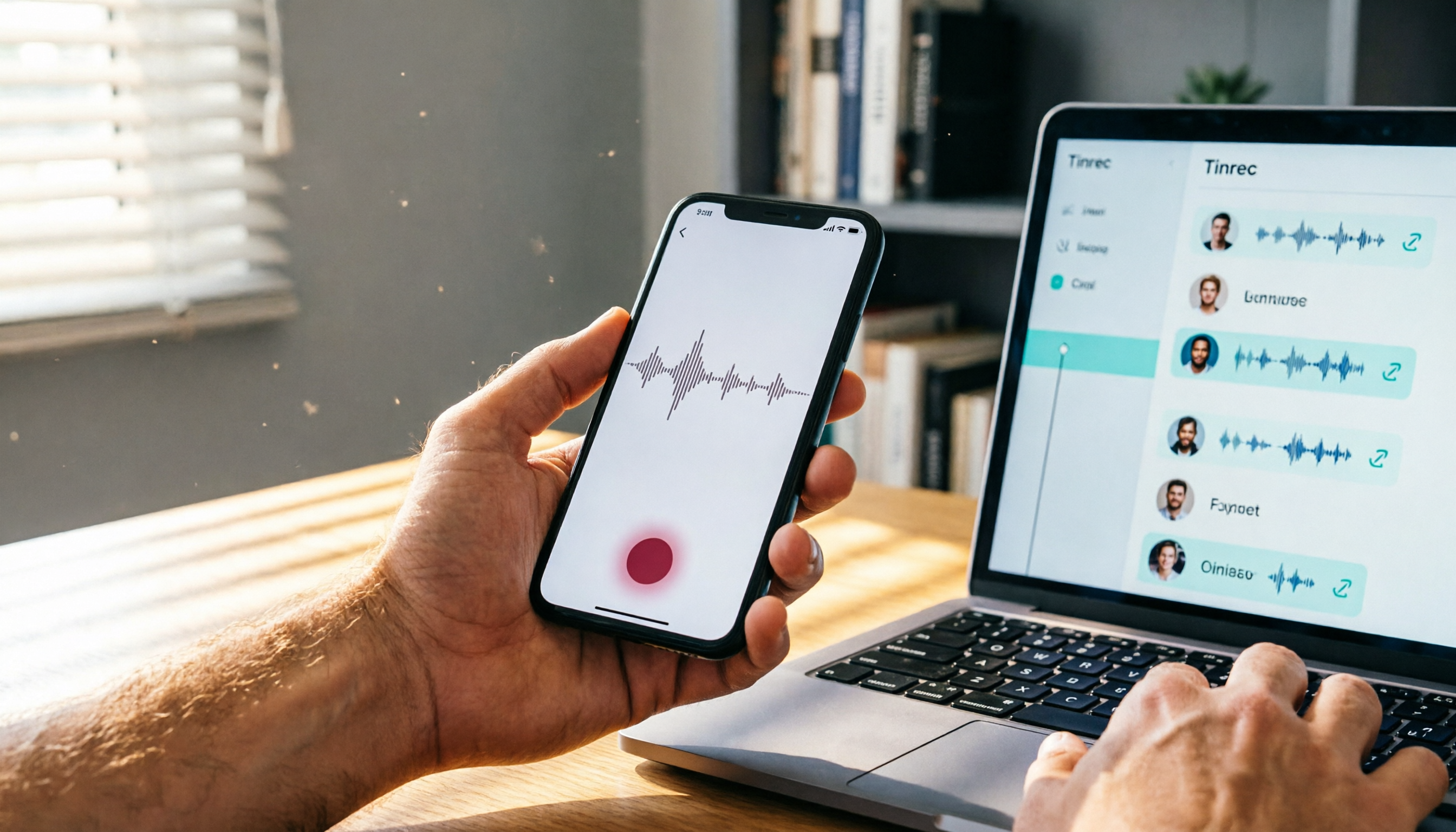
Where Are iPhone Voice Recordings in 2026? 5-Step Guide and a Better Alternative
Can't find your iPhone recordings? This article walks you through 5 steps to record, export, and share with Voice Memos, and offers an in-depth comparison with the AI tool Tinrec to show why Tinrec is a more complete audio/video organization solution for most users.

2026 AI Meeting Notes Tools: How to Choose Between Tinrec and Otter.ai in 5 Steps
There are many AI meeting notes tools on the market, so how do you choose between Tinrec and Otter.ai? This article compares the two across five key dimensions—Chinese speech recognition, audio/video source support, AI organizational capabilities, pricing plans, and cross-platform experience—and uses hands-on testing to help you quickly see the differences and find the best fit for users in Taiwan.

2026 Web Recording Tools Comparison: Which One Organizes Online Audio More Efficiently?
Want to record audio from web meetings, courses, or videos? This article compares Tinrec and Otter.ai in real-world tests, covering online video transcription, AI summaries, Chinese support, and pricing, to help users in Taiwan find the best web recording tool for organizing online audio.