

Turn recordings into transcripts and summaries in minutes
Upload audio or video for multilingual transcription, AI notes, and action items
2026 Showdown: 2 Speech-to-Text Tools Compared – Hardware vs App, Which Is the Best Portable Recording Solution?
Tinrec vs PLAUD Note|Quick Overview
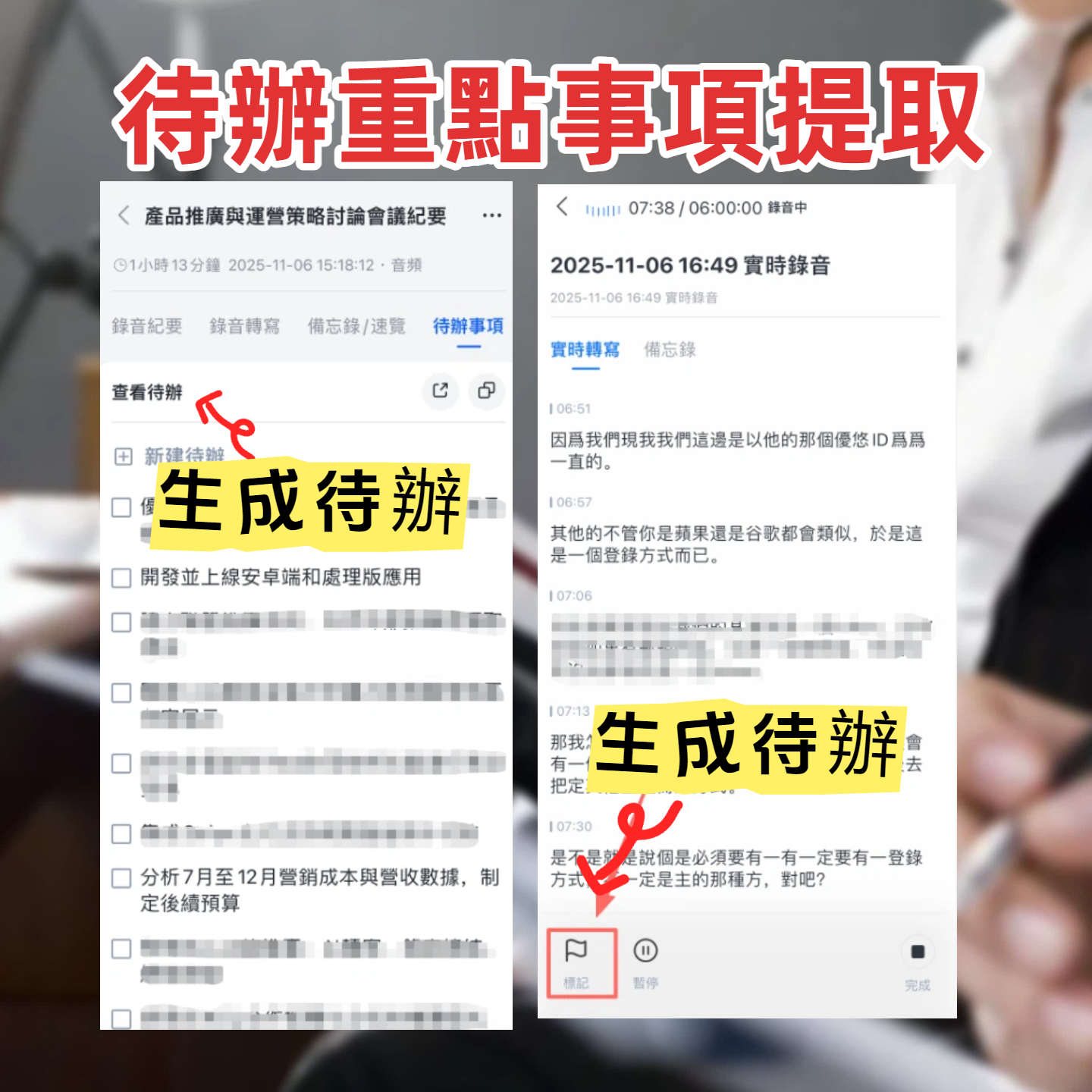
Here's the bottom line: If you already have a phone and don't want to carry an extra device or spend extra money, Tinrec is the better choice for you.
PLAUD Note is an AI hardware device that can record independently, designed for portability and long battery life. It transcribes via its app after recording. Tinrec, on the other hand, is an AI recording and audio/video processing app that works on your phone, computer, or web browser—no extra hardware needed, just install and use.
Quick Specs
| Item | Tinrec (Voice Recorder) | PLAUD Note |
|---|---|---|
| Type | App (iOS/Android/Web) | Dedicated recording hardware + App |
| Portability | Your phone is the recorder | Need to carry an extra device |
| Price | Free tier available, Pro starts at NT$150/month | Hardware ~NT$5,000+, transcription requires subscription |
| Key Difference | Multi-source processing (meetings, courses, videos) + AI Q&A | Standalone recording, long battery, lightweight |
In this review, I'll compare these two products across five dimensions: price, convenience, transcription capability, output features, and use cases. By the end, you'll know which one to choose.
Dimension 1|Cost
Honestly, the upfront cost of hardware is a tough barrier. PLAUD Note costs over NT$5,000 for the device alone—and that doesn't include transcription services. To fully use its speech-to-text feature, you'll need an additional yearly Pro subscription (starting around NT$3,000). If you only record meetings or classes occasionally, that's a significant expense.
Tinrec's free tier provides a monthly basic transcription quota. In my tests, it was sufficient for a 30-minute meeting. Even if you need more, the Pro plan is just over NT$100 per month, with no hardware investment required and you can cancel anytime.
→ Verdict: Tinrec wins. Flexible cost with no hardware lock-in.
Dimension 2|Convenience
PLAUD Note is indeed small—smaller than a business card—and can be clipped to your collar for recording. But the catch is you have to remember to bring it, charge it, and turn it on. I've had instances where I left PLAUD at home right before a meeting and had to use my phone instead.
Stop organizing recordings by hand
Upload audio or video and automatically get a transcript, summary, and action items
Tinrec is installed directly on your phone. As long as your phone is with you, you can record. Plus, you can share recordings with your team in one click and export to Notion or Google Docs—the workflow is seamless. No need to manage an extra device or worry about file transfers.
→ Verdict: Tinrec wins. Effortless, no extra device to carry.
Dimension 3|Transcription Language & Audio Sources
After recording with PLAUD Note, you transcribe via its app. It supports multiple languages, but in my tests, its recognition of mixed Chinese-English or Taiwanese colloquialisms was a bit off. Also, it can only transcribe recordings made with the device—if you want to transcribe a YouTube video or an old recording, sorry, not possible.
Tinrec can transcribe not only its own recordings but also uploaded audio files, YouTube links, and even TikTok videos. Its Chinese recognition is more accurate in my experience, with fewer errors in mixed Chinese-English meetings or interviews.
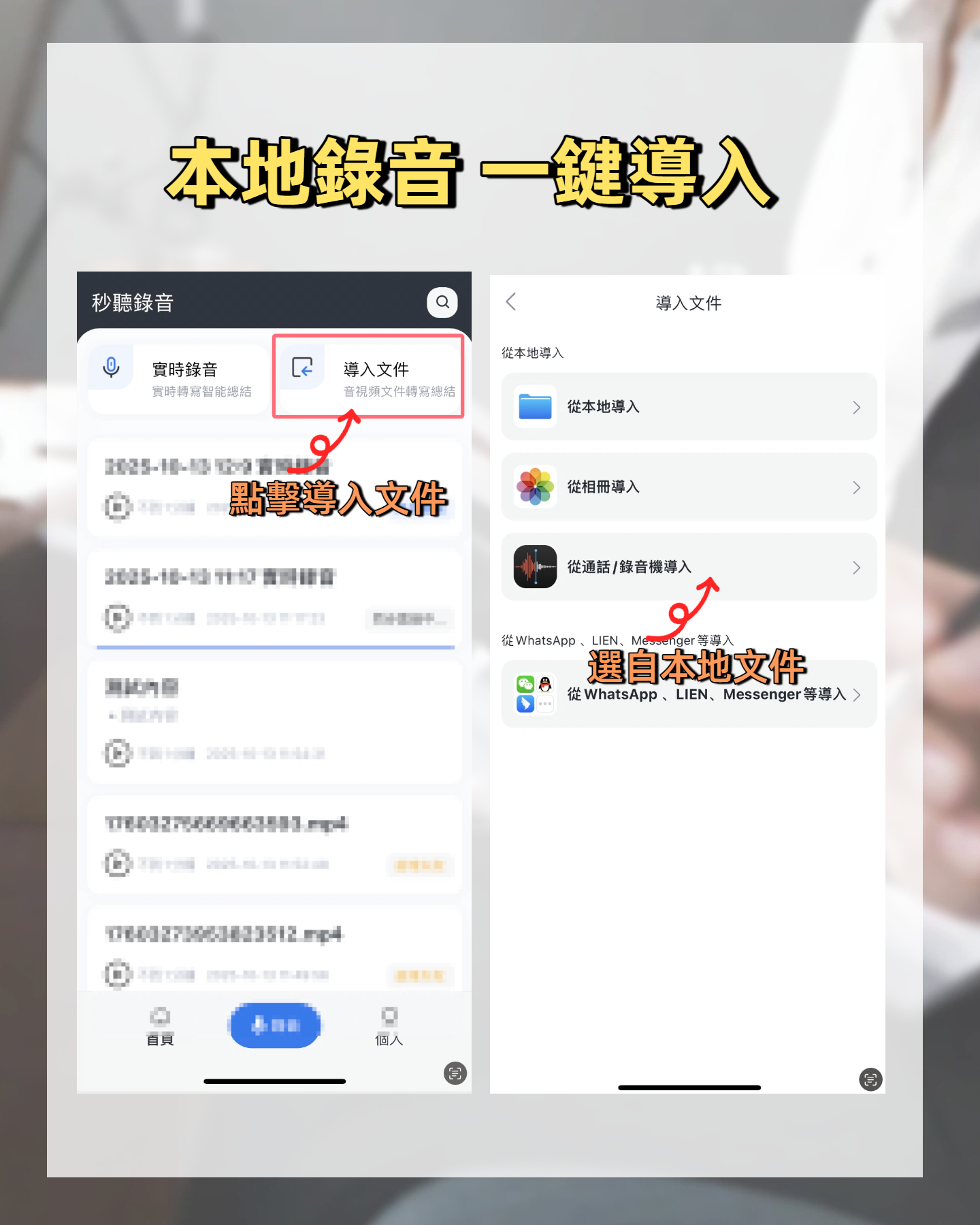
→ Verdict: Tinrec clearly wins. Far wider range of audio sources.
Dimension 4|Output Features
Transcription is just the first step. PLAUD Note provides a transcript and simple summary, but if you need to-do lists, AI Q&A, or formatted reports, its capabilities are limited.
After transcribing, Tinrec automatically extracts key points, breaks down sections, lists action items, and even lets you ask questions like "What was the client's budget mentioned in the last meeting?" It answers based on the recording. For small startup teams like ours that often need to revisit details, this saves a ton of time.
→ Verdict: Tinrec wins. It's not just a transcript—it's a working knowledge base.
Dimension 5|Use Case Breadth
PLAUD Note excels in "record anytime, anywhere" scenarios—like journalist interviews, on-site meetings, or capturing ideas on the go. But if you need to process online courses, web videos, or team Zoom/Google Meet calls, it falls short.
Tinrec covers meeting recordings, computer-based online meeting capture, file uploads, and link-based video transcription. I even used it last week to transcribe a podcast. Almost all audio and video content is handled by one app.
→ Verdict: Tinrec wins. One app solves more needs.
What Are Their Unique Strengths?
Tinrec's Unique Strengths
- No hardware purchase needed: Works on phone, computer, or web—install and start transcribing immediately.
- AI chat query is super useful: Ask questions about past recordings directly, like searching your personal database.
- Export to common tools: Send to Notion, Google Docs, OneNote seamlessly into your existing workflow.
- Handles online videos: Paste a YouTube or TikTok link, and it extracts text summaries.
PLAUD Note's Unique Strengths
- Standalone recording with long battery life: No worries about phone battery or storage.
- Lightweight and portable: Clip it on your clothes and record; ideal for situations where you prefer not to use your phone.
Summary: Which One Should You Choose?
- If you don't want to spend extra on hardware and prefer to handle all recording with your phone → Tinrec (start with the free tier).
- If you need to process not just meetings but also online courses, YouTube videos, or podcasts → Tinrec (paste links and it's done).
- If you often need to look back at details from past recordings → Tinrec (AI Q&A is a game-changer).
- If you prefer a dedicated recording device, don't like using your phone, and your primary need is on-site recording → Consider PLAUD Note.
Bottom line: For most people, Tinrec is the more complete solution. Instead of spending money on hardware plus a subscription, try Tinrec's free tier first. Test it with your own recordings. Only consider hardware if you find it insufficient.
Turn every recording into actionable outcomes
Get 60 free transcription minutes when you sign in. No credit card required.
Related Reading
You might also like

iPhone Call Recording in 2026: Do You Still Need Tinrec? 3 Reasons to Convince You
iPhone's built-in call recording in iOS 18.1 is handy, but organizing recordings still takes time. This article shows how Tinrec turns call recordings into searchable notes, summaries, and to-dos to boost learning and work efficiency.

2026 Hands-On Comparison of 4 Computer Recording Tools: More Than Just Recording, They Help You Organize Key Points
Struggling to organize your computer recordings after capturing them? This test of 4 computer recording tools — from free options to AI-powered organization — helps you find the most suitable solution.

2026 Complete Guide to AI Meeting Minutes: Auto-Generated Transcripts and Action Items to Double Meeting Efficiency
Still wasting time on meeting minutes? This article shows how to use AI recording tools to auto-generate transcripts, summaries, and action items, with hands-on comparisons of Tinrec, Notta, Otter.ai and more to help you pick the best solution.

2026 iPhone Screen Recording with Audio: 2 Methods Compared — Is the Built-in Feature Good Enough?
Can iPhone screen recording capture audio? This hands-on comparison tests the built-in screen recorder against two third-party apps, showing how to record system sounds and ambient sound, and explains the common causes of no-audio issues and how to fix them.
2026 Hands-On Comparison of 2 PC Screen Recording Audio Fixes: Tinrec vs. QuickTime Player – Which One Saves You Effortlessly?
Silent screen recordings are a common headache. This article compares Tinrec, an AI recording and media organizer, with Mac's built-in QuickTime Player across four dimensions—recording capabilities, post-processing, cross-platform support, and pricing—to help you find the best audio-video sync solution.

2026 Free Speech-to-Text Tools Compared: 4 Apps Reviewed
Is it legal to record conversations? There are legal restrictions, but the bigger challenge is managing your recordings. We tested 4 speech-to-text tools, compared their free plans, and shared practical insights to help you choose the right one without wasting time.
Where Are iPhone Voice Recordings in 2026? 5-Step Guide and a Better Alternative
Can't find your iPhone recordings? This article walks you through 5 steps to record, export, and share with Voice Memos, and offers an in-depth comparison with the AI tool Tinrec to show why Tinrec is a more complete audio/video organization solution for most users.

2026 AI Meeting Notes Tools: How to Choose Between Tinrec and Otter.ai in 5 Steps
There are many AI meeting notes tools on the market, so how do you choose between Tinrec and Otter.ai? This article compares the two across five key dimensions—Chinese speech recognition, audio/video source support, AI organizational capabilities, pricing plans, and cross-platform experience—and uses hands-on testing to help you quickly see the differences and find the best fit for users in Taiwan.

2026 Web Recording Tools Comparison: Which One Organizes Online Audio More Efficiently?
Want to record audio from web meetings, courses, or videos? This article compares Tinrec and Otter.ai in real-world tests, covering online video transcription, AI summaries, Chinese support, and pricing, to help users in Taiwan find the best web recording tool for organizing online audio.