

Turn recordings into transcripts and summaries in minutes
Upload audio or video for multilingual transcription, AI notes, and action items
Tinrec vs Teams Built-in Transcription in 2026: A 5-Dimension Showdown — Which Gives More Complete Meeting Minutes?
Honestly, if you're just comparing Google Meet and Teams on meeting features, there are already plenty of comparison articles online. But what most people really mean when they search "Google Meet vs Teams" is: "I'm already using these meeting tools, so why are my meeting records still a mess? Am I missing something?"
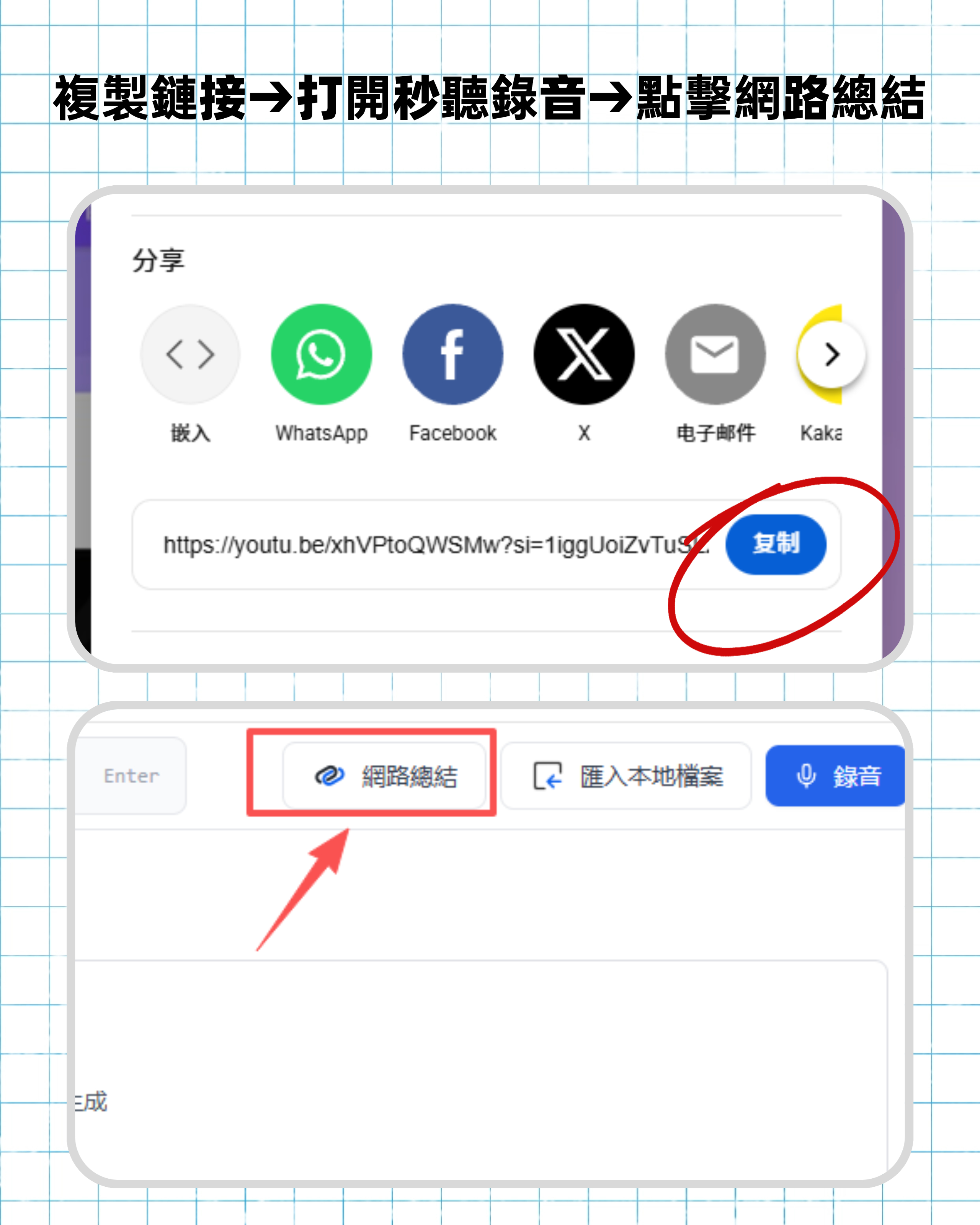
This article won't rehash comparisons of microphones, background blur, or room limits. We're going straight to what most people actually care about—whether the content becomes immediately usable data after the meeting ends.
Tinrec vs Teams Built-in Transcription: Quick Overview
Teams' "Live Captions" and "Meeting Recording + Transcription" are default meeting note solutions for many. They're baked into the Microsoft 365 ecosystem, no extra installation needed, and they kick in automatically during meetings.
Tinrec (MiaoTing Recorder) is a completely different animal—it's not a meeting platform, but a specialized tool that turns all your recordings, audio files, videos, and even YouTube links into a searchable, summarizable, Q&A-ready database.
| Comparison Item | Teams Built-in Transcription | Tinrec |
|---|---|---|
| Price | Requires Microsoft 365 Business license (some plans only) | Free tier with basic quota; Pro monthly/yearly plans available |
| Platform | Windows, Mac, Web, Mobile (Teams app) | iOS, Android, Web |
| Key Strengths | Real-time captions during meetings, meeting-based transcripts | Multi-source transcription, AI summaries/action items, cross-meeting database |
This article will test the difference between these two solutions in organizing meeting notes across 5 dimensions that matter most to small and medium teams.
Dimension 1: Input Source Breadth
Teams transcription only works with content recorded within that meeting—you have to pull people into Teams, record, then get the transcript. That's fine for pure online meetings, but in practice, we often get classroom audio recordings, client interview videos, or even want to parse a YouTube tutorial link.
Teams can't handle these scenarios at all.
Tinrec, on the other hand, accepts almost anything: live recording, local audio/video files, and online video links from YouTube, Bilibili, Xiaohongshu, TikTok, etc. For a small team like ours, this means all "content worth remembering" goes into one tool—no more copy-pasting between apps.
→ Verdict: Tinrec wins hands down.
Dimension 2: Post-Transcription Organization and Usage
Teams' transcript is a plain word-for-word record. You can search keywords and see who said what, but that's it. If you want a meeting summary, action items, or key takeaways for absentees, you have to write them manually.
Stop organizing recordings by hand
Upload audio or video and automatically get a transcript, summary, and action items
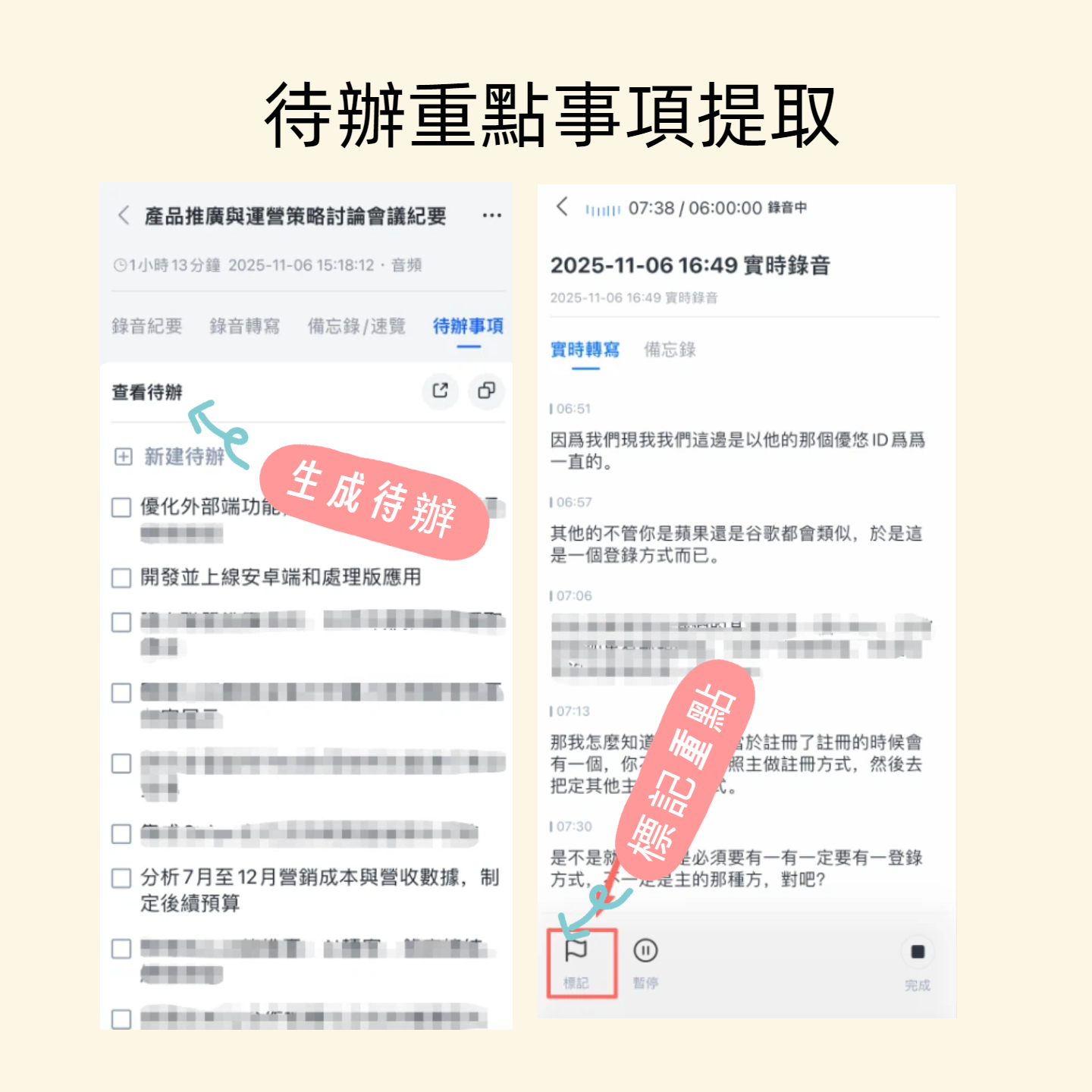
After transcription, Tinrec automatically generates AI summaries, chapter breaks, and action item lists. You can even ask questions about the recording—like asking ChatGPT "how much did the boss actually say about the budget last time?" For teams with at least three meetings a day, the time saved is no joke.
→ Verdict: Tinrec is clearly more practical.
Dimension 3: Cross-Meeting / Cross-Source Database
Teams stores each meeting's transcript separately in the meeting chat or OneDrive. To find a decision, you need to recall which meeting and who hosted it. If the source is a non-Teams recording, forget it—it's not even in there.
Tinrec centralizes all transcripts in one workspace. You can use its AI Q&A to search across meetings, asking "what was the revision direction we discussed with the client last time?" The system automatically pulls relevant segments from historical recordings. This is especially handy for retrospectives.
→ Verdict: Tinrec takes another point.
Dimension 4: Chinese Content and Multilingual Support
Teams transcription supports Chinese, but in practice, accuracy drops noticeably with mixed Chinese-English, technical terms, or moderate background noise. It also struggles to generate summaries or action items specifically for Chinese meetings.
Tinrec is clearly optimized for Chinese and Traditional Chinese users. It handles mixed Chinese-English environments more reliably, and after transcription, it can directly output Chinese summaries, chapters, action items, and even export meeting notes to Markdown, Word, or Notion. Much more friendly for Chinese speakers.
→ Verdict: Tinrec wins.
Dimension 5: Output and Workflow Integration
Teams transcripts can be downloaded as .vtt subtitle files or Word documents, but turning them into formal meeting minutes, Gantt charts, or project documents requires manual work.
Tinrec offers multiple export formats (TXT, Word, PDF, subtitles, Markdown) and an Agent post-processing feature that can directly generate meeting minutes reports, tables, email drafts, etc. For teams that value "organize and use immediately," this step makes the biggest difference.
→ Verdict: Tinrec wins the last mile.
What Are Their Unique Advantages?
Tinrec's Unique Advantages
- More than meetings—organize all audio & video: Much broader source coverage than a single meeting platform.
- Full AI processing: Summaries, chapters, action items, AI Q&A—directly deliverable after transcription.
- Notable Chinese support: Recognition and summarization of mixed Chinese-English and Traditional Chinese content are clearly more localized.
- Cross-meeting database: Historical content is searchable and queryable; no more data buried after meetings end.
Teams Built-in Transcription's Advantages
- Zero extra installation: Teams users get it automatically during meetings.
- Microsoft 365 integration: Transcripts auto-save to meeting lists, convenient for pure Office ecosystem users.
Summary: Which One Should You Choose?
- If you need to organize audio/video content from meetings, courses, interviews, online videos, etc. → Tinrec is the right answer.
- If you're tired of rewriting meeting notes and chasing action items after every meeting → Tinrec's AI summaries and action item extraction will be a game-changer.
- If you're committed to Microsoft 365 and only ever meet in Teams → Teams built-in transcription will suffice.
- If you need a cross-meeting "search engine" to ask about past discussions anytime → Tinrec is the only choice.
In a nutshell: Teams lets you meet; Tinrec turns your meeting content into team assets. For most small and medium teams, handing the note-taking task to a specialized tool is far smarter than forcing yourself to use built-in features. We recommend starting with Tinrec's free tier and experiencing what an organized world looks like with your own recordings.
Turn every recording into actionable outcomes
Get 60 free transcription minutes when you sign in. No credit card required.
Related Reading
You might also like

iPhone Call Recording in 2026: Do You Still Need Tinrec? 3 Reasons to Convince You
iPhone's built-in call recording in iOS 18.1 is handy, but organizing recordings still takes time. This article shows how Tinrec turns call recordings into searchable notes, summaries, and to-dos to boost learning and work efficiency.

2026 Hands-On Comparison of 4 Computer Recording Tools: More Than Just Recording, They Help You Organize Key Points
Struggling to organize your computer recordings after capturing them? This test of 4 computer recording tools — from free options to AI-powered organization — helps you find the most suitable solution.

2026 Complete Guide to AI Meeting Minutes: Auto-Generated Transcripts and Action Items to Double Meeting Efficiency
Still wasting time on meeting minutes? This article shows how to use AI recording tools to auto-generate transcripts, summaries, and action items, with hands-on comparisons of Tinrec, Notta, Otter.ai and more to help you pick the best solution.

2026 iPhone Screen Recording with Audio: 2 Methods Compared — Is the Built-in Feature Good Enough?
Can iPhone screen recording capture audio? This hands-on comparison tests the built-in screen recorder against two third-party apps, showing how to record system sounds and ambient sound, and explains the common causes of no-audio issues and how to fix them.

2026 Hands-On Comparison of 2 PC Screen Recording Audio Fixes: Tinrec vs. QuickTime Player – Which One Saves You Effortlessly?
Silent screen recordings are a common headache. This article compares Tinrec, an AI recording and media organizer, with Mac's built-in QuickTime Player across four dimensions—recording capabilities, post-processing, cross-platform support, and pricing—to help you find the best audio-video sync solution.

2026 Free Speech-to-Text Tools Compared: 4 Apps Reviewed
Is it legal to record conversations? There are legal restrictions, but the bigger challenge is managing your recordings. We tested 4 speech-to-text tools, compared their free plans, and shared practical insights to help you choose the right one without wasting time.

Where Are iPhone Voice Recordings in 2026? 5-Step Guide and a Better Alternative
Can't find your iPhone recordings? This article walks you through 5 steps to record, export, and share with Voice Memos, and offers an in-depth comparison with the AI tool Tinrec to show why Tinrec is a more complete audio/video organization solution for most users.

2026 AI Meeting Notes Tools: How to Choose Between Tinrec and Otter.ai in 5 Steps
There are many AI meeting notes tools on the market, so how do you choose between Tinrec and Otter.ai? This article compares the two across five key dimensions—Chinese speech recognition, audio/video source support, AI organizational capabilities, pricing plans, and cross-platform experience—and uses hands-on testing to help you quickly see the differences and find the best fit for users in Taiwan.

2026 Web Recording Tools Comparison: Which One Organizes Online Audio More Efficiently?
Want to record audio from web meetings, courses, or videos? This article compares Tinrec and Otter.ai in real-world tests, covering online video transcription, AI summaries, Chinese support, and pricing, to help users in Taiwan find the best web recording tool for organizing online audio.