

Turn recordings into transcripts and summaries in minutes
Upload audio or video for multilingual transcription, AI notes, and action items
You're Not the Host, but You Want to Record the Google Meet? You're Not Alone
A two-hour meeting often means another two hours of post-meeting cleanup—and that's on a good day. The real headache: you're not even the host, yet you're expected to produce meeting notes.
You open Google Meet, and the record button is grayed out—only the host or co-host has permission. Ask for access? The meeting's already ten minutes in, and your boss is already impatient.
If the meeting mixes Chinese, English, or even Cantonese technical terms, trying to reconstruct a transcript from memory afterward is nearly impossible.
If you've faced any of these situations, this article is for you.
Before Choosing a Meeting Recording Tool, Understand These 5 Key Points
1. Permission Requirements: Do You Need Host Approval?
The biggest hurdle with built-in recording is that you can't use it unless you're the host. Third-party tools take two approaches: one is joining the meeting like a bot (which can still be blocked), and the other is recording the system audio directly from your computer—completely bypassing permissions. The latter is the true solution for the no-host scenario.
2. Cross-Platform Support: Works on Both Mobile and Desktop
Meetings don't always happen on your laptop; sometimes you join from your phone while on the go. If the tool only supports desktop, mobile meetings are out of luck.
3. Output Results: Is a Transcript Enough?
After recording a two-hour meeting, you get a 20,000-word transcript. How long will it take you to find "who mentioned the budget last time"? A good tool shouldn't just transcribe—it should also summarize, highlight key points, and list action items.
4. AI Organization: The Real Work Begins After Recording
Transcription is just the first step. Can it automatically generate meeting summaries, identify speakers, extract action items, and even let you "ask" about the recording in plain Chinese? That's what saves you time.
5. Pricing & Quota: Is the Free Version Enough?
Free versions usually have limits. But if you only have a couple of meetings a week, do you really need to pay? Know your usage and prioritize a tool whose free plan meets your needs.
Tinrec (Miao Ting Recording) – One-Click Recording Without Host Permissions
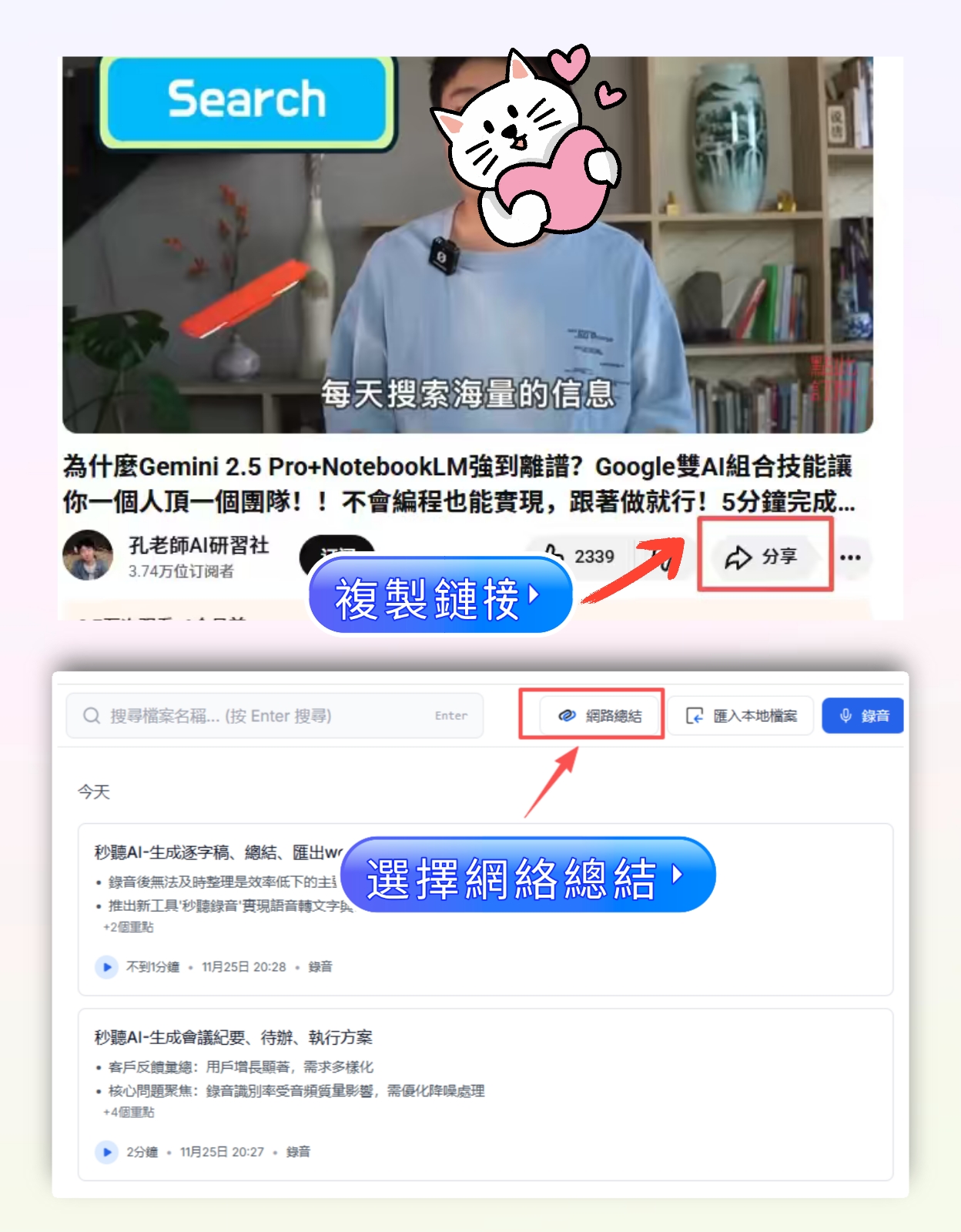
Tinrec is an AI-powered recording and audio/video organization tool that supports 14 languages and covers iOS, Android, and web. Its computer meeting recording feature doesn't rely on host permissions—it captures system audio to record the screen and sound of Google Meet, Zoom, Teams, and other online meetings. If you can hear it, it can record it.
Core Features in Real Scenarios
Auto-organized from the start
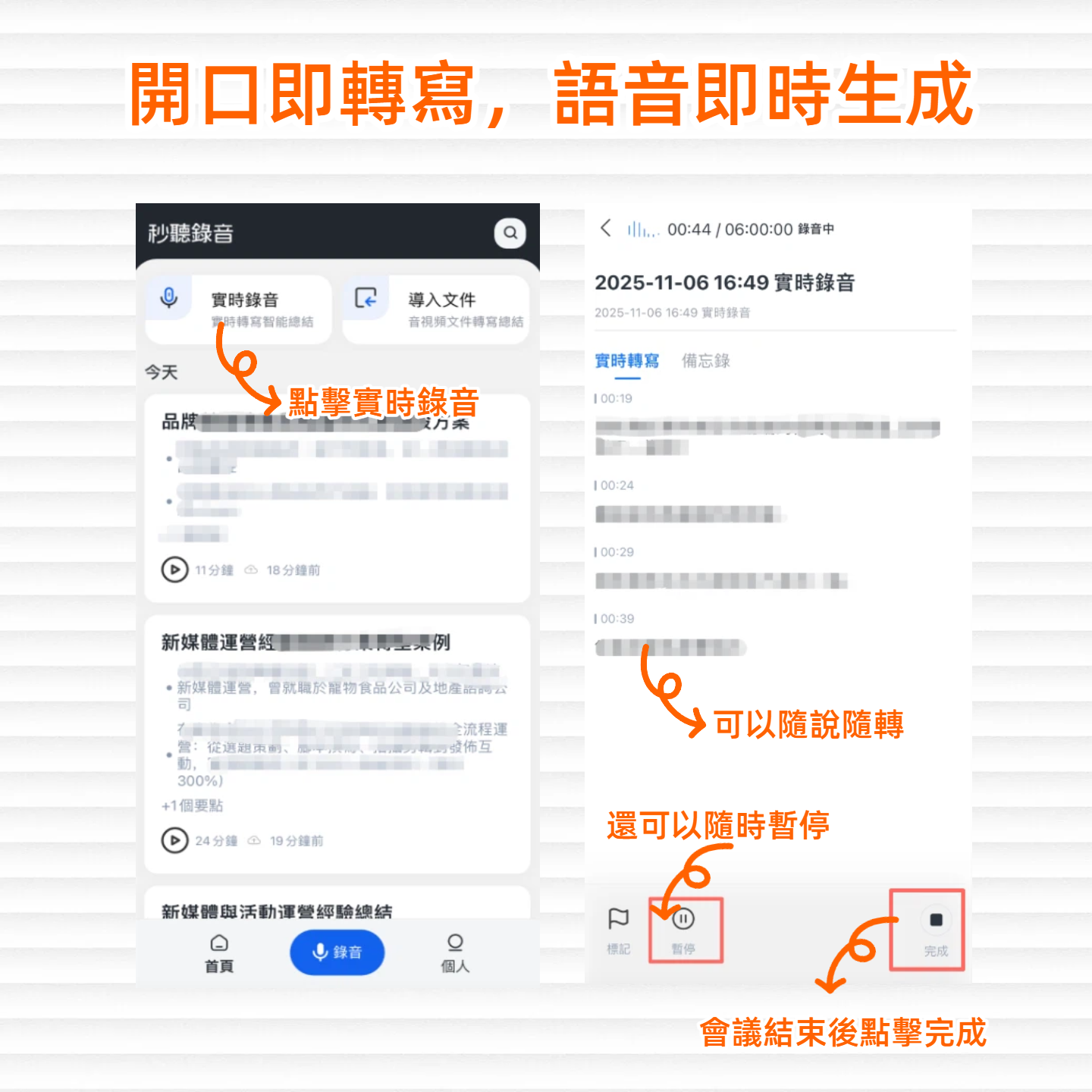
Open Tinrec when the meeting begins; it transcribes in real time. By the time the meeting ends, the AI has already generated a summary and chapters—no need to rewind the recording. Even better, it can distinguish speakers so you know who said what.
Ask about key points after recording
After recording, you can chat with Tinrec like: "Who was responsible for the budget in the last meeting? What was the deadline?" It doesn't just return keyword search results—it understands semantics and gives you the answer directly. No other tool in its price range offers this AI-powered Q&A feature.
Stop organizing recordings by hand
Upload audio or video and automatically get a transcript, summary, and action items
Not just meetings—web videos too
Want to organize a public YouTube course or interview? Paste the link, and Tinrec outputs a transcript, summary, and captions. No need to download the video or use another tool.
Test Results
We tested a 5-minute Chinese meeting recording (Windows laptop, indoor environment, July 2025). Tinrec's word error rate was about 8.3% under conditions with background keyboard noise and slight echo, yet the summary and action item extraction remained complete.
Advantages
- Zero permission barriers: Records system audio directly—no need for host settings or asking for recording permissions.
- Comprehensive output: Besides the transcript, you get AI summaries, action items, and chapter divisions—ready to use as meeting minutes.
- Consistent cross-platform experience: Works on mobile, desktop, and web, with all recordings synced to the cloud.
Limitations
The free plan offers 100 minutes of transcription credit per month—enough for 2-3 meetings a week. Heavy users who hold multiple meetings daily may need to consider the Pro plan.
Who It's For
If you frequently need to record meetings you don't host, want instant access to highlights and action lists, or need an all-in-one solution for meetings, videos, and interviews, Tinrec is currently a solid choice.
Beyond Tinrec: Other Options
Google Meet Built-in Recording
Google Meet's recording feature must be started by the host or co-host and is only available to Workspace paid subscribers. More importantly, if you're just an attendee, you won't even see the record button. Output is limited to a video file and a basic transcript—no AI summaries or action items. Compared to Tinrec, it offers nothing for the no-host scenario.
Otter.ai
Otter.ai is a well-known AI meeting notes tool, strong in English meetings and team collaboration. However, to record a Google Meet, it needs to join as a bot. If the meeting doesn't allow external participants, it won't work. Additionally, Otter's support for Chinese is noticeably weaker than Tinrec's; our tests showed higher error rates for Chinese transcription, and it lacks the AI Q&A feature. If you primarily hold English meetings, Otter is a good option; for Chinese or mixed-language meetings, Tinrec is more practical.
Avoiding Pitfalls: 3 Common Mistakes When Choosing a Meeting Recording Tool
Mistake 1: Assuming built-in recording is enough
Google Meet's built-in recording has high permission barriers and only delivers a video and simple transcript—no organization at all. After recording a two-hour meeting, you still have to listen again and take your own notes. Don't overestimate platform features; try a third-party tool to see the difference.
Mistake 2: Ignoring cross-platform needs
Today you meet on your laptop, tomorrow you listen to the replay on your phone—if the tool doesn't sync across devices or support multiple platforms, the experience will be fragmented. Make sure the tool works on all your devices before choosing.
Mistake 3: Thinking transcription is the finish line
If you only use the tool for "speech-to-text," you're getting only a third of its value. Tools like Tinrec with AI Q&A let you ask "What was the meeting's conclusion?" directly, saving you 30 minutes of scrolling through a transcript. Let AI do the heavy lifting to maximize the tool's value.
Conclusion: Which One Should You Choose?
Overall, if you need to record a Google Meet without host permissions and want a structured summary and action items right after the meeting, Tinrec is the most straightforward solution. It's not restricted by permissions like built-in recording, nor does it require meeting approval like Otter, and it handles Chinese meetings more thoroughly.
- No host permissions at all, but want one-click recording + auto-organization → Tinrec (records system audio, cross-platform cloud sync)
- Already a Google Workspace paid user and are the host → Built-in recording may work, but you'll still need Tinrec's AI for post-meeting organization
- Mostly English meetings and can invite a bot → Otter.ai is an option, but it still requires meeting settings to cooperate
We recommend trying Tinrec's free plan first. With 100 minutes per month, it's enough for 2-3 meetings. Experience it yourself before deciding whether to upgrade—no pressure at all.
Turn every recording into actionable outcomes
Get 60 free transcription minutes when you sign in. No credit card required.
Related Reading
You might also like
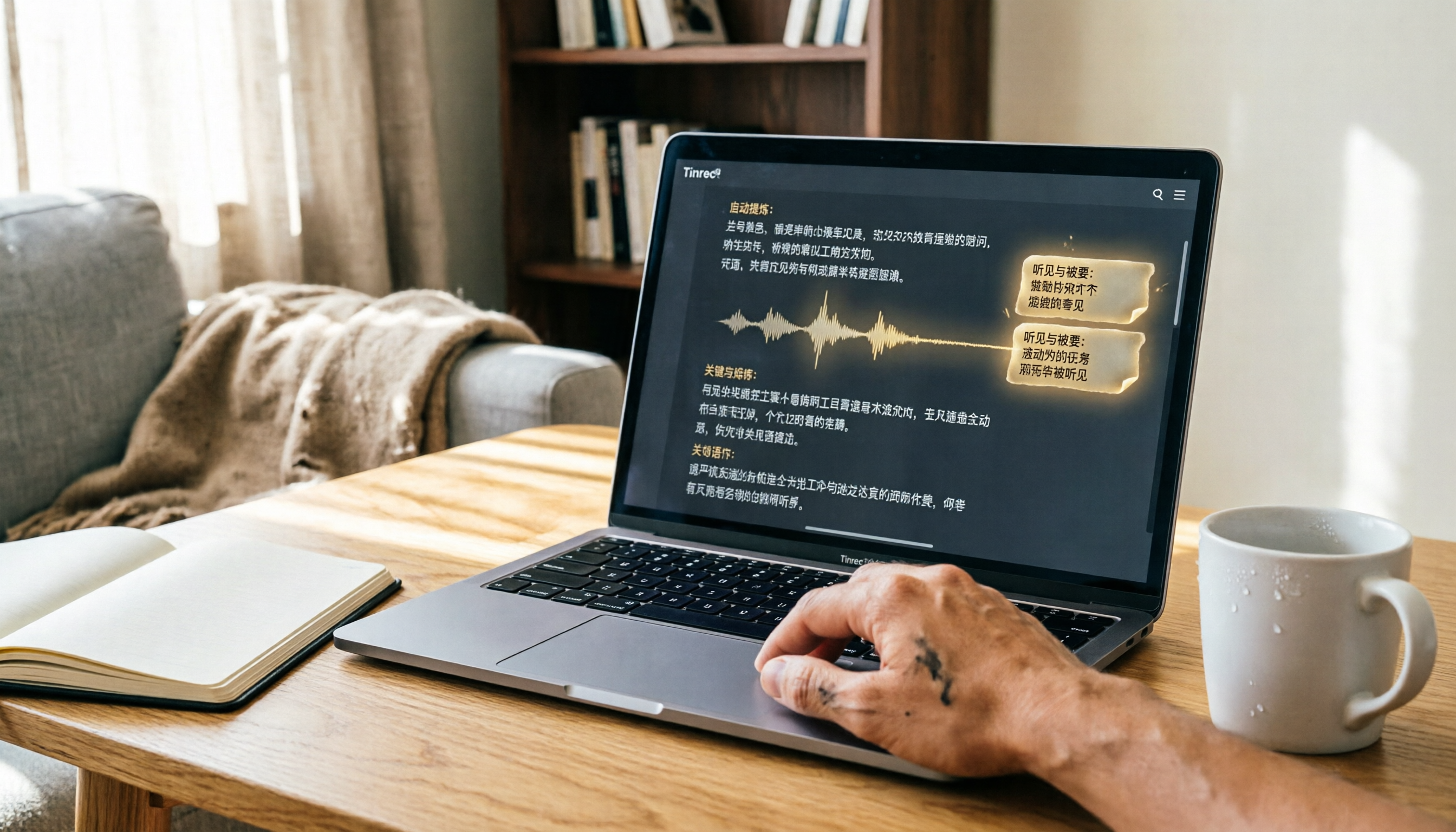
2026 Mac Recording-to-Text App Comparison: Which AI Meeting Notes Really Save Time?
Apple's built-in Voice Memos makes recording easy, but it can't transcribe audio. This article hands-on tests Tinrec, Otter.ai, and Notta, covering accuracy, AI summaries, cross-platform support, and free plans, to help you find the best fit for meetings, classes, and interview notes.
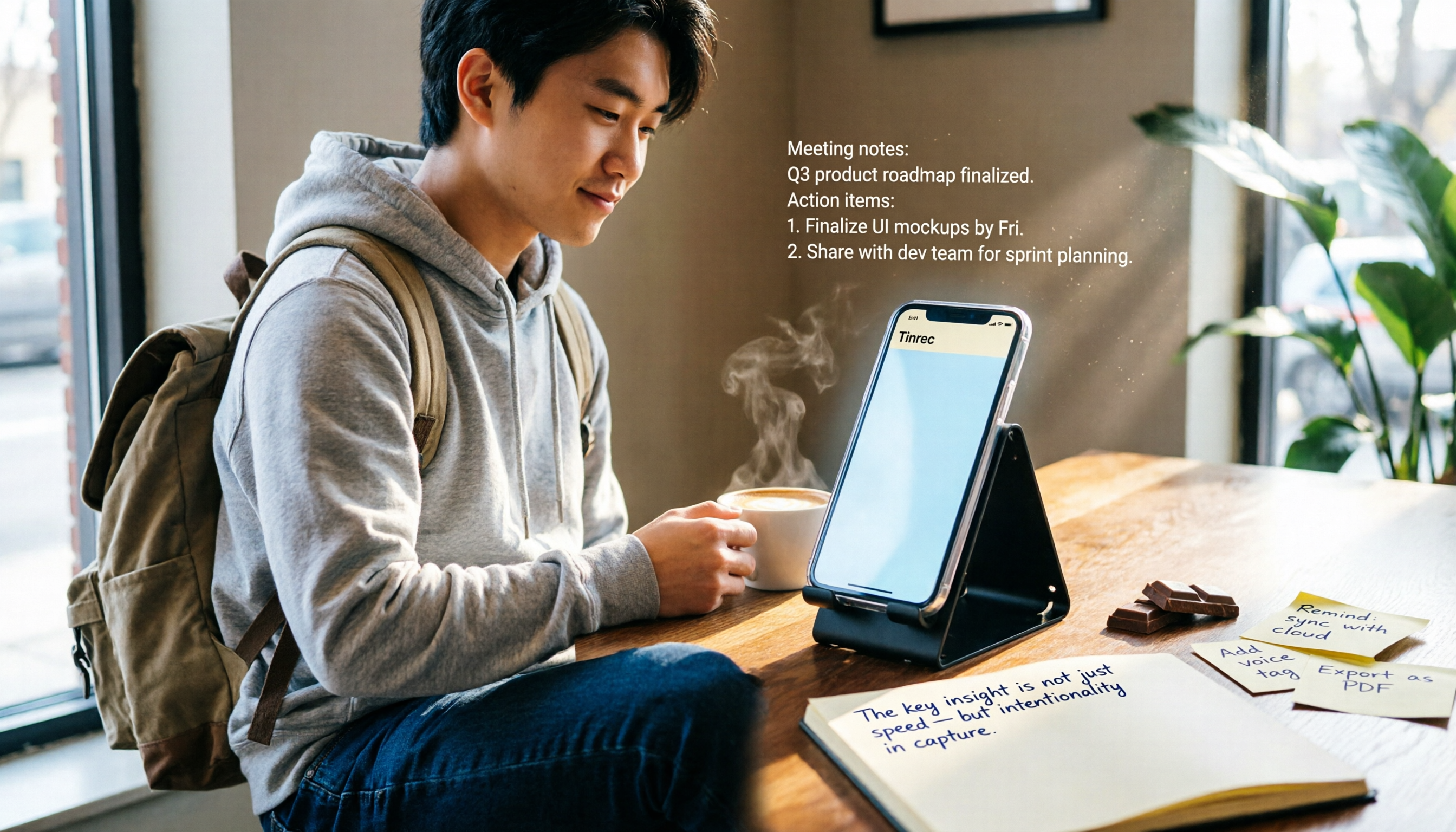
iPhone Voice-to-Text Test in 2026: Built-in Dictation vs. Apps Compared, This AI Q&A App Made Note-Taking 3x Faster
A college senior tested iPhone voice-to-text methods, from built-in dictation to third-party apps. See how Tinrec’s free plan saved 3 hours of note-taking time per week, plus a pitfall guide and student-focused buying advice.

iPhone 17 Screen Recording Free Options in 2026: 5 Tools Reviewed
How to screen record on iPhone 17? This article covers built-in screen recording, Dual Capture tips, and recommends tools like Tinrec to transcribe audio from recordings, from free to paid options.

Best AI Meeting Recorder Tools in 2026: Automatic Summaries, Action Items, and Multi-Source Organization
Looking for an AI meeting note tool but not sure where to start? This article reviews 6 top solutions—from automatic summaries and action items to cross-platform collaboration—and shows you how to save up to 80% of your meeting note time with the right tool.
2026 Free AI Meeting Notes Tools Buyer's Guide: 2 Hands-On Reviews and Practical Tips
Don't want to spend money on hardware but still want to use AI to organize meeting recordings? I actually compared Tinrec, a pure software tool that provides instant recording, with Plaud Note, which integrates hardware. From free plans, recording sources, post-processing capabilities, to cross-platform flexibility, this guide helps you find the best free AI meeting notes solution for your needs.
iPhone Call Recording in 2026: Do You Still Need Tinrec? 3 Reasons to Convince You
iPhone's built-in call recording in iOS 18.1 is handy, but organizing recordings still takes time. This article shows how Tinrec turns call recordings into searchable notes, summaries, and to-dos to boost learning and work efficiency.

2026 Hands-On Comparison of 4 Computer Recording Tools: More Than Just Recording, They Help You Organize Key Points
Struggling to organize your computer recordings after capturing them? This test of 4 computer recording tools — from free options to AI-powered organization — helps you find the most suitable solution.

2026 Complete Guide to AI Meeting Minutes: Auto-Generated Transcripts and Action Items to Double Meeting Efficiency
Still wasting time on meeting minutes? This article shows how to use AI recording tools to auto-generate transcripts, summaries, and action items, with hands-on comparisons of Tinrec, Notta, Otter.ai and more to help you pick the best solution.

2026 iPhone Screen Recording with Audio: 2 Methods Compared — Is the Built-in Feature Good Enough?
Can iPhone screen recording capture audio? This hands-on comparison tests the built-in screen recorder against two third-party apps, showing how to record system sounds and ambient sound, and explains the common causes of no-audio issues and how to fix them.