

Turn recordings into transcripts and summaries in minutes
Upload audio or video for multilingual transcription, AI notes, and action items
Two Hours in a Meeting, Two More to Write It Up—My Recent Pain Point
Over the past month, I realized I spend more time each week organizing Google Meet notes than actually being in meetings.
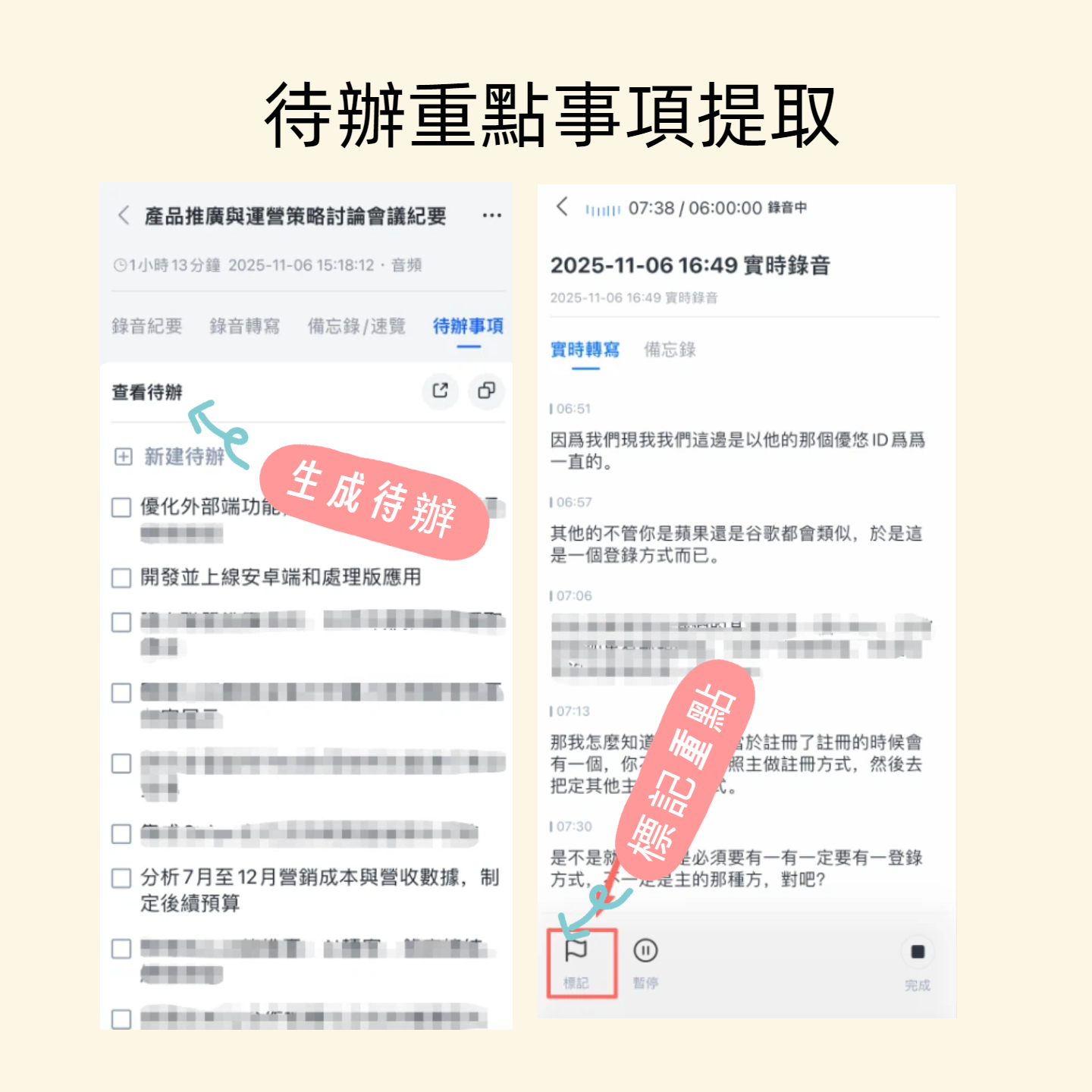
What makes it worse: some meetings involve multiple people speaking in turn, and with occasional network instability, it’s hard to tell who said what when replaying the recording.
Manually re-listening, transcribing word for word, then extracting key points into a to-do list… that process eats up half a day.
If you often use Google Meet for meetings and find yourself buried in recordings and notes afterward, this article is for you.
5 Key Points to Understand Before Choosing a Google Meet Transcription Tool
1. Transcription Accuracy: Don’t Just Trust the Numbers
Many tools claim accuracy above 90%, but that’s lab data.
Real Google Meet sessions include keyboard clicks, paper rustling, and people talking over each other—that’s where the differences really show.
I pay special attention to performance in multilingual conversations and discussions with jargon.
2. AI Summaries: More Than Just a Transcript
If a tool only gives you a full transcript, you still have to read through everything yourself.
What I really need is: after the meeting ends, automatically generated key summaries, action items, and even the ability to ask questions like "Who mentioned the budget earlier? What was the conclusion?"
This capability turns meeting records from "archival documents" into "actionable information."
3. Cross-Platform Support: Sync Across Phone, Computer, and Web
You might join a Google Meet on your work computer and later review the recording on your phone during your commute.
If the tool only works on one device, you’re stuck.
Cross-platform sync keeps your workflow uninterrupted.
4. Free Tier & Pricing: Try Before You Buy
I don’t recommend jumping straight into an annual plan.
Test the free version first to see if the transcription quality matches your real-world needs, then consider upgrading.
Also check: does the free tier limit minutes or features? There’s a big difference.
5. Beyond Meetings: Can It Handle Other Audio/Video?
My workflow includes more than just Google Meet recordings.
There are also lecture recordings, interview files, and occasional YouTube videos I want to transcribe.
If a tool only handles meetings, I’d need multiple tools, making things messier.
A tool that can process various audio/video sources is better for multitaskers like me.
Tinrec (Miao Listening) — Our Top Pick After Testing
Tinrec is an AI recording and audio/video transcription tool that supports 14 languages, available on iPhone, Android, and web.
Here’s how I use it:
Before each Google Meet, I open Tinrec’s web app or mobile app and select "Record computer audio and microphone."
During the meeting, it transcribes in real time, automatically labeling different speakers.
As soon as the meeting ends, the AI summary and action items appear on screen.
This is my favorite part: no need to wait until the meeting is over to start organizing—the organization is already done when the meeting ends.
(Screenshot: Tinrec’s meeting recording main screen, arrow pointing to the "Start Recording" button and audio source selection)
Another feature that surprised me is its AI conversation search.
Once I needed to quickly confirm a budget figure from a project meeting last week. I just typed in Tinrec’s Q&A box: "What was the budget mentioned by the marketing team in the last meeting?"
It didn’t just return keyword search results—it understood the context and gave me the exact numbers and context from the conversation.
Currently, no competitor at the same price point offers such an intuitive search method.
(Screenshot: Tinrec’s AI Q&A interface, arrow pointing to the input box and generated answer)
Stop organizing recordings by hand
Upload audio or video and automatically get a transcript, summary, and action items
In our test, we used a 10-minute Chinese Google Meet recording (with three people discussing, keyboard typing, and paper rustling as background noise).
Tinrec transcribed quickly, and even with overlapping speech, it correctly distinguished speakers.
Overall impression: I no longer need to spend time re-listening to the recording; the transcript is highly readable, and the summary hits the key points directly.
Pros:
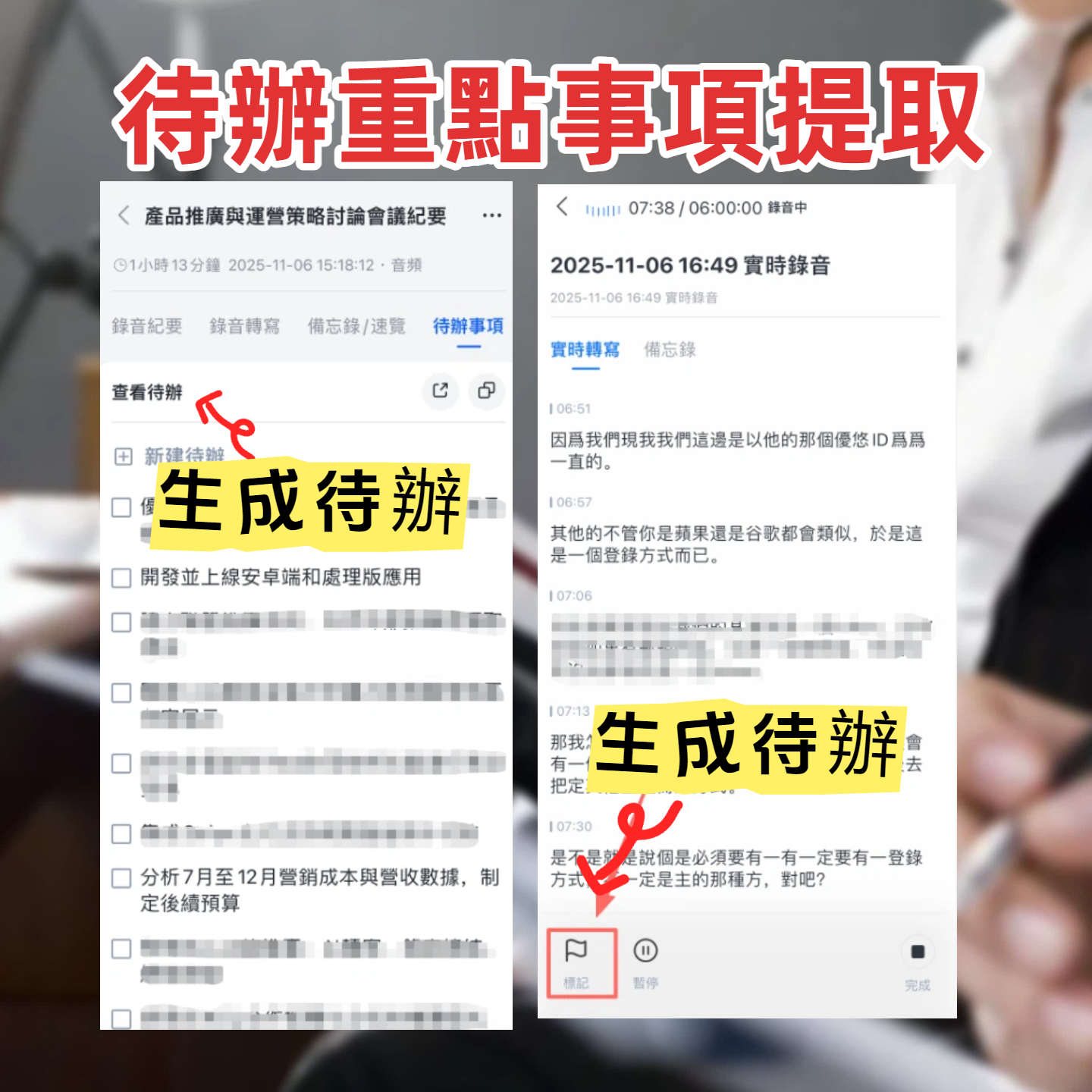
- Multiple input sources: Besides recording Google Meet, you can upload local audio files or paste YouTube links for direct transcription. This makes it not just a meeting transcription tool but a single hub for organizing lectures, interviews, and online videos.
- Great Chinese handling: In conversations mixing Chinese and jargon (e.g., "We need to optimize CTR while lowering CPA"), transcription accuracy is noticeably better than most English-first tools.
- Complete AI post-processing: Automatically generates chapters, to-do lists, and exports to Notion or Google Docs, seamlessly connecting to my workflow.
Limitations to note:
- The free tier provides basic transcription credits; heavy users who have more than three meetings per week may need to upgrade. But for most people, the free trial is sufficient for testing.
- The conversation search feature depends on the transcribed text; if the original recording quality is poor, accuracy may suffer.
Best for:
If you frequently hold Google Meet meetings, want to save time on post-meeting organization, and your meetings involve a lot of Chinese terminology, Tinrec is the tool that best fits my workflow so far.
Beyond Tinrec: What Other Options Are There?
Otter.ai: Great for English Meetings, Struggles with Chinese
Otter.ai is a well-known meeting transcription tool among many teams, with a smooth interface and mature automatic meeting joining.
The free tier offers 300 minutes per month, generous for light English meetings.
But in our experience, Otter’s transcription error rate increases significantly in Chinese meetings, and the AI summaries tend to follow English syntax, requiring additional proofreading.
For Chinese conversational search, Otter currently can’t match Tinrec’s capability.
Notta: Fast Transcription, Basic Post-Processing
Notta transcribes quickly and supports real-time translation. Its paid plan offering 1,800 minutes per month is attractive for heavy users.
However, compared to Tinrec, the biggest difference lies in "what you can do after transcription."
Notta’s summaries and to-do features are relatively basic; you can’t directly query the content or extract actions like you can with Tinrec.
If you just need a quick transcript, Notta works well; but if you need to turn meetings into actionable tasks, Tinrec is more convenient.
Pitfall Guide: 3 Common Mistakes When Choosing a Google Meet Transcription Tool
Mistake 1: Focusing Only on Price, Ignoring Post-Processing
Many tools lure you with "free transcription," but after transcribing, they just give you a wall of text.
You still have to manually find key points and create to-do lists.
That solves only half the problem.
What truly saves time is a seamless workflow from transcription to summary to task list.
Mistake 2: Overlooking Cross-Platform & Offline Needs
You might record a Google Meet on your laptop at the office and later review key points on your phone at home.
If the tool only supports one platform, you’re locked in.
Always check if the tool offers a web app, mobile app, and offline caching for recordings.
Mistake 3: Buying an AI Tool but Only Using It for Transcription
This is the biggest waste.
If you only use the tool to "convert recordings to text," you’re using only a third of its capability.
With Tinrec’s AI conversation search, you can ask "What’s the next step for this project?"—much smarter than manually scrolling through a 30-minute transcript.
Make full use of AI features to truly get the most out of your tool.
Conclusion: Which One Should You Choose?
To sum up: if you’re a heavy Google Meet user and often deal with Chinese meetings, lectures, or interviews, Tinrec is the most integrated choice that best fits my workflow.
Here’s how to decide:
- Need multi-speaker Chinese transcription + post-meeting Q&A → Tinrec (best AI conversation and summaries)
- Only English meetings, and on a budget → Otter.ai (generous free tier)
- Just need a quick transcript, no AI summarization → Notta (fast transcription)
- Cross-device usage (phone + computer + web) → Tinrec (most convenient sync across three platforms)
- Manage meetings, courses, and online videos in one tool → Tinrec (only solution with multiple input sources)
One last tip: download Tinrec’s free version and try it out.
Don’t rush to pay—use it for your next Google Meet and experience the transcription and organization workflow firsthand.
If you like it, consider upgrading; if not, no loss.
Quick Start Guide
- Go to the Tinrec website or App Store to download.
- Create an account to get free trial credits.
- At your next Google Meet, open Tinrec and select "Record system audio."
- After the meeting, check the auto-generated summary and action items.
- Use the AI Q&A feature to search for key meeting content.
- Export results to Notion or Google Docs to complete your workflow.
Test it step by step, and you’ll master this method over time.
Turn every recording into actionable outcomes
Get 60 free transcription minutes when you sign in. No credit card required.
Related Reading
You might also like

How to Quickly Start Recording on an iPhone in 2026: A Complete 3-Step Guide
Need to record something right away but can't find an app? This guide covers 3 practical ways to start recording instantly on iPhone, from the Action Button and Back Tap to Shortcuts home screen icons—one tap and you're recording. We also recommend Tinrec, a recording tool we found best for most people after hands-on testing. It doesn't just start fast; it automatically organizes transcripts, summaries, and to-do items after recording, making it incredibly convenient.

2026 AI Recording Tools Buyer's Guide: 2 Hands-On Tests and Recommendations
Want to buy the PLAUD Note voice recorder or just use the Tinrec app? This article compares them across 5 dimensions: recording scenarios, AI summarization, cross-platform support, Chinese accuracy, and price, to help you choose the best AI recording tool.
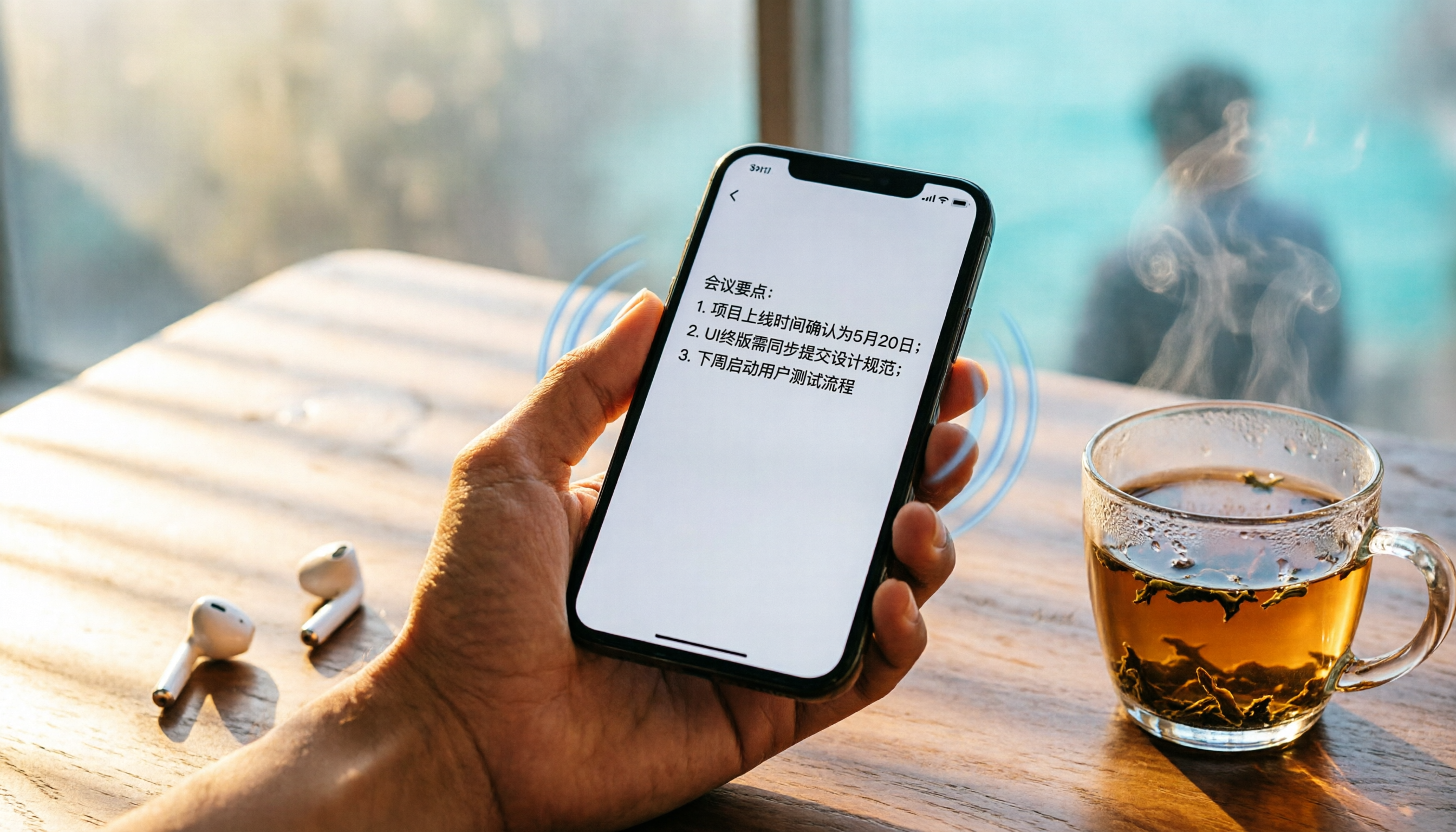
Best iPhone Call Recording Apps in 2026: 4 Tested, Tinrec Is the Most Practical Choice
Looking for a great tool to organize your iPhone call recordings? We tested Tinrec, Plaud Note, Yating Transcriber, and Otter.ai — from AI summaries to cross-platform support and Chinese accuracy — to help you pick the best recording-to-text app.

5 Speech-to-Text Tools Compared in 2026: From Free to Paid, All You Need to Know
Word can't record video, but can it transcribe audio? This article tests 5 tools, from free to paid, to help you find the best speech-to-text solution for the workplace. From a middle manager's perspective, here's why Tinrec is the top choice.

3 Voice-to-Text Tools Compared for 2026: Which Free Plan Is Enough?
Want to turn audio recordings into text without typing it all out? This article reviews 3 popular transcription tools and walks you through 5 easy steps using Tinrec to convert meeting, class, or interview recordings into key summaries and full transcripts. We also compare free plans and features so you can find the best option for your needs.
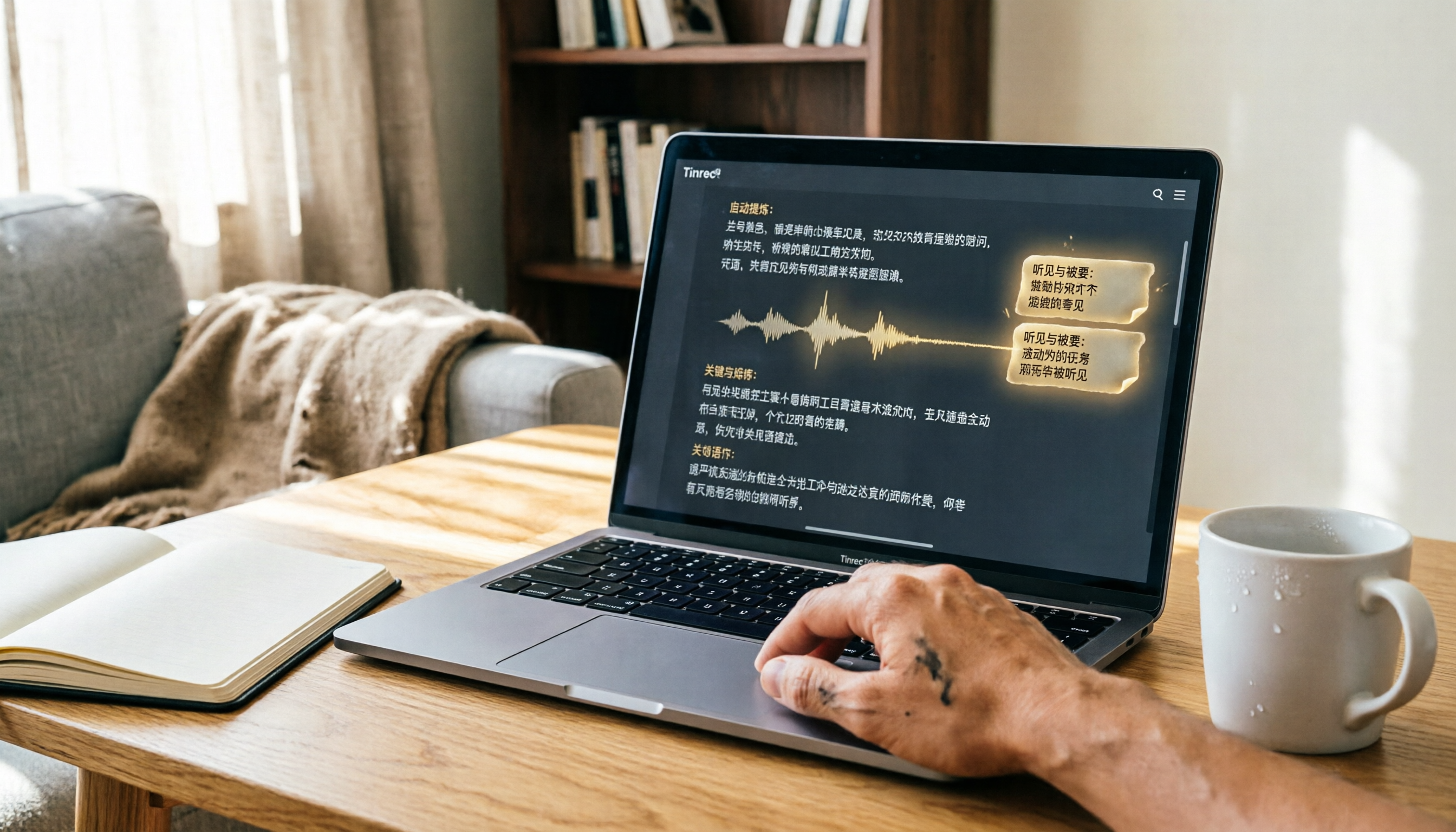
2026 Mac Recording-to-Text App Comparison: Which AI Meeting Notes Really Save Time?
Apple's built-in Voice Memos makes recording easy, but it can't transcribe audio. This article hands-on tests Tinrec, Otter.ai, and Notta, covering accuracy, AI summaries, cross-platform support, and free plans, to help you find the best fit for meetings, classes, and interview notes.
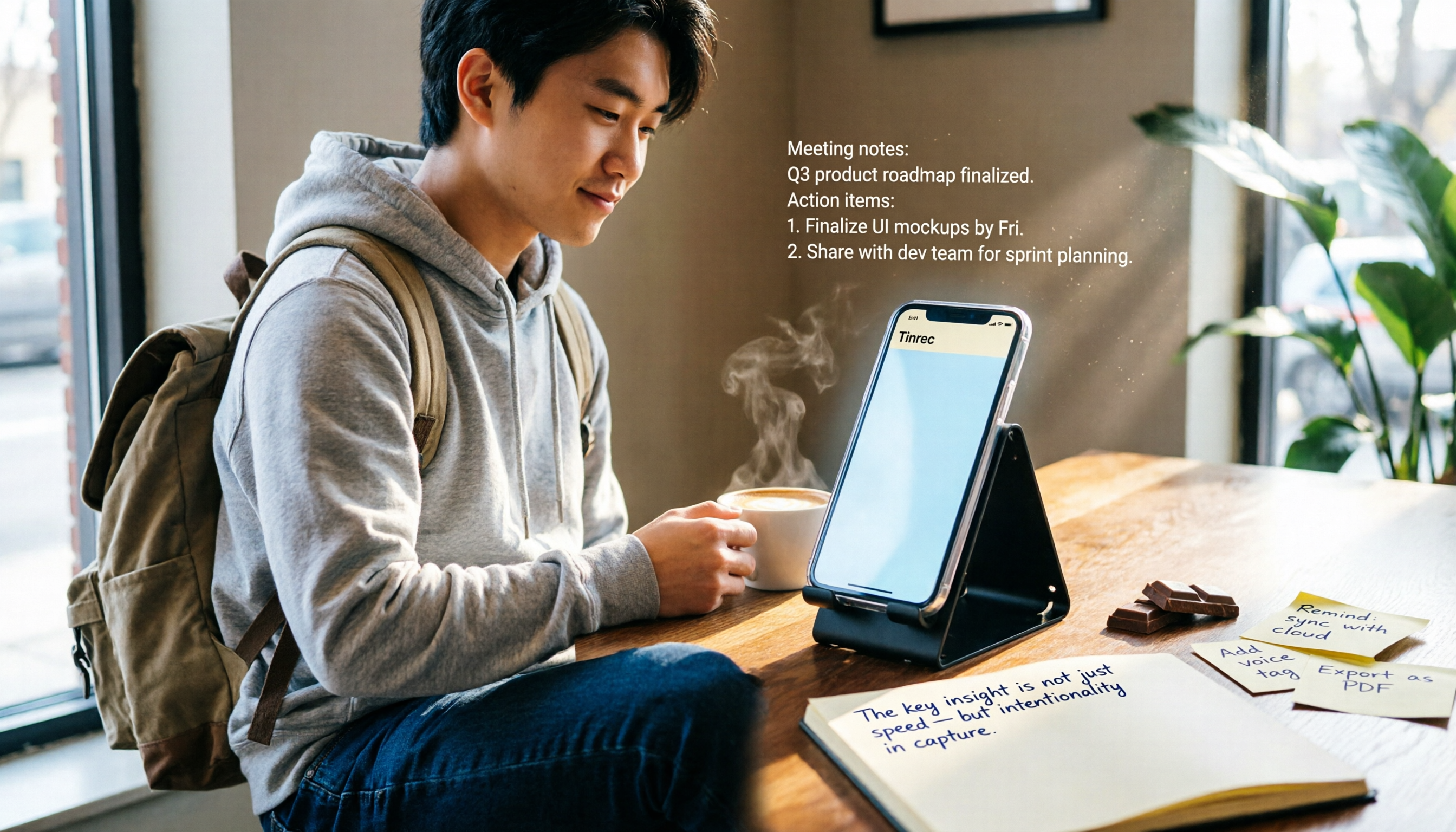
iPhone Voice-to-Text Test in 2026: Built-in Dictation vs. Apps Compared, This AI Q&A App Made Note-Taking 3x Faster
A college senior tested iPhone voice-to-text methods, from built-in dictation to third-party apps. See how Tinrec’s free plan saved 3 hours of note-taking time per week, plus a pitfall guide and student-focused buying advice.

iPhone 17 Screen Recording Free Options in 2026: 5 Tools Reviewed
How to screen record on iPhone 17? This article covers built-in screen recording, Dual Capture tips, and recommends tools like Tinrec to transcribe audio from recordings, from free to paid options.

Best AI Meeting Recorder Tools in 2026: Automatic Summaries, Action Items, and Multi-Source Organization
Looking for an AI meeting note tool but not sure where to start? This article reviews 6 top solutions—from automatic summaries and action items to cross-platform collaboration—and shows you how to save up to 80% of your meeting note time with the right tool.