

Turn recordings into transcripts and summaries in minutes
Upload audio or video for multilingual transcription, AI notes, and action items
Meetings driving you crazy, and you need to pick the right tool to avoid pitfalls? If you work in Central and have at least three or four meetings a day, choosing the wrong platform can really frustrate you. This article helps you quickly break down the differences between Google Meet and Microsoft Teams, so you'll know which one suits you best.
Google Meet vs Microsoft Teams | Quick Overview
Google Meet is the video conferencing tool from Google Workspace, known for being simple and straightforward—just one click to join a meeting. Microsoft Teams is the core collaboration platform of Microsoft 365, bundling chat, meetings, and file collaboration together, with so many features it feels like an extension of Office.
| Comparison Item | Google Meet | Microsoft Teams |
|---|---|---|
| Base Pricing (Paid Plan) | Google Workspace Business Starter ~HK$47/user/month | Microsoft 365 Business Basic ~HK$39/user/month |
| Free Meeting Time Limit | 60 minutes | 60 minutes |
| Max Participants | 100 (free version) | 100 (free version) |
| Platform Support | Web, iOS, Android | Web, Windows, Mac, iOS, Android |
Below, we compare them across five dimensions to see which one matches your work style.
Dimension 1 | Meeting Features and Experience
Google Meet's interface is refreshingly clean—just open and use, perfect for users who dislike complexity. It includes built-in noise cancellation, virtual backgrounds, automatic captions (supports English and a few other languages), and recently added AI background blur. However, it lacks a built-in whiteboard; you need to open Jamboard separately.
Teams takes a multi-function route. Besides basic video, it offers "Together Mode" to place everyone in a virtual scene, with a dizzying array of background effects. Its AI captions support more languages, and you can collaborate on Office documents directly during a meeting without leaving the app. The only downside is that loading can be slower, especially on older machines.
→ This dimension: It depends on whether you want simplicity or multiple features. General users prefer Google Meet for its directness, but for deep team collaboration, Teams clearly wins. This round is a tie.
Dimension 2 | Ecosystem Integration
Google Meet integrates natively with Gmail, Google Calendar, and Google Drive to the extreme—just one click in the Gmail sidebar to start a meeting. If you're already in the Google ecosystem, it's completely seamless.
Teams is deeply tied to Office 365 (Word, Excel, PowerPoint, Outlook) and can also connect to SharePoint and OneDrive. If your company already uses Microsoft products, Teams allows direct document collaboration within channels, saving time switching between apps.
But for many Hong Kong SMEs using Gmail or a hybrid platform, Teams' advantage becomes "you're forced to use Office," which is less flexible than Google Meet.
Stop organizing recordings by hand
Upload audio or video and automatically get a transcript, summary, and action items
→ This dimension: Google Meet is lightweight and open; Teams is strong in the Microsoft whole family. If your company hasn't locked into Office, Meet is more flexible; otherwise, Teams is the inevitable choice. This round's winner depends on the scenario.
Dimension 3 | Pricing and Value for Money
Google Meet's pricing follows Google Workspace plans directly. The cheapest, Business Starter, is about HK$47 per month and already includes 100-person meetings and 30 GB cloud storage.
Teams' cheapest plan, Microsoft 365 Business Basic, is about HK$39 per month, also with 100-person meetings, but includes web versions of Office and 1 TB OneDrive, making the value seem slightly higher.
But note that the free versions of both are sufficient for small teams (60-minute limit), just with fewer features.
→ This dimension: Teams is slightly cheaper at the entry level and includes Office. If you need Word/Excel anyway, Teams is clearly a better deal. Google Meet is a bit more expensive but with an open ecosystem and no lock-in feeling. This round Teams wins slightly.
Dimension 4 | Ease of Use and Learning Curve
Google Meet's design philosophy is "no learning required." The interface is minimal, and sharing screens, recording meetings, and controlling participant permissions are highly intuitive. Most Hong Kong users are already using Gmail, so there's zero learning cost.
Teams is like a mini Windows—the left sidebar has tabs for chat, teams, files, calendar, etc. New users may not find where to start a meeting at first. The advantage is that features are clearly organized, making it suitable for teams that need deep meeting and file management.
→ This dimension: Google Meet wins on instant use and a clean interface; Teams has many features but takes time to adapt. For general workers who want quick and efficient, Meet wins decisively. This round Google Meet clearly wins.
Dimension 5 | Security and Administrative Controls
Both have basic encryption and enterprise-level security certifications. Google Meet provides meeting lock, participant approval, and meeting recording restrictions, with detailed settings in Admin Console.
Teams' security settings are more granular, such as restricting external access, setting meeting roles, and applying compliance policies, making it suitable for industries with high security requirements like finance or legal.
→ This dimension: If you're an IT admin, Teams' control panel is clearly more powerful, especially in large enterprise environments; for SMEs, Meet's security is sufficient. This round Teams is slightly better.
What Are Their Unique Advantages?
Google Meet's Unique Advantages
- Minimal meeting experience: No app installation needed, use directly in the browser, perfect for quick meetings.
- Seamless Google ecosystem: Direct integration with Gmail and Calendar makes meeting link management super convenient.
- Cross-platform smoothness: No compatibility issues even if others use Mac, Windows, or mobile.
Microsoft Teams' Unique Advantages
- Deep Office integration: Collaborate on documents directly during meetings, saving a lot of back-and-forth time.
- Comprehensive features: Chat, team channels, file storage all in one platform, no need to open multiple apps.
- Mature enterprise management: IT departments can finely control permissions and compliance.
Summary: Who Should You Choose?
- If you only need simple meetings, already use Gmail and Google Calendar, and don't want hassle → Google Meet is enough.
- If your company uses Microsoft 365, needs team collaboration and file management, and wants one app to do everything → Microsoft Teams is more suitable.
- If you're a small business or startup, want quick deployment without being locked into an ecosystem → Google Meet is more flexible.
- If you're a large enterprise IT professional, value security and management → Microsoft Teams is the inevitable choice.
In short: there's no absolute winner; which one you choose depends on your company's toolchain. But for most Hong Kong office workers, if you're not forced to use Office, Google Meet's lightness and intuitiveness will make your meetings more comfortable.
We recommend trying both free versions for a few meetings to see which interface suits you best before deciding to pay.
Turn every recording into actionable outcomes
Get 60 free transcription minutes when you sign in. No credit card required.
Related Reading
You might also like

2026 Tinrec vs Google Meet: A 5-Dimension Comparison – Which Is the Top Choice for Student Meeting Recording?
Searching for whether Google Meet or Zoom is cheaper? A student's real-world test shows price isn't the key – meeting notes and organization efficiency are what really matter. Tinrec not only transcribes audio to text but also auto-generates summaries, to-do lists, and AI Q&A, far surpassing built-in transcription features.

2026 Google Meet vs Teams: A 5-Dimension Comparison, Tinrec Tops for Meeting Notes
Google Meet and Microsoft Teams offer similar features, but the real pain point is post-meeting note organization. After hands-on testing of both platforms, this article recommends a more efficient speech-to-text workflow centered on Tinrec, with side-by-side comparisons to Otter.ai and Notta, plus a pitfall avoidance guide and selection tips.

How to Record Google Meet Meetings and Convert to Text in 2026: Real-Time Transcription & AI Summary Generation
After recording a Google Meet meeting, how can you quickly organize it into text and key points? This tutorial tests two popular tools, telling you which is best for Chinese meetings, whose AI summaries are most accurate, and whether the free plans are sufficient.

2026 Hands-on Review of Two Online Meeting Tools: Google Meet vs Teams – Tinrec Essential for Student Note-Taking
A senior student tests Google Meet and Microsoft Teams to see which is better for online classes and group discussions, plus how Tinrec simplifies meeting notes with its free version.

2026 Google Meet & Zoom Meeting Notes Alternative: Why I Switched to Tinrec?
A middle manager with 15 meetings per week shares real experience: from Google Meet's built-in transcription to Zoom meeting notes, finally choosing Tinrec. It handles not only meetings but also online videos and audio files in one place.

Tutorial: 2026 Google Meet Meeting Notes with Tinrec – Auto Summaries & To-Dos in One Go
When sharing your screen during a Google Meet, manually compiling meeting notes is always time-consuming and tiring. This article shows you how to use Tinrec to record meetings and automatically generate summaries and action items, so you can focus on what matters most.
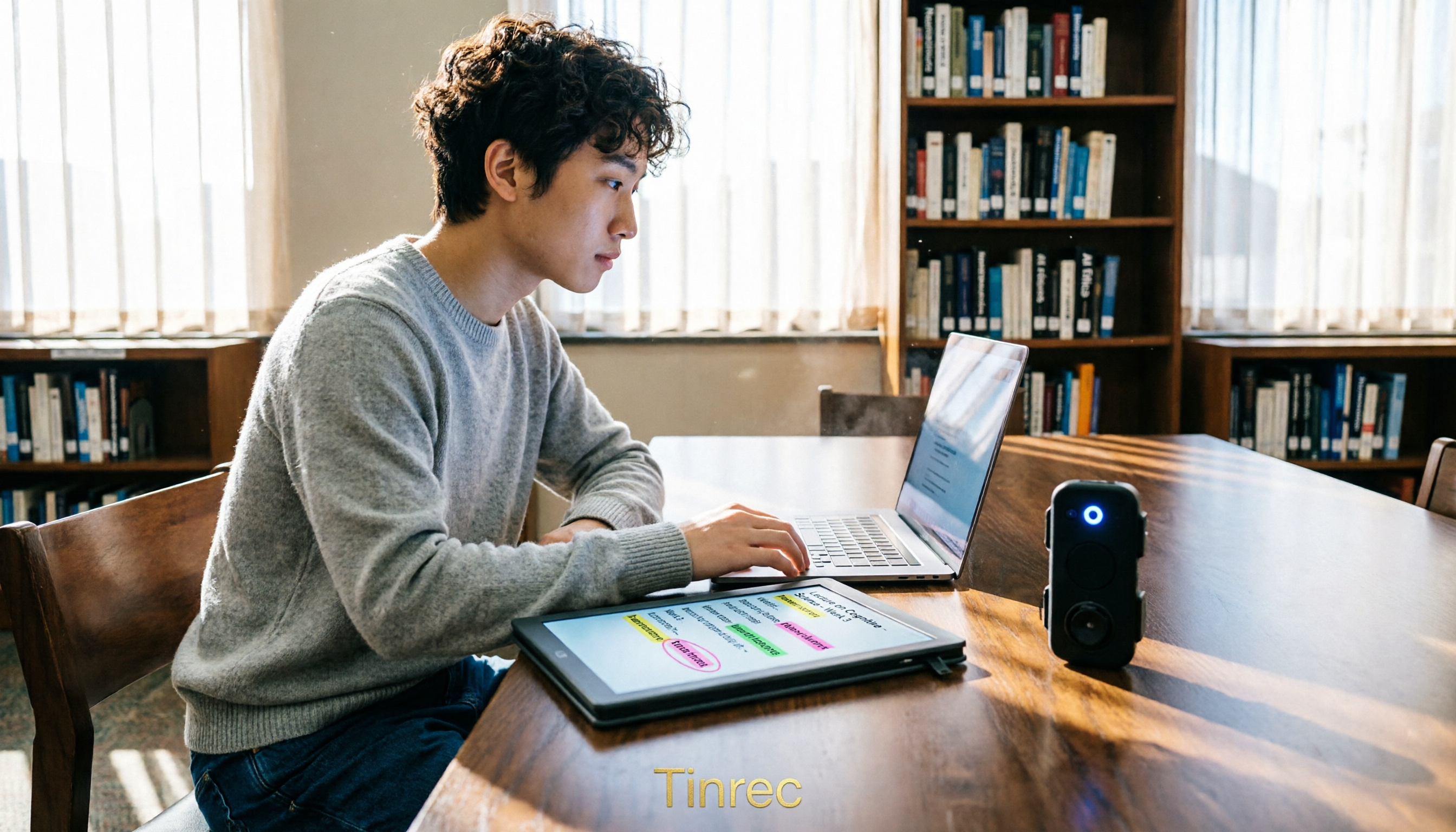
Google Meet Time Limits 2026: AI Recording & Note-Taking Tips for Students
Google Meet's free version only allows 60-minute sessions. This guide shares my experience using AI recording tools to bypass the time limit, from free options to cost-effective upgrades, helping you record lectures, get transcripts, and create summaries without the hassle.

Google Meet vs FaceTime: Which is Better? 2026 Real-World Test with Tinrec for Complete Meeting Notes
Are you torn between Google Meet and FaceTime for online meetings? This article tests both across 5 dimensions—transcription, AI summaries, to-do lists, and more—and shows why adding Tinrec makes meeting notes more complete, boosting team productivity.

2026 Google Meet vs WhatsApp: A 5-Dimension Showdown for Better Meeting Notes
Tired of spending hours transcribing meeting recordings? This article compares built-in features of Google Meet and WhatsApp for note-taking, then introduces Tinrec, a professional AI-powered audio/video organizer, to help you find the ideal workflow.