

Turn recordings into transcripts and summaries in minutes
Upload audio or video for multilingual transcription, AI notes, and action items
2026 Tinrec vs Google Meet: A 5-Dimension Comparison – Which Is the Top Choice for Student Meeting Recording?
After group discussions and meetings, your notes are still blank — what you need isn't a cheaper meeting app
Last semester I took a class where the professor required weekly Google Meet discussions with my group. I thought, since it's free, no big deal. But after every meeting, I'd stare at a blank Notion page — what exactly was the conclusion? Who's responsible for what?
My roommate uses Zoom. He said the free version only lasts 40 minutes, then it cuts off and you have to restart. We used to take turns creating rooms to save money, but the note-taking problem remained just as painful.
Later I realized what really eats up time isn't which app you use, but the after-meeting organization. Instead of stressing over whether Google Meet or Zoom is a few bucks cheaper, it's better to find a tool that automatically turns meeting content into key points, action items, and even lets you ask questions later to find answers.
Before choosing a transcription tool, understand these 5 key points
1. Accuracy: Don't just look at ads, test in real environments
Many tools claim high accuracy, but that's tested in quiet recording studios. In your class, there's the projector fan, overlapping voices, and background chatter from neighbors. In practice, Google Meet's live captions often can't keep up, and it gets confused with mixed Chinese and English. Zoom's transcription also requires a paid plan and is cumbersome to set up.
2. AI organization: Not just a word-for-word transcript
If you only get a transcript, you still have to read it all from start to finish. What I need is: immediately after the meeting, a summary, action items, and the ability to ask questions about the content. That's the key to saving time for college students.
3. Cross-platform and cross-meeting app compatibility
You use Google Meet today, Zoom tomorrow, and in-person discussions later. The tool can't be tied to a single platform; it must record and organize across any meeting app.
4. Is the free tier enough for students?
Student budgets are tight. If the free version can't even cover basic needs, it's not worth considering.
5. Output and export: You need to be able to take your notes with you
Your organized notes should be exportable as documents, sent to Notion or Google Docs, or even generate a report directly. That way it integrates into your study workflow.
Tinrec – Our group's top pick after real-world testing
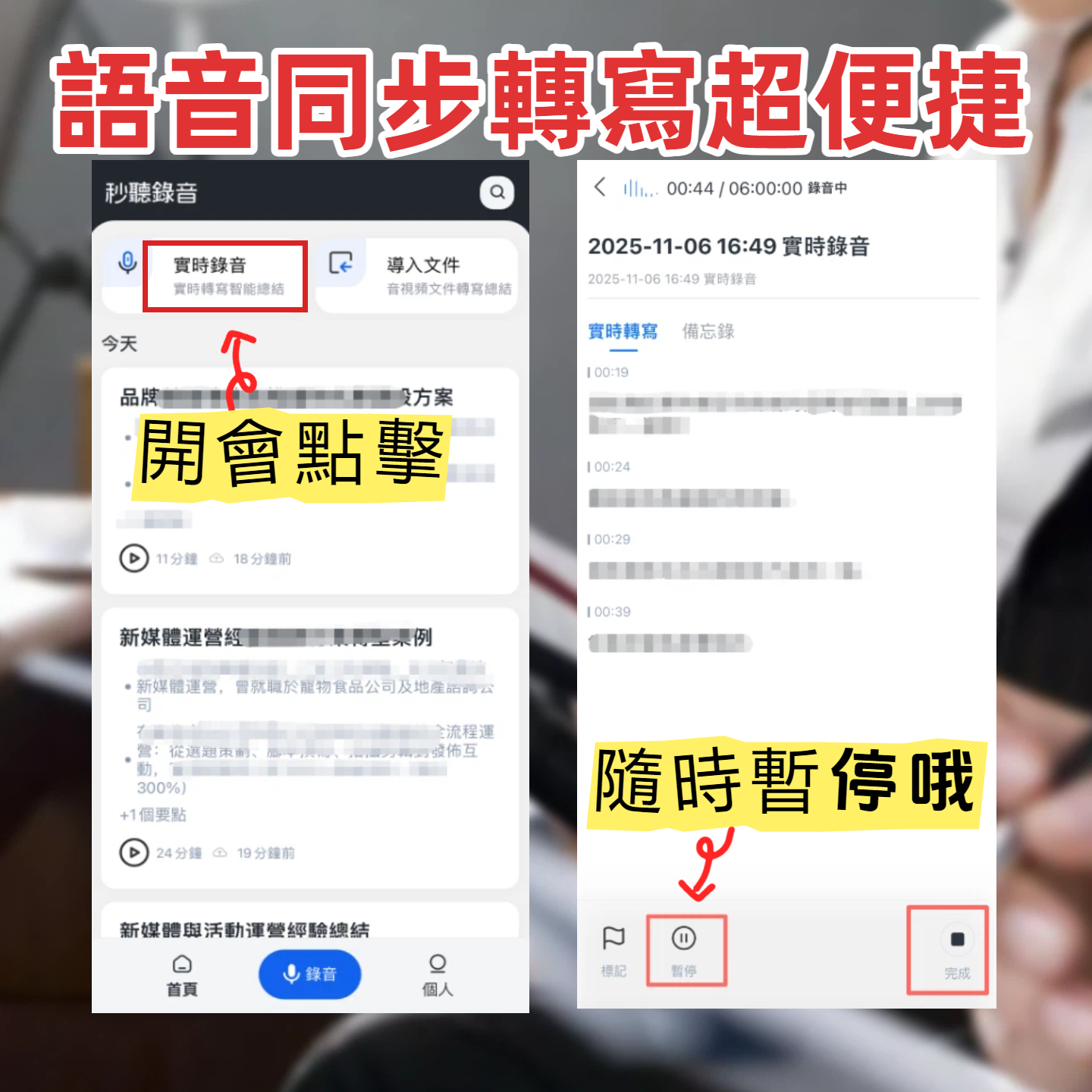
Tinrec is not another meeting app; it's an AI audio and video organization tool. Whether you use Google Meet, Zoom, or in-person discussions, just open Tinrec and it records and transcribes in real time, automatically generating summaries and action items after the meeting.
Core features tailored for campus scenarios
- Lecture/meeting recording to transcript: Professor talking too fast? Group discussion all at once? Tinrec transcribes in real time so you can focus on listening while it takes notes. We tested a mixed Chinese-English online meeting, and it even caught terms like "machine learning" and "API."
- AI auto-summary and action items: After the meeting, no need to replay the recording. Tinrec directly gives you the key points of the class, plus to-do lists like "Submit draft by next Tuesday" or "Find 3 related papers." My roommate didn't believe it until he saw how fast and complete my midterm report was; then he installed it too.
- AI Q&A – Ask questions after recording: This feature is a lifesaver. Before midterms, I asked Tinrec, "In last month's class, which chapters did the professor say would be on the final?" It found the answer from the recording, ten times faster than scanning the transcript myself. Google Meet or Zoom's built-in transcription can't do this at all.
Stop organizing recordings by hand
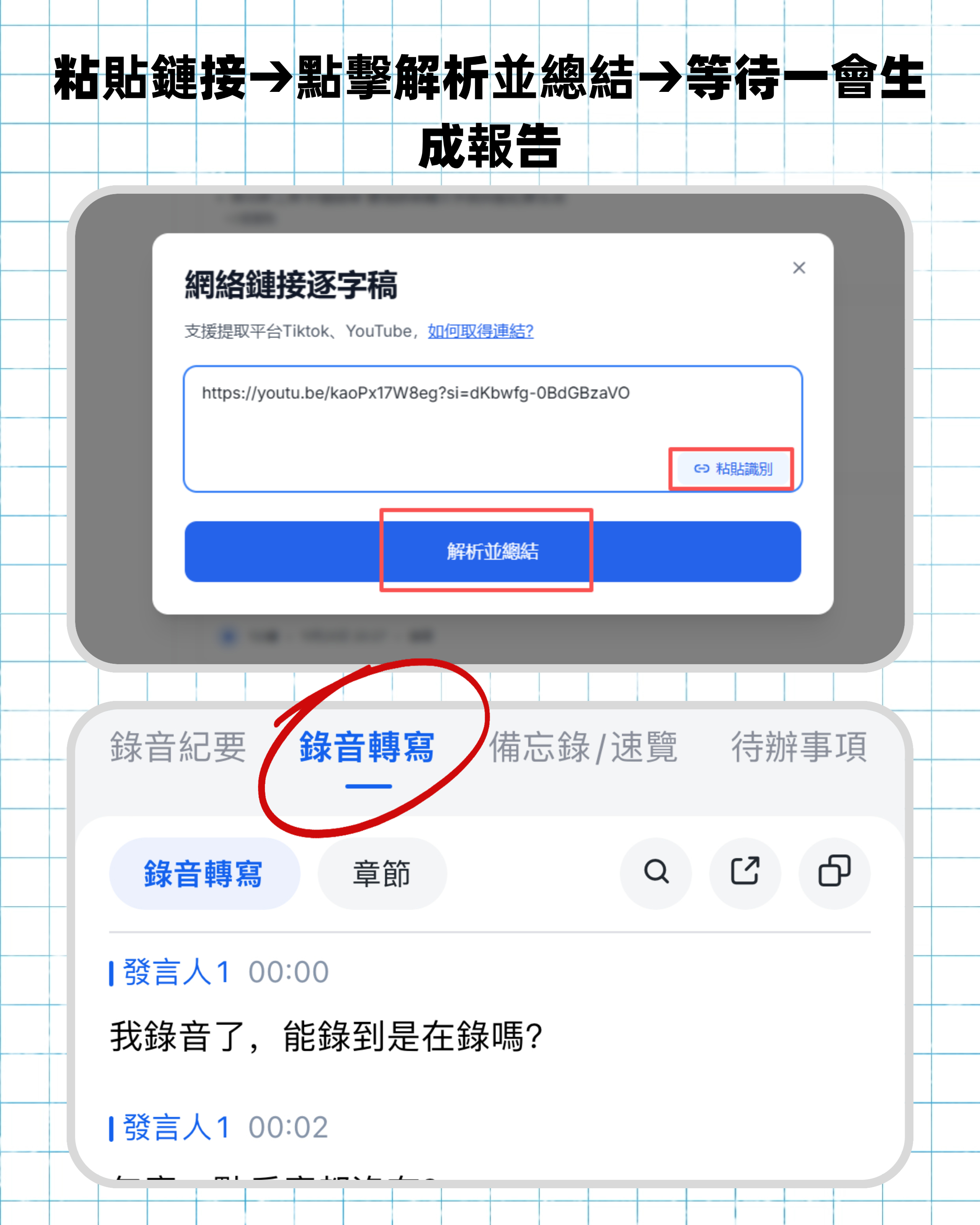
Upload audio or video and automatically get a transcript, summary, and action items
Pros
- Cross-platform compatibility: Use Google Meet, Zoom, or even your phone to record – it works with everything. Our group members used both Android and iPhone, all worked fine.
- Not just transcription, but content understanding: Summaries, chapters, action items, Q&A – all in one pipeline. Now I just open Tinrec during meetings, spend 5 minutes after on the summary and action items, and get to work.
- Free tier sufficient for basic use: The free version provides basic transcription minutes – enough for a few classes and group discussions per week. Upgrade only when you really need more, no upfront cost.
Cons
- Free tier has a usage limit; if you record several hours daily, you may need a paid plan. But for most students, the free tier can last a semester.
- AI summaries may still miss details – always cross-check with the original for important info. But this is true for all tools; none are 100% perfect.
Who is it for?
If you have weekly online or in-person discussions, want to save time on note-taking, or need to quickly find key points from recordings, Tinrec is the most student-friendly option right now.
Other options besides Tinrec
Google Meet built-in transcription
Google Meet's live captions are free, but only support English, and accuracy drops with multiple speakers and accents. More importantly, it doesn't save a full transcript or provide AI summaries. You still have to take notes after the meeting. If you only need simple English captions, it's okay; but for automatic organization, you need another tool. And you can't ask questions about meeting content later – Google Meet can't do that.
Zoom cloud recording and transcription
Zoom's cloud recording requires a paid plan, and transcription needs extra setup – not plug-and-play. Our group tried it once; the output had no punctuation and no paragraphs – more tiring to read. It also lacks AI Q&A; you just get a text file to read from start to finish. For budget-conscious students, paying extra each month is better spent on bubble tea.
Common pitfalls when choosing a transcription tool – avoid these 3 mistakes
Mistake 1: Only looking at app price, ignoring time cost Many classmates, including my initial self, just look for free and cheap meeting apps. But I soon realized that spending half an hour after each meeting organizing notes adds up to enough wasted time in a semester to take another class. If a tool can get it done in 10 minutes, spending the price of a drink per month is worth it.
Mistake 2: Assuming built-in transcription is enough Google Meet has live captions, Zoom has transcription, but both just turn speech into text. You need more than that – you need AI to extract key points and answer questions. Don't settle for half-baked features.
Mistake 3: Buying a tool but only using it for transcription Many students use transcription apps just to read the transcript. That's only using one-third of the functionality. Features like Tinrec's AI Q&A let you ask about exam points and conclusions directly – that's where the real time savings are.
Summary: Which one should you choose?
Back to the original question: "Is Google Meet or Zoom cheaper?" The answer: both are cheap, but neither solves the meeting note pain point. As a college student, you really need a tool that automatically organizes meeting and course content into key points.
Scenario recommendations:
- Weekly group discussions and online meetings → Tinrec (cross-platform, auto-summary, free tier to try)
- Only English and only need live captions → Google Meet (works but no organization)
- Already paid for Zoom and only record single meetings → Zoom transcription (still lacks AI Q&A)
My advice: Download Tinrec's free version and turn it on during your next meeting. You'll find you never worry about "what did we just discuss?" again, and before finals you can ask to find key points in recordings. Experience the free tier first, upgrade only if you like it – no upfront cost.
Turn every recording into actionable outcomes
Get 60 free transcription minutes when you sign in. No credit card required.
Related Reading
You might also like

2026 Google Meet vs Teams: A 5-Dimension Comparison, Tinrec Tops for Meeting Notes
Google Meet and Microsoft Teams offer similar features, but the real pain point is post-meeting note organization. After hands-on testing of both platforms, this article recommends a more efficient speech-to-text workflow centered on Tinrec, with side-by-side comparisons to Otter.ai and Notta, plus a pitfall avoidance guide and selection tips.

How to Record Google Meet Meetings and Convert to Text in 2026: Real-Time Transcription & AI Summary Generation
After recording a Google Meet meeting, how can you quickly organize it into text and key points? This tutorial tests two popular tools, telling you which is best for Chinese meetings, whose AI summaries are most accurate, and whether the free plans are sufficient.

2026 Hands-on Review of Two Online Meeting Tools: Google Meet vs Teams – Tinrec Essential for Student Note-Taking
A senior student tests Google Meet and Microsoft Teams to see which is better for online classes and group discussions, plus how Tinrec simplifies meeting notes with its free version.

2026 Google Meet & Zoom Meeting Notes Alternative: Why I Switched to Tinrec?
A middle manager with 15 meetings per week shares real experience: from Google Meet's built-in transcription to Zoom meeting notes, finally choosing Tinrec. It handles not only meetings but also online videos and audio files in one place.

Tutorial: 2026 Google Meet Meeting Notes with Tinrec – Auto Summaries & To-Dos in One Go
When sharing your screen during a Google Meet, manually compiling meeting notes is always time-consuming and tiring. This article shows you how to use Tinrec to record meetings and automatically generate summaries and action items, so you can focus on what matters most.

2026 Google Meet vs Microsoft Teams Complete Guide: Comprehensive Comparison of Features, Integrations, and Pricing
Which is better for Hong Kong office workers, Google Meet or Microsoft Teams? We break it down across five dimensions: meeting features, ecosystem integration, pricing, security, and ease of use, so you can stop worrying.
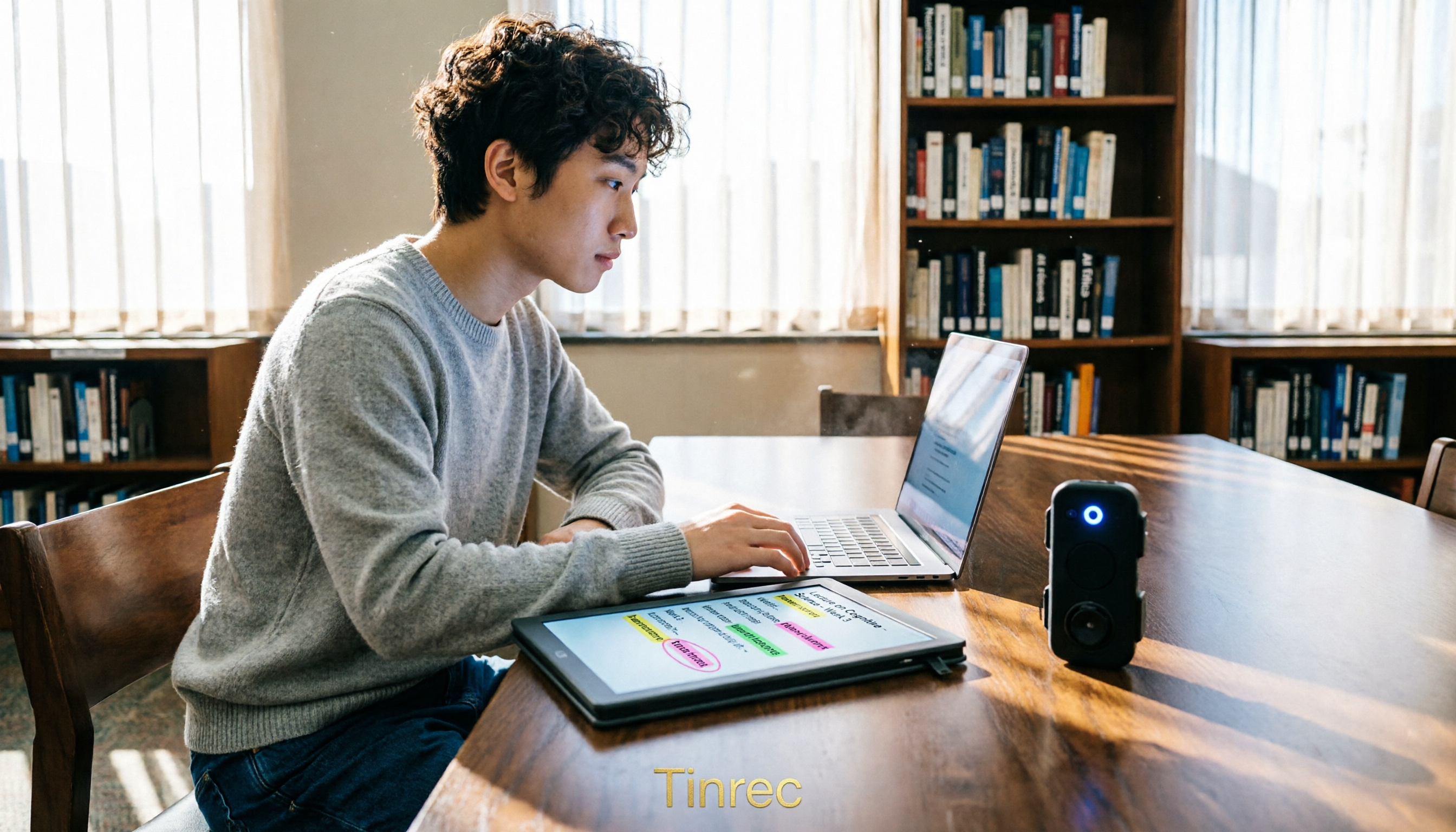
Google Meet Time Limits 2026: AI Recording & Note-Taking Tips for Students
Google Meet's free version only allows 60-minute sessions. This guide shares my experience using AI recording tools to bypass the time limit, from free options to cost-effective upgrades, helping you record lectures, get transcripts, and create summaries without the hassle.
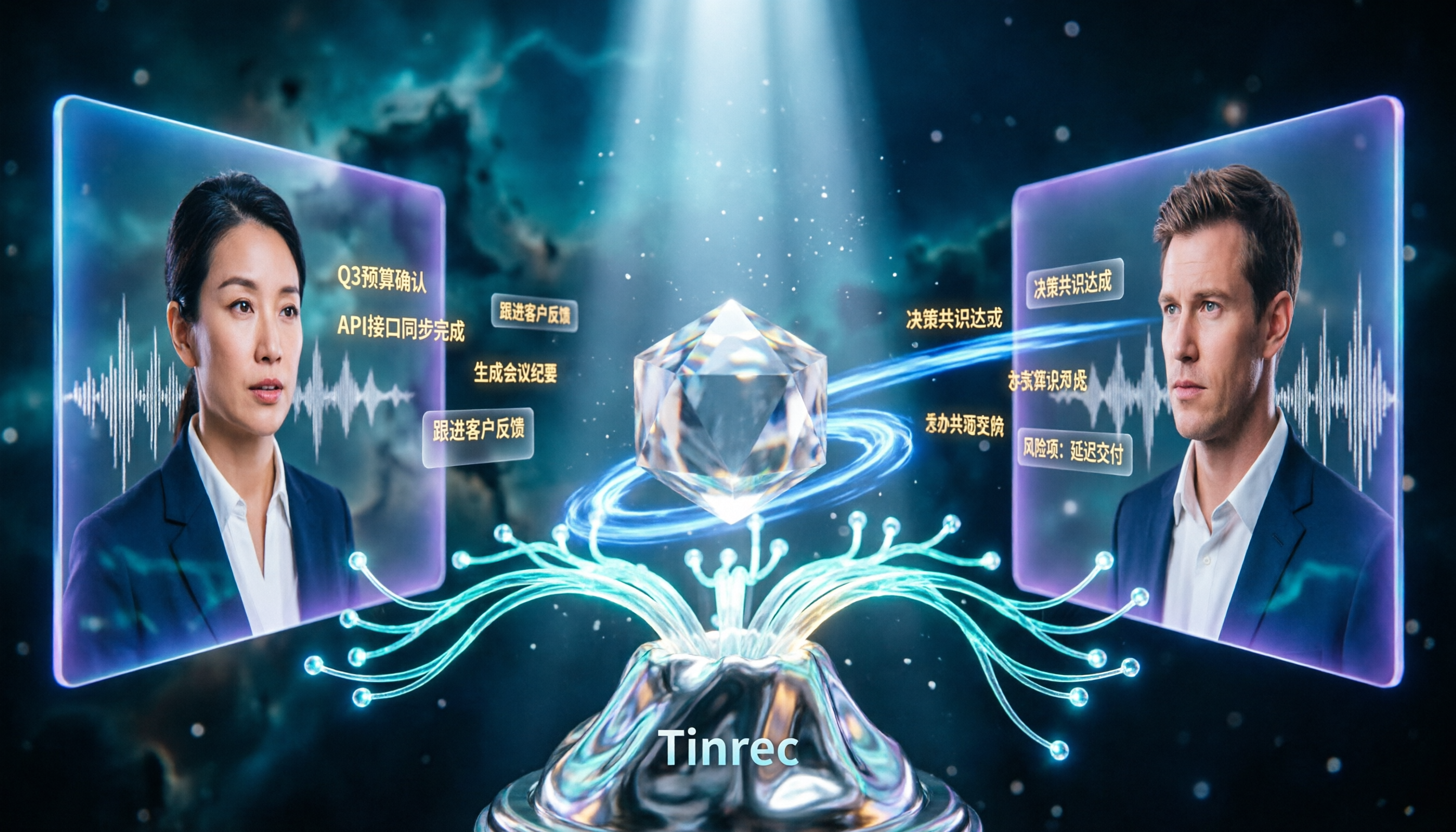
Google Meet vs FaceTime: Which is Better? 2026 Real-World Test with Tinrec for Complete Meeting Notes
Are you torn between Google Meet and FaceTime for online meetings? This article tests both across 5 dimensions—transcription, AI summaries, to-do lists, and more—and shows why adding Tinrec makes meeting notes more complete, boosting team productivity.

2026 Google Meet vs WhatsApp: A 5-Dimension Showdown for Better Meeting Notes
Tired of spending hours transcribing meeting recordings? This article compares built-in features of Google Meet and WhatsApp for note-taking, then introduces Tinrec, a professional AI-powered audio/video organizer, to help you find the ideal workflow.