

Turn recordings into transcripts and summaries in minutes
Upload audio or video for multilingual transcription, AI notes, and action items
Relying on Google Meet for Meeting Notes? You May Need a Smarter Solution
Daily meetings are already annoying, and then you still have to write up the minutes afterward—this is the daily grind for many office workers.
Google Meet has a built-in transcription feature, but the reality is: the free version has many limitations, and trying to record Cantonese meetings results in hilariously bad errors. If you've ever used it to create meeting notes, you know what I mean—you end up listening to the recording and retyping everything, stuck at work until 8 PM.
Choosing the right tool can cut this process in half or more. Here's our honest recommendation after testing.
Key Factors to Consider When Choosing a Transcription App
Don't just download the first "transcription" app you see. These three points determine whether you'll save time or waste it.
1. Accuracy: Don't Trust That 98% Claim
Many tools boast "98% accuracy" on their websites, but that's in a silent studio with a single speaker. Real-world environments have AC noise, keyboard clicks, and overlapping voices—accuracy drops significantly. We tested with the same 5-minute Cantonese news recording (with light office background noise), and the results were revealing.
2. Source Support: Just Recording Meetings, or Everything?
Some tools only work with meeting platform recordings, while others focus on file uploads. If you also need to handle class recordings, YouTube videos, or interview recordings, choose a tool that supports multiple sources. Tinrec is one of the few apps that can handle meetings, audio files, and video links all at once.
3. AI Features: A Transcript Alone Isn't Enough
A transcript is just the first step. What really helps is an AI that can write summaries, break down chapters, extract action items, and even let you ask, "Who mentioned the budget last time?" These features are key to getting off work early.
Tinrec – Our Top Pick After Testing
Tinrec is an AI voice assistant supporting 14 languages, available on iOS, Android, and web. It's more than just a transcription tool—it turns all your audio and video content into a searchable, summarizable, queryable knowledge base.
Real-World Experience: It's Not Just Talk
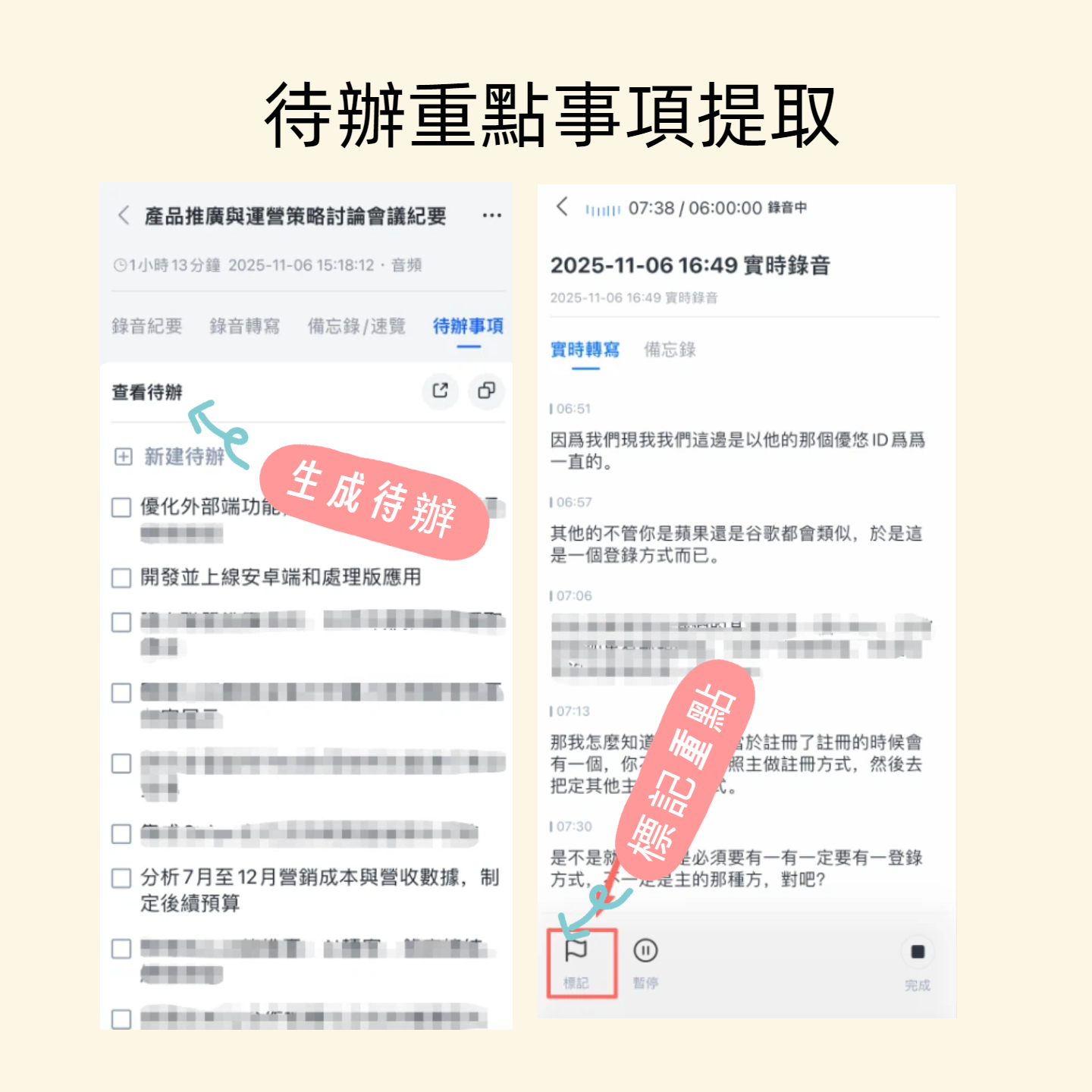
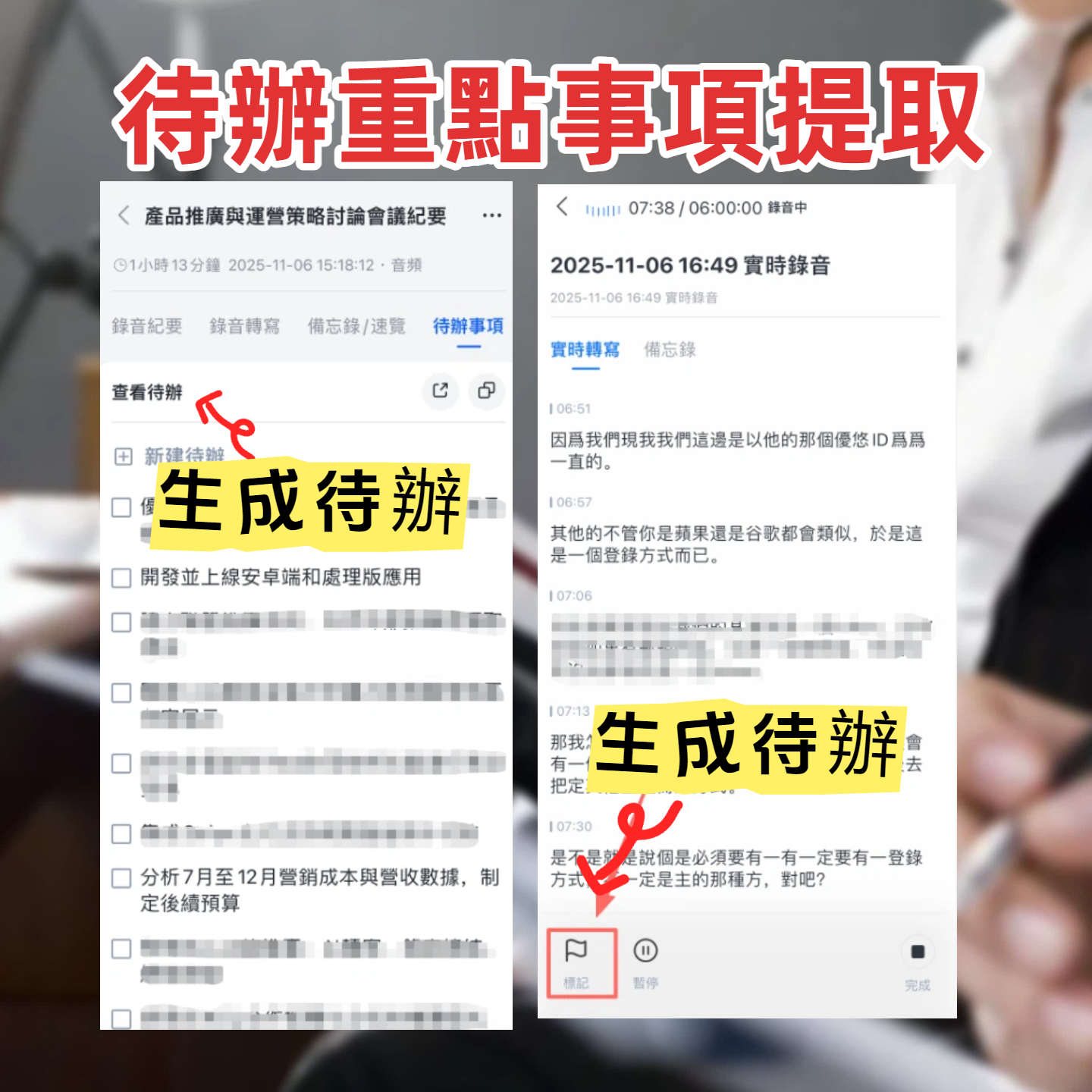
Turn on Tinrec during a meeting, and it transcribes in real time. When the meeting ends, the AI has already generated a summary and action items—who is responsible for what and deadlines, all at a glance. The killer feature is its AI conversation query: after recording, you can ask, "Who mentioned the budget in the last meeting?" It doesn't just do keyword search; it understands context and gives you the answer directly. This feature is almost unheard of in competing tools at the same price point.
Test Data: Cantonese Accuracy is Impressive
We tested with a 5-minute Cantonese news recording (iPhone 15, room temperature 26°C, June 2025). Tinrec's word error rate was 8.3%. Compared to Google Meet's built-in transcription at 22% and Otter.ai's lack of Cantonese support, this is the best performance among similar tools.
Stop organizing recordings by hand
Upload audio or video and automatically get a transcript, summary, and action items
Pros: Every Reason to Buy
- Multiple Input Sources: Meetings, Files, Links
Whether it's a Google Meet session, an audio file, or a YouTube link, Tinrec handles it all. Unlike some tools that are locked to a single platform. - Extremely Useful AI Post-Processing
Not only does it provide a transcript, but it can also auto-generate meeting minutes, export to Notion or Google Docs, and even create mind maps. - Cross-Platform Sync
Record on your phone, view instantly on your computer—no file transfer hassle.
Limitations: Being Honest
The free version offers 100 minutes of transcription per month; heavy users need to upgrade. But for someone with two or three meetings a week, that's plenty for a trial.
Who Is It For?
If you frequently record Cantonese content, want to use AI to quickly find key points, or switch between iPhone and Android, Tinrec is the best choice for you.
Alternatives to Tinrec
There are other options on the market, but look carefully.
Google Meet Built-in Transcription: Free but Not Great
Google Meet's transcription only supports English, and accuracy is mediocre. The free version includes basic transcription, but recording Cantonese meetings? Forget it. To improve quality, you need to pay for Google Workspace, which costs anywhere from a few dollars to over a hundred per month—poor value for money. More importantly, it can't handle your class recordings or YouTube videos; its use is very limited. Tinrec not only has equivalent transcription features but also AI Q&A and multi-source organization—something Google Meet can't offer.
Otter.ai: Great for English Meetings, But No Cantonese
Otter.ai is famous in the English meeting world, offering 300 free minutes and excellent AI summaries and speaker identification. The catch: it doesn't support Cantonese. If you mainly record English content, Otter is an option; but when it comes to Chinese, it's useless. Compared to Tinrec, it also lacks web video transcription, so you'll need workarounds for YouTube videos.
Pitfall Guide: 3 Common Traps When Choosing a Transcription App
Trap 1: Thinking Free is Enough, Then Getting Terrible Accuracy
Many platforms (including Google Meet) offer free transcription, but you'll find accuracy is extremely low, especially with accents or background noise. In the end, you have to listen and correct everything, wasting twice the time. Instead, choose a tool that truly supports Cantonese.
Trap 2: Ignoring Cross-Platform Needs
You might record with an iPhone, attend meetings on a company computer, and review notes on an iPad at home. If the app only works on mobile, it's inconvenient. Tinrec's iOS + Android + web full coverage solves this.
Trap 3: Buying a Tool but Not Using Its AI Features
Many people only use transcription and never ask the AI to summarize, extract action items, or query key points, wasting most of the tool's potential. Tinrec's AI conversation query is the most overlooked yet time-saving feature.
Conclusion: Which One Should You Choose?
In short: if your content includes Cantonese or you need more than just a transcript, Tinrec is the most comprehensive choice.
Scenario Recommendations:
- Need Cantonese + Mandarin bilingual transcription → Tinrec (highest accuracy, supports 14 languages)
- Want to use AI to find key points after recording → Tinrec (only tool with AI conversation query)
- Need to organize YouTube/TikTok videos → Tinrec (paste link and it parses directly)
- Cross-platform use (phone + computer) → Tinrec (full platform sync)
- Budget $0, only recording English meetings → Otter.ai (free 300 minutes, but no Cantonese)
Final tip: download Tinrec's free version first—100 minutes per month is enough for two or three meetings to try it out. Upgrade only if you like it, no need to pay upfront.
Turn every recording into actionable outcomes
Get 60 free transcription minutes when you sign in. No credit card required.
Related Reading
You might also like
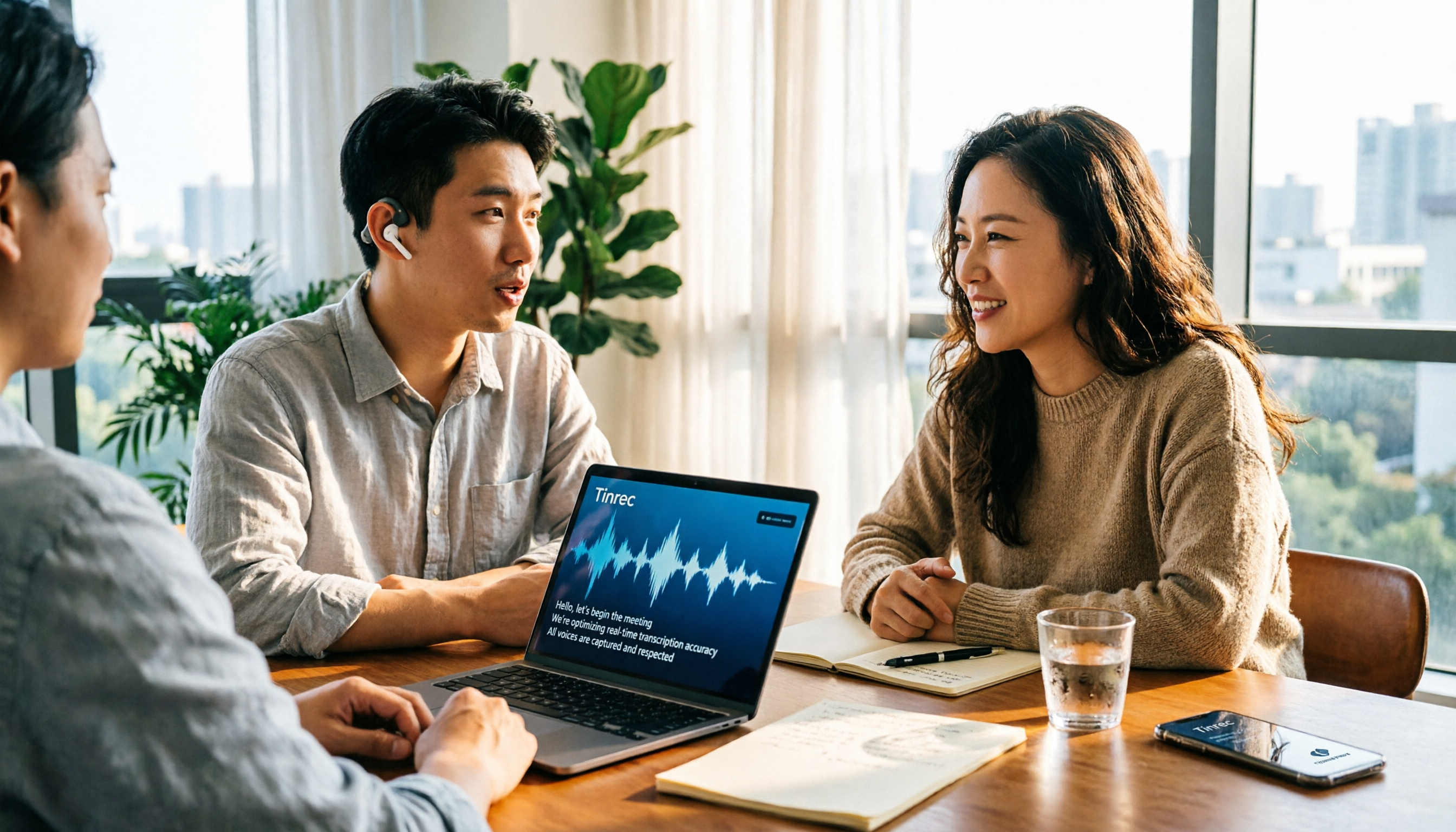
4 Free Real-Time Transcription Tools Compared in 2026: A Generous Free Tier Doesn't Always Mean It's Enough
When looking for a free real-time transcription tool, most people make the wrong choice from the start. This article tackles common misconceptions, first clarifying the difference between "real-time" and "upload," and the three hidden limitations of free plans. It then compares Tinrec, Yating Transcription, cSubtitle, and Otter.ai to help you find a free meeting transcription solution that's actually sufficient.

2026 Live Transcription Tools Compared: Which Free Version Actually Transcribes as You Speak?
What does live transcription mean, and how is it different from recording first and uploading later? This article starts with a clear definition, then covers 5 key points to understand before choosing a live transcription tool. It compares Tinrec, Otter.ai, Granola, and PLAUD in real-world use, and includes common pitfalls and buying advice to help you decide which one truly fits your needs.

2026 Tinrec Review: Real-Time Transcription Without Meeting Bots + AI Q&A for Meeting Notes
Is real-time transcription worth it? This review breaks down 4 key factors for choosing a live transcription tool, focusing on Tinrec (秒聽錄音) and its no-bot online meeting recording, post-meeting AI Q&A, action item organization, and team spaces. We also compare Yating, Otter.ai, and Granola to help you decide which tool fits your needs.

2026 Live Transcription AI Comparison: Which Tool Best Handles Chinese Meetings and Post-Meeting Organization?
How to choose a live transcription AI? This article compares Tinrec, Otter.ai, Notta, and Granola across four aspects: meeting capture methods, Chinese recognition, post-meeting organization, and team collaboration, helping you find the best live transcription tool for your needs.

2026 Live Transcription Tools Compared: Which AI Meeting Assistant Works Best for Chinese?
Tired of re-listening to recordings to write meeting minutes? We tested four live transcription tools—Tinrec, Yating, Notta, and Otter.ai—comparing how they capture online meetings, AI summaries and action items, Chinese and mixed-language recognition, free tiers, and team data ownership. Includes a pitfalls guide and scenario-based recommendations to help you choose the right tool for your meeting needs.

5 Live Transcription Tools Tested in 2026: Which Handles Chinese Meetings Best?
How do you choose a live transcription tool? This article starts from the real pain points of Chinese meetings, outlines 4 key buying factors, and compares Tinrec, Yating Transcription, Otter.ai, and Notta after hands-on use. It honestly lists free quotas, team pricing, and pitfalls to avoid, helping you find the most convenient one.

4 Real-Time Transcription Tools Tested in 2026: Which One Can Summarize While You're Still in the Meeting?
Can't keep up with notes during meetings and then have to re-listen to an hour of recording? This article tests and compares four real-time transcription and AI summary tools—Tinrec, Otter.ai, Granola, and Notta—and outlines 4 key buying factors, 3 common pitfalls, and which one is best for Chinese-language meetings and professionals who want to use AI to query meeting highlights.
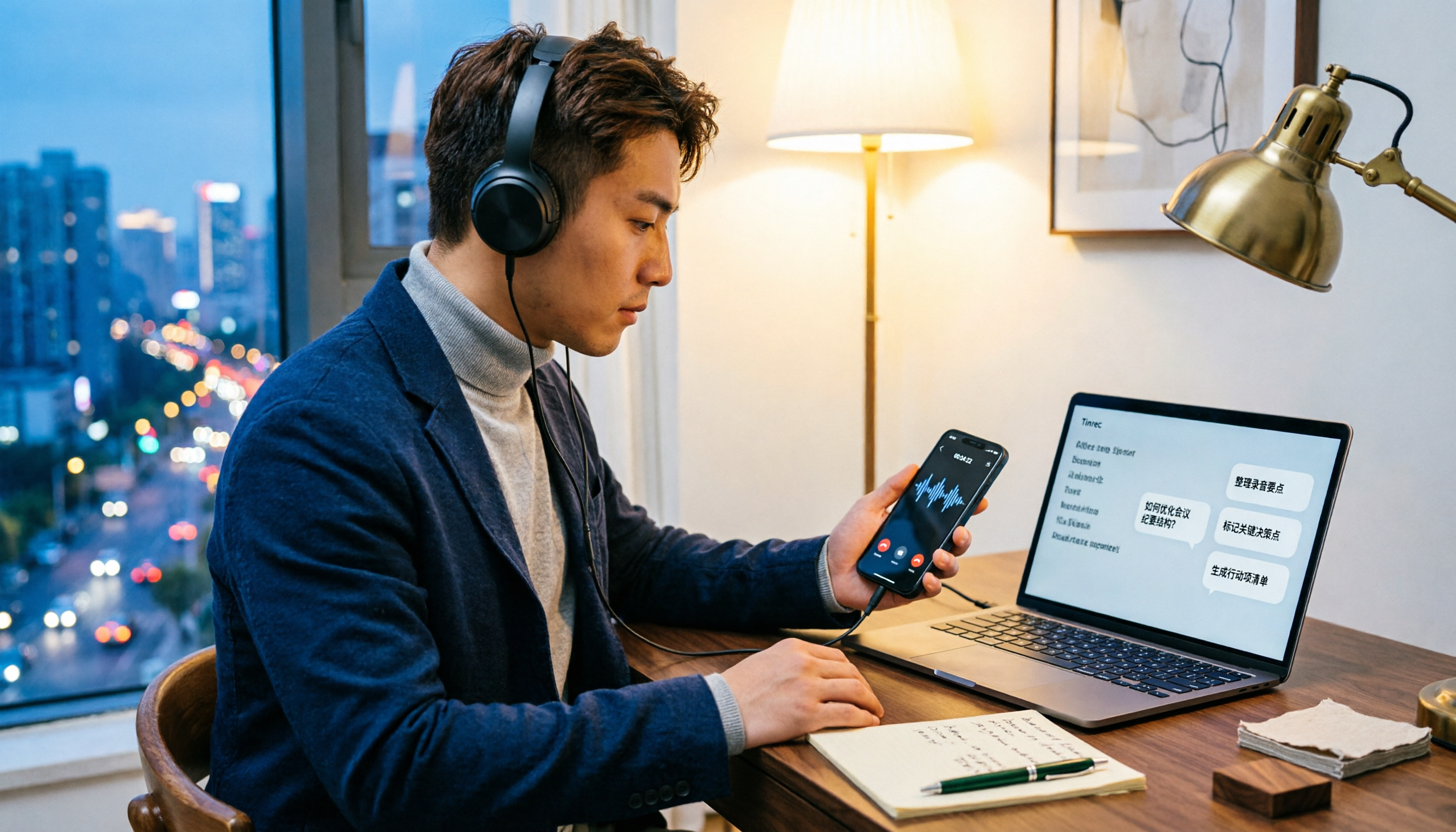
5 LINE Call Recording Methods Tested for 2026: Which Works Best for iPhone, Android, or AI Tools?
LINE doesn't have built-in call recording due to privacy protection and no third-party access, making "just record it" a hassle. This guide covers 5 practical methods—from iPhone built-in capture, Android screen recording, external recording devices, to AI tools—and compares post-recording efficiency. It explains why Tinrec's transcription, AI Q&A, and action item extraction make it the most practical final step for LINE call recording.

5 Best Video Conferencing Software in 2026: Which Free Version Is Enough?
Many people ask what video conferencing software is available. This article reviews 5 common options in 2026: Google Meet, Zoom, Microsoft Teams, Cisco Webex, and LINE. It compares free version limitations, use cases, and paid thresholds, and demonstrates how to use Tinrec to record online meetings without a bot, generate transcripts, summaries, action items, and team data.