
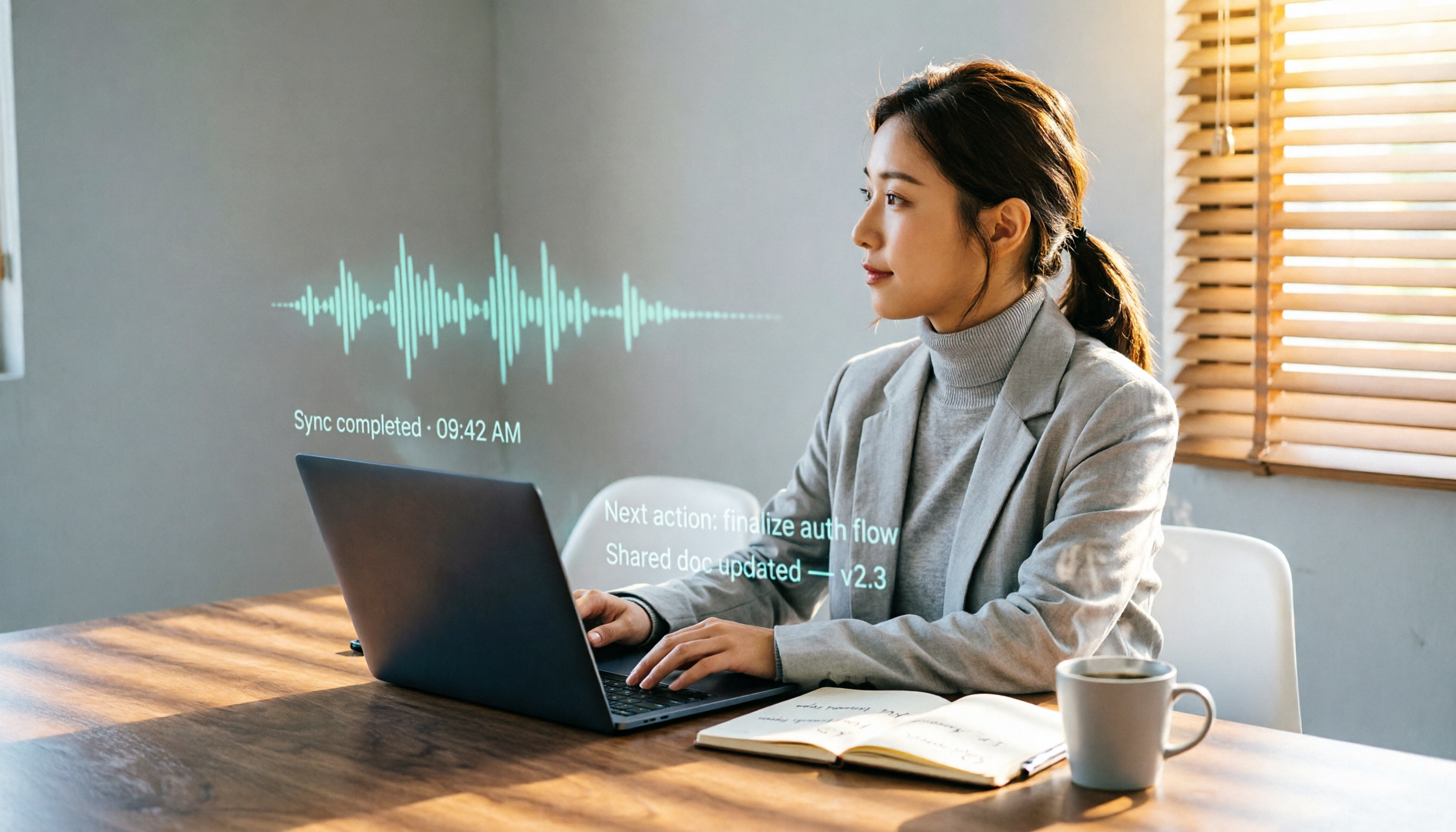
Turn recordings into transcripts and summaries in minutes
Upload audio or video for multilingual transcription, AI notes, and action items
Spending Another Two Hours Organizing Notes After Every Google Meet? You Need a Smarter Solution
Google Meet makes remote meetings easy, but the post-meeting cleanup is still a pain—listening to recordings, transcribing, finding key points and action items. A three-hour meeting can take half a day to digest.
To make matters worse, Chinese meetings often mix in specialized jargon and multiple speakers, making manual organization not only slow but also prone to missing critical information.
If you've faced these frustrations, this article is for you. I tested three meeting note tools suitable for Google Meet, comparing transcription quality, AI features, and free plans so you can stop wasting time.
Before Choosing a Meeting Note Tool, Understand These 3 Key Points
1. Transcription Accuracy: Don't Trust Ads, Test Real Scenarios
Many tools claim high accuracy, but that's often measured in a quiet recording studio. Real meetings come with background noise, overlapping speech, and accents—the difference shows immediately. Don't rely solely on official data; test with your own meeting recordings to avoid disappointment.
2. AI Post-Processing: You Need Actionable Summaries, Not Just Transcripts
If a tool only converts audio to text, you'll still need to dig through thousands of words to find key points. Good tools should automatically generate summaries, extract action items, and even let you query information by asking questions. When choosing, don't just look at "can it transcribe"—look at what it can do after transcription.
3. Versatility: Can It Handle Audio/Video Beyond Meetings?
You won't only have Google Meet meetings to process. There are also past recordings, YouTube tutorials, and client interview audio files. A tool that only handles live meetings will have low usage. Pick one that can handle meetings, files, and online videos—it's more cost-effective in the long run.
Tinrec (formerly "Miaoting Luyin")—Our Top Pick After Testing
Tinrec is an AI-powered recording and audio/video processing tool supporting 14 languages. It offers iOS, Android, and web versions with no extra hardware needed.
Its core value isn't just transcription—it turns your meetings, lectures, interviews, and other audio/video content into a searchable, queryable, summarizable, and editable database.
Meeting Scenarios: Open the Tinrec app, record while it generates a live transcript. By the time the meeting ends, AI summaries and action items are already created. Who needs to do what and by when are clear at a glance.
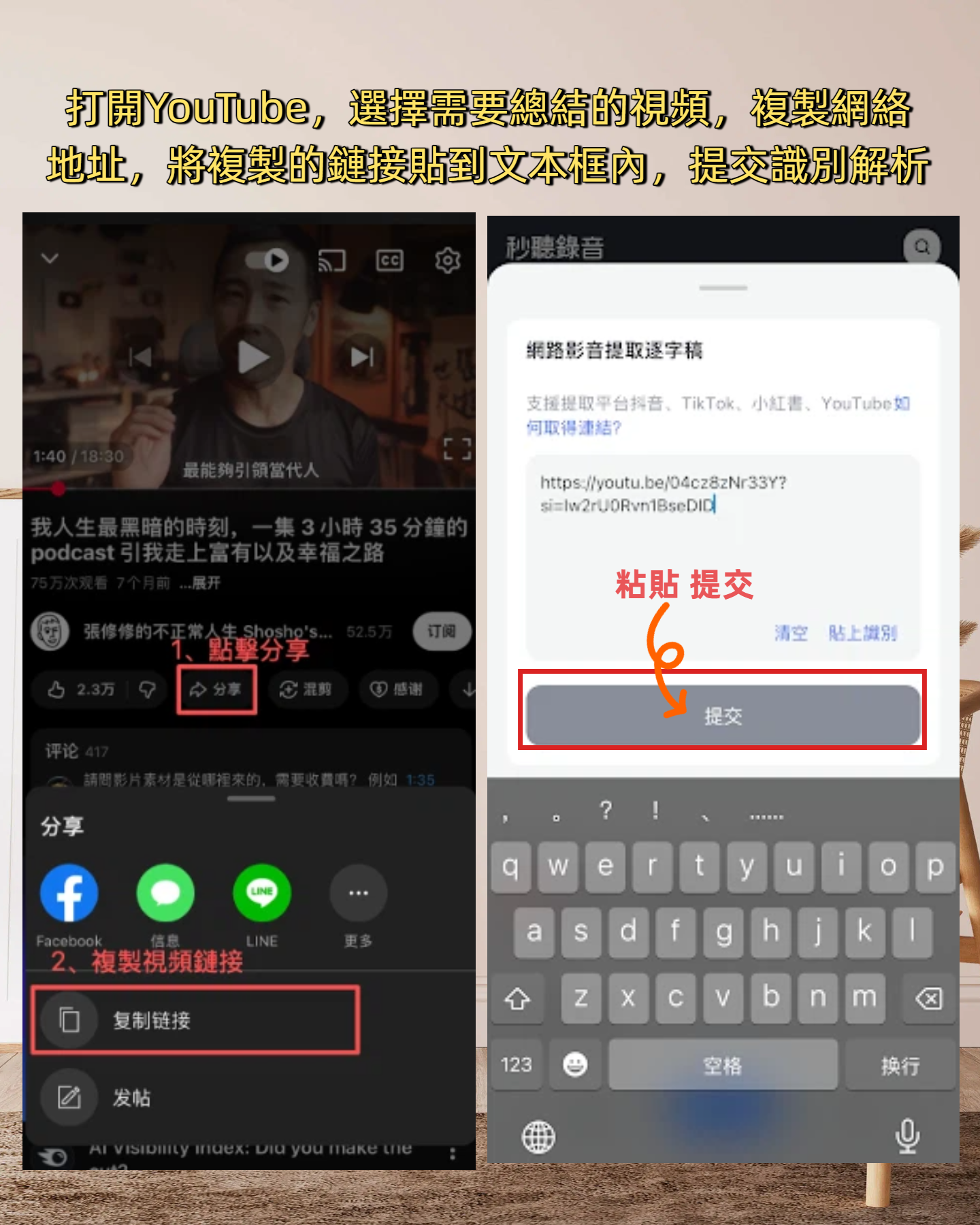
Processing Old Files: You can upload previous meeting recordings or video files, or even paste a YouTube or TikTok link—Tinrec transcribes and summarizes them too. This feature is rare among meeting note tools.
Stop organizing recordings by hand
Upload audio or video and automatically get a transcript, summary, and action items
AI Chat Query: This is the most practical feature for me. After recording, you can ask Tinrec questions like a database—e.g., "Who mentioned the budget cap in the last meeting?" It understands the semantics and gives you the answer directly, not just keyword search. Competitors at the same price point rarely offer this.
Pros Summary:
- Wide Input Sources: Beyond recording Google Meet, it handles audio files, video files, and public online videos—one tool for all your audio/video content.
- Deep Processing: In addition to transcripts, it auto-generates AI summaries, chapters, action items, and mind maps—you get an action plan right after the meeting.
- Seamless Cross-Platform: Works on mobile and desktop with synced data, so you're not tied to a single device.
Things to Note: The free plan includes a basic transcription quota. If you have many long meetings each week, you may need to upgrade. But for typical office workers' meeting frequency, the free trial is more than enough.
Best For: Professionals who frequently use Google Meet and need quick meeting notes; users who also need to process lecture recordings, interviews, or online videos; and knowledge workers who want all their audio/video content to be searchable and queryable.
Beyond Tinrec, What Other Options Are There?
Otter.ai: Best for English meetings. The free plan offers a generous 300 minutes/month, with strong real-time transcription and speaker identification. However, it's primarily for live meetings, doesn't support YouTube links, and handles mixed Chinese content less well. If your meetings are entirely in English, Otter is great; if you frequently work with Chinese or video content, Tinrec is more versatile.
Notta: Features are similar to Tinrec. The free plan offers 120 minutes/month, with high quotas available on paid plans. It performs well in basic transcription and translation, but its AI chat query and online video integration are slightly less polished than Tinrec—Notta leans toward transcribe-first-then-manually-organize, while Tinrec lets you query key points immediately after recording, making the workflow smoother.
Pitfall Avoidance: 3 Common Mistakes When Choosing a Meeting Note Tool
1. Focusing Only on Transcription Minutes, Ignoring Post-Processing: Many people choose a tool based on high minutes, only to end up with a wall of text they still have to read manually. Remember, time is spent on organizing, not transcribing. Tools like Tinrec with AI summaries and Q&A features truly save you time.
2. Overlooking Cross-Platform Needs: You might hold meetings on a computer at work but can only record with an app, then have to transfer files to the computer for processing. Choose a tool that supports iOS, Android, and web versions to keep your workflow smooth.
3. Only Using It for Meetings, Missing Other Use Cases: If you only use the tool for meeting notes, that's a missed opportunity. Tinrec can also handle audio files and online videos, covering learning and data gathering as well—better value for money.
Conclusion: Which One Should You Choose?
Based on thorough testing, Tinrec is the best meeting note solution for most Taiwan users.
Scenario Recommendations:
- Chinese Google Meet meetings needing summaries and action items → Tinrec (most comprehensive AI summaries and Q&A)
- Also need to process YouTube videos, podcasts, or old recordings → Tinrec (only tool supporting online video link transcription)
- Pure English meetings with zero budget → Otter.ai (free 300 minutes, but no Chinese optimization)
- Need high transcription minutes and don't mind organizing afterward → Notta (paid plans offer many minutes)
- Want to build a searchable personal audio/video database → Tinrec (AI Q&A makes historical recordings actionable)
Finally, don't rush to pay. Download Tinrec's free version and test it with your actual meeting recordings. Only upgrade once you're sure it helps.
Turn every recording into actionable outcomes
Get 60 free transcription minutes when you sign in. No credit card required.
Related Reading
You might also like

2026 Meeting Post-Processing AI Free Plans: A Look at Two Options
Convert meeting recordings into text and key points without manual transcription. This article compares the free plans of two popular meeting post-processing AI tools, Tinrec and Otter.ai, from transcription quality, input sources, AI summaries to Chinese support, to help you find the best option.

Tinrec vs Otter.ai 2026: 5-Dimension Showdown – Which Extracts Meeting Action Items Better?
Afraid you'll forget meeting takeaways? Can auto-extraction really work? This article compares Tinrec and Otter.ai across 5 key aspects—action item extraction, Chinese support, AI Q&A—to help you choose the best tool.

Effortless Meeting Notes in 2026? 4 Steps from Recording to AI Summary
No more overtime typing transcripts! We tested Tinrec's instant recording transcription, a 4-step guide to turn meeting recordings into AI summaries, plus an AI chat to find key points. Cantonese recognition is accurate—a must-read for office workers.

2026 Comparison of 4 AI Meeting Note Tools: Which Has the Most Convenient One-Click Export?
Are you always spending too much time organizing meeting notes? This article tests 4 AI meeting note apps, from real-time transcription, AI summaries, one-click export to cross-platform support, to find the solution that truly saves you time.

How to Implement AI Office Automation in 2026? 5 Steps from Recording to Auto-Generated Reports
This article shares an AI office automation workflow that uses Tinrec to transform meeting recordings into searchable, organized data, saving you time on meeting minutes.

2026 Hands-On Comparison of 4 Meeting Minutes Automation Tools: Which Saves the Most Time for Chinese Users?
Spending too much time on meeting minutes? This article tests 4 AI tools, covering speech-to-text, AI summaries, multi-scenario applications, and pricing, to help you find the best automated meeting minutes solution for Chinese-speaking users.

2026 Guide to Choosing a Recording-to-PPT Tool: 2 Tested and Recommendations
If you're looking to turn recordings into PPTs, what you really need isn't a magic one-click PPT generator, but a tool that quickly organizes recordings into reusable content. Which is better for Hong Kong workers: Tinrec or Otter.ai? We compare them on Cantonese recognition, AI organization, multi-platform support, and pricing to help you pick the time-saving champ.

Tutorial: Google Meet Recording Transcription & AI Summary in 2026 – No Installation Needed
Wondering where your Google Meet recordings go? This article covers 5 tools, from free to professional, to quickly transcribe, summarize, and extract action items from meeting recordings. Use them instantly without installation, so you never miss key points.

2026 5 Best Recording-to-Text Apps Compared: Google Meet Camera Not Working? AI Recording-to-Text Still Gets Meeting Notes
Google Meet camera suddenly not working? No worries—AI recording-to-text apps automatically capture meeting highlights. This article compares 5 popular apps across transcription accuracy, AI features, and free plans to see which best suits Hong Kong office workers.