

Turn recordings into transcripts and summaries in minutes
Upload audio or video for multilingual transcription, AI notes, and action items
Why You Need to Organize Your Google Meet Recordings
Google Meet's recording feature is convenient, but what happens after you record? Many people face these issues:
- Not knowing which folder the recording is saved in, spending ages looking for it.
- The recording is too long – no time to listen from start to finish.
- Even if you find it, you just want the key points and action items, not a full transcript.
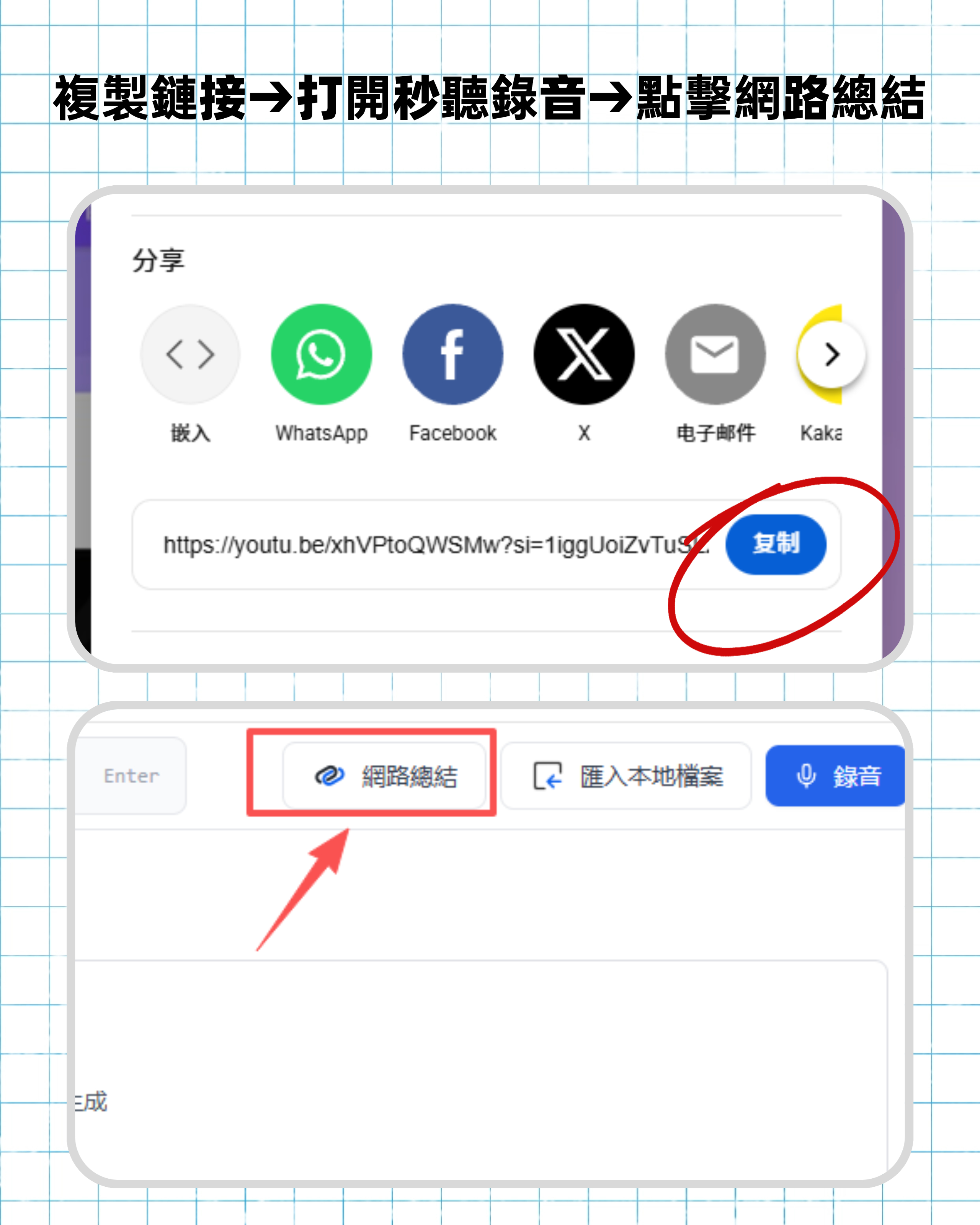
In fact, you need a tool that can turn your recordings into usable information. This article compiles 5 practical solutions, from completely free to full-featured AI tools. The first one, Tinrec, is my current top pick for users in Taiwan.
Option 1: Tinrec – The Most Complete AI Recording Assistant
Tinrec is an AI tool focused on turning audio and video files into knowledge. It not only generates transcripts but also automatically summarizes, highlights key points, and even lets you ask questions about the meeting content.
Core Highlights That Fit Into Your Daily Workflow:
- Direct Import of Google Meet Recordings: Whether you upload a recording from your computer or record an online meeting directly, Tinrec quickly converts it to text. You don't need to leave your workflow; within minutes of uploading, you get organized content.
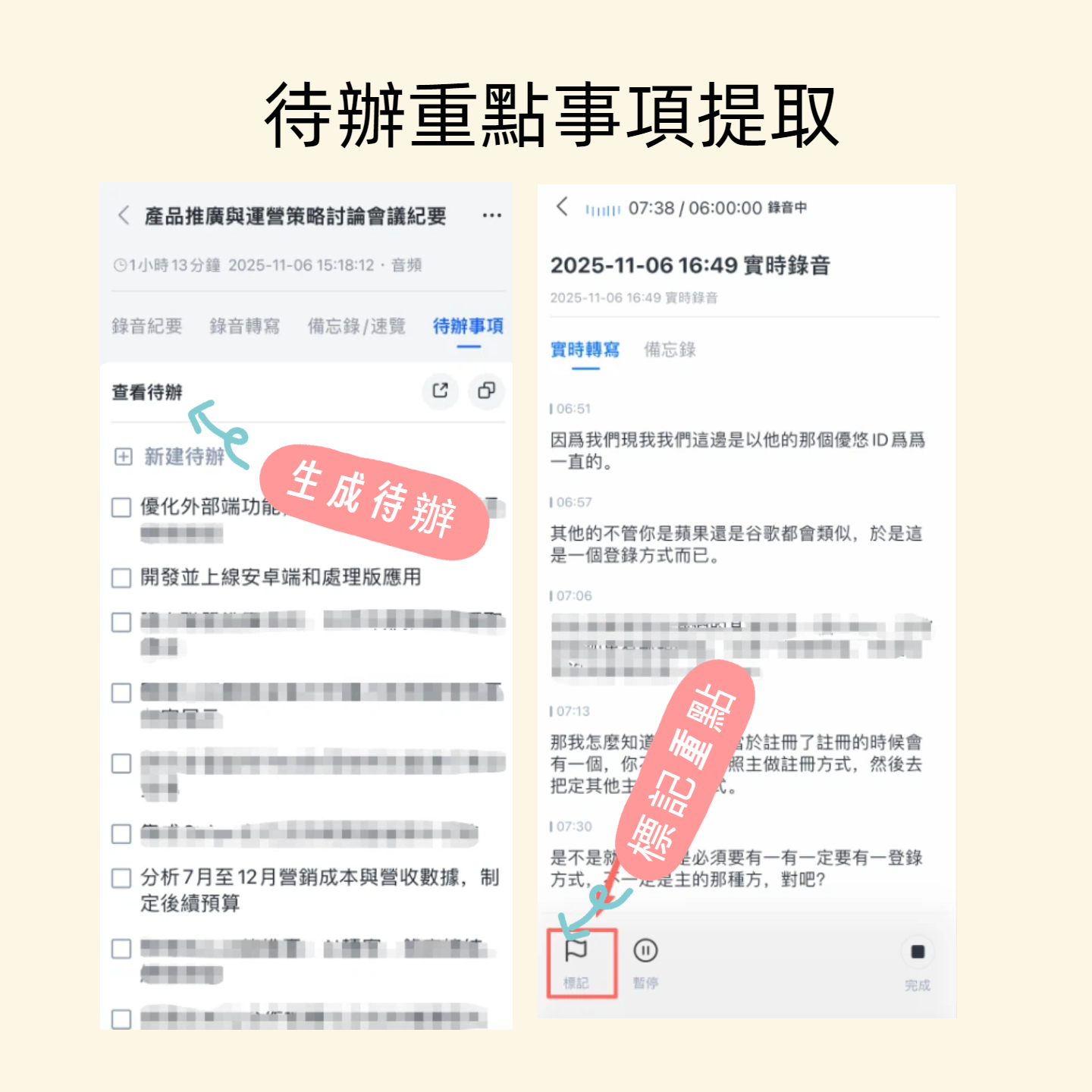
- Not Just Transcription, But Understanding: AI automatically generates summaries, chapters, and action items. Right after a meeting, you can see "what were the key points" and "what I need to do." Our team uses Tinrec to generate to-do lists after project meetings, saving 30 minutes of manual organization.
- Query Recordings Like Asking an Assistant: This is the most impressive feature. You can ask Tinrec "What was the budget number discussed last time?" or "Who proposed that plan?" and it searches across all recordings to find the answer, acting like a personal knowledge base.
- Cross-Platform, Mobile Ready: Supports iOS, Android, and web. You can organize meeting recordings on your phone without needing a computer.
Pricing (Actual 2026 Information):
- Free Version: Monthly basic transcription quota, lets you experience core features.
- Weekly, Pro Monthly, Pro Yearly: Choose based on usage; yearly is most cost-effective for long-term use.
Who Is It For? If you have two or more Google Meet meetings per week, or need to store and search meeting content long-term, Tinrec is the most complete option.
Option 2: Otter.ai – Veteran AI Meeting Note Tool
Otter.ai is many people's first impression of AI meeting notes. Its strength lies in automatically joining online meetings, identifying different speakers, and generating real-time transcripts and summaries.
- Difference from Tinrec: Otter leans more toward a "meeting bot" approach, ideal for English business meetings; Tinrec covers more scenarios (classes, interviews, YouTube videos) and handles Chinese better for users in Taiwan.
- Core Highlights: Accurate speaker identification, real-time collaborative highlighting of key points.
- Free version: 300 minutes of transcription per month; Pro annual about $8.33/month (1,200 minutes).
Suitable for business professionals heavily reliant on English meetings and needing team collaboration on notes.
Option 3: Fireflies.ai – Meeting Assistant with CRM Integration
Fireflies.ai is another meeting bot representative, especially suitable for sales teams, automatically pushing meeting summaries to CRM systems (e.g., Salesforce).
- Core Highlights: Claims "unlimited transcription," but free storage is limited; broad integration ecosystem.
- Free version: Basic transcription and AI summaries; Pro annual $10/month, Business annual $19/month.
Stop organizing recordings by hand
Upload audio or video and automatically get a transcript, summary, and action items
If your team uses many business tools, Fireflies' automation integration is a plus, but it may feel heavy for typical individual users.
Option 4: Notta – Multi-Platform Transcription + Translation
Notta is similar in positioning to Tinrec – a multi-platform real-time transcription tool that covers meetings, file uploads, and offers real-time translation.
- Core Highlights: Stable transcription quality, clean interface, supports Japanese, English, and other languages.
- Free version: 120 minutes per month; Pro annual $8.17/month (1,800 minutes).
Suitable for those who need simultaneous transcription and translation, or often deal with multilingual audio files. Note that the free quota is limited.
Option 5: Google Meet Built-in Captions & Cloud Recording – Free Basic Method
If you only use recordings occasionally, Google Meet itself provides real-time captions and cloud recording (requires a Workspace account). Recorded videos are saved to Google Drive; you can replay and manually note key points.
- Pros: Completely free (some features may vary by account type), no extra tools needed.
- Cons: Recording files are large, no AI summaries or text search; long meetings are hard to quickly scan.
Suitable for very light users, or just to confirm if key dialogue was captured. Once you need quick organization, you'll find manual work time-consuming.
How to Choose Among These Options?
- You want the most complete AI processing (transcription + summary + Q&A + action items) and need it for meetings, classes, and videos → Tinrec
- 80%+ of your meetings are in English, and you need team collaboration on notes → Otter.ai
- Your team heavily relies on CRM and wants meeting summaries automatically archived → Fireflies.ai
- You often need transcription and translation into multiple languages → Notta
- Your budget is zero, and you only need occasional playback, okay with manual organization → Google Meet built-in features
Honestly, most users in Taiwan fall into the first category: besides meetings, they also watch Chinese videos, take classes, and conduct interviews. This multi-source nature is exactly where Tinrec excels.
3 Things to Know Before Using
Recording Quality Affects Transcription Accuracy
No matter which tool you use, if multiple people talk at once or there's background noise, accuracy drops. It's recommended to use a headset microphone during meetings and keep speaking turns orderly.AI Summaries Are Powerful, But Still Glance at the Original
Summaries from Tinrec or Otter can save you 90% of time, but for critical decisions and numerical details, it's wise to cross-check against the original transcript. That's why Tinrec retains the full transcript and provides jump-to functionality.Free Plans Are Usually Not a Long-Term Solution
If your meeting volume is stable, directly choosing a paid plan is more hassle-free. For example, Tinrec's yearly plan may be more cost-effective than buying weekly passes each month. Start with the free version to try, then decide based on usage.
Summary
Organizing Google Meet recordings doesn't have to be labor-intensive. From free built-in options to AI-powered professional tools, there are many choices. Based on my experience, Tinrec excels at turning audio into actionable information—not just meetings, but also YouTube videos and old recordings can be processed in one go.
If you're still struggling with meeting notes, start with Tinrec's free version—it's free to try, and you might never go back.
Frequently Asked Questions
Q: Where are my Google Meet recordings stored?
A: If you use a Google Workspace account to start a meeting and choose "Record," the video is automatically saved to the meeting host's Google Drive in the "Meet Recordings" folder. You'll also receive an email with a link after the meeting ends.
Q: Can Tinrec directly record Google Meet meetings?
A: Tinrec has a "Computer Meeting Recording" feature that uses your computer's system audio to capture Google Meet sound, then transcribes and organizes it. You can also manually upload recorded audio files.
Q: How accurate are these transcription tools?
A: In a quiet environment with standard accents, most AI tools achieve over 90% accuracy, but this can be affected by background noise or mixed languages. For Chinese, Tinrec is tuned better; for English, Otter performs reliably.
Q: Is the free version of Tinrec enough?
A: If you only have 1-2 short meetings per month, the free quota is likely sufficient to experience. But if you have weekly meetings, consider a Pro plan to avoid worrying about quotas.
Q: Do I need to buy recording hardware like PLAUD?
A: If you only need to organize online meetings and existing audio files, using an app or web tool is sufficient. PLAUD is more for those who frequently record in the field and need hardware convenience, but it adds extra cost.
Q: Can the AI-generated action items be wrong?
A: AI extracts based on context and is usually reliable, but it's recommended to quickly review to avoid missing or misinterpreting important tasks.
Turn every recording into actionable outcomes
Get 60 free transcription minutes when you sign in. No credit card required.
Related Reading
You might also like
2026 Comparison of 3 AI Meeting Workflow Tools: Which AI Features Are Most User-Friendly?
Spending hours on meeting notes? We tested 3 popular AI meeting tools—comparing transcription quality, AI features, and pricing—to help you find the perfect fit for your workflow.

2026 Test Comparison of 5 Automatic Meeting Report Generators: Which Free Version Is Best?
Tired of spending hours organizing meeting notes? This article tests 5 popular AI automatic meeting report tools, comparing free limits, cross-platform support, and AI summary accuracy to help you find the best solution.

The Best Meeting Minutes Automation Software of 2026: Auto Summaries & Action Items
Struggling to organize meeting notes? This article covers the best meeting minutes automation software of 2026, from free to paid plans, helping you quickly generate summaries and action items.

2026 Post-Meeting Automation Tool Buying Guide: 3 Products Tested and Recommendations
Meetings running into overtime, and still need to work late on meeting minutes? This article tests 3 post-meeting automation tools, including Tinrec, Otter.ai, and Notta, comparing accuracy, AI features, cross-platform support, and more, to help you choose the most time-saving solution.

2026 Real-World Test: 3 One-Click Meeting PPT Solutions Compared – From Recording to Slides, Which Actually Saves Half the Time?
Two hours in a meeting, another two hours making slides? This article tests three leading solutions to show you how to turn meeting content directly into presentations with the right tools—no more late nights transcribing.

2026 Meeting Post-Processing AI Free Plans: A Look at Two Options
Convert meeting recordings into text and key points without manual transcription. This article compares the free plans of two popular meeting post-processing AI tools, Tinrec and Otter.ai, from transcription quality, input sources, AI summaries to Chinese support, to help you find the best option.

Tinrec vs Otter.ai 2026: 5-Dimension Showdown – Which Extracts Meeting Action Items Better?
Afraid you'll forget meeting takeaways? Can auto-extraction really work? This article compares Tinrec and Otter.ai across 5 key aspects—action item extraction, Chinese support, AI Q&A—to help you choose the best tool.

Effortless Meeting Notes in 2026? 4 Steps from Recording to AI Summary
No more overtime typing transcripts! We tested Tinrec's instant recording transcription, a 4-step guide to turn meeting recordings into AI summaries, plus an AI chat to find key points. Cantonese recognition is accurate—a must-read for office workers.

2026 Comparison of 4 AI Meeting Note Tools: Which Has the Most Convenient One-Click Export?
Are you always spending too much time organizing meeting notes? This article tests 4 AI meeting note apps, from real-time transcription, AI summaries, one-click export to cross-platform support, to find the solution that truly saves you time.