
Turn recordings into transcripts and summaries in minutes
Upload audio or video for multilingual transcription, AI notes, and action items
The Ultimate 2026 Student Voice Recorder Guide: Turn Lectures into a Note Library with Tinrec
How Can Student Recording Help You?
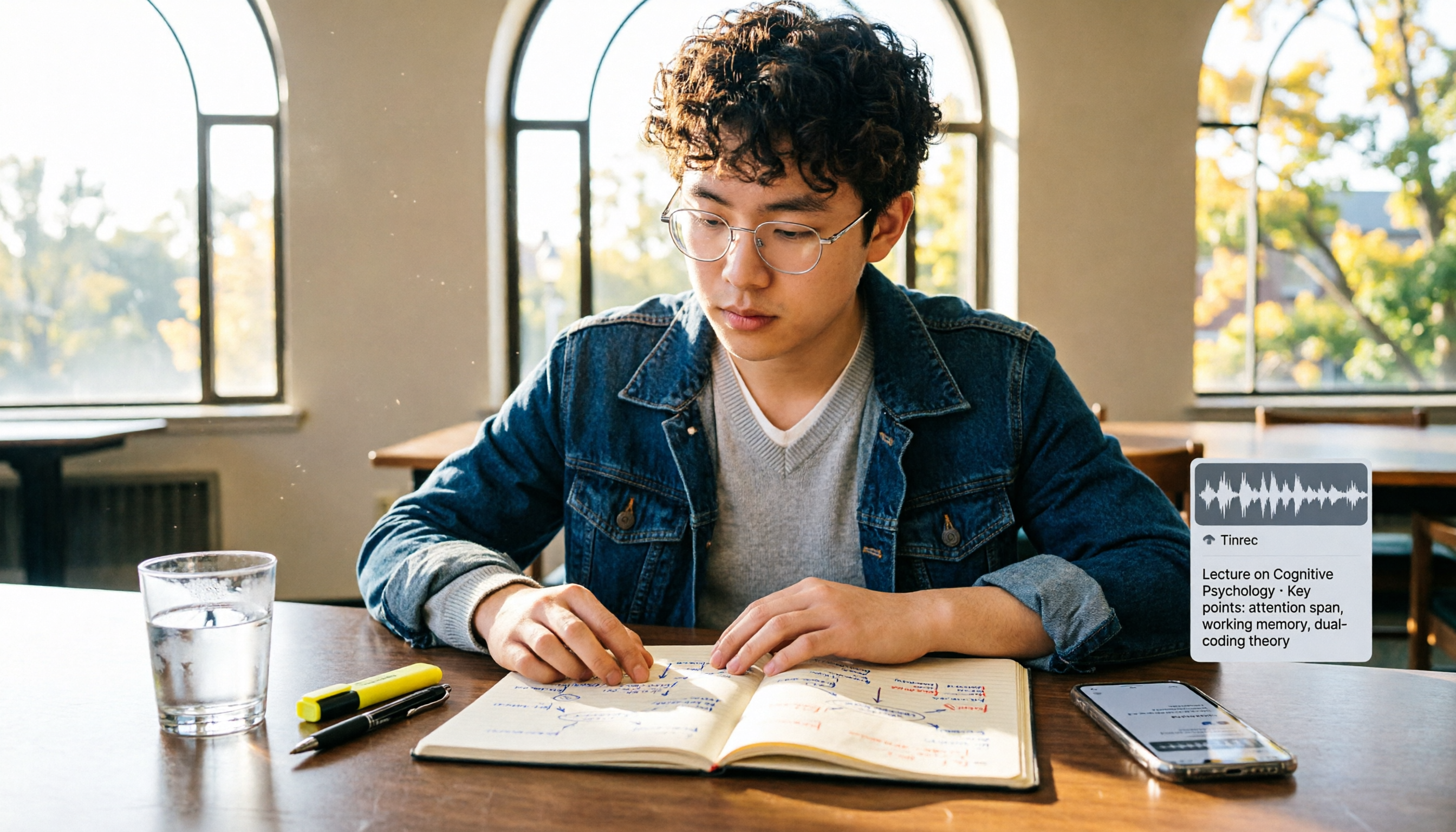
The first week of school, the professor hands out a long reading list and syllabus. They speak fast at the podium while you scramble to take notes. Not to mention courses taught in English or with heavy accents—hard enough to follow, let alone organizing key points. If this sounds familiar, you need a solution more efficient than a traditional voice recorder.
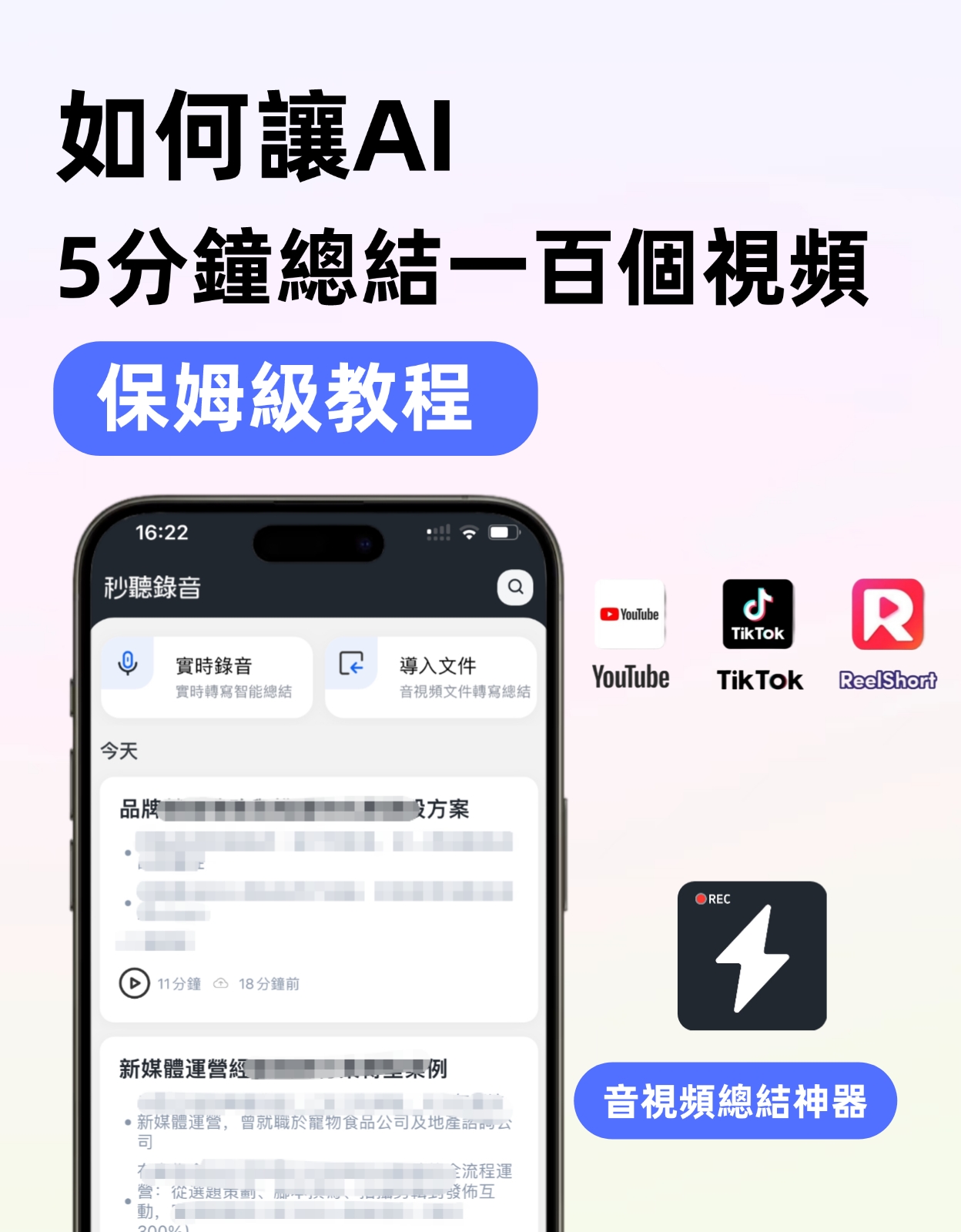
Take Tinrec for example. It's not just a "voice recorder"—it's an AI recording and organizing tool installed on your phone and computer. During class, open the app to start recording. It transcribes in real time and automatically uses AI to summarize, create chapters, and highlight key points after class. Previously you might spend an entire evening re-listening to recordings to organize notes; now Tinrec delivers the organized highlights directly to you.
Tinrec's Core Recording and Organizing Capabilities
Tinrec is ideal for students because it not only captures audio but also helps you understand and organize it. The following capabilities will change how you study:
- Real-time transcription: Open Tinrec in class, and audio is transcribed into text with less than 1 second delay. You can read the transcript while listening, ensuring no important concepts are missed.
- AI summaries and chapters: For a two-hour lecture, Tinrec automatically splits it into chapters with key summaries for each. No need to listen from start to finish—just click the segment you want to review.
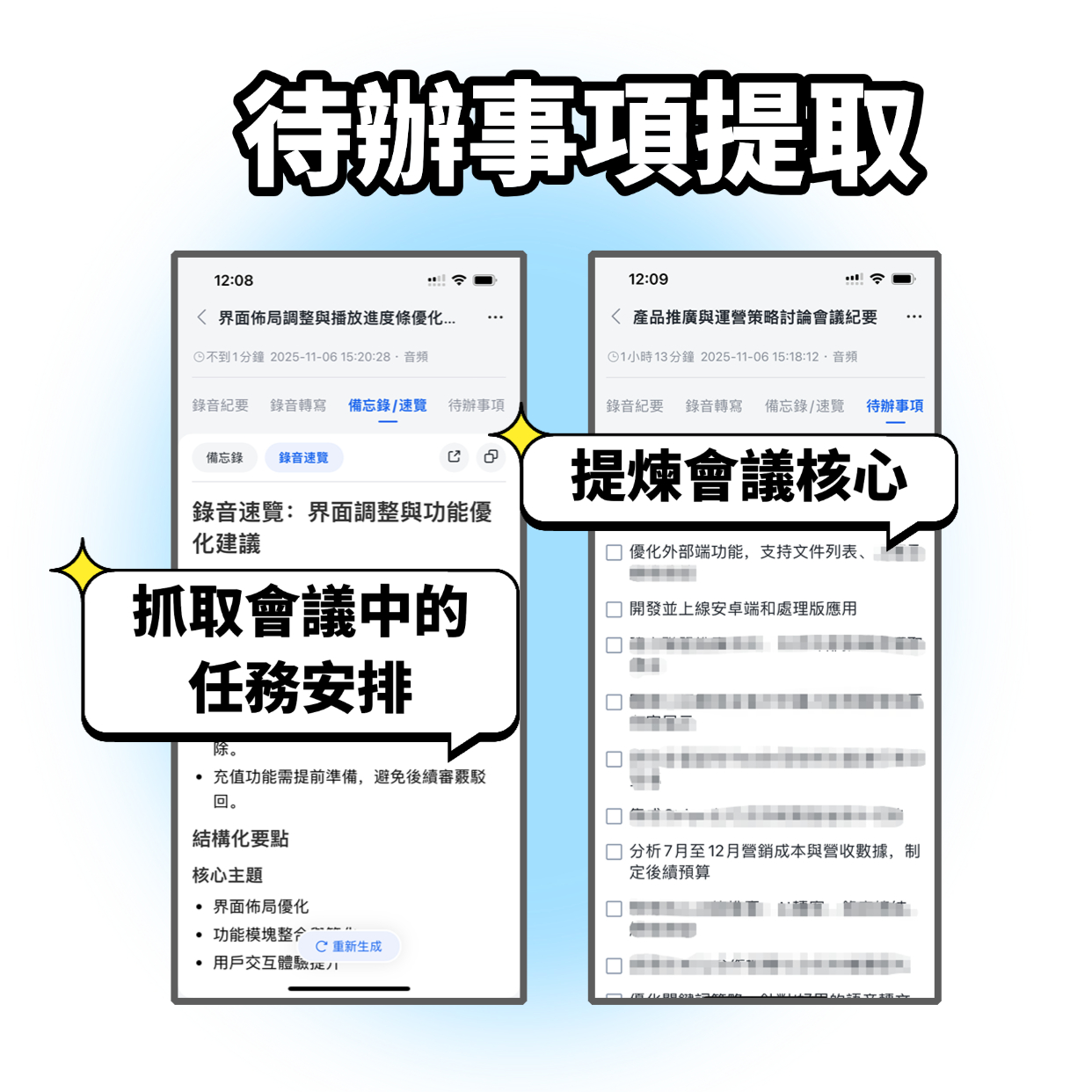
- Action item extraction: When the professor says "submit your report next week" or "midterm covers up to chapter 8," Tinrec automatically extracts these action items into a list, so you won't forget.
- AI query chat: Reviewing feels like having a tutor by your side—you can ask Tinrec questions like "What three theories were discussed?" or "What examples did the professor give?" and it answers based on the recording.
- Multi-format export: The organized summaries, transcripts, or notes can be exported as PDF, Word, or synced to Notion or Google Docs, ready to use for midterm review.
Real-World Student Scenarios
Scenario 1: Taking notes without chasing the professor
In a general education course or large lecture, the professor speaks fast and slides change quickly. With Tinrec recording in real time, it transcribes and automatically generates a summary after class. You just focus during class, then review the organized content at home.
Stop organizing recordings by hand
Upload audio or video and automatically get a transcript, summary, and action items
Scenario 2: Savior for English-taught courses or textbooks
In full English courses or when using original textbooks, it's normal to struggle with listening. Tinrec's real-time transcription lets you read along with the text and even search for unfamiliar words, so you never miss key concepts.
Scenario 3: Group discussions and project meetings
During group reports, everyone talks at once, making it hard to remember who said what and the conclusions. Use Tinrec to record the discussion. Afterward, it automatically generates a summary and action items, clarifying who needs to do what and the deadlines.
Scenario 4: Online courses and open courseware
There are many free YouTube courses and open courseware online. Just paste the video link into Tinrec, and it analyzes the audio content, generating key notes for you, saving time from repeated playback.
4 Things to Consider When Choosing a Student Recording Tool
1. Not just recording, but organizing
Traditional voice recorders only capture audio; you still have to listen again later. A tool that truly saves time must transcribe, summarize, and highlight key points. Tinrec handles everything from recording to note creation seamlessly, cutting your review time in half for the same two-hour lecture.
2. Accuracy and language support
Recording quality directly affects transcription accuracy. Tinrec delivers stable transcription for Mandarin and Cantonese in classroom environments (normal volume, minimal background noise), accurately recognizing academic terms. It also supports mixed Chinese-English content, making it especially useful for bilingual courses.
3. Cross-device convenience
Dedicated voice recorders require carrying, charging, and file transfers. Tinrec is installed on your phone and computer—just open it in class, and recordings auto-save to the cloud, accessible on phone, tablet, or laptop. No extra device needed, no forgetting cables.
4. Post-processing and export
It's important that organized notes can be exported to your usual tools. Tinrec can export as Word or PDF, and sync to Notion or Google Docs, integrating directly into your assignments and reports without extra file conversion.
Frequently Asked Questions
Q: Do I need the professor's permission to record in class? A: Recording for personal study use generally does not require consent, but avoid public distribution. It's advisable to check your school's policy or politely inform the professor.
Q: Is the free version enough? A: The free version of Tinrec includes a monthly transcription quota, enough for about 2-3 lectures. For long-term use or to organize every class, consider the Pro monthly or yearly subscription—costs less than a cup of coffee per month.
Q: Will recognition be poor in noisy or echoey classrooms? A: Generally, clearer audio sources yield better transcription. Mild echoes or ambient noise usually don't affect recognition of main content, but sitting too far away or having unclear audio reduces accuracy. Try to sit near the podium or use an external microphone to improve quality.
Q: Can I export recordings as text transcripts? A: Yes. Tinrec supports exporting transcripts, summaries, and even to-do lists in formats like TXT, Word, and PDF, making it easy to print or add to note apps.
Conclusion
The era of traditional voice recorders is over. Today's students need an all-in-one tool for recording, transcribing, and organizing. Tinrec turns audio files into a searchable, queryable, exportable digital note library, preserving every lecture for final review. Download the free version of Tinrec and try it on one class—once AI organizes your notes, you'll never go back.
Turn every recording into actionable outcomes
Get 60 free transcription minutes when you sign in. No credit card required.
Related Reading
You might also like
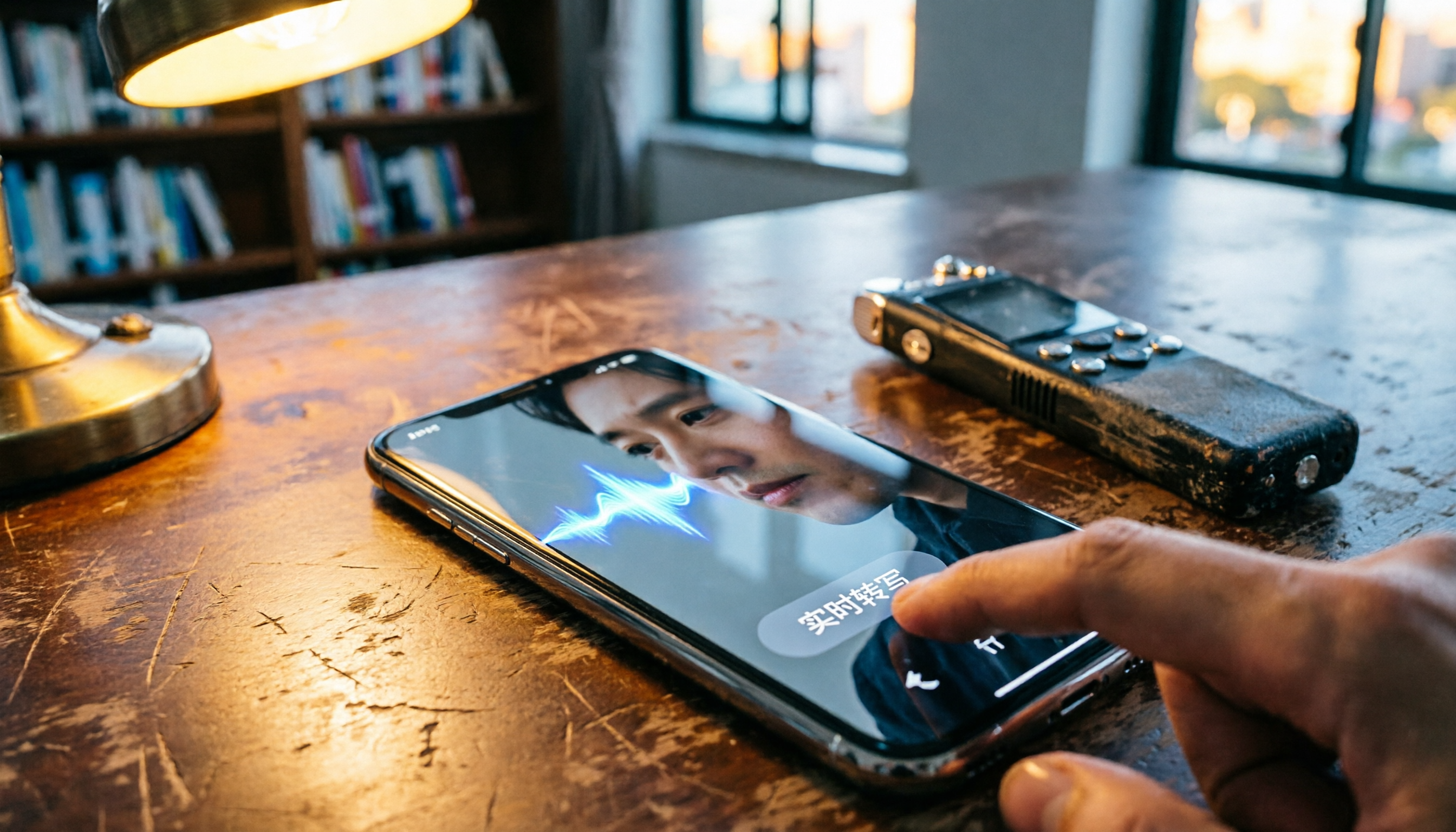
2026 Real-World Test: Hardware Voice Recorder vs. Mobile App – Which Is Better for Taking Notes?
Who says students have to buy a voice recorder? We compare PLAUD NOTE and Tinrec in real-world tests, covering cost, features, portability, Chinese transcription, and post-class organization, showing you why using an app is actually more cost-effective.

2026 Free Speech-to-Text Plans for Students: A Side-by-Side Comparison of 2 Tools
Which free speech-to-text tool is best for students? This article compares Tinrec and Notta across online video transcription, AI Q&A, output richness, and Chinese language optimization to help you find the best free plan for classes, lectures, and self-study.

How to Turn Meeting Recordings into Documents in 2026? 5-Step AI Transcription Tutorial
Tired of meetings all day and then working overtime on meeting minutes? Use Tinrec, an AI transcription tool that automatically turns live recordings, files, and online videos into transcripts, summaries, and to-do lists. Learn 5 steps from recording to a complete meeting document, saving 90% of your time!

2026 Tinrec vs Notta: A Deep 4-Dimension Comparison – Which One is Worth Choosing?
Looking for a speech-to-text tool but feel like Notta is missing something? This comparison breaks down the two from four dimensions—input sources, AI organization, Chinese optimization, and free plans—to help you decide which is the better fit for US users in 2026.

Free AI Meeting Summary Tools in 2026: 3 Options at a Glance
This article compiles 3 free AI meeting summary solutions, using Tinrec as the core example. From features and use cases to selection tips, learn how to automatically generate meeting summaries, action items, and query content with AI to boost productivity.

What's the Best Meeting Notes Tool? We Tested One in 2026 - The Free Version Is More Than Enough
Hate sorting through meeting notes afterward? We tested Tinrec hands-on, from recording to transcription to summaries and to-do lists—all in one workflow. Highly recommended for small to mid-size team leads.

2026 Tinrec vs Notta: 5-Dimension Face-Off – Which is Best for Students on a Budget?
A senior student tests two leading voice-to-text apps, comparing free limits, Chinese recognition, AI organization features, and student plan value for money to help you decide which note-taking lifesaver is right for you.

2026 Tinrec Lecture Recording to Text: No Hardware Needed, AI Chapter Notes | Full Comparison with PLAUD Note
This article compares Tinrec and PLAUD Note for students who need to convert lecture recordings into text. It provides a detailed PK from five dimensions: recording method, Chinese recognition, AI organization, price, and cross-platform compatibility, analyzing which one is more suitable for students.

2026 Comparison of 4 AI Meeting Summarizers: From Free to Pro, All You Need to Know
Tired of spending hours after meetings to write notes? AI tools can now auto-generate summaries and action items. This article compares 4 popular AI meeting summarizers—from free tiers to core features and use cases—to help you find the perfect assistant.