

Turn recordings into transcripts and summaries in minutes
Upload audio or video for multilingual transcription, AI notes, and action items
Last semester I took a class where the professor lectured like a runaway train, flipping slides faster than I could snap photos. I tried recording while taking notes by hand, but when I opened my notebook before midterms, it looked like alien hieroglyphics. That's when I decided I needed a voice-to-text app to save me from handwritten hell.
I started with Notta because their ads were everywhere, promising 120 minutes of free transcription. But after half a semester, problems crept in: Chinese recognition sometimes messed up badly—like turning "machine learning" into "chicken learning". Proofreading took almost as long as re-listening. And the free export was barebones; converting to PDF cost extra. Later my roommate recommended I try Tinrec (Miao Listening Recorder), saying it's designed for Chinese scenarios with a student-friendly plan. I figured “free version can’t hurt,” installed it, and ended up using it the whole semester—from midterm reports to finals. It saved my bacon several times.
If you're also trying to decide which voice-to-text app to choose and you're on a budget like me, this article uses my own experience to compare Tinrec and Notta across five dimensions that matter most to students, so you can decide for yourself.
Before You Start: What You’ll Need
No matter which app you use, the prep is similar. I’ll use Tinrec as an example since it’s my go-to now:
- A smartphone (iPhone or Android—both work; Tinrec supports both platforms, so does Notta)
- Download the Tinrec app (free on App Store or Google Play; sign up with Google or Apple ID in 3 seconds)
- Have a recording ready to transcribe (lecture recording, group discussion, or a meeting with your professor)
- A stable internet connection (real-time transcription needs it; check signal if you’re in the library basement or a dead zone)
(Image placeholder: student sitting mid-row in a lecture hall, phone on desk facing the podium, screen showing real-time transcribed text, natural bright lighting)
Step 1: Record the Content You Want Transcribed
The goal here is to get a clear recording—the foundation for everything else. With both Tinrec and Notta, recording quality directly affects accuracy.
Open Tinrec, tap the record button, and you’re off. In class, keep your phone close to the sound source—don’t toss it in your backpack’s side pocket. Closer is better for clear audio and accurate transcription. For a one-on-one with your TA, place the phone between you. For a large lecture hall, sit up front or at least put your phone on the desk in the center.
Why stress recording quality? I learned the hard way with Notta: once I sat in the back near an AC vent, the recording sounded like it went through a voice changer, and the transcription came out in a different language. Later I used Tinrec’s built-in smart noise reduction (found in recording settings) in the same environment, and the clarity was way better—this feature is free on Tinrec, while Notta charges for similar noise options.
When done, you’ll see the recording on Tinrec’s main screen with duration and file size.
(Image placeholder: in a classroom, student’s phone on a foldable desk recording, classmates around, phone screen showing transcription in progress, classroom fluorescent lighting)
Step 2: Let AI Transcribe into a Transcript
Once recorded, let AI turn speech into text. Tinrec is fast—a 50-minute lecture takes about 3–5 minutes to transcribe (actual speed depends on your internet). It also automatically labels different speakers, like professor questions and student answers—super handy for group discussions.
I remember the first time I used Notta to transcribe a lecture: the Chinese transcript was mostly okay, but technical terms often got “creative.” For example, “convolutional neural network” became “convolutional neural network” (simplified/traditional bug), and “loss function” turned into “loss row number”… proofreading was painful. Tinrec’s Chinese term recognition is noticeably better, especially for business and engineering terms—fewer typos to fix. Plus the free version supports mixed Chinese-English recognition, which is more generous than Notta’s free plan.
After transcription, Tinrec shows the full transcript with timestamps—tap any sentence to jump to that point in the audio, perfect for reviewing key points before exams.
(Image placeholder: laptop screen showing full transcript, floating window with AI-generated section titles, student using trackpad to select important paragraphs)
Step 3: Quickly Proofread the Transcript
Even though AI is powerful, it’s wise to spend 10 minutes skimming, especially for key formulas or names. Tinrec’s editing interface is intuitive—edit directly on the transcript and it auto-saves. It also has a super useful feature: listen and edit—as audio plays, the cursor follows the text; pause and fix as you go. Notta has a similar feature, but the free version lags sometimes when you tap.
Stop organizing recordings by hand
Upload audio or video and automatically get a transcript, summary, and action items
Another reason I switched from Notta: Tinrec lets you add notes and bookmarks directly in the transcript. For example, star a “midterm scope” paragraph so you can jump to it later. Notta’s free version only shows the plain transcript; bookmarking requires an upgrade.
(Image placeholder: student in library with headphones, laptop left half showing transcript editor, right half showing audio waveform, editing while listening, textbook and highlighter on desk)
Step 4: Let AI Generate Key Summaries
This is where Tinrec is most “student-friendly.” After transcription, it doesn’t just give you text—it can auto-generate:
- AI Summary: Condenses key points from a lecture into a few paragraphs—great for last-minute cramming
- Section Segmentation: Splits a two-hour recording into “Introduction-Methodology-Case Study-Conclusion” without manual timeline dragging
- To-Do Items: For group meetings, it automatically extracts “who should do what and by when”
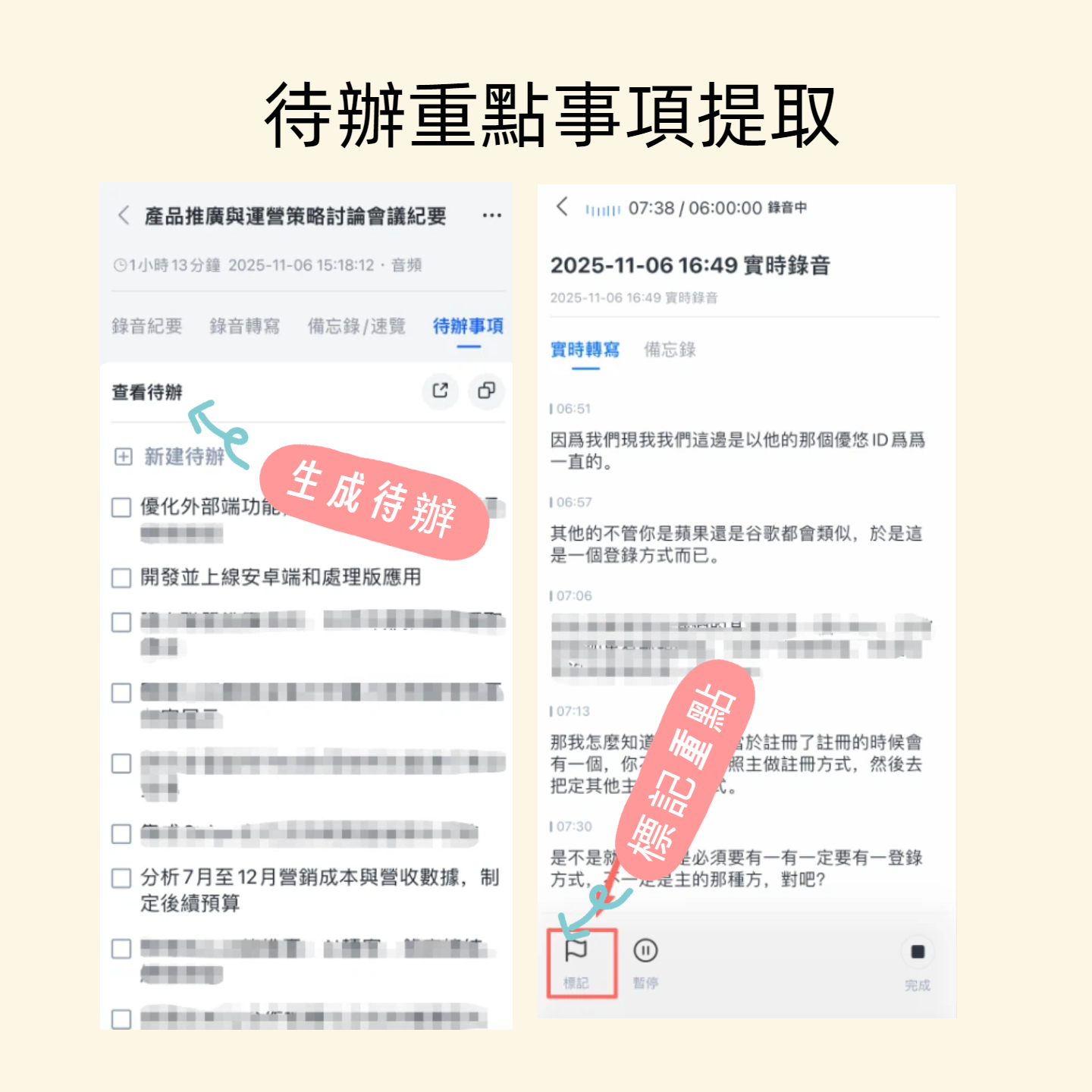
Notta also has a summary feature, but the free version only produces a very basic summary that doesn’t capture the lecture’s logic. Tinrec’s free summary is quite comprehensive and automatically highlights keywords. Before finals, I dumped six lecture summaries into Notion with Tinrec’s Markdown export, and it was clearer than my own handwritten notes.
More advanced: the AI Chat Query lets you ask questions about the recording, like “How many times did the professor mention regression analysis in this lecture?” or “What to-dos from the group discussion are still pending?” It answers based on the recording—no need to re-listen. Notta only offers this in the paid version, and I find Tinrec’s Chinese Q&A accuracy a bit better.
(Image placeholder: tablet screen split in half, left showing section list, right showing detailed summary, student tapping “Chapter 3: Market Analysis” to expand related points, dark mode for late-night study vibes)
Step 5: Export and Share
Notes need to be portable. Tinrec supports export to TXT, PDF, Word, and Markdown, even syncs directly to Notion or Google Docs—a lifesaver for those of us who manage all study materials in Notion. Notta's export is more limited: free version only exports plain text; PDF or Word requires an upgrade.
My standard workflow: record lectures with Tinrec → transcribe → AI summary + sections → export Markdown to Notion → before exams, use AI Chat to review key points. What used to take three hours of organizing now finishes in under 30 minutes.
(Image placeholder: phone screen showing sharing menu with Notion, Google Docs, Mail, and Line icons; student taps Notion and sees “Export successful” notification; background is a cafe wooden table)
Common Questions & Troubleshooting
Q: The transcript has many errors—what should I do?
The recording environment is probably too noisy or you’re too far from the source. Tinrec has built-in smart noise reduction—enable it in settings before recording. If you already have a recording, import it and manually select the “High Noise Environment” mode. Notta’s noise handling relies more on original audio quality and offers fewer post-processing options.
Q: Is the free version enough?
Tinrec free gives 100 minutes of transcription per month. A typical lecture is around 50 minutes, minus breaks it’s about 40 minutes, so you can transcribe 2-3 lectures per month. If you only record key subjects like I do, it’s plenty. If you record every class, consider the Pro monthly plan (~$5 USD / NT$150 per month—cheaper than two textbooks). Notta free offers 120 minutes, but its Chinese recognition and post-processing are weaker; I’d rather lose 20 minutes for better accuracy.
Q: Can I use it offline?
Real-time transcription requires internet, but Tinrec lets you download a language pack and record offline; then transcribe later when online. Notta requires a constant connection. This matters if you often study in library basements or commute with spotty signal.
Advanced Tips: 3 Ways to Supercharge Tinrec Efficiency
1. Transcribe online videos directly into notes
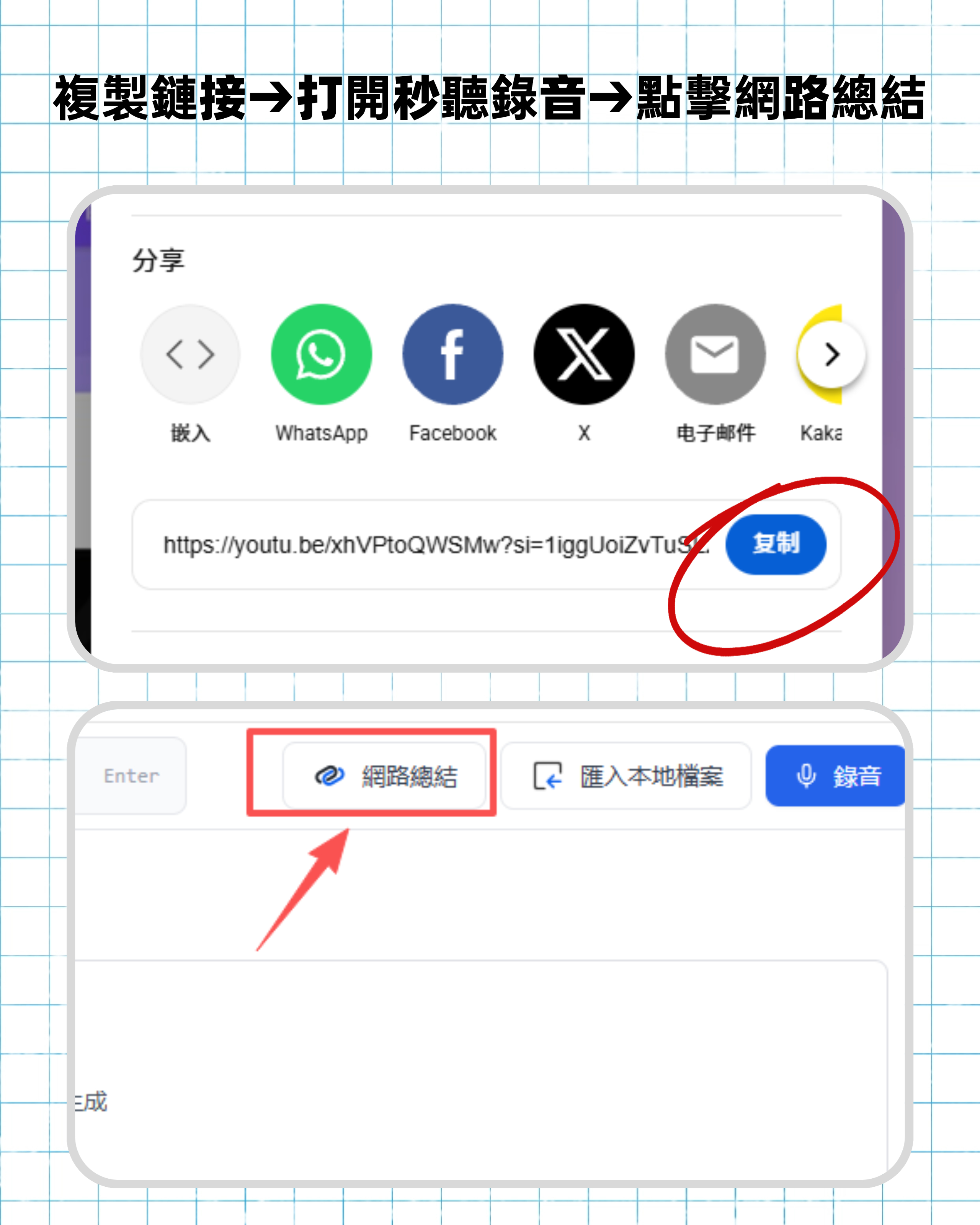
Many general education classes show YouTube or Bilibili videos as supplements. Tinrec can paste the video link and automatically extract audio for transcription and summarization. Notta doesn’t have this—you’d have to download the video and import it.
2. Cross-lecture AI Chat for key topics
As mentioned, this is a powerhouse. You can build a “database” of all recordings and ask Tinrec: “Which parts of all marketing lectures mentioned the 4Ps?” It searches across files, giving you cross-chapter summaries. Notta’s AI Chat is limited to single files.
3. Generate final report outlines with Agent
Tinrec’s Agent mode can use multiple recordings to auto-generate report outlines, slide scripts, or even SWOT analysis tables. The feature is still evolving, but just having it string together scattered notes into an outline saves tons of time. Notta currently lacks similar post-processing.
If You Don’t Use Tinrec, Here Are Alternatives
- Notta: Good for light users who just need “text from voice.” Free 120 minutes, but Chinese organization is shallow. Budget-limited students can try it first, and switch if proofreading becomes too time-consuming.
- Otter.ai: A good option if your classes are in English or you’re preparing for study abroad. English recognition is excellent, but Chinese support is nearly nonexistent, and there’s no special student plan.
But honestly, if like me, 80% of your college courses are in Chinese and you frequently deal with Chinese materials, Tinrec is still the most balanced choice.
Conclusion
This article walked through my personal experience using voice-to-text apps to boost study efficiency, comparing Tinrec and Notta across five student-focused aspects: free limits, Chinese recognition, organization features, export options, and student plan value.
The verdict is simple: if you want a tool that not only transcribes but also turns lectures into review-ready notes, allows cross-lecture search, and exports to Notion, Tinrec’s free version can carry you through a semester. As a soon-to-graduate senior, my only regret is not starting in sophomore year—the time saved could have let me take extra classes.
Next step: Download Tinrec’s free version and try it on a lecture tomorrow. With 100 minutes per month, two classes are plenty to test. After using it, you might join my roommate in being hooked.
Turn every recording into actionable outcomes
Get 60 free transcription minutes when you sign in. No credit card required.
Related Reading
You might also like
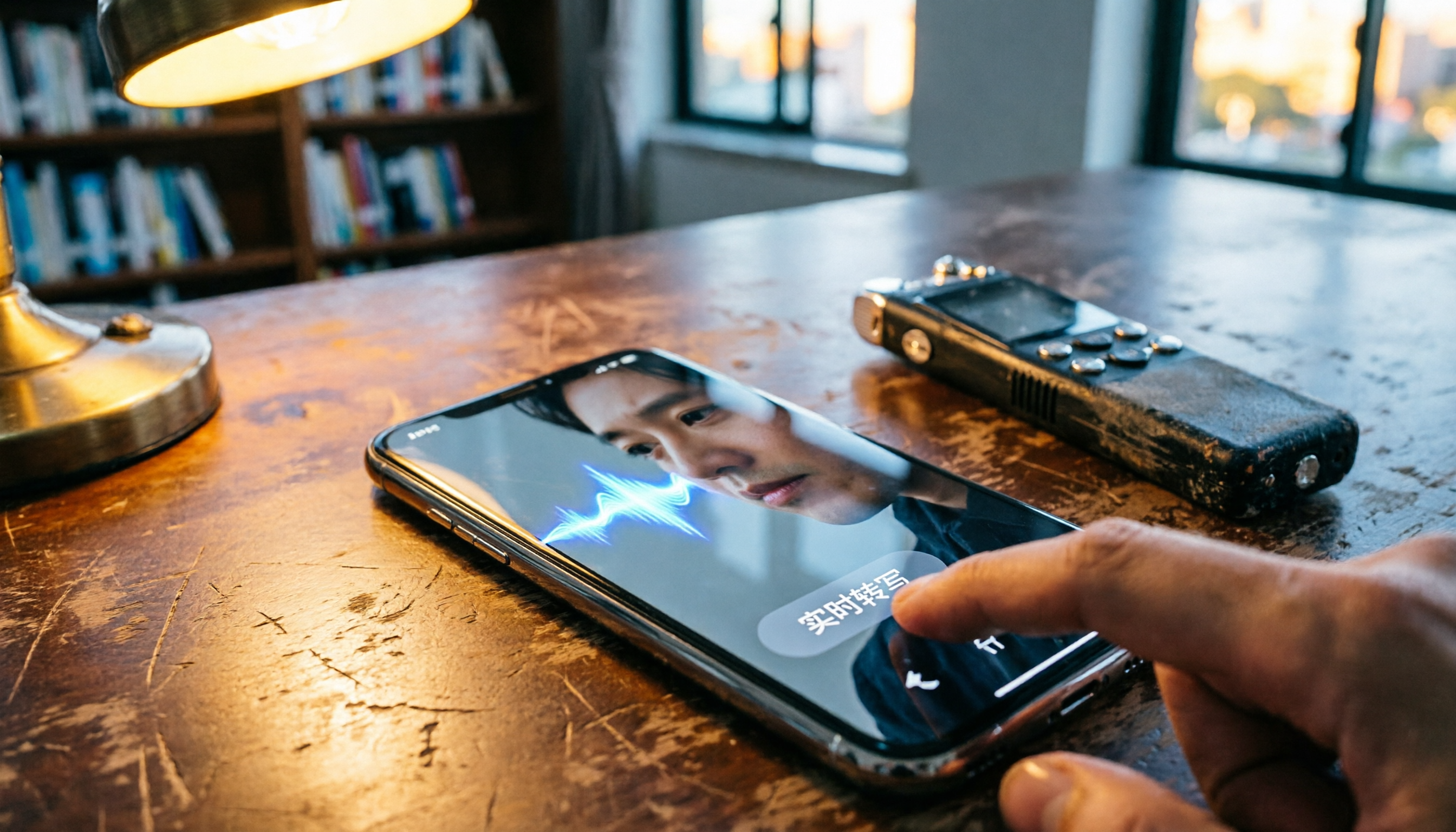
2026 Real-World Test: Hardware Voice Recorder vs. Mobile App – Which Is Better for Taking Notes?
Who says students have to buy a voice recorder? We compare PLAUD NOTE and Tinrec in real-world tests, covering cost, features, portability, Chinese transcription, and post-class organization, showing you why using an app is actually more cost-effective.

2026 Free Speech-to-Text Plans for Students: A Side-by-Side Comparison of 2 Tools
Which free speech-to-text tool is best for students? This article compares Tinrec and Notta across online video transcription, AI Q&A, output richness, and Chinese language optimization to help you find the best free plan for classes, lectures, and self-study.

How to Turn Meeting Recordings into Documents in 2026? 5-Step AI Transcription Tutorial
Tired of meetings all day and then working overtime on meeting minutes? Use Tinrec, an AI transcription tool that automatically turns live recordings, files, and online videos into transcripts, summaries, and to-do lists. Learn 5 steps from recording to a complete meeting document, saving 90% of your time!

2026 Tinrec vs Notta: A Deep 4-Dimension Comparison – Which One is Worth Choosing?
Looking for a speech-to-text tool but feel like Notta is missing something? This comparison breaks down the two from four dimensions—input sources, AI organization, Chinese optimization, and free plans—to help you decide which is the better fit for US users in 2026.

Free AI Meeting Summary Tools in 2026: 3 Options at a Glance
This article compiles 3 free AI meeting summary solutions, using Tinrec as the core example. From features and use cases to selection tips, learn how to automatically generate meeting summaries, action items, and query content with AI to boost productivity.
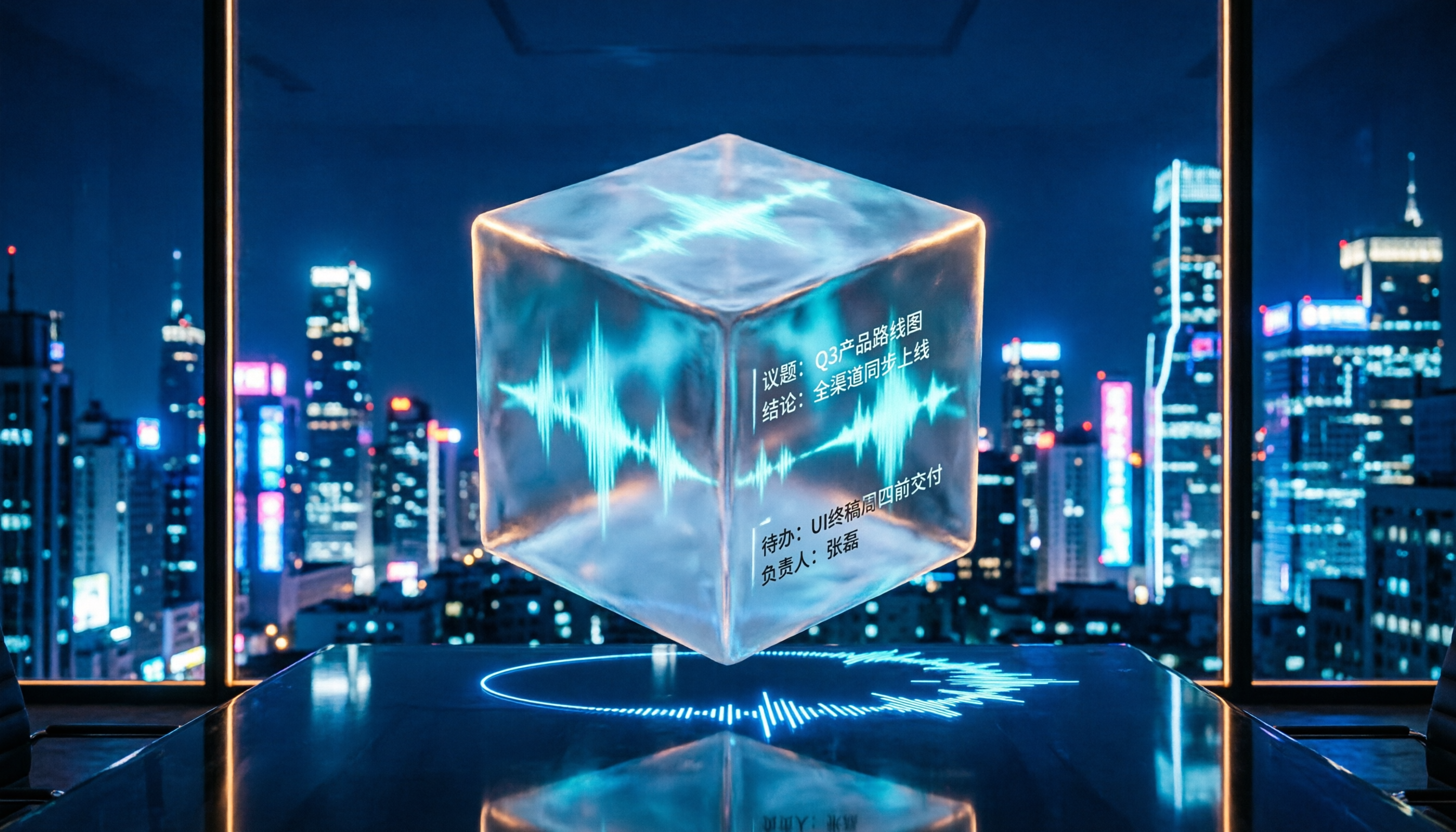
What's the Best Meeting Notes Tool? We Tested One in 2026 - The Free Version Is More Than Enough
Hate sorting through meeting notes afterward? We tested Tinrec hands-on, from recording to transcription to summaries and to-do lists—all in one workflow. Highly recommended for small to mid-size team leads.
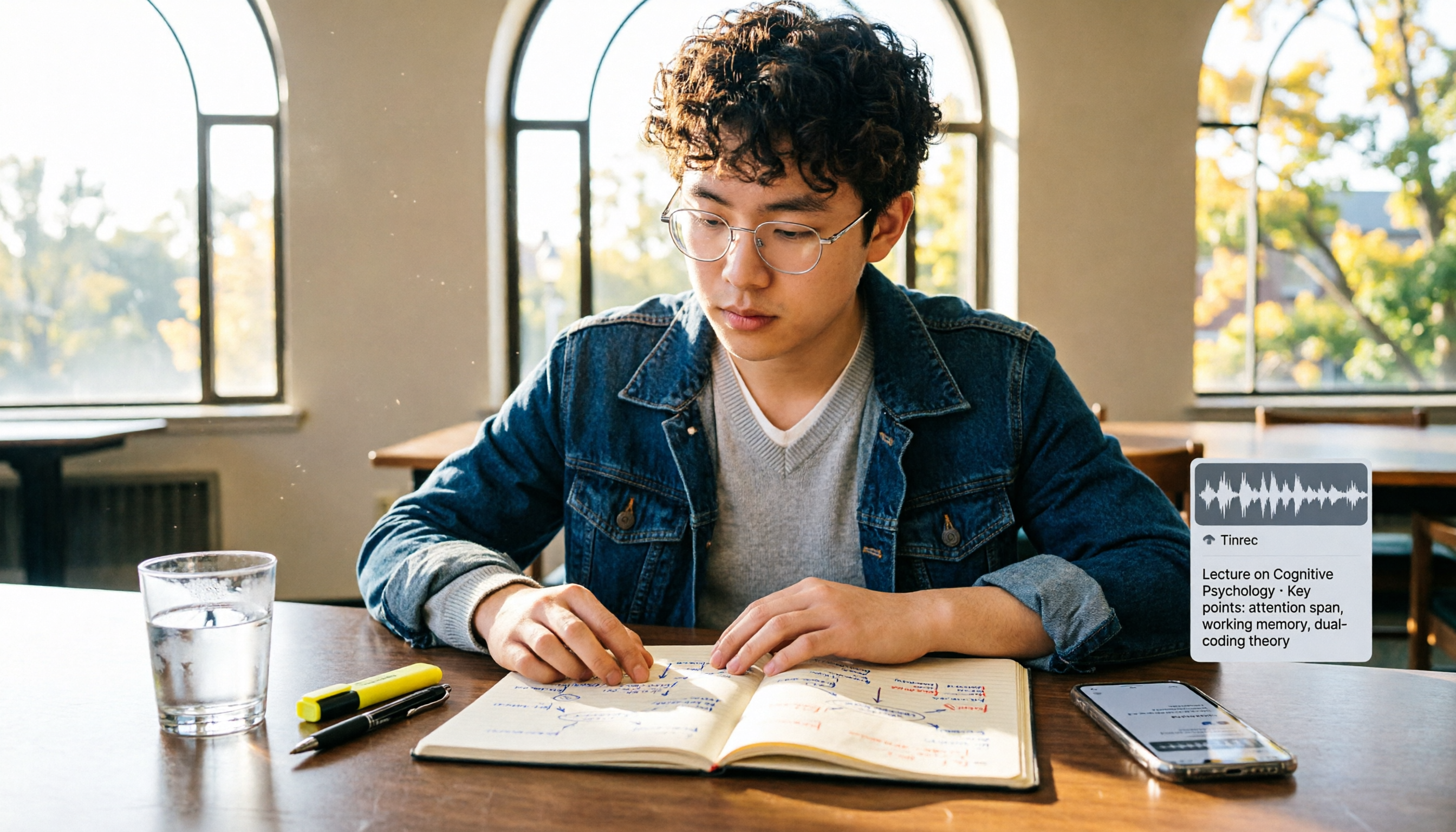
The Ultimate 2026 Student Voice Recorder Guide: Turn Lectures into a Note Library with Tinrec
Still using a traditional voice recorder? In 2026, the smarter choice is Tinrec, the AI-powered recording and organizing tool. This article fully analyzes student recording needs, feature comparisons, and buying tips to help you record lectures and review notes all in one go.

2026 Tinrec Lecture Recording to Text: No Hardware Needed, AI Chapter Notes | Full Comparison with PLAUD Note
This article compares Tinrec and PLAUD Note for students who need to convert lecture recordings into text. It provides a detailed PK from five dimensions: recording method, Chinese recognition, AI organization, price, and cross-platform compatibility, analyzing which one is more suitable for students.

2026 Comparison of 4 AI Meeting Summarizers: From Free to Pro, All You Need to Know
Tired of spending hours after meetings to write notes? AI tools can now auto-generate summaries and action items. This article compares 4 popular AI meeting summarizers—from free tiers to core features and use cases—to help you find the perfect assistant.