

Turn recordings into transcripts and summaries in minutes
Upload audio or video for multilingual transcription, AI notes, and action items
Every time after a meeting or class, the most painful part is going back to organize those hours of recordings. Traditional voice recorders are convenient to carry, but turning recordings into text requires additional effort; while pure software solutions worry about phone battery or complicated operation. This time I picked two highly discussed recording solutions: one is the hardware-based PLAUD Note, the other is the software-based Tinrec Instant Recording. In this article, I will compare them from 5 dimensions to help you decide which is more suitable for your work and study scenarios.
Tinrec vs PLAUD Note|Quick Overview
PLAUD Note is a standalone AI recording hardware, focusing on portable recording and long battery life, suitable for users who need one-touch recording anytime. Tinrec is a cross-platform AI recording and audio/video organization tool that doesn't require any extra hardware—just download the app on your phone or computer. It can not only record but also import files and paste YouTube links for transcription.
| Comparison Item | PLAUD Note | Tinrec |
|---|---|---|
| Product Type | Hardware voice recorder | Software App + Web |
| Price | Hardware approx. US$179 (about NT$5,500), transcription plan extra | Free plan with basic monthly quota, Pro monthly card about US$9.5 |
| Platform | Requires companion phone app | iOS, Android, Web |
| Recording Method | Hardware one-button recording | Phone/computer real-time recording, import audio files, network links |
| Core Strength | Portable quick start, long battery life | Multi-source transcription, AI summaries and Q&A, data organization |
This article will compare them from five dimensions: core positioning, recording sources, transcription, AI features, and pricing flexibility, and provide clear purchase recommendations at the end.
Dimension 1|Core Positioning and Use Scenarios
PLAUD Note's positioning is clear—it is a "voice recorder that transcribes." You just pick it up and press to record, perfect for meetings, interviews, and classes that require quick start. However, its strength stops at recording and basic transcription; subsequent organization, summaries, and cross-platform syncing still need to be handled manually through the phone app.
Tinrec's positioning is more like an "audio/video data organization center." It can certainly be used as a voice recorder, but its real value lies in helping you organize meetings, classes, interviews, and even online videos into searchable, queryable, and editable data. You don't need to decide whether it's a meeting or a class; any audio/video content can be handled by Tinrec.
→ This dimension: Tinrec wins. If you need more than just a voice recorder—you need a workflow for all audio/video data—Tinrec is more complete.
Dimension 2|Recording and Input Sources
PLAUD Note's input is almost exclusively one way: using the hardware to record. Although the phone app can also record independently, most users buy it for the convenience of that dedicated button. The advantage is that you don't have to worry about phone battery or missed notifications; the disadvantage is that if your data comes from other sources—such as recorded meetings on your computer, audio files from friends, or YouTube videos you want to organize—it can't help.
Tinrec's input flexibility is much greater. Besides real-time recording, it supports:
- Importing local audio or video files (e.g., Zoom recordings, old voice recorder files)
- Pasting public online video links (YouTube, TikTok, Xiaohongshu, Bilibili)
- System audio recording on computer (suitable for online meetings)
Stop organizing recordings by hand
Upload audio or video and automatically get a transcript, summary, and action items
This means you don't need to switch different tools for different sources. A voice recorder can only handle "after" issues, but often your data comes from "before" archives or "elsewhere" content.
→ This dimension: Tinrec wins. More diverse input sources covering real-time recording, files, and online videos, making it more practical.
Dimension 3|Transcription and Organization Capabilities
PLAUD Note's transcription relies on cloud services. Basic accuracy is good in quiet environments, but error rates increase significantly with multiple speakers, background noise, or mixed Chinese/English. After transcription, the app provides a transcript and summary, but organization features are basic, mainly marking key points and exporting text.
Tinrec not only provides transcripts but also automatically:
- Generates AI summaries to quickly grasp key content
- Splits into chapters for easier browsing of long meetings or classes
- Extracts action items from discussions
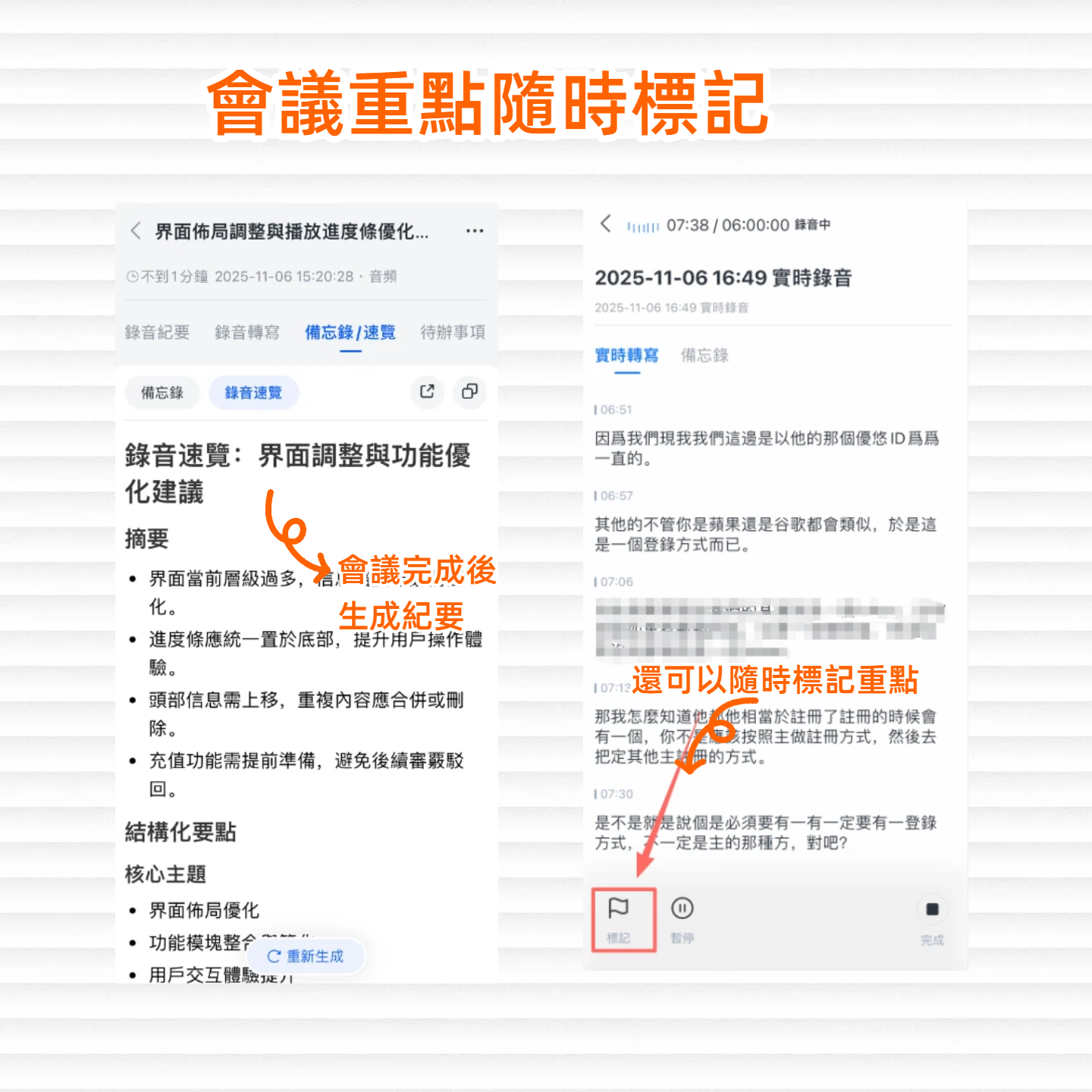
- Supports speaker identification and allows marking key points and adding notes
Honestly, if you only need a transcript, many tools can do that. But Tinrec's output is "workable data" that you can directly paste into a report, email to colleagues, or export to Notion for further editing.
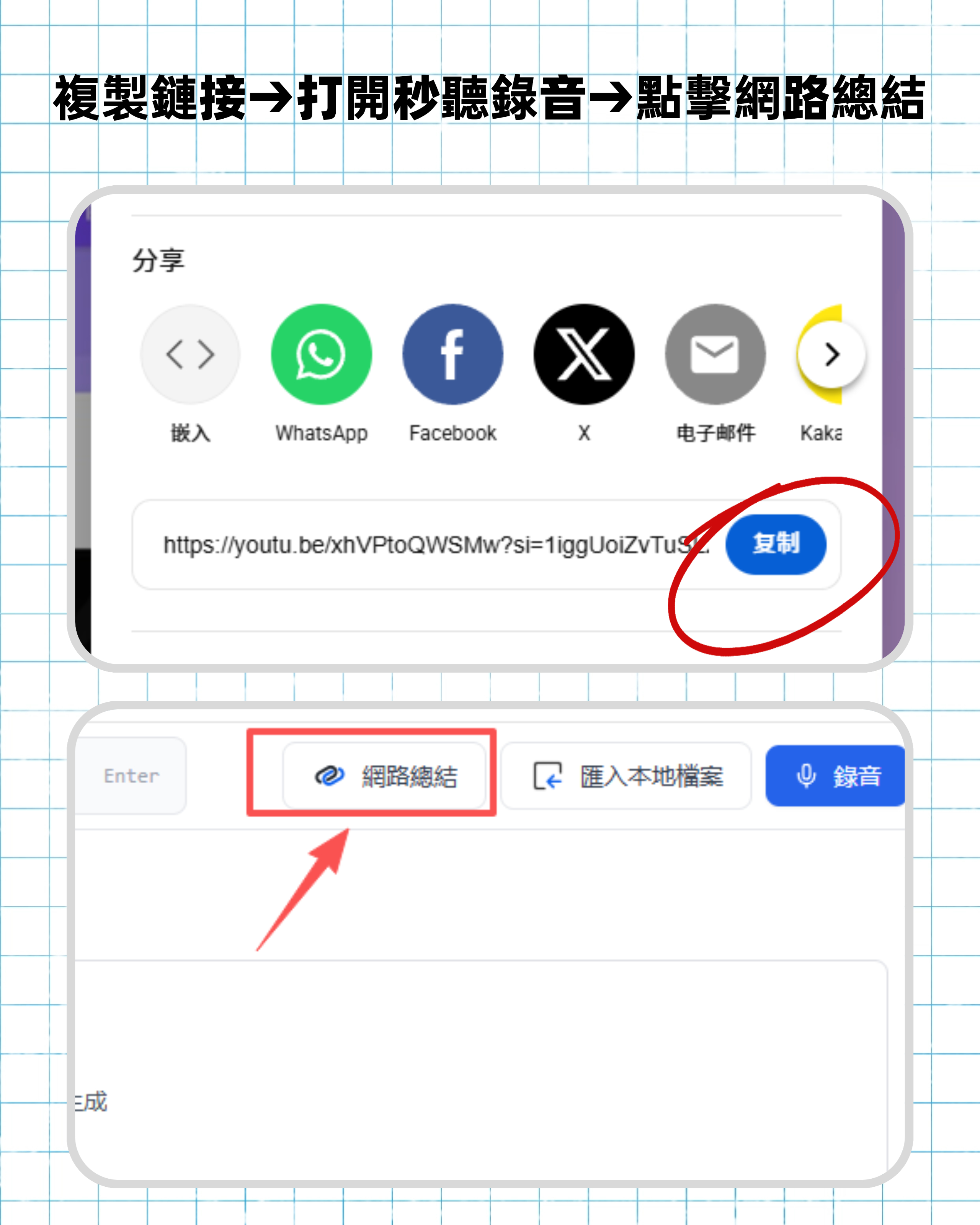
→ This dimension: Tinrec wins. The depth of organization and output completeness is clearly better, more suitable for those who need subsequent application.
Dimension 4|AI Features and Subsequent Applications
PLAUD Note's AI is more of an aid, with summaries, meeting templates, and basic Q&A, but overall it remains recording and transcription-centric.
Tinrec treats AI as a core work partner. What impressed me most is its AI dialogue query function: you can ask it like a colleague, "What requirements did the client raise in last week's project meeting?" or "Did the lecturer mention the midterm report deadline in this class?" It directly answers based on the recording content, rather than dumping a pile of text for you to search through.
Additionally, Tinrec can further generate meeting minutes, report outlines, and even tables, turning recordings into various deliverables. For those who frequently need to organize data, the time saved is substantial.
→ This dimension: Tinrec wins. AI is not just an add-on but fundamentally changes how you use recordings.
Dimension 5|Pricing and Plan Flexibility
PLAUD Note's entry barrier is buying hardware first. The Note Pro pre-order price is about US$179 (approximately NT$5,500), and after purchase, you get 300 minutes of transcription per month. For more minutes, annual plans range from US$99.99 (1,200 minutes per month) to US$239.99 (unlimited). Initial cost is high, and subsequent plans are annual commitments, which can be awkward for those with variable usage.
Tinrec is try-before-you-buy. The free version gives you a basic monthly transcription quota, so you can test it with a few meetings or classes before upgrading. For sudden large needs, you can buy a weekly card; for long-term use, the Pro monthly card (about US$9.5/month) or annual card offers lower monthly costs. You don't have to spend thousands upfront, and plans are flexible—pay for what you use.
→ This dimension: Tinrec wins. Zero hardware cost, flexible plans, more friendly for budget-conscious or variable usage users.
What Are Their Unique Advantages?
Tinrec's Unique Advantages:
- Cross-platform + multi-source: Works on phone, computer, and web; supports recording, files, and online videos.
- Powerful AI post-processing: Not just transcription, but summaries, chapters, action items, Q&A, and even report generation.
- Flexible plans: Free version for trial, paid plans based on usage, no long-term commitment.
- Better for long-term data accumulation: All your past recordings can be searched and queried, becoming a personal knowledge base.
PLAUD Note's Unique Advantages:
- One-button start, portable recording: Just pick up the hardware and record, ideal for those who dislike operating on their phone.
- Strong battery life: Independent device, no worry about phone battery; reassuring for long meetings or day trips.
Objectively speaking, if you highly value "convenience at the moment of recording" and have sufficient budget, PLAUD Note's hardware experience is indeed good. But if you need a complete workflow from recording to organizing, querying, and exporting, Tinrec's advantages are more apparent.
Summary: Who Should You Choose?
- If you need a standalone voice recorder that can be quickly activated anytime and don't mind carrying an extra device → Consider PLAUD Note.
- If your meetings, classes, and interviews are mostly on your phone or computer, and you want to save on hardware costs → Tinrec is enough.
- If you not only record but also frequently organize old files and online videos, and want AI to help with summaries, Q&A, and document generation → Go with Tinrec.
- If you're still on the fence and don't want to spend money on hardware yet → Download Tinrec's free version and test it with a real meeting or class recording to see if it meets your needs.
In a nutshell: For most people, Tinrec is the more cost-effective and complete choice. It combines "what a voice recorder should do" and "what you want to do after recording" without the hardware burden. I recommend trying Tinrec's free plan first and experiencing the power of AI organization with your own recordings.
Turn every recording into actionable outcomes
Get 60 free transcription minutes when you sign in. No credit card required.
Related Reading
You might also like

Tinrec vs Otter.ai 2026: 5-Dimension Comparison for Chinese Meeting Scenarios
Many think AI recording is just converting voice to text, but the real time sink is post-meeting organization. This article compares Tinrec and Otter.ai across five dimensions, tests Notta, PLAUD, and other common options, and explains the practical differences in bot-free online meeting recording, AI Q&A, action item extraction, and team spaces. It concludes with purchase advice based on use cases and four common pitfalls to avoid.

2026 Video-to-Text Tools Compared: Which One Actually Saves Time After Transcription?
Many people think video-to-text is done once they get a transcript, but the real time sink is post-meeting organization, finding key points, and sharing with the team. This article focuses on video-to-text tools, comparing Tinrec, Notta, TurboScribe, and others, explaining selection criteria, common pitfalls, and suitable scenarios, and summarizing differences between free and paid plans.

2026 Complete Guide to Audio Transcription: From Transcripts to Searchable Team Data
Audio transcription isn't just about turning sound into text. This complete guide starts with four key buying factors to help you understand why 'usability after transcription' is the real differentiator, and uses Tinrec as a core example to demonstrate a full workflow from transcripts and AI Q&A to a team knowledge base.

4 Video Meeting Summary Tools Tested: Can You Get Automatic Meeting Minutes Without a Bot?
The meeting ends, but the real work begins. We tested four video meeting summary tools using the same criteria, comparing bot-free recording, post-meeting output, Chinese language performance, and team seat management. We provide clear recommendations for different budgets and scenarios to help you convince your boss and choose the right tool for your team.

2026年4款字幕提取工具实测对比:硬字幕、软字幕、AI转录怎么选?
从软字幕、硬字幕到语音转写,帮你判断自己真正需要的是字幕文件还是可用的会议资料。实测 Tinrec 秒听录音、绘影字幕、Video-subtitle-extractor、Filmora 四款工具,整理选购关键、避坑指南与场景推荐。

2026 Video-to-Text Tools Comparison: Tinrec vs Notta for Chinese Meetings
We tested Tinrec and Notta for video-to-text transcription, Chinese meeting notes, and post-meeting organization. Learn how Tinrec's bot-free recording, AI Q&A, and team collaboration features can help you find the best transcription tool for Chinese teams.
How to Download YouTube Videos Without Watermark in 2026: 5-Step Guide
2026 updated guide on downloading YouTube videos without watermarks. This article addresses common misconceptions, outlines a 5-step process, tool selection, resolution and format options, and copyright considerations. It also explains how to use Tinrec to transcribe, summarize, and extract action items after downloading.

2026 Comparison of 4 Online Audio-to-Text Tools: Which Is Best for Chinese Meetings and Team Knowledge Retention?
A hands-on comparison of 4 online audio-to-text tools, covering Chinese recognition, post-meeting organization, data retention, and free quotas. It explains Tinrec's advantages for Chinese meetings and team collaboration, compares it with Notta, TurboScribe, and Granola, and includes buying advice to avoid pitfalls.

2026 Recording Summary AI Free Plans: 4 Top Tools Compared
Recording summary AI is not the same as a transcription tool. This guide reviews the free plans and limitations of 4 popular recording summary AI tools in 2026, comparing post-transcription summaries, action items, AI Q&A, team collaboration, and pricing. It also includes selection criteria and common pitfalls to help you decide which tool best fits your meeting needs.