

Turn recordings into transcripts and summaries in minutes
Upload audio or video for multilingual transcription, AI notes, and action items
2026 Free Chinese-English Real-Time Translation Solutions: 3 Tools Compared
I have 15 meetings every week, and about 5 of them are cross-border meetings with overseas clients or headquarters. The most annoying part used to be not understanding English—it was the language switching. When the other person spoke English, I would translate it in my head; when it was my turn, I would translate Chinese back into English. Back and forth, my brain would get tangled. Worse still, after the meeting I still had to organize the minutes; halfway through my English notes, I would suddenly forget what we were discussing.
Only after I started using AI real-time translation tools did I realize it didn't have to be so exhausting. There are several free solutions on the market, but most only do translation, with very limited features. Later I switched to Tinrec because it not only offers Chinese-English real-time translation but also integrates transcription, AI summaries, and other practical workplace features. In this article, based on my own hands-on experience, I'll review three truly usable free options and highlight how Tinrec saves me half the time spent on meeting notes.
What Can Chinese-English Real-Time Translation Do for You?
Scenario 1: Cross-Border Meetings with Zero-Delay Bidirectional Translation
Before, after a two-hour cross-border meeting, I would spend another hour replaying the recording and filling in the translation. Now with Tinrec, its real-time translation feature syncs a Chinese-English transcript while recording. The delay is less than a second; before you even speak, the screen shows the text. And it supports not just English but also Japanese, Korean, Cantonese, etc.—very convenient for managers like me who occasionally meet with Asia-Pacific colleagues.
Scenario 2: Watching Overseas Videos and Lectures, Instantly Turned into Notes
I often need to absorb international market reports or online courses but don't have time to grind through English. Using Tinrec, I paste a web video link, and it plays the video while showing side-by-side Chinese-English subtitles, and can even auto-summarize the key points. I've developed a habit—listening to a TED talk on my commute, and by the time I get to the office I have a neatly organized bilingual summary ready to drop into Notion as morning meeting material.
Scenario 3: Business Trips or In-Person Meetings, Handled on Your Phone
Sometimes I meet clients on the go and can't bring a laptop. Tinrec has a mobile app that starts real-time translation as soon as you begin recording. Once done, both the transcript and translation are saved together. Back at the office, no need to redo notes—just share directly from your phone to the team.
What Are Tinrec's Core Real-Time Translation Capabilities?
Frankly, many tools on the market can do "translation," but Tinrec's strength is "translation + understanding." It bundles real-time translation and AI transcription together so you don't just get a transcript—you can keep working with it.
Bidirectional Real-Time Voice Translation
Not just one-way—you speak Chinese, it outputs English; the other person speaks English, it outputs Chinese. It's like having an interpreter in the meeting without buying extra equipment—works on both phone and computer. In real tests, the delay is about 0.8 seconds; unless the network is really bad, you barely notice the wait.
Transcription + Translation Simultaneously
This is where Tinrec differs from typical translation apps. Other tools might just give you a translation and that's it. Tinrec saves both the recording and translation as files that you can search later. For managers who need to keep records, this is crucial.
AI-Generated Bilingual Summary with Key Points
Translation isn't everything—many times you only need the conclusions. Tinrec's AI automatically produces a structured summary after the meeting, with Chinese and English side by side, categorizing topics, decisions, and action items. Now when I report to my boss, I just tweak a few words from this summary and it's ready.
Stop organizing recordings by hand
Upload audio or video and automatically get a transcript, summary, and action items
Supports Web Videos and Local Files
Tinrec accepts links (YouTube, Bilibili, Xiaohongshu videos) or uploaded audio files, and automatically generates bilingual subtitles and summaries. I use it to process competitor interviews in English, producing several analysis reports per week.
Seamless Cross-Platform Syncing
Works on phone, tablet, and computer with data sync. I usually use my computer at the office to capture online meetings, and rely on my phone for on-site recording during travel. Back at the desk, I open the web version to continue editing.
Real-World Use Cases
Weekly Cross-Border Team Meetings
Every Monday morning I have a fixed meeting with the US team. Before, I would record it, but replaying the recording to find key points was painful. Now with Tinrec's real-time translation, I view the Chinese version during the meeting and never miss any discussion. When the meeting ends, the summary and action items are auto-generated, and I share both English and Chinese versions with the China team, greatly reducing communication gaps.
Overseas Seminars or Courses
Last month I attended an English lecture on agile development. The speaker spoke very fast—I wouldn't have been able to take notes. I recorded the whole thing with Tinrec, and when I reviewed the transcript at home, I found it had not only translated but also divided it into seven chapters, each with bilingual key points—more complete than my own notes.
Content Creation and Social Media Management
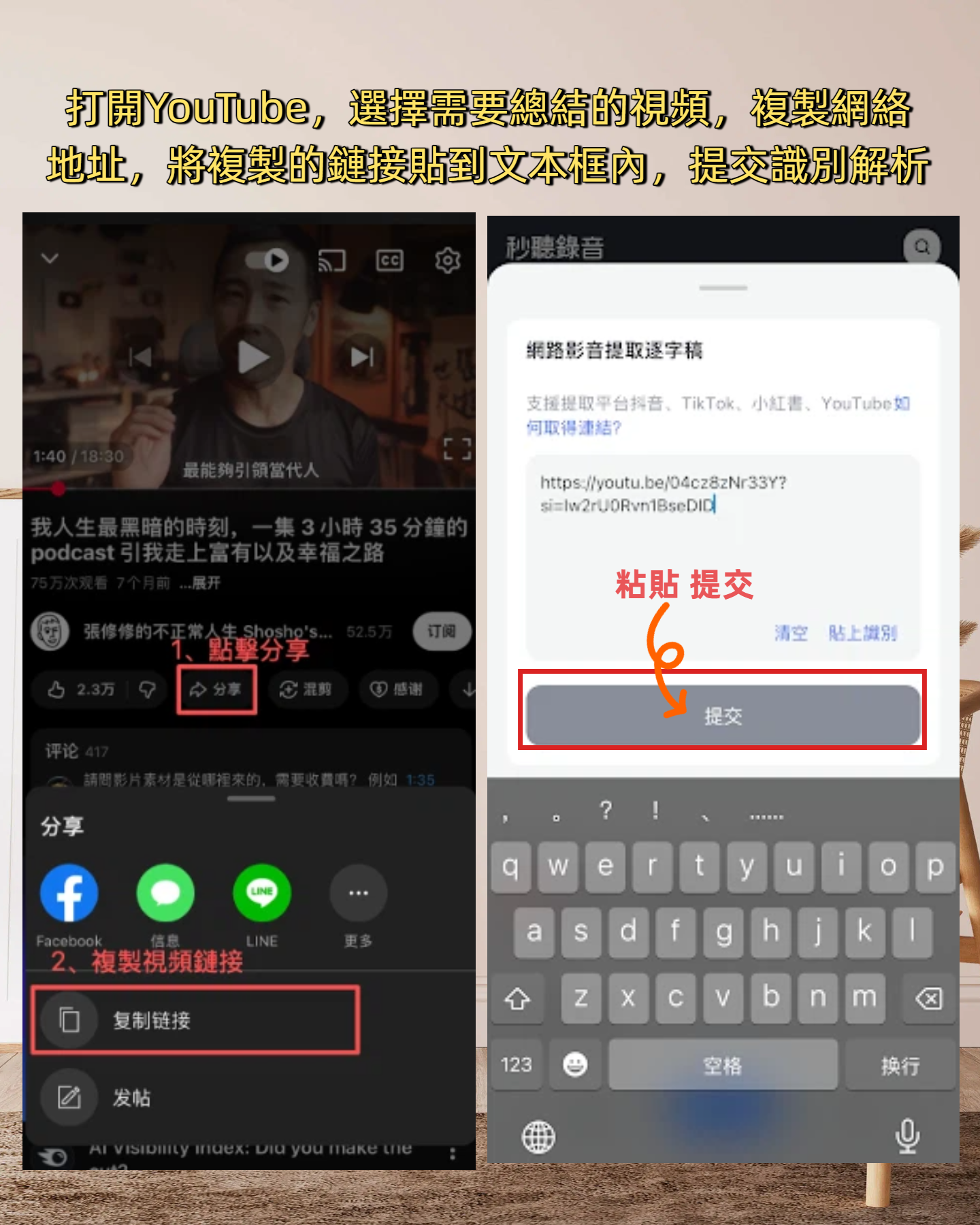
Our team's social media editor often looks for inspiration in foreign videos. Before, she had to manually transcribe and translate; now with Tinrec, she just pastes the URL and gets subtitles and a summary in three minutes, doubling her productivity.
Business Travel and Client Meetings
When meeting clients face-to-face, I usually feel awkward taking out a laptop to type notes. But with Tinrec recording on my phone, it quietly translates in the background. After the meeting I just look at the summary to know what was promised and what the next steps are.
4 Key Points When Choosing a Real-Time Translation Tool
There are plenty of free solutions out there, but many people only look at the word "free" and end up finding them insufficient. Here are the points to consider, using Tinrec as an example.
1. Translation Latency and Real-Time Performance
Some tools advertise heavily but take several seconds to show translations. Meeting pace is fast—you'd want to flip the table. Tinrec's delay is under one second and stable; I've used it for nearly half a year without any disconnections.
2. Not Just Translation, but Data Organization
What happens after translation? If it just ends there, you still need to manually organize meeting notes. Tinrec automatically produces summaries, action items, and even lets you query the recording conversationally, e.g., "What budget did the client mention?"—it answers directly without you having to listen to the whole thing.
3. Language Support and Chinese Friendliness
If you need languages other than Chinese and English, check the support. Tinrec supports 14 languages, and it handles mixed Chinese-English conversations very well. In tests with code-switched meetings, the recognition rate was comparable to pure English—impressive.
4. Does the Free Tier Meet Your Needs?
Many tools' free tiers only offer a few minutes—not enough for a single meeting. Tinrec's free plan provides 100 minutes of transcription per month. If you have only 2–3 meetings a week, that's basically sufficient. During peak project periods, spending a few dollars on a weekly or monthly pass is more cost-effective than buying online courses.
Frequently Asked Questions
Q: Is Chinese-English real-time translation accurate?
A: To be honest, no tool can achieve 100% accuracy, especially with accents or background noise. However, in my tests, Tinrec has very high recognition rates for Chinese and English in typical office environments. Importantly, it allows post-editing, so you can compare with the original audio for any doubts—much more reassuring than relying entirely on translation.
Q: Does real-time translation slow down my phone?
A: No. Tinrec's processing is mostly cloud-based; the phone only handles audio capture and display. My three-year-old phone runs it very smoothly.
Q: Besides Chinese and English, what other languages are supported?
A: It includes Japanese, Korean, Cantonese, Spanish, French, and 14 languages total—more than enough for the Asian workplace.
Q: Are the recording and translation files secure?
A: Tinrec uses bank-level encrypted transmission, and you can delete server files at any time. Our company has security concerns, but we have no issues using it.
Summary
Chinese-English real-time translation tools are nothing new, but few truly integrate into your workflow—not just translating but also organizing. I tried built-in phone translation, browser extensions, and finally stuck with Tinrec because it packages recording, translation, summaries, and queries into one. For middle managers constantly chasing meetings, the time saved is more valuable than the money saved.
I suggest starting with the free version—100 minutes per month to experience two or three meetings and see how AI helps organize Chinese-English content. If you find it useful, choose a suitable plan based on your meeting frequency.
Turn every recording into actionable outcomes
Get 60 free transcription minutes when you sign in. No credit card required.
Related Reading
You might also like

2026 Comparison of Two Speech-to-Text Apps: Tinrec vs Notta – Which One Understands Your Chinese Meetings Better?
If you're looking for an alternative to Notta, Tinrec might be a better choice for Chinese users. This article fully compares Tinrec and Notta from core experience, features, use cases to buying tips, helping you make the best purchase decision.

Best Multilingual Meeting Transcription Tool? 2026 Test of Two: Tinrec Suits Hong Kong Workers Best
We tested two multilingual meeting transcription solutions: Tinrec and Plaud Note. See which one helps you finish work earlier!

2026 Free Korean Speech-to-Text Solutions Roundup: 5 Tools at a Glance
2026 Free Korean Speech-to-Text Solutions Roundup: A curated selection of 5 tools, with a step-by-step guide using feature-rich Tinrec to convert Korean audio and video into transcripts, including recording, transcription, proofreading, and export.

Free Minority Language Speech-to-Text Plans in 2026: A Look at 2 Options
An in-depth comparison of Tinrec and Notta's free plans: Minority language users looking for a free transcription tool? We compare them across 5 dimensions—input sources, AI processing, Cantonese accuracy, free tier value, and cross-platform experience—to tell you which one is worth trying.

How to Use Tinrec for English Meeting Notes: Real-Time Transcription & AI Summarization (2026)
Struggling with English meetings? Tinrec not only transcribes in real time but also generates AI summaries, extracts action items, and handles mixed Chinese-English speech. This comprehensive guide shows you how to use Tinrec for English meeting minutes, with a comparison to Otter, Notta, and more, so you can choose the best tool.

2026 Complete Guide to Speech-to-Text: Features, Use Cases, and Tool Selection
As a senior college student, I used speech-to-text tools for an entire semester to organize lecture notes, group discussions, and YouTube study videos. This guide introduces you to Tinrec, from core features to real student scenarios, showing how AI turns audio and video into actionable knowledge.

2026 Free Speech-to-Text Solutions: 2 Tools Compared
A mid-level manager puts two popular free speech-to-text tools—Tinrec and Otter.ai—to the test, comparing Chinese accuracy, free tiers, AI features, and cross-platform support to help you pick the best one for workplace productivity.

2026 Tinrec Voice-to-Text Tutorial: No Hardware Needed, AI Organizes from Multiple Sources
How to choose voice-to-text software? This article compares Tinrec and Plaud Note, from hardware requirements, input sources, AI features to pricing, and tells you why you don't need to buy a voice recorder — your phone can handle meetings, lectures, and online video transcription.

2026 Hands-On Comparison of 5 Cross-Border Meeting Note Apps: Which AI Summary Saves the Most Time?
Dealing with cross-border meetings daily, mixing English, Mandarin, and Cantonese? Still transcribing recordings after meetings? We test 5 transcription apps to see which one can quickly organize multilingual meetings, saving you time and overtime.