

Turn recordings into transcripts and summaries in minutes
Upload audio or video for multilingual transcription, AI notes, and action items
2026 Tinrec Voice-to-Text Tutorial: No Hardware Needed, AI Organizes from Multiple Sources
Anyone who has used Plaud Note for recording knows that hardware recorders are convenient, but you have to carry an extra device, and they can only record live audio. Worse, when you want to transcribe a YouTube video or an old audio file, they're useless. Honestly, spending thousands of dollars on hardware only to find you still need another tool—I've been down that road and it's enough.
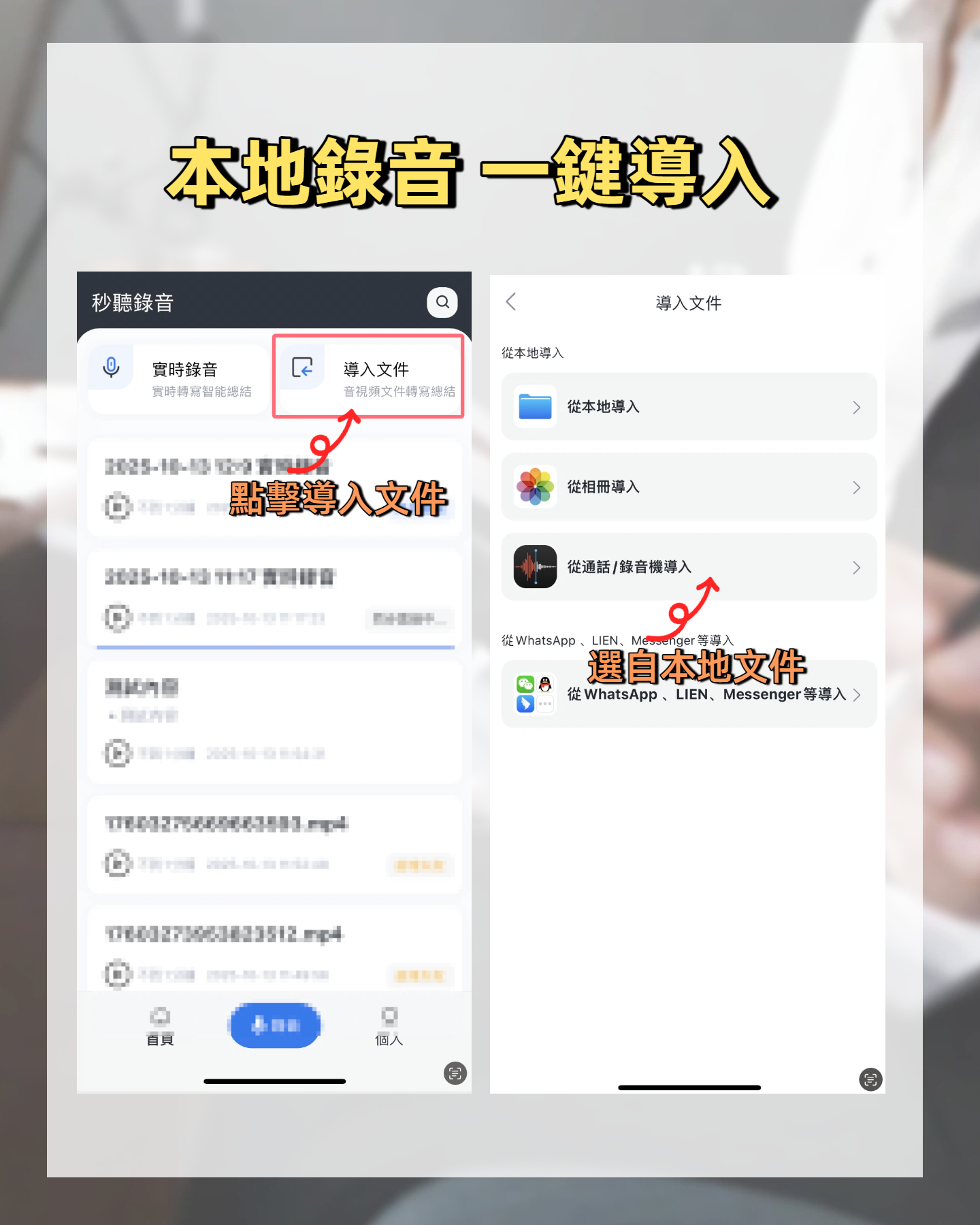
Lately I started using Tinrec and found that no extra hardware is needed. Just install the app on your phone to record and transcribe in real time, paste a video link to analyze it, or upload old audio files. This is the "all-scenario voice-to-text tool" I've been looking for.
Tinrec vs Plaud Note | Quick Overview
The two products have completely different positioning: Tinrec is AI recording and audio/video processing software, while Plaud Note is AI recording hardware.
- Price: Tinrec's free version offers basic credits; Pro monthly or yearly plans unlock full features. Plaud Note hardware starts at around US$150 (NT$5,000), plus a monthly subscription for more minutes.
- Platform: Tinrec has iOS, Android apps, and a web version; Plaud Note relies on a phone app connected to the hardware, no standalone desktop client.
- Key Difference: Tinrec requires no hardware—just your phone for recording, files, and online videos. Plaud Note's hardware is handy for portable recording but limited in scenarios.
This article compares them across five dimensions: hardware requirements, input sources, AI post-processing, cross-platform support, and long-term cost.
Dimension 1 | Hardware Requirements: Just Your Phone vs. Carrying an Extra Device
Plaud Note requires buying a recorder first. Though lightweight, it's one more thing to carry. Forget it, run out of battery, or lose it—and that meeting or interview is lost.
Tinrec runs directly on your phone. Open the app anytime to record, no extra cost, no worry about forgetting the device. You already carry your phone, so zero extra burden.
→ Winner: Tinrec, zero hardware barrier.
Dimension 2 | Input Sources: Not Just Live Recording, But Online Videos and Old Files Too
Plaud Note mainly records live audio via hardware. Though the app can import files, the process isn't intuitive and it doesn't support pasting video links.
Stop organizing recordings by hand
Upload audio or video and automatically get a transcript, summary, and action items
Tinrec not only records in real time but also lets you upload audio/video files. Even better, you can paste links from YouTube, Bilibili, TikTok, and other public videos—it automatically downloads, transcribes, and summarizes them. I use it all the time for online courses and foreign YouTube videos. Super handy.
→ Winner: Tinrec dominates with multi-source support.
Dimension 3 | AI Capabilities: Beyond Transcripts—Ask Key Points, Extract Tasks
Plaud Note offers summaries, templates, and AI Q&A after transcription—decent but standard.
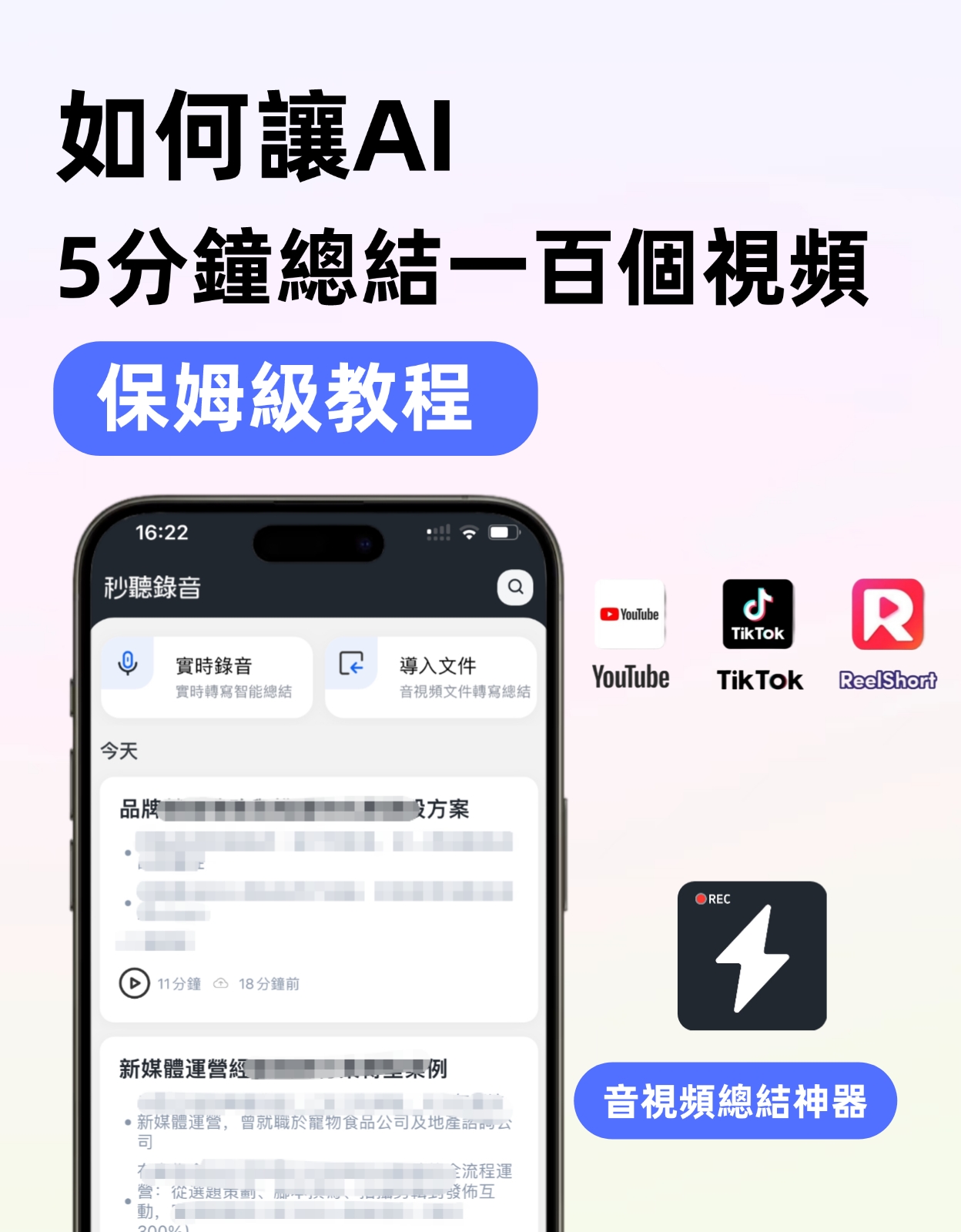
Tinrec not only provides AI summaries but also auto-chapters, extracts action items, and generates mind maps. The AI Q&A feels like talking to your recording database—you can ask "What was decided in last week's meeting?" or "What are the three key points in this video?" In my tests with the same meeting recording, Tinrec extracted more complete to-dos and even allowed direct export to Notion.
→ Winner: Tinrec, deeper AI application.
Dimension 4 | Cross-Platform: Phone, Computer, Web vs. App-Only
Plaud Note only connects to hardware via its phone app. Transferring data to a computer requires manual export, which is inconvenient.
Tinrec offers iOS, Android apps, and a full-featured web version. All recordings and results sync automatically. I record on my phone outside, then continue editing and exporting on my computer back at the office—much smoother workflow.
→ Winner: Tinrec, convenient multi-device sync.
Dimension 5 | Long-Term Cost: Subscription vs. Hardware + Subscription
Plaud Note requires an upfront hardware cost (Note Pro pre-order $179), plus an annual subscription of at least $99.99 for 1,200 minutes. Over two years, that's nearly $380.
Tinrec's free version provides basic monthly credits for light users. The Pro annual plan is very affordable per month, and there's no hardware investment. Comparing two-year total cost, Tinrec is significantly cheaper.
→ Winner: Tinrec, cost-effective.
What Are Their Unique Strengths?
Tinrec's Unique Strengths
- No hardware needed—your phone becomes an AI voice recorder.
- Supports direct transcription of online videos, super fast for organizing web content.
- AI conversational queries like a personal assistant, digging out highlights and answers from recordings.
- Multiple export formats (Notion, Google Docs, TXT, etc.) for seamless workflow integration.
Plaud Note's Unique Strengths
- One-button recording with hardware, intuitive for meetings and interviews.
- Long battery life, reliable for extended recording sessions.
Conclusion: Which Should You Choose?
- If you don't want to spend extra on hardware and want all recording-to-text done with your phone → Tinrec
- If you often transcribe YouTube videos, online courses → Tinrec (Plaud can't directly paste links)
- If you need AI to extract tasks, ask key points, generate reports → Tinrec
- If you're a heavy portable recorder user (e.g., journalist interviews, instant idea capture) and don't mind carrying an extra device → Plaud Note is a solid hardware choice
In a nutshell: For most people, Tinrec is the more comprehensive voice-to-text solution. No upfront hardware cost, try the free version. Download it and experience the convenience of all-scenario organization.
Turn every recording into actionable outcomes
Get 60 free transcription minutes when you sign in. No credit card required.
Related Reading
You might also like

2026 Comparison of Two Speech-to-Text Apps: Tinrec vs Notta – Which One Understands Your Chinese Meetings Better?
If you're looking for an alternative to Notta, Tinrec might be a better choice for Chinese users. This article fully compares Tinrec and Notta from core experience, features, use cases to buying tips, helping you make the best purchase decision.

Best Multilingual Meeting Transcription Tool? 2026 Test of Two: Tinrec Suits Hong Kong Workers Best
We tested two multilingual meeting transcription solutions: Tinrec and Plaud Note. See which one helps you finish work earlier!

2026 Free Korean Speech-to-Text Solutions Roundup: 5 Tools at a Glance
2026 Free Korean Speech-to-Text Solutions Roundup: A curated selection of 5 tools, with a step-by-step guide using feature-rich Tinrec to convert Korean audio and video into transcripts, including recording, transcription, proofreading, and export.

Free Minority Language Speech-to-Text Plans in 2026: A Look at 2 Options
An in-depth comparison of Tinrec and Notta's free plans: Minority language users looking for a free transcription tool? We compare them across 5 dimensions—input sources, AI processing, Cantonese accuracy, free tier value, and cross-platform experience—to tell you which one is worth trying.

How to Use Tinrec for English Meeting Notes: Real-Time Transcription & AI Summarization (2026)
Struggling with English meetings? Tinrec not only transcribes in real time but also generates AI summaries, extracts action items, and handles mixed Chinese-English speech. This comprehensive guide shows you how to use Tinrec for English meeting minutes, with a comparison to Otter, Notta, and more, so you can choose the best tool.

2026 Complete Guide to Speech-to-Text: Features, Use Cases, and Tool Selection
As a senior college student, I used speech-to-text tools for an entire semester to organize lecture notes, group discussions, and YouTube study videos. This guide introduces you to Tinrec, from core features to real student scenarios, showing how AI turns audio and video into actionable knowledge.

2026 Free Speech-to-Text Solutions: 2 Tools Compared
A mid-level manager puts two popular free speech-to-text tools—Tinrec and Otter.ai—to the test, comparing Chinese accuracy, free tiers, AI features, and cross-platform support to help you pick the best one for workplace productivity.

2026 Hands-On Comparison of 5 Cross-Border Meeting Note Apps: Which AI Summary Saves the Most Time?
Dealing with cross-border meetings daily, mixing English, Mandarin, and Cantonese? Still transcribing recordings after meetings? We test 5 transcription apps to see which one can quickly organize multilingual meetings, saving you time and overtime.

2026 Free Chinese-English Real-Time Translation Solutions: 3 Tools Compared
A must-read for professionals: hands-on testing of Chinese-English real-time translation tools. From cross-border meetings to self-study, Tinrec not only translates in real time but also transcribes audio and generates AI summaries, truly solving the pain points of middle managers.