

Turn recordings into transcripts and summaries in minutes
Upload audio or video for multilingual transcription, AI notes, and action items
The Pain of English Meeting Notes: Why You Need a Smarter Tool
When dealing with foreign clients or cross-border meetings, the biggest fear isn't speaking English—it's remembering only fragments afterward and having messy notes. Replaying the recording and transcribing it manually? A one-hour meeting can take three hours to process, and you might still miss key decisions.
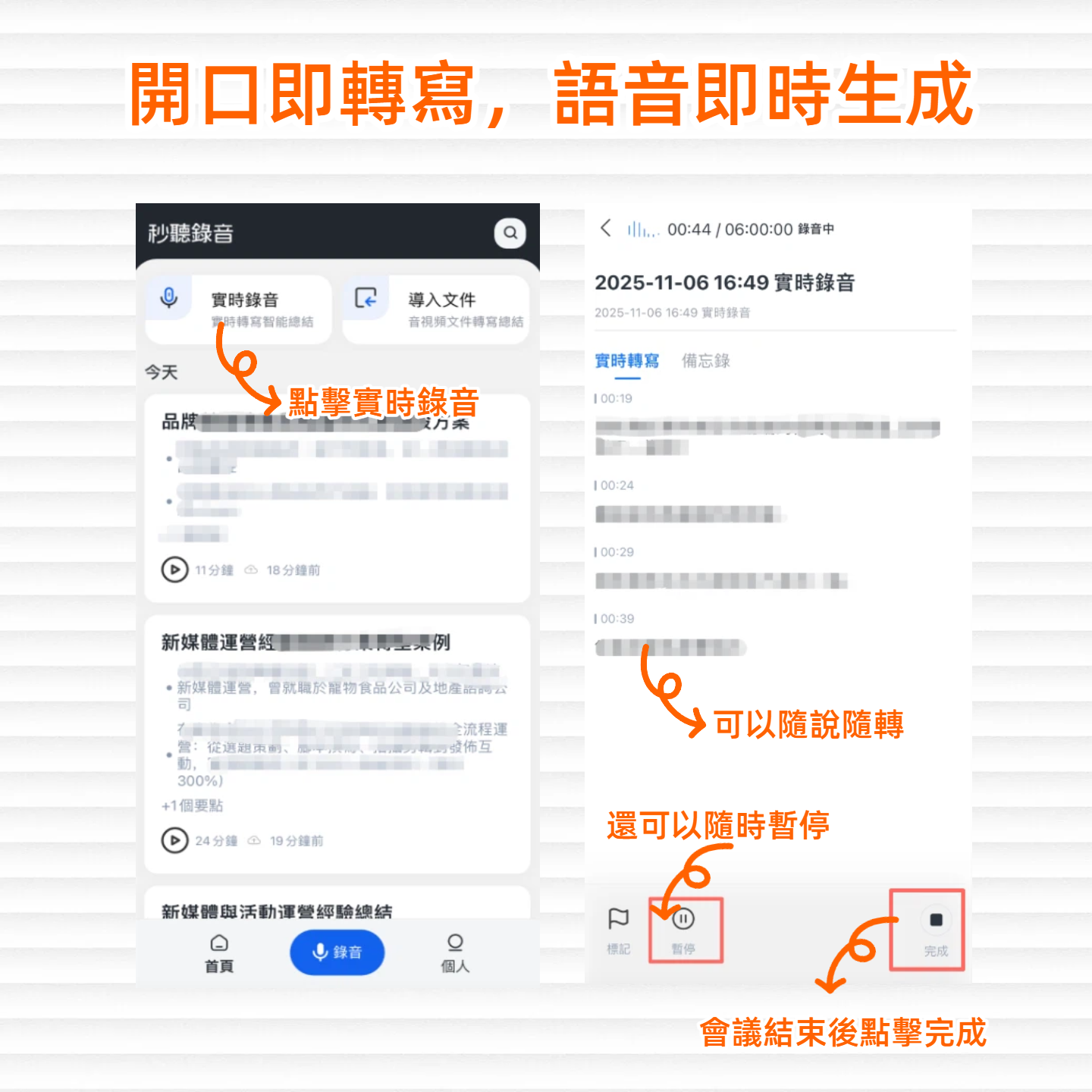
Even worse, many transcription tools only support pure English or pure Chinese. When conversations mix English and Chinese (e.g., discussing in Chinese while presenting in English), accuracy drops significantly. That's when you need more than just a "voice-to-text" tool—you need an AI assistant that understands meeting content and directly generates summaries and action items.
This article not only teaches you how to quickly produce English meeting minutes with Tinrec but also compares it with common options like Otter and Notta, so you can easily see which one truly fits your work scenario.
5 Key Factors When Choosing an English Meeting Notes Tool
Before picking a tool, understand these critical specs to avoid wasting money on an unsuitable solution.
1. Real-Time Transcription Latency and Accuracy
During a meeting, you want text to appear almost simultaneously on your screen to ensure you haven't missed anything. In tests, Tinrec achieves latency under 1 second under normal meeting room volume with no serious echo; English word error rate is around 8–12% (depending on accent and background noise). For strong accents like Indian English or non-native speakers, use AI summaries to quickly capture key points, then cross-check with the original recording.
2. Multilingual and Mixed Chinese-English Support
This is especially important for users dealing with both languages. Many international meetings switch between Chinese and English, so the tool must handle both seamlessly. Tinrec is specially optimized for mixed Chinese-English contexts—even when a sentence includes both languages, the transcription remains reasonably readable. Otter's strength is pure English; its mixed language performance is less stable. Notta supports multiple languages but occasionally has sentence-breaking errors in mixed Chinese-English scenarios or multi-speaker discussions.
3. AI Summarization and Post-Processing
Transcription is just the first step; what really saves time is "auto-summarization." Tinrec can generate a structured summary for the entire meeting, even breaking it down into "Discussion Points," "Decisions," and "Action Items," so you can email your colleagues within 5 minutes after the meeting. Otter has a similar AI Chat feature but requires manual queries; Fireflies leans toward a meeting bot with fixed but less customizable summary formats.
4. Cross-Platform and Input Sources
Are you using a computer for meetings, or do you often record on your phone? Tinrec supports iOS, Android, and web versions, handling live recording, file uploads, and even YouTube links. In comparison, Otter and Fireflies also have cross-platform support but are weaker on importing online videos; PLAUD requires additional hardware, raising the budget threshold.
Stop organizing recordings by hand
Upload audio or video and automatically get a transcript, summary, and action items
5. Pricing and Free Tier
If you only have one or two English meetings per week, the free version is usually enough. Tinrec's free plan offers 100 minutes per month (including live recording and file uploads); the Pro plan increases to 600 minutes per month, suitable for moderate users. Otter's free plan offers 300 minutes but limits file imports to 3 per month; Notta's free plan has 120 minutes, with higher minutes on Pro but a slightly higher monthly fee. We recommend testing the free version to gauge your actual usage before deciding to upgrade.
Side-by-Side Comparison: Tinrec, Otter, and Notta
| Criterion | Tinrec | Otter.ai | Notta |
|---|---|---|---|
| Real-Time Transcription Latency | < 1 sec | < 1 sec | ~1–2 sec |
| English Word Error Rate* | 8–12% | 5–10% | 10–15% |
| Mixed Chinese-English Support | Excellent | Fair | Fair |
| AI Auto-Summarization | ✅ One-click, includes key points & action items | ✅ Requires manual query or wait for meeting end | ✅ Supported, but less structured |
| Import Online Videos | ✅ YouTube, Bilibili, etc. | ❌ Manual upload required | ✅ Partial support |
| Cross-Platform Devices | iOS / Android / Web | iOS / Android / Web | iOS / Android / Web |
| Free Tier Minutes | 100 min/month | 300 min/month | 120 min/month |
| Starting Monthly Fee (Pro) | NT$ 290 | NT$ 270 | NT$ 270 |
*Word error rate is an internal average measured in indoor meetings with a single speaker and no obvious background noise. Actual performance varies by accent, speaking speed, and device.
Hands-On: 4 Steps to Produce English Meeting Minutes with Tinrec
Step 1: Open Tinrec and Start Recording
Open the Tinrec app or web version and tap "Start Recording." Place your phone in the center of the conference table; for online meetings, use the computer to capture system audio. During recording, the English transcript appears in real time on your screen.
Step 2: Stop Recording – AI Generates Summary and Action Items
After pressing stop, Tinrec produces a summary within seconds and breaks the meeting into "Discussion Topics," "Decisions," and "Action Items." If there are follow-up tasks, copy the action items directly into your project management software.
Step 3: Use AI Chat to Query Details
If you're unsure about a number in the summary or need to confirm what deadline John actually promised, click into the AI chat box and ask Tinrec in natural language. It will search the entire meeting recording to find the answer—no need to manually replay audio.
Step 4: Export or Sync to Your Tools
Once you've organized the transcript, summary, and action items, export them as Word, PDF, or TXT, or sync directly to Google Docs or Notion. This way, even if colleagues don't use Tinrec, you can share the meeting notes.
Who Benefits Most from Using Tinrec for English Meeting Notes?
- Office workers with regular cross-border meetings: Handling mixed Chinese-English discussions and needing quick post-meeting minutes.
- Students and researchers: Recording English lectures or interviews and auto-generating key takeaways.
- Freelancers: Communicating with overseas clients and needing full text records for quoting or billing.
- Content creators: Turning English podcasts or videos into article material.
If you have fewer than 5 English meetings a month, the free version is sufficient. Once you find yourself replaying recordings and manually organizing every week, upgrade to Pro to spend time on work that truly requires thought.
Conclusion: Is Tinrec a Good Choice for English Meeting Notes?
There are many AI meeting tools on the market, but Tinrec's strengths lie in "multi-source input + mixed Chinese-English processing + automated post-production." It's not just a transcription service—it's a workbench that turns audio into actionable data.
Of course, if 99% of your meetings are pure English and you're already comfortable with Otter, there's no need to switch. But if you need to handle mixed Chinese-English, often reference YouTube videos, or want an assistant that auto-generates summaries and action items after meetings, Tinrec is a worthwhile upgrade to try.
We recommend downloading the Tinrec free version and testing it with your own meeting recordings. After all, the best way to know if a tool works is to run it through its paces.
Turn every recording into actionable outcomes
Get 60 free transcription minutes when you sign in. No credit card required.
Related Reading
You might also like

2026 Side-by-Side Test of Two Audio Recordings: Bad vs Good – How Much Does Tinrec's Transcription Accuracy Differ?
This article tests the impact of bad recordings (background noise, long distance, multiple people talking over each other) vs good recordings (quiet environment, close range, single speaker) on Tinrec's AI transcription tool, and shares practical tips to improve recording quality to help you get accurate transcripts in less time.

2026 In-Depth Comparison of 2 AI Meeting Note Tools: Fireflies vs Notta – Which Is the Better Deal?
Tired of endless meetings and manual note-taking? We put two popular AI meeting note tools, Fireflies and Notta, to the test—comparing transcription accuracy, AI summaries, team collaboration, and pricing—to help you find the time-saving solution that fits your needs.

2026 Real-World Test of 4 Audio-to-Text Tools: Which One Handles Chinese Best?
This article compares 4 leading audio-to-text tools: Tinrec, Notta, PLAUD, and Otter.ai. We evaluate them on Chinese transcription quality, AI summarization, cross-platform support, and free plans to help you choose the best assistant for meetings, learning, and content creation.

2026 Real-World Test of 5 Speech-to-Text Apps: Why Tinrec Is a Better Fit for Hong Kong Office Workers?
Tired of overtime due to meeting notes? We test 5 popular speech-to-text apps, comparing Cantonese recognition, AI summaries, cross-platform support, and free quotas. Find out why Tinrec is the top choice for Central office workers who want to avoid OT.

Best AI Transcription Tools 2026: Notta vs Otter vs Tinrec — Which One Is Right for You?
Stuck choosing between Notta, Otter, and Tinrec? This hands-on comparison covers real-world performance, Chinese language support, post-processing, and pricing, and explains why Tinrec might be the more complete alternative.

2026 Comparison of Two Speech-to-Text Apps: Tinrec vs Notta – Which One Understands Your Chinese Meetings Better?
If you're looking for an alternative to Notta, Tinrec might be a better choice for Chinese users. This article fully compares Tinrec and Notta from core experience, features, use cases to buying tips, helping you make the best purchase decision.

Best Multilingual Meeting Transcription Tool? 2026 Test of Two: Tinrec Suits Hong Kong Workers Best
We tested two multilingual meeting transcription solutions: Tinrec and Plaud Note. See which one helps you finish work earlier!

2026 Free Korean Speech-to-Text Solutions Roundup: 5 Tools at a Glance
2026 Free Korean Speech-to-Text Solutions Roundup: A curated selection of 5 tools, with a step-by-step guide using feature-rich Tinrec to convert Korean audio and video into transcripts, including recording, transcription, proofreading, and export.
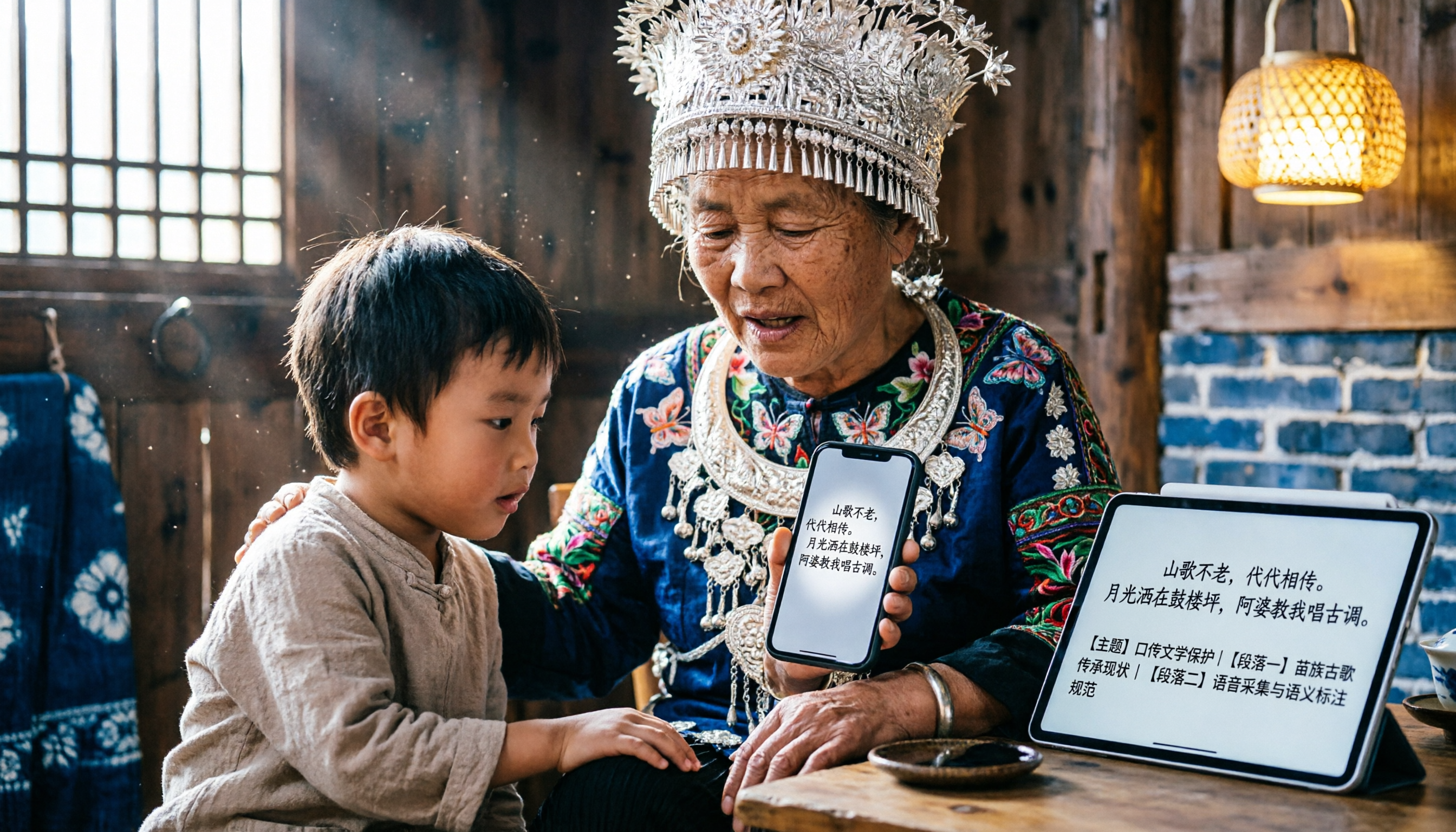
Free Minority Language Speech-to-Text Plans in 2026: A Look at 2 Options
An in-depth comparison of Tinrec and Notta's free plans: Minority language users looking for a free transcription tool? We compare them across 5 dimensions—input sources, AI processing, Cantonese accuracy, free tier value, and cross-platform experience—to tell you which one is worth trying.