

Turn recordings into transcripts and summaries in minutes
Upload audio or video for multilingual transcription, AI notes, and action items
2026 Free Korean Speech-to-Text Solutions Roundup: 5 Tools at a Glance
Before You Start: What You'll Need
• A smartphone (iPhone or Android) or a computer (browser works)
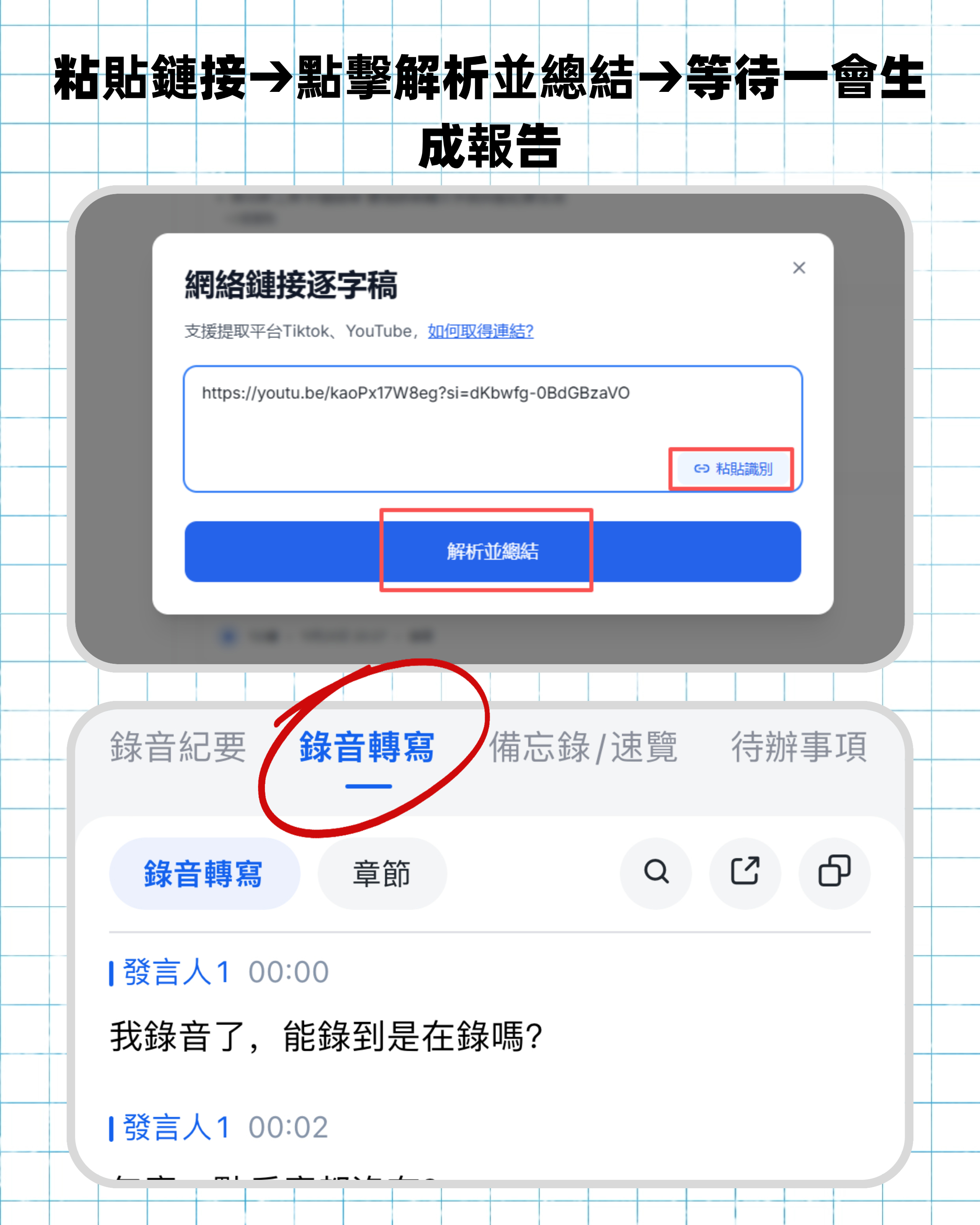
• Download the Tinrec app (free from App Store or Google Play, or use the web version; sign up with Google or Apple ID)
• Prepare a Korean audio or video file—it could be a Korean class recording, meeting, interview, or a link to a Korean video on YouTube or Bilibili
• A stable internet connection (real-time transcription requires internet; for offline use, download the Korean language pack first)
Step 1: Record the Korean Audio You Want to Transcribe
The goal of this step is to obtain a clear Korean audio file—it's the foundation for all subsequent steps.
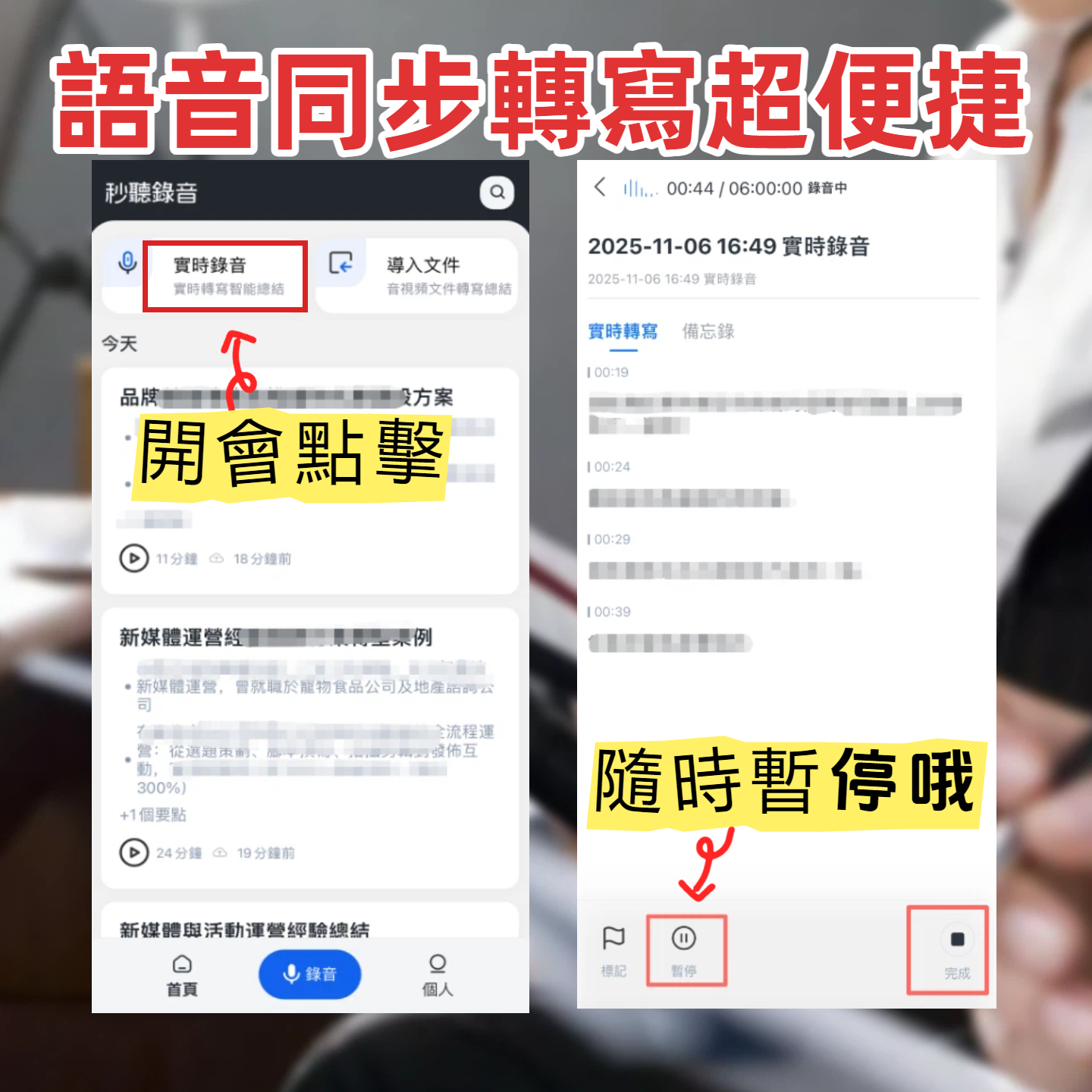
Open Tinrec and tap the record button on the home screen to start recording your Korean conversation or speech. Try to keep the phone close to the speaker—the closer it is, the clearer the audio and the higher the transcription accuracy. For face-to-face interviews, place the phone between the two people; for multi-person meetings, put it in the center of the table.
Why emphasize audio quality? Because AI transcription accuracy heavily depends on the original audio—no engine can handle unclear recordings. Rather than spending time proofreading later, take an extra 30 seconds during recording to ensure proper placement.
After recording, you'll see the recording on the Tinrec home screen with its duration and file size displayed.
Step 2: Let AI Transcribe Your Korean Audio into Text
This step converts the Korean recording you just made, or any existing Korean audio/video file, into searchable, editable text.
If the recording is already on your phone, tap 'Import Audio/Video File' in Tinrec and select the file to upload. If it's an online Korean video (e.g., from YouTube or Bilibili), paste the link and Tinrec will automatically parse and transcribe it.
After upload, the AI will produce a full Korean transcript within minutes, automatically dividing it into paragraphs. Whether it's standard Seoul accent, Busan dialect, or conversations mixing Korean and Chinese, as long as the audio is clear, recognition accuracy is quite good.
Step 3: Quickly Proofread the Transcript
Transcription is rarely 100% perfect; spending ten minutes proofreading ensures reliable use later.
Tinrec's playback interface supports 'listen and edit'—tap any paragraph in the transcript and the audio plays from that point. For errors caused by proper nouns or accents, simply tap the text to edit. You can also mark key points for later review.
Stop organizing recordings by hand
Upload audio or video and automatically get a transcript, summary, and action items
Step 4: Generate Summary and Translation (Optional)
If you need to quickly grasp the Korean content or share it with colleagues who don't understand Korean, this step is very useful.
On the transcript page, tap the 'AI Summary' button and Tinrec will automatically generate a summary of the recording (supports Korean original summary or direct translation into Chinese). You can also tap 'Translate' to convert the entire transcript into Chinese for bilingual meeting minutes or study notes.
Step 5: Export and Share
The finalized Korean transcript, summary, or translation can be exported in multiple formats and integrated into your existing workflow.
Supports export as plain text, PDF, Word document, or even SRT subtitle files. It can also be directly synced to third-party services like Notion, Google Docs, Dropbox, allowing team members to access simultaneously.
FAQ and Troubleshooting
Q: The transcribed Korean has many errors. What should I do?
A: It's usually due to a noisy recording environment or the speaker being too far away. Tinrec has built-in smart noise reduction—enable it in settings before recording to filter out ambient noise. For existing files, you can manually select 'High Noise Environment' mode after import to further optimize recognition. Most transcription tools on the market don't offer this option.
Q: Can I see the Korean transcription in real time?
A: Yes, Tinrec's real-time speech-to-text feature supports Korean, displaying the transcript as you record—ideal for class notes or live interpretation practice.
Q: How much transcription time does the free version offer?
A: Tinrec's free version provides a monthly basic transcription allowance (check the official page for details), enough for a few meetings or a couple of classes. For long-term use, consider the paid plan.
Advanced Tips: 3 Ways to Double Tinrec's Efficiency
1. AI Dialogue Query: Turn Recordings into a Q&A Knowledge Base
After transcribing, tap 'AI Q&A' and you can directly ask questions about the recording, like 'What was the budget limit discussed in the meeting?' or 'What required reading list did the instructor mention?' Tinrec pulls answers directly from the transcript without needing to listen through the entire recording. This feature is unique among many pure transcription tools.
2. Cross-Platform Sync: Record on Phone, Edit on Computer
Record on your phone in a meeting room, then open Tinrec's web version on your computer back at your desk—the transcript is already synced and ready for editing, exporting, or querying. Supports iOS, Android, and web versions for a seamless workflow.
3. Automatic To-Do Extraction
After a Korean meeting, Tinrec's AI can automatically extract action items from the conversation to generate a to-do list, saving you the manual effort.
If You're Not Using Tinrec, Here Are Other Options
• Notta: Also supports multilingual transcription with decent Korean recognition. Free plan offers 120 minutes per month, suitable for light users. However, for unified management across multiple videos and audio files, Notta's knowledge base capabilities are weaker.
• Google Docs Voice Typing: No installation required, real-time recognition, but limited to Chrome browser and requires internet. Lacks subsequent summary, translation, and export features—more of a quick note-taking tool.
Overall, if you need a complete workflow from recording to reusable data, Tinrec's all-in-one integration of recording, transcription, summary, translation, and export is a more effortless choice.
Summary
After learning these five steps, you can now use Tinrec to convert any Korean audio or video into a transcript, automatically generate summaries, translate into Chinese, and use AI Q&A to directly find key points. Next step: download the free version of Tinrec and try it with your own Korean recording. The monthly free allowance is enough for a few meetings or classes, so you never have to manually type Korean word by word again.
Turn every recording into actionable outcomes
Get 60 free transcription minutes when you sign in. No credit card required.
Related Reading
You might also like

2026 Side-by-Side Test of Two Audio Recordings: Bad vs Good – How Much Does Tinrec's Transcription Accuracy Differ?
This article tests the impact of bad recordings (background noise, long distance, multiple people talking over each other) vs good recordings (quiet environment, close range, single speaker) on Tinrec's AI transcription tool, and shares practical tips to improve recording quality to help you get accurate transcripts in less time.

2026 In-Depth Comparison of 2 AI Meeting Note Tools: Fireflies vs Notta – Which Is the Better Deal?
Tired of endless meetings and manual note-taking? We put two popular AI meeting note tools, Fireflies and Notta, to the test—comparing transcription accuracy, AI summaries, team collaboration, and pricing—to help you find the time-saving solution that fits your needs.

2026 Real-World Test of 4 Audio-to-Text Tools: Which One Handles Chinese Best?
This article compares 4 leading audio-to-text tools: Tinrec, Notta, PLAUD, and Otter.ai. We evaluate them on Chinese transcription quality, AI summarization, cross-platform support, and free plans to help you choose the best assistant for meetings, learning, and content creation.

2026 Real-World Test of 5 Speech-to-Text Apps: Why Tinrec Is a Better Fit for Hong Kong Office Workers?
Tired of overtime due to meeting notes? We test 5 popular speech-to-text apps, comparing Cantonese recognition, AI summaries, cross-platform support, and free quotas. Find out why Tinrec is the top choice for Central office workers who want to avoid OT.

Best AI Transcription Tools 2026: Notta vs Otter vs Tinrec — Which One Is Right for You?
Stuck choosing between Notta, Otter, and Tinrec? This hands-on comparison covers real-world performance, Chinese language support, post-processing, and pricing, and explains why Tinrec might be the more complete alternative.

2026 Comparison of Two Speech-to-Text Apps: Tinrec vs Notta – Which One Understands Your Chinese Meetings Better?
If you're looking for an alternative to Notta, Tinrec might be a better choice for Chinese users. This article fully compares Tinrec and Notta from core experience, features, use cases to buying tips, helping you make the best purchase decision.

Best Multilingual Meeting Transcription Tool? 2026 Test of Two: Tinrec Suits Hong Kong Workers Best
We tested two multilingual meeting transcription solutions: Tinrec and Plaud Note. See which one helps you finish work earlier!
Free Minority Language Speech-to-Text Plans in 2026: A Look at 2 Options
An in-depth comparison of Tinrec and Notta's free plans: Minority language users looking for a free transcription tool? We compare them across 5 dimensions—input sources, AI processing, Cantonese accuracy, free tier value, and cross-platform experience—to tell you which one is worth trying.

How to Use Tinrec for English Meeting Notes: Real-Time Transcription & AI Summarization (2026)
Struggling with English meetings? Tinrec not only transcribes in real time but also generates AI summaries, extracts action items, and handles mixed Chinese-English speech. This comprehensive guide shows you how to use Tinrec for English meeting minutes, with a comparison to Otter, Notta, and more, so you can choose the best tool.