

Turn recordings into transcripts and summaries in minutes
Upload audio or video for multilingual transcription, AI notes, and action items
I have about 15 meetings a week. The old-school way I used was: send myself a voice message on WeChat as a memo, thinking I could transcribe it later. Then I realized this method doesn't work at all—voice messages aren't searchable, and listening a few days later, I'd completely forget what I was talking about. It wasn't until I started using Tinrec that I discovered transcription isn't just about "getting the text out"; it's about how you organize, find the key points, and turn it into actionable material after transcription.
Why are people looking for alternatives to WeChat voice transcription?
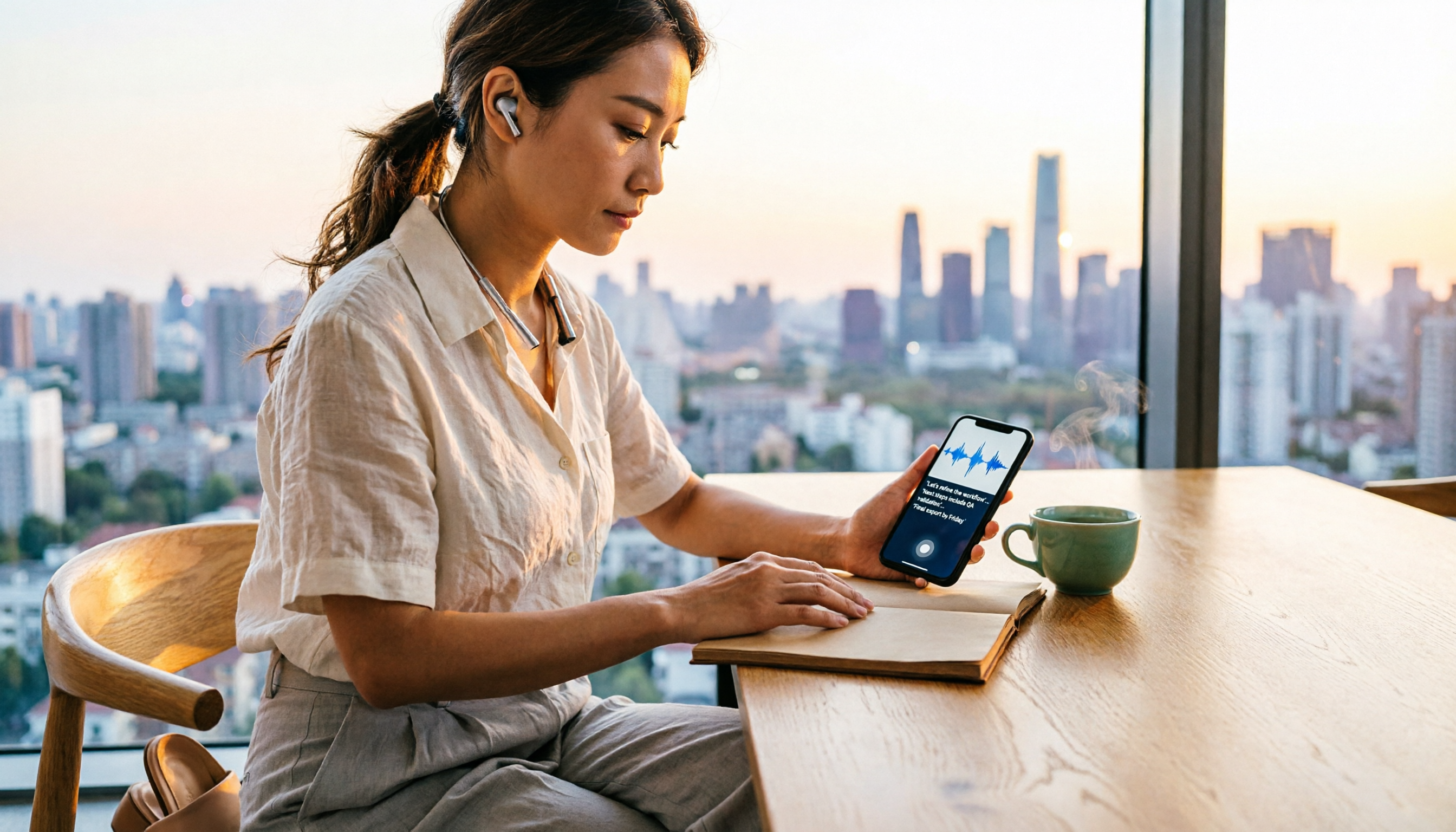
Many professionals use WeChat to save voice memos—after a meeting, they record a quick note; when an idea strikes, they record another. But this approach has inherent limitations: you can only listen to one message at a time, no keyword search; if you want to convert to text, you have to listen and type yourself; and if you record a 30-minute meeting, it takes 30 minutes to replay, and you might still miss the key points. If you face these issues too, Tinrec is worth checking out.
Tinrec vs WeChat Voice Memos: What's different in core experience?
WeChat's voice-to-text is real-time and message-by-message—great for confirming what a specific message says, but useless when you need to "organize a bunch of recordings." It's not about which is better; it's about different use cases. Below is a comparison from dimensions that managers care about.
Input Source Flexibility
WeChat can only handle voice messages you receive. Tinrec supports live recording, uploading local audio files, pasting public video links (YouTube, Bilibili, Xiaohongshu, etc.), and even importing meeting recordings from Zoom or Teams. For someone handling meetings, interviews, and courses simultaneously, this is very practical.
Post-Transcription Organization
WeChat just gives you plain text. Tinrec not only provides a verbatim transcript but also automatically generates summaries, splits into chapters, extracts action items, and even lets you ask questions about the recording like you would with ChatGPT—ask "What was the client's budget in the last meeting?" and get an answer directly, without flipping through 30 pages of transcript.
Cross-Platform and Long-Term Storage
WeChat voice messages can expire and are only convenient to listen to on a phone. Tinrec has iOS, Android, and web versions, with data synced across devices. All past recordings are searchable, replayable, and queryable—essentially building a searchable audio file database.
Chinese Content Recognition Quality
If you often deal with Chinese meetings like I do, Tinrec does well with mixed Chinese-English and Taiwanese expressions. Accuracy can be affected by background noise and accents, but in practice, only a few words need correction in ten sentences—still a huge time saver.
Tinrec Core Features at a Glance
Real-Time Transcription
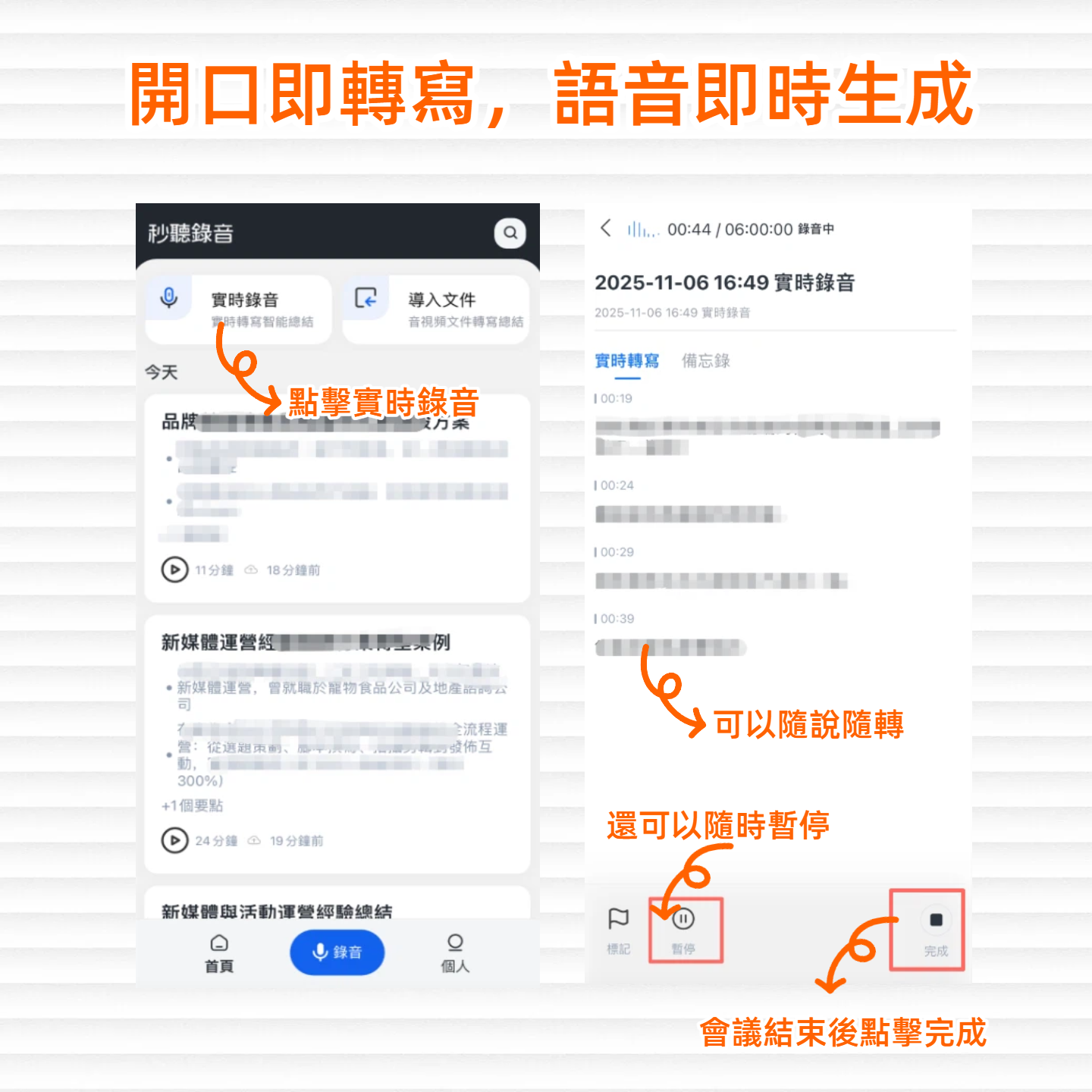
Open Tinrec, hit record, and text appears on screen with less than a second delay. During meetings, you can follow along to ensure you don't miss key points, and the transcript is ready by the time the meeting ends.
Stop organizing recordings by hand
Upload audio or video and automatically get a transcript, summary, and action items
Audio and Video File Transcription
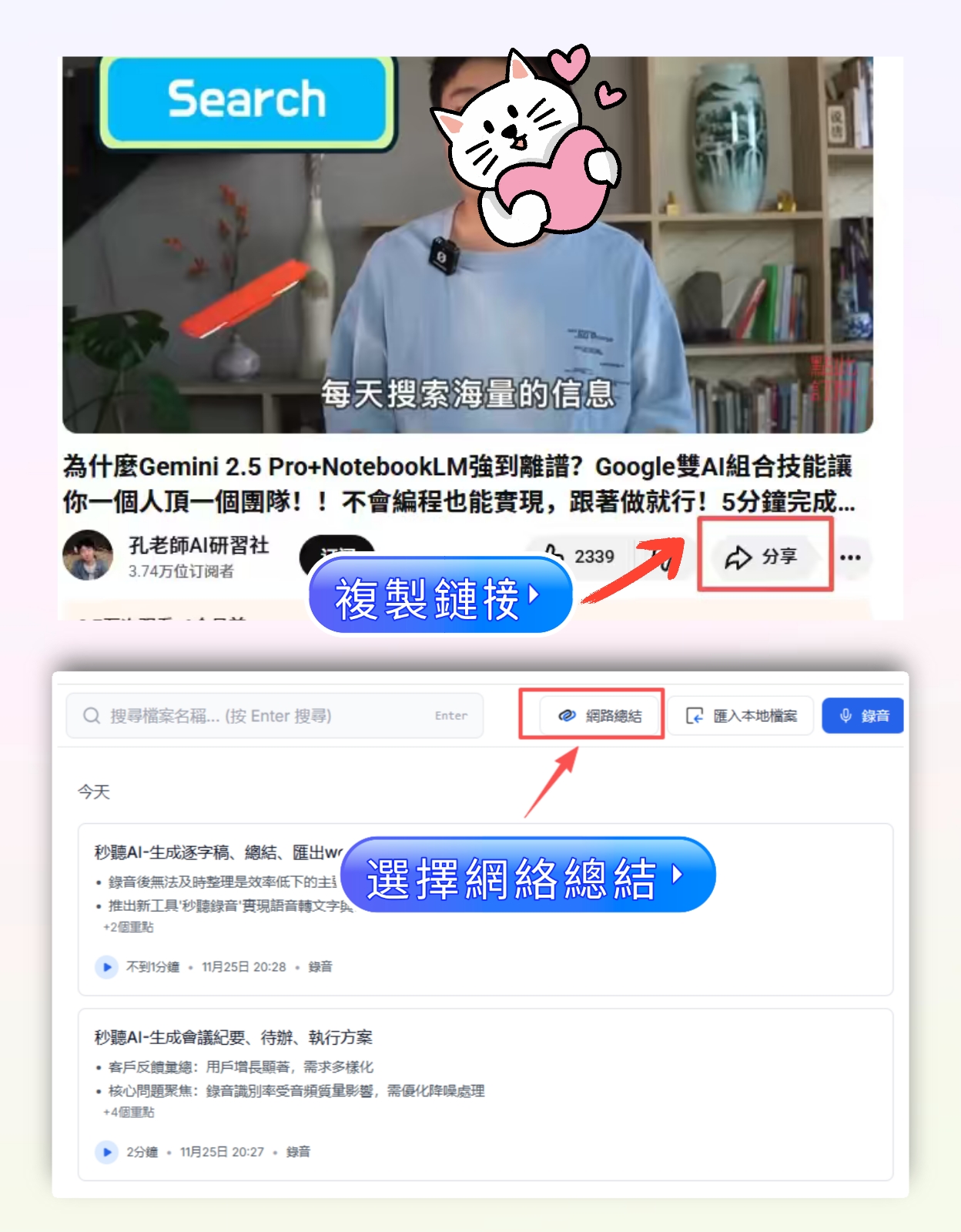
Just drop in accumulated meeting recordings or course MP3s, and Tinrec converts them to text. Even public online videos—paste the link, and it will organize them into summaries and transcripts for easy citation or note-taking.
AI Summaries and Chapter Splitting
For a long one-hour meeting, Tinrec automatically divides it into major sections, each with a one-sentence summary. When you need a quick review, just glance at the summaries and chapter titles to know where the key points are.
Automatic Action Item Extraction
This is my favorite feature for reporting to my boss. After a meeting, Tinrec extracts who needs to do what and by when, directly into a to-do list—saving manual retyping.
AI-Powered Q&A
You can treat Tinrec as your recording database manager. Ask it "What was the conclusion of this meeting?" or "What are the three requirements the client mentioned?" It answers based on the recording content, with timestamps so you can jump back to the original audio.
Multi-Format Export
Export completed content as Word, PDF, TXT, or sync directly to Notion or Google Docs. I personally drop action items into Notion for seamless workflow integration.
Real-World Use Cases
Weekly and Project Meetings
Start recording with Tinrec before a meeting; within 5 minutes after, summaries and action items are ready. Now I copy the AI-generated to-do list into the group chat, saving time on meeting notes and focusing on execution.
Courses and Lectures
Record lectures, get transcripts, then AI splits them into chapters. For review, just read key summaries and sections—no need to re-listen for two hours. For online courses, just paste the link and get organized notes, even skipping the recording step.
Interviews and Qualitative Research
The hardest part used to be taking notes during interviews and re-listening to transcribe later. Now after an interview, Tinrec highlights key points and quotable sections, so I just focus on asking questions.
Personal Voice Memos
I no longer send WeChat voice messages to myself. Whenever I have an idea, I record it in Tinrec; it automatically transcribes, summarizes, and makes it searchable—no more listening one by one.
What to Look For When Choosing a Transcription Tool
Language Support and Localization
Check how well it handles local terms and mixed Chinese-English. In my experience, Tinrec performs adequately for Chinese content, especially when people mix Chinese and English—it usually captures it correctly.
Cross-Platform Consistency
Make sure it works on your devices. Tinrec has iOS, Android, and web versions; I use it on my work computer and on my phone during commute, with data synced seamlessly.
Post-Transcription Value-Add
If you only need plain transcripts, many tools do that. But if you need key point extraction, to-do lists, and summaries like I do, look for AI post-processing. That's where Tinrec clearly beats pure transcription tools.
Free Plan Limits
Tinrec's free plan offers 100 minutes of transcription per month. If you only occasionally record meetings or classes, try the free version first—it's more than enough for a few sessions. Upgrade if you find it useful.
Export and Integration Flexibility
Can you export the processed content to your usual tools? Tinrec supports multiple formats and syncs to Notion, Google Docs, etc.—a big plus for professionals who need to archive or collaborate on meeting notes.
Summary: Is Tinrec Worth a Try?
If you're still using WeChat voice memos for work or meetings, or spending 30 minutes replaying recordings to type up transcripts after every meeting, Tinrec can save you that time. It doesn't just transcribe; it turns recordings into searchable, organizable, reusable assets. Especially for Chinese meetings, courses, and interviews, Tinrec's summaries, action items, and AI Q&A are extremely practical. I'd recommend downloading the free version and giving it a shot—100 minutes a month is enough for several meetings. Run your own recordings through it; you'll get a better sense than any review can provide.
Turn every recording into actionable outcomes
Get 60 free transcription minutes when you sign in. No credit card required.
Related Reading
You might also like

2026 Free Speech-to-Text Tools Comparison: Which One Saves Your Lecture Notes?
Tinrec and Otter are two popular free speech-to-text tools. This comparison tests their performance in common student scenarios like Chinese lectures, online video transcripts, and AI summaries to help budget-conscious college students choose the best option.
2026 Complete Guide to Speech-to-Text: A 5-Step Tutorial to Cut Your Organizing Time by 80%
This is a practical tutorial on converting audio to text, demonstrating 5 steps with Tinrec: recording, transcription, proofreading, meeting minutes generation, and exporting. It helps middle managers and professionals save a lot of organizing time.

2026 Tinrec Audio-to-Text Review: Free Online, AI Summary, Notta Alternative
Hands-on test of Tinrec’s free online speech-to-text tool. Accurate transcription, AI-powered summaries, Q&A, and export options. Better than Notta for multi-source audio/video. Free basic quota per month, perfect for small teams and solopreneurs.

How to Convert Audio to Text in 2026: A Complete 5-Step Guide
Choosing the right audio-to-text tool? This article compares Tinrec and PLAUD NOTE across five key dimensions—price, use cases, organization, cross-platform support, and AI features—to help you pick the best solution for your workflow.

2026 5 Best Voice-to-Text Apps for Android: A Smart User's Guide
A comprehensive comparison of 5 Android voice-to-text tools, covering free and paid plans, to help you quickly find the right AI transcription assistant.

2026 Free Speech-to-Text Solutions: 5 Top Picks
This article rounds up 5 free and paid speech-to-text tools for 2026, from fully free options to professional AI workstations, including Tinrec, Otter.ai, Notta, and more. Get an overview of each tool's highlights and selection tips.

2026 Complete Guide to Speech-to-Text: Features, Use Cases, and Tool Selection
Still unsure which speech-to-text tool to choose in 2026? This article dives deep into five key dimensions—recording methods, input sources, AI organizing capabilities, cross-platform support, and cost—to compare the pure-software solution Tinrec with the AI recording hardware Plaud Note, helping you find the right fit.

How to Transcribe Voice Recordings on Your Phone in 2026: A Complete 5-Step Guide (Using Tinrec as an Example)
Learn how to convert phone voice recordings to text with Tinrec (Second Listen Audio) in 5 easy steps—from recording and verbatim transcription to AI summaries and to-do lists. Includes a hands-on tutorial, FAQs, and advanced tips.

Tinrec vs Notta 2026: A 5-Dimension Showdown for Cantonese Users
Meetings all day? Looking for a Cantonese-friendly speech-to-text AI? Which one is the lifesaver for Hong Kong office workers? Our reporter tested five key dimensions to save you the hassle.