

Turn recordings into transcripts and summaries in minutes
Upload audio or video for multilingual transcription, AI notes, and action items
2026 Speech-to-Text API Comparison: A Buying Guide for Businesses
After a two-hour meeting, you might spend over an hour just organizing notes; after an important client interview, you have to manually type the transcript; online courses or YouTube videos you want to extract key points from, but you have to watch from start to finish. These pain points all point to the same need: you need a reliable speech-to-text solution, but the options range from AI meeting bots to hardware recorders, each claiming to be the best. With a limited budget, how do you choose?
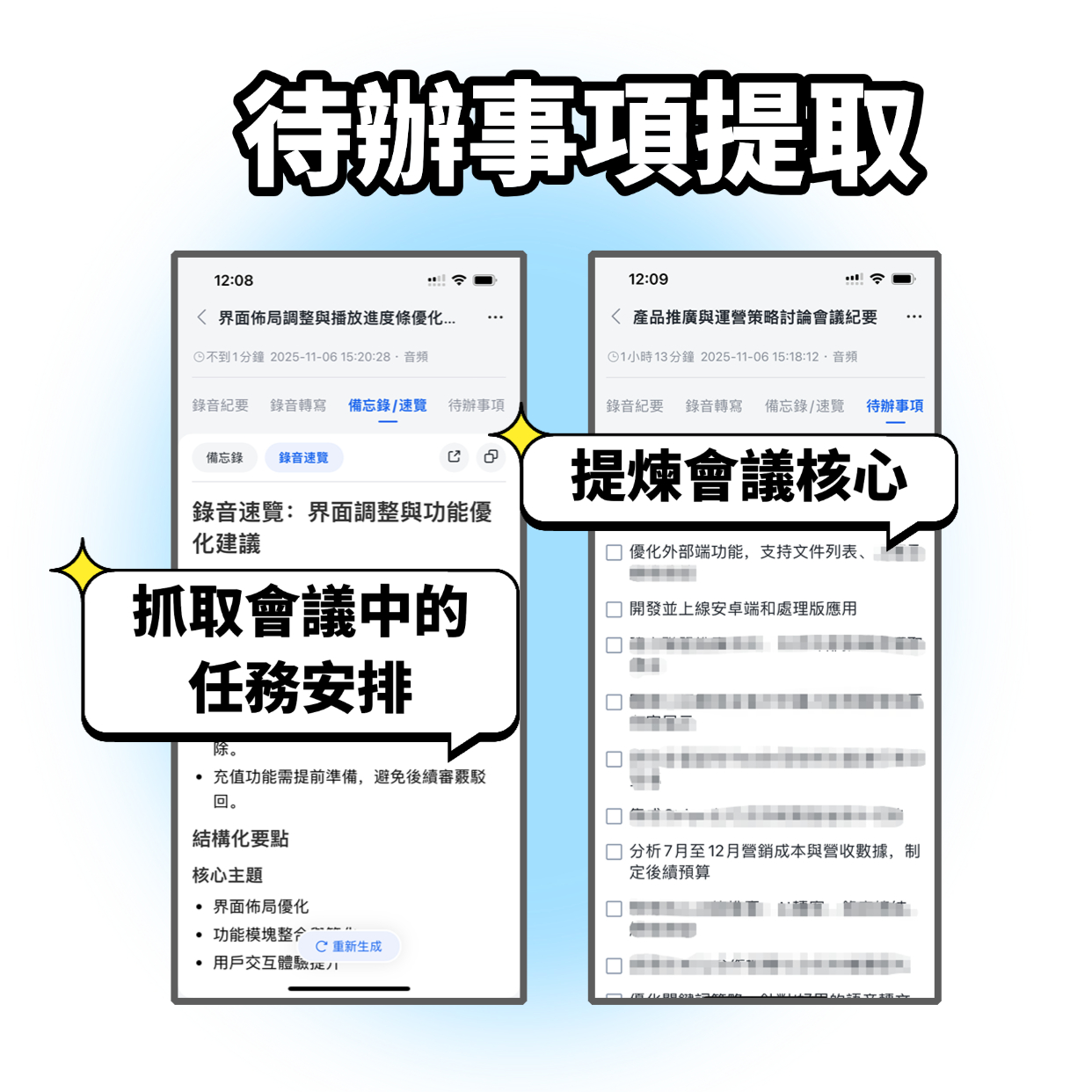
This article compares three mainstream speech-to-text APIs across three common scenarios—meeting notes, course organization, and interview analysis—using Tinrec as a practical example to help you make a purchasing decision quickly.
What Can a Speech-to-Text API Do for You?
Don't think speech-to-text is just turning audio into text. A good tool should further 'understand' the content, giving you actionable results. With Tinrec, here are three practical scenarios:
Scenario 1: Get meeting notes 5 minutes after the meeting ends Before, after a meeting, you'd rely on memory and recordings to organize notes. Now, with Tinrec's real-time transcription, you can see the transcript as the meeting happens. After the meeting, AI automatically generates structured summaries, conclusions, and action items—who is responsible for what and deadlines are clear. Send the meeting notes to your team directly, saving 80% of meeting organization time.
Scenario 2: Turn a two-hour online course into a 10-minute key-point note Whether for school courses or workplace training, Tinrec can import audio files or paste a video link, generate a transcript, automatically split it into chapters, and produce an AI summary. You no longer need to listen and write manually—just scan the key points and mind map for double the review efficiency.
Scenario 3: No more late nights transcribing interviews Upload interview recordings with users or experts to Tinrec. Besides transcription, AI lets you query the conversation: 'What feedback did the customer give about the new feature?' 'What pricing pain points did the interviewee mention?'—like having a dedicated research assistant to extract highlights.
What Are the Core Capabilities of a Speech-to-Text API?
The three mainstream options—AI meeting bots, general transcription tools, and AI recording hardware—each have strengths, but few products can handle both 'multi-source input' and 'post-transcription organization'. Tinrec's performance in these key capabilities makes it a good benchmark for SMEs and individual workers.
Real-time Transcription and Multi-source Support Not limited to meetings, Tinrec supports real-time recording, uploading audio/video files, pasting YouTube or TikTok links, and even computer meeting recordings. Past recordings and online public courses can all become searchable text databases.
AI Summaries and Structured Organization Transcription is just the first step; understanding the content is more important. Tinrec not only provides the transcript but also automatically generates summaries, chapters, key points, and action items. For meetings, conclusions and action items are listed separately, so you don't have to search through the entire document.
Cross-Recording AI Conversation Query This is a capability not found in general transcription tools. After transcription, you can ask questions in natural language, such as 'Who mentioned the budget in the meeting?' 'What feature did the customer like most in the last interview?' Tinrec answers based on semantic understanding, turning historical recordings into an interactive knowledge base.
Stop organizing recordings by hand
Upload audio or video and automatically get a transcript, summary, and action items
Multi-format Export and Workflow Integration Organized data can be exported as Word, PDF, TXT, subtitle files, or synced directly to collaboration tools like Notion and Google Docs. For users who need further processing, Tinrec's Agent post-processing can generate complete meeting reports, tables, or project documents based on the recording, truly moving from 'recording' to 'action'.
Practical Scenarios
Company Meetings: From Recording to Action Items Seamlessly For weekly meetings, open Tinrec on your phone for real-time recording. Text displays synchronously during the meeting, and you can mark key points with the memo function. After the meeting, one click generates summaries and action items, allowing managers to assign tasks on the spot without relying on manual notes.
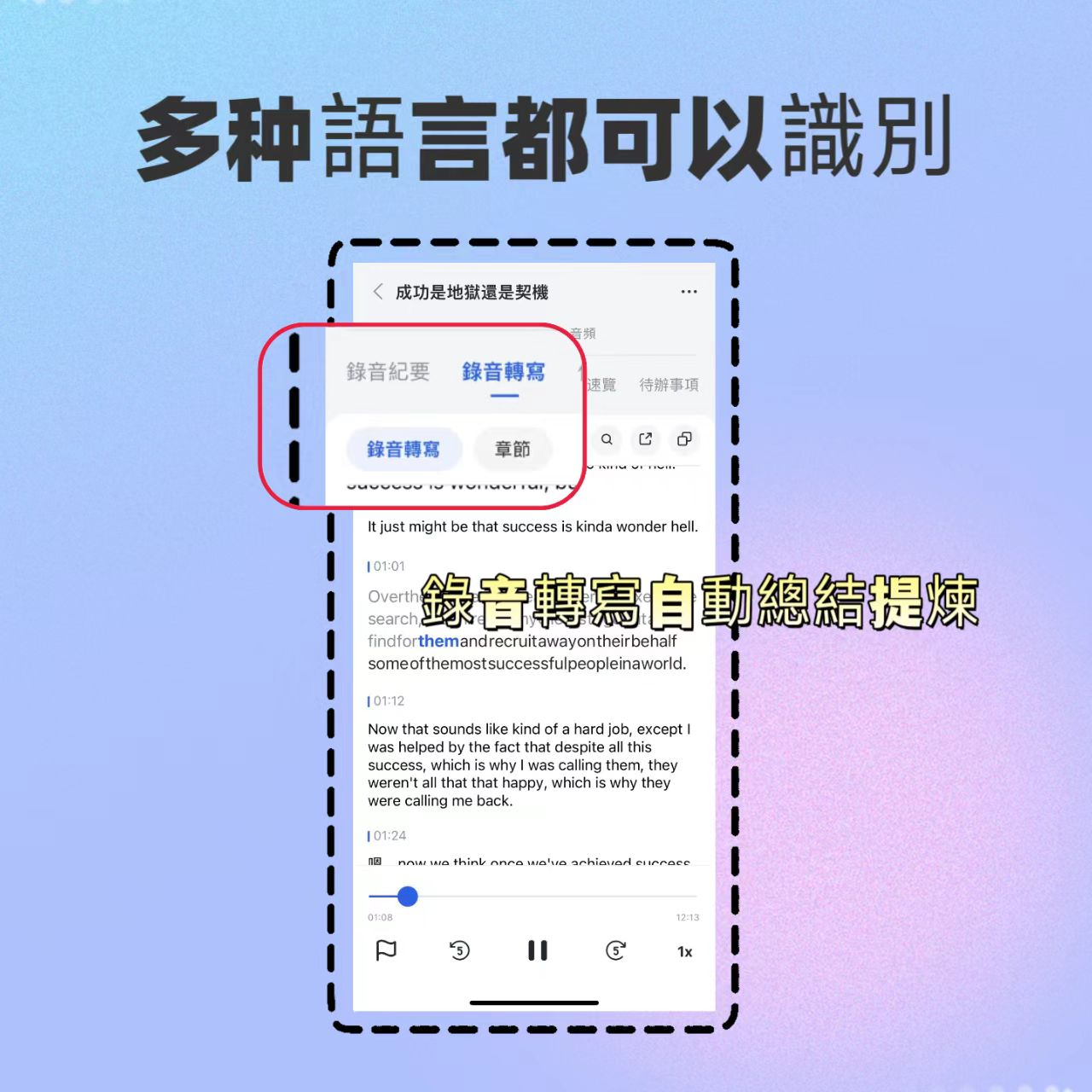
Online Courses and Self-Study: Turn Videos into Searchable Notes Paste a YouTube course link, and Tinrec analyzes the audio, generates a transcript with chapters, and provides an AI summary to grasp core concepts instantly. In a test with a 45-minute tutorial, it took less than 3 minutes from pasting the link to getting structured notes. During review, you can use the query function to search for specific terms.
User Interviews and Research: Quickly Extract Insights Upload multiple interview recordings separately; Tinrec automatically distinguishes speakers and generates transcripts. Researchers can directly use AI Q&A, asking 'What common feedback did all interviewees have about pricing?' The system extracts key sentences from multiple files, reducing qualitative analysis from weeks to hours.
4 Things to Consider When Buying a Speech-to-Text API
1. Input Source Variety If your needs go beyond meetings to include courses, videos, or interview records, check if the tool supports multiple sources. Some AI meeting bots only handle online meetings and can't process recordings from your phone or YouTube links. Tinrec covers real-time recording, file upload, and web link parsing, so one tool meets various scenarios.
2. Post-Transcription Capabilities A pure transcription tool only gives you a transcript; you still have to organize it yourself. Check if the tool has AI summaries, chapters, action item extraction, and conversation query. Tinrec automatically generates structured highlights and can cross-search historical recordings, turning a passive transcript into an active knowledge base.
3. Accuracy in Chinese Contexts and Language Support Many international products perform well in English but struggle with Chinese, mixed Chinese-English, or local accents. Test with your actual meeting or interview recordings. Tinrec's product design clearly considers Traditional Chinese and multilingual usage, offering a localization advantage in the Chinese market (actual results depend on recording quality, accent, etc.).
4. Cost and Team Flexibility Don't just look at per-minute pricing; also consider hidden costs like team sharing, storage space, and export limits. Tinrec offers a free plan with monthly credits to try first. For short-term high-intensity use (e.g., project crunch or exam week), there are weekly plans for flexible purchase. Long-term users can consider the Pro annual plan to lower monthly cost.
FAQ
Q: How is a speech-to-text API different from regular recording software? Regular recording software only records audio; a speech-to-text API converts audio to text, and some tools further organize summaries, action items, or allow querying content via conversation.
Q: Do I need to buy additional hardware to use a speech-to-text API? Not necessarily. Software tools like Tinrec work on your phone or computer. If you often need on-the-go recording, AI recording hardware is also an option; the two can be used together.
Q: Is the free plan sufficient? If you just want to test features or occasionally organize short meetings or videos, the free plan is a great start. Tinrec's free plan includes monthly credits to try real-time transcription and AI summaries. Consider paid plans for heavier usage.
Q: Can transcription accuracy really reach 99%? Accuracy is affected by recording environment, voice volume, accent, and overlapping speech. Any claim of fixed 99% accuracy should be taken with caution. Under clear recordings and standard speech, mainstream tools can achieve good accuracy, but it's still recommended to cross-check with the original recording for important content.
Conclusion
Speech-to-text APIs are no longer future technology—they are practical tools that save teams significant time on note-taking and organization. If your work or study frequently involves meetings, courses, interviews, or audio/video content, instead of agonizing over 'meeting bots,' 'general transcription tools,' or 'recording hardware,' choose a solution that covers multiple sources and helps you further process content after transcription.
Tinrec's performance in 'input diversity' and 'organization depth' makes it especially suitable for SME managers and individual workers who need to turn recordings into actionable knowledge. Download the free plan and experience turning a two-hour meeting into a five-minute key-point summary.
Turn every recording into actionable outcomes
Get 60 free transcription minutes when you sign in. No credit card required.
Related Reading
You might also like
2026 Tinrec vs Notta: 4-Dimensional Comparison – Which Is Better for Meeting Notes?
How to choose a meeting note-taking tool? This article compares Tinrec and Notta across four dimensions: language support, depth of organization, cross-source coverage, and post-processing applications, helping you decide which one turns meeting recordings into truly usable knowledge.

5 Best Transcription AI Tools of 2026: Free vs Paid – Which One Saves You the Most Time at Work?
Tired of overtime transcribing meeting notes? We tested 5 popular AI speech-to-text tools: Tinrec, Otter.ai, Fireflies.ai, Notta, and TurboScribe. Find the best transcription tool for your needs, with insights on Cantonese accuracy, free plans, and selection tips to save you from late-night typing.

2026 Comparison of 3 Speech-to-Text Tools: A Student's Real Test and Switch from Notta to Tinrec for Transcription
A senior student tests Tinrec, Notta, and Otter for lecture recording, group discussions, and finals prep, sharing which tool works best for budget-conscious students needing accurate transcripts.

Best Free Meeting Minutes Solutions for Word in 2026: 3 Options Compared
Tired of typing meeting minutes overtime? Tinrec instantly transcribes meetings, lectures, and interviews into text, auto-generates summaries, action items, and key points, and exports to Word. This article compares three free options: manual typing, mobile dictation, and Tinrec’s free plan.

Which Meeting Note Export App Is Best? 2026 Review of 3 Apps, This One Has the Most Complete Cross-Platform Export
How to choose a meeting note export tool? We tested Tinrec, Otter.ai, and Notta, comparing transcription accuracy, AI summaries, export formats, and pricing. If you need to convert meeting recordings into tasks and minutes and export to Notion or Google Docs, this article helps you decide in 3 minutes.

2026 Test Report: 5 Interview Recording-to-Text Tools Compared – Fast Transcripts & Key Insights
As a mid-level manager, transcribing interviews is the most time-consuming task. This article tests Tinrec, Otter.ai, Notta, TurboScribe, and built-in phone recorders, comparing transcription accuracy, AI summaries, multi-source support, and pricing to help you find the most efficient interview processing solution.

2026 Comparison of 5 Free Speech-to-Text Tools: Free Credits, AI Features, and Best Use Cases
There are many free speech-to-text tools, but which one is best for you? This article tests 5 mainstream free options, covering transcription credits, AI summaries, multilingual support, and export limitations, to help you find the best value tool.

2026 Hands-on Comparison of 4 Types of Transcription Tools: How Students Can Get Transcripts on a Budget
Lecture recordings, group discussions, interview transcripts—students need transcription tools the most. I tested 4 types of tools on the market, from meeting bots to hardware recorders. Only one truly fits campus life: enough free quota, high value, and it helped me organize all key points for finals.

2026 Real-World Test of 5 Speech-to-Text Tools: Which AI Meeting Notes App Helps Most?
Tired of overtime after endless meetings? We tested 5 speech-to-text apps, including Tinrec, Otter.ai, and Notta, to find the best time-saving solution for busy professionals.