
Turn recordings into transcripts and summaries in minutes
Upload audio or video for multilingual transcription, AI notes, and action items
Last semester I took a class where the professor talked super fast and flipped through slides even faster. I tried taking handwritten notes—but when I opened my notebook before midterms, I couldn't even read my own writing. That's when I knew I needed a tool.
Ever since my freshman year, I've been looking for "meeting note tools"—which for students really means something that can turn lecture recordings into notes. At first I used my phone's built-in voice memos, but I'd fall asleep listening to playback. Later I tried a few apps and have been using them ever since. This semester I decided to put the 4 most popular ones to a real test to see which can actually save me come finals.
Why Did I Ditch Some Tools?
I started with an app that advertised "free transcription," but halfway through the semester I realized the problem: a two-hour lecture recording turned into a massive transcript with no key points highlighted. When it was time to review for midterms, I still had to relisten to the recording—no time saved at all. My roommate recommended another app with a beautiful interface, but the free plan only gave 60 minutes per month, and one class would blow through that. Upgrading was insanely expensive. Then a senior introduced me to Tinrec, which had enough free features for lectures and even auto-summarized. I've been using it all semester and haven't switched.
I tested all 4 apps in real lectures, group discussions, and listening to talks, comparing free quotas, Chinese recognition, summarization, and student pricing—here's my honest take.
Tinrec vs. Other Tools: What's the Real Difference?
Free Quota: What Matters Most to Students
For students, whether the free tier is sufficient is the first gate. One app gives 120 minutes per month, sounds like a lot, but consider: a class is 2 hours, and with 4 classes a week you'd blow through it. Tinrec's free plan offers 100 minutes per month, which seems less, but it counts "processing time" and you can split recordings—only transcribe key lectures, keep others as audio files. I record 2-3 key lectures per week, and the free plan is just enough. If you really need more, the Pro monthly plan costs less than two bubble teas—great value.
Chinese Recognition & Summarization: Does It Actually Understand?
Some tools are great with English but terrible with Chinese, especially when professors mix in technical terms or code-switch, turning into gibberish. Tinrec's Chinese recognition is the smoothest I've used—it handles Taiwanese accents mixed with English words flawlessly. And not only does it give you a transcript, but it also auto-generates summaries and chapters. For finals, I just open the app and review the key points without reading a wall of text.
Stop organizing recordings by hand
Upload audio or video and automatically get a transcript, summary, and action items
Cross-Scenario Use: Not Just Lectures, But Group Work & Online Videos Too
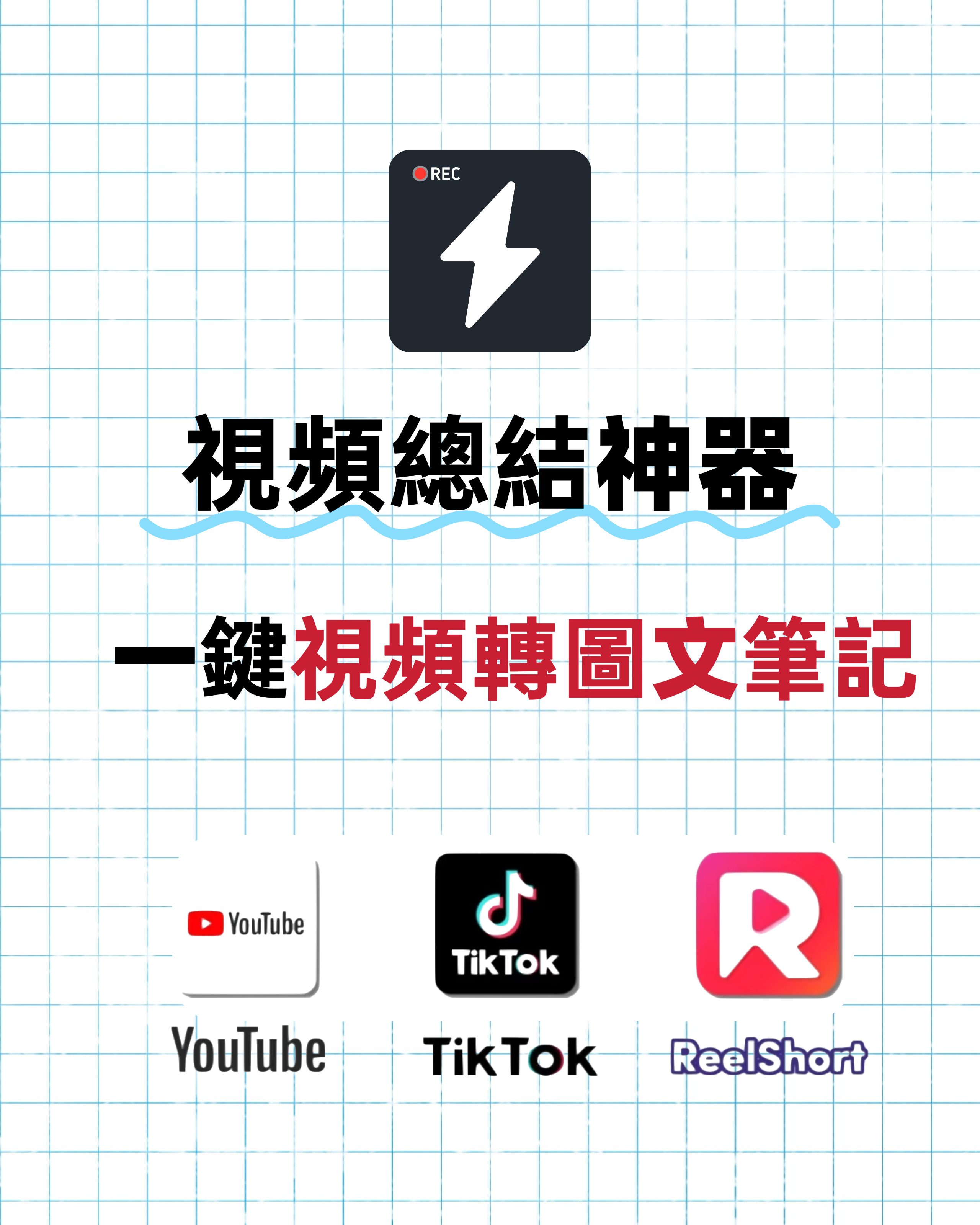
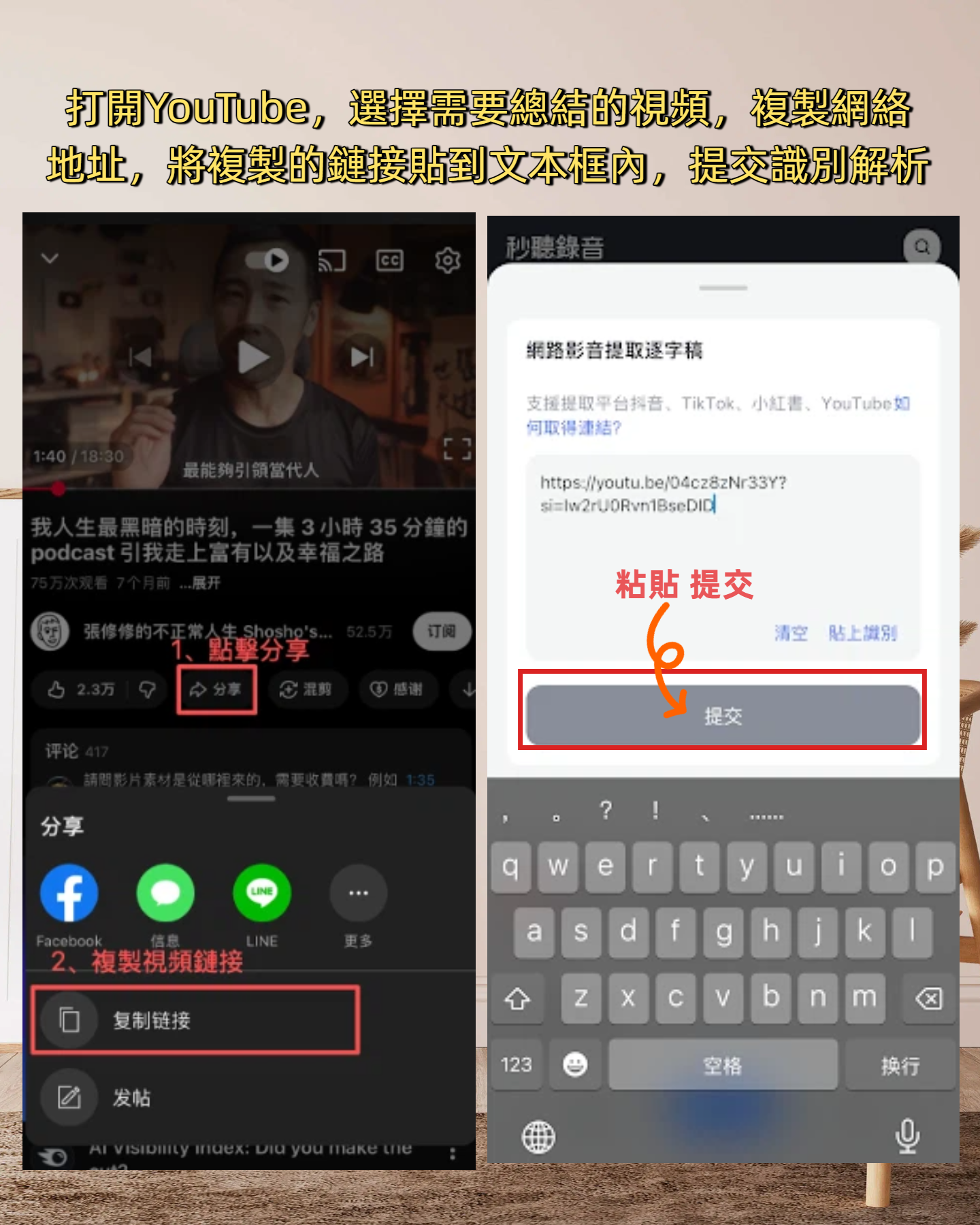
Older tools usually only support live recording. If I wanted to transcribe a YouTube tutorial, I'd have to find a workaround. Tinrec lets you paste a video link and transcribe it directly into text and summary. This semester I used it to organize online courses—super efficient. During group discussions, I turn on Tinrec and it automatically extracts action items; everyone knows what to do, no more post-meeting amnesia.
Output & Organization: Transcription Is Just the Start
Many tools just dump a transcript and leave you to organize it yourself. Tinrec's strength is that you can ask the AI: "What are the key points of this lecture?" or "What exam questions are likely?" It pulls answers from the recording, and you can export to Notion or PDF. I made my final exam notes this way, and my classmates were amazed.
Tinrec's Core Features at a Glance
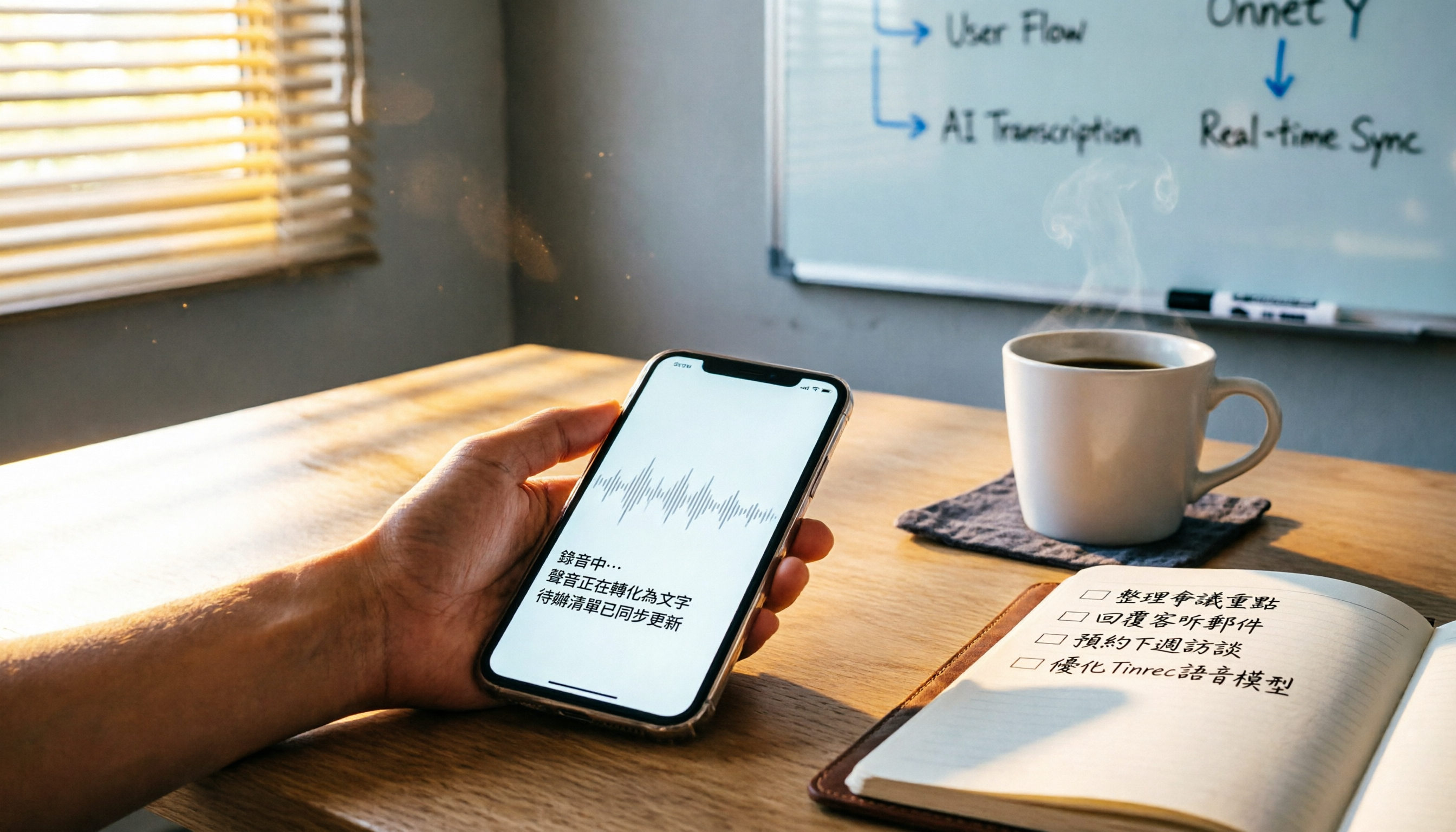
Live Recording to Text: Open Tinrec, and text appears in real-time with less than 1 second lag. During lectures I can confirm key points, mark missed sections, and by the end of class the transcript is ready.
Audio/Video File to Text: Upload old recordings or downloaded lecture videos, and it converts them into searchable text. I used this to revisit recordings from my freshman year and found key exam topics—a goldmine.
Online Video to Text: Paste a YouTube or Bilibili link, and it automatically extracts content into text and summary. I used it to organize online courses assigned by my professor—no more manual subtitling.
AI Chat Query: This is my most-used feature. After recording a one-hour lecture, I just ask: "What's the main topic of this class?" or "What three key points did the professor make?" It finds answers from the recording—no need to scroll through 30 pages of transcript.
Action Item Extraction & Multi-format Export: After group discussions, it automatically extracts who needs to do what. Export to Notion or Google Docs and turn it straight into my group project checklist.
Real-World Use Cases
Lecture Recording & Notes: I record the whole class with Tinrec, check the summary five minutes before class ends to understand the flow. At home I ask AI for details and compile my key notes. Compared to handwriting, I save at least half my review time per subject.
Group Discussion Records: In team meetings, everyone talks over each other—we used to forget conclusions. Now I record with Tinrec and share the action list and summary directly to the group chat. My teammates say, "Dude, this is amazing."
Exam Review Compilation: Before finals, I dump all semester lecture recordings and supplementary video links into Tinrec, ask AI for common exam topics, and it filters out concepts the professor emphasized repeatedly—turning into a study guide. This semester I aced all my finals.
Online Self-Study: I took a Coursera course in English. Tinrec not only transcribes but also summarizes key points in Chinese. For sections I didn't understand, I just ask the AI—double the learning speed.
What to Look for When Choosing a Transcription Tool
When picking a tool, pay attention to: how the free quota works—is it total minutes or per session? Some tools run out after one lecture. Chinese recognition quality—especially mixed English and Chinese and local accents; Tinrec is very reliable here. Summarization capabilities—a tool that only gives transcripts still requires you to digest the content; look for AI summaries and Q&A. Cross-platform support—works on phone, computer, and web, so you can record in class and organize at home.
Summary: Is Tinrec Worth a Try?
If you're a student like me looking for a tool that turns lecture recordings into useful notes, Tinrec is the most comprehensive option I've found. Its free plan is sufficient for key lectures, Chinese recognition and summarization meet student needs perfectly, and it works not only for lectures but also group discussions and online videos. I suggest downloading the free Tinrec version, using the 100-minute monthly quota to record a lecture you really need to organize—experience firsthand the magic from recording to exam-ready notes. That's better than any review.
Turn every recording into actionable outcomes
Get 60 free transcription minutes when you sign in. No credit card required.
Related Reading
You might also like

2026 Comparison of 3 Meeting Transcription Tools: Which One Is Best for Chinese Meetings?
Still manually taking meeting minutes? We tested 3 mainstream tools, from free credits to AI summaries and Chinese accuracy, to help you find the best option for Chinese meetings.

Tinrec vs Notta (2026): A 4-Dimension Showdown for Chinese Transcription – Which One Reigns?
A middle manager tests two popular voice-to-text tools across 4 key dimensions: transcription accuracy, AI summaries & Q&A, free plan limits, and cross-scenario usability. Find out which one saves the most time for Chinese users.
How to Take Meeting Minutes in 2026? A Complete Guide from Recording to AI Meeting Notes in 4 Steps
Tired of marathon meetings? Our test recommends Tinrec – an app that handles Cantonese audio transcription, AI summaries, and to-do lists. Say goodbye to overtime on meeting minutes.

2026 Side-by-Side Comparison: 2 Best Speech-to-Text Tools for Busy Professionals
A mid-level manager puts Tinrec and Plaud Note head-to-head across five dimensions — input sources, AI summarization, cross-platform convenience, cost, and Chinese accuracy — to help you decide whether to buy hardware or just use your phone for meeting notes.

2026 Tinrec vs Otter.ai: 5-Aspect Showdown – Which Transcription Tool Suits You Best?
Tinrec is an AI recording and audio/video transcription tool, while Otter.ai is an AI meeting note tool. This article compares the two across five dimensions to help you choose the best fit for transcription management.
2026 Tinrec vs Notta: 4-Dimensional Comparison – Which Is Better for Meeting Notes?
How to choose a meeting note-taking tool? This article compares Tinrec and Notta across four dimensions: language support, depth of organization, cross-source coverage, and post-processing applications, helping you decide which one turns meeting recordings into truly usable knowledge.

5 Best Transcription AI Tools of 2026: Free vs Paid – Which One Saves You the Most Time at Work?
Tired of overtime transcribing meeting notes? We tested 5 popular AI speech-to-text tools: Tinrec, Otter.ai, Fireflies.ai, Notta, and TurboScribe. Find the best transcription tool for your needs, with insights on Cantonese accuracy, free plans, and selection tips to save you from late-night typing.

2026 Comparison of 3 Speech-to-Text Tools: A Student's Real Test and Switch from Notta to Tinrec for Transcription
A senior student tests Tinrec, Notta, and Otter for lecture recording, group discussions, and finals prep, sharing which tool works best for budget-conscious students needing accurate transcripts.

Best Free Meeting Minutes Solutions for Word in 2026: 3 Options Compared
Tired of typing meeting minutes overtime? Tinrec instantly transcribes meetings, lectures, and interviews into text, auto-generates summaries, action items, and key points, and exports to Word. This article compares three free options: manual typing, mobile dictation, and Tinrec’s free plan.