

Turn recordings into transcripts and summaries in minutes
Upload audio or video for multilingual transcription, AI notes, and action items
2026 Comparison of 3 Speech-to-Text Tools: A Student's Real Test and Switch from Notta to Tinrec for Transcription
Last semester I took a "Data Structures" class. The professor talked super fast and flipped through slides even faster. I tried handwriting notes—until I flipped open my notebook before the midterm and realized I couldn't even read my own writing. That's when I started looking for voice-to-text tools, hoping to at least get a full transcript first, then organize the key points later.
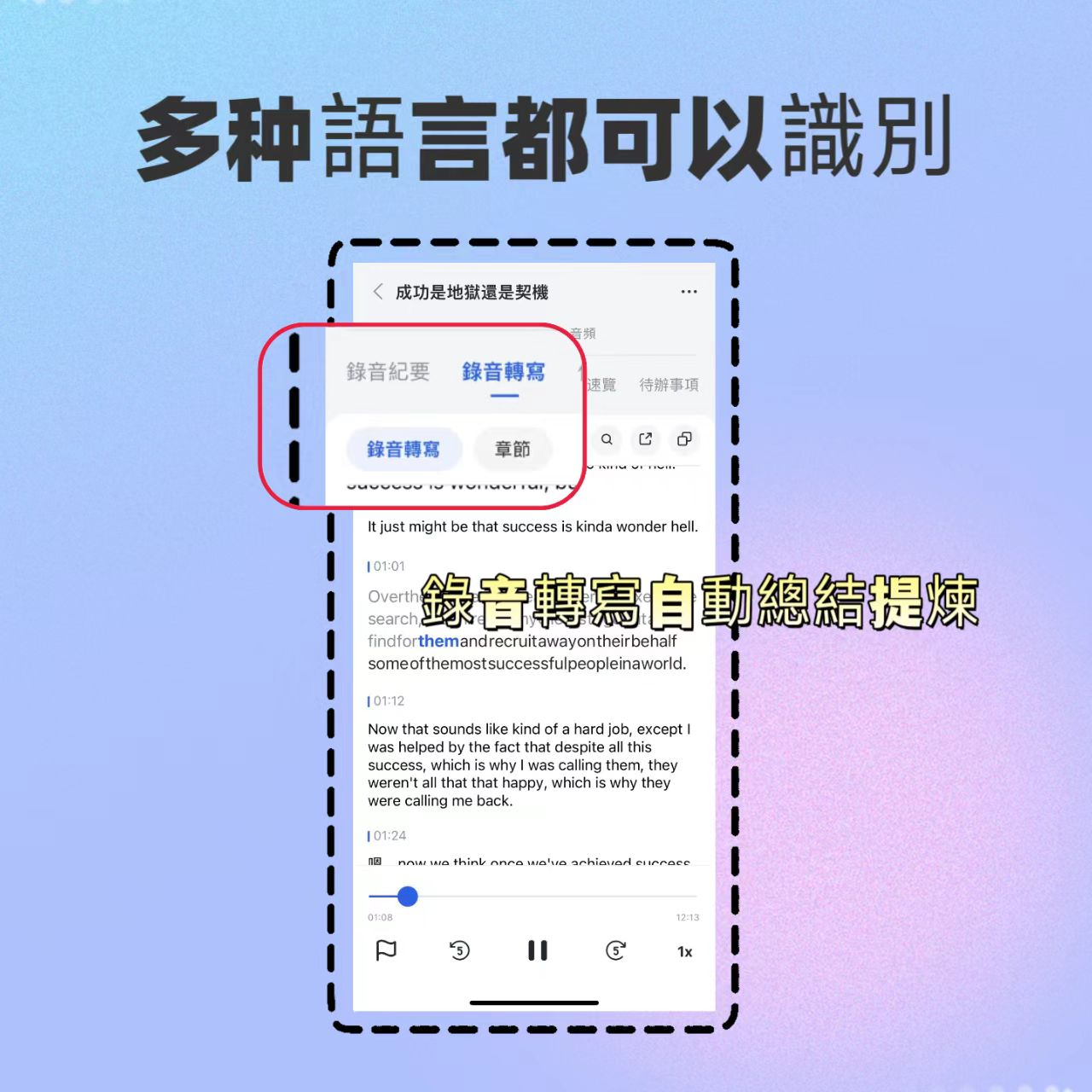
I tried Notta and Otter, and finally settled on Tinrec. This article is my experience after using it for a full semester—from lectures and group discussions to final exam prep. I'll tell you which app can really turn recordings into useful notes without hurting your wallet.
Why Look for a Notta Alternative?
I started with Notta because a senior in my department recommended it. Notta has a clean interface and decent transcription speed—right after class, I could get the text. But after half a semester, I started feeling it wasn't enough.
The problem isn't that Notta is bad. It's that I needed more than just lecture transcripts. During group discussions, everyone talked over each other and I needed to quickly grab conclusions. For my final project, I had to watch tons of YouTube tutorials and wanted to extract key points directly. Sometimes I recorded two-hour interviews and just wanted to know the key insights the interviewee shared.
Notta is solid for transcription, but when it comes to "post-transcription organization," I felt it fell short—I needed a tool that could summarize, find key points, and even let me ask questions about the recording content. If you have these needs, Tinrec is a better fit for students.
Tinrec vs Notta: Key Differences in Core Experience
Below are four dimensions that I found most important for students after real-world use.
Beyond Transcripts: AI Summaries and Q&A
Two-hour lecture recording—need to re-listen at home? Not anymore. After Tinrec transcribes the text, it automatically generates summaries and chapters. I just spend 5 minutes reading the summary to know the class highlights. Even better, I can directly ask Tinrec: "What's the homework for this class?" or "What are the differences between the three algorithms the professor mentioned?" It answers based on the recording content—this feature was a lifesaver before finals. Notta has good transcription accuracy but lacks this conversational query ability.
Cross-Platform and More Diverse Input Sources
I record on my iPhone but use a Windows laptop. Notta's web version sometimes syncs slowly. Tinrec has iOS, Android, and web versions, so I can use it anywhere. Plus, Tinrec doesn't just record—it can also accept YouTube or Bilibili links and directly parse video content. That's super convenient for watching tutorials. Notta excels at live recording and meeting transcription, but parsing online videos isn't its strength.
Better Chinese Content Organization
Some of our classes are fully in Chinese, others mix Chinese and English. Tinrec's chapter splitting and summary generation for Chinese content is noticeably smoother—it doesn't chop English technical terms into gibberish. During group discussions with mixed Chinese and English, Tinrec's recognition remains stable. Notta's Chinese support isn't bad, but in terms of AI summary fluency, Tinrec feels like a classmate who understands context and highlights key points for you.
Stop organizing recordings by hand
Upload audio or video and automatically get a transcript, summary, and action items
More Student-Friendly Free Plan
Students care most about free minutes. Notta's free plan gives 120 minutes per month, which only lasts about the first two weeks of a semester. Tinrec's free version also has basic transcription minutes (exact number depends on official policy). In my experience, if you only record key classes and group discussions, it's just enough for a month. If you want unlimited use, the Pro monthly subscription costs less than a daily bubble tea. Otter gives 300 free minutes, but it's designed for English meetings, so its Chinese summaries are limited.
Tinrec Core Features Overview
After using it for a whole semester, these are the features I use most:
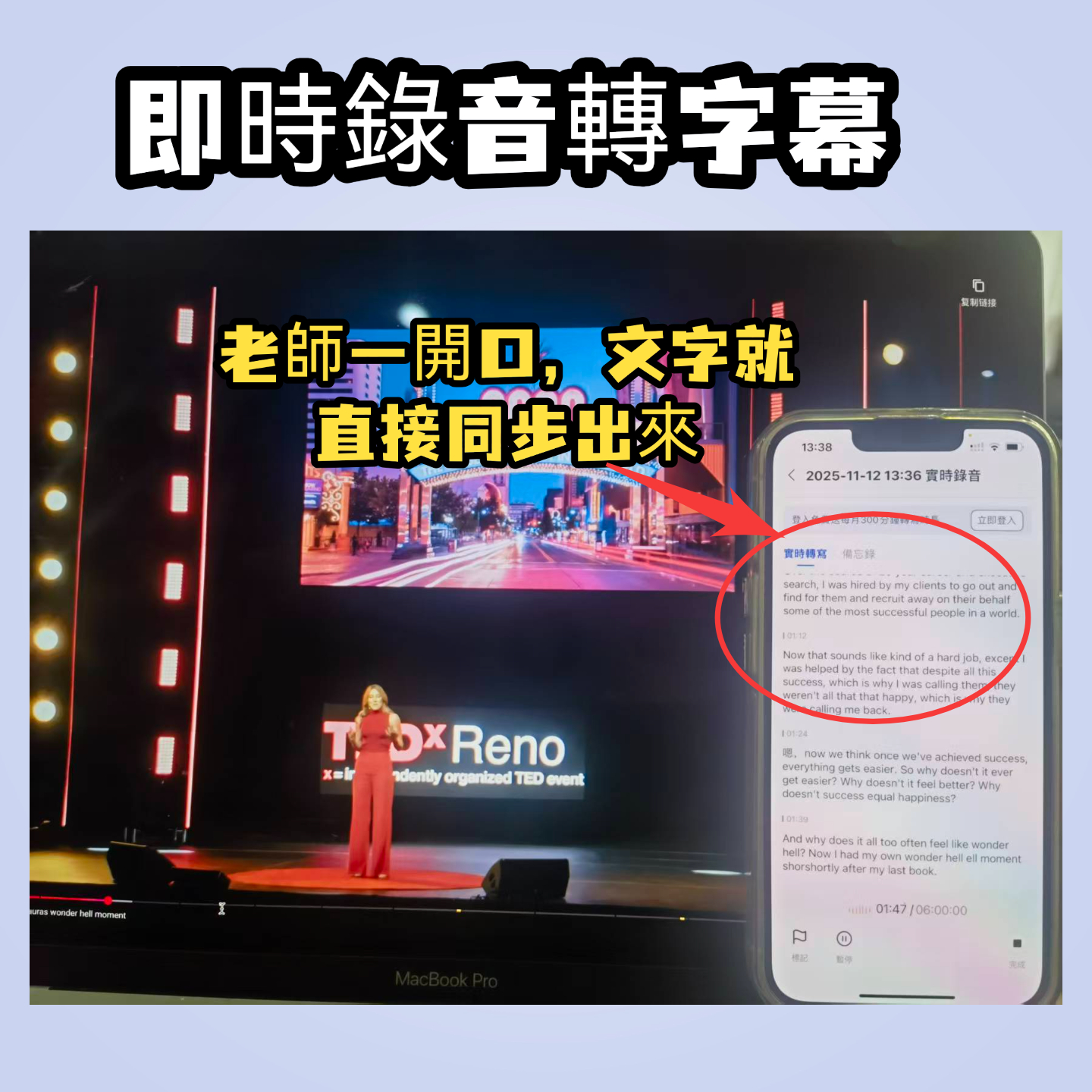
Live Recording to Text
Open Tinrec during class—text appears as the professor speaks. I can watch the screen to confirm key points, and by the end of class, the transcript is ready. No extra time needed for organization.
AI Conversational Query
This was my lifesaver for finals. I dumped all semester's recordings into it. Before the exam, I just asked: "What was covered in the first quiz?" or "Where is the answer to question 2?" Tinrec searches semantically—no need to flip through a dozen pages of transcripts.
Online Video Link Parsing
Many supplementary materials are YouTube videos. Just paste the link, Tinrec converts the video to text and summary. I even used it to organize online courses—so efficient that my roommate asked if I was cheating.
To-Do Extraction
After group discussions, the worst thing is no one remembers who does what. I record the discussion; Tinrec automatically extracts action items like "Xiao Ming researches literature, Xiao Mei prepares slides, I handle code." Screenshot and share to the group—no arguments.
Real Use Cases
Lecture Recording → Exam Review Notes
I record every class, but I don't re-listen to all of them. Tinrec's chapter feature splits a class into 5-6 segments, each with a title and summary. When reviewing for exams, I only read the summaries and key points. Only if something is unclear do I go back to that recording segment. Compared to re-listening to everything, I save at least 3x time.
Group Discussions → Auto Meeting Minutes
Our project team meets weekly, about 40 minutes each. We used to take turns writing minutes, but everyone's notes were different. Now I use Tinrec to record, then after the discussion I ask Tinrec: "What was this week's conclusion?" and "What needs to be done before next meeting?" Then I paste the result into Notion—no need to write meeting minutes at all.
Watching Tutorials → Quick Key Points
When preparing for projects, I had to watch tons of coding tutorials. I used to pause and take notes constantly. Now I throw the video link to Tinrec, get the transcript and summary, copy the key points into my notes, and only go back to the video if I need clarification.
What to Look for When Choosing a Speech-to-Text Tool
Even if you don't choose Tinrec, keep these points in mind when picking a tool:
Diverse Input Sources
If you're like me—recording lectures, watching online videos, and processing interview audio—pick a tool that supports file uploads and link parsing. Apps that only support live recording limit your use cases. Tinrec covers this comprehensively.
AI Organization Matters More Than Transcription Speed
A few seconds faster in transcription doesn't matter. But whether summaries are accurate and if you can ask questions directly impacts your review efficiency. Tinrec's AI Q&A and summaries are the features I find most worth paying for.
Calculate Free Minutes Long-Term
Don't just look at how many minutes the free plan gives. Calculate how many minutes you'll need per week. For me, about 200 minutes per week for lectures and discussions—the free plan might not be enough. But the Pro monthly subscription costs less than a daily drink, which I find worthwhile.
Don't Judge Chinese Support by Surface
Many tools claim to support Chinese, but their summaries read like Google Translate. Be sure to test with your own recording to see the fluency of summaries and Q&A. Tinrec's Chinese summaries are the most human-like I've used.
Wrap-Up: Is Tinrec Worth Trying?
If you're looking for a tool that can turn your lecture recordings, tutorial videos, and group discussions into useful notes without spending too much each month, Tinrec is my top recommendation. Its AI summaries, conversational queries, and online video parsing hit exactly the pain points students face.
I switched from Notta not because Notta is bad, but because Tinrec better fits my workflow of "organizing knowledge." I suggest trying the free version first—test it with your own lecture recording or a tutorial video. That's more direct than any review. If it works for you, consider upgrading; the student plan is really affordable.
Turn every recording into actionable outcomes
Get 60 free transcription minutes when you sign in. No credit card required.
Related Reading
You might also like

2026 Tested Comparison of 3 Google Meet Note-Taking Alternatives: Which One Does Reddit Recommend Most?
Is Google Meet's built-in transcription not enough? This article tests three Reddit-popular alternatives: Tinrec, Otter.ai, and Fireflies.ai, comparing accuracy, AI summaries, cross-platform support, and free plans to help you find the best meeting notes tool.

Top 5 Google Meet Alternatives in 2026: From Meetings to Action
Tired of struggling to organize meeting notes after Google Meet calls? This comparison of 5 alternatives, from video conferencing to AI meeting notes, helps you find the right tool to turn meetings into action.

The Complete Guide to Google Meet Meeting Notes in 2026: Auto-Transcription & Summaries with Tinrec
This guide shows you how to use Tinrec on Windows to instantly record audio, automatically transcribe Google Meet meetings into verbatim text, summaries, and to-do lists — try it for free.
2026 Comparison of 5 Google Meet Recording & AI Summarization Tools: Which Free Plan Is Good Enough?
Spending hours replaying meeting recordings and manually transcribing after Google Meet calls? This article compares 5 tools—Tinrec, Otter.ai, Fireflies.ai, Notta, Granola—that record meetings, auto-transcribe, and generate action items. We tested their free plans to help you find the best meeting assistant.
2026 Hands-On Comparison: 4 Affordable Google Meet Recording Tools – No Hardware Needed, Your Phone Does It All
A mid-level manager tested multiple speech-to-text apps for Google Meet. No need to buy meeting hardware—just use your phone to auto-record meetings, generate AI summaries and action items. This comparison of Tinrec, Otter.ai, and Notta shows which is the most cost-effective and practical.

How to Take Meeting Minutes on Google Meet in 2026? 5 Steps with Tinrec for Free
Tired of being overwhelmed by post-meeting notes after Google Meet calls? A mid-level manager tested 5 steps using Tinrec for free to convert meeting recordings into summaries and action items, saving over an hour a day from manual work.
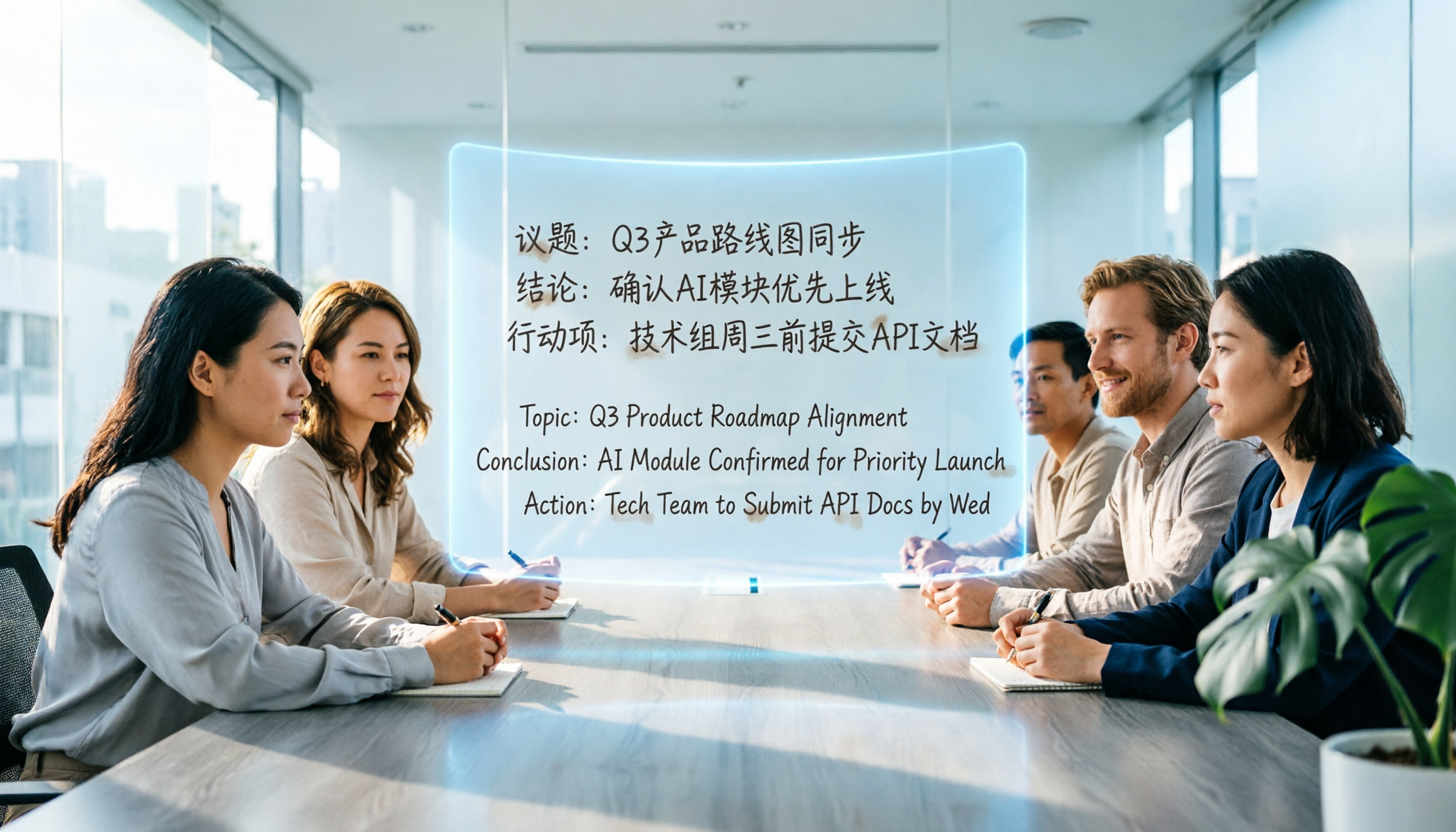
Tinrec vs Google Meet 2026: 4-Dimension Comparison, Which Is Better for Meeting Minutes?
This article compares Tinrec and Google Meet on meeting recording and organization across four dimensions—language support, AI capabilities, and cost—to help you choose the best post-meeting tool.
2026 Testing 5 Google Meet Alternatives: Which Captures Meetings Best?
Reddit users rave about Google Meet alternatives that not only improve meetings but also auto-transcribe, summarize, and create to-dos. A hands-on test of Tinrec and 4 other tools.

Tinrec vs Otter.ai 2026: A 5-Dimension Showdown – Which Is Better for Chinese Meeting Transcription?
With Google Meet background reversal and frequent online meetings, which recording tool should you use to organize meeting content? This article deeply compares Tinrec and Otter.ai from 5 dimensions: input sources, Chinese accuracy, AI organization features, cross-platform support, and price, to help you choose the best solution for Chinese users and cross-source audio/video data organization.