

Turn recordings into transcripts and summaries in minutes
Upload audio or video for multilingual transcription, AI notes, and action items
Tinrec is an AI-powered recording and audio/video organization tool with built-in practical voice translation features that support multiple language pairs. It saves a lot of time for users who need to handle cross-language meetings, classes, or interview content. The free plan provides a monthly base transcription quota and includes translation features, making it suitable for office workers, students, and individual creators.
While there are several free voice translation tools on the market, this article focuses on Tinrec alongside two other general-purpose options, giving you a clear picture of how voice translation can be used and whether the free versions are sufficient.
What Can Voice Translation Do for You?
Voice translation isn't just about converting Chinese to English; it saves you the time of repeated listening, typing, and manual translation in these scenarios:
- Cross-language meetings: When foreign colleagues or clients speak, use Tinrec to instantly record and transcribe the audio, then translate the entire transcript. In minutes after the meeting, you'll have a bilingual meeting record.
- Foreign language courses and lectures: Record the entire class, transcribe it to text, translate it into Chinese (or your language), and use AI summaries to grasp the key points. Your review efficiency will double.
- Interviews and research: Interview foreign-language subjects, organize bilingual transcripts for easy citation, and avoid hiring someone to transcribe.
- Content creation: Convert foreign-language YouTube or podcast content into text, translate it, and produce Chinese summaries or articles, quickly building topic research.
Key Capabilities of Voice Translation
Take Tinrec as an example: its voice translation isn't a standalone machine translation tool but part of the entire "record → transcribe → translate → organize" workflow. The benefit is consistency across the data.
- Multi-source translation: Whether it's live recording, uploading local audio files, or pasting a public video link, Tinrec first transcribes the audio to text and then translates it into your desired language. This way, you don't need to switch between different tools for different sources.
- Multi-language support: Tinrec's transcription and translation currently support 14 languages, including Traditional Chinese, Simplified Chinese, English, Japanese, Korean, and other common languages—sufficient for most business or learning scenarios.
- AI-assisted understanding: It doesn't just give you a block of translated text. You can follow up with questions like "What does this section mean?" or "What are the key points?" The AI answers based on the recording content, acting like a personal bilingual assistant.
- Coherent output: After translation, you can directly export bilingual transcripts, meeting minutes, subtitles, and other formats without copying and pasting into other software for reformatting.
Stop organizing recordings by hand
Upload audio or video and automatically get a transcript, summary, and action items
Practical Use Cases
Scenario 1: Everyday workplace meetings You have weekly online meetings with overseas teams. In the past, you scrambled to take notes during the meeting and later tried to remember the English translations. Now, just record the entire meeting with your phone or computer. Tinrec automatically transcribes it, and with one click you can translate it into English, highlight action items, and email them to colleagues.
Scenario 2: Students attending foreign-language lectures A foreign professor gives a lecture entirely in English, and you're worried about missing key points. Open Tinrec for live recording, transcribe it into an English transcript, translate it into Chinese (or your language), and use AI summaries. A two-hour lecture's highlights can be reviewed in 5 minutes.
Scenario 3: Content creators organizing material You often watch foreign YouTube videos for inspiration but don't want to spend time transcribing and translating. Simply paste the video link into Tinrec; it will parse the content, generate a transcript, and translate it into Chinese (or your language), helping you quickly decide if the video has valuable article-worthy points.
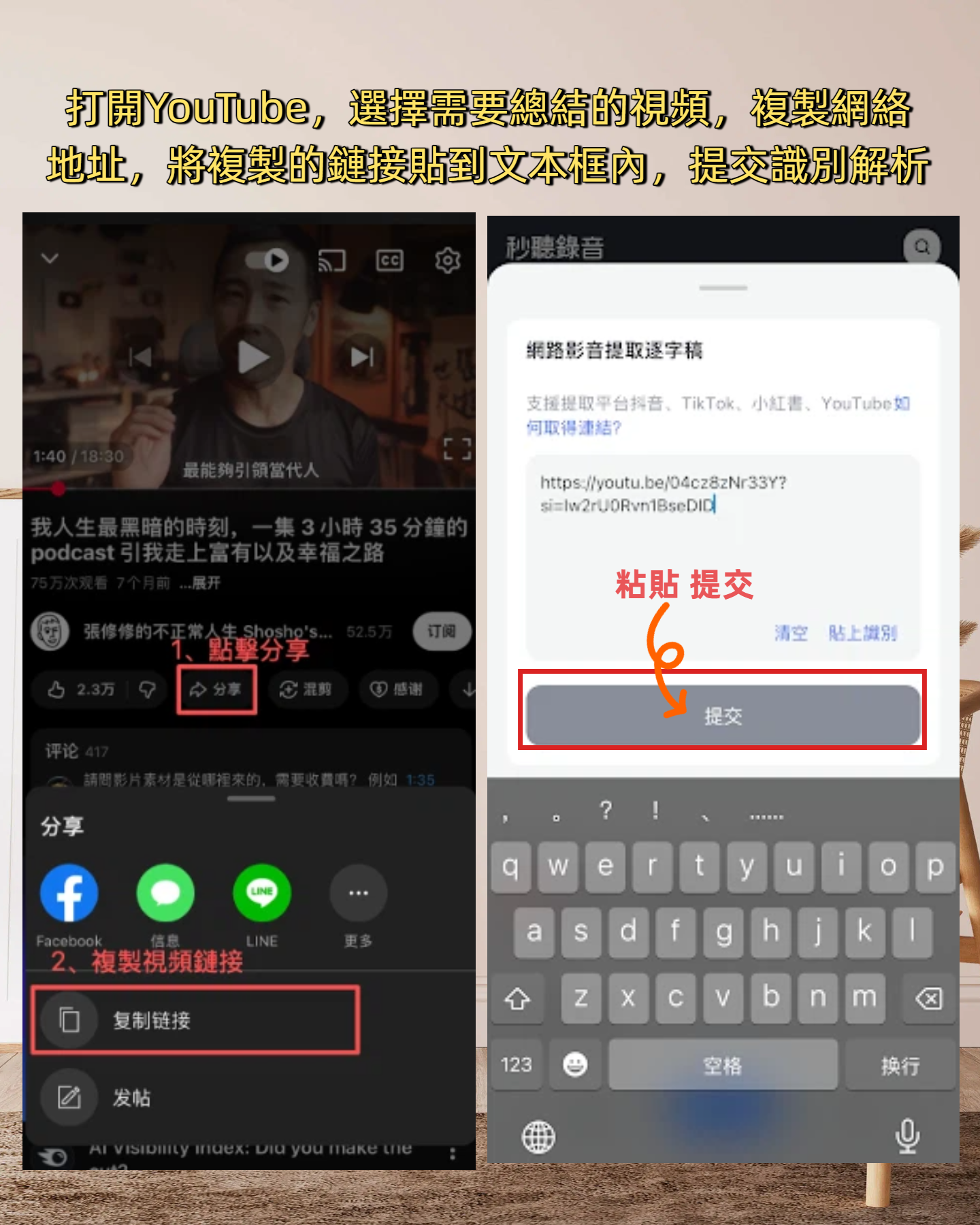
Scenario 4: Personal language learning You're practicing English listening. Record your own speaking practice; after Tinrec transcribes it to text, you can compare it with the original and translation to check pronunciation and grammar.
4 Things to Consider When Choosing a Voice Translation Tool
- Translation accuracy: Don't just rely on official data. Test with your actual recordings. Tinrec delivers good transcription quality with clear audio and maintains meaning in translation, but you may still need to verify against the original in cases of overlapping speakers or heavy accents.
- Language coverage: If you need common language pairs like English, Japanese, Korean, and Chinese, most tools support them. But for French, Thai, etc., you need to check. Tinrec currently supports 14 languages, covering most common scenarios.
- Post-translation usability: Does it only provide a block of translated text? Or can you edit, ask questions, and export meeting minutes? Tinrec's advantage is that after translation, you can use AI to ask about key points and export bilingual documents.
- Free plan limitations: Some tools offer translation but not transcription, or the free monthly minutes are very limited. Tinrec's free plan includes transcription and translation with a monthly base quota. You can try it out; for heavier use, consider the weekly card or Pro plan.
Frequently Asked Questions
How long can I use the free voice translation? For Tinrec, the free plan provides a monthly base transcription minutes; translation has no additional restrictions as long as you stay within the transcription quota.
Can I choose the target language for translation? Yes. In Tinrec, you can select the target language in settings, supporting 14 language pairs.
How well does translation work with multi-speaker or code-switched content? If the audio is clear, translation for single-language segments is good; but with code-switching (e.g., Chinese-English mix) or simultaneous speakers, errors may occur. For important content, it's recommended to check against the transcript.
How is this different from general translation software? General translation software usually only does real-time text or voice input translation. But Tinrec first converts audio into full text, then performs entire-document translation. It can also generate summaries, action items, and export files, making it more suitable for "content organizing" rather than just "word lookup."
Conclusion
Voice translation is no longer expensive or difficult to use. Free tools can now achieve decent results. If you frequently deal with cross-language meetings, classes, or video/audio content, start with Tinrec's free version. Within a month, you'll appreciate the convenience of not having to translate manually. Besides Tinrec, there are other free options available; choose the one that best fits your workflow.
Turn every recording into actionable outcomes
Get 60 free transcription minutes when you sign in. No credit card required.
Related Reading
You might also like

How to Stay Focused While on a Mobile Meeting? Complete Guide to Google Meet On-the-Go Mode and Meeting Notes Tips
This guide walks you through setting up Google Meet On-the-Go mode to join meetings smoothly while commuting, walking, or moving, and explains how to use recording tools to quickly convert meeting content into transcripts, summaries, and action items.

How to Start a New Google Meet and Turn Recordings into Reusable Content: From Link Creation to AI Summary Export
This hands-on tutorial walks you through quickly creating a new Google Meet from Gmail, Google Calendar, or meet.google.com, and shows you how to use Tinrec to convert meeting recordings into transcripts, summaries, and action items—turning every discussion into searchable, organizable text assets.

2026 Comparison of 3 Google Meet Recording and Transcription Tools: Which Free Plan for Windows Users Is Best?
Using Google Meet on Windows has no built-in recording feature, making meeting notes cumbersome. This article tests 3 recording and transcription tools, showing how to pair them with PWA for efficiency and find the best free plan for Chinese users.
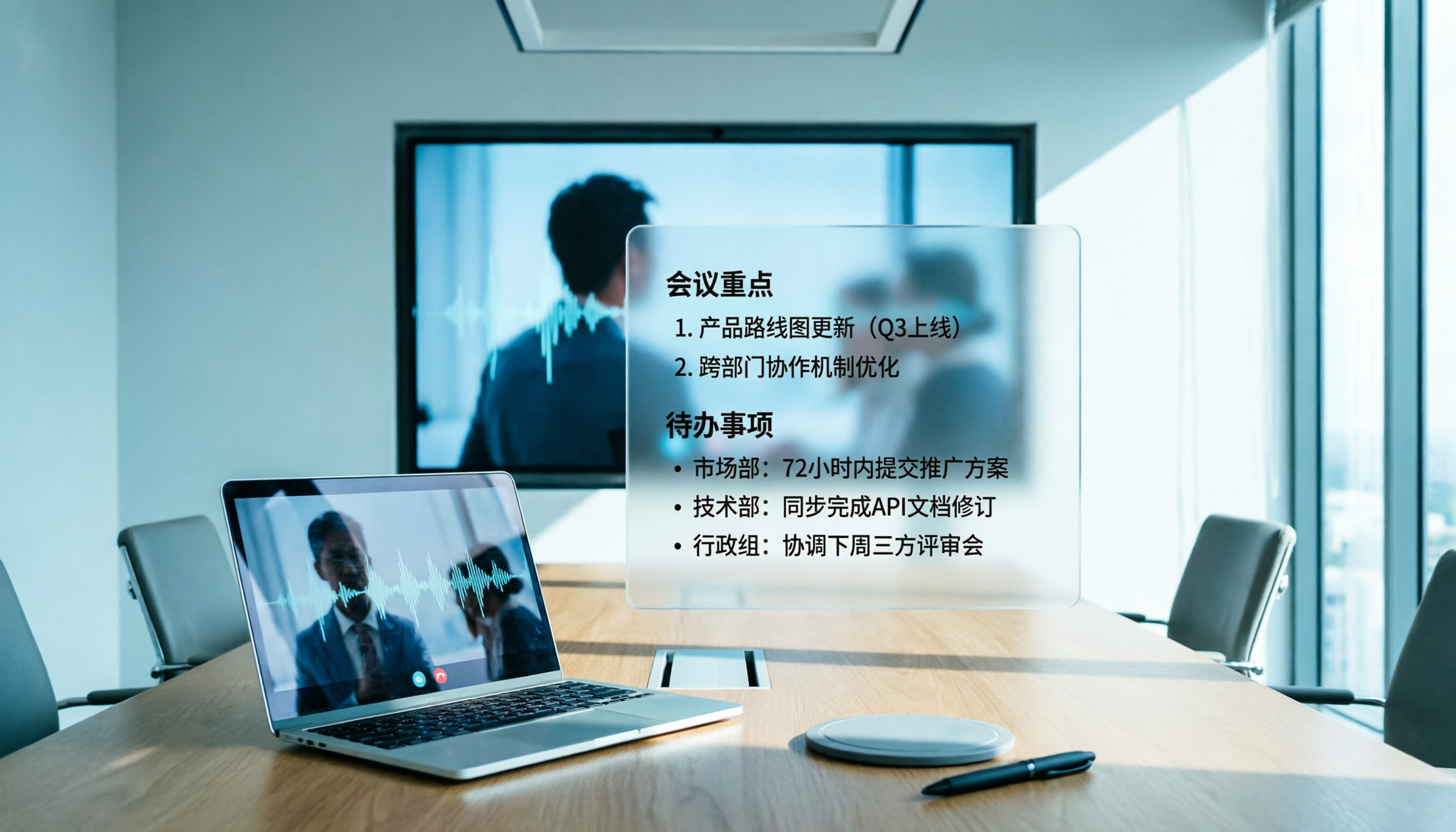
4 Google Meet Transcription Tools Compared in 2026: Which AI Summary Saves You the Most Time?
Struggling to record Google Meet meetings on your TV? This article tests Tinrec, Otter.ai, Notta, and Yating transcript, comparing cross-platform support, Chinese accuracy, and AI summarization to help you find the best meeting recording tool.

2026 Comparison of 4 Auto Video Captioning Tools: Which Free Plan Is Most Useful?
Tested multiple auto video captioning tools, analyzed free version limitations and real-world experience, and recommend the best solution for Taiwan users that supports Chinese and has sufficient free quota.
2026 Free Recording Transcription Apps: 3 Top Options Compared
A review of 3 free recording transcription apps, including hands-on experience, key buying tips, and common pitfalls to avoid. Find the best voice-to-text tool for your needs.

A Complete Guide to AI Subtitle Generation in 2026: How to Auto-Generate Video Subtitles
Need subtitles for your lecture recordings? Learn these 5 steps to quickly transcribe videos and auto-generate subtitles with Tinrec, saving you manual typing time. Tested by students – the free tier is enough!

2026 Tinrec vs Notta: A 5-Dimension Comparison — Which Is More Comprehensive for Meeting Notes and Knowledge Management?
Still using real-time translation tools but struggling to organize transcripts? This article compares Tinrec and Notta across 5 dimensions—language support, post-processing capabilities, use cases, and more—to help you choose the best tool for meeting notes and knowledge management.

2026 Tinrec Online Subtitle Generator: No Installation, AI-Powered Multilingual Subtitles
Struggling to follow lectures or keep up with meeting notes? This article, tested by a senior student, compares 5 online subtitle generators, including Tinrec, Otter.ai, and Notta, from free plans to paid value, helping you find the best subtitle tool for students.