

Turn recordings into transcripts and summaries in minutes
Upload audio or video for multilingual transcription, AI notes, and action items
Tinrec vs Otter.ai|Quick Overview
Otter.ai is a well-known AI meeting notes tool, strong in automatically joining online meetings and real-time transcription of English content. Tinrec is more like a multi-source audio/video processing workstation, covering not only meetings but also courses, interviews, online videos, and local files.
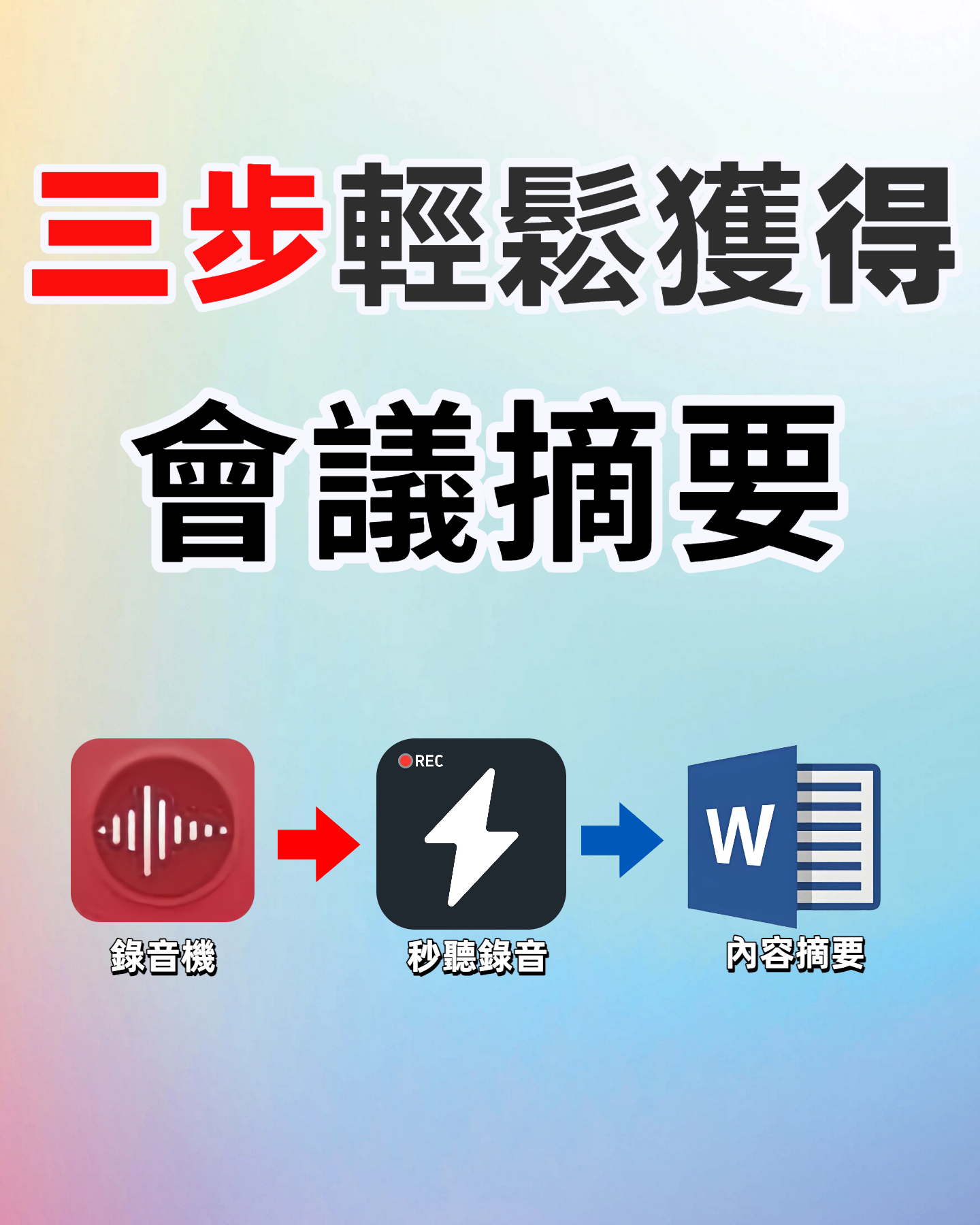
If you primarily create Chinese subtitles for YouTube, Bilibili, or Xiaohongshu, you'll find these two tools take very different approaches.
| Comparison Item | Tinrec | Otter.ai |
|---|---|---|
| Core Positioning | AI recording & audio/video organization | AI meeting notes & team collaboration |
| Input Sources | Live recording, local files, online video links | Meeting platforms, limited files |
| Chinese Support | Optimized for Chinese content | English strong, Chinese secondary |
| Free Plan | Monthly basic transcription quota | 300 minutes per month |
| Paid Plan | Weekly, monthly, yearly passes | Pro annual ~$8.33/month |
This article compares these two tools across four key dimensions: input sources, Chinese recognition & subtitle generation, post-transcription processing, and pricing.
Dimension 1|Input Sources: Which Handles More Video Types?
Otter.ai's core entry point is online meetings. It can automatically join Zoom, Google Meet, and Teams, making it very friendly for English business meetings. But getting subtitles from public online videos is cumbersome: you must download the video first and then upload it, and the free plan only allows 10 file imports per month.
Tinrec directly supports pasting links from platforms like YouTube, TikTok, Xiaohongshu, and Bilibili. It parses the video content with one click and converts it directly into text and subtitles. This saves content creators who frequently work with various video sources many download and re-upload steps.
Verdict: Tinrec is clearly better suited for handling diverse video sources.
Dimension 2|Chinese Recognition & Subtitle Generation: Which Is More Reliable for Chinese?
Otter.ai excels at English recognition, with mature speaker separation and keyword search. However, Chinese scenarios are not its strong suit, especially with background noise, multi-speaker conversations, or mixed Chinese-English content, where error rates increase significantly.
Tinrec's product design covers both simplified and traditional Chinese users. Whether for meetings, courses, or online videos, the transcribed text and subtitles are adjusted for Chinese contexts, with more natural sentence breaks and punctuation. Although no tool guarantees perfect accuracy, for Chinese video subtitles, Tinrec's actual experience aligns better with our usage habits.
Verdict: Tinrec handles Chinese content more meticulously.
Dimension 3|Post-Transcription Processing: What Can You Do After Getting the Transcript?
After transcription, Otter.ai mainly provides summaries, keyword search, and team collaboration. You can share meeting notes with colleagues for collaborative annotation.
Stop organizing recordings by hand
Upload audio or video and automatically get a transcript, summary, and action items
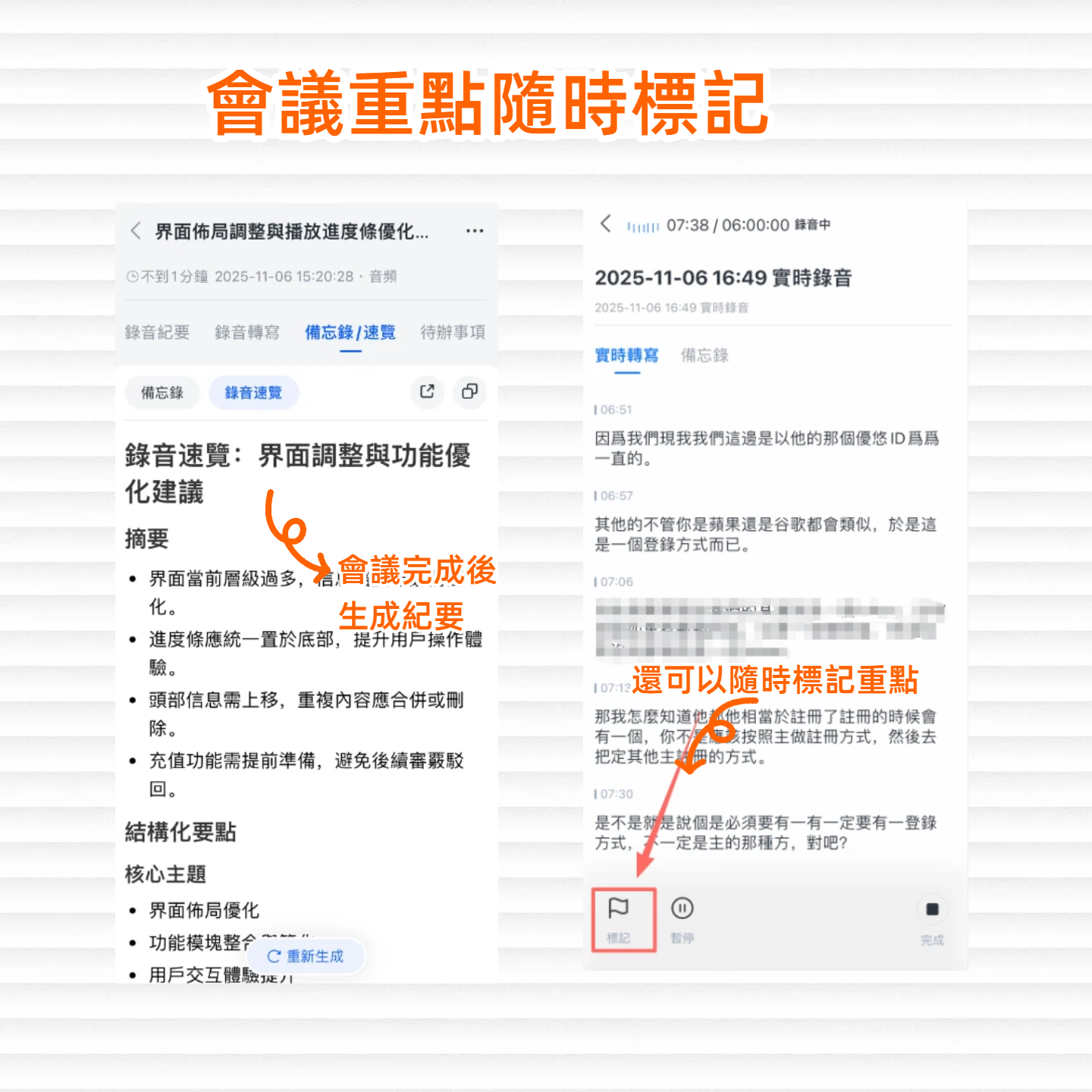
Tinrec goes further: it not only provides a transcript but also automatically generates summaries, chapters, action items, and even allows you to ask questions about the recording content. For example, if you upload an interview video, you can ask, "What is the interviewee's view on product XX?" More practically, it can generate meeting minutes, reports, or tables directly from the results, and supports export to Notion, Google Docs, and other external tools.
Verdict: Tinrec's post-processing is closer to a complete workstation, not just transcription.
Dimension 4|Pricing: Is the Free Plan Enough? Which Paid Plan Offers Better Value?
Otter.ai's free plan offers 300 minutes per month, which might suffice for occasional short meetings. But if you regularly process videos over 10 minutes long, the quota runs out quickly. The paid Pro plan costs ~$8.33/month billed annually, offering 1,200 minutes and 10 file imports per month, still focused on meeting scenarios.
Tinrec's free plan provides a basic quota to try live recording and online link parsing. Paid options include weekly, monthly, and yearly passes, offering more flexibility. For example, if you have a few long videos to subtitle this month, a weekly pass can handle it without committing to a long-term subscription.
Verdict: Tinrec's plans are more flexible, suitable for creators with irregular usage.
Unique Advantages of Each?
Tinrec's Unique Strengths
- Multi-source Integration: Paste a link to parse online videos - extremely creator-friendly.
- Chinese First: Adjusted for Chinese sentence breaks, punctuation, and context, resulting in more natural subtitles.
- Powerful Post-Processing: Q&A, report generation - not just text conversion but turning videos into actionable data.
- Flexible Plans: Weekly pass suitable for project-based usage, no long-term commitment.
Otter.ai's Unique Strengths
- Deep Meeting Integration: Auto-join meetings, speaker separation - excellent for English business teams.
- Collaboration Features: Teams can share notes and comment, ideal for cross-department communication.
Summary: Which Should You Choose?
- If you frequently extract subtitles from YouTube, Xiaohongshu, Bilibili, etc., and the content is primarily Chinese → Tinrec is better.
- If you want to ask questions about the content or generate meeting notes or reports after transcription → Tinrec is the top choice.
- If your workflow involves many English online meetings requiring team collaboration and speaker separation → Otter.ai works better.
- If you only need simple subtitles occasionally and are budget-conscious → try Tinrec's free plan first, then decide on upgrading.
In short: For most Chinese video creators, Tinrec offers a more complete solution in input sources, Chinese processing, and subsequent applications. We recommend trying the free plan first with your own videos to test its performance.
Frequently Asked Questions
Q1: Can both Tinrec and Otter.ai generate subtitles? Both tools can convert speech to text and export in subtitle formats. However, Tinrec directly supports online video links, while Otter.ai focuses primarily on meeting recordings.
Q2: Is the free plan sufficient? Tinrec's free plan offers a basic quota suitable for light testing; Otter.ai's free plan provides 300 minutes per month, fine for short meetings. For heavy or long-form content, consider paid plans.
Q3: Which has better Chinese recognition? No tool guarantees perfect accuracy, but Tinrec has more optimizations for Chinese, typically performing more consistently with mixed Chinese-English or multi-speaker scenarios.
Q4: Can I export to other editing software? Yes. Tinrec supports export to Notion, Google Docs, etc. Otter.ai also allows text file export but has fewer integrations.
Q5: Can I use it on mobile and desktop? Both offer iOS and Android apps and web versions, enabling cross-platform use.
Q6: What else can I do besides subtitles? Tinrec can generate summaries, action items, chapters, and even allow you to ask questions about the recording. Otter.ai focuses on meeting summaries and team collaboration.
Turn every recording into actionable outcomes
Get 60 free transcription minutes when you sign in. No credit card required.
Related Reading
You might also like

2026 Google Meet Whiteboard Free Plan Roundup: 1 Solution at a Glance
Want to use a whiteboard in Google Meet without the hassle of meeting notes? This post covers a fully free combo that lets you automatically generate transcripts, summaries, and action items while using the whiteboard—no more scrambling.

2026 Real-World Test of 5 AI Captioning Tools: Which One Saves Time for Hong Kong Office Workers?
Tired of non-stop meetings and working overtime on meeting minutes? We tested 5 AI speech-to-text tools to find the best time-saving solution for Hong Kong office workers.

2026 Comparison of 4 Speech-to-Text Tools: How Tinrec Saves Mid-Level Managers 50% of Their Organizing Time
A mid-level manager tests 4 speech-to-text tools, from meeting minutes to video subtitles and interview transcription, explaining why Tinrec replaced Notta, whether the free version is sufficient, and when to upgrade.

2026 Comparison of 4 Subtitle Generation Software: Which One Handles Cantonese Transcription Best? Plus AI Summarization Feature!
Tired of daily meetings that run until quitting time, plus overtime to create meeting minutes and subtitles? Tried several Cantonese transcription tools that aren't accurate? This time we test 4 subtitle generation software to see which one can help—especially Tinrec's AI subtitle and summary feature, can it really save your overtime hours?
2026 Real-World Comparison of 4 Auto Captioning Tools: Which One Handles Both Video and Audio?
How to choose an auto captioning tool? This article compares real-world tests, shows you core features and use cases, and uses Tinrec as an example to teach you how to generate subtitles for free and quickly, perfect for meetings, courses, and video creation.

Which Auto-Captioning Tool is Best? 2026 Review of 3 Tools, This One Has the Most Complete AI Features
We tested three auto-captioning tools, evaluating Chinese accuracy, AI features, and export convenience to find which ones really save you time. Top pick: Tinrec, because it not only transcribes but also lets you ask AI questions and generate summaries.

2026 Tinrec vs Plaud Note: A 5-Dimension Comparison for Audio/Video Organization
What's the real difference between the audio transcription app Tinrec and the AI recording hardware Plaud Note? This article compares them across five dimensions—Cantonese accuracy, cross-platform support, AI query capabilities, input source diversity, and long-term cost—to help you decide which is better for organizing meetings, courses, and online videos.

2026 Video Subtitling AI Complete Guide: How to Choose Automatic Video Captioning Tools? Tinrec vs Plaud Note In-Depth Comparison
Want to quickly add subtitles to your videos but unsure which AI tool to pick? This article takes a purchasing decision perspective, deeply comparing Tinrec and Plaud Note across video sources, real-time captions, accuracy, cross-platform support, and pricing, so you can see at a glance which one fits you better.

2026 Comparison of 4 Video-to-Text Tools: Which One Generates the Most Accurate and Fastest Subtitles?
Tested multiple video-to-text apps, from free to paid. Which one supports Cantonese and produces the fastest, most accurate subtitles? Tinrec (Instant Voice Recording) stands out with AI features. Check out the review!