

Turn recordings into transcripts and summaries in minutes
Upload audio or video for multilingual transcription, AI notes, and action items
2026 Hands-On Comparison: Google Meet vs Tinrec for Multi-Scenario Meeting Notes
Tinrec vs Google Meet|Quick Overview
In the daily routine of online meetings, Google Meet is a familiar free video tool for many. Its built-in live captions are often used as an aid for meeting notes. But when you need more comprehensive organization, post-meeting queries, or multi-source audio processing, relying solely on platform-native features often falls short.
Basic Comparison
- Positioning: Google Meet is a video conferencing platform with live captions and enterprise-grade transcription; Tinrec is an AI recording and audio/video organization tool that turns sound into actionable knowledge.
- Pricing: Google Meet offers basic captions for free; enterprise transcription requires a paid Workspace subscription. Tinrec offers free trial credits, and Pro monthly/annual plans are usage-based.
- Platforms: Google Meet is available on web, iOS, Android; Tinrec supports iOS, Android, and web.
This article will analyze the actual differences between the two across five dimensions: input sources, organization features, AI dialog, cross-platform export, and Chinese language support.
Dimension 1|Input Source Flexibility
Google Meet's transcription is limited to audio within a live meeting and only works when you start or join a meeting on its platform. After the meeting ends, if recording was not enabled, the content cannot be accessed again. It is completely helpless for other sources like lecture recordings, interview audio files, or YouTube videos.
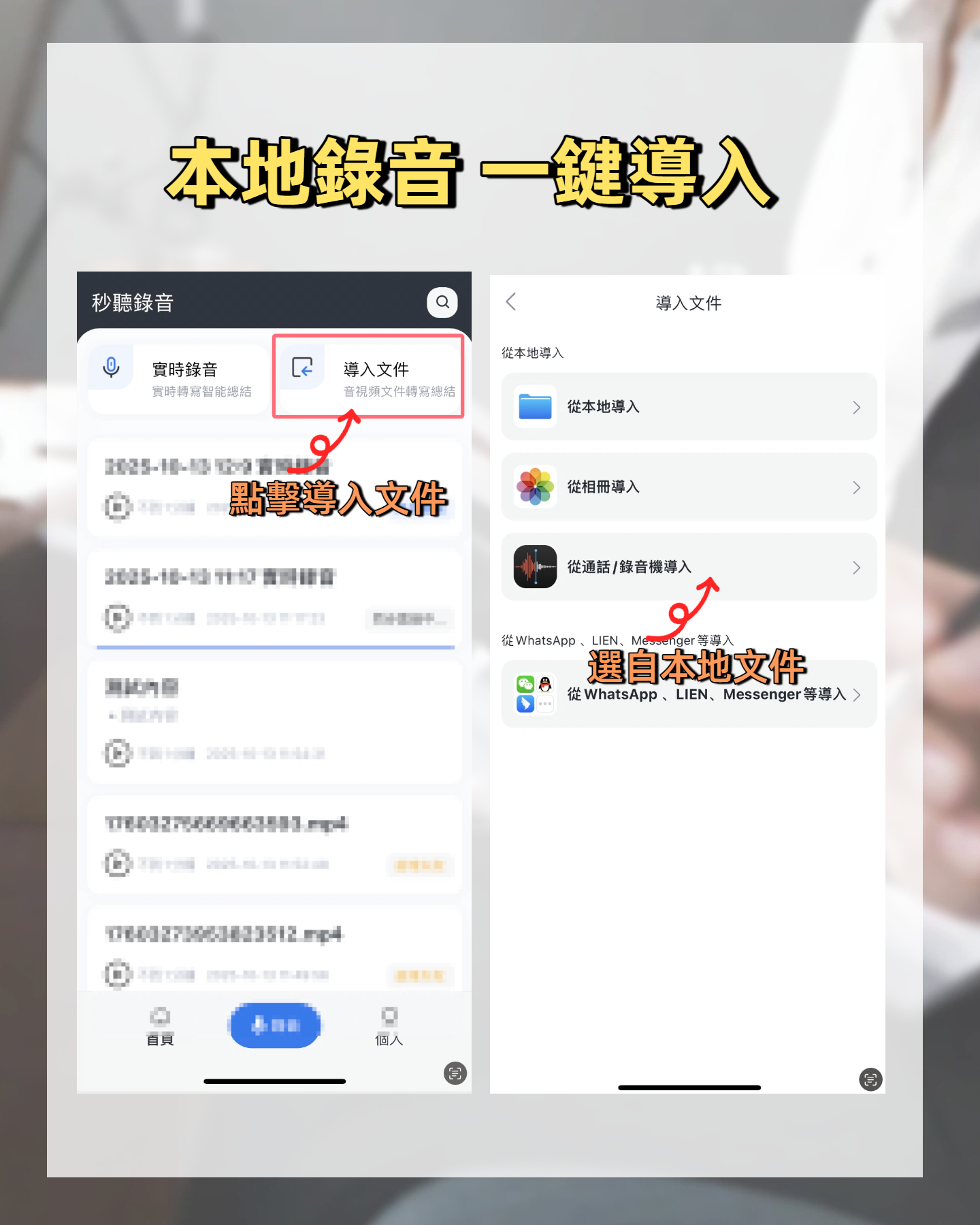
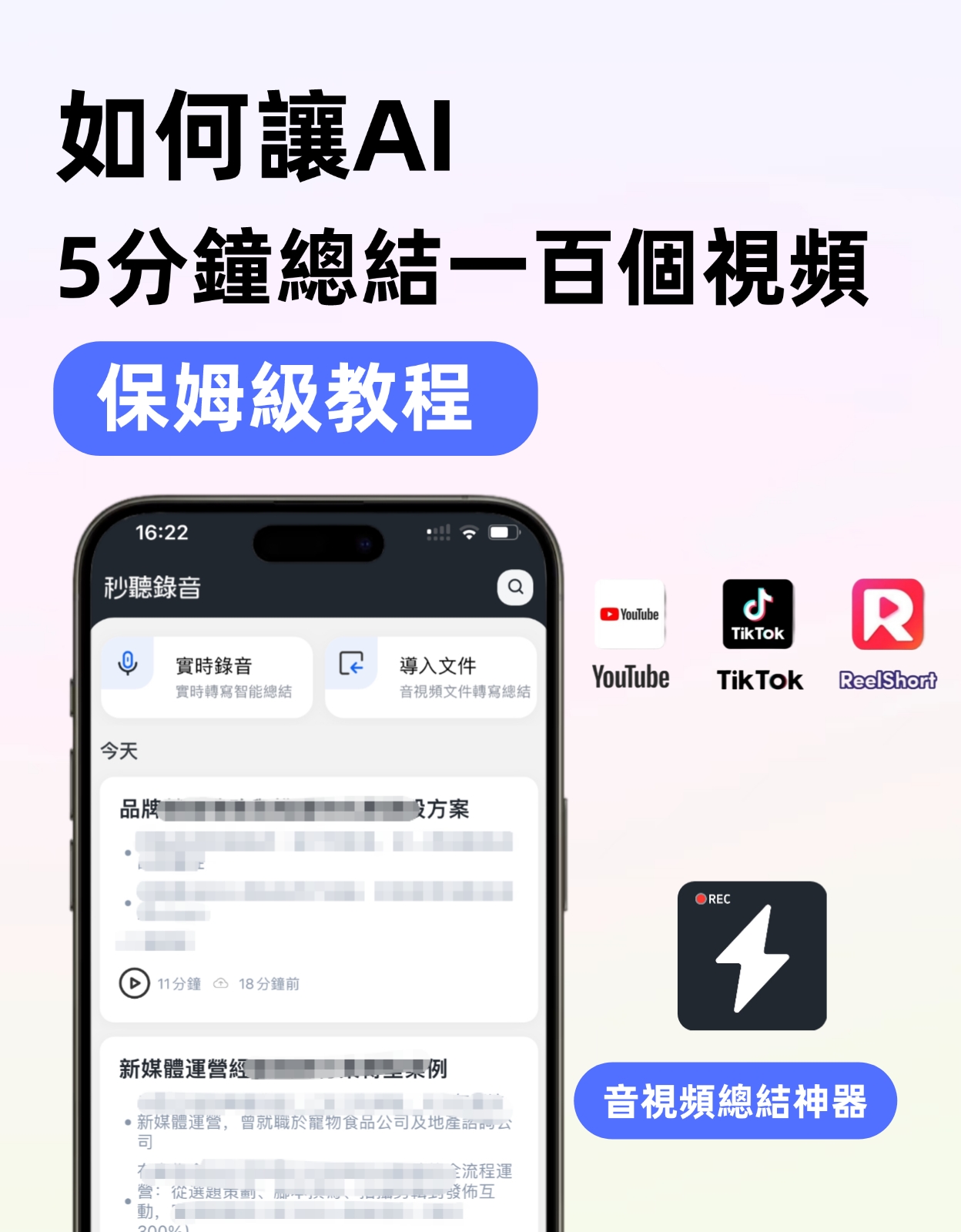
Tinrec covers five input channels: live recording, local audio/video file upload, web video link paste (supports YouTube, Bilibili, Xiaohongshu, TikTok, etc.), computer meeting recording (including Google Meet, Zoom, etc.), and one-tap recording on mobile. In other words, it is not limited to a single meeting scenario; any audio that needs to be organized can enter the same workflow.
→ This dimension: Tinrec clearly wins.
Dimension 2|Post-Transcription Organization
Google Meet's live captions disappear when the meeting ends. The enterprise version can produce text records, but they are merely a verbatim transcript without automatic summaries, key highlights, or structured organization. Users have to spend time re-reading and marking important points.
Tinrec not only produces verbatim transcripts but also automatically generates AI summaries, condensing an hour-long meeting into a few hundred key points. It also divides content into chapters, marks key discussion points, and directly lists action items. Users get not just plain text, but readable, pre-organized material.
→ This dimension: Tinrec wins big.
Dimension 3|AI Q&A and Action Item Extraction
Google Meet has no Q&A feature. Once the meeting is over, if you want to check "what was the quote" or "when is the deadline," you have to manually go through the transcript.
Stop organizing recordings by hand
Upload audio or video and automatically get a transcript, summary, and action items
Tinrec has a built-in AI Q&A module. After transcription, you can ask questions like "What was the conclusion of this meeting?" or "What modifications did the client request?" and the system extracts answers directly from the recording. Additionally, action item extraction automatically converts promises like "I'll handle it" or "I'll deliver by next Friday" into a to-do list, so nothing is missed.
→ This dimension: Tinrec overwhelmingly wins.
Dimension 4|Cross-Platform and Export
Google Meet's transcription text is limited to the Google ecosystem. The free version cannot even save it. The enterprise version can save to Google Docs, but converting to PDF, Word, or integrating with external tools like Notion or Dropbox requires cumbersome steps and offers limited flexibility.
Tinrec offers multi-format export including TXT, PDF, Word, and subtitle files, plus one-click sync to Google Docs, Notion, OneNote, and other cloud notes, embedding the organized result directly into your existing workflow. Seamless switching between phone and computer, with real-time sync across devices.
→ This dimension: Tinrec wins again.
Dimension 5|Chinese and Multilingual Support
Google Meet's Chinese live captions perform decently in quiet, single-speaker scenarios, but error rates increase with multi-speaker discussions, mixed Chinese-English speech, or slight accents. There are no settings optimized for Traditional Chinese or Cantonese.
Tinrec was designed with clear coverage of Traditional Chinese usage scenarios. It performs more maturely in transcription and summarization for Chinese meetings, classes, and interviews. It also supports Cantonese transcription and has better tolerance for mixed Chinese-English conversations. Of course, actual accuracy still depends on recording quality, background noise, and accents, but the overall experience is more tailored to local user needs.
→ This dimension: Tinrec wins with better Chinese adaptation.
What Unique Advantages Does Each Have?
Tinrec's Unique Strengths
- One-stop audio/video organization from multiple sources: Whether it's a meeting, class, interview, podcast, or YouTube/TikTok video, all can be transcribed and summarized with the same workflow.
- Complete chain from transcription to action: Summaries, chapters, action items, and AI Q&A all in one go, turning recordings into deliverable documents or task lists.
- Export ecosystem that connects outward: Supports multiple formats and third-party tool sync, so your data isn't locked inside a single app.
- A dictation experience that understands Chinese better: Focused on Traditional Chinese and Cantonese scenarios, reducing post-editing time.
Google Meet's Relative Advantages
- Native integration: If your entire team relies heavily on Google Workspace, Google Meet's integration with Calendar, Gmail, and Drive is seamless.
- Live caption aid: For lightweight needs like hearing assistance or quick dialogue confirmation, built-in captions are sufficient.
Summary: Who Should You Choose?
- If you only need live captions during a Google Meet session and don't need post-meeting organization → Google Meet is okay.
- If you want to turn meetings, classes, interviews, and web videos into searchable, summarizable, exportable data, and be able to ask questions about the recording anytime → Tinrec is a more complete choice.
- If you're frustrated with missing words or misrecognition in Google Meet's transcription, or often need to process external audio and video files → try Tinrec and save hours of re-listening and manual note-taking.
In a nutshell: For most users who need more than just "record it," but also "understand it and use it," Tinrec is a more practical meeting notes and audio/video organization solution. You can download the free version of Tinrec and test it with your own recordings to see the results.
Turn every recording into actionable outcomes
Get 60 free transcription minutes when you sign in. No credit card required.
Related Reading
You might also like

Google Meet vs Tinrec in 2026: Microphone Failed? 3-Dimension Comparison for Reliability
Is your Google Meet microphone not working, stalling your meeting? This comparison article evaluates recording stability, transcription and organization capabilities, and cross-device export across three dimensions, comparing Google Meet's built-in features with Tinrec Instant Recording to help you find the most reliable backup solution when microphone issues occur.

5 Google Meet Audio-to-Text Tools Compared in 2026: From Free to AI, All You Need to Know
Google Meet's built-in recording not enough? This article compares 5 popular Google Meet audio-to-text tools, including Tinrec, Otter.ai, Fireflies.ai, and more, from free plans to AI summaries, helping you choose the best meeting note assistant.

2026 Comparison of 3 Meeting Transcription Solutions: Is Google Meet's Built-in Transcription Enough?
The worst part of meetings is post-meeting cleanup. Google Meet has built-in transcription, but does it really save time? We test three solutions, from free to paid, to see which is best for meetings, classes, and interviews, and analyze why built-in features alone may not be enough.

Top 4 Subtitle Generator Tools in 2026: Free vs Paid Plans Compared
Looking to quickly add subtitles to videos, meetings, or lectures? This article tests 4 mainstream subtitle generators, comparing free credits, Chinese accuracy, and AI organization features to help you find the best choice.

2026 Horizontal Comparison of 4 Auto-Caption Apps: Are Free Student Plans Enough?
A senior information management student tested 4 auto-caption tools, from free quotas, speech recognition, AI summaries to cross-platform use, helping you save money.

2026 Comparison of 4 Google Meet Note-Taking Apps: Which Free Plan is Best for Students?
Taking online classes via Google Meet, professor talks too fast to take notes? This article tests 4 recording-to-text tools, from free limits, Chinese recognition, AI summaries, to cross-platform support, giving you a student's perspective on which offers the best value, helping you easily organize key points for finals.

2026 Comparison of 3 Google Meet Companion Mode Alternatives: Which AI Meeting Transcriber is Best?
Google Meet Companion Mode lets you join meetings with your personal device, but lacks transcription and auto-summarization. This article introduces smarter alternatives, using Tinrec as an example to turn meeting audio into searchable, organized knowledge, with a free tier to get started.

The Complete Guide to Google Meet Recording Alternatives in 2026: Why Tinrec Is Better for Your Meeting Management
Google Meet recording suddenly not working? This article explains common reasons for mid-level managers and recommends a more comprehensive recording and organizing tool, Tinrec, to help you integrate meetings, courses, and interviews across platforms, so you never miss important decisions again.
2026 Comparison of 2 Google Meet Camera Fix Solutions: Which Keeps Your Meetings Uninterrupted?
Google Meet camera not working? This article compares "traditional troubleshooting steps" with the "Tinrec instant recording backup solution" across problem resolution, complexity, cost, meeting quality, and long-term value to help you choose the best meeting safeguard strategy.