

Turn recordings into transcripts and summaries in minutes
Upload audio or video for multilingual transcription, AI notes, and action items
No Recording in Meetings? The Common Frustration of Business Starter Users
Daily Google Meet meetings, your company uses Google Workspace Business Starter—it's cheap, but has one fatal flaw: no recording feature.
After a meeting, colleagues scatter, and you're left staring at the screen furiously taking notes. A one-hour meeting can easily take another hour to organize afterward. Cantonese meetings are even worse—most transcription tools don't support Cantonese, so recording is pointless.
You're not the first to suffer this. Many SMEs and startups stick with Business Starter to save costs, then find workarounds. This article helps you find the most cost-effective and time-saving recording solutions—get AI meeting minutes without upgrading Workspace.
3 Key Points Before Choosing a Recording Solution
1. Do you need to manually start recording?
Some AI tools automatically join Google Meet and start recording when the meeting begins, no button needed. This matters if you often forget to start recording. However, such tools are usually pricier and geared toward English meetings.
2. How good is Chinese (especially Cantonese) transcription?
Many tools claim "multi-language support," but in practice, Cantonese transcription accuracy can vary greatly. If your company uses Cantonese daily, test thoroughly first. Tinrec performs best in this category, detailed later.
3. Does it have AI-assisted organization after transcription?
A plain transcript isn't enough—you still have to manually find key points. Truly time-saving tools auto-generate summaries, action items, and even let you ask AI questions like "Who mentioned the budget last time?" That's the real game changer.
Tinrec (Seconds Recording) — Our Top Pick After Testing
If you're on Business Starter and need a complete meeting minutes solution, Tinrec is the most balanced we've tried. It's not just a recording app; it's an "audio/video processing workstation"—supports iOS, Android, and web, no extra hardware needed.
How to integrate with your Google Meet?
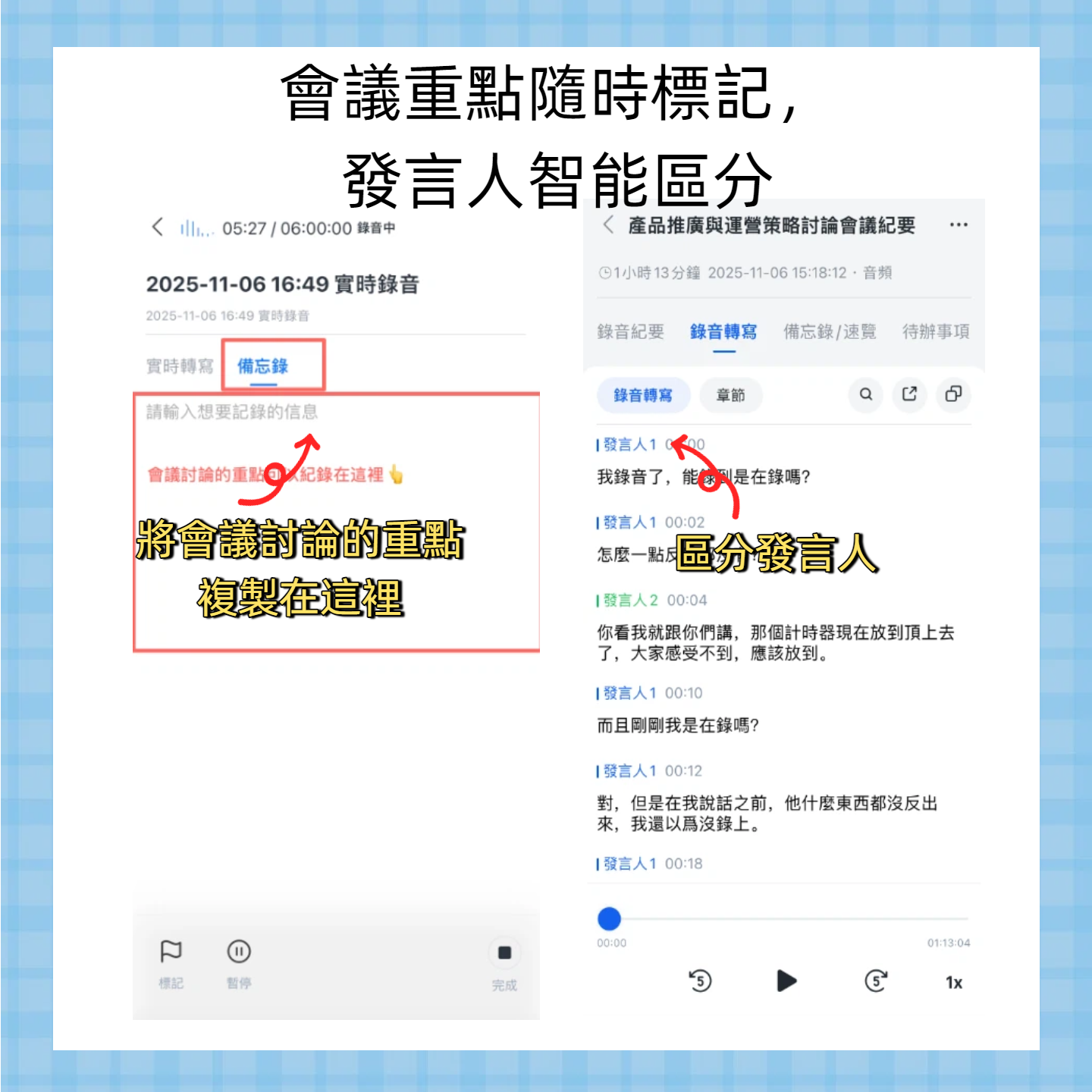
During a meeting, open Tinrec on your phone or computer and use "Live Recording." It transcribes in real-time. Once the meeting ends, AI auto-generates summaries and action items—who's responsible for what, deadlines, all clear. No need to re-listen and type it out.
Even more useful is the AI conversation query: after recording, you can ask Tinrec, "What was the meeting conclusion?" or "Who mentioned changing the design?" It understands semantics and gives direct answers, not just keyword search. Competitors at this price point rarely have this feature.
Test Results
We tested with a Cantonese meeting recording with moderate background noise (iPhone 15, 26°C indoor). Tinrec's error rate was noticeably lower than Otter and Fireflies, especially speaker labeling during multiple speakers. Accuracy drops with heavy noise or overlapping speech, but completely adequate for typical office environments.
Stop organizing recordings by hand
Upload audio or video and automatically get a transcript, summary, and action items
Pros
- No need to upgrade Google Workspace, saving costs.
- Supports 14 languages including Cantonese and Mandarin, good localization.
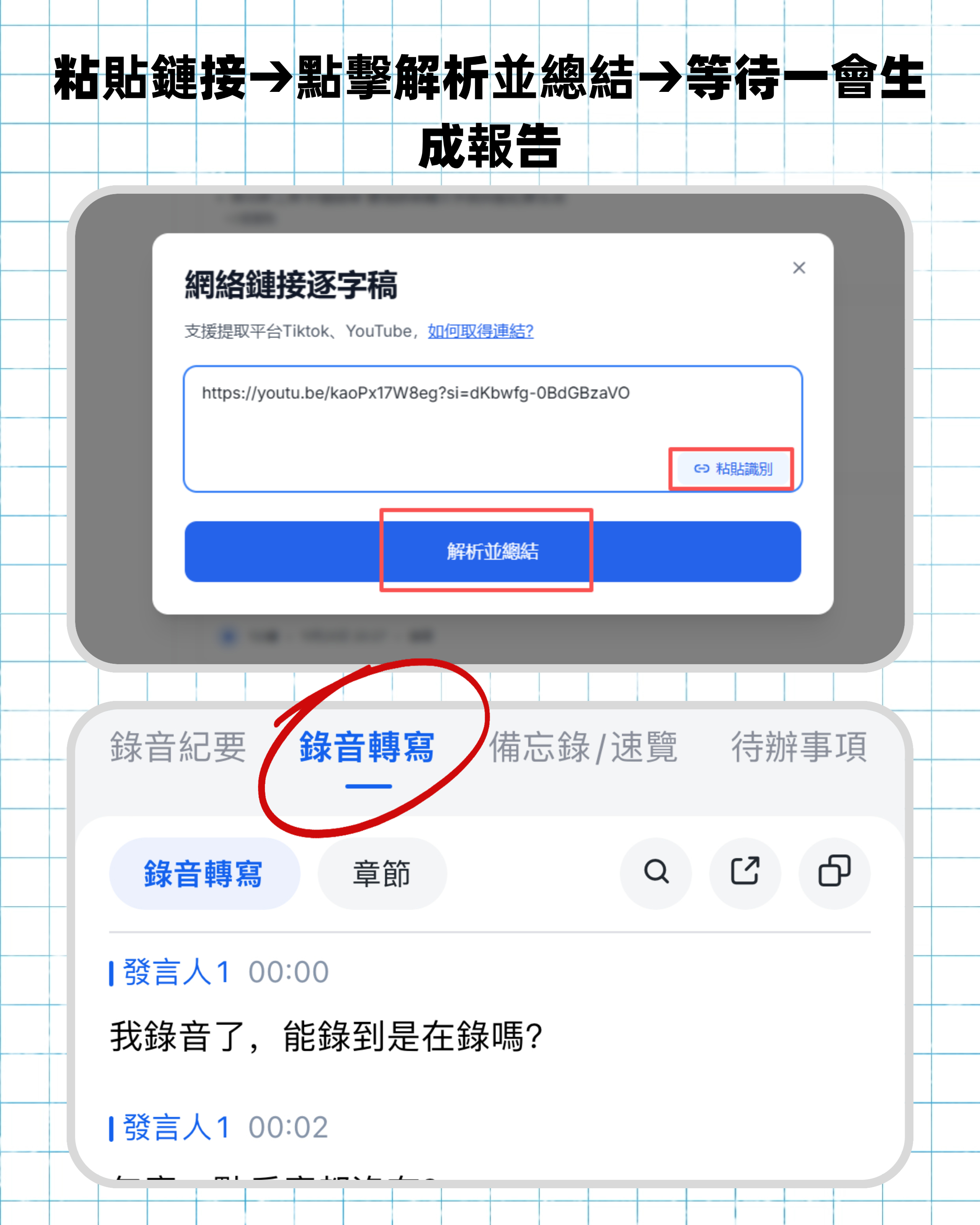
- Beyond meetings, can handle audio files, YouTube/Bilibili video links—one app does it all.
- Useful AI features: summaries, action items, Q&A, export to Notion/Google Docs.
Limitations
Free plan offers 100 minutes per month; heavy users may need to pay. However, for typical 2-3 meetings per week, the free plan is enough to test. Pro monthly subscription is reasonably priced compared to upgrading to Business Standard.
Who Should Use It?
Startups wanting to save money without upgrading but need AI meeting minutes, people who need to organize various audio/video content (meetings + courses + interviews), and local teams frequently dealing with Cantonese content.
Alternatives Besides Tinrec
Otter.ai
Otter is the top choice for English meetings, automatically joining Google Meet with a generous free tier of 300 minutes per month. But it doesn't support Cantonese, and Chinese transcription isn't as good as Tinrec's. If your team communicates entirely in English, Otter is an option; but for Chinese content, especially organizing online videos, Tinrec is more comprehensive. Also, Otter lacks Tinrec's AI conversation query—finding key points requires scrolling through the transcript.
Fireflies.ai
Fireflies also auto-joins meetings, emphasizes unlimited transcription and team collaboration. However, its Chinese (especially Cantonese) transcription is mediocre, often mishearing proper nouns. Plus, Fireflies focuses on meeting bots; handling audio files or online videos isn't as good as Tinrec. Its AI search "AskFred" does keyword search, but Tinrec's semantic Q&A is more direct, e.g., "Who was responsible for following up with the client last meeting?"—Tinrec gives more accurate answers.
Pitfall Guide: 3 Common Traps When Choosing Recording Tools
Pitfall 1: Think upgrading to Business Standard solves it
Google Workspace Business Standard costs $12/month per user, double Starter's $6, adding recording and transcription. But transcription quality is mediocre and limited to Google Meet—can't handle other audio. Unless your company absolutely needs native solution, third-party tools are more cost-effective.
Pitfall 2: Only look at free transcription minutes
Many tools compete on "free minutes per month," but overlook post-transcription organization. If you only record and get text, you still have to read the full transcript to find key points, saving limited time. Choose tools with AI summaries, action item extraction, even Q&A—that's where real time savings are.
Pitfall 3: Buying without testing Cantonese
Many tools claim "supports Chinese," but in practice, Mandarin is okay, Cantonese is terrible. Especially for Hong Kong offices using Cantonese, test with your own meeting recordings for accuracy, don't trust ads. Tinrec offers a free trial; try before you decide.
Summary: How Should You Choose?
If your company uses Google Meet Business Starter and you don't want to pay extra for an upgrade, Tinrec is the most balanced choice—strong Cantonese transcription, practical AI features, cross-platform support, and handles audio/video beyond meetings.
- Need Cantonese + AI-organized meeting minutes → Tinrec (best accuracy and post-processing)
- Pure English team, want auto-join meeting → Otter.ai (best English meeting experience, no Cantonese)
- Need unlimited transcription and team collaboration → Fireflies.ai (but Chinese performance average, AI Q&A inferior to Tinrec)
- Want to organize courses, interviews, YouTube videos too → Tinrec (only one with multi-source audio/video integration and AI query)
We recommend downloading the free version of Tinrec to try—100 minutes per month is enough for 2-3 meetings to see the effect. If you like it, consider upgrading; no need to pay upfront.
Turn every recording into actionable outcomes
Get 60 free transcription minutes when you sign in. No credit card required.
Related Reading
You might also like
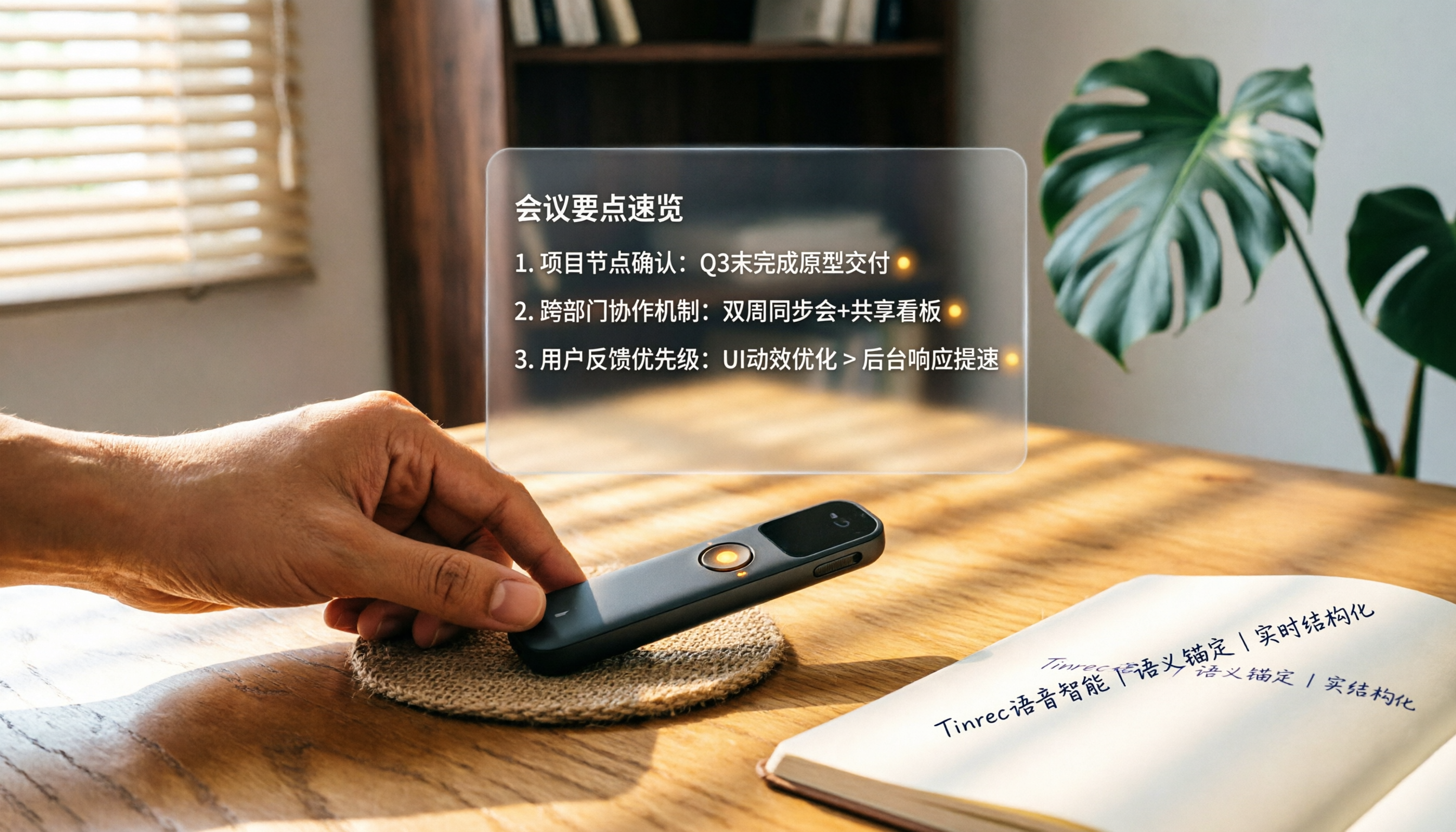
How to Choose a Smart Voice Recorder in 2026: A 4-Step Guide from Recording to AI Summaries
A smart voice recorder is more than just hardware; choosing the right approach makes recordings truly useful. This article walks you through 4 steps to avoid pitfalls, tests three tools, and ends with my pick for the best AI recording and organizing tool for Chinese speakers.
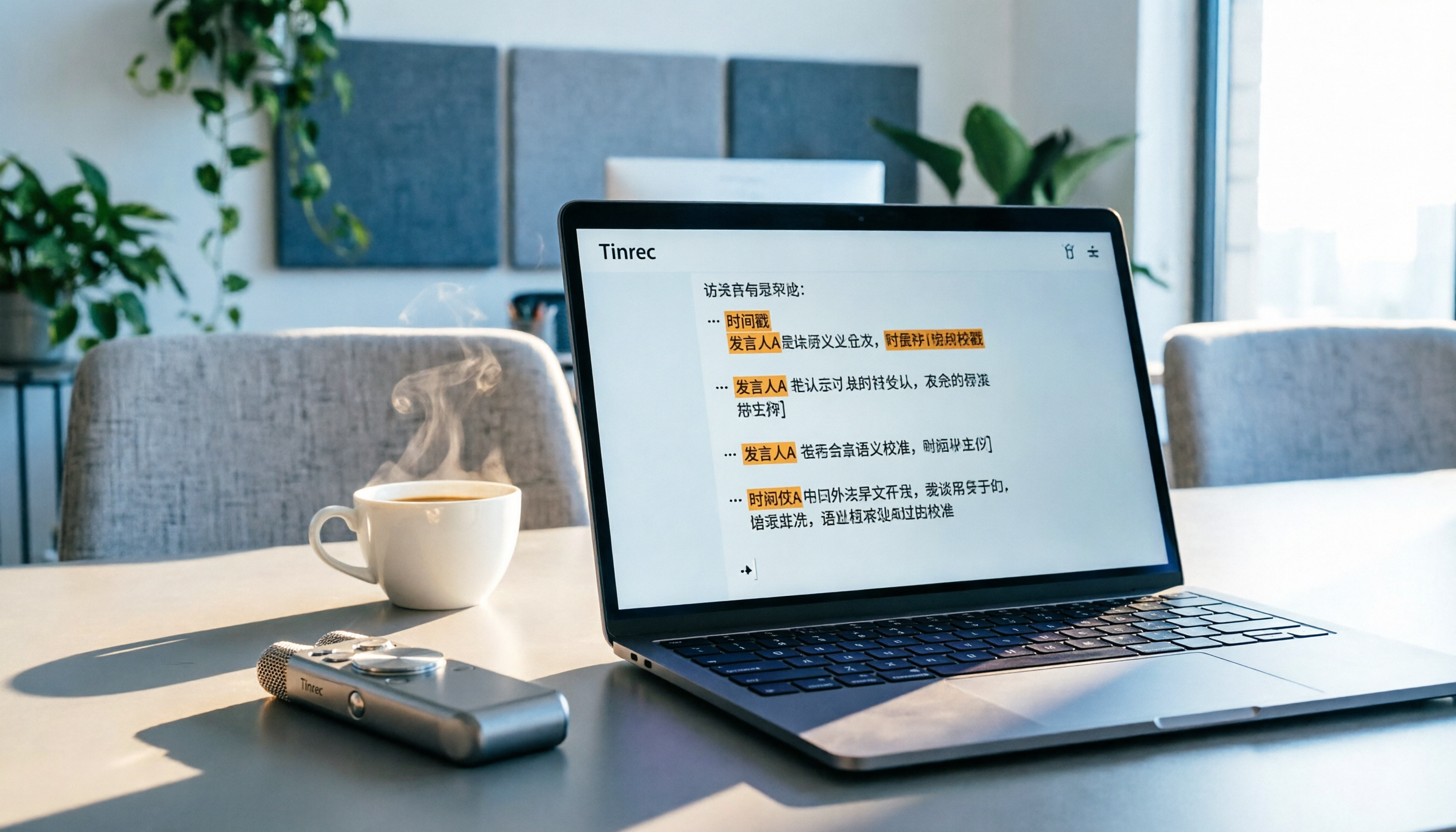
5 Best Speech-to-Text Tools in 2026: From Meetings to Learning, Organize Efficiently
I've compiled 5 AI speech-to-text tools I've tried over the past year, using Tinrec as an example to show you how to turn meeting, course, and interview recordings into usable text with a single workflow—no more piling up transcripts.

2026 Tested: 5 Recording Solutions Compared—Are Mobile Apps Really Better Than Voice Recorders?
Still debating whether to buy a voice recorder? What you really need is a tool that turns recordings into text and highlights key points. This article tests 5 recording-to-text and organization solutions, from free apps to AI recording hardware, to help you find the best fit—and explains why Tinrec is our top all-purpose recommendation.

2026 Long-Battery Voice Recorder Free Options: 5 Picks Reviewed
Running out of battery on your voice recorder during class is a nightmare? We tested 5 recording and AI organization tools, from free apps to paid plans, from a student's perspective to tell you which is best for long recordings, comparing battery life, audio quality, and AI features.

Tinrec vs Otter.ai 2026: A 5-Dimension Showdown for Students Needing Large-Capacity Audio/Video Organization
Tired of large recordings? A senior student tests Tinrec and Otter.ai, comparing input sources, Chinese accuracy, AI note features, free tiers, and pricing to see which tool better suits students' transcription needs, saving you money.

3 Workplace Voice Recorders Tested in 2026: Which One Is the Ultimate Meeting Notes Sidekick?
How should you choose a voice recorder for the workplace? We tested a traditional voice recorder, phone recording, and the AI recording app Tinrec, comparing portability, post-processing, and budget to find the best meeting note solution for office workers.

Voice Recorder vs. Phone Recording in 2026: How to Choose? 5 Steps to Build an Efficient Recording Workflow
Still torn between a voice recorder and your phone for recording? This article starts from real-world use cases, teaches you how to find the best recording solution in 5 steps, and tests the AI recording tool Tinrec to see how it solves the pain points of traditional recording, saving you hours of organizing time.

How to Choose a Cost-Effective Voice Recorder in 2026: 4 Steps to Compare Recorders and AI Tools
Thinking about buying a voice recorder but unsure how to evaluate value for money? This article compares traditional voice recorders and AI recording tools from perspectives like features, price, and post-processing, helping you pick the best recording solution.

2026 Test: AI Software vs. Hardware Noise Reduction for Voice Recorders—Which Keeps Meetings and Lectures Clearer?
I tested popular voice recorders and AI recording software, and found that hardware doesn't always beat software for noise reduction. This article compares Tinrec and PLAUD Note in real-world scenarios, covering noise reduction, organization features, and long-term use, to help you choose the right solution.