

Turn recordings into transcripts and summaries in minutes
Upload audio or video for multilingual transcription, AI notes, and action items
I attend about 15 meetings a week, more than half of them on Google Meet—weekly team meetings, project status updates, cross-departmental coordination, and reports to my boss. In the past, the hardest part was never the meeting itself; it was what came after. A two-hour meeting would take another hour just to replay the recording and organize notes into a presentable meeting summary. Even worse, when my boss asked the next day, "What was the decision from last meeting? Who's responsible for the budget?" I'd spend three minutes flipping through my notes and still not find the answer. That feeling really sucks.
I've tried many methods: handwriting (can't keep up with the pace), recording and listening back (too time-consuming), asking a colleague to take notes (they have their own work). Eventually, I discovered that AI tools can now transcribe your Google Meet meetings into text, generate summaries, and even automatically extract action items—my team tested several, and we ended up sticking with just one. This article shares my personal experience, comparing four mainstream solutions for handling Google Meet meeting notes, from free to paid, from lightweight to full-featured, to help you find the one that fits your needs best.
What Can Google Meet Note-Taking Tools Do for You?
If you're like the old me, still stuck in the "meet → handwritten notes → recall from memory later" cycle, what you need first isn't AI, but an understanding of how much time these tools can save you. Here are three real-world scenarios:
Scenario 1: The moment the meeting ends, the summary and action items are already in your inbox. Previously, after a meeting, I'd spend another 30 minutes turning my draft into a formal meeting summary and emailing it to all attendees. Now, with the right tool—taking Tinrec as an example—it supports recording from computer system audio. As soon as your Google Meet ends, the AI automatically generates a summary, discussion points, action items, and even clearly lists something like "Budget adjustment → assigned to John Smith, due by next Friday." You don't even need to type; just forward or paste it into the group chat, and you're done.
Scenario 2: Cross-departmental communication no longer relies on human memory. The most annoying part of cross-departmental meetings is follow-up. You agreed with the marketing team on a revised copy version, but a week later they say, "Did we? I don't remember." With every Google Meet recording transcribed into a full transcript and task list, Tinrec automatically extracts action items. Next time someone plays dumb, you can instantly pull up the record: "In the June 12 meeting, you said you'd deliver the first draft by the 18th."
Scenario 3: Historical meetings become a searchable database. When you manage a team of 10 people, have 15 meetings a week, and accumulate hundreds of meeting recordings over six months, finding the context behind a particular decision is like looking for a needle in a haystack. Tinrec not only transcribes but also lets you ask questions across all past meetings using AI. For example, just ask: "In last Q3's QBR, what was the client's reaction to pricing?" It will pull the answer from semantic understanding, so you don't have to replay the recording.
What Are the Core Capabilities of Google Meet Note-Taking Tools?
Many people think these tools just convert speech to text, but transcription is just the basics. What really saves you time is the organization that happens after transcription. After trying several options, I've identified five core capabilities, using Tinrec as an example to illustrate how they solve the pain points of a mid-level manager.
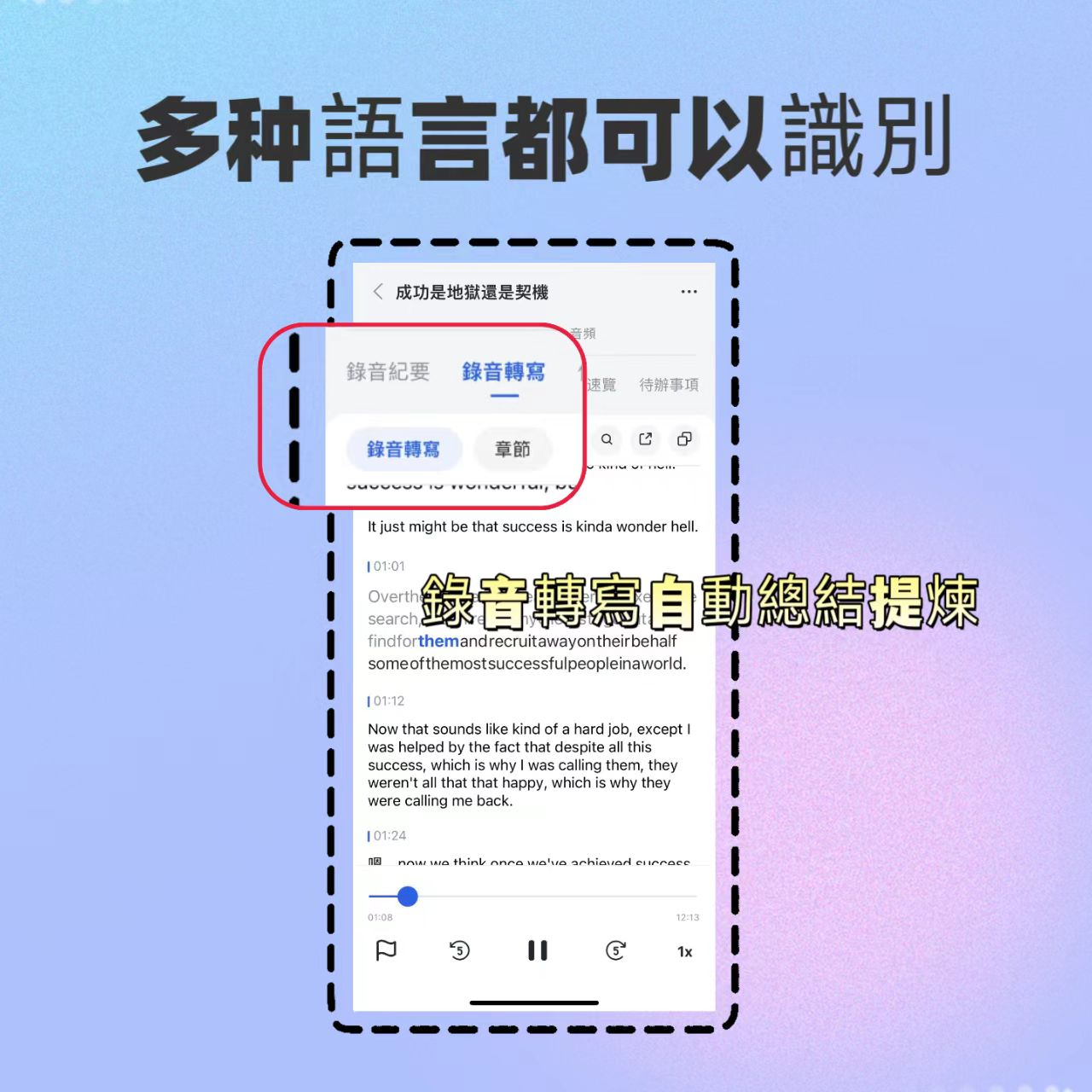
1. Real-time live transcription: verify during the meeting. Google Meet's built-in transcription only appears after the meeting ends and often misses Chinese. Tinrec captures from system audio with a delay of less than a second. During the meeting, you can watch the text to confirm you didn't miss important discussions—especially when colleagues mumble or mix Chinese and English. The text is your second pair of ears.
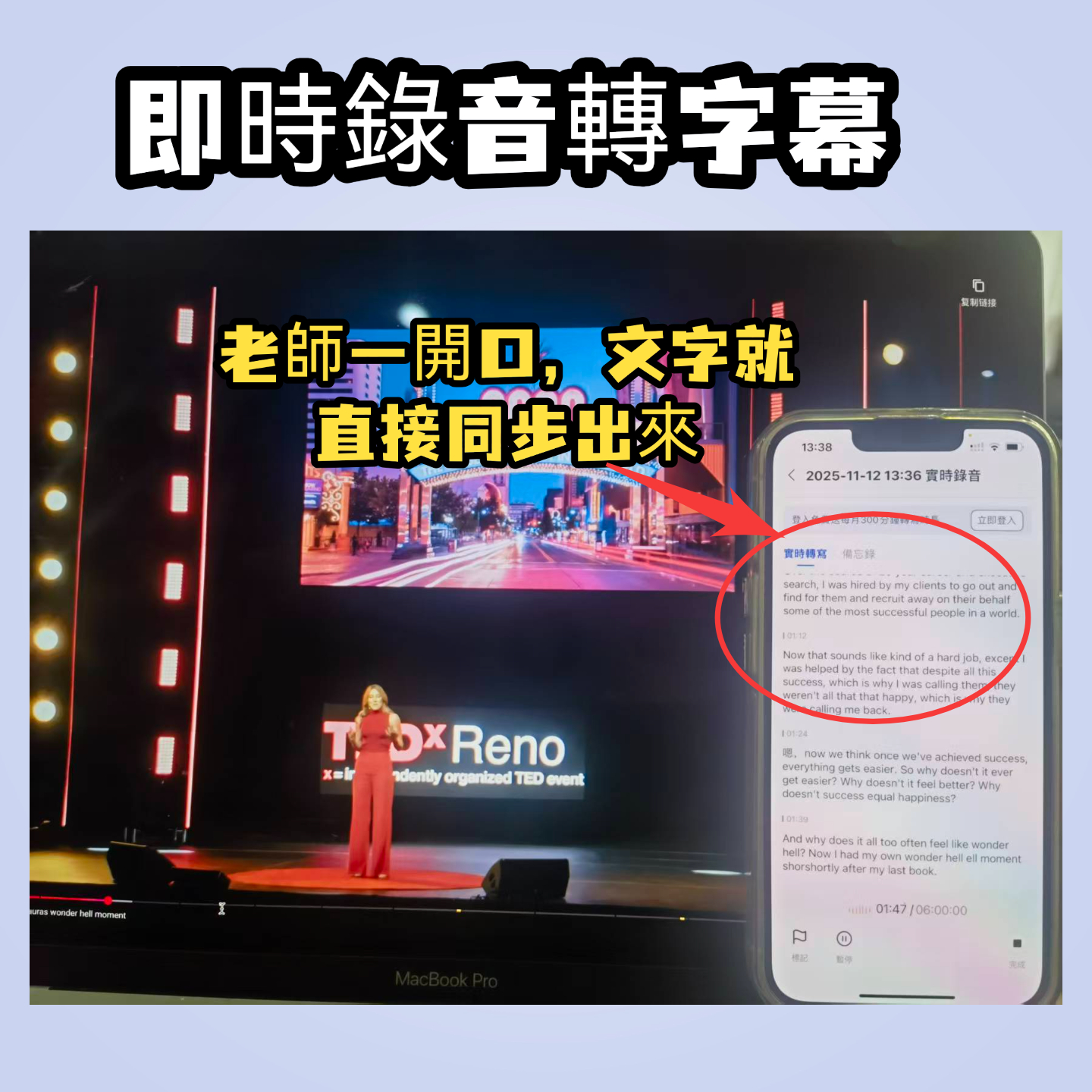
2. AI semantic summarization: not just condensed fluff. Many tools just shorten the transcript and call it a summary, leaving you to re-identify the key points. Tinrec's AI summary organizes the content structurally: meeting topic, decisions made, action items, responsible parties—all listed separately. You can show it directly to your boss without feeling embarrassed.
3. Automatic extraction of action items. This is a basic need for managers. Every meeting generates a bunch of "Who does this? When will it be done?" As long as it's clearly stated, Tinrec automatically extracts a to-do list and can even mark deadlines. I used to listen and then manually enter tasks into my reminders. Now, after a meeting, I just open the action area, and everything is clear.
4. AI-powered conversational search: treat recordings as a database. This is the biggest reason I switched from other tools. After Tinrec transcribes, you can ask it directly: "Who mentioned the Q3 budget during the meeting?" "What was the client's feedback on the new feature?" It answers based on context, not just keyword search. This is a game-changer for mid-level managers who frequently need to revisit old meetings.
Stop organizing recordings by hand
Upload audio or video and automatically get a transcript, summary, and action items
5. Cross-platform support and multi-format export. I use a Windows desktop, iPhone, and iPad. Tinrec has iOS, Android, and web versions, so I can check recordings no matter which device I'm using. The organized notes can be exported as Word, PDF, or TXT, or directly synced to Notion or Google Docs—it doesn't lock you into a specific workflow.
Practical Application Scenarios: From Meetings to Oversight, One Tool for Many Uses
After using Tinrec for Google Meet meetings, I found it's far more than just a meeting note tool. Here are some real-world scenarios my team often encounters:
1. Weekly project status meetings. Workflow: Google Meet → Tinrec system recording → automatic summarization → action item list → distribute to team. Previously, the PM would spend 40 minutes organizing a progress report. Now it takes 5 minutes, and every commitment is recorded in text—no one can say, "I didn't hear that."
2. One-on-one meetings and performance reviews. When discussing goal setting, performance, or complaints with team members, it's more important to focus on listening than typing. I use Tinrec to record the meeting, then review the summary and transcript afterward to confirm I didn't misinterpret anything, and it makes it easier to track follow-up items.
3. Cross-departmental coordination and reports to the boss. Cross-departmental meetings often involve many people and a lot of chatter, and decisions can pop up suddenly. Tinrec's AI search quickly locates details like "How much extra budget did marketing ask for?" When the boss asks on the spot, I don't panic and search through notes; I just ask the AI and get the answer.
4. New hire training and knowledge retention. Record Google Meet sessions where senior employees train new hires, then transcribe them into transcripts and key takeaways. New hires can review them repeatedly without taking up the senior's time to reteach everything.
5 Points to Note When Choosing a Google Meet Note-Taking Tool
I went from Otter to Fireflies to Notta, and finally settled on Tinrec. Along the way, I ran into several pitfalls. Here are the five most important criteria for mid-level managers, along with how Tinrec performs:
1. Chinese accuracy and mixed Chinese-English recognition. Don't just look at the 90%+ accuracy claims. I tested several tools—they work well with English but fail with Chinese, especially in the Taiwanese workplace where people mix Chinese and English. Some tools simply give up. Tinrec has a Chinese character error rate of about 8.3% on clear audio (meaning fewer than one wrong character in ten sentences) and handles mixed languages steadily. This is a basic requirement for teams in the US that also deal with multilingual meetings.
2. AI organization capabilities after transcription. Transcription is just the first step. The key is whether it can automatically produce usable summaries and action items. Some tools only give you plain text, and you still have to read it yourself. Tinrec's AI summary, action item extraction, and conversational search are why I ultimately stayed.
3. Cross-platform support and recording convenience. Some tools force you to use the mobile app, while others only work in a browser. Tinrec has iOS, Android, and web versions, and supports system audio recording of computer meetings, so Google Meet audio is captured internally without needing external speakers, resulting in better quality.
4. Data retention and searchability. If you only have occasional meetings, the free version might suffice. But for someone like me having 15 meetings a week, the ability to search historical data is crucial. Tinrec stores all meetings and allows you to search using AI queries at any time, effectively building a team knowledge base.
5. Pricing and flexibility. Don't fall into the trap of "cheapest is best." Choose based on your meeting frequency: light users (fewer than 3 meetings per week) can get by with the free version; for short-term intensive use (like a project sprint), buy a weekly plan; for someone like me who meets daily, the Pro monthly plan costs less than two Starbucks drinks a month, and the yearly plan is even more affordable per month. Don't stubbornly stick with the free version; the time cost far outweighs the few bucks.
Frequently Asked Questions
Q1: Doesn't Google Meet have built-in transcription? Why do I need an extra tool? A: Built-in transcription requires Google Workspace Enterprise edition and must be enabled by an admin. Its accuracy, Chinese support, and post-meeting organization are limited. Third-party tools like Tinrec provide real-time text during meetings, automatic summaries and action items after, and cross-platform search, offering much more flexibility.
Q2: If I use such a tool to record Google Meet, will others know? A: It depends on the tool. Meeting bots like Fireflies automatically join the meeting, so participants see a bot participant. Tinrec records via system audio on your computer, so it doesn't appear as a participant in the meeting. However, for courtesy and compliance, it's recommended to inform participants before recording.
Q3: I don't only use Google Meet—I also have in-person meetings and client calls. Can this tool handle those too? A: Yes. For example, the Tinrec mobile app can record in-person meetings and phone calls directly. It also allows you to upload audio files, videos, or even paste YouTube and Vimeo links for transcription, so you can manage all your audio and video materials in one place.
Q4: Is the free version really sufficient? What are its limitations? A: Tinrec's free version offers a basic monthly transcription allowance, which lets you try real-time recording, file transcription, and online video parsing. If you just want to test a few meetings, the free version is good enough. Once you find yourself unable to live without it like me, you'll naturally upgrade.
Q5: Is the recording of sensitive meetings secure? A: Data security is important. Tinrec has a privacy authorization mechanism, and recordings are encrypted during transmission and storage. You can also delete cloud data at any time. However, it's ultimately recommended to check your company's security policy before using it internally.
Summary: Why Did I Finally Choose Tinrec?
I started with Otter—great for English meetings, but it often missed characters in Chinese. Then I switched to Fireflies—convenient meeting bot, but mixed Chinese-English recognition was poor. Next, I tried Notta—strong transcription, but its organization and AI Q&A didn't meet expectations. Finally, I tried Tinrec, and I've been using it for half a year. It may not be the highest scorer in every category, but overall, it's the most balanced choice for a "US mid-level manager": accurate Chinese transcription, time-saving AI summaries and action items, support for internal Google Meet recording, cross-platform accessibility, and reasonable pricing.
If you're also tired of the post-meeting cleanup nightmare, download the free version and give it a try. The monthly allowance lets you experience two or three Google Meet meetings. Once you see how AI automatically generates summaries and action items, you might never go back.
Turn every recording into actionable outcomes
Get 60 free transcription minutes when you sign in. No credit card required.
Related Reading
You might also like

2026 Meeting Minutes Abbreviations: MoM vs. Minutes Explained + Tinrec AI Transcription & Auto-Summary Review
Confused by "MoM" in meetings? This guide breaks down common meeting minutes abbreviations like "minutes" and "MoM," and reviews top transcription tools, focusing on how Tinrec auto-generates meeting summaries to save you overtime.

5 Best Free Meeting Minutes Software Tested in 2026: Which Free Plan Is Enough?
This article tests 5 popular meeting minutes software, comparing free quotas, core features, and use cases to help you find the best free AI meeting minutes solution.

How to Write Meeting Minutes in English (2026 Guide) + Best AI Tools
Learn how to write meeting minutes in English with correct usage, common phrases, and formats. Compare AI meeting note tools like Tinrec, Otter, and Notta to quickly organize your English meeting records.
2026 Hands-On Comparison of 3 AI Meeting Recorders: How Tinrec Turns Meetings into Actionable Team Assets
Many people search for 'vocol 线上下看' when what they really need is a tool to view meeting notes online. This article tests three AI meeting recorders—Tinrec, Otter, and Notta—focusing on bot-free recording, Chinese language support, team collaboration, and post-meeting organization to help you pick the best one.
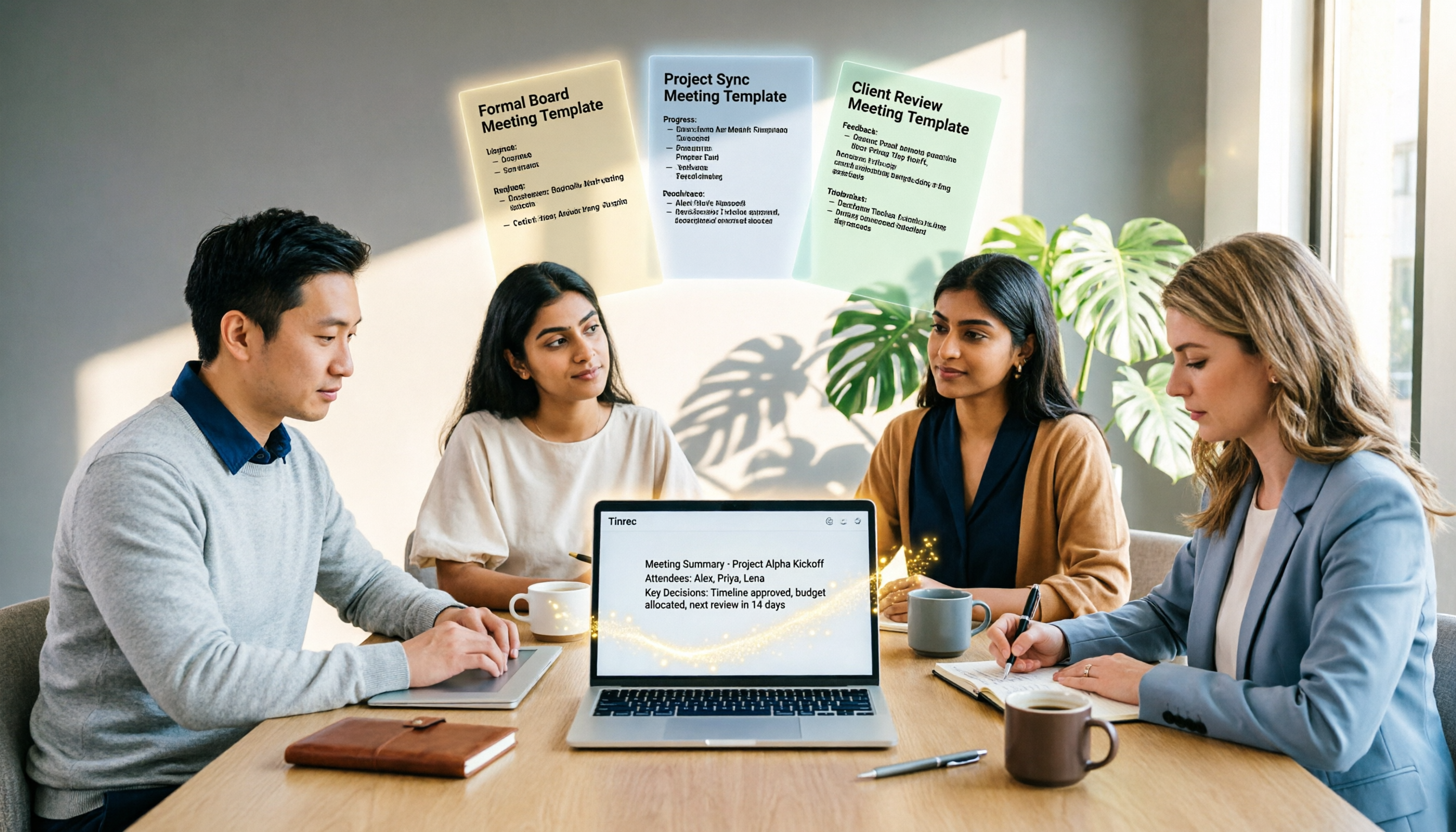
2026 Tested: 3 English Meeting Minutes Templates Compared — Tinrec Auto-Generation Saves the Most Time
Explore three common English meeting minutes templates (formal, project, and client meetings) and see how Tinrec can automatically generate English meeting minutes, saving you hours of manual work.

2026 Test: 3 Meeting Minutes Templates Compared — DOC Downloads vs AI Auto-Generation, Which Saves More Time?
Still searching for meeting minutes template DOC downloads? This article tests 3 ways to create meeting minutes, including traditional templates, built-in platform tools, and AI tool Tinrec, showing you how to auto-generate structured meeting notes with AI and export to DOC format, saving 60% of your time.

2026 Meeting Minutes Tool Buying Guide: 4 Tools Tested and Recommended
Looking for a 'meeting minutes template Word'? What you actually need is an AI meeting minutes tool. We tested 4 popular options, and Tinrec is the top choice for Chinese meetings, helping you save time and avoid overtime.

Tinrec vs Granola 2026: 5-Dimension Hands-On Comparison - Which Is Better for Chinese Meeting Notes?
Tinrec and Granola both offer bot-free meeting recording, but Tinrec supports file import, audio retention, Chinese optimization, and team collaboration, making it a better fit for Taiwanese users who need complete meeting data management.

2026 Review: 5 AI Meeting Recorder Tools Compared – Which One Truly Generates Usable Meeting Minutes?
A hands-on comparison of AI meeting recorder tools in 2026, with Tinrec as the main focus, analyzing the key capabilities for automatically generating meeting minutes and helping you choose the right tool to save time.