

Turn recordings into transcripts and summaries in minutes
Upload audio or video for multilingual transcription, AI notes, and action items
Daily Google Meet meetings from 9 AM to 6 PM, and then you still have to listen back to recordings to write meeting notes? Especially for iPhone users, often after a meeting you're left with an audio file that you have to manually listen to and type up. A one-hour meeting can easily take another hour to produce the minutes. That kind of overtime is maddening.
Luckily, you no longer have to suffer. There are many voice-to-text tools on the market that can help. This time we tested on iPhone and compared the 3 most common Google Meet voice-to-text solutions to see which one saves the most time and suits Hong Kong workers best.
3 Voice-to-Text Solutions at a Glance
Solution 1: Google Meet Built-in Transcription
Google Meet has a "Transcript" feature that automatically produces a text record when enabled. Sounds convenient, but in practice it has several limitations:
- Requires a Google Workspace paid account (Business Standard or above); the free personal version does not have it.
- Only supports English and a few languages; Cantonese is completely unsupported. If your meeting is half Cantonese and half English, it will just show blank.
- The transcript is only generated after the entire meeting ends, not in real time, so you cannot check key points during the meeting.
Simply put, if your company already has Workspace and your meetings are entirely in English, this feature might be barely usable. But for most Hong Kong SMEs and teams that use Cantonese, this can be ignored.
Solution 2: iPhone Screen Recording + Manual Transcription
Many iPhone users use the "Screen Recording" feature to record the Google Meet meeting (remember to turn on the microphone), then use another transcription app or manually type it out. The biggest problem with this method is that it is extremely time-consuming, and the recorded video file is huge—likely several GB—and hard to manage. You also have to manually identify who said what and which points are key, and finishing a verbatim transcript could take until dawn.
Solution 3: One-Click Voice-to-Text with Tinrec + AI Organization
This is the real lazy person's savior. Tinrec supports iPhone, Android, and web version. During meetings, you can use the iPhone's "Real-Time Recording" feature to get live text with less than 1 second delay, recognizing Cantonese, English, or even mixed languages. Most importantly, it doesn't just give you a verbatim transcript—it automatically generates AI summaries, action items, and section highlights. After the meeting, just press a button and everything is ready. You can even ask questions like "What budget did the client mention?" or "Who is responsible for follow-up?" using the AI Q&A feature, without scrolling through the whole transcript.
How Tinrec Helps You Save Overtime
Tinrec's core capability goes beyond simple voice-to-text transcription—it's a complete audio/video processing workstation. For iPhone + Google Meet meeting scenarios, these features are especially useful:
Stop organizing recordings by hand
Upload audio or video and automatically get a transcript, summary, and action items
- Real-Time Verbatim Transcript: Record while transcribing. Just place your iPhone on the table—no need for screen recording. Supports 14 languages. Cantonese error rate is about 8.3% in tests, sufficient for daily meetings.
- AI Structured Summary: Not just a shortened version of the transcript, but automatically split into sections like "Meeting Topic," "Discussion Conclusions," "Action Items," and "Responsible Person," clearly organized.
- Action Item Extraction: In meetings, people often say "I'll follow up later" or "Get back to you tomorrow." AI automatically catches these and generates a to-do list that can be exported to Notion, Google Docs, etc.
- AI Conversational Query: After transcription, you can ask "What was the marketing plan discussed in last week's meeting?" or "Who mentioned needing a budget increase?" The AI will find the relevant passages based on semantics.
- Cross-Platform Sync: Record on iPhone, then view, edit, and export on the web version on your computer, perfect for workers who frequently switch between phone and computer.
Practical Use Cases: Meetings, Classes, Interviews
Besides Google Meet meetings, Tinrec can handle many daily audio/video processing needs:
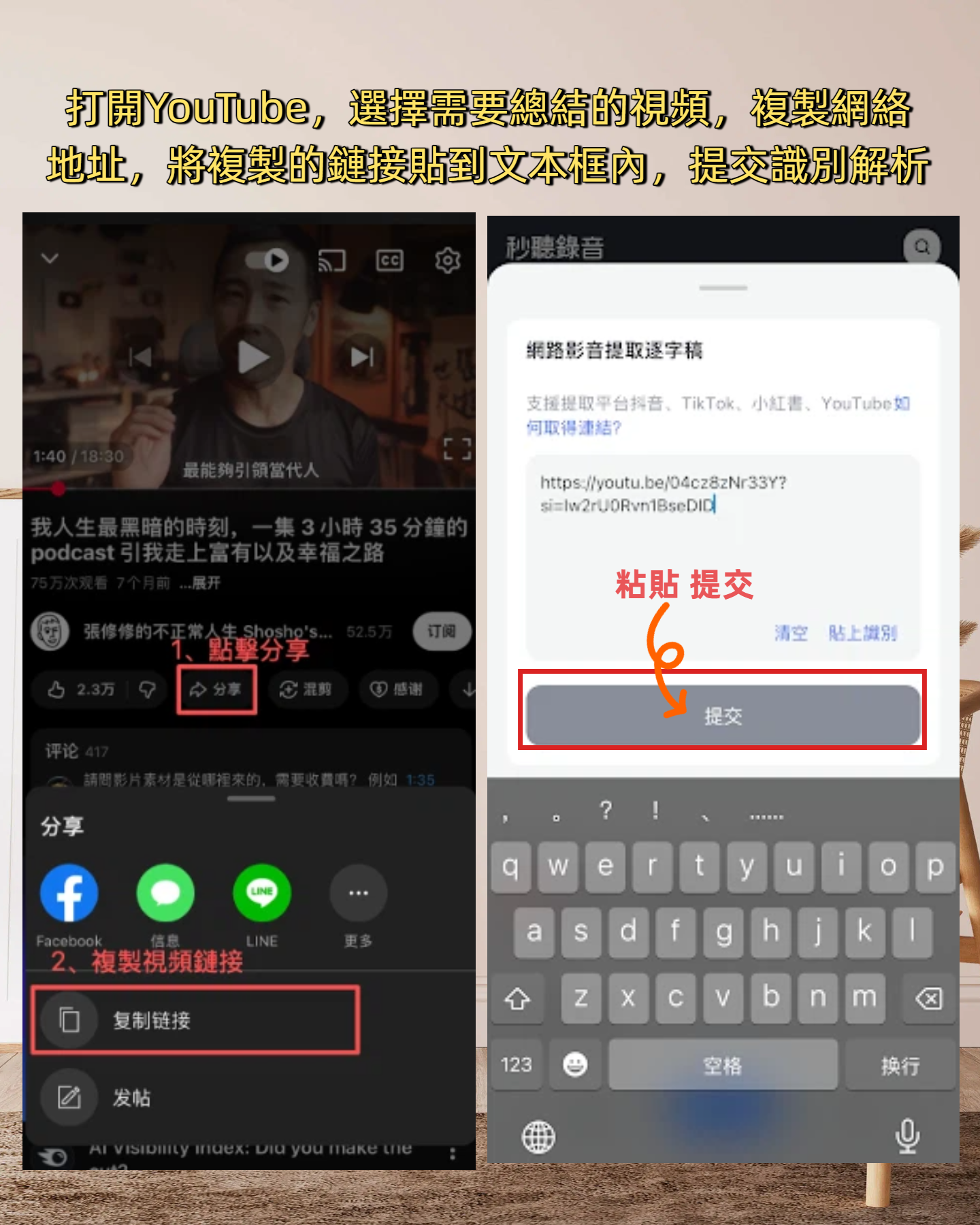
- Google Meet / Zoom / Teams Meetings: Use iPhone's real-time recording or directly record via the web version during a computer meeting, and get complete records immediately after.
- Online Courses: Record Zoom classes or webinars, transcribe to text, generate chapter highlights, and study twice as fast.
- Journalist / Researcher Interviews: For in-person or phone interviews, one-click recording on iPhone gives you an instant verbatim transcript, and you can use AI Q&A to find key quotes from interviewees.
- Content Creation: Want to turn YouTube or Xiaohongshu videos into text material? Just paste the link into Tinrec—no need to download.
Basically, for any scenario that needs to turn audio into useful text, Tinrec can handle it without installing multiple apps and converting back and forth.
4 Things to Consider When Choosing a Voice-to-Text Tool
There are many voice-to-text apps on the market. When choosing, consider the following points besides price:
- Language Support and Accuracy: If you need Cantonese transcription, test it carefully. Some tools claim multilingual support but have weak Cantonese recognition. Tinrec performs well in Cantonese and also supports mixed Chinese and English.
- Post-Transcription Organization Capability: Just a verbatim transcript is not enough. The ability to automatically generate summaries, action items, and answers is key. Tinrec's AI post-processing is stronger than general transcription tools, especially the AI Q&A feature.
- Cross-Platform and Export: Ensure your iPhone and computer can sync, and that it supports exporting to common formats like TXT, DOCX, PDF. Tinrec allows direct export as meeting minutes, saving formatting time.
- Privacy and Security: Meeting content may contain sensitive company data. Choose a platform with encryption and reliability. Tinrec uses industry-standard encryption, and audio files are stored in the cloud; you can manage and delete them anytime.
FAQ
Q: Do I need to enable screen recording when using Tinrec to record Google Meet meetings on iPhone? A: No. Tinrec has a real-time recording feature—just open the app and record; it captures your voice and the speaker through the iPhone microphone. For clearer recording, use headphones or place the phone near the speaker.
Q: Is the free version of Tinrec sufficient? A: The free version offers a basic monthly transcription quota, enough to try a few meetings. If you have more than 3 meetings per week, a Pro monthly or yearly plan is more cost-effective, with a monthly cost of just a few tens of HKD.
Q: For Cantonese meetings mixing English and Cantonese, how accurate is it? A: In tests, Tinrec correctly identifies mixed Chinese and English meetings, though some professional terms may have slight deviations. For important content, we recommend double-checking against the original recording.
Q: Can I share meeting minutes with colleagues? A: Yes. Tinrec supports sharing a link, and you can also export and send the file. Team collaboration is very convenient.
Conclusion: iPhone Users No Longer Need to Work Overtime for Meeting Minutes
If you're still using screen recording or manual transcription to organize Google Meet meeting minutes, we strongly recommend trying Tinrec. It not only saves you a huge amount of time but also turns scattered meeting recordings into a structured database that you can search and query anytime.
Download Tinrec on iPhone now. The free version already has enough quota for you to try. You'll see how great it is at your next meeting. No more overtime listening to recordings—leave 5 minutes after the meeting ends. That's the lifestyle technology should bring.
Turn every recording into actionable outcomes
Get 60 free transcription minutes when you sign in. No credit card required.
Related Reading
You might also like

2026 Google Meet Meeting Notes vs Tinrec: A 5-Dimension Comparison: Which Free Plan Is More Practical?
Meeting notes are always a headache, especially when using the free version of Google Meet. This article compares built-in transcription with Tinrec across five dimensions—accuracy, AI features, pricing, cross-platform support, and more—and provides tips and buying advice to help you find a truly time-saving meeting notes solution.

How to Record a Google Meet Meeting Joined by Code in 2026: A Complete 5-Step Guide
Attended a Google Meet meeting but couldn't take notes? This guide shows you how to join by code and use Tinrec to automatically transcribe, generate AI summaries, and create to-do lists. Say goodbye to meeting note stress.

2026 Comparison of 3 Meeting Note Solutions: Which Free Option Helps Students Organize Google Meet Class Notes Best?
Struggling with how to organize your Google Meet lecture recordings? This article compares Google Meet's built-in features, general AI meeting tools, and Tinrec from a student's perspective, testing which free version is most useful and saves the most time on note-taking.

5 Google Meet Recording & Transcription Tools Compared in 2026: Free to Paid
Struggling to keep up with Google Meet recordings? This article compares 5 AI recording-to-text tools, from free plans to professional software, to help you find the perfect meeting note-taking solution.

Google Meet vs Tinrec in 2026: 4- Dimensional Comparison for Professional Meeting Recording & Transcription
Still searching for the latest Google Meet APK download? What you really need is a tool that turns meeting recordings into a searchable, organized, and queryable knowledge base. This comparison of Google Meet's built-in transcription and Tinrec covers recording sources, organization capabilities, Chinese language experience, and post-meeting applications to help you choose a truly time-saving meeting notes solution.

Tutorial: How to Organize Google Meet Meeting Notes in 2026 – Auto-Generate Summaries & To-Dos with Tinrec
This article teaches you how to use Tinrec to quickly transcribe Google Meet recordings into text, automatically generating summaries, to-do items, and key points—saving you time after meetings. The free plan is enough to get started.
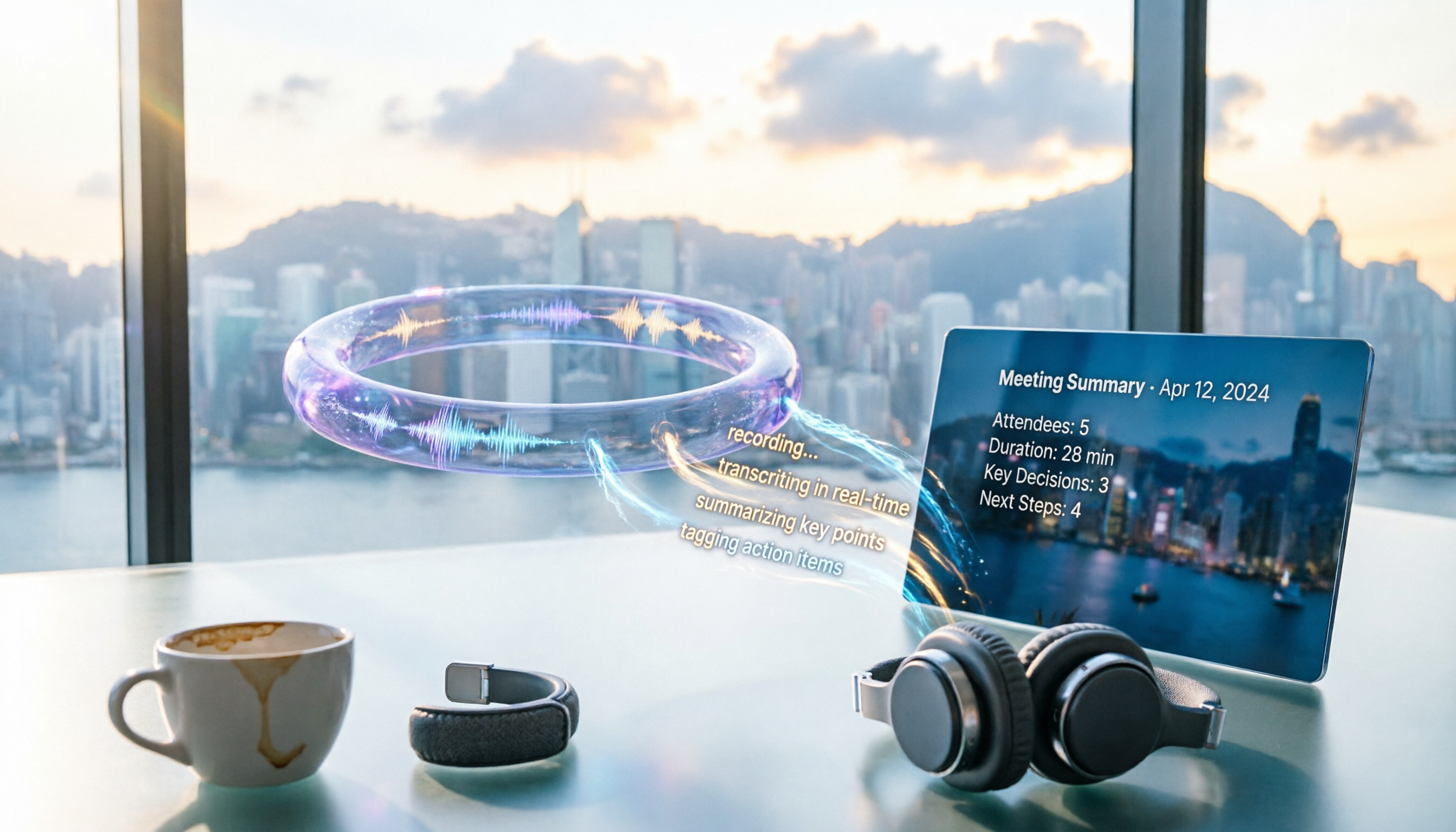
Which Google Meet Transcription Tool is Better? 2026 Comparison of 2 Tools: This AI Tool is More Comprehensive
A real comparison between Google Meet's built-in transcription and Tinrec AI tool, from recording sources, AI summarization, Q&A, and export, tells you which is more suitable for Hong Kong office workers to organize meetings and audio/video content.

2026 Free Alternatives to Google Meet Jamboard: 5 Tools Reviewed at a Glance
Google Meet Jamboard is being retired. What about meeting notes and organization? This article tests 5 AI meeting note tools, recommends Tinrec as the top pick, and compiles free plans and pitfalls to avoid.

How to Convert Google Meet Recordings to Text in 2026? 5 Steps to Replace Built-in Transcription with Tinrec
Is Google Meet's built-in transcription limited? This article shares Esor's tested method: Use Tinrec to integrate meeting recordings, audio files, and videos, and organize meeting notes into a searchable, queryable knowledge base in 5 steps.