

Turn recordings into transcripts and summaries in minutes
Upload audio or video for multilingual transcription, AI notes, and action items
Too many short videos to watch? You don't need more time—you need a smarter summarizer
Scrolling through your phone during your commute or lunch break, you find loads of short videos you want to watch, but there's never enough time to click through and finish them all. Even worse, some videos don't have subtitles at all, so to quickly catch the key points you have to listen from start to finish, and you still worry about missing crucial info halfway through.
There's another pain point: even if a tutorial or interview has great content, it's hard to jot down the key takeaways afterward. When you want to go back to a specific part later, you have to rewatch from the beginning.
You don't have to tough it out. There are tools now that can automatically convert short video content into text and summaries, and even let you dig out key points through Q&A.
In this article, we test four popular tools designed for summarizing short videos, covering no-subtitle support, platform coverage, and organizational flexibility, to help you find a solution that actually saves time.
Before you buy a short video summarizer, understand these 3 key factors
Tools on the market vary widely in features and positioning. If you only pick based on "it can generate a summary," you could easily be disappointed. Here are the factors we care most about in our evaluation:
Can it handle videos without subtitles?
Many tools rely on the video's own embedded subtitle files. Once a video has no subtitles, or the uploader has disabled them, these tools simply don't work. But the reality is, the content that most needs summarizing is often the unsubtitled live-stream highlights, speech clips, or creative short videos.
In our testing, we specifically picked several videos without any subtitles to see which tools can actually convert speech to text instead of just saying "cannot analyze."
How broad is platform support?
You might think that most videos are on YouTube anyway. But now TikTok, Instagram Reels, Xiaohongshu (Little Red Book), and Bilibili are increasingly full of short videos. If a tool is locked to a single platform, its usefulness drops sharply.
A good tool should let you paste a link and start processing, no matter where the video lives. This is especially important for people who need to organize content from multiple platforms at once.
Can you actually use the text output afterward?
Getting a raw transcript alone isn't all that helpful. We want the tool to also automatically generate key summaries, break content into chapters, and even let you ask questions about the content. That way, you shift from passively watching to actively extracting information.
Some tools stop after transcription, while others go further to generate mind maps, to-do lists, or let you ask it "What is this part about?" The gap between these two levels is huge.
Tinrec (Miao Ting Recording) — the most well-rounded option in our testing
Among the four tools we tested, Tinrec impressed us the most. It can handle not just regular videos with subtitles, but also completely unsubtitled short videos, where it uses speech recognition to transcribe the text and then generate a summary.
In a nutshell
Tinrec (Miao Ting Recording) is an AI recording and audio/video organization tool. You can paste public video links from YouTube, TikTok, Bilibili, Xiaohongshu, and more, and it automatically transcribes the content and organizes key points. It works on iOS, Android, and web versions, with no extra hardware needed.
Three truly practical use cases
Use case 1: Capture key points even from videos without subtitles
We tested several tutorial clips with no subtitles. After pasting the link, Tinrec first performed speech recognition and generated a complete transcript in under a minute. Then it automatically produced a summary, listing the steps and notes from the video in bullet points. For those gem videos that don't even have subtitles, this feature is a huge help.
Use case 2: Ask follow-up questions after watching
This is what I think Tinrec does best. After transcribing the video content, you can directly ask in the chat box: "What are the three tips mentioned in this video?" or "Did the speaker recommend any books?" It's not just keyword searching—it actually understands the content and answers you. When you need to quickly extract specific info from multiple videos, this feature saves you a ton of time.
Use case 3: Organize your video material across platforms
Whether it's an interview on YouTube, a tutorial on TikTok, or an unboxing on Xiaohongshu, you just copy the link into Tinrec and it handles the rest. All organized content is stored in your account, so you can revisit your history anytime and continue asking questions about it. For creators who need to constantly collect video inspiration, it's like having a second brain.
Stop organizing recordings by hand
Upload audio or video and automatically get a transcript, summary, and action items
Strengths we liked
- Handles videos without subtitles directly: Of the unsubtitled videos we tested, only Tinrec successfully transcribed and summarized them, while most other tools either failed outright or only captured fragments.
- AI Q&A is genuinely useful: It's not just a summary—you can probe details like you would with an assistant. We asked the same video to other tools, "What's the coffee ratio mentioned in this video?" and only Tinrec gave the correct answer.
- Comprehensive output formats: In addition to summaries and transcripts, Tinrec can automatically break content into chapters, extract to-dos, and even generate mind maps. This is very convenient for turning video content into notes or reports.
Limitations you should know
The free version provides a monthly basic transcription allowance, ideal for light users who occasional summarize short videos. If you process multiple videos every week, the Pro plan will be more sufficient, but we recommend starting with the free version to test its value before deciding. Also, speech recognition accuracy can be affected by background noise, speaking speed, and accents. Our tests on clear short videos worked well, but extremely noisy clips still have some errors.
Who is it best for?
If you often need to organize short videos from different platforms, get stuck when you encounter videos without subtitles, or want to continue asking questions and exporting after organizing, Tinrec is the most complete solution we've tested so far. Content creators, researchers, and people who love learning from videos will benefit the most.
What else is out there? Alternatives to Tinrec
WayinVideo — Generates multiple formats at once, but fails without subtitles
WayinVideo focuses on one-click generation of video summaries, transcripts, subtitles, and key moments, along with mind maps and interactive Q&A, supporting multiple languages. However, note that it relies on the video's existing subtitles to work. When we tested unsubtitled videos, it was completely unable to process them, a clear gap compared to Tinrec's speech recognition capability. If you only watch videos with subtitles, WayinVideo's multi-format output is convenient; but if you need to handle short videos without subtitles, Tinrec is the one that can actually do the job.
YouTube Summary with GPT — YouTube-only, subtitles required
This tool from Monica.im works well for summarizing YouTube videos, especially longer ones with full subtitles. But it only supports YouTube, and still requires the video to have subtitles enabled. For the unsubtitled videos we tested, it returned an error. Additionally, it lacks an AI Q&A feature like Tinrec's, so you can only passively view the summary. If you're a heavy YouTube user and only watch subtitled content, this could be an option; but if you want to organize videos across platforms or often encounter unsubtitled content, Tinrec is more versatile.
MemoAI — Great mind maps, but limited video sources
MemoAI, when combined with ChatGPT, can generate structured mind maps, which is attractive for those who need visual organization. However, it also depends on subtitles and cannot process unsubtitled videos. Additionally, MemoAI primarily targets long videos and meeting recordings, so it's not as smooth for quick handling of short videos compared to Tinrec. If you greatly need mind map functionality, MemoAI is worth trying; but if you want a Swiss Army knife that can handle various video situations, Tinrec's no-subtitle support and cross-platform capabilities offer a more comprehensive solution.
Pitfall guide: 3 common mistakes when choosing a short video summarizer
Pitfall 1: Only checking for summaries, ignoring the "no-subtitle" capability
Many people pick a tool just because it can generate a summary, only to find out it doesn't work when they encounter a video with no subtitles. As we saw in our tests, some tools won't even try and simply say they can't analyze. If the videos you usually watch are mostly unsubtitled live-stream highlights, short dramas, or tutorial clips, this is the biggest pitfall. Always check whether the tool relies on speech recognition or subtitle files so you don't waste your effort.
Pitfall 2: Assuming cross-platform, but it's only YouTube
Some tools claim to support "web videos" on their pages, but actually only support YouTube, or even only YouTube videos with subtitles. You paste a TikTok link excitedly, only to find it can't recognize it. Before choosing a tool, test it with videos from different platforms, or check if it explicitly lists which platforms it supports. Tools like Tinrec that accept most public video links are truly cross-platform.
Pitfall 3: Stopping at transcription, wasting the AI's potential
If you only use these tools to get a transcript, it's a real shame. A good tool should help you further understand the content, like Tinrec's AI Q&A. You can directly ask it "What's the conclusion of this video?" or "Which tools does the speaker recommend?" and it answers based on the full text, saving you from having to re-listen to entire sections. Next time you choose a tool, try its Q&A feature; that's the real time-saver.
Summary: Which one should you actually choose?
Overall, if you need a tool that can handle various short video content (including videos without subtitles), works across platforms, and lets you continue the conversation with questions after organizing, Tinrec is our top pick. Its speech recognition and AI Q&A capabilities clearly set it apart in this test.
Based on your actual needs, here's our recommendation:
- You often watch short videos without subtitles and need one-click key point extraction → Tinrec (the only option that fully handles unsubtitled videos)
- You only watch subtitled YouTube videos and have zero budget → Start with the free version of YouTube Summary with GPT
- You need to generate lots of mind maps for study notes → Try MemoAI, but remember it can't handle unsubtitled videos
- You collect video material across platforms and want a searchable database → Tinrec's multi-source organization and historical Q&A fit best
- You only process a few videos right now, but might scale up in the future → Download Tinrec's free version first; the monthly basic allowance lets you try it, and consider Pro if you find it useful
Don't rush to pay. Start with the free version and summarize a few of your most challenging short videos to experience the convenience of "watching then asking." If it saves you more time than the cost of a cup of coffee, upgrade later.
References
- Use GPT to Summarize YouTube: Free Online Video Summarizer
- Free AI Video Summarizer—Accurate, Fast, with Timestamps - WayinVideo
- ChatGPT's YouTube Video Summary Tips: From Transcript to Summary - Mr. Mad
- Videos Too Long to Watch? Must-have Tools for Learning and Fandom! Long Video Summary and Foreign Video Translation Done Fast! - PanSci
- AI Video Summary: Use AI to Quickly Summarize YouTube Videos - JJTECHSHOW
Turn every recording into actionable outcomes
Get 60 free transcription minutes when you sign in. No credit card required.
Related Reading
You might also like

2026 Speech-to-Text Tools: 4 Tested and Compared — AI Q&A and Summaries Save You Time
We tested 4 popular speech-to-text tools for meeting minutes, interview transcripts, and video captions. Compare free tiers, AI organization features, and find the best fit for you.

4 Video Summary Tools Tested in 2026: Which AI Summarizer Actually Saves Time?
Tired of long videos? We tested 4 video summarizers across accuracy, AI Q&A, and Chinese support to find the best tool for courses, meeting recordings, and YouTube videos. We recommend Tinrec to turn video into actionable knowledge.

2026 Hands-On Comparison of 4 AI Video Summary Tools: Which One Is Best for Taiwan Users?
We tested 4 of the most talked-about AI video summarization tools, comparing language support, free tiers, summary quality, and AI follow-up features to help you find a time-saving, accurate YouTube video summarizer.

2026 AI Transcription Tools Compared: Which Free Plan Is Most Practical?
We tested four tools—cSubtitle, Yating Transcript, Otter.ai, and Tinrec—evaluating accuracy, AI features, free allowances, and cross-platform experience to help you find the best speech-to-text solution for users in Taiwan.

2026 AI Video Summary Tools Compared: Beyond Transcripts, Only This One Offers Conversational Q&A
Want to quickly extract key points from YouTube videos? We tested 3 AI video summary tools, from free to paid, from simple transcripts to AI conversational query features, to help you find the most time-saving option. Tinrec (秒聽錄音) doesn't just summarize—it also lets you ask questions and export notes, turning videos into your knowledge base.
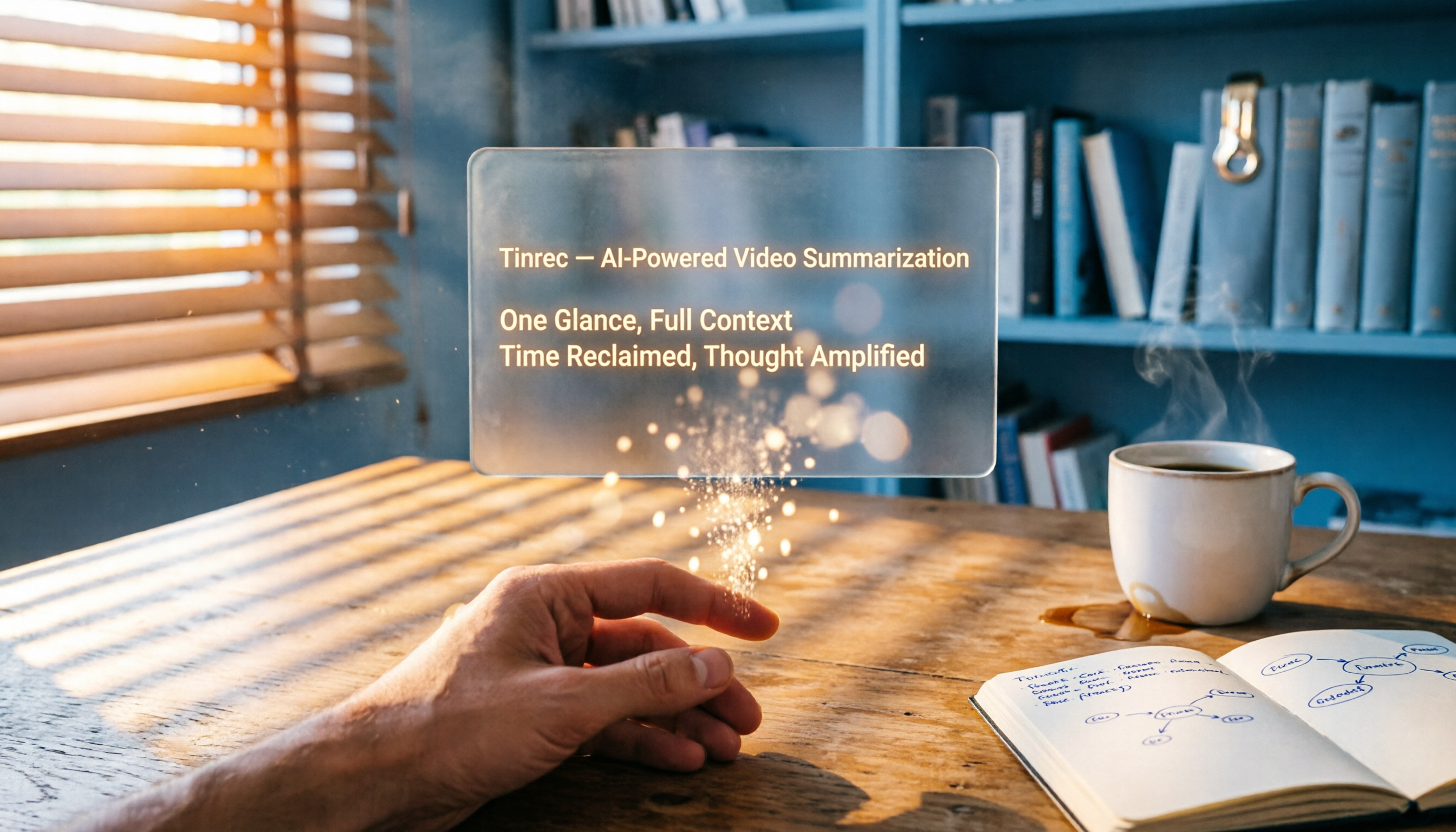
We Tested 5 AI Video Summarizer Tools in 2026: Which One Actually Saves You Time?
Watching YouTube videos takes too long? We tested 5 AI video summarizer tools, comparing accuracy, Traditional Chinese support, free plans, and AI follow-up Q&A, to find the ones that truly help you grasp the key points fast—plus a buyer's guide and pitfalls to avoid.
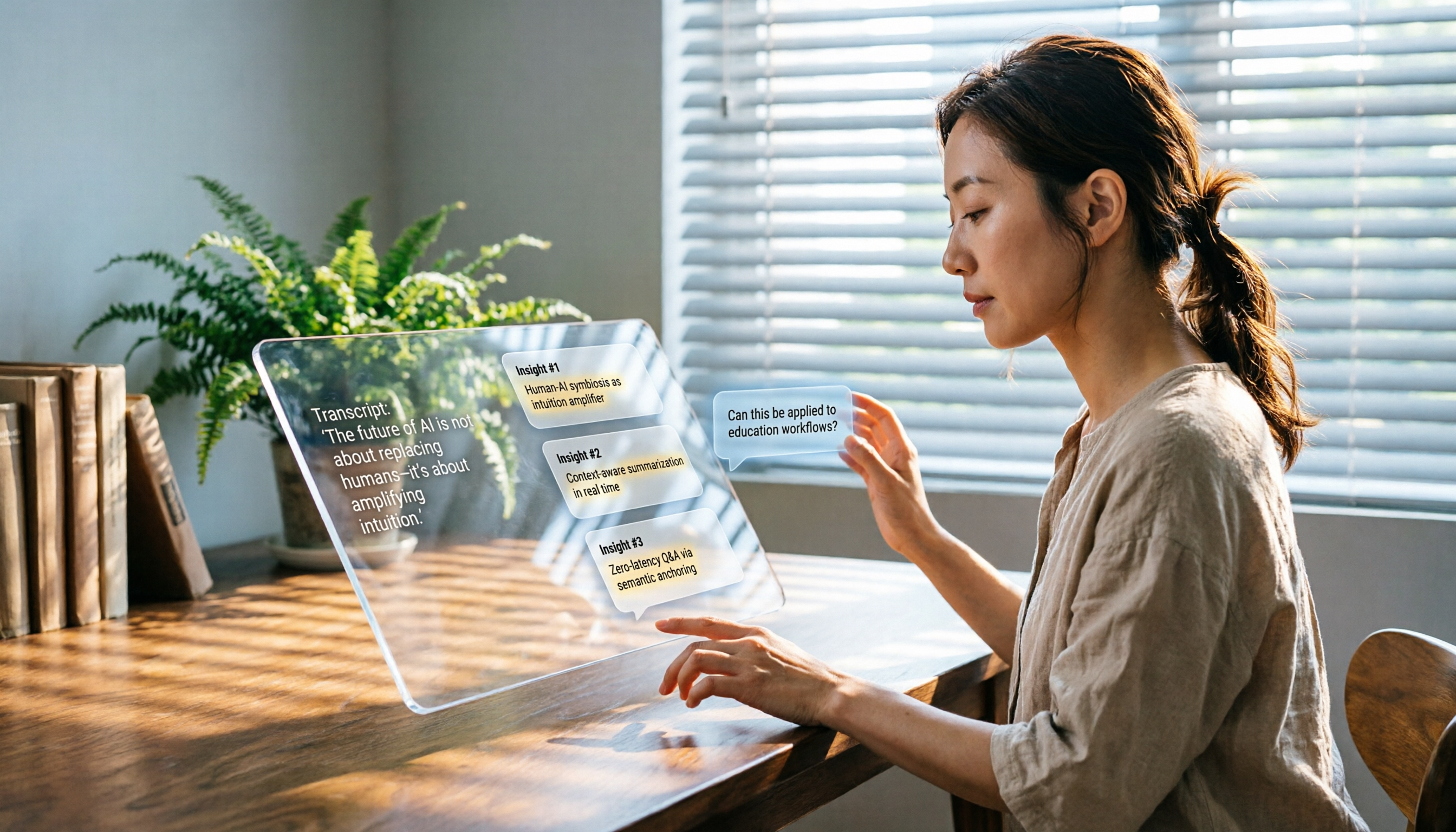
3 YouTube Video-to-Text Tools Tested in 2026: Which AI Summary Saves the Most Time?
We tested three online tools that turn YouTube videos into transcripts, summaries, and key points—so you can skip manual note-taking. Tinrec supports direct link parsing, and its AI Q&A makes finding key info more intuitive.

2026 AI Meeting Note Tools Compared: Which Free Version Is Enough?
Tired of spending hours on meeting minutes? We tested 5 popular AI meeting note tools, from free plans to transcription quality and smart summary generation, to help you find the best option for Taiwanese office workers—no more wasted time.

6 Text-to-Speech Tools Compared in 2026: Which Free Option Is Good Enough?
We tested 6 free text-to-speech tools—Luvvoice, Vidnoz, 雅婷, Ondoku, and 工具邦—on language support, voice naturalness, customization options, and output formats to help you find the best fit.