

Turn recordings into transcripts and summaries in minutes
Upload audio or video for multilingual transcription, AI notes, and action items
5 Voice-to-Text Tools Tested and Compared in 2026: Which Free Version Is Good Enough and Accurate?
If you want to quickly turn meeting recordings, course audio, or interview content into text, voice-to-text tools have become essential assistants for modern workers. There are many free and paid options on the market, from online web versions to mobile apps, with varying language support and accuracy. This time, we tested five voice-to-text tools commonly used by users in Taiwan, including Tinrec, MyEdit, cSubtitle, Yating Transcript, and SoundType AI, to help you find which free version is most practical and which paid version is worth it.
What is a Voice-to-Text Tool?
Simply put, they use AI speech recognition technology to convert audio content from recordings or videos into text. These tools not only save you the time of listening and typing, but some can also automatically add punctuation, segment text, and even generate summaries or to-do lists.
Core Features and Highlights of the 5 Tools
Tinrec: A Complete Workbench from Transcription to Post-processing
Tinrec (秒听录音) is not just an ordinary transcription tool; it's more like your audio data organization center. In addition to real-time recording-to-text and uploading audio files for transcription, it can also directly paste YouTube or Bilibili video links for analysis. The most convenient part is that after transcription, it automatically generates summaries, chapters, to-do lists, and even allows you to ask questions about the recording content, using AI to find key points. For those who need to organize meetings, courses, or interviews on a long-term basis, Tinrec extends "transcription" into a complete workflow.
MyEdit: Fast Transcription with Multi-language Support
MyEdit is an online AI voice-to-text tool that supports 9 languages including Traditional Chinese, English, and Japanese. It offers free daily credits, fast conversion speed, and decent accuracy. It can also export SRT subtitle files with timestamps, which is convenient for YouTubers or video creators. However, the free version's transcription length is limited by credits; heavy usage may require a paid plan.
cSubtitle: Focused on Chinese, Supports Batch Processing
cSubtitle focuses on Chinese speech recognition, trained on a large amount of Chinese corpora, and has high recognition accuracy for Mandarin (officially claimed to be above 90%). It supports uploading audio files up to 4GB and 5 hours in length, can process in batches, and automatically adds punctuation and paragraph breaks, generating Word documents and subtitle files. It's free to use without an account, suitable for those who occasionally need to transcribe long recordings.
Yating Transcript: A Convenient Choice for Real-time Transcription on Mobile
The Yating Transcript app supports both "transcribe while recording" and "upload audio files later" modes, making it very friendly for mobile-first users. Developed by a Taiwanese team, it has good Chinese recognition, and the free plan includes basic features. However, it's mainly designed for mobile; if you need to organize a large number of files on your computer, you may need to pair it with other tools.
SoundType AI: 90+ Languages and Speaker Identification
SoundType AI emphasizes precise transcription and speaker identification, supporting over 90 languages, suitable for multilingual environments or international meetings. It can convert speech to text with one click and generate AI summaries simultaneously. The free version has a monthly transcription hour limit, suitable for individual users with low usage.
Stop organizing recordings by hand
Upload audio or video and automatically get a transcript, summary, and action items
Plan and Price Comparison
| Tool | Free Plan | Paid Plan (Lowest) |
|---|---|---|
| Tinrec | Monthly base transcription quota, can experience all features | Weekly card suitable for short-term high-intensity use; Pro monthly or annual card offers more hours |
| MyEdit | Daily free credits, can transcribe a certain length | When credits run out, need to purchase; price depends on plan |
| cSubtitle | Free to use, no account required, but may have time or capacity limits | Official website does not clearly list paid plans |
| Yating Transcript | Free version has basic transcription features | Advanced features require payment; see details in the app |
| SoundType AI | Monthly free transcription hours | Monthly subscription provides more hours and advanced features |
Note: Actual free quotas may change over time; we recommend checking the latest information on the official website before use.
Tinrec Usage Tutorial
Tinrec's cross-platform design lets you work on both mobile and desktop. Here, using the desktop version as an example, we'll teach you how to quickly transcribe your first recording.
- Open the Tinrec official website, register or log in to your account.
- Click "Import Audio" or paste a video link; you can also record directly.
- Wait for transcription to complete; the system will automatically generate a transcript and mark the timeline.
- In the right-hand toolbar, you can click "Summary", "Chapters", and "To-Do" to have AI organize key points for you.
- If you have questions about the content, use the "AI Q&A" feature directly; enter a question and it will answer based on the recording content.
- Finally, you can export to Word, PDF, or plain text, and even send to tools like Notion, Google Docs, etc.
(Screenshots: You can refer to the official website's operation guide; we won't include extra images here.)
Frequently Asked Questions
Q1: How accurate are speech-to-text tools? All tools are affected by recording quality, background noise, accent, and speaking speed. For Chinese, cSubtitle claims above 90%; MyEdit and Tinrec can achieve good recognition rates in a generally quiet environment. We recommend testing them first to see if the results meet your needs.
Q2: Is the free version really sufficient? That depends on your usage. If you only have a few meetings within one hour each month, most free plans can handle it. But if you are a heavy user, or need more advanced features like AI summaries and Q&A, the paid version will be more suitable.
Q3: Which one supports the most languages? SoundType AI supports over 90 languages, the most among these five. If you often need to handle multilingual content, it should be a top priority. However, in terms of Chinese optimization, cSubtitle and Tinrec stand out.
Q4: Can I directly paste a YouTube link to convert to text? Currently, Tinrec provides this feature; other tools mostly require you to download the video and then upload the audio file. For those who often organize online video content, this is convenient.
Q5: Can the transcribed text be edited? Yes. All tools allow you to directly modify the transcript on the platform before exporting. Tinrec also allows further content adjustments through AI Q&A.
Q6: Is it private and secure? These tools have privacy policies and generally do not use your audio for other purposes. However, if you are handling confidential meetings, we recommend choosing a trustworthy platform and confirming whether audio files are deleted after transcription. Tinrec has clear privacy statements on its official website; you can check them before use.
References
- Free Audio to Text
- Online AI Speech, Video, and Audio File Auto Transcription - Free Trial - cSubtitle
- Online AI Speech-to-Text Tool, Free MP3 or Recording to Text Transcript - MyEdit
- Voice to Text App Recommendations: iPhone/iPad "Notes" App - Supports Real-time Transcription - Free - Supports Chinese and English
- SoundType AI - Ultra-Precise Transcription, Speech-to-Text, AI Dictation - Google Play App
Turn every recording into actionable outcomes
Get 60 free transcription minutes when you sign in. No credit card required.
Related Reading
You might also like

4 Text-to-Speech Generators Compared in 2026: Pair with Tinrec for Effortless Audio Organization
Looking for natural-sounding speech generators? We tested 3 free tools and recommend the all-in-one organizer Tinrec to streamline your audio workflow from creation to application.
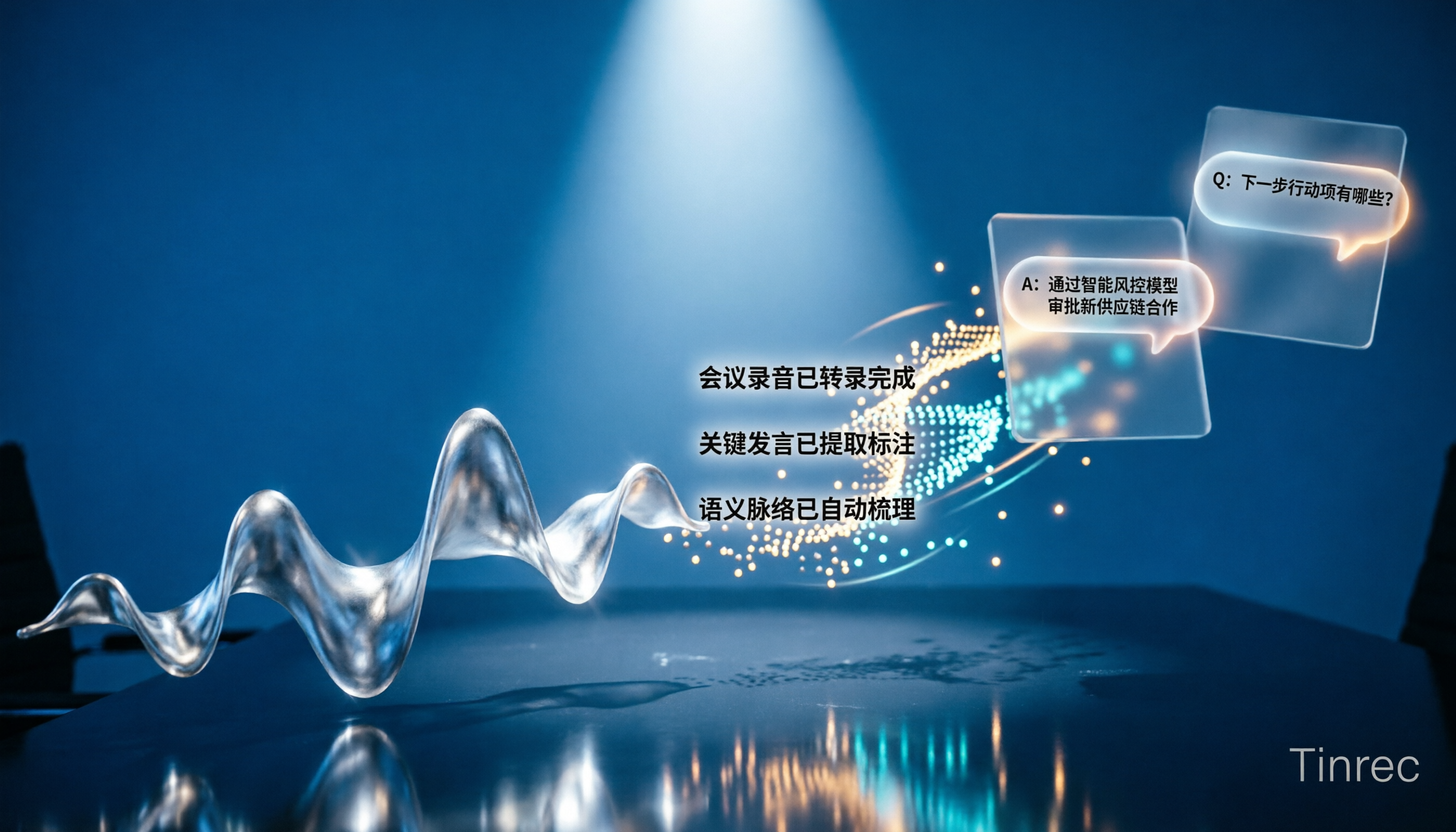
2026 MP3-to-Text Tool Comparison: Not Just Transcripts – AI Summaries and Q&A Are Key
Struggling to turn MP3 recordings into text and organize the results? This hands-on comparison of Tinrec, Notta, TurboScribe, and Otter covers transcription quality, post-processing, and AI Q&A to show which one truly saves you time.

2026 Hands-On Comparison of 4 Online Text-to-Speech Tools: Who Can Truly Turn Your Content into Usable Assets?
The article starts from real-world scenarios and compares 4 common online text-to-speech tools, while also analyzing the real need beyond text-to-speech: how to convert large amounts of audio data into text and organize it into knowledge. In the end, you'll find that turning recordings into a searchable, askable knowledge base is a far more practical productivity solution than simply reading text aloud.

5 iPhone Recording Apps Compared in 2026: Which AI Transcription Saves You the Most Time?
Tired of spending two hours organizing recordings after meetings? This hands-on comparison of 5 iPhone recording apps—from the free built-in option to AI transcription tools—shows which one saves you the most time. Our test team was impressed by Tinrec's AI conversation search and multi-source organization features.

Hands-On Comparison of 4 AI Meeting Notes Tools in 2026: Which One Has the Best Chinese Summaries and To-Do Lists?
Struggling with meeting minutes? In this 2026 hands-on comparison, we test 4 AI meeting notes tools and compare transcription accuracy, AI summaries, to-do lists, and free plans to help you find the best meeting assistant.

2026 Hands-On Comparison of 4 Google Recording-to-Text Methods: Is Free Really Enough? Or Is Tinrec More Hassle-Free?
This article tests four free speech-to-text methods—Google Pixel's built-in Recorder, Google Docs voice typing, Google AI Studio, and Google Cloud Speech-to-Text—and compares them in depth with Tinrec, an AI tool developed by a Taiwan-based team. We evaluate accuracy, cross-platform support, AI post-processing, and real-world usage scenarios to help you find the best voice-to-text solution for meetings, learning, and interviews.
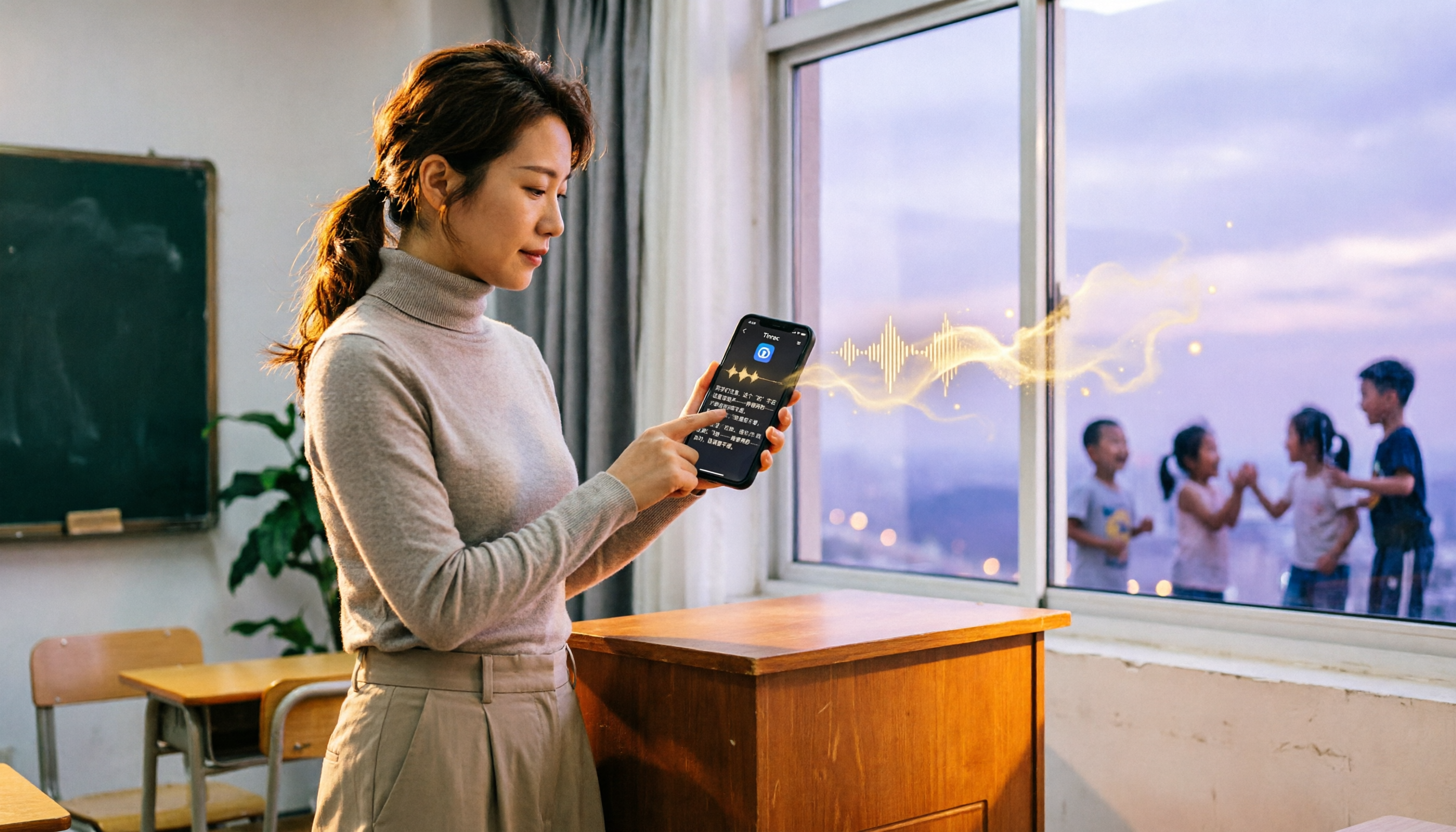
2026 Mobile Voice-to-Text App Comparison: Which Is Best for Chinese Meetings, Classes, and Interviews?
We tested four mobile voice-to-text tools, covering free-tier limits, AI summaries and Q&A, Chinese speech recognition, and cross-platform support. Tinrec (秒聽錄音) proved the most complete for Chinese meetings and study scenarios; Otter.ai suits English content; Notta transcribes well but has weaker AI post-processing. Full buying advice and pitfalls at the end.

2026 Video-to-Text Tool Comparison: Which AI Q&A Saves You the Most Effort?
We tested three video-to-text tools—Tinrec, Otter.ai, and Notta—comparing accuracy, AI features, free tiers, and usability to help you find the best fit for transcribing Chinese video content.

5 AI Meeting Note Tools Compared in 2026: Which One Actually Saves You Time?
Spending two hours in a meeting and another two hours writing up notes? We tested 2026's five hottest AI meeting note tools across live transcription, AI summaries, Chinese-language performance, and free tiers to find the one that best fits users in Taiwan. Stop letting meeting notes run your life!