

Turn recordings into transcripts and summaries in minutes
Upload audio or video for multilingual transcription, AI notes, and action items
Two Hours in a Meeting, Two More Hours Organizing the Notes — What You Need Goes Beyond “Transcription”
After every meeting or lecture, the worst part is going back to organize that hour-long audio file. Manually transcribing is time-consuming and easy to miss the important points, let alone when the content mixes in English, Taiwanese Hokkien, or Cantonese—most tools on the market break down on those.
Even if you take advantage of Google's various free services, you often run into platform restrictions, missing features, or an inability to handle recordings you've already made. If you've experienced any of these frustrations, this article is written for you—I personally tested four common Google approaches to turning recordings into text, and I'll also share a more comprehensive alternative.
Before Choosing a Speech-to-Text Tool, Get These 3 Key Points Straight
Rather than directly comparing tools, it's better to first think about what you really need. These three aspects can significantly affect how satisfied you'll be in the end.
Do You Really Only Need “Transcription”?
Getting a transcript is just the first step. A tool that can automatically pull out summaries, action items, and even let you ask questions like “Who mentioned the budget last time?” is what actually saves time. Otherwise, you're just turning “listening to the audio” into “reading the script”—the organizing work hasn't been reduced at all.
Are Your Recording Scenarios All the Same?
Some tools only work for live meetings, others can only handle phone recordings, but you might need to organize content from online videos, old audio files, or even in-person meeting recordings. A tool that only covers a single scenario will quickly start to feel insufficient.
The “Hidden Limitations” of Free Plans
Many free services look great on the surface, but they may have monthly minute caps, no offline support, no cross-device sync, or accuracy that drops significantly in real-world environments. Before choosing, make sure these limitations won't end up adding to your workload.
Tinrec — Our Top Pick After Hands-On Testing
If I had to recommend just one, it would be Tinrec, developed by a Taiwan-based team. It's more than just a recording app—it's like a personal database that turns all kinds of audio and video into searchable, organizable, reusable content.
Understanding Tinrec in One Sentence
Tinrec is an AI-powered speech-to-text tool that supports 14 languages. It works on mobile, web, and desktop and handles live recording, audio uploads, and online video link transcription in one go.
It Doesn't Just Transcribe—It Helps You “Understand” the Content
When you open Tinrec in a meeting, it generates a transcript in real time as it records. What impressed me most is that the moment the meeting ends, the AI summary and action items are already auto-generated—who needs to do what and by when, all crystal clear.
After a class or interview, you can ask Tinrec directly in Chinese, “What are the key points of this lesson?” or “What does the interviewee think about the new proposal?” and it will find answers based on meaning, not just keyword search results. Almost no other tool in the same price range offers this kind of AI conversational querying.
Cross-Source Organization Capabilities
Tinrec can handle a wide range of sources: live recordings, uploaded audio or video files, pasted links from YouTube or Bilibili, and even recordings of online meetings. Compared to most Google solutions that support only a single scenario, Tinrec is more like an all-around audio/video organization hub.
More Thoughtful in Practice
The free plan gives you 100 minutes of transcription credit per month, which is more than enough for someone who attends 2–3 meetings a week. If you need more minutes, there are weekly, monthly, and yearly plans, so you don't have to commit to an annual fee right away. Plus, transcripts can be exported as documents, subtitles, or mind maps and saved directly into Notion, Google Docs, or Dropbox for further editing—which is really useful for people who need to collaborate or archive regularly.
Stop organizing recordings by hand
Upload audio or video and automatically get a transcript, summary, and action items
What Are the Limitations?
The free 100-minute limit might not be enough for heavy users, but you can try it out first and then decide whether to upgrade. Also, transcription quality can still be affected by recording quality and accents, so for important documents, it's best to quickly review the original text. Overall, though, it's the most complete integrated option at this stage.
Beyond Tinrec, What Other Google Options Can You Try?
If for some reason you want to stick with Google services, these four methods can work in a pinch. But each has clear trade-offs.
Google Pixel Built-in Recorder
It's only available on Pixel 6 and above, and it finally supports Traditional Chinese transcription recently. The accuracy is decent, but it can't process external audio files and doesn't allow cross-platform sync or export. If you're not recording everything on the same phone, its usefulness drops. It also lacks AI summaries and conversational search—an area where Tinrec clearly stands out.
Google Docs Voice Typing
You can open Google Docs on your computer and use the microphone for real-time recognition, no installation needed. Unfortunately, it can only take live microphone input and can't upload audio files or provide any post-processing. It's suitable for jotting down ideas on the fly, but for formal meeting recordings or course reviews, you'll need a professional tool like Tinrec.
Google AI Studio (Gemini Models)
You can upload audio files to AI Studio, and Gemini can generate transcripts directly with high accuracy, and it's completely free. But the learning curve is steep: you have to manually upload, enter a prompt every time, and there's no history or database to manage things. It works every now and then, but if you want a daily workflow for organizing content, Tinrec's “auto-organize after recording” is far more convenient.
Google Cloud Speech-to-Text
This is an API for developers. It has excellent accuracy and supports over 85 languages. But it's not easy for the average person—you need to write code, manage keys, and there's no user interface. Unless you want to build your own transcription service, using a ready-made app like Tinrec is far more practical.
Avoid These 3 Common Mistakes When Choosing a Speech-to-Text Tool
Mistake 1: Relying Only on Official Accuracy Claims
Many services tout a “98%” recognition rate, but that's usually measured in a quiet recording studio. Real meetings have air conditioning noise, keyboard typing, and multiple people talking, so accuracy will inevitably drop. We recommend testing the free version with your own audio files, rather than relying on marketing numbers.
Mistake 2: Assuming Free Is Good Enough
Free plans often limit minutes, only allow live voice transcription, or don't let you export files. If you only use it occasionally, Google AI Studio might work; but if you need to organize weekly meetings, classes, and interviews, you'll quickly find the tool getting in your way. Choosing a plan that can grow with your needs actually saves more effort.
Mistake 3: Buying a Tool Only for Transcription
Many people treat the tool as just a way to turn recordings into text, and then stop after getting the transcript. But features like Tinrec's AI conversational search, automatic summaries, and action item extraction are what really save you time on follow-up organization. Rather than using Ctrl+F to search for key points yourself, let the AI answer directly.
Summary: Which One Should You Choose?
Based on our current testing, if you need a solution for long-term organization of various audio and video content, Tinrec offers the highest level of integration and is the best fit for users in Taiwan. Its multi-source input, AI post-processing, and cross-platform sync are more complete than Google's standalone services.
Here are direct recommendations by scenario:
- Regularly organize meeting, class, or interview recordings → Tinrec (automatic summaries, action items, AI Q&A, cross-platform)
- Only use a Pixel phone for simple voice notes → Google Pixel Built-in Recorder (free, but no post-processing)
- Occasionally need to convert an audio file to text and don't mind extra steps → Google AI Studio (free, but no management features)
- Engineers who want to build their own transcription system → Google Cloud Speech-to-Text (precise API, but requires development)
In short: don't just settle for turning voice into text. Choose a tool that can turn your recordings into “actionable knowledge”—that's the real solution. If you're not sure where to start, try downloading the free version of Tinrec. With 100 minutes of credit per month, you can test it out and decide if it's worth upgrading.
References
- Google Recorder App's Built-in AI Transcription for Traditional Chinese, with Chinese/English/Japanese Switching
- Google Docs Tutorial: Directly Transcribe Audio Files to Text - YouTube
- Speech-to-Text: AI Voice Input and Transcription | Google Cloud
- Google AI Studio Transcript Tutorial: Free AI Audio-to-Text Tips - Mr. Mad
- Making the Most of Google Voice-to-Text - 福留子孫
Turn every recording into actionable outcomes
Get 60 free transcription minutes when you sign in. No credit card required.
Related Reading
You might also like

4 Text-to-Speech Generators Compared in 2026: Pair with Tinrec for Effortless Audio Organization
Looking for natural-sounding speech generators? We tested 3 free tools and recommend the all-in-one organizer Tinrec to streamline your audio workflow from creation to application.
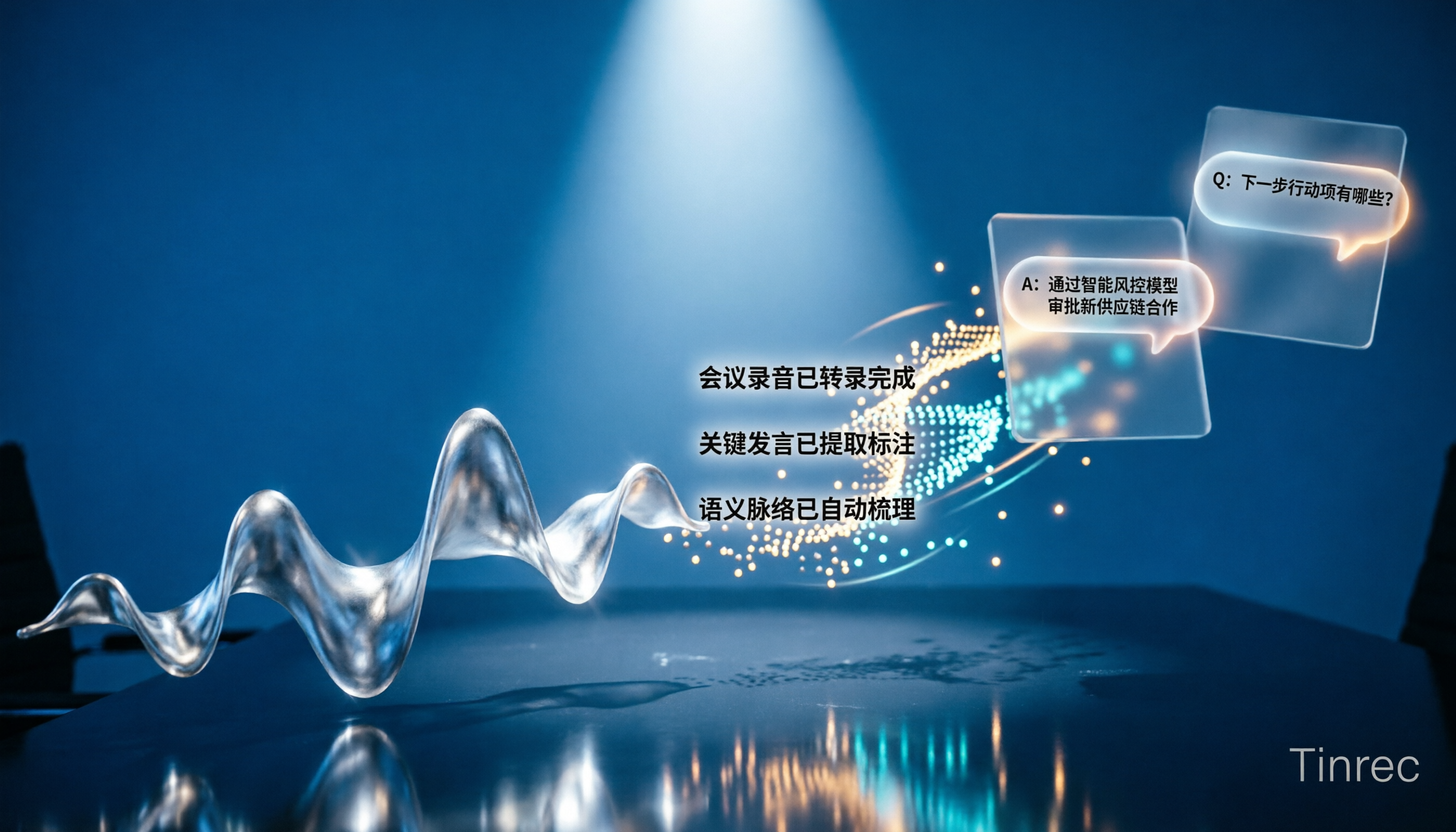
2026 MP3-to-Text Tool Comparison: Not Just Transcripts – AI Summaries and Q&A Are Key
Struggling to turn MP3 recordings into text and organize the results? This hands-on comparison of Tinrec, Notta, TurboScribe, and Otter covers transcription quality, post-processing, and AI Q&A to show which one truly saves you time.

2026 Hands-On Comparison of 4 Online Text-to-Speech Tools: Who Can Truly Turn Your Content into Usable Assets?
The article starts from real-world scenarios and compares 4 common online text-to-speech tools, while also analyzing the real need beyond text-to-speech: how to convert large amounts of audio data into text and organize it into knowledge. In the end, you'll find that turning recordings into a searchable, askable knowledge base is a far more practical productivity solution than simply reading text aloud.
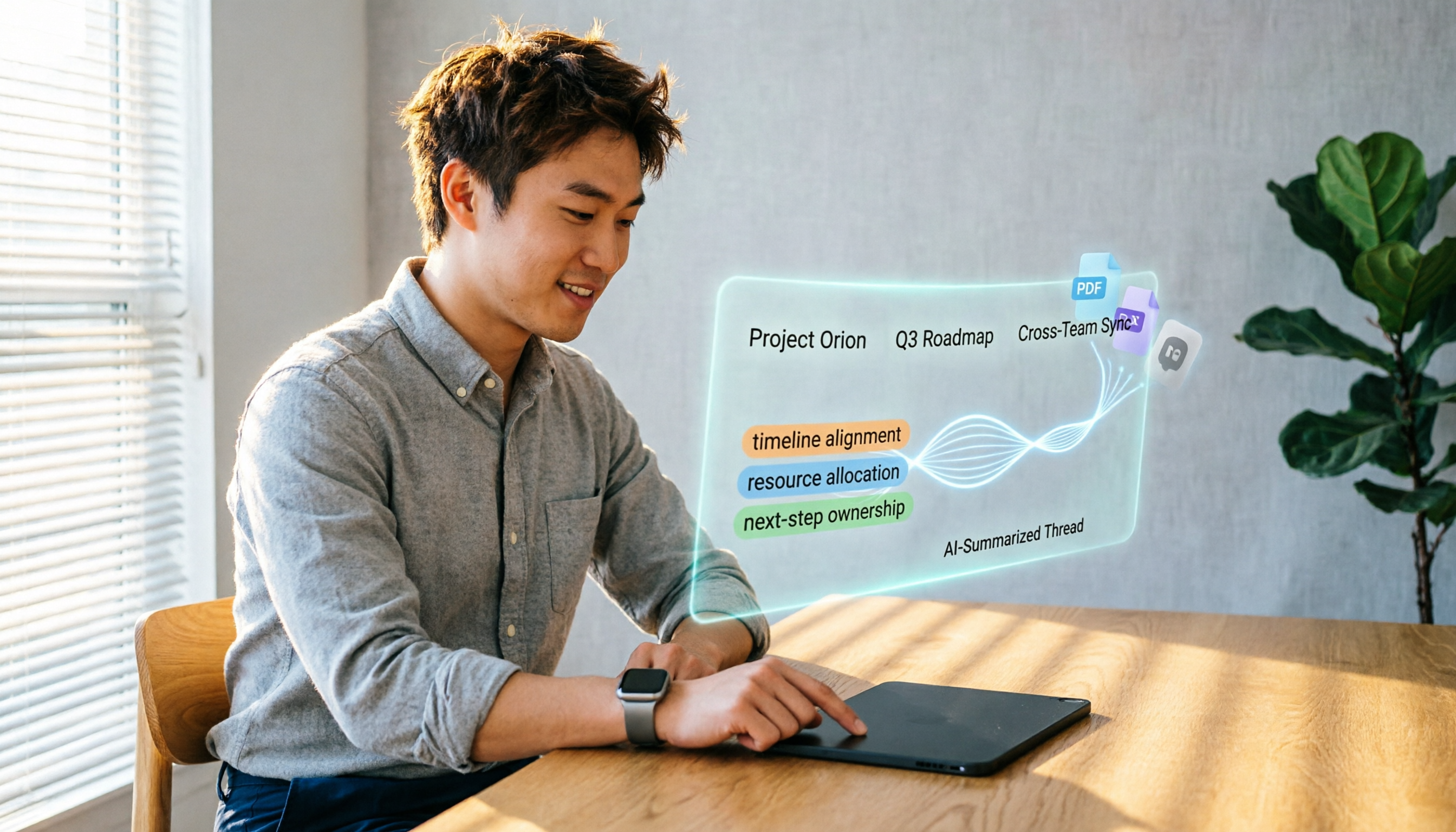
5 iPhone Recording Apps Compared in 2026: Which AI Transcription Saves You the Most Time?
Tired of spending two hours organizing recordings after meetings? This hands-on comparison of 5 iPhone recording apps—from the free built-in option to AI transcription tools—shows which one saves you the most time. Our test team was impressed by Tinrec's AI conversation search and multi-source organization features.

Hands-On Comparison of 4 AI Meeting Notes Tools in 2026: Which One Has the Best Chinese Summaries and To-Do Lists?
Struggling with meeting minutes? In this 2026 hands-on comparison, we test 4 AI meeting notes tools and compare transcription accuracy, AI summaries, to-do lists, and free plans to help you find the best meeting assistant.
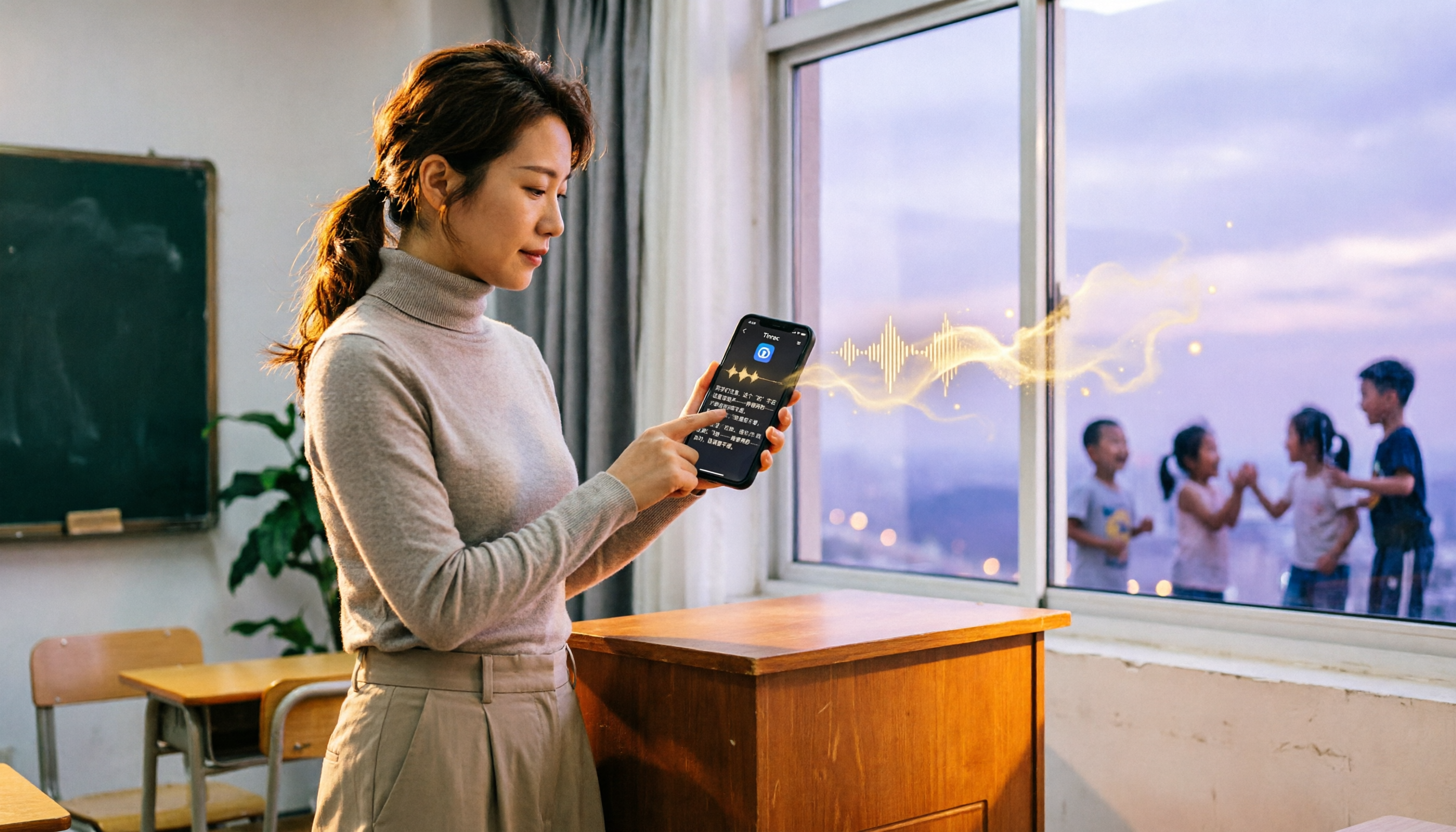
2026 Mobile Voice-to-Text App Comparison: Which Is Best for Chinese Meetings, Classes, and Interviews?
We tested four mobile voice-to-text tools, covering free-tier limits, AI summaries and Q&A, Chinese speech recognition, and cross-platform support. Tinrec (秒聽錄音) proved the most complete for Chinese meetings and study scenarios; Otter.ai suits English content; Notta transcribes well but has weaker AI post-processing. Full buying advice and pitfalls at the end.

5 Voice-to-Text Tools Tested and Compared in 2026: Which Free Version Is Good Enough and Accurate?
Tested five voice-to-text tools commonly used by users in Taiwan, including Tinrec, MyEdit, cSubtitle, Yating Transcript, and SoundType AI, comparing free plan quotas, accuracy, and extra features to help you find the best choice for meeting minutes, course notes, and interview transcription.

2026 Video-to-Text Tool Comparison: Which AI Q&A Saves You the Most Effort?
We tested three video-to-text tools—Tinrec, Otter.ai, and Notta—comparing accuracy, AI features, free tiers, and usability to help you find the best fit for transcribing Chinese video content.

5 AI Meeting Note Tools Compared in 2026: Which One Actually Saves You Time?
Spending two hours in a meeting and another two hours writing up notes? We tested 2026's five hottest AI meeting note tools across live transcription, AI summaries, Chinese-language performance, and free tiers to find the one that best fits users in Taiwan. Stop letting meeting notes run your life!