
Turn recordings into transcripts and summaries in minutes
Upload audio or video for multilingual transcription, AI notes, and action items
In this era of explosive video content, we consume massive amounts of YouTube videos daily to learn or gather information. However, video content often has lower "information density" than text. Finding the key 2-minute argument in a 30-minute lecture requires repeatedly dragging the progress bar and listening multiple times, which is time-consuming and prone to missing key points. That's why the demand for "directly converting YouTube URLs to transcripts" is growing—we need to transform time-based content (video) into searchable, scannable text assets.
This article provides an in-depth review of 5 popular tools in 2026, analyzing them from Chinese recognition accuracy, support for videos without captions, cross-platform convenience, and more, with a detailed comparison table and practical tutorials.
Quick Buying Guide:
- If you are a heavy Mac user who values privacy: Go for MacWhisper.
- If you are a student or researcher who needs to organize large amounts of data for free: Try NotebookLM.
- If you need cross-device use (phone/computer) and want "Action Items" and "AI chat queries" directly: Tinrec is the most comprehensive choice.
Why Do You Need a YouTube URL to Text Tool?
Beyond simple caption generation, a good AI transcript tool solves three core pain points:
- Save time: No need to rewatch videos at double speed; read text highlights for 10x+ efficiency.
- Precise content retrieval: Use keyword search (Ctrl+F) or AI semantic queries to instantly locate specific segments, no more blind dragging.
- Structured note-taking: Automatically convert unstructured audio into structured summaries, mind maps, or to-do lists for easy editing and sharing.
Review of 5 Popular YouTube-to-Transcript Tools
Based on market feedback and actual testing, here are 5 tools for different needs:
1. NotebookLM: Google's Free AI Note-Taking Tool
- Best for: Students or researchers who organize large amounts of data and like mind maps.
- Features: NotebookLM is a cloud-based AI tool from Google. Its biggest advantage is that it's completely free and requires no installation. Just import a YouTube link, and it quickly generates transcripts and summaries.
- Pros: Very fast, supports voice summaries and mind maps, can recognize videos without captions (No CC).
- Cons: Occasionally fails on very long videos, mainly relies on a computer browser, mobile experience is weak.
2. MacWhisper: A Local Performance Beast for Mac Users
- Best for: Mac users who value privacy and need high-accuracy Chinese recognition.
- Features: A macOS app that uses local hardware for processing. Supports OpenAI's Whisper model, with extremely high Chinese recognition accuracy.
- Pros: Supports multiple formats (video/audio), can transcribe without captions, can output SRT subtitle files for editing software.
- Cons: Only available on Mac, model files take up local storage, transcription speed depends on hardware specs.
3. Tinrec: Cross-Platform & Action Assistant
- Best for: Professionals and creators who need cross-device syncing (phone/computer) and want to turn content into "action lists."
- Features: Tinrec is an integrated solution supporting iOS, Android, and web. It's not just a transcription tool but emphasizes a "record → understand → act" workflow.
- Pros:
- Multi-device sync: Paste a YouTube link on your phone, continue editing on the web.
- Decision support: Automatically generates meeting summaries, conclusions, and key "Action Items."
- AI chat queries: Ask questions about the video content (e.g., "What are the three solutions mentioned in the video?") replacing traditional keyword search.
- High compatibility: Supports YouTube and various podcast/web video links; can transcribe without captions via AI.
- Cons: Free plan has a monthly limit of 100 minutes (suitable for light users).
Stop organizing recordings by hand
Upload audio or video and automatically get a transcript, summary, and action items
4. Glasp: A Community Highlighter for Browsers
- Best for: Those who watch videos on Chrome/Safari and take light notes.
- Features: A browser extension that sits next to YouTube pages, allowing you to copy transcripts while watching.
- Pros: Ready to use, no window switching, one-click to send content to AI for analysis.
- Cons: Highly dependent on original captions. The video must have CC captions or auto-generated English captions to work. Cannot use on videos without any captions.
5. tactiq.io: Lightweight Option for Online Meetings & Videos
- Best for: Users who need quick transcripts of English content.
- Features: No-install online service, generate notes from a URL.
- Pros: No sign-up (basic features), simple interface, generates timestamped transcripts.
- Cons: Similar to Glasp, strictly requires CC captions, and Chinese video support is poor; mainly for English and Latin language content.
Comparison Table of 5 Popular Video-to-Text Tools
To help you decide which tool fits you best, here is a detailed comparison:
| Feature | Tinrec | NotebookLM | MacWhisper | Glasp | tactiq.io |
|---|---|---|---|---|---|
| Platform Support | Web / iOS / Android (All) | Web (browser) | macOS (Mac only) | Chrome / Safari extension | Web / Chrome extension |
| No Caption (No CC) Support | Yes (AI voice recognition) | Yes | Yes (local model) | No (requires subtitle file) | No (requires subtitle file) |
| Chinese Support | High (supports 10 languages including Taiwanese, Cantonese) | High | Very High (Whisper model) | Depends on YouTube captions | Low (English-focused) |
| Output & Organization | Transcript + Action Items + AI Summary | Transcript + Mind Map | Transcript + SRT subtitles | Transcript + Summary | Transcript |
| AI Interaction | AI Chat Query | AI Q&A | Requires OpenAI API integration | Integrates ChatGPT | Integrates AI |
| Best For | Cross-device learning, mobile work, meeting & video notes | Academic research, data organization | Video editors, heavy Mac users | Light browser note-taking | English meetings/videos |
Tutorial: How to Turn a YouTube Video into Key Notes in 1 Minute
If you want more than just a block of text—structured summaries and actionable items—here’s how to use Tinrec (which supports multiple devices) to process a YouTube video:
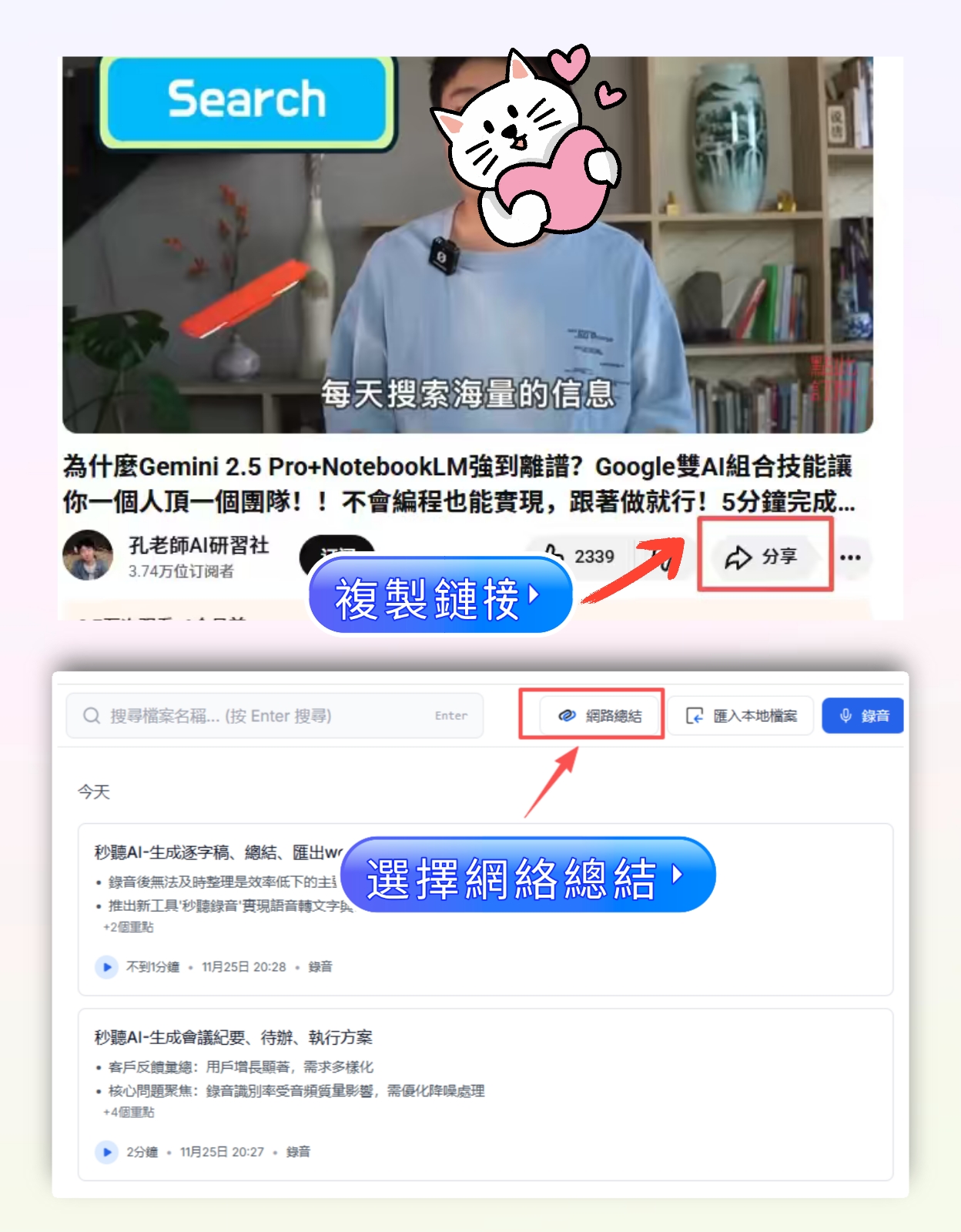
Step 1: Copy the Video Link
Find the video you want to organize on YouTube (lecture, tutorial, meeting recording, all work), click "Share," and copy the video URL.

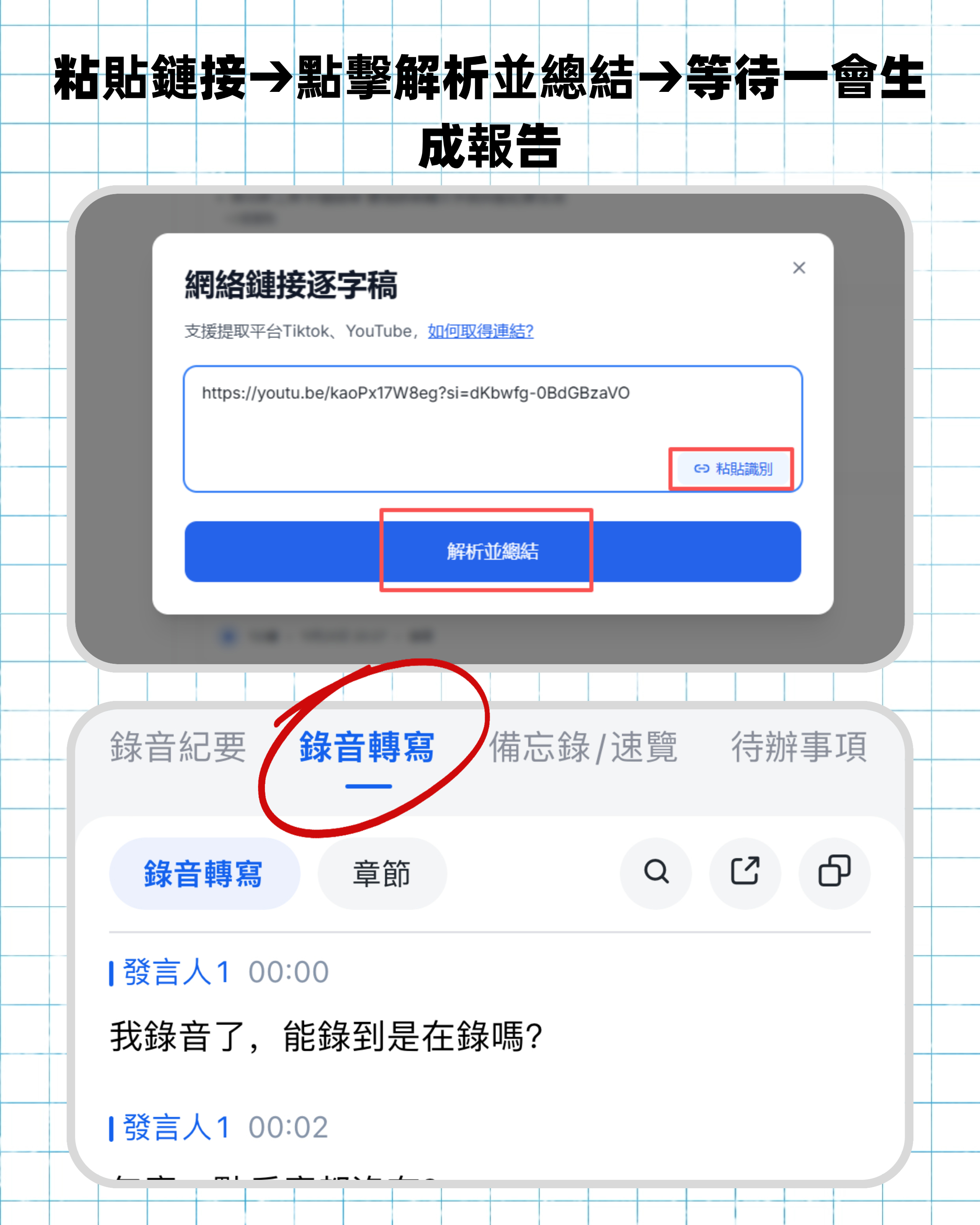
Step 2: Paste the Link and Parse
Go to Tinrec's Podcast/Web Video to Text feature (web or app), paste the link, and submit.
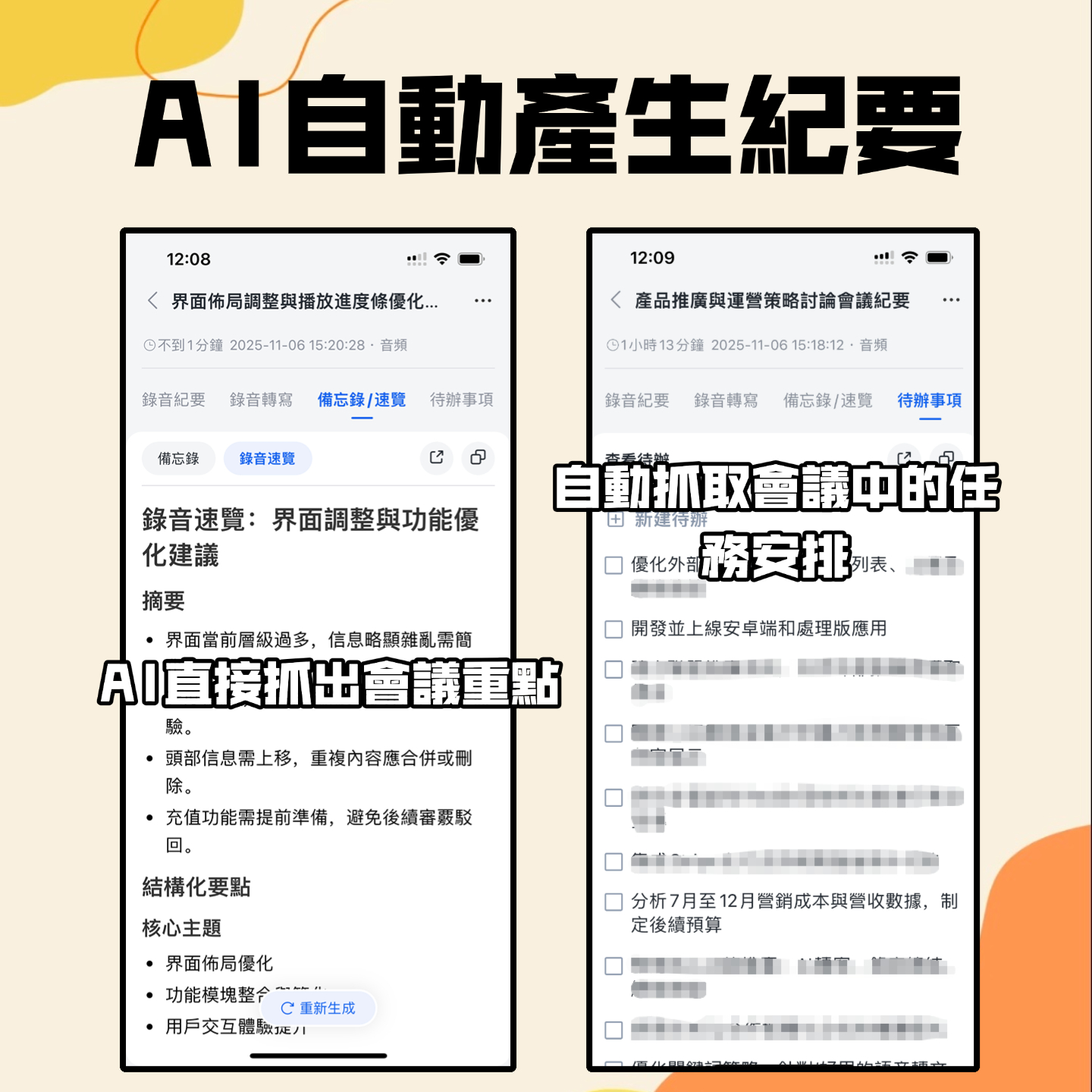
Step 3: View Summary and Action Items
The system will automatically perform speech-to-text. Within minutes, you'll see the full transcript along with AI-generated "meeting minutes" and "action items." This is very useful for quickly grasping key points.
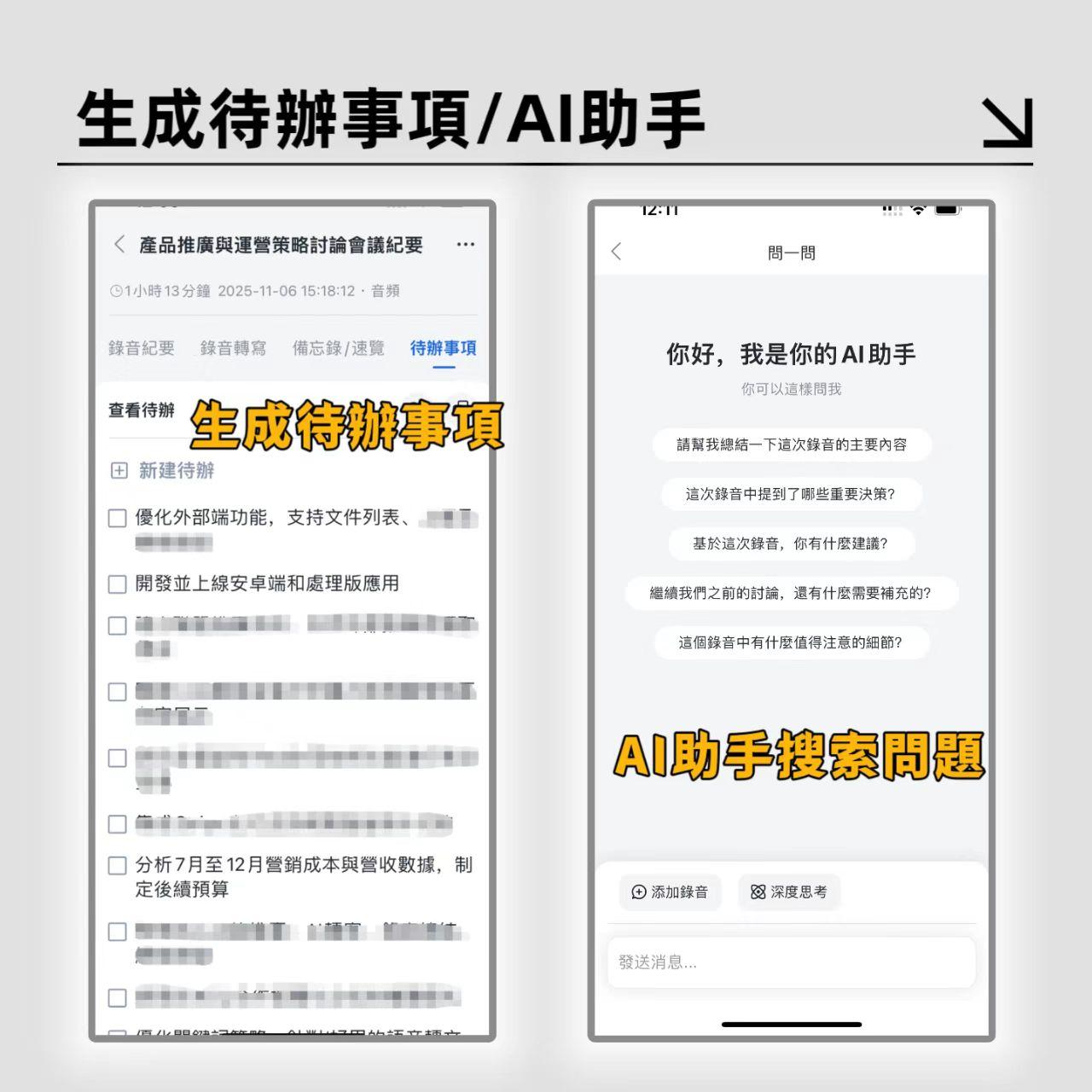
Step 4: Use AI Chat for Details
If the transcript is too long, use the AI chat query feature. Ask: "What is the speaker's market forecast for the second half?" Tinrec will answer based on the audio content, providing better context than Ctrl+F.
Frequently Asked Questions (FAQ)
Q1: Why can't some tools transcribe videos without CC captions?
Tools like Glasp and tactiq.io primarily "scrape" YouTube's own caption files. If the original video has no captions, these tools can't produce content. In contrast, MacWhisper, NotebookLM, and Tinrec use "speech recognition models" to directly listen to audio, so they don't require captions to generate accurate transcripts.
Q2: If I mainly use an iPhone or Android phone, which tool do you recommend?
NotebookLM can be used via a mobile browser, but the experience leans toward desktop. If you want a native mobile app experience, Tinrec is a better choice. It supports both iOS and Android and syncs data automatically, allowing you to process video content on the go.
Q3: Can these tools export SRT subtitle files for video editing software?
MacWhisper and tactiq.io both explicitly support SRT export, making them great for editors. While Tinrec focuses on notes and summaries, it also supports exporting text as TXT or Word files, which can then be converted into subtitle formats.
Q4: For multilingual videos (e.g., Chinese and English mixed), which tool has the best recognition?
MacWhisper (Pro) and Tinrec both have strong multilingual recognition. Tinrec specifically highlights support for Chinese, English, Japanese, Korean, and even Taiwanese and Cantonese, making it very friendly for Asian users.
Q5: What are the limitations of the free version?
- NotebookLM & Glasp: Currently completely free.
- MacWhisper: Has a free version, but the high-end Whisper model requires a paid Pro upgrade.
- Tinrec: Offers free trial (100 minutes per month). For heavy use, subscribe to Basic or Pro (starting at $4.9/month), suitable for professionals needing long-term stable service.
Q6: How about privacy and security of recording or video content?
Most cloud tools (like NotebookLM, Tinrec) encrypt data in transit. For extremely sensitive content, use a "local processing" tool like MacWhisper, where data never leaves your computer, though it uses more system resources.
Turn every recording into actionable outcomes
Get 60 free transcription minutes when you sign in. No credit card required.
Related Reading
You might also like

3 Speech-to-Text Tools Tested in 2026: Is the Free Version Enough? Tinrec Offers the Best Value
This tutorial reviews free speech-to-text tools, focusing on Tinrec, and shows how to use the free version to quickly convert meetings, interviews, and course recordings into transcripts and summaries. It also includes buying tips and FAQs.

2026 Tested: 4 Best Free Speech-to-Text Tools Compared – Which Free Plan Is Most Practical?
We tested 4 popular free speech-to-text tools, comparing free quotas, accuracy, and AI features to help you find the best option for meeting notes and transcripts.

2026 Hands-On Comparison of 4 Speech-to-Text Tools: Which AI Meeting Notes Really Save Time?
How do you choose a speech-to-text tool? This article tests Tinrec, Otter, Notta, and PLAUD, covering accuracy, AI summarization, cross-platform support, and team collaboration to help you find the best meeting notes solution.

4 iOS Voice-to-Text Apps Tested in 2026: Tinrec's AI Meeting Notes Save You Hours of Organizing
This article tests 4 iOS voice-to-text tools, comparing the built-in Voice Memos, Tinrec, PLAUD NotePin, and Yating Transcript, and tells you when to use the free built-in option and when to upgrade to Tinrec with AI meeting notes and team collaboration.

2026 Review: 4 Speech-to-Text Tools Compared – Which Is Best for Chinese Meetings and Team Collaboration?
We tested Tinrec, Otter.ai, Notta, and Granola for speech-to-text, focusing on Chinese meetings, bot-free recording, team collaboration, and file import. Get our recommendations.

2026 Free Speech-to-Text Tools Compared: Which Is Best for Meeting Notes?
We tested three free speech-to-text tools—Tinrec, Otter, and Notta—comparing free quotas, meeting organization, AI Q&A, and cross-platform support to help you pick the best option for meeting minutes.

3 iPhone Voice-to-Text Solutions Compared in 2026: Built-in Notes, Voice Memos, or Tinrec?
After updating to iOS 18.4 on iPhone 12 and later, the built-in Notes and Voice Memos apps can transcribe recordings into text. But if you need AI summaries, cross-platform export, or team collaboration, Tinrec is a more complete choice. This hands-on comparison helps you weigh the pros and cons of each option.
2026 Hands-On Comparison of 3 Recording-to-Text Apps: Which Is Best for Chinese Meeting Minutes and Team Collaboration?
Tired of transcribing meetings yourself? This hands-on test of Tinrec, Notta, and Otter.ai covers Chinese transcription, bot-free recording, AI summaries, and team spaces to reveal which tool truly saves you time on meeting minutes.

4 Best Speech-to-Text Platforms in 2026: Free Options for Meeting Notes
We tested 4 speech-to-text platforms in 2026, from Tinrec to MyEdit, cSubtitle, and Otter, to help you find free or entry-level solutions for meeting notes, transcripts, and AI summaries.