
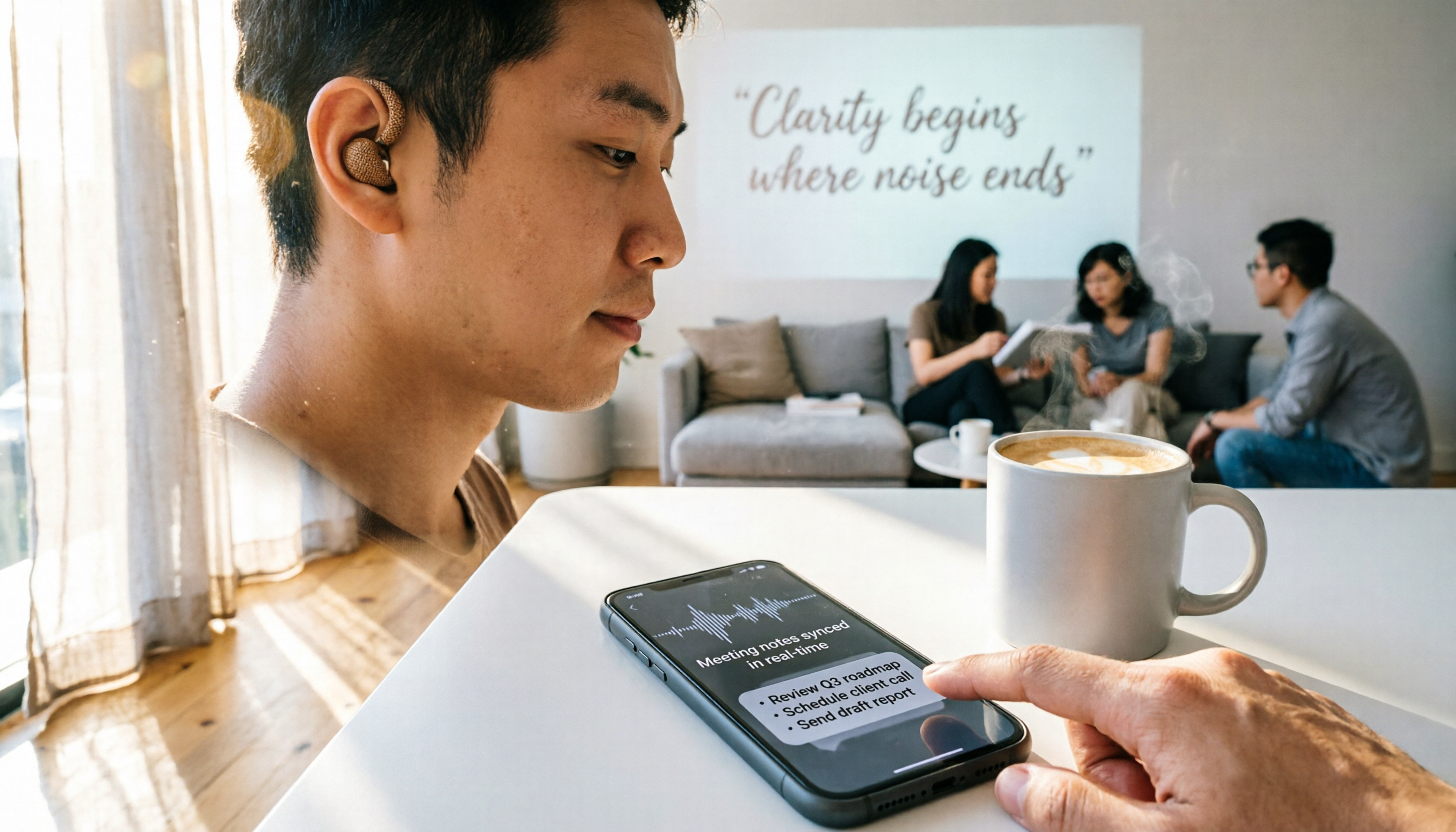
Turn recordings into transcripts and summaries in minutes
Upload audio or video for multilingual transcription, AI notes, and action items
Have you ever run into this situation: you're on a LINE call with a client, friend, or family member and want to record it for reference, only to find LINE doesn't have a built-in recording feature? Even if you manage to record it, listening back to a long audio file later is still a hassle—can't find the key points, can't search, and it's hard to turn into meeting notes or memos.
This article shows you how to record LINE calls on iPhone or Android, and how to use Tinrec after recording to quickly turn audio files into summaries, action items, and searchable text.
How to record LINE calls
iPhone: Built-in "Local Capture" in iOS 26
Once you update your iPhone to iOS 26, you can use "Local Capture" from the Control Center to record LINE calls.
- Go to Settings > Control Center, and add the "Local Capture" item.
- During a LINE call, pull down Control Center and tap the Local Capture button to start recording.
- You must enable Speaker mode during recording to ensure both voices are captured.
Quick tip: try to keep the screen on during recording to avoid the system automatically interrupting it. Recorded files are saved directly to the Files app for later organization.
Android: Use screen recording
Some Android phone brands (such as Samsung, Xiaomi, etc.) support recording internal system audio during screen recording. Here's how:
- Enable "Screen recording" from the quick settings panel, and allow internal audio or microphone recording in its settings.
- Start screen recording after making a LINE call.
- After the call ends, the recording file is saved to your gallery or file manager.
Note that this method isn't supported on every Android model, and actual results may vary by brand. If no sound is captured, try using an external wired headset or a third-party app.
After recording, you're still missing a step—organizing the recording content
Okay, now you have a recording file. But what's next? Listening to 30 minutes just to find one sentence? Manually transcribing takes longer than the call itself.
That's where Tinrec comes in. It's an AI recording and audio/video organization tool that not only transcribes recordings but also automatically generates summaries, key points, and action items—and even lets you ask questions about the recording as if you were talking to it.
What can Tinrec do for you?
Scenario 1: Get the key points within 5 minutes after a call
You just finished a client call and immediately upload the recording to Tinrec. A few minutes later, it gives you more than just a transcript—it also lays out the discussion conclusions, client requirements, and next actions. You only need to copy and paste into Slack or Email.
Scenario 2: Turn course or interview recordings into notes
If you record online courses or podcast interviews for review, Tinrec can automatically split chapters, highlight key points, and even generate mind maps. For students and content creators, this saves a huge amount of manual note-taking time.
Scenario 3: Organize historical recordings and search anytime
Meetings or calls you recorded before may be sitting in folders you never open again. Tinrec's AI Q&A lets you search across all recording content. For example, ask "What did we say about the budget last time?" and it will find the answer directly from the relevant recordings.
What are Tinrec's core capabilities?
- Audio/video transcription: Supports multiple formats; upload and quickly generate a transcript in one click.
- AI summaries and chapters: Long recordings are automatically split into sections with titles, so you don't have to listen from start to finish.
- Action item extraction: Pulls out "who should do what" from the conversation and generates an action list right after a meeting.
- AI conversation query: Not keyword search, but semantic understanding to answer your questions—like having an assistant listen to the recording for you.
- Multiple export options: Converted text can be exported as TXT, Word, PDF, or synced directly to tools like Notion and Google Docs.
Stop organizing recordings by hand
Upload audio or video and automatically get a transcript, summary, and action items
Practical use cases
Meeting minutes
Record every meeting, but organizing afterward is time-consuming. Simply drop the recording into Tinrec, and the AI will list the topics, conclusions, and action items separately. If you need formal meeting minutes, you can use the post-processing feature to generate a formatted document.
Study notes
Record an entire online course or lecture, and a two-hour session is hard to review. Tinrec breaks it into several chapters, each with a summary and key highlights, so you can quickly find key concepts when reviewing.
Interview organization
For journalists or researchers, transcribing interviews is the most painful part. After transcribing with Tinrec, the AI summary gives you the interviewee's core viewpoints directly, and the transcript includes timestamps for easy citation.
Content creation
Want to turn a podcast or YouTube video into an article? Drop the link or file into Tinrec, get the full text and summary, and then rewrite or extract key points. Your creative efficiency will improve significantly.
When choosing a recording organization tool, keep these 4 points in mind
- Transcription accuracy: Don't just look at official numbers. Test with your own recordings for the most accurate picture, especially in Chinese and mixed Chinese-English scenarios. Tinrec performs reliably with clear audio, but remember: background noise and accents will affect quality.
- Not just transcription, but organization: Transcription is only the first step. What really saves time is whether the tool can summarize, split into chapters, and extract action items. Tinrec integrates all these features into one workspace.
- Supported input sources: Some tools only handle meeting recordings; others only accept files. Besides uploading audio/video files, Tinrec can also process public video links like YouTube and Bilibili, making it more versatile.
- Pricing and flexibility: If you only need to organize call recordings occasionally, a free plan or weekly card may be enough. If you're constantly in meetings, classes, or creating content, consider the Pro plan. Don't be swayed by unlimited-plan ads; think about how many minutes you'll actually use per month.
Frequently asked questions
Why is there no sound when recording LINE calls on iPhone?
Usually it's because you forgot to turn on Speaker mode. Local Capture needs to play through the speaker to capture both sides of the conversation, so remember to tap Speaker mode in the call screen.
What if Android screen recording doesn't capture the other party's voice?
Some models limit internal audio recording. Check the "Record internal audio" option in system settings first. If that doesn't work, try an external headset or a third-party app that supports system audio recording.
Can I upload recording files to Tinrec for transcription?
Yes. Tinrec supports multiple audio formats, and files recorded from iPhone or Android can be uploaded directly. Video files and public links are also supported.
What are the limitations of Tinrec's free plan?
The free version includes a monthly base transcription allowance, enough to try a few calls or short meeting transcriptions. Check the official website for exact limits.
Will my data be stored or leaked after organizing recordings?
Tinrec uses industry-standard encrypted transmission and storage, and does not use your recordings or transcripts for training or share them with third parties. If your content is highly confidential, we recommend reviewing the official privacy policy.
Conclusion
Recording a LINE call is just the first step; organizing and using the content afterward is what truly saves time. Tinrec doesn't just transcribe your audio—it also uses AI to summarize, categorize, search, and export, so recordings are no longer black files piled up in your phone, but work materials you can revisit and reuse anytime.
The next time you finish recording an important call, try uploading the file to Tinrec and see the record AI organizes for you in minutes. You might discover that organizing recordings can be this easy.
References
Turn every recording into actionable outcomes
Get 60 free transcription minutes when you sign in. No credit card required.
Related Reading
You might also like

2026 Speech-to-Text Tools Buying Guide for the Deaf and Hard of Hearing: 4 Tools Reviewed and Selection Tips
We selected 4 speech-to-text tools for deaf and hard-of-hearing users, compared free plans vs. paid features in hands-on tests, and recommend the best-value AI transcription app, plus practical tips to avoid common pitfalls.

Tinrec vs TurboScribe 2026 Comparison: Which Free Tool Is Better for Making SRT Subtitles?
This hands-on comparison of Tinrec and TurboScribe covers input sources, AI post-processing, subtitle export, pricing, and Chinese-language experience, helping you decide which service is better for quickly generating SRT subtitle files.

2026 Comparison of 3 Meeting Minutes Methods: Which One Helps You Write the Most Professional Meeting Minutes?
Still transcribing every word after meetings? Professional meeting minutes are not just dialogue records, but action documents with structure, conclusions, and next steps. This article tests three common meeting notes methods and uses Tinrec to demonstrate how AI can help you quickly produce professional meeting minutes that earn your boss's approval.

2026 Tested: 5 Best Recording-to-Text Tools Compared – Which One Has the Easiest One-Click Share Link?
This article tests 5 free and paid recording-to-text tools, including Tinrec, cSubtitle, MyEdit, Monica, and inFin, comparing their one-click share links, transcription accuracy, and extra features to help you find the most time-saving option.

5 tl;dv Alternatives Tested & Compared in 2026: Which Free Plan Is Best for Chinese Meetings?
tl;dv's free plan has many limitations and its Traditional Chinese transcription isn't accurate enough? This article tests 5 alternatives, comparing features, pricing, and Chinese-language support to help you find the best AI assistant for meeting notes and audio organization.

2026 Hands-On Comparison of 2 Multilingual Real-Time Speech-to-Text Tools: Which One Better Helps You Organize Audio & Video?
The need for multilingual translation and real-time speech-to-text is growing, but tool types vary greatly. This article compares Tinrec and Google Translate hands-on across real-time transcription, multilingual organization, post-editing, and pricing, to help you decide which is better for long-term meeting, course, and audio/video management.

2 Speech-to-Text Apps Compared in 2026: Which AI Summarization Feature Really Saves You Time?
A hands-on comparison of Tinrec Voice Recorder vs. Yating Transcription across 5 key dimensions—input sources, AI features, cross-platform support, free tier, and export options—to help you find the best voice-to-text app for your needs.

2026 Horizontal Comparison of 2 Tibetan Audio-to-Text Tools: Tinrec vs Tibetan Translator – From Recording to AI Organization, Which Is Better?
How to choose a Tibetan audio-to-text tool? This article compares Tinrec and Tibetan Translator side by side, covering 5 dimensions including speech recognition, AI summarization, multilingual support, and export capabilities, to help you find the most suitable Tibetan audio organization solution.

3 Yating Transcript Alternative Apps Tested and Compared in 2026: Which Has the Most Complete AI Organization Features?
Tired of Yating Transcript? Pseric tested 3 alternative apps, from recording transcription and AI summaries to cross-platform support, to help you find the best speech-to-text tool for users in Taiwan.