

Turn recordings into transcripts and summaries in minutes
Upload audio or video for multilingual transcription, AI notes, and action items
Two-hour lectures and no time to take notes? Voice-to-text saved my semester
Last semester I took a class where the professor spoke fast and flipped through slides even faster. I tried handwriting notes, but when I opened my notebook before midterms, I couldn't understand anything I'd written. So I started recording lectures on my phone, but listening to an hour of audio to transcribe it was even more miserable—I nearly fell asleep before midterms and never finished my notes.
If you're like me and relying on just recording lectures isn't enough for classes, group discussions, or talks, this article is for you. I spent an entire semester testing 4 voice-to-text tools, from iPhone built-in options and free apps to paid software, and put together the best options for students.
Before choosing a voice-to-text tool, understand these 4 key points
There are many tools out there, but not all are suitable for class use. Based on my own trial-and-error, here are 4 things to check:
1. Does the free tier cover your class length?
Students have limited budgets, so how long the free version lets you record is key. A typical class is 50 minutes to 2 hours, and you might record 3–5 classes a week. If the free tier only gives you 30 minutes, it won't even cover one class—skip it. Some tools offer 100–300 minutes, which is fine for occasional recording, but daily use requires upgrading.
2. How accurate is Chinese recognition? Typos make it useless
Official claims of 98% accuracy are from lab tests. In a real classroom, with classmates talking, air conditioning, and chairs scraping, background noise makes accuracy drop. When I tested with my own 5-minute class recordings, some tools had so many errors that I had to listen again to fix them, wasting time. A good tool should let you understand the lecture from the transcript alone, without listening to the recording.
3. Beyond the transcript, does it use AI to highlight key points?
The transcript is only the first step; the real time-saver is what comes next. Some tools automatically generate summaries, chapters, and to-dos, or even let you ask questions like, "What exam topics were mentioned in this class?" That's much faster than skimming a 30-minute transcript. Not many built-in tools offer this, but it's super useful for students.
4. Cross-platform matters: record on iPhone, review on computer
I record lectures on my phone and organize notes on my laptop at home. If a tool only works on iPhone or makes exporting difficult, it's a problem. The best setup is having iOS, Android, and web versions with synced data, so you can work anywhere.
Tinrec (Seconds Recording) — My top pick after a semester of testing
Tinrec is the voice-to-text app I was most satisfied with this semester. It doesn't just turn audio into text; it also helps with summaries and finding key points—it's truly a study sidekick.
Record and transcribe in real time; get notes right after class
When I open Tinrec during class, it transcribes the professor's words in real time with high accuracy. I used it for a 1.5-hour IT management course with some classroom noise, and the transcript required almost no corrections—very few errors. The best part is that it automatically divides the lecture into chapters, so I can jump to sections rather than scrolling through everything.
After group discussions, AI summarizes the conclusions for you
In group discussions, everyone talks at once and no one remembers the decisions afterward. I record the discussion, and Tinrec not only gives a transcript but also auto-generates summaries and to-do items—who is responsible for what, deadlines, everything is clear. I can also ask directly: "What did we finally decide?" It answers based on the context, not just keyword search. This feature is almost nonexistent in other apps at the same price point.
Not just recordings: turn YouTube tutorials into notes too
For some classes, I watch supplementary videos on YouTube. Previously, I had to pause and type notes, but now I just paste the video link into Tinrec, and it converts the entire video into text with a summary, no pausing needed. This is incredibly convenient for research and projects.
Test data: in a 5-minute classroom recording, the character error rate was about 12%
Stop organizing recordings by hand
Upload audio or video and automatically get a transcript, summary, and action items
I tested with a 5-minute class recording (iPhone 15, middle of the room with background chatter). Tinrec had a character error rate of about 12%, meaning a 100-character transcript has around 12 characters that need manual correction. That's much better than the other free tools I've tried, and once corrected, it's ready to use as notes.
Pros summary
- Accurate Chinese recognition with fewer errors in classroom settings
- AI summaries and Q&A really save time; no need to listen to the whole recording
- Supports recording, file uploads, and pasting online video links—converts almost anything
- Cross-platform (iOS, Android, web): record on phone, review on computer
Limitations: the free tier has limited minutes
The free version includes a monthly transcription allowance. If you only record occasionally, it's plenty; but if you record every class like I do, you might run out mid-month. You can then consider a Pro monthly plan—just skip two late-night snacks and you're there, and student pricing is even more affordable. I recommend downloading the free version first to test, then upgrade if it works for you.
Who is it for? If you record lectures, group discussions, or online learning videos and want instant key-point notes rather than just a transcript, Tinrec is currently the best choice for students.
What other options are there besides Tinrec?
Of course, everyone's needs differ. I've used these three as well, and here are my quick thoughts.
iPhone built-in Voice Memos (iOS 18.4 or later)
After updating to iOS 18.4, the built-in Voice Memos app supports Chinese transcripts without installing an extra app. In practice, accuracy is fine for short recordings, but it can be a bit unstable for longer ones. Also, there's no AI summarization; you have to find key points manually. If you want the most basic transcription without spending money, give it a try. But if you need to organize notes, ask questions, or handle lots of recordings, Tinrec is more comprehensive.
Yating (雅婷逐字稿)
A well-established Taiwanese tool with good accuracy—my classroom test had about a 15% character error rate. However, the free tier has almost no minutes, so it's basically pay or don't use. It also lacks AI Q&A; after recording, you'd have to manually Ctrl+F for keywords. If you have a budget and only need straightforward speech-to-text, Yating is an option; but for the same price, Tinrec offers summaries, Q&A, and cross-platform support, so it's better value.
Otter.ai
A top choice for English meetings, with a generous 300 free minutes per month. But it's primarily English-focused, and Chinese recognition is poor—classroom Chinese transcript accuracy is terrible. If you mainly record English-taught content, Otter.ai is more cost-effective than Tinrec; but if your primary need is Chinese, skip it.
How to avoid pitfalls: 3 common mistakes when choosing a voice-to-text tool
Pitfall 1: Trusting official accuracy without considering real environments
Many tools claim 98% accuracy, but that's measured in a quiet recording studio. Classrooms, cafés, and group discussions are completely different—more noise, multiple speakers, and accuracy drops by 30%. Use your own class recordings to test the free version; don't just look at the ads.
Pitfall 2: Ignoring post-processing features
If you only use the tool for "voice-to-text," you're only using a third of its capability. Tools like Tinrec's AI summary and Q&A—just ask "What are the exam key points?" and it's much faster than manually scrolling through a 30-minute transcript. When choosing, check for automatic summaries or AI query features.
Pitfall 3: Forgetting about cross-platform sync
If you record on your phone during class and organize on your computer at home, a tool without cross-platform support is painful. Make sure the tool at least has a web version or can sync automatically to popular note apps (like Notion or Google Docs). Otherwise, manually transferring files each time gets old quickly.
Conclusion: Which one should you choose?
After testing for a semester, I genuinely think Tinrec is the best for students. It doesn't just turn audio into text; it extracts key points from lectures, group discussions, and online videos, turning them into review-ready notes.
Scenario-based recommendations
- Only record occasionally and don't want extra apps → iPhone built-in Voice Memos (but update to iOS 18.4 first)
- Need Chinese speech-to-text, want free, but don't mind manual organization → Yating (very limited free minutes)
- Mainly record English classes, no need for Chinese → Otter.ai (300 free minutes is generous)
- Want an all-in-one solution with transcription, AI summaries, Q&A, and cross-platform → Tinrec (best value for students)
I suggest downloading Tinrec's free version to try it; the monthly basic allowance is enough for a few classes to test its effectiveness. Upgrade only if it genuinely helps—don't spend money right away. I've already recommended it to three classmates, and it got us through midterms.
References
- iPhone Recording to Text Free Transcript! iOS 18 Supports 10 Languages | Quality Life | 500 Times
- View Voice Memos transcripts on iPhone - Apple Support (Taiwan)
- iPhone Voice Memo to Text Tutorial, Transcript without Third-Party Apps - Mr. Mad
- No Need for Third-Party Apps! Complete Guide to iPhone Voice Memos and Notes App Recording to Text
- [iPhone Voice Memo to Text] 3 Methods Complete Tutorial! Which is Best: iOS Built-in, App, or Recorder?
Turn every recording into actionable outcomes
Get 60 free transcription minutes when you sign in. No credit card required.
Related Reading
You might also like
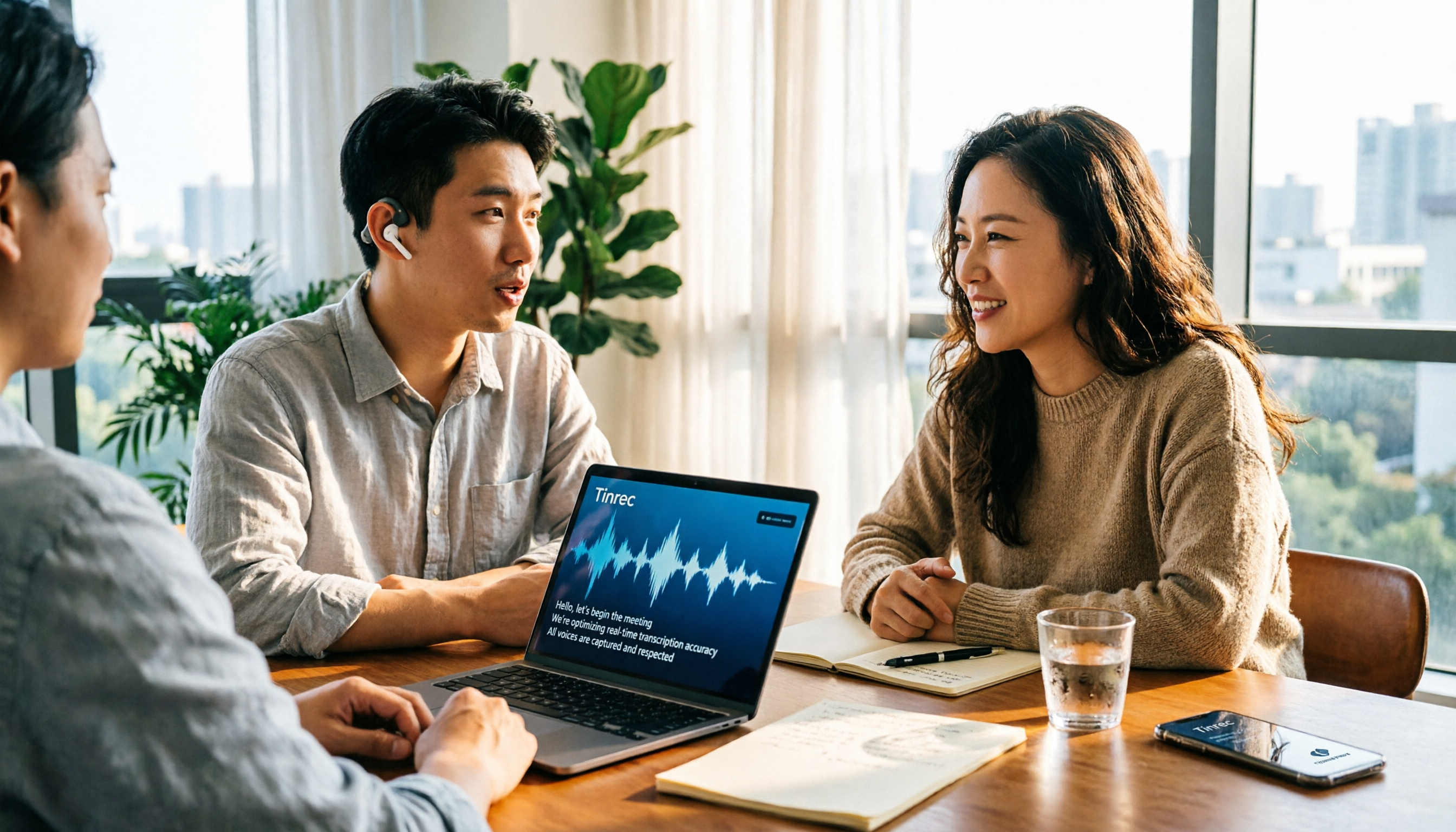
4 Free Real-Time Transcription Tools Compared in 2026: A Generous Free Tier Doesn't Always Mean It's Enough
When looking for a free real-time transcription tool, most people make the wrong choice from the start. This article tackles common misconceptions, first clarifying the difference between "real-time" and "upload," and the three hidden limitations of free plans. It then compares Tinrec, Yating Transcription, cSubtitle, and Otter.ai to help you find a free meeting transcription solution that's actually sufficient.

2026 Live Transcription Tools Compared: Which Free Version Actually Transcribes as You Speak?
What does live transcription mean, and how is it different from recording first and uploading later? This article starts with a clear definition, then covers 5 key points to understand before choosing a live transcription tool. It compares Tinrec, Otter.ai, Granola, and PLAUD in real-world use, and includes common pitfalls and buying advice to help you decide which one truly fits your needs.

2026 Tinrec Review: Real-Time Transcription Without Meeting Bots + AI Q&A for Meeting Notes
Is real-time transcription worth it? This review breaks down 4 key factors for choosing a live transcription tool, focusing on Tinrec (秒聽錄音) and its no-bot online meeting recording, post-meeting AI Q&A, action item organization, and team spaces. We also compare Yating, Otter.ai, and Granola to help you decide which tool fits your needs.

2026 Live Transcription AI Comparison: Which Tool Best Handles Chinese Meetings and Post-Meeting Organization?
How to choose a live transcription AI? This article compares Tinrec, Otter.ai, Notta, and Granola across four aspects: meeting capture methods, Chinese recognition, post-meeting organization, and team collaboration, helping you find the best live transcription tool for your needs.

2026 Live Transcription Tools Compared: Which AI Meeting Assistant Works Best for Chinese?
Tired of re-listening to recordings to write meeting minutes? We tested four live transcription tools—Tinrec, Yating, Notta, and Otter.ai—comparing how they capture online meetings, AI summaries and action items, Chinese and mixed-language recognition, free tiers, and team data ownership. Includes a pitfalls guide and scenario-based recommendations to help you choose the right tool for your meeting needs.

5 Live Transcription Tools Tested in 2026: Which Handles Chinese Meetings Best?
How do you choose a live transcription tool? This article starts from the real pain points of Chinese meetings, outlines 4 key buying factors, and compares Tinrec, Yating Transcription, Otter.ai, and Notta after hands-on use. It honestly lists free quotas, team pricing, and pitfalls to avoid, helping you find the most convenient one.

4 Real-Time Transcription Tools Tested in 2026: Which One Can Summarize While You're Still in the Meeting?
Can't keep up with notes during meetings and then have to re-listen to an hour of recording? This article tests and compares four real-time transcription and AI summary tools—Tinrec, Otter.ai, Granola, and Notta—and outlines 4 key buying factors, 3 common pitfalls, and which one is best for Chinese-language meetings and professionals who want to use AI to query meeting highlights.
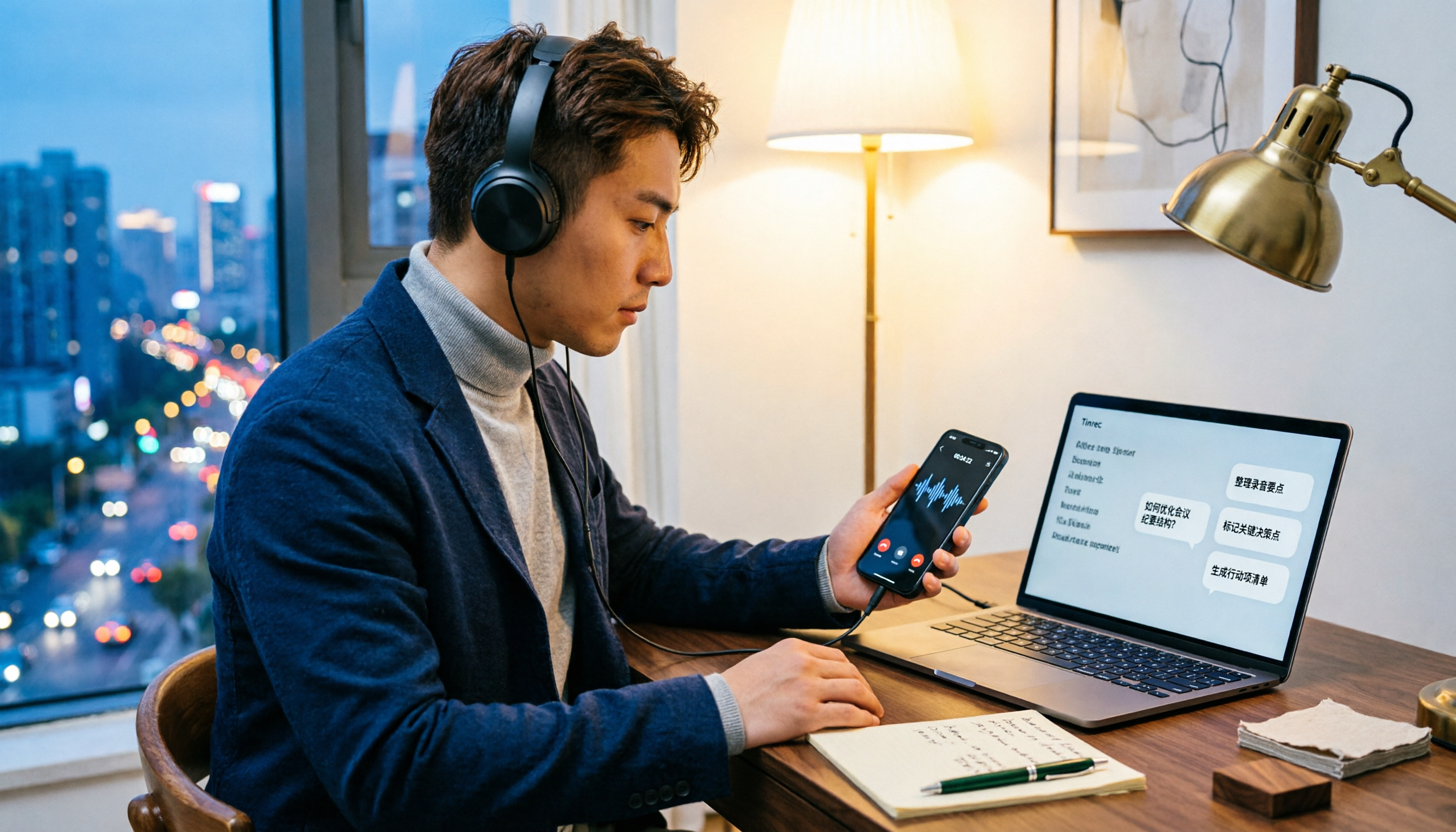
5 LINE Call Recording Methods Tested for 2026: Which Works Best for iPhone, Android, or AI Tools?
LINE doesn't have built-in call recording due to privacy protection and no third-party access, making "just record it" a hassle. This guide covers 5 practical methods—from iPhone built-in capture, Android screen recording, external recording devices, to AI tools—and compares post-recording efficiency. It explains why Tinrec's transcription, AI Q&A, and action item extraction make it the most practical final step for LINE call recording.

5 Best Video Conferencing Software in 2026: Which Free Version Is Enough?
Many people ask what video conferencing software is available. This article reviews 5 common options in 2026: Google Meet, Zoom, Microsoft Teams, Cisco Webex, and LINE. It compares free version limitations, use cases, and paid thresholds, and demonstrates how to use Tinrec to record online meetings without a bot, generate transcripts, summaries, action items, and team data.