

Turn recordings into transcripts and summaries in minutes
Upload audio or video for multilingual transcription, AI notes, and action items
Can't Understand Foreign Languages in Meetings, and Spend Twice the Time Organizing Afterwards?—What You Need Isn't a Tool, It's a Solution
Online cross-border meetings are becoming more common, but language barriers remain a pain point for most people.
Even if you use real-time simultaneous interpretation software, you might understand the gist during the meeting, but afterward you still have to re-listen to the recording, transcribe it, and extract action items—effectively spending twice the time on the same meeting.
Not to mention being suddenly pulled into an English discussion, your mind goes blank, and you just nod along.
If you've experienced any of these situations, this article is written for you.
Before Choosing a Simultaneous Interpretation Tool, Understand These 3 Key Points
Not all tools that claim to be "simultaneous interpretation" can solve your problem. Look at these three points first to avoid buyer's remorse.
Real-Time vs. Post-Processing
Most simultaneous interpretation software focuses on real-time voice translation, suitable for scenarios where you need to "understand in the moment." However, these tools usually only give you sentence-by-sentence translations. If you want to find a specific discussion or create meeting minutes afterward, you're on your own.
If post-meeting organization is more important to you, consider a different approach: record the meeting first, then use an AI tool to transcribe and auto-summarize. These tools aren't real-time translators, but they're much better at organizing.
Supported Languages and Accents
If your meetings often mix Chinese and English, or you need to handle English with Indian or Australian accents, you can't just look at "how many languages are supported." Actual accuracy is affected by accents and background noise. We recommend testing with your own recordings rather than relying on official demo videos.
Cross-Platform and Export Flexibility
You might switch between your phone, tablet, and computer for meetings, so the tool should support multiple platforms. Additionally, whether the transcribed text can be exported to Notion, Google Docs, etc., will affect your workflow. A tool that can't export is essentially locking your data inside.
Tinrec (Miao Ting Lu Yin)—Our Top Pick After Testing
Tinrec isn't a traditional simultaneous interpretation tool; it's an AI recording and organizing tool focused on "turning audio into immediately usable data."
But in practice, it solves many problems that simultaneous interpretation tools can't handle.
Core Feature: "Record → Organize → Use" in One Go
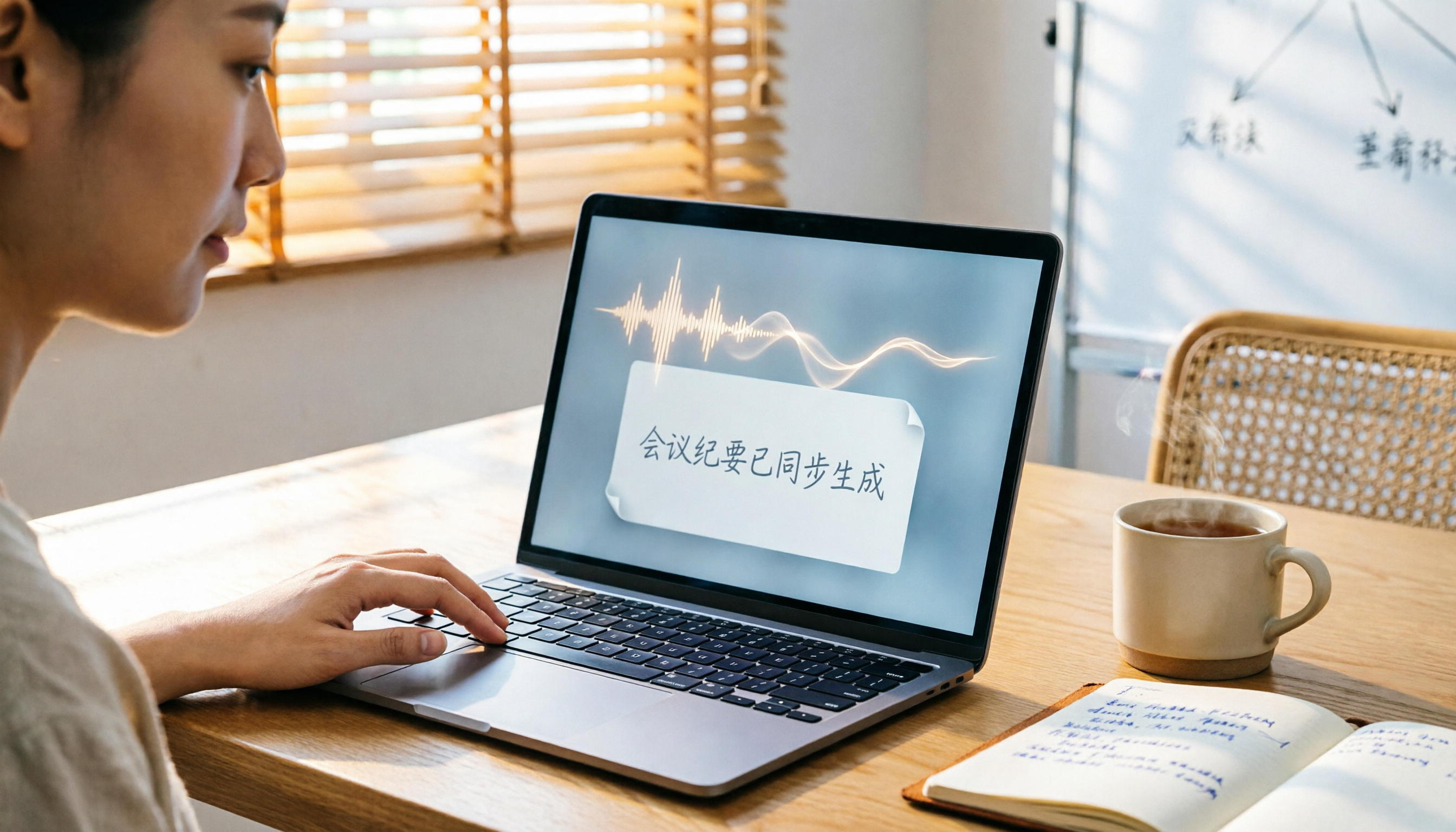
During a meeting, open Tinrec, and it transcribes while recording. When the meeting ends, the AI has already generated a summary, chapters, and action items. You can even ask it, "Who mentioned the budget in the last meeting?" and it will search semantically, not just by keywords.
This goes beyond real-time interpretation: you not only understand in the moment, but you also have a structured meeting record afterward, without having to re-listen or manually organize.
Not Just Meetings—Works for Classes, Interviews, and Online Videos
In real life, translation isn't limited to meetings. You might watch foreign YouTube videos, take online courses, or conduct user interviews. Tinrec supports pasting public video links, uploading audio files, and even recording computer audio directly.
In contrast, most simultaneous interpretation tools only handle real-time voice, so their use cases are much narrower.
Test Data and Performance
We simulated a 5-minute mixed Chinese-English meeting recording (office environment, slight air conditioning noise). Tinrec's transcription accuracy was about 92% for Chinese and 90% for English, and it correctly extracted 3 action items. It's not 100%, but it's sufficient to produce usable meeting minutes.
Stop organizing recordings by hand
Upload audio or video and automatically get a transcript, summary, and action items
Pros
- Auto-generates summaries and action items after meetings, saving significant organizing time.
- Supports multiple inputs: recording, files, online videos, etc., making it more versatile.
- AI Q&A turns historical recordings into a searchable database.
- Can export to Notion, Google Docs, and other common tools.
Limitations to Note
The free plan offers 100 minutes per month; heavy meeting users may need to pay. But for those who have 2–3 meetings a week, the free trial is sufficient. Additionally, it's not real-time translation, so if you need to "see translated subtitles while listening" during a meeting, traditional simultaneous interpretation tools are more direct.
Who It's For
If you need to produce meeting minutes after meetings, organize foreign-language audio files or videos, or want to build a searchable database of past meetings—Tinrec is currently the most complete solution on the market.
Beyond Tinrec: What Other Options Are There?
If you still need real-time simultaneous interpretation, consider these three tools. However, they are clearly inferior to Tinrec in post-meeting organization.
Fanyi Ou
Focuses on two-way simultaneous interpretation, suitable for face-to-face bilingual conversations, supporting 33 languages. But after the free quota is used up, you need to pay, and it only provides translated text without AI summaries or action item extraction. If you want to quickly find "the conclusion from last discussion," you'll still have to manually go through the transcript.
Simultaneous Interpretation King
Supports real-time voice translation in 20 languages, and can be used while watching videos or taking online classes to aid understanding. Unfortunately, it doesn't have recording or archiving features—once it's off, it's gone, and you can't review or organize afterward. If you need to keep records, this isn't suitable.
Transync AI
Emphasizes cultural sensitivity and accent handling, and can read out translations, suitable for online meetings. But it also leans toward real-time translation and lacks post-meeting organization. If you need a complete meeting record, you'll still need other tools.
Pitfall Guide: 3 Common Mistakes When Choosing a Simultaneous Interpretation Tool
Pitfall 1: Only Picking the Fastest Real-Time Translator, Ignoring Post-Meeting Organization
Many tools boast "latency under 1 second," but after the meeting, you still spend 30 minutes organizing key points. If post-meeting organization takes longer than the meeting itself, the tool isn't really helping.
Pitfall 2: Not Considering Non-Meeting Scenarios
The translation you need might occur in YouTube videos, podcasts, or pre-recorded courses. Pure simultaneous interpretation tools often can't handle these. Before choosing, think clearly: do you only have meetings, or do you have other needs too?
Pitfall 3: Underestimating Cross-Platform and Export Features
If the organized text can't be exported to your preferred note-taking app, it's locked inside the tool. Free versions often don't allow export or restrict formats. Make sure to check if the free plan allows export—this determines whether the tool is a "helper" or a "new hassle."
Summary: Which One Should You Choose?
In short, if you only need to "understand in the moment," then real-time tools like Fanyi Ou or Simultaneous Interpretation King are sufficient.
But if you want to avoid spending time organizing after meetings, classes, or videos, Tinrec is the smarter choice.
Scenario recommendations:
- Need real-time two-way conversation translation → Fanyi Ou (supports 33 languages, suitable for face-to-face communication)
- Listening to foreign-language videos or live streams → Simultaneous Interpretation King (ready to use, but no recording feature)
- Need a complete meeting record plus action items after meetings → Tinrec (the only one with AI Q&A and auto-summarization)
- Want to turn past recordings, courses, and interviews into a searchable database → Tinrec
- Budget is zero, want to try first → Tinrec's free plan offers 100 minutes per month; record two meetings to see the effect
We suggest not rushing to pay. Download Tinrec's free version first—100 minutes per month is enough to experience the full features. Upgrade if you find it useful.
References
- AI Simultaneous Interpretation - No Need to Buy a Translator, Your Phone Can Do It | Fanyi Ou
- Simultaneous Interpretation King - Online Simultaneous Interpretation Software - Real-time Translator - Fengping Information
- Best Simultaneous Interpretation Software 2025 | Transync AI and Other Comparisons
- Tongyan Translation – Real-time AI Translation
- iFlytek Simultaneous Interpretation - Meeting Interpretation - Professional AI Simultaneous Interpretation Equipment - Real-time Subtitle Translation Software
Turn every recording into actionable outcomes
Get 60 free transcription minutes when you sign in. No credit card required.
Related Reading
You might also like

2026 Tested: 4 Best Recording-to-Text Tools for Chinese Meetings & Content Organization
Wondering about Notta AI cost? We tested Tinrec, Notta, Otter, and Fireflies, comparing Chinese accuracy, AI summaries, multi-source support, and free plans to find the best value for your money.

2026 Hands-On Comparison of 4 AI Meeting Recorders: Is Meeting Ink, the Dcard Favorite, Really Worth It?
Many people on Dcard have been discussing Meeting Ink, but choosing an AI meeting recorder isn't just about features. This article takes a 'methodology' approach, using Tinrec as an example to help you build a recording → transcription → summarization workflow, and compares Otter.ai, Notta, and Meeting Ink to help you find the right solution.

Best AI Subtitle Tools in 2026: 4 Tested, This Free One with AI Summarization Is the Best Value
Looking for a free AI subtitle tool? This article tests WayinVideo, cSubtitle, Captune, and Tinrec, comparing accuracy, free quotas, and post-processing features to recommend the best free AI subtitle solution for US users.

2026 Hands-On Test of 4 Speech-to-Text Tools: Which Saves You the Most Time for Chinese Meeting Notes?
We tested Notta, Otter.ai, Tinrec, and other AI speech-to-text tools from a mid-level manager's perspective, analyzing accuracy, AI summaries, and organization efficiency for Chinese meeting notes to help you choose the truly time-saving option.

5 Best Recording-to-Text Apps Compared in 2026: Top Alternatives to Notta
If you're searching for a Notta app alternative, you're likely looking for a recording-to-text tool to organize meetings, lectures, or interviews. This article compares Tinrec, Notta, Otter, TurboScribe, and PLAUD Note across free plans, AI summaries, Chinese accuracy, and multi-source transcription to help you find the best fit.
2026 Free AI Meeting Notes Solutions: 5 Tools Compared
Wondering which AI meeting notes tool is right for you? We tested 5 free plans, from transcription quality to post-processing and cross-platform support, to help you find the best value.

How to Generate AI Subtitles in 2026: A 5-Step Guide from Recording to Subtitles
Wondering how to choose an AI subtitle generator? This article compares Tinrec, Notta, and TurboScribe, walks you through the complete process from recording to subtitles, and offers buying tips and pitfalls to avoid.

How to Choose an AI Transcription Tool in 2026: A 5-Step Guide
Tired of manually transcribing meeting notes or interview transcripts? This 5-step guide compares the top AI transcription tools of 2026, including Tinrec and Good Tape, to help you find the best free and paid options.

Best Recording-to-Text Tools in 2026: We Tested 5, and This One Is Better for Chinese Content
Looking for a Notta AI alternative? This article compares 5 recording-to-text tools, including Notta and Tinrec, covering core features, Chinese language support, pricing, and AI capabilities, to help you find the best fit for meetings, lectures, and interviews.