

Turn recordings into transcripts and summaries in minutes
Upload audio or video for multilingual transcription, AI notes, and action items
The 2026 Notta review has drawn significant attention, with over 5 million cumulative users and 4,000+ businesses onboard, showing stable performance in Japanese and English transcription. However, if you need to organize Chinese meetings, courses, interviews, or online videos, simple transcription may not be enough. This article starts with key points from the Notta review, walks you through 5 critical factors for choosing an AI recording tool, and explains why Tinrec is a better alternative for organizing Chinese audio and video content.
Notta Review 2026: What Users Say
From Notta user reviews, several key points emerge:
- Pros: High transcription accuracy for structured interviews and business meetings; real-time transcription saves significant post-meeting time; supports multiple languages, including decent performance for Chinese content.
- Cons: Emotional or colloquial content may be transcribed inaccurately; its main strength remains verbatim transcripts, with limited post-transcription organization, Q&A, export, and continuation capabilities.
Notta excels at transcription, but the real time-saver lies in post-transcription organization, Q&A, export, and continuation—areas where Tinrec differentiates itself.
Beyond Verbatim Transcripts: Tinrec Fills the Gap Notta Leaves
Tinrec (秒听录音) is an AI recording and audio/video organization tool designed for meetings, learning, interviews, and content creation. It doesn't just convert speech to text; it turns recordings and audio/video materials into searchable, summarizable, queryable, exportable, and further processable knowledge.
Compared to Notta, Tinrec's advantages include:
- Multi-source input: Supports live recording, audio/video files, online video links (YouTube, Bilibili, Xiaohongshu, TikTok, etc.), and computer meeting recording—not limited to meetings.
- Post-transcription processing: Automatically generates summaries, chapters, key points, action items, subtitles, and mind maps, and can further generate meeting minutes, reports, tables, and other deliverables.
- AI Q&A: After transcription, you can ask Tinrec directly, "Who mentioned the budget in the meeting?" or "What was the client's feedback?" It answers based on semantic understanding.
- Multi-format export: Export results to Notion, Google Docs, OneNote, Dropbox, and other tools, seamlessly integrating with your existing workflow.
- Agent post-processing: Let AI generate deliverable content based on the recording, going beyond verbatim transcripts.
Tinrec Core Capabilities: Turning Audio/Video into Usable Data
Tinrec's core capabilities revolve around "organization" and "usage," not just transcription:
- Real-time recording to text: Transcribe as you record, capturing meeting and class content instantly.
- Audio/video file to text: Upload existing audio or video files and convert them to text with one click.
- Online video to text: Paste a public video link and organize it into text and summaries.
- AI summaries and chapter organization: Quickly grasp key points of long recordings and break down lengthy content into structured sections.
- Action item extraction and AI Q&A: Extract action items from discussions and query recording content like a database.
- Multi-format export and Agent post-processing: Bring results to familiar tools or let AI generate reports, tables, meeting minutes, and more.
Stop organizing recordings by hand
Upload audio or video and automatically get a transcript, summary, and action items
These capabilities make Tinrec suitable not only for meetings but also for course review, interview organization, podcast transcription, video material extraction, and building personal knowledge bases.
Practical Use Cases: How to Use Tinrec
Use Case 1: Meeting Minutes and Action Item Tracking
After a two-hour meeting, it used to take an hour to compile minutes. Now, with Tinrec's real-time recording, the AI generates summaries, conclusions, and action items by the time the meeting ends—who is responsible for what and deadlines are clear at a glance.
Use Case 2: Classroom and Lecture Notes
Upload classroom recordings or online lecture audio to Tinrec to automatically get transcripts, chapters, and key points. When reviewing, you don't have to listen from start to finish; just look at structured notes, or use AI Q&A to quickly find specific concepts.
Use Case 3: Interview and Research Data Organization
After transcribing interview recordings, Tinrec's AI Q&A helps you quickly find interviewees' views on specific topics and generate citable material, saving hours of manual re-listening.
Use Case 4: Online Videos and Content Creation
Paste a YouTube or Bilibili video link, and Tinrec will transcribe text, summaries, and key points. Content creators can turn video material into articles, posts, or inspiration for reuse without manual transcription.
5 Key Points to Consider When Choosing an AI Recording Tool
- Input source breadth: Don't settle for meeting-only tools; ensure they handle files and online videos. Tinrec supports live recording, audio/video files, and public video links, covering more use cases.
- Post-transcription organization depth: Verbatim transcripts aren't enough; summaries, chapters, action items, and Q&A matter more. Tinrec offers complete post-processing capabilities, making transcription results truly usable.
- Chinese content handling: Some tools are English-centric and may struggle with Chinese-English mixed or multilingual scenarios. Tinrec is suitable for organizing Chinese content, ideal for Chinese-speaking users.
- Export and workflow integration: Check if the tool can export to Notion, Google Docs, etc. Tinrec supports multi-format export and can generate reports, tables, and other deliverables from recordings, reducing secondary organization costs.
- Pricing and usage frequency: Don't just look at unit price; calculate total cost. Tinrec offers a free plan, weekly pass, Pro monthly, and Pro annual plans, allowing you to choose based on usage frequency and avoid paying for unused quotas.
FAQ
What's the difference between Tinrec and Notta?
Notta excels at transcription and translation, while Tinrec emphasizes post-transcription organization, Q&A, export, and continuation, and is suitable for multi-source audio/video materials, not just meetings.
What can I do with Tinrec's free plan?
The free plan provides basic transcription quotas, allowing you to try live recording, audio/video file import, and online video parsing. It's perfect for testing before upgrading.
How accurate is Tinrec for Chinese?
Tinrec is suitable for organizing Chinese content. Actual results depend on audio quality, accents, and technical terms. For important content, it's recommended to cross-check with the original audio or recording playback.
What platforms does Tinrec support?
Tinrec is available on iOS, Android, and web, enabling cross-platform use on both mobile and desktop.
Conclusion
The 2026 Notta review confirms its transcription strengths, but if you need more than verbatim transcripts—turning audio/video into searchable, summarizable, exportable knowledge—Tinrec is a more complete choice. It covers meetings, courses, interviews, online videos, and historical data organization, and offers AI Q&A and Agent post-processing, truly turning recordings into actionable assets. Start with the free plan to experience live recording and online video transcription, and see how it saves you organization time.
References
Turn every recording into actionable outcomes
Get 60 free transcription minutes when you sign in. No credit card required.
Related Reading
You might also like

Notta vs Ultimate Vocal Remover 2026: 4-Factor Comparison — Which Free Vocal Remover Should You Choose?
Free vocal removers seem plentiful, but their limitations vary widely. This article compares Notta's free online vocal remover with the open-source desktop tool Ultimate Vocal Remover across 4 dimensions, covering format support, the 20-minute limit, dual-track output, and how to judge separation artifacts. It also includes selection criteria and 3 common pitfalls to help you find the right tool.

2026 AI Meeting Recorder Comparison: Notta Tutorial & Tinrec Review
Starting with a complete Notta tutorial, we tested and compared five AI meeting recorder tools—Notta, Tinrec, Otter.ai, TurboScribe, and Granola—on transcription, post-meeting organization, Chinese language experience, and free tier limits. Includes key buying factors and three common pitfalls to help you decide which tool truly saves time on meeting follow-ups.
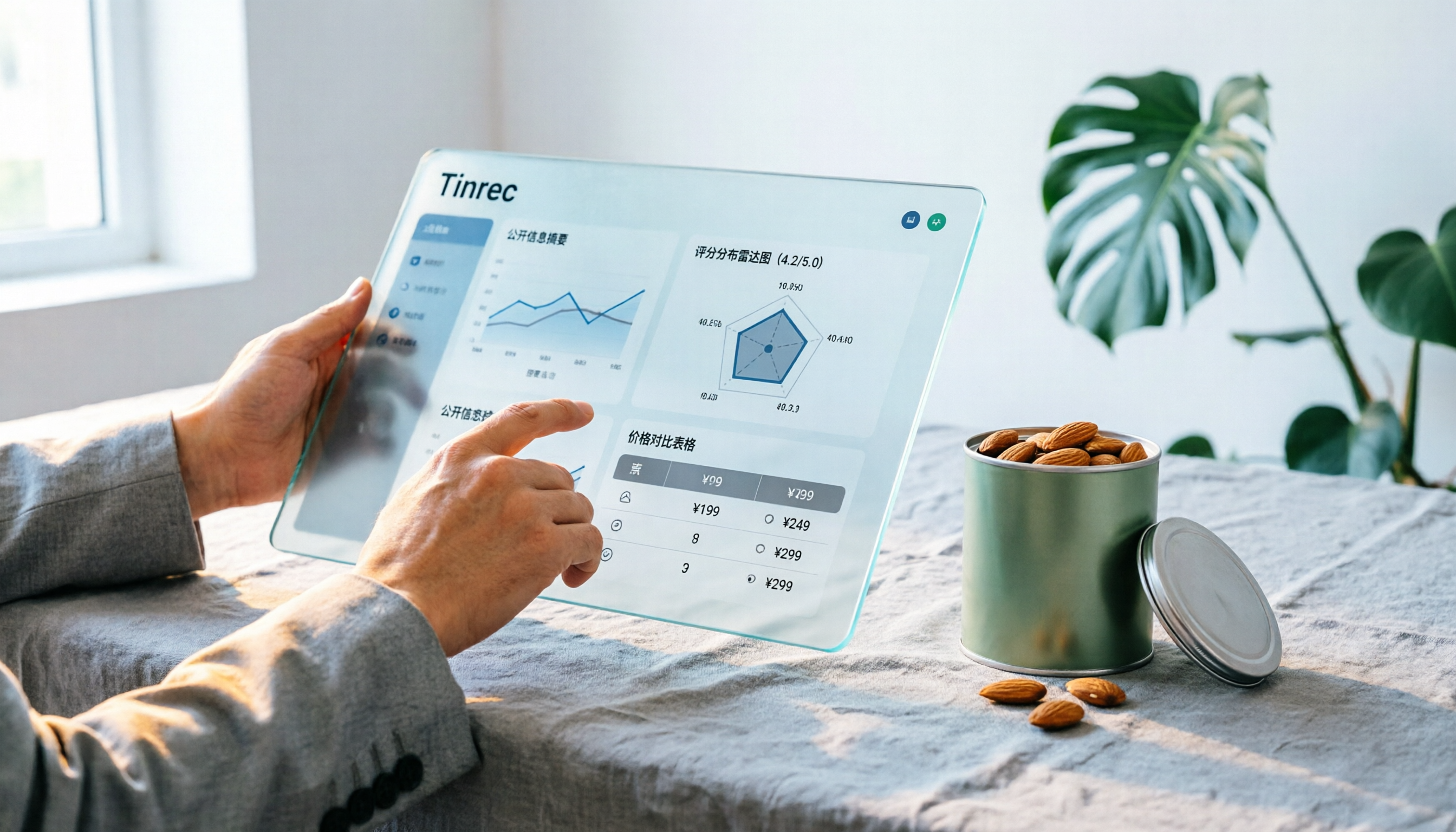
Notta Sin Foods Sugar-Free Snacks Buying Guide 2026: Reviews of 2 Products and Recommendations
There are few Chinese reviews of Notta Sin Foods. This guide compiles public information from the official website, Instagram, Amazon, and bigbasket into a buying guide: it breaks down the two main products, Choco Almond Spread and MilBites, explains the rating distribution behind the 4.5 stars, and summarizes three common buying mistakes to help you think clearly before ordering whether the alternative sweetener taste and price are really right for you.

How to Prepare for the 2026 Vocol Gubin Job Opening: 5 Steps from Understanding the Job Posting to Interview Notes
Vocol Sp. z o.o. has an opening for a pracownik biurowy (office administrator) in Gubin, Poland, with a gross salary starting at 4,666 PLN, a fixed-term contract, and 40 hours per week. This article covers 4 key points for understanding the job posting, a practical interview preparation process, and the tools I actually use to record and organize communication.

5 'Sweat' Reviews Compared: How to Read Lynn Nottage's Working-Class Rage
People searching for 'sweat lynn nottage review' usually aren't wondering if the play is good—they want to know what angle to take. This guide distills key points from five reviews—Los Angeles Times, Variety, The New York Times, blogger Kevin Stephany, and a 2026 Glasgow production—plus methods and tools for organizing research before and after seeing the play.

2026 AI Meeting Notes Comparison: Vocol.ai vs Tinrec — Which Is Better for Chinese-Speaking Teams?
Vocol.ai is a GPT-powered voice collaboration platform, and many users start looking for alternatives after trying it. This article examines three decision points—how to record online meetings, what you get after transcription, and how teams manage data—to compare Vocol.ai and Tinrec. It also covers Tinrec's features, real-world use cases, and pricing for personal and team plans, helping you decide which fits your meeting workflow.

Sweat by Lynn Nottage: 2026 Comparison of 3 Productions — Which Is Worth Seeing?
How to review Lynn Nottage's Sweat? This comparison covers the 2017 Broadway, 2018 Los Angeles, and 2026 Glasgow productions, with 4 key evaluation points and common pitfalls. Plus, if the play's interview-based writing inspires you, here's how to record, transcribe, and follow up on interviews.

2026 VOCOL Capillary GC Columns Comparison: How to Choose Length, Film Thickness, and Temperature Limit
How to choose a VOCOL capillary GC column? This article compares the publicly available specifications of three options—105 m × 0.53 mm, 60 m × 0.25 mm, and 30 m—covering differences in length, film thickness, and maximum temperature. It explains suitable scenarios for purge and trap versus direct injection and uses an FAQ to answer the most common purchasing questions, helping you decide based on your sample and method conditions.
Vocol B.V. vs Vocol Nederland B.V. in 2026: 5 Key Differences Between Two Same-Name Dutch Companies
Searching for "vocol bv" returns two Dutch companies: a trailer manufacturer and a Rotterdam tank storage firm. This article uses 5 dimensions—KVK number, industry code, address, size, and business activity—to distinguish them, and highlights practical tips and common pitfalls when researching Dutch company data.